Latest News and Comment from Education

Monday, December 14, 2015

Marie Corfield: The Star Ledger's double standard on organized labor

Marie Corfield: The Star Ledger's double standard on organized labor:

The Star Ledger's double standard on organized labor


Yesterday's Star Ledger editorial page is a case study in the double standards it applies to organized labor. On the one hand, they make an impassioned and completely justified plea in support of the unsustainable wages earned by SEIU 32BJ's 7,000 custodians and janitors who are fighting for a $15 minimum wage; while on the other, they excoriate Sen. Sweeney for pushing for a constitutional amendment to fund NJ's anemic pension system, and as usual, beat the war drums for public employees to pay more for less. 

But this is nothing new. The S-L editorial board, led by Tom Moran, has a long history of union bashing—especially teachers. Just search this blog or Jersey Jazzman's for a list of Moran's rants. Who knows why he hates us and loves others. And now that Sen. Sweeney has proposed the amendment that would require quarterly pension payments, Moran is at it again, spinning his ill-informed, teacher-hating rhetoric to unsuspecting readers:


But public workers continue to receive health benefits that are far more generous than those enjoyed by the typical taxpayers. The cost is about 50 percent more than the average plan in the private sector, according to Tom Byrne, a former Democratic state chairman and member of the governor's bipartisan reform commission.
First, I beg to differ on those generous benefits. The days of 'Cadillac' benefits are long gone thanks to Chr. 78 (more on this below). Second, does anyone else see the subtle fracturing here? The blaming and shaming of middle class workers? The pitting of public vs. private sector? The brainwashing of the general public that the financial crisis would go away if only we could get rid of those pesky, greedy unions? 

Those in power, including Moran, have done an admirable job of convincing private 
Marie Corfield: The Star Ledger's double standard on organized labor:

Hurting the neediest children: Why charter schools are immoral | Bob Braun's Ledger

Hurting the neediest children: Why charter schools are immoral | Bob Braun's Ledger:

Hurting the neediest children: Why charter schools are immoral

SOSLOGO


Today, charter schools–funded by taxpayer dollars–will send their amateur and professional lobbyists to Trenton  to block a bill that would place a moratorium on new charter schools until their impact on traditional public schools can be studied. The bill wouldn’t affect already existing charter schools so these lobbyists are foot soldiers for charter expansion in the take-no-prisoners war of  Wall Streeters against traditional public schools. Like other well-financed lobbying organizations, the charter lobby buys its politicians and tries to destroy its critics–because all that counts to the money people behind it is continued expansion.  An expansion that robs scarce public money from the neediest children.

The immorality of the charter lobby–here and in New York and throughout the country–is described succinctly in a statement issued today by Save Our Schools–New Jersey, a statewide, pro-public school coalition:
New Jersey charter schools should not grow until they stop segregating by income, special needs status and language proficiency.
The current uncontrolled growth of very segregated charter schools is hurting New Jersey children, particularly in districts with the largest numbers of charter school students.
In aggregate, New Jersey charter schools educate many fewer special needs students, English Language Learners, and very low-income students than those students’ home school districts. As the number of charter school students increases, this segregation worsens, concentrating the more expensive and challenging to educate students in the district schools, without the funding necessary to provide them with a high quality education.
In Newark, for example, only 8.5% of the students who attended charter schools in 2014-15 had special needs versus 18% of the students in the district. Only 1% of charter school students were English Language Learners versus 11% for the district. Even the very low-income students are concentrated in the district, with 76% of Newark public school students eligible for Free lunch versus 71% of charter school students.
Some charter schools are even more segregated than these percentages suggest. North Star/Uncommon, for example, educated lower percentages of Hurting the neediest children: Why charter schools are immoral | Bob Braun's Ledger:

The Washington Teacher: Broken Promises- It's December - Still No Contract for You!

The Washington Teacher: Broken Promises- It's December - Still No Contract for You!:

Broken Promises- It's December - Still No Contract for You!

No More Broken Promises!


By Candi Peterson, General Vice President

Statements or expressions of opinions herein 'do not' represent the views or official positions of DCPS, AFT, Washington Teachers' Union (WTU) or its members. Views are my own. 

For the record, I am not a member of the WTU Contract Negotiations team. I never have been. I am a concerned union member and I am tired of 'Broken Promises' of WTU Presidents. 

I've witnessed the campaign of mis-information, neglect and avoidance of what I consider the number one job of a WTU President - represent the interests of its members in getting a negotiated contract.

It’s December and after 3 plus years of desperately awaiting a teacher contract, DCPS teachers still don’t have a contract thanks to WTU President/Chief Negotiator Davis and former union president Saunders. Teachers are still in limbo and it seems unlikely that there will be a tentative agreement by the end of the calendar year as reported by President Davis in previous union meetings and newsletters.  The last WTU contract expired in September 2012.

Prior to the thanksgiving break, teachers were invited to the Kellogg conference center on the campus of Galludet University on November 19 by WTU for a Contract Action and Member Feedback session.

The WTU newsletter billed this event as the “first-ever WTU member engagement event on contract negotiations” and “an opportunity to represent  each school chapter utilizing state-of-the-art audience response technology and hand-held devices to interact, analyze and partake in preliminary contract voting and surveying of the full proposals and Articles completed by the WTU contract negotiations team. 

Some of the teachers I conversed with during the evening, initially seemed hopeful that this event The Washington Teacher: Broken Promises- It's December - Still No Contract for You!:

Mike Klonsky's SmallTalk Blog: WEEKEND QUOTABLES

Mike Klonsky's SmallTalk Blog: WEEKEND QUOTABLES:

WEEKEND QUOTABLES

John Dewey, founder of the Lab School where Mayor Emanuel sends his children, on DuSable librarian. 


17-year-old DuSable senior Sabaria Dean

“The librarian is like a mentor to me, a resource. She's dedicated her entire life to DuSable and the children in it. She deserves to be here...“Libraries are essential to all CPS schools, not just Dusable. Without resources and reliable people, such as librarians, our resources are limited. Being on the South Side of Chicago is already a huge disadvantage."” -- DNAinfo
John Kass

Rahm Emanuel has lost the city and he can't get it back. -- Tribune
Peniel E. Joseph


The ugly truth—that historically affirmative action has been Mike Klonsky's SmallTalk Blog: WEEKEND QUOTABLES:

Will New Federal Education Policy Make a Difference? - LA Progressive

Will New Federal Education Policy Make a Difference? - LA Progressive:

Will New Federal Education Policy Make a Difference?

every student succeeds act
President Barack Obama greets Kenmore Middle School eighth-grader Sofia Rios and the other stage participants prior to a bill signing ceremony for S. 1177, Every Student Succeeds Act, in the Eisenhower Executive Office Building South Court Auditorium, Dec. 10, 2015. Standing with Rios from left, Education Secretary Arne Duncan; Lily Eskelsen GarcĆ­a, President, National Education Association; Todd Rokita, R-Ind.; Suzanne Bonamici, D-Ore.; and House Education Committee Chairman John Kline, R-Minn. (Official White House Photo by Pete Souza)


Much Ado About an Enigma: No One Really Knows What Impact the ESSA Will Have on Public Schools

President Barack Obama signed the Every Student Succeeds Act (ESSA) this week.
The new legislation reauthorizes federal law governing K-12 public education.
In 1965, we called it the Elementary and Secondary Education Act (ESEA). Until today we called itNo Child Left Behind (NCLB). And now after a much-hyped signing ceremony, the most definitive thing we can say about it is this: federal education policy has a new name.
Seriously. That’s about it.
Does it reduce the federal role in public schools? Maybe.
Is it an improvement on previous policies? Potentially.
Will it enable an expansion of wretched charter schools and unqualified Teach for America recruits? Likely.
The problem is this – it’s an over 1,000-page document that’s been open to public review for only two weeks. Though it was publicly debated and passed in the House and Senate, it was finalized behind closed doors and altered according to secure hurried Congressional votes. As such, the final version is full of legal jargon, hidden compromise, new definitions and verbiage that is open to multiple meanings.
How one reader interprets the law may be exactly the opposite of how another construes it.
Take the much-touted contention that the ESSA reduces the federal role in public schools. Even under the most positive reading, there are limits to this freedom.
The document continues to mandate testing children each year in grades 3-8 and once in high school. It also mandates academic standards and accountability systems. However, what these look like is apparently open to the states.
For instance:
The Secretary [of Education] shall not have the authority to mandate, direct, control, coerce, or Will New Federal Education Policy Make a Difference? - LA Progressive:

NYC Educator: You Can Fool Some of the People Some of the Time, but You Can't Fool Opt-Out NY

NYC Educator: You Can Fool Some of the People Some of the Time, but You Can't Fool Opt-Out NY:

You Can Fool Some of the People Some of the Time, but You Can't Fool Opt-Out NY


Even as UFT leadership breaks out the champagne over NY State's largely meaninglessCommon Core recommendations, Governor Cuomo ought to keep worrying. Because the fact is UFT leadership has played virtually no part in opt-out. They've delayed and prevented meaningful resolutions, and backed up reformy claims that aid would be withheld if not enough kids took tests that Cuomo himself called meaningless, except for rating teachers.

Even if these tests are temporarily decoupled from rating teachers, and even if they change the name of Common Core, opt-out activists will not simply fold their tents and agree to Governor Cuomo's sleight of hand. Not everyone is willing to declare victory every time a demagogue offers lip service. I have no idea why UFT leadership is so anxious to do so, but their need to label absolutely everything and anything as a Great Victory limits their repertoire of responses.

While UFT is willfully and chronically out of touch, our brothers and sisters in PJSTA keep their eyes open all the time and offer a much different interpretation of the task force recommendations. Their President, Beth Dimino, is a tireless advocate for children. She's been an active participant in opt-out, and had no problem whatsoever speaking truth to John King, even as myopic UFT leadership scrambled for that ever-elusive "seat at the table."

You'd better believe, if Cuomo hasn't fooled Beth Dimino, he hasn't fooled parent leaders of opt-out either. Opt-out claimed 20% of New York's children last year, is spreading by leaps and bounds, and aims to get closer to 50% next year. The fact is Cuomo's committee recommended that state test-based junk science be placed on hold for a few years, but allowed the testing to continue anyway. There's not a whole lot of motivation for parents to allow their kids to sit for tests that have no meaning for anyone whatsoever.

A big argument UFT leadership trots out as to why we need this testing is that civil rights groups endorse it. If that is the case (and I'm not completely persuaded it is), then the remedy is to educate said groups as to what these tests actually do. If we wish to correct societal inequality, we certainly won't do so by ignoring poverty and scapegoating teachers and schools. As long as UFT leadership accepts this 
NYC Educator: You Can Fool Some of the People Some of the Time, but You Can't Fool Opt-Out NY:


Pondering Chartering: What do we know about administrative and instructional spending? | School Finance 101

Pondering Chartering: What do we know about administrative and instructional spending? | School Finance 101:

Pondering Chartering: What do we know about administrative and instructional spending?


In a recent report, Gary Miron and I discuss some of the differences in resource allocation practices between Charter operators and district schools.  Among other things, we discuss the apparently high administrative expenses of charter operators. But in that same report, we explain that some of these higher administrative expenses, and, as a result lower instructional expenses, result from bad policy structures that constrain resource allocation and/or induce seemingly illogical behaviors.
Some have pointed out to me that this assertion of higher administrative and lower instructional expense by charter operators runs counter claims made by Dale Russakoff in her book The Prize. My doc student Mark Weber has already thoroughly rebutted Russakoff’s anecdotal claims.  Put bluntly. Those claims were supported only by anecdote and run in contrast with the larger body of data in New Jersey (see Mark’s post) and larger literature on the topic. The summary below addresses additional literature on this topic.
[to be clear… and this is a topic for another post, or perhaps Matt Barnum will do a piece on this… there is little if any evidence that administrative expense shares alone are an indicator if “inefficiency,” where inefficiency is defined as a reduction in outcomes produced for the same aggregate dollar input]
In a related recent post, I explain whether “chartering” can tell us much/anything about whether and how money (and resources that cost money) are associated with measured student outcomes.
Below is a section of a separate, forthcoming paper (coauthored with Mark Weber), in which we evaluate school site staffing expenditure differences between district, non-profit and for-profit charter operators.

Charter School Administrative/Instruction Expense

A handful of studies over time have addressed questions similar to those we address herein, asking more specifically about the differences in administrative overhead expenditures of charter schools. Two studies of Michigan charter schools, which operate fiscally independently of local public districts, have found them to have particularly high administrative expenses and low direct instructional expenses. Arsen and Ni (2012) found that “Controlling for factors that could affect resource allocation patterns between school types, we find that charter schools on average spend $774 more per pupil per year on administration and $1141 less on instruction than traditional public schools.” (p. 1) Further, they found “charter schools managed by EMOs spend significantly more on administration than self-managed charters (about $312 per pupil). This higher spending occurs in administrative functions traditionally performed at both the district central office and school building levels.” (p. 13)
Izraeli and Murphy (2012) found that district schools in Michigan tended to spend more on instruction per student than did charter schools, and the gap grew by about 5 percent to nearly 35% percent over the period studied (1995-96 to 2005-06) (p. 265). Further they found the spending gap for instructional spending to be greater than that for general spending. The overall funding gap between district and charter schools was approximately $230. The spending gap for basic programs was $562 and for total instruction $910. The authors note “much like a profit-maximizing firm, charter schools generate a surplus of revenue over expenditure.” (Izraeli & Murphy, 2012, p. 265)
Bifulco and Reback (2014) explore the complex relationship between fiscally dependent charter schools and their host districts in upstate New York cities. Particularly relevant to our investigation is Bifulco and Reback’s finding that having fiscally dependent charter schools separately affiliated with outside Pondering Chartering: What do we know about administrative and instructional spending? | School Finance 101:

Bad Apples | EduShyster

Bad Apples | EduShyster:

Bad Apples


Rutgers Professor Bruce Baker shines a light on some extremely shady charter industry practices—and causes my hair to literally catch on fire…
BadAppleEduShyster: Your new studyabout the policies that charter school operators use for financial benefit, is harshly critical of a few bad apples. But why focus on them as opposed to, say, the high-performing many?
Bruce Baker: The important context for this report is to understand just who are the dominant charter managers in the landscape. You’ve got Imagine, you’ve got National Heritage, you’ve got White Hat and you’ve got Charter Schools USA. A lot of academics and charter advocates are going to think well *those aren’t the big ones like KIPP and Uncommon.* But KIPP and Uncommon aren’t the big ones. The big ones are Imagine, National Heritage, White Hat and Charter Schools USA. If we were to decide that here and now is the time to clean all this stuff up and just shut down a bunch of these operators, we’d be taking out a sizable share of charter schools in Florida and Ohio.
EduShyster: You use the term *subprime chartering* to refer to the massive amounts of debt being accumulated by charter operators. What happens when the bubble pops? And should I add this to the long list of things I lie awake at night worrying about?
bad-appleBaker: If you look at the escalation of debt being taken out to finance charter facilities, we’re on the front end of that. A lot of the debt doesn’t come due until the mid 2040’s. But the debt is only part of the picture. If you look at what’s happening in many cities, we’re turning over, or *relinquishing*, all of our land and facilities in the urban core to private Bad Apples | EduShyster:

Gary Rubinstein, TFA Critic, Will Attend the 25th Anniversary of TFA | Diane Ravitch's blog

Gary Rubinstein, TFA Critic, Will Attend the 25th Anniversary of TFA | Diane Ravitch's blog:

Gary Rubinstein, TFA Critic, Will Attend the 25th Anniversary of TFA


Gary Rubinstein, the most thoughtful of Teach for America’s critical alums, plans to attend the 25th anniversary of Teach for America. Gary’s blog has punctured the illusions of TFA and other corporate reformers again and again. Will he be shunned? Will anyone speak to him?
When I read Gary’s post, my first reaction was that the party would be “a conclave of losers,” considering how many of the TFA stars have faded or failed or disappeared into obscurity.  Not to mention the fact that TFA has not–in its 25 years–closed the achievement gap in any district or turned any district into a paragon of excellence. “One day,” the TFA slogan (“one day all children will have an excellent education”) seems as far away as ever.
But what a meeting it will be!
Gary writes:
Of the 200 speakers listed so far, there is only one ‘reform critic’ I see, Los Angeles Board President Steve Zimmer. Then there are about 150 people I’ve never heard of, but who are mostly from different ed companies or charter schools, and then there are about 50 A and B list ‘reformers’ and charter leaders. These include Jeremy Beard (YES Prep), Karolyn Belcher (President of TNTP), RiShawn Biddle (Dropout Nation), Tim Daly (Former President of TNTP), Mike Feinberg (KIPP), Heather Harding (former VP of research at TFA, now with Gates), Kevin Huffman (former Tennessee Education commissioner and former husband of Michelle Rhee), Michael Johnston (State senator in Colorado who got a teacher evaluation law passed where 50% of the evaluation is based on value-added), John King (current acting Secretary of Education), Dave Levin (KIPP), Kira Orange Jones (New Orleans Board Member), Paymon Rouhanifard (Camden Schools Superintendent), Alexander Russo (Writer and reform cheerleader), Hannah Skandera (secretary of education for New Mexico), Preston Smith (CEO Rocketship Charter schools), John White (State Superintendent of Louisiana), Joe Williams (DFER and now Walton). Not yet on the speakers page, but listed on some of the panels are Joel Klein (Amplify and former chancellor in NYC), John Deasy (Former head of Los Angeles Schools), Jon Schnur (Architect of Race To The Top), Chris ‘Citizen’ Stewart (blogger who I’ve sparred with on Twitter), and, of course, Michelle Rhee (StudentsFirst and star of Waiting For Gary Rubinstein, TFA Critic, Will Attend the 25th Anniversary of TFA | Diane Ravitch's blog:


No gymnasiums, no cafeterias and no administrators. That’s school policy at AltSchools | TechCrunch

School Districts Are Standing In The Way Of Public School Edtech | TechCrunch:

School Districts Are Standing In The Way Of Public School Edtech


No gymnasiums, no cafeterias and no administrators. That’s school policy at AltSchools, a chain of private, for-profit schools backed by the likes of Andreessen Horowitz and Mark Zuckerberg.
At the location I visited, the school schedule was written on a white board and could be changed in real time. Students flowed between grade levels and classes based upon what they wanted and needed from teachers.
To me, it seemed a bit like a 21st-century version of a one-room frontier schoolhouse. But no matter — AltSchools “has been anointed by the top minds in Silicon Valley as the best hope for the future of education,” according to WIRED.
The reason why is AltSchools’ use of technology. Instead of textbooks, students in AltSchools’ mixed-grade classrooms work through “lesson playlists” on iPads or Chromebooks that are tailored to their proficiency level and learning style. Teachers supplement tech time with group or individual instruction, an approach known as blended learning.
My visit got me thinking — how would one of our school districts, which might contain 100,000 or more students, implement AltSchools’ model? Would they need to build small schools on every corner, until they were as ubiquitous as Starbucks?
Based on my experience, the biggest barrier to rolling out an AltSchools model more broadly would probably be the district itself. I’ve found that districts’ layers of complex and siloed workflows and vast systems of checks and balances often get in the way of implementing personalized learning through edtech, especially when technology changes so fast.
Before we revolutionize the classroom or the school, we need to revolutionize the school district.

Tailor-Made For The Factory Floor

Seventy-five to 80 percent. That’s the percentage of high school students who graduated with diplomas in the United States in 2010 — and in 1990. In other words, in the past two decades, graduation rates have barely budged.
That’s not entirely a bad thing. The U.S. educational system was founded on a system of factory-floor efficiency, governed by ringing bells, classrooms specialized by subject and students organized by age. And it’s clear that this system has more or less delivered on its promise of getting a majority of kids the basic math, reading and writing skills they need to face the challenges of the 20th century.
The 21st century, however, is a different matter.
In the workplace of the 21st century, what you know is still important, but what you can learn is just as vital a metric for success. Today’s globalized economy increasingly rewards creativity, out-of-the-box thinking and collaboration. Skills like this aren’t captured by the high school graduation rate, scores on knowledge-based assessments or any of our other standard metrics of education “success.” And none of them are the type of skill one learns in a factory, either.
Before we revolutionize the classroom or the school, we need to revolutionize the school district.
Unfortunately, factories are what school districts are still set up to administer. Take a look at an average school district’s organizational chart, like this one from the school district of Philadelphia. Sectioned into dozens of departments connected by a spiderweb of lines, it’s difficult for an outsider to decipher — and not too different from the charts of old-school industrial corporations like General Motors.
Organizations structured like this often take a top-down, “control” approach to management, based on the Six Sigma model of process improvement. But as I wrote in my 2015 book Personalized Learning Playbook, that is a huge missed opportunity. In an age where not only startups, but established companies, employ increasingly flat management styles, we can do better in managing districts.
Here are three steps to bringing school districts into the 21st century.
We Need To Rethink How Districts Are Organized. Just as at a tech startup, management structures for a school district shouldn’t be one size fits all. Instead of being segmented by geographic attendance zones, for instance, a school district could be organized around student needs, with each department focused on a different learning style or skill set.
The point isn’t that one structure is better than another — the point is that districts, like startups or charter schools, should be free to experiment to find the one that’s right for them. For districts just getting started, implementing the Baldridge Excellence Framework can be a great first step. This system, used by organizations like Ritz-Carlton Hotels and Boeing, focuses less on micro-managing process and more on providing support for reaching high-level goals. We have seen it work in districts like Horry County Schools, South Carolina, which, despite its size, has been able to get a lot done.
Districts Must Recognize That Their Culture Has A Trickle-Down Effect. Personalized learning requires a fluid classroom environment, where students work at a pace individual to them, circulating freely between individual workstations and teams. A responsive district School Districts Are Standing In The Way Of Public School Edtech | TechCrunch:

How far will N.Y. Gov. Cuomo really go in overhauling Common Core? - The Washington Post

How far will N.Y. Gov. Cuomo really go in overhauling Common Core? - The Washington Post:

How far will N.Y. Gov. Cuomo really go in overhauling Common Core?


Last week, a task force created by New York Gov. Andrew Cuomo (D) to review Common Core curriculum and aligned standardized testing issued a report with a series of recommendations on how to change the standards and assessment. The report, which detailed mistakes in the Core’s implementation in New York, was the subject of stories in the press (including an Answer Sheet post here) that discussed the changes the task force is recommending, and that Cuomo is expected to accept.
Here’s a new piece on the report, which says that there is less there than meets the eye, and that New Yorkers shouldn’t expect big changes. It was written by Carol Burris, who retired as principal of South Side High School in New York last June and is now the executive director of the nonprofit Network for Public Education Fund. She was named New York’s 2013 High School Principal of the Year by the School Administrators Association of New York and the National Association of Secondary School Principals. In 2010, she was selected as the 2010 New York State Outstanding Educator by the School Administrators Association of New York State.

By Carol Burris
Poor Andrew Cuomo. He really doesn’t get it. He can’t understand that yet another commission report, with pictures of grinning kids, will not make New York mothers and teachers like him again.
The press release for the New York Common Core Task Force Final Report,  released last week, suggests that New York will create its own standards and abandon the Common Core, assuming Cuomo accepts its recommendations. That is not, however, an accurate characterization of what is in the report. It does a credible job of describing New York’s botched implementation of reform, but if New Yorkers were looking for audacity and clear direction, they will not find it in the task force report.
The report is timid. There is no courage in recounting well-documented mistakes. Parents understand the problems that resulted from goofy modules, mixed up math and horrible tests. There would be courage, however, in charting a bold course forward that provides immediate relief for the students and teachers of New York. Such bravery, sadly, is noticeably absent.
Let’s begin with its recommendations regarding the Common Core. Although the press release characterizes the report as demanding an “overhaul” of the standards, the body of the report calls for minimal change. There are only two specific recommendations: (1) modify the standards K-2 and (2) provide How far will N.Y. Gov. Cuomo really go in overhauling Common Core? - The Washington Post:

Florida gave about $70 million to charter schools that later closed; state recouped little | Miami Herald

Florida gave about $70 million to charter schools that later closed; state recouped little | Miami Herald:

Florida gave about $70 million to charter schools that later closed; state recouped little

Former Gov. Jeb Bush gets a hug from a student at Liberty City Charter School. Bush helped open the school, which closed in 2008 after receiving more than $1 million from the state in capital funding.


Less than a mile from the state Capitol, a former steakhouse shows little evidence that it was once part of a movement to change Florida’s schools.
It was on this location nearly two decades ago that the leader of a prominent Tallahassee church put together one of the state’s first charter schools. The space where customers grazed the salad bar became student desks. The parking lot became home to two portables used for classrooms.
The only trace of C.K. Steele/LeRoy Collins Community Charter Middle School is a sign in the parking lot. It closed in 2014.
But over the course of the preceding decade, the school received nearly $540,000 to help with capital purchases under a program enacted by the Republican-controlled Legislature and supported by the last three governors. Bethel Missionary Baptist Church owned the building when the school opened and it still does.
So what did get taxpayers get back? Not much. Some televisions, computers and other surplus supplies deemed unusable by the Leon County school district.
The story is repeated across the state: Charter schools, which are public schools run by private groups, have received more than $760 million from state taxpayers since 2000 according to an Associated Press analysis of state Department of Education records. Schools can use the money for construction costs, rent payments, buses and even property insurance.
More capital money has gone to charter schools in Miami-Dade than any other county: about $179 million.
Yet charter schools in 30 districts have wound up closing after receiving as much as $70 million combined in such funding, the AP’s analysis showed. In all, more than $7.5 million went to almost 20 Miami-Dade charter schools that eventually shut their doors.
Taxpayers usually can’t recover the capital money invested in those schools because most of it has been spent on rent or leasing costs. The Department of Education reported it has taken back just $133,000 in the last three years from schools that closed.
“That’s definitely a concern as a taxpayer,” said Jaime Torrens, chief facilities officer for Miami-Dade schools. “If a school closes, whatever property was built with these public dollars, it doesn’t come back to the public. It remains with the owner of property.”
There have been cases where the district recuperated equipment left behind after a charter school closed. When the School for Integrated Academics and Technology abruptly closed its doors last year — after receiving $1.9 in state capital funding — Miami-Dade recovered computers, smart boards and furniture. When that happens, the district usually redistributes the equipment to other charter schools.
In contrast, when Balere Language Academy shut down amid allegations it threw raunchy after-hours parties in the cafeteria, $4,500 in equipment went missing. The school reported the items were stolen, according to Miami-Dade officials.
Democratic lawmakers have criticized the expenditures, especially since Florida legislators have curtailed construction money for traditional public schools in recent years.
The AP’s analysis was derived from department data that lists charter schools that received money set aside in the annual state budget. That data was compared with schools that the state listed as closed. The state listed as closed some schools that had merged with others; the AP did not count money that went to those schools in tallying the total spent on now-defunct schools.
Schools that got money include Miami’s Liberty City Charter, set up with great fanfare by Jeb Bush shortly before he ran for governor in 1998. Liberty City closed after eight years because of severe financial problems, but not before receiving $1.1 million in state capital funds.
Today, the building stands empty in a quiet enclave of El Portal that backs up to hummingFlorida gave about $70 million to charter schools that later closed; state recouped little | Miami Herald

Read more here: http://www.miamiherald.com/news/local/education/article49565370.html#storylink=cpy

Ohio charter schools that misspent money still owe state $6 million | The Columbus Dispatch

Ohio charter schools that misspent money still owe state $6 million | The Columbus Dispatch:

Ohio charter schools that misspent money still owe state $6 million


Dozens of Ohio charter schools collectively have failed to repay more than $6 million in misspent tax dollars, a first-time compilation of state audits reveals.
The improper spending involved about 40 of the tax-funded, privately operated schools and was uncovered by audits conducted between 2008 and 2014.
“A majority of the unresolved findings for recovery are against individuals who operated or worked at the schools, and many of these schools are now closed,” according to the report that Ohio Superintendent Richard A. Ross recently submitted to federal officials.
The biggest offender: former school treasurer Carl W. Shye Jr. of New Albany, who misspent a reported $2.1 million while handling finances for more than a dozen former charter schools in Columbus, Dayton and Youngstown, according to state Auditor Dave Yost.
Shye served a two-year prison sentence after pleading guilty in 2012 to embezzling nearly $500,000 from four charter schools, including the former George Washington Carver Preparatory Academy in Columbus, between 2005 and 2011.
The charter-school audit findings were compiled by the Ohio Department of Education at the request of federal regulators, who in November placed a hold on a $71 million grant awarded to the state.
The funds were to be used to open new charter schools in Ohio. But officials with the U.S. Department of Education said they were concerned about the state agency’s rigging of charter-school evaluations and wanted assurances that the grant money would be spent properly.
The federal review is ongoing, officials said on Friday.
The Dispatch reported in September that Ohio’s grant application had inaccuracies and questionable claims, including that the state had no “ poor-performing” charters in the 2012-13 school year, even though about a third failed to meet a single standard on state report cards that year.
The application also promised that only the “best-rated” charter-school sponsors would receive grant money for new schools. But former school-choice chief David Hansen, who drafted the state’s application, failed to mention he had left off grades of failing online schools from sponsor evaluations to boost their ratings.
Ohio currently spends about $1 billion a year to educate more than 120,000 students attending about 350 charter schools.
According to the report Ross submitted last week, the auditor’s office conducted 2,315 audits of charter schools between 2008 and 2014. Of those, 347 sought to recover misspent funds.
Most have been resolved or repaid. However, state officials are still seeking repayment of more than $6 million in misspent money uncovered in 99 audits of about 40 schools.
Much of the illegal spending involved undocumented or overpayments to school management companies, vendors and employees.
As Ross works to win back the federal grant, his report noted that Ohio charter schools that misspent money still owe state $6 million | The Columbus Dispatch:


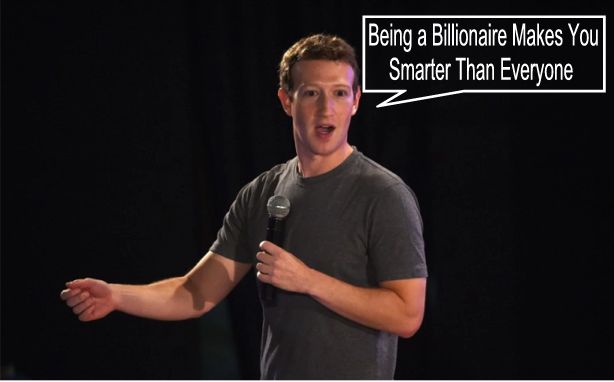
The fate of Zuckerberg’s “gift” to Newark schools - World Socialist Web Site

The fate of Zuckerberg’s “gift” to Newark schools - World Socialist Web Site:

The fate of Zuckerberg’s “gift” to Newark schools

Five years ago, Facebook billionaire Mark Zuckerberg decided to promote “school reform” by making an unprecedented $100 million gift to the single school system of Newark, New Jersey. A real media event, the announcement was made on a wildly popular national television program, “The Oprah Winfrey Show.” It was also timed as a one-two punch to coincide with the release of the documentary film Waiting for Superman, funded by school privatization advocates, which provided an idyllic portrait of charter schools.
The Zuckerberg gift was hailed, not just as a boon to the impoverished city, but as a turning point for public education in America. His philanthropic experiment aimed—with more than a touch of hubris—to show “how to flip a city and take it from very, very poor schools and poor performance of children to…a model of educational excellence,” in the words of Newark Democratic Mayor Cory Booker, a longtime advocate for dismantling public education and a major co-leader of the city initiative, together with New Jersey Republican Governor Chris Christie.
The recently released book “The Prize: Who’s in Charge of America’s Schools?” tells the story of the bequest and its failure to deliver on its promises. Dale Russakoff, a former Washington Post writer, has received much critical acclaim for her exposure of the mechanics of philanthropic school reform, the roles of Booker and Christie and following the lucrative money trail.
But it must be said that on the fundamental issue of the political and economic nature of the “school reform” movement, Russakoff waffles if not capitulates. Despite her critical approach, she is inconsistent, embracing “good” charters, agreeing with some attacks on teachers’ rights, and in general having no answer to the problem of getting more resources to schools and students. Nonetheless, despite its limitations, the book’s detailed account of the events of the past five years in Newark reveals much about the bipartisan attack on public education.
The book’s importance is in its depiction of the ill-fated nature of this political project—the legacy of the “prize” is the fact that one-third of the city’s children now attend charter schools, thousands of students were forced to transfer from their home schools, 1,000 teachers and more than 800 support staff were eliminated, neighborhood schools were destroyed and a system of “school choice” was imposed that determined children’s schools with algorithms. These attacks sparked “venomous” public outrage.
Booker’s goal—that Newark should become “the charter school capital of the nation”—has not been achieved. That statistical place belongs to New Orleans, with 91 percent in charter schools, followed by Detroit at 55 percent. Newark, with 30 percen charters, now joins many other US cities with a hybrid school system: District of Columbia, Flint, MI, Cleveland, OH, Gary, IN, Kansas City, MO, Philadelphia, PA and so on. It is noteworthy, however, that the Newark initiative made huge inroads and played a big role in the ongoing national drive for privatization of education.
As the WSWS predicted at the time, Zuckerberg’s “money will have no measurable impact on America’s crumbling infrastructure.” We cautioned, “The latter requires the application of a massive, coordinated social effort, involving the expenditure of trillions of dollars, which will be possible only as the result of radical wealth redistribution and changes in social policy.”
On this point, Russakoff’s book eloquently demonstrates the relationship The fate of Zuckerberg’s “gift” to Newark schools - World Socialist Web Site: