Latest News and Comment from Education

Tuesday, November 3, 2015

Better pay, more time to plan and one other thing teachers want from you - LA Times

Better pay, more time to plan and one other thing teachers want from you - LA Times:

Better pay, more time to plan and one other thing teachers want from you

Teaching
Amid a shortage of teachers in California, a new report calls for attracting more people to the profession by making teaching more prestigious. 
 (Anthony Russo / For The Times)


en Arielle Bourguignon started teaching at 24th Street Elementary in Jefferson Park about two years ago, she felt UCLA's education school had prepared her well.
But if it were up to her, she would change the perception of her profession. “Some people see us as glorified babysitters,” she said.
Jane Fung, a veteran, award-winning kindergarten teacher at Belvedere Elementary in East L.A., would change something else. “I would make sure that elementary and middle school teachers have a period off where they could either prep or collaborate,” she said. “It should be embedded into our profession."
Changing the teaching profession by making it more prestigious and giving teachers more planning time are just two proposals that are part of a new report from the Center for American Progress, a liberal think tank in Washington. The report, which was provided to The Times and is being released Tuesday, calls for a comprehensive overhaul of the pipeline for becoming a teacher and staying in the classroom.
The report, written by former Obama administration official and current CAP Executive Vice President Carmel Martin, CAP's teacher policy director Lisette Partelow and CAP's vice president of education policy Catherine Brown, points out different ways to make teaching a more desirable profession. It calls for making teacher preparation programs more selective, requiring licensing exams to be more relevant, increasing teacher salaries, paying better teachers more, making tenure more meaningful, and reorganizing the school day so that teachers have more time to plan.
The individual proposals have been suggested previously by various groups, but the report ties these ideas together. “We think there is this almost perfect storm that is about to hit the education sector in that there’s this broad consensus that we dramatically raise the bar,” Martin said in an interview. “We need to make some radical changes in how the profession is organized.”
The report comes amid a teacher shortage in California, though not in L.A. Last year, the California Department of Education estimated that the state would be short 21,482 Better pay, more time to plan and one other thing teachers want from you - LA Times:

Mike Klonsky's SmallTalk Blog: In response to war on unions, the CTU prepares its troops for battle

Mike Klonsky's SmallTalk Blog: In response to war on unions, the CTU prepares its troops for battle:

In response to war on unions, the CTU prepares its troops for battle

"Our plan will eliminate the big government unions entirely..." -- Scott Walker
Gov. Rauner's war on the unions, especially teacher unions, is modeled on his pal, Gov. Walker's war in Wisconsin. Walker's plans include preventing federal workers from collective bargaining, creating a national right-to-work law and eliminating the National Labor Relations Board. He has already succeeded in taking away teacher collective-bargaining rights.

Unlike Walker, Rauner is facing a Democrat-controlled legislature. So he is holding the state budget hostage in an effort to get Democrats to crush the CTU and other public employee unions in exchange for releasing badly-needed state funds. The question is, will Dem political bosses Madigan and Cullerton go along with the sociopath governor in exchange for a budget deal. So far they have resisted. With 2016 elections on the horizon, there are not many Democrats in Springfield who are ready to go back to their districts and face the wrath of union constituents and their families.

Capitol Fax's Rich Miller writes in Crain's:
The governor cannot win this fight in the pro-union, Democratic Mike Klonsky's SmallTalk Blog: In response to war on unions, the CTU prepares its troops for battle:

The Very Persistent Delusions of Billionaire-Edureformers | the becoming radical

The Very Persistent Delusions of Billionaire-Edureformers | the becoming radical:

The Very Persistent Delusions of Billionaire-Edureformers


Billionaire-Edureformer extraordinaire Bill Gates “sat in a gray easy chair” at Clemson University’s Tillman Hall (yes, that Tillman Hall) to pontificate once more on education reform.
Gates soothed the crowd by explaining “that if they get frustrated at the lack of change in American education policy, they should ‘go into a charter school’ to see quality change,”reported Nathaniel Cary.
And, on que, “Gates defended the Common Core,” and of course, “innovation,” before tossing out his old standby: “Improving the quality of teachers across the country is the only way to close the gap for all students, an initiative his foundation supports [read: ‘purchases’], he said.”
Delusion 1: Gates has financed and perpetuated the same accountability policies started in the early 1980s. If there is a “lack of change” in education (and there is), it is very much at Gates’s feet (or enormous wallet).
Delusion 2: School choice, including charter schools and public school choice, has resulted in outcomes that are indistinguishable from traditional public schools, as I detailed in 2010, and as the Center for Public Education concludes in this October 2015 analysis:
In general, we find that school choices work for some students sometimes, are worse 
The Very Persistent Delusions of Billionaire-Edureformers | the becoming radical:

Review of Journeys: Are @KIPP charter schools pathological? | Cloaking Inequity

Review of Journeys: Are @KIPP charter schools pathological? | Cloaking Inequity:

Review of Journeys: Are @KIPP charter schools pathological?


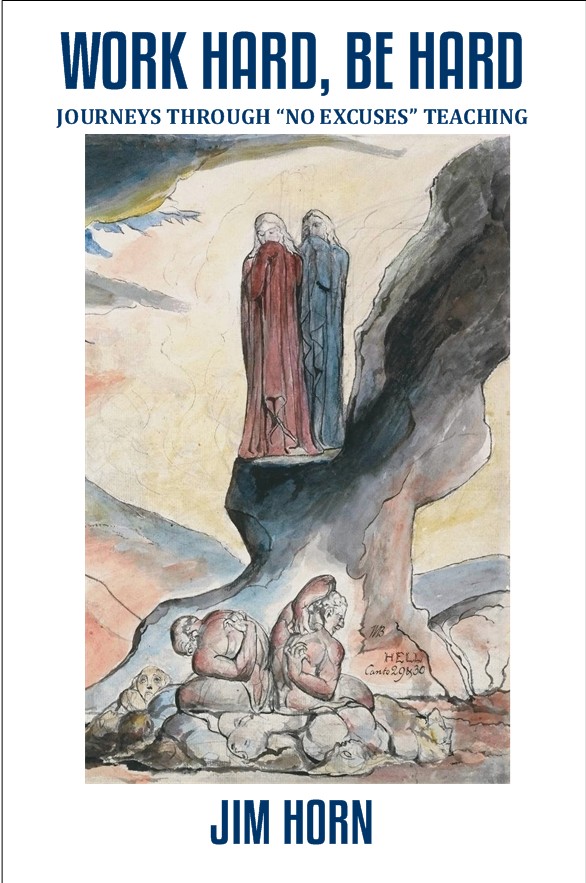
Are @KIPP charter schools pathological? Jim Horn et al. will soon publish a new book entitled Work Hard, Be Hard: Journeys Through “No Excuses” Teaching. The following is a review based on the advance copy that I received.
jkh_mfa_3-12-11__3Jim Horn et al. have collected important perspectives from current and former Knowledge is Power Program (KIPP) teachers in a new book entitled Work Hard, Be Hard: Journeys Through No Excuse Teaching. The KIPP corporate charter school chain of schools has received hundreds of millions of dollars in corporate, local, state and federal dollars since its inception in 1994. The KIPP charter chain was started by Mike Feinberg (See Frank Convo with KIPP’s Mike Feinberg: Do you call BS?) and Dave Levin, Teach For America alums, have found ready allies in the corporate education reform movement— whose policies are focused on private control of public schools.
Since the KIPP charter chain is privately controlled, they have also restricted access and only allowed a select few outside research projects to enter their schools. Horn wrote in Journeys that he requested access to KIPP schools to expand his sample and was rejected by the charter chain. Sadly, this is not an isolated example of KIPP refusing to cooperate with researchers. I personally experienced the restrictive nature of KIPP schools to outside researchers. A few years ago, KIPP Austin relayed in conversations with a UT-Austin research team that they were having problems with BlackBE HARD K font blue sized student attrition. A colleague and myself set up a research design that protected their anonymity and we expressed our intent to publish the work. Then the KIPP program was featured on Oprah as an ideal location for Black students and the Austin campus of the KIPP charter chain backed out of the research project. That sequestering experience inspired a peer reviewed research study independent of KIPP Austin published by the Berkeley Review of Education examining the attrition of Black students out of KIPP and other charter schools. We found that charters in Texas often had double and triple the attrition rates of traditional urban public school districts. In fact, Cloaking Inequity, my education policy and social justice blog, was first begun to address the KIPP public relations machine that respond to the black student attrition study. In their press releases, KIPP Review of Journeys: Are @KIPP charter schools pathological? | Cloaking Inequity:

Possible candidates emerge in LAUSD superintendent search | 89.3 KPCC

Possible candidates emerge in LAUSD superintendent search | 89.3 KPCC:

Possible candidates emerge in LAUSD superintendent search


The search for Los Angeles Unified’s next superintendent enters a new phase this month as recruiters reach out across the country to approach qualified candidates.
After the LAUSD’s school board decides on the type of candidates it wants to interview, the search firm it hired will begin calling people who could be a good fit to run the second largest school district in the nation.
Although recruiters for the firm Hazard, Young, Attea and Associates won't reach full tilt for several more weeks, there are already names of potential candidates floating among those who have active interest in the search — and they have opinions on the kind of leader the district should seek.
“They need to find a person who is tough, and compassionate, who is fiscally responsible,” said former Los Angeles County Supervisor Zev Yaroslavsky.
That’s the reputation Yaroslavsky himself earned in nearly 40 years in elective office. So does he want to be the next LAUSD superintendent as some have suggested?
He laughed. “I have not gotten a call from a recruiter. I’m in a new phase of my life and very happy about it,” said Yaroslavsky, who stepped down as county supervisor last year and has his own public policy institute.
Yaroslavsky said he gave LAUSD the names of several potential candidates when the school district asked him for help. He wouldn’t say which names he gave them.
But former Fountain Valley superintendent Marc Ecker did share his short list.
“Mike Hanson from Fresno Unified School District, another very successful superintendent. There’s a new superintendent in Oakland, although he’s only been there a couple of years,” he said.
Also on Ecker's list are the school superintendents in Pomona, Long Beach, and Fremont in Northern California. Ecker’s opinion has weight because he’s a partner with Leadership Associates, a large search firm that bid on but lost out on a contract two months ago to search for LAUSD's next superintendent.
Ecker said if he was running the search, he’d call his friend, San Francisco schools superintendent Richard Carranza, one of the rising stars in California public schools.
“Richard is an extremely dynamic individual, he’s extremely bright. He’s the superintendent of a large urban school district, L.A. Unified is a large urban school district. And Richard Carranza is a Latino,” Ecker said.
But does Carranza even want to be LAUSD superintendent?
“I’m so busy doing the work I’m doing in San Francisco that, you know, I haven’t even thought about that,” Carranza said.
Since his appointment in 2012, Carranza said San Francisco schools have improved academically, and now parents are choosing his district’s traditional schools over charters and private schools.
That is a situation that LAUSD would like to be in, given dropping enrollment and the challenge facing the district from charter school advocates.
People from LAUSD who he would not name talked to Carranza about the superintendent search at a conference in Long Beach last month. He said they told him “just how important they saw the leadership of the district, how important they thought it was going to be to have somebody come into the district who is willing to make a commitment to be in the district for the long haul.”
If Carranza and any of the others do decide to submit their resumes, the school Possible candidates emerge in LAUSD superintendent search | 89.3 KPCC:

Campaign Finance Violations will follow Bronin (Win or Lose) - Wait What?

Campaign Finance Violations will follow Bronin (Win or Lose) - Wait What?:

Campaign Finance Violations will follow Bronin (Win or Lose)


Call it Pay-to-Play or Play and Pay…
Greenwich native and Hartford mayoral wannabee Luke Bronin has not only run the most expensive mayoral campaign in Connecticut history, but his campaign that has made a mockery of Connecticut’s Campaign Finance Laws.
Win or lose, Luke Bronin will be facing the State Elections Enforcement Commission to address his significant and far-reaching violations of the State’s laws about who can donate and how campaign donation’s must be reported.
As part of his unprecedented effort to buy the Hartford Mayor’s Office, Bronin and his political operation violated numerous provisions of the Connecticut’s election laws including the failure to properly disclose contributions from lobbyists and from companies and individuals who have contracts with the City of Hartford.
As Bronin’s campaign finance reports indicate, his campaign failed to accurately identify more than 80 percent of the lobbyists who donated to his campaign and well over 100 individuals who have contracts with the City of Hartford.
The reports suggest that Bonin and his campaign have also violated even more significant provisions of the law.
Any issues that have not already been raised in complaints to the State Elections Enforcement Commission will be included in a wrap-up complaint that will be filed with the state authority in the next couple of days.
Interestingly, while the breadth of campaign violations are obvious, the Hartford Court chose not to cover the issue at all.
The following are some of the Wait, What? posts about Bronin’s campaign, others can be found on the Blog;
Campaign Finance Violations will follow Bronin (Win or Lose) - Wait What?:

This Week In Education: Campaign 2016: Standalone Education PACs - Is It Time?

This Week In Education: Campaign 2016: Standalone Education PACs - Is It Time?:

Campaign 2016: Standalone Education PACs - Is It Time?


I had the chance to chat for a few minutes yesterday afternoon with Naveed Amalfard, one of the co-founders of America's Teachers whose efforts have been written up recently in the LA Times among other places.
Describing the effort as a "a political startup," Amalfard laughs when asked and says "No, this is not a stunt." The organization is building a list of supporters, tolerating unsolicited queries like mine, and building out as much as it can given its two main heads are both still fulltime teachers. 
Funders aren't disclosed, but the organization's supporters include former DNC head Howard Dean and former Green Dot head Steve Barr.  The ultimate goal is to raise $1-2 million this cycle, says Amalfard.  According to this recent LA Times article, they've raised much less than that so far.
The question that everyone seems to want to know, says Amafard, is which side they're on. "I get asked this all the time. We take money from all sides."  But folks aren't entirely convinced, he says. They keep asking. "I know that it's literally unbelievable for some people, but we are not a proxy for anyone."
To be sure, the organization has picked three priorities (college costs, UPK, and the DREAM Act) that sidestep hot-button education reform items. "Let's solve these three issues first," he says. 
Meantime, the organization is legally prohibited from contact with the Clinton campaign it supports. He doesn't know if the campaign is even aware of its existence. He just wants his candidate to make education a central part of her agenda. A voter pledge drive is coming up later this month. Their inspirations are Democratic strategists David Plouffe and David Axelrod, according to Amalfard.
Other inspirations might be Lawrence Lessig, whose recently-shuttered presidential campaign was largely a vehicle to raise issues surrounding campaign finance, and DFER, the reform-minded Democratic organization created to use campaign contributions and other forms of political advocacy to pressure candidates. (Is there a PAC associated with the Badass Teachers, or with Diane Ravitch's NEPC, or United Opt Out? ) This Week In Education: Campaign 2016: Standalone Education PACs - Is It Time?:


Video: The Constitution and School Choice - Yahoo News

Video: The Constitution and School Choice - Yahoo News:

Video: The Constitution and School Choice


What do the U.S. and Pennsylvania Constitutions say about school choice, teacher tenure, standardized testing, and more? The National Constitution Center hosted three events on November 2 exploring these questions.
View photo
.
education_436
If you would like to watch a video replay of the discussions, here are links to video along with a description of each event.

Event One: Education in Philadelphia
Mark Gleason of the Philadelphia School Partnership, Deborah Gordon Klehr of the Education Law Center, and Ina Lipman of the Children’s Scholarship Fund Philadelphia examine the state of Philadelphia public education, what an “equal education” in Philadelphia would look like, and their specific proposals for getting there. They also explain what, if anything, the Pennsylvania state constitution says about these questions, and how state government interacts with local government in setting education policy. Kristen Graham, education reporter at the Philadelphia Inquirer, moderates.
Event Two: A Perspective from the Field
The keynote presentation features Dr. William R. Hite, Jr., Superintendent of the School District of Philadelphia, who offers his perspective on the issues facing Philadelphia schools.
Event Three: Liberty and Equality in American Education
James Finberg of Altshuler Berzon and Joshua Lipshutz of Gibson Dunn—two attorneys involved in Vergara v. California, a landmark dispute over the legality of teacher retention policies—present the best arguments on both sides and discuss what’s next in the case. They also explain what the U.S. Constitution and major Supreme Court cases like Brown v. Board of Education, San Antonio Independent School District v. Rodriguez and Parents Involved in Community Schools v. Seattle School District No. 1 say about education and our national debates. Jeffrey Rosen, president and CEO of the Center, moderates.


Video: The Constitution and School Choice - Yahoo News:

Bill Gates spent a fortune to build it. Now a Florida school system is getting rid of it. - The Washington Post

Bill Gates spent a fortune to build it. Now a Florida school system is getting rid of it. - The Washington Post:

Bill Gates spent a fortune to build it. Now a Florida school system is getting rid of it.


Here we go again. Another Bill Gates-funded education reform project, starting with mountains of cash and sky-high promises, is crashing to Earth.
This time it’s the Empowering Effective Teachers, an educator evaluation program in Hillsborough County, Florida, which was developed in 2009 with major financial backing from the Bill & Melinda Gates Foundation. A total of more than $180 million has been spent on the project since then  — with Gates initially promising some $100 million of it — but now, the district, one of the largest in the country, is ending the program.
Why?
Under the system, 40 percent of a teacher’s evaluation would be based on student standardized test scores and the rest by observation from “peer evaluators.” It turned out that costs to maintain the program unexpectedly rose, forcing the district to spend millions of dollars more than it expected to spend. Furthermore, initial support among teachers waned, with teachers saying that they don’t think it accurately evaluated their effectiveness and that they could be too easily fired.
Now the new superintendent of schools in Hillsborough, Jeff Eakins, said in a missive sent to the evaluators and mentors  that he is moving to a different evaluation system,  according to this story in the Tampa Bay Times.  It says:
Unlike the complex system of evaluations and teacher encouragement that cost more than $100 million to develop and would have cost an estimated $52 million a year to sustain, Hillsborough will likely move to a structure that has the strongest teachers helping others at their schools.
Eakins said he envisions a new program featuring less judgmental “non-evaluative feedback” from colleagues and more “job-embedded professional development,” which is training undertaken in the classroom during the teacher work day rather than in special sessions requiring time away from school. He said in his letter that these elements were supported by “the latest research.”
Gates, the biggest education philanthropist in the country, has been through this before.
In 2000, he began investing in education reform through his foundation. By Bill Gates spent a fortune to build it. Now a Florida school system is getting rid of it. - The Washington Post:


Colorado School District Immersed In Political Turmoil Amid Recall

Colorado School District Immersed In Political Turmoil Amid Recall:

Colorado School District Immersed In Political Turmoil Amid Recall

"I think we are a harbinger of education reform, what can persist and succeed and what cannot."

<span class='image-component__caption' itemprop="caption">Protesting students Adriana Gonzales, right, and Andrea Colmenero march against a Jefferson County School Board proposal to emphasize patriotism and downplay civil unrest in the teaching of U.S. history on Monday, Sept. 29, 2014. (AP Photo/Brennan Linsley)</span>
Protesting students Adriana Gonzales, right, and Andrea Colmenero march against a Jefferson County School Board proposal to emphasize patriotism and downplay civil unrest in the teaching of U.S. history on Monday, Sept. 29, 2014. (AP Photo/Brennan Linsley)


DENVER (AP) -- Angry parents and educators in a Colorado battleground county are trying to recall three conservative school board members Tuesday, citing several complaints, including a change in how teachers get pay raises and talk of reviewing the history curriculum to promote patriotism.
The idea prompted students to walk out of class and protest in the streets last year. Teachers staged sick-outs, the Jefferson County district claimed.
The board members facing recalls cruised to victory in 2013, but their arrival quickly caused a stir. The superintendent of the school district, Cindy Stevenson, left days after their election, saying she felt disrespected by them and couldn't do her job anymore.
Then came a decision to tie teacher pay increases to performance rather than seniority, and accusations that the three conservatives on the five-member board were meeting privately before scheduled meetings. Ken Witt, Julie Williams and John Newkirk have repeatedly denied holding secret meetings.
While school-board spats typically are confined locally, these recall efforts have attracted spending from special-interest groups in a battle over what education reform should look like. It's no surprise the setting for that question is Jefferson County, a politically diverse swing district where rural, mountain, and urban communities mingle.
"I think we are a harbinger of education reform, what can persist and succeed and what cannot," said Witt, the board's president.
Jefferson County, which has Colorado's second largest school district, drew national attention when the conservative-led majority considered reviewing a new Advanced Placement U.S. history curriculum to emphasize patriotism.
Ultimately, the board didn't do anything with the AP history class, an elective course that has been criticized by the Republican National Committee and the Texas State Board of Education. The course gives greater attention to the history of North America and its native people before colonization and their clashes with Europeans.
But the board members insist it's their duty to periodically look at curriculum, and that the Colorado School District Immersed In Political Turmoil Amid Recall:

Here’s why $7 billion didn’t help America’s worst schools - POLITICO

Here’s why $7 billion didn’t help America’s worst schools - POLITICO:

Here’s why $7 billion didn’t help America’s worst schools

What two troubled high schools tell us about why the government got so little for so much money.


In 2009, the Obama administration saw a chance to tackle a problem that had bedeviled educators for decades.
“Our goal is to turn around the 5,000 lowest-performing schools over the next five years, as part of our overall strategy for dramatically reducing the dropout rate, improving high school graduation rates and increasing the number of students who graduate prepared for success in college and the workplace,” said Arne Duncan, the administration’s new secretary of education in August of that year.


 The administration pumped $3 billion of economic stimulus money into the School Improvement Grants program. Six years later, the program has failed to produce the dramatic results the administration had hoped to achieve. About two thirds of SIG schools nationwide made modest or no gains — not much different from similarly bad schools that got no money at all. About a third of the schools actually got worse.

Even Duncan acknowledges the progress has been “incremental.”
School turnaround is “hard, but it’s not rocket science,” said Sarah Yatsko, a senior research analyst at the Center on Reinventing Public Education. “We know a lot about what an effective turnaround strategy looks like.”
But then why has the SIG program, created in 2007 under President George W. Bush, produced such uneven results at a total cost of about $7 billion?
A comparison by POLITICO of two troubled high schools — one in Miami and one in Chicago — both of which received millions in SIG funds, both of which followed a similar turnaround strategy, reveals that education officials at the federal, state and local levels paid too little attention to a key variable for success. One school made impressive gains, rebounding in three years from an “F” rating to a “B.” At the other, less than 10 percent of juniors are proficient at reading, math and science — the same level as before the grant.
The difference between the schools was in their readiness to make use of the sudden infusion of money. In Miami, school district officials had prepared for the grants. They had the support of teachers, unions and parents. In Chicago, where teachers fought the program and officials changed almost yearly, schools churned through millions of dollars but didn’t budge the needle.
Now, the Department of Education is preparing for another multi-million grant competition. But interviews by POLITICO with nearly two dozen analysts, teachers, administrators and policymakers, who have studied the performance of SIG schools, raise questions about whether any of the changes ordered by the Department of Education or Congress will actually yield better results for the
Read more: http://www.politico.com/story/2015/11/failing-schools-education-white-house-214332#ixzz3qRZ5jkoF


Gulen charter school network: Overseas Junkets And Charter Schools – Part Two

Politicians, Overseas Junkets And Charter Schools – Part Two:

Politicians, Overseas Junkets And Charter Schools – Part Two


Readers of Friday’s edition of USA Today found out about an issue thatPlunderbund readers have known about for some time.  It’s nice to know that more folks are now in the loop.
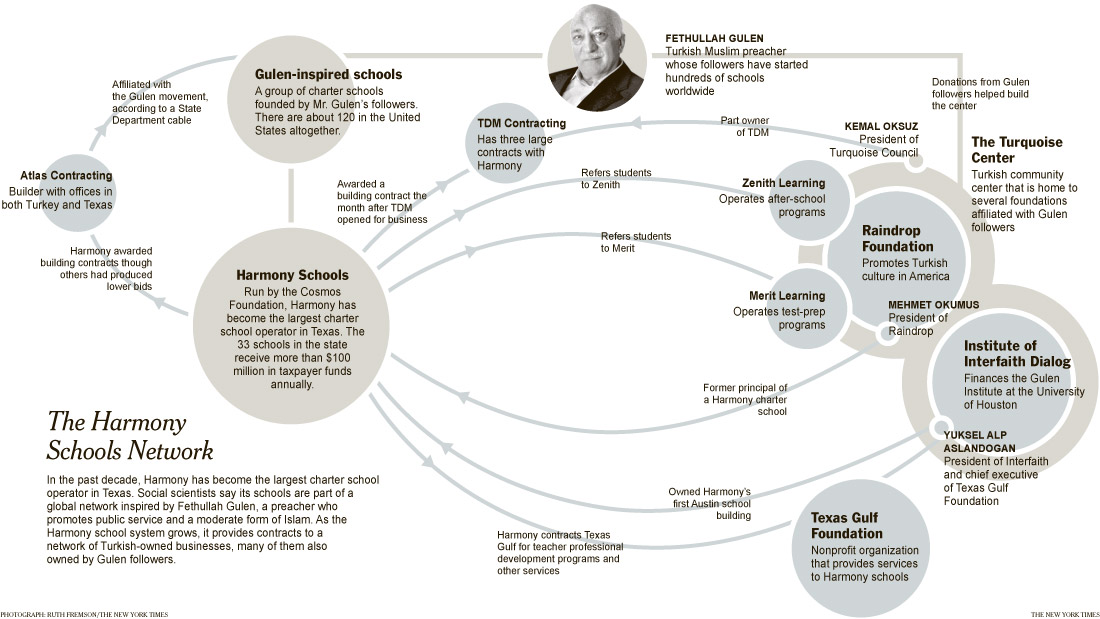
The story,   “Turkish Faith Movement Secretly Funded 200 Trips for Lawmakers and Staff,” details the efforts of the Gulen Movement to provide Members of Congress and their staffs with free trips to Turkey that are of questionable legality, based upon U.S. House Ethics Committee rules.  The term Gulen Movement  describes a number of organizations that follow the teachings of Fethullah Gulen, an Islamic cleric and Turkish exile who lives in relative seclusion in the Pocono Mountains of Pennsylvania.
An examination of the USA Today article offers some interesting tidbits of information. In addition to the “secretly funded” trips in the headline, readers were told about “$800,000 in free travel for lawmakers,” “the movement’s … funding hundreds of Islamic schools, and think tanks and media outlets,” and that at least one Gulenist organization “provided gifts in the form of impermissible travel expenses to congressional travelers in violation of House rules and regulations.”
If all of this wasn’t enough, there is this:
“The movement has founded hundreds of charter schools across the United States  and across the world, has its own media organizations, and was deeply entrenched with the Turkish regime until a falling out two years ago. That led President Recep Tayyip Erdogan to declare Gulen was running “a parallel state” inside the country with the intent of undermining the government.”
Whether or not Fethullah Gulen is indeed running a parallel government in his native land, there seems to be no question that he and his followers are establishing a “parallel” system of “public” charter schools in the United States, with one source listing 139 schools in operation in 2014.  Among these charter schools are 19 in Ohio that are administered under the Horizon and Noble Academy brands.
While the extent of the Gulen charter school network is relatively well-known, the USA Today article does shed more light on the proclivity of such allied groups to influence federal public policy by inviting so many lawmakers to Politicians, Overseas Junkets And Charter Schools – Part Two:

A Change in Leadership on K-12 for the Gates Foundation, But Not Direction - Inside Philanthropy

A Change in Leadership on K-12 for the Gates Foundation, But Not Direction - Inside Philanthropy: Fundraising Intelligence - Inside Philanthropy:

A Change in Leadership on K-12 for the Gates Foundation, But Not Direction


The U.S. Department of Education is not the only big player in K-12 policy undergoing a change of leadership.
Vicki Phillips announced recently that she would step down from her position as head of the K-12 program at the Bill and Melinda Gates Foundation at the end of 2015. Phillips has been with the funder since 2007, occupying one of the most powerful positions in education philanthropy. Her appointment marked the funder's shift away from a focus on smaller high schools to an emphasis on instruction and teacher quality.
"The baton was passed to me eight years ago," Phillips wrote in a letter announcing her resignation. "I have been honored to run my leg, and I am ready to hand the baton forward to the next leader." Phillips' announcement comes only a few weeks after Arne Duncan announced his resignation as U.S. Secretary of Education. Duncan, appointed to the post by President Obama in 2009, plans to return to Chicago to spend more time with his family.
Tasked with identifying a strategic lever for improving U.S. education, Phillips and her team at Gates concluded that despite a mountain of evidence that teachers played the most crucial in-school role in driving student achievement, little research existed on how to identify the best teachers. That led to the Gates-funded Measures of Effective Teaching (MET) project, a multi-year study that used videotaped observations, surveys, and extensive academic data to identify the measures most associated with effective teaching. Since beginning MET in 2009, Gates has spent an estimated $900 million on grantmaking in the area of teacher effectiveness, according to Education Week.
It was under Phillips' leadership that Gates embarked on another ambitious endeavor: underwriting the development of the Common Core State Standards in reading and math, which have since been adopted by more than 40 states and the District of Columbia.
Both initiatives have attracted their share of controversy. Teachers' unions opposed tying standardized test scores to teacher evaluations, while the A Change in Leadership on K-12 for the Gates Foundation, But Not Direction - Inside Philanthropy: Fundraising Intelligence - Inside Philanthropy:

Germany’s Approach to School Reform: Standards and Testing Without Any Penalties - The Atlantic

Germany’s Approach to School Reform: Standards and Testing Without Any Penalties - The Atlantic:

The Great German School Turnaround

The European country managed to raise test scores while reducing educational inequality. But with the dramatic influx of migrants, will its success last?


To make a good national school system, a country needs to help its most disadvantaged students. So says Andreas Schleicher, the man in charge of the most authoritative international test. “It’s the capacity of those systems to invest in those students from disadvantaged backgrounds” says Schleicher, the education director for the OECD, which administers the triennial Programme for International Student Assessment (PISA) among its roughly three dozen member countries. “What those education systems do is attract the best teachers and best principals to most challenging classrooms and schools.” Moreover, he notes, “reducing inequality is not just a social imperative but an economic imperative.”
While U.S. students have scored in the bottom half of nations on the PISA and have made no significant gains over 10 years, Germany—Schleicher’s home country—has managed to increase test scores while decreasing inequality in its school system. In fact, Germany was one of just three countries surveyed by the OECD that reduced inequality while raising math scores between 2003 to 2012, the other two being Mexico and Turkey.
And Germany has, notably, made these strides without closing or threatening to cut funding from its poorest-performing schools—a tactic used by the United States during the same time period. Germany now ranks 20th for math proficiency; the U.S., meanwhile, is 49th, just behind Turkey. (Some critics question the validity of PISA scores as a tool for gauging proficiency, but they offer the only reliable and consistent means of comparing achievement across countries.)
Germany’s reform efforts included the creation of national standards and standards-based tests for students in grades three and eight, which sounds much like the U.S. approach. But unlike the U.S., Germany doesn’t penalize schools for poor performance, nor does it publicize school-level test scores. Experts say its focus instead on providing school-based support and monitoring and targeting Germany’s Approach to School Reform: Standards and Testing Without Any Penalties - The Atlantic:

Jesse Hagopian: Rolling back the testing mania?

Rolling back the testing mania? | SocialistWorker.org:

Rolling back the testing mania?


In an article written for Diane Ravitch's blogJesse Hagopian, a teacher at Garfield High School in Seattle and editor of More Than a Score: The New Uprising Against High-Stakes Testing, responds to the Obama administration's recent announcement that "unnecessary testing" has gotten out of control.
Still from Barack Obama's video statement on over-testing  (White House)Still from Barack Obama's video statement on over-testing (White House)
IN A stunning turn of events, President Barack Obama announced that "unnecessary testing" is "consuming too much instructional time" and creating "undue stress for educators and students." Rarely has a president so thoroughly repudiated such a defining aspect of his own public education policy. In a three-minute video announcing this reversal, Obama cracks jokes about how silly it is to over-test students, and recalls that the teachers who had the most influence on his life were not the ones who prepared him best for his standardized tests. Perhaps Obama hopes we will forget it was his own former Education Secretary Arne Duncan who radically reorganized America's education system around the almighty test score.
Obama's statement comes in the wake of yet another study revealing the overwhelming number of standardized tests children are forced to take: The average student today is subjected to 112 standardized tests between preschool and high school graduation. Because it's what we have rewarded and required, America's education system has become completely fixated on how well students perform on tests. Further, the highest concentration of these tests are in schools serving low-income students and students of color.
To be sure, Obama isn't the only president to menace the education system with high-stakes exams. This thoroughly bipartisan project was enabled by George W. Bush's No Child Left Behind Act. NCLB became law in 2002 with overwhelming support from Republicans and Democrats alike.
Obama, instead of erasing the wrong answer choice of NCLB's test-and-punish policy, decided to press ahead. Like a student filling in her entire Scantron sheet with answer choice "D," Duncan's erroneous Race to the Top initiative was the incorrect solution for students. It did, however, make four corporations rich by assigning their tests as the law of the land. Desperate school districts, ravaged by the Great Recession, eagerly sought Race to the Top points by promulgating more and more tests.
The cry of the parents, students, educators and other stewards of education was loud and sorrowful as Obama moved to reduce the intellectual and emotional process of teaching and learning to a single score--one that would be used to close schools, fire teachers and deny students promotion or graduation. Take, for instance, this essay penned by Diane Ravitch in 2010. She countered Obama's claim that Race to the Top was his most important accomplishment:
[RttT] will make the current standardized tests of basic skills more important than ever, and even more time and resources will be devoted to raising scores on these tests. The curriculum will be narrowed even more than under George W. Bush's No Child Left Behind, because of the link between wages and scores. There will be even less time available for the arts, science, history, civics, foreign language, even physical education. Teachers will teach to the test.
- - - - - - - - - - - - - - - -
WHAT RAVITCH warned us about has come to pass, and Obama has now admitted as much without fully admitting to his direct role in promoting the tests. Duncan and Obama, with funding from the Gates Foundation, coupled Race to the Top with Common Core State Standards and the high-stakes tests that came shrink wrapped with them. Together, these policies have orchestrated a radical seizure of power by what I call the Rolling back the testing mania? | SocialistWorker.org: