Latest News and Comment from Education

Tuesday, July 7, 2015

GUEST: A gifted city teacher says Cerf must never come to Newark | Bob Braun's Ledger

GUEST: A gifted city teacher says Cerf must never come to Newark | Bob Braun's Ledger:

GUEST: A gifted city teacher says Cerf must never come to Newark


By JONATHAN ALSTON
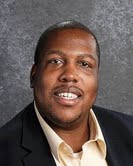
Jonathan Alston
Chris Cerf Must Not Become the Next Superintendent of Newark’s Public Schools: He has Already Exploited Us Enough
(Editor’s Note: Mr. Alston calls this the “polite” version of his incomparable analysis of what is going on in the Newark schools. He has reserved what he calls an “emotionally honest” version for his own blog, The Newark Teacher,  at http://newarkteacher.blogspot.com/2015/07/chris-cerf-must-not-be-next.html.
I respect that–but want my readers to know I wanted to publish the “emotionally honest” version and would never censor this brilliant voice from the Newark community.)
 Fanon realized that colonialism was a crime scene with evidence everywhere, admission nowhere, and the “authorities” were guilty parties.
- Lewis Gordon, @lewgord
Dear NJ State Board of Education:
Part I
The State Board of Education should unflinchingly reject Governor Chris Christie’s nominee for the next Superintendent of Newark’s public schools. Former NJ Commissioner of Education Chris Cerf has a history of underfunding, dismantling, and making money off of the very institution he now wants to now lead.
Like a parody of a shifty, racist politician from the 1950s, Chris Christie went from blatantly saying that he would not let Newark govern itself, to promoting an ugly, dishonest process that will ensure that -on education – Newark will never govern itself. If the State Board of Education is even mildly sincere about the importance of local control, then it must today work directly with the locally elected school board to select Newark’s next school leader.
In response to growing media coverage of wide spread protests and anger, Governor Chris Christie removed Cami Anderson as Superintendent of Newark’s public schools and started a commission to pretend that he was interested in local control. His commission is rigged to make Newark into a New Orleans style charter district. If the governor cared about starting a process to lead to local control, he would have suggested educators on his commission instead of making the committee’s deciding majority business people and charter school proponents.
If the governor cared at all about our children, he would have nominated an educator to be the next superintendent of Newark’s public schools. Instead of an educator, Chris Christie nominated a questionable business man, better known for GUEST: A gifted city teacher says Cerf must never come to Newark | Bob Braun's Ledger:

Marriage ruling may boost school climate for LGBT families and students | EdSource

Marriage ruling may boost school climate for LGBT families and students | EdSource:

Marriage ruling may boost school climate for LGBT families and students


Stick figure drawings of families
When the U.S. Supreme Court issued a major civil rights decision on marriage in Loving v. Virginia in 1967, striking down a state law banning interracial marriage, Alameda Unified teacher Gene Kahane was a 3rd-grader in Richmond, California, and didn’t hear about it. News of social change travels faster and farther now – and almost immediately into the classroom.
Across California and the nation, educators say the Supreme Court decision legalizing same-sex marriage stands to improve, over time, the way gay and lesbian people are talked about at schools, both in the hallways and in the curriculum.
“That decision was heard everywhere,” said Kahane, an Alameda Unified School District high school English teacher and district-identified ally for gay youth.
“I think we’ve crossed a threshold toward acceptance and welcome,” said Todd Savage, president of the National Association of School Psychologists.
Savage and other educators said the ruling will give new momentum to efforts to make schools safer and more inclusive for gay, lesbian and transgender students, as well as the more than 200,000 schoolchildren nationwide – including at least 30,000 in California – who have same-sex parents.
Sara Train, coordinator of the Los Angeles Gay & Lesbian Center’s Project Spin, which works with the Los Angeles Unified School District to end bullying, said the ruling is “a path to equality” for gay and lesbian people and “a validation” that will affect school culture.
“I think we’ve crossed a threshold toward acceptance and welcome,” said Todd Savage, president of the National Association of School Psychologists.
She referenced the words of Justice Anthony Kennedy in the June 26 Obergefell v. Hodges decision in favor of the right to marry for gay and lesbian couples. “They ask for equal dignity in the eyes of the law,” he wrote. “The Constitution grants them that right.”
And she praised the words of President Barack Obama, who called the ruling “a victory for the children whose families will now be recognized as equal to any other.” Obama referred to the struggles of gay, lesbian and transgender individuals who were able to “endure bullying and Marriage ruling may boost school climate for LGBT families and students | EdSource:

CURMUDGUCATION: Jeb's Ed Backers Revealed

CURMUDGUCATION: Jeb's Ed Backers Revealed:

Jeb's Ed Backers Revealed


Long-time observers of the reformster scene are familiar with the Foundation for Excellence in Education (FEE) the advocacy group that was, among other things, supposed to help Jeb Bush leverage his reformy career into a Presidential run.

At various times they have promoted specious arguments for testing, tried to use aging demographics to sell choice, jumped onthe honesty gap train to nowhere, held a regular reformster-palooza gatheration, and tried to harness fake-ish social media presences to tout the whole reformy package. They are a one stop shop for reformster baloney, sliced to whatever thickness you prefer.

One thing they have not previously done is actually admit where their funding comes from. Until now.

In an act that appears related to Jeb Bush's Candidature Data Dumpage, FEE has finally coughed up their donors list. And it is a revelation, a shock, a stunning surprise of-- well, actually, no. It's pretty much exactly who you'd guess would be backing the mess.

FEE's list now occupies a corner of their website. John Connor of NPR broke the list down to make it a little more searchable.

It is not an exact list in that donors are organized by ranges. So we know that Bloomberg donated somewhere between $1.2 million and $2.4 million, which is quite a margin of error. But it's still a chunk of change, either way.

Joining Bloomberg Philanthropies in the Over a Cool Million Club are these folks, a completely unsurprising list:

Walton Family Foundation (between $3.5 mill and over $6 mill)
B&M Gates (between $3 mill and over $5 mill)
Charles and Helen Schwab Foundation (between $1.6 mill and $3.25 mill)
News Corporation (between $1.5 mill and $3 mill)
GE Foundation (between $2.5 mill and over $3 mill)
Helmsley Trust (at least $2 mill)

The Might Have Hit a Million Club includes

The Broad Foundation
Jacqueline Hume Foundation
Robertson Foundation
Carnegie Corporation of New York
Kovner Foundation
The Arnold Foundation

Beyond those, we find Florida businesses and a fair sampling of folks who have a stake in the FEE mission, like McGraw Hill and Renaissance Learning.

FEE's website breaks things down by year, which helps create a picture of FEE's growth. The first reported year is 2007 (that's the same year that Bush's run as Florida's governor ended), and while Bloomberg was still one of the top donors, that was with a 
CURMUDGUCATION: Jeb's Ed Backers Revealed:


Obama administration: Education bills lack accountability - Yahoo News

Obama administration: Education bills lack accountability - Yahoo News:

Obama administration: Education bills lack accountability


WASHINGTON (AP) — The Obama administration said Monday it cannot support either the Senate or the House versions of bills being considered this week to update the Bush-era No Child Left Behind education law.
Cecilia Munoz, director of the White House Domestic Policy Council, says neither bill has sufficient accountability to ensure that all children get the resources they need to succeed. She, however, stopped short of saying President Barack Obama would veto the bipartisan Senate bill sponsored by Sen. Lamar Alexander, R-Tenn., and Sen. Patty Murray, D-Wash.
In a phone call with Munoz, Education Secretary Arne Duncan and reporters, Duncan called the House bill "a major step backwards for our nation and its children" and appealed for Republicans to strike a more bipartisan chord. The White House has previously threatened a veto on that legislation.
Emphasizing the need for congressional action on No Child Left Behind, Munoz and Duncan highlighted what they said were large achievement gaps between students at struggling schools and those at better performing elementary and middle schools. They released a White House report that said between students in the nation's lowest-performing 5-percent of schools and their peers in all other schools, there was a 31 percentage point gap in reaching grade-level proficiency in reading, and a 36-percentage point gap in math.
In the Senate bill, Munoz said: "There is a lot in this bipartisan bill that gives us a lot of hope." But, she said, she wants to see specific language in the Senate and House bills that would not only require that the lowest-performing 5-percent of schools in each state be identified, but that states and schools be compelled to have a plan to do something about it.
The Alexander-Murray bill would retain reading and math tests outlined in No Child Left Behind — but in a significant move, it shifts to the states decisions about how to use those tests to measure school performance. The House bill, sponsored by Rep. John Kline, R-Minn., also transfers more power to the states on accountability but has a school choice provision that would allow public money to follow low-income children to different public schools — something Democrats don't support.
The Senate is scheduled to begin debate on the Alexander-Murray bill on Tuesday. The full House is expected to take up the Kline measure on Wednesday.Obama administration: Education bills lack accountability - Yahoo News:

Principal: Stop blaming Common Core for problems in public education - The Washington Post

Principal: Stop blaming Common Core for problems in public education - The Washington Post:

Principal: Stop blaming Common Core for problems in public education


This is the tenth in a continuing series of letters between two award-winning school principals, one who likes the Common Core State Standards and the other who doesn’t. The debate over the Common Core State Standards has become so polarized that it is hard to get people who disagree to have reasonable conversations about it. The Hechinger Report, a nonprofit, independent news Web site focused on inequality and innovation in education, is hosting a conversation between Carol Burris of New York and Jayne Ellspermann of Florida (in a format that Education Week once used with Diane Ravitch and Deborah Meier as the authors).  The Report’s editors as well as both principals have given me permission to republish each letter.
Burris  served as principal of South Side High School in the Rockville Centre School District in New York for 15 years before recently retiring. In 2010, she was recognized by the School Administrators Association of New York State as their Outstanding Educator of the Year, and in 2013, she was recognized as the New York State High School Principal of the Year. Ellspermann is principal of West Port High School in Ocala, Florida.  She has served as a principal in elementary, middle, and high schools for the past 24 years and is the 2015 Principal of the Year for the National Association of Secondary School Principals. 
The first letter was written by Burris, a Core opponent, to Ellspermann, a Core supporter. Burris explained why she once liked the Core but changed her mind. Ellspermann’s reply letter explained why she thinks the  Core is helping schools in her district. In the third letter, Burris explains why she thinks Core testing hurts disadvantaged students. The fourth, by Ellspermann, says that critics should not blame the Common Core standards for bad implementation and she writes why she likes the English Language Arts emphasis on reading text rather than allowing students to rely on personal experience.
In the fifth letter, Burris asks Ellspermann why she thinks she needs the Core.In the sixth letter, Ellspermann responds by discussing why she opposes the opt-out movement and how the Core is working in her school.  In the seventh letter, Burris explains why she doesn’t think the Core will do for students what supporters say it will. The eighth letter, from Ellspermann, talks about why she believes all students should have the same standards. The ninth letter, from Burris, explained that she was taking early retirement because she no longer felt she could work well in a test-based system.
Here is the tenth letter in the series, from Ellspermann back to Burris:

Dear Carol,
Your recent letter identified the drawbacks of tying teacher evaluations to student performance on the Common Core-aligned tests. In order to receive Race to the Top funds, states agreed to tie student test results to teacher evaluations. An outcry from teachers and school administrators followed. You wrote in your last letter that the New York State legislature recently passed a bill that increased the impact of student test scores on teacher evaluations to 50 percent. The Florida legislature just passed a bill reducing the weight of Principal: Stop blaming Common Core for problems in public education - The Washington Post:

Principal: How I know something is wrong with Common Core standards and tests
This is the eleventh in a continuing series of letters between two award-winning school principals, one who likes the Common Core State Standards and the other who doesn’t. The debate over the Common Core State Standards has become so polarized that it is hard to get people who disagree to have reasonable conversations about it. The Hechinger Report, a nonprofit, independent news Web site focused on inequality and innovation in education, is hosting a conversation between Carol Burris of New York and Jayne Ellspermann of Florida (in a format that Education Week once used with Diane Ravitch and Deborah Meier as the authors).  The Report’s editors as well as both principals have given me permission to republish each letter.
Burris  served as principal of South Side High School in the Rockville Centre School District in New York for 15 years before recently retiring. In 2010, she was recognized by the School Administrators Association of New York State as their Outstanding Educator of the Year, and in 2013, she was recognized as the New York State High School Principal of the Year. Ellspermann is principal of West Port High School in Ocala, Florida.  She has served as a principal in elementary, middle, and high schools for the past 24 years and is the 2015 Principal of the Year for the National Association of Secondary School Principals. 
The first letter was written by Burris, a Core opponent, to Ellspermann, a Core supporter. Burris explained why she once liked the Core but changed her mind. Ellspermann’s reply letter explained why she thinks the  Core is helping schools in her district. In the third letter, Burris explains why she thinks Core testing hurts disadvantaged students. The fourth, by Ellspermann, says that critics should not blame the Common Core standards for bad implementation and she writes why she likes the English Language Arts emphasis on reading text rather than allowing students to rely on personal experience.
In the fifth letter, Burris asks Ellspermann why she thinks she needs the Core.In the sixth letter, Ellspermann responds by discussing why she opposes the opt-out movement and how the Core is working in her school.  In the seventh letter, Burris explains why she doesn’t think the Core will do for students what supporters say it will. The eighth letter, from Ellspermann, talks about why she believes all students should have the same standards. The ninth letter, from Burris, explained that she was taking early retirement because she no longer felt she could work well in a test-based system. The tenth letter, from Ellspermann, which you can read in the post below, talks about how much she and Burris have in common, and says the standards themselves are not the root of problems in education.
Here is the eleventh letter in the series, from Burris to Ellspermann, which first appeared on The Hechinger Report on July 2:

Dear Jayne,
I am writing this letter the day after my last graduation ceremony. The past week has been difficult—full of tearful goodbyes. Although I am certain that my decision to retire was the right one, leaving a school that I love so much has been very painful. But, as I said to the Class of 2015 in my address, quoting Winnie the Pooh—“how lucky I am to have something that makes saying goodbye so hard.”
Your last letter acknowledged our mutual concern about the evaluation of teachers by student test data. Even if it were a perfect measure, and it is far from perfect, the unintended consequences of using test scores in this manner would never be worth the price. Back in 1976, social scientist Donald Campbell predicted what would happen if standardized tests became high-stakes. He wrote, “When test scores become the goal of the teaching process, they both lose their value as indicators of educational status and distort the educational process in undesirable ways.” Certainly, that is a worry you and I share.
You asked what accountability system produces a bell curve in which teachers are measured against each other. It’s called the “VAM” — for value-added Principal: How I know something is wrong with Common Core standards and tests

Q&A: Post education reporter Lyndsey Layton pulls back the curtain on this week’s No Child Left Behind fight in Congress - The Washington Post

Q&A: Post education reporter Lyndsey Layton pulls back the curtain on this week’s No Child Left Behind fight in Congress - The Washington Post:

Q&A: Post education reporter Lyndsey Layton pulls back the curtain on this week’s No Child Left Behind fight in Congress


Both the House and Senate will consider major education bills this week. Lyndsey Layton covers national education issues for The Washington Post and understands the underlying issues as well as anyone. In the latest PostWorthy Q&A, conducted by email Monday night, she pulls back the curtain on key sticking points in negotiations, reflects on Arne Duncan’s legacy as Secretary of Education and previews last-minute efforts by conservatives to limit the further limit the federal role.

“Common Core” has become toxic in Republican politics. What might the GOP Congress do to curtail the Department of Education’s ability to advance or incentivize the initiative?
Actually, both the bipartisan bill in the Senate, written by Lamar Alexander (R) and Patty Murray (D), and the GOP House bill crafted by John Kline (R-Minn.) explicitly prohibit the Education secretary from having any influence over state academic standards. So it’s likely that whatever legislation makes it out of conference will include some language that prohibits the federal government from getting involved in academic standards.
Sign up for The Daily 202, The Washington Post’s new political tipsheet
What are the biggest differences between the House and Senate bills?
Both bills would transfer power over education decisions from the federal government to the states and local school districts, but the House version would go farther – to the point that Democrats, civil rights groups, teachers unions and the U.S. Chamber of Commerce fear it would hand too much authority to states. They argue that the federal government should maintain some kind of oversight over local schools, otherwise some states will ignore the needs of the kids who are the hardest (and most costly) to educate: poor kids, kids with disabilities and English language learners.
In general, how much power is the federal Education Department poised to lose under the legislation now being considered?
Arne Duncan became arguably the most influential education secretary since the job was created in 1979 by exploiting two levers. He got $4.3 billion from Congress – Recovery Act money designed to keep the economy afloat after the 2008 recession – and created Race to the Top, a national contest that required cash-starved states to adopt his education policies just in order to compete for a chance at a grant. Then, he saw that states were struggling mightily under No Child Left Behind and, while Congress dithered on a rewrite, Duncan handed out conditional waivers that excused states from the law – as long as they adopted his favored policies. By doing that, Duncan was able to get 43 states and D.C. to adopt the Common Core State Standards, to require that states evaluate their teachers based in part on student test scores, and to dictate how states should try to improve their worst performing schools, among other things.
It’s a remarkable record, but now the pendulum is swinging back.
Under the legislation that is now under debate, much of that power evaporates. The federal Department of Education would not be able to attach conditions to waivers, nor would it be able to influence state decisions about academic standards, teacher evaluation systems or what to do about their Q&A: Post education reporter Lyndsey Layton pulls back the curtain on this week’s No Child Left Behind fight in Congress - The Washington Post:

'Every Child Achieves' Won't Fix The Fed-Ed Farce

'Every Child Achieves' Won't Fix The Fed-Ed Farce:

‘Every Child Achieves’ Won’t Fix The Fed-Ed Farce

Bills to rewrite No Child Left Behind put Republicans in a bad political position and expand the federal role in education.


Tuesday, the House and Senate are scheduled to take up separate bills to replace No Child Left Behind (NCLB). While out here in the hinterlands normal people are calling for an end to know-nothing bureaucrats telling local schools how to train teachers despite zero scientifically valid evidence about what improves teaching, up in The Capitol our rulers still believe themselves uniquely qualified to forge boldly where research and common sense has never gone before.
To wit: Sen. Lamar Alexander attempting to slather the “bipartisan” (i.e. crappy as a county fair port-a-potty) Senate bill he’s coauthored with a whole lotta pig lipstick. At 792 pages, Alexander’s “Every Child Achieves Act” (ECAA) is 122 longer than NCLB. Apparently, coauthoring a bill that is a fifth longer than the law it’s intended to replace means “more state and local control” to Alexander.
Democrats are happy enough with the bill to give Alexander enough votes to pass it, so it’s conservative Republicans he’s got to woo to get this monstrosity to President Obama. So he’s hitting all the notes they want to hear—except they’re false notes. Here’s a big one: “The bill expressly prohibits the federal government from mandating or incentivizing any particular set of academic standards, such as Common Core.” While some portions of Alexander’s bill do technically prohibit the administrative state from pushing Common Core, in others it appears to give educrats precisely this authority, as a bill analysis from the American Principles Project details. That’s part of the problem with an 800-page bill: It’s easy for the thing to contradict itself.

Every Child Achieves What the National School Board Says

Alexander also claims his proposal will mean “fewer tests for our students.” That’s just plain false. (Also, please never tag my kids with the collective “our.” They’re not yours or anyone else’s, ever, no matter what Melissa Harris-Perry says.) He’s sidestepping here the truth that his bill erases not one currently mandated federal test, despite theunprecedented populist pressure for a massive reduction in federal test-twisting.
What it does do is reduce federal sanctions for state noncompliance, which Alexander extrapolates will mean less pressure at the local level, thus potentially translating into fewer pre-tests. In other words, while he apparently doesn’t believe in the negative unintended consequences of central planning, a well-established reality, he’s willing to tout potential, accidental positive consequences as a sure thing. Further, the thing he’s relying on to achieve this supposed reduction in testing insanity, Alexander’s promise that “the bill will remove the high stakes attached by Washington to those test results,” is a flat-out deception. As Jane Robbins and Heidi Huber write for Townhall.com:
ECAA also continues to mandate that results of high-stakes assessments be used in state accountability systems. For example, the bill requires states to use assessment scores, progress toward readiness for ‘college and the workforce,’ and high-school graduation rates as a ‘substantial’ portion of a school’s grade. So not only must states ensure 95% participation in the assessments, they must use the results to rate their schools.
Wow, sounds like those tests won’t matter much to schools at all, and that this bill “will 'Every Child Achieves' Won't Fix The Fed-Ed Farce:

Charter Schools Are Not Required To Provide Bus Transportation to Students, Judge Rules | FlaglerLive | FlaglerLive

Charter Schools Are Not Required To Provide Bus Transportation to Students, Judge Rules | FlaglerLive | FlaglerLive:

Charter Schools Are Not Required To Provide Bus Transportation to Students, Judge Rules


Pointing to choices made by parents, a state judge has ruled that a Southeast Florida school district cannot require a charter school to provide bus transportation to students.

Administrative Law Judge Darren Schwartz, in a 45-page order issued last week, sided with Renaissance Charter School at Tradition in a long-running dispute with the St. Lucie County School Board.
The case focused, in part, on a state law that effectively requires districts to provide bus transportation to students who live two miles or more from school. Also, St. Lucie County school officials argued that the charter school violated a contract by not providing transportation to students.
But Schwartz pointed to a state charter-school law that gives more leeway on transportation issues.
“(To) conclude that Renaissance Charter School at Tradition is required by the charter school statute to provide regular school bus transportation to all students residing more than two miles from the charter school would violate one of the fundamental principles of the charter school statute, which is to provide charter schools greater flexibility,” Schwartz wrote. “The Legislature specifically recognized that charter schools should have greater flexibility than traditional public schools. Parents choose to send their children to charter schools, knowing full-well that they may reside more than two miles from the charter school, and that their traditional public school may be located much closer to their residence than the charter school.”
Charter schools are public schools, though they are often run by private management companies. As part of a school-choice movement heavily backed by state Republican leaders, charter schools do not have to operate under all of the same requirements as more-traditional public schools.
The St. Lucie County School Board approved a contract in 2013 for Renaissance Charter School at Tradition. But later that year, the school board sent a notice alleging that the charter school was not complying with contract requirements for student transportation, according to documents filed in the case.
The charter school last year filed a petition at the state Division of Administrative Hearings to resolve the dispute. In part, the petition said that since its “inception, (the school) has had more students enrolled than it projected and the charter school currently has a waiting list of students hoping to matriculate there despite the fact that it does not offer regular busing to its students absent exceptional circumstances required by law (as is the case, upon information and belief, with most charter schools in Florida).”
But in response, the school board argued that a lack of transportation could prevent some students from attending the charter school.
“Tradition’s refusal to provide school bus transportation is a … ‘barrier to equal access for all students’ by excluding all students who cannot provide their own transportation,” the school board argued, quoting part of state law. “As a result, Tradition has breached the charter contract and has violated Florida statutes.”
Schwartz’s order alluded to student demand for the school. The order said the school opened for the 2013-14 academic year as a kindergarten- through sixth-grade school with 695 students. It grew to 890 Charter Schools Are Not Required To Provide Bus Transportation to Students, Judge Rules | FlaglerLive | FlaglerLive:

Battle Over Standardized Testing Exposes Deep Rifts in Education Reform Community | TakePart

Battle Over Standardized Testing Exposes Deep Rifts in Education Reform Community | TakePart:

Battle Over Standardized Testing Exposes Deep Rifts in Education Reform Community

One faction says the high-stakes exams hurt children of color, while the other side believes they help the fight for civil rights.


The words read like a familiar manifesto against standardized testing, condemning it as harmful to students, a drain on classroom instruction time that doesn’t accurately measure achievement, and an unwieldy tool that’s used for every purpose than the one intended: helping to improve education.
However, a harsh statement released by the advocacy group Network for Public Education is actually the latest salvo in a high-stakes battle between two education reform factions. They’re fighting each other while simultaneously battling the education establishment.
In the statement, released in late June on its website, the NPE says the tests, which are mandated by No Child Left Behind, are being used to “rank, sort, label, and punish” African American and Latino kids. Designed to “unveil the achievement gaps” with white students, the tests instead became a justification for a white-supremacist agenda: “Thousands of predominantly poor and minority neighborhood schools—the anchors of communities—have been closed,” according to the statement.
Robin Hiller, NPE’s executive director, said in an email interview that the statement is the organization’s pushback against education activists who want to squash the growing movement to boycott tests that are tied to the Common Core curriculum standards. Her organization, Hiller said, also wants Congress to end annual testing and “return the nation to grade span testing” in elementary, middle, and high school. 
She also confirmed the statement is directed at the Leadership Conference on Civil and Human Rights, a mainstream organization that opposes boycott efforts. The LCCHR says minority students and parents should buy in, not opt out, for the sake of racial and educational equality.
“These data are used to advocate for greater resource equity in schools and more fair treatment for students of color, low-income students, students with disabilities, and English learners,” the LCCHR continues. “Anti-testing efforts have resulted in statewide bills and local pressure on schools to discourage students from taking assessments, which would undermine the validity of this data.” “Data obtained through some standardized tests are particularly important to the civil rights community because they are the only available, consistent, and objective source of data about disparities in educational outcomes, even while vigilance is always required to ensure tests are not misused,” says an LCCHR statement
The dueling statements have exposed a rift between mainstream organizations like the LCCHR and assertive, more progressive ones like NPE over the future of standardized tests and what tactics to use to make sure students of color are treated equally. 

5 Key Principles to Guide Consideration of any ESEA Title I Formula Change | Center for American Progress

5 Key Principles to Guide Consideration of any ESEA Title I Formula Change | Center for American Progress:

ESEA Reauthorization: 5 Key Principles to Guide Consideration of any ESEA Title I Formula Change


Last year, the federal government spent more than $14 billion to help educate low-income students as part of Title I, Part A, of the Elementary and Secondary Education Act, or ESEA. For schools, particularly low-income schools, these federal investments make a huge difference. If Title I was used to only fund teachers, for instance, it would support the jobs of more than 200,000 educators.
But while federal education dollars bring many benefits for students, they are distributed in a way that is deeply unfair both between and within states. This unfairness stems from the following flaws in the allocation formula.
  • It is overly complex and opaque. Title I today is allocated based on four separate formulas with conflicting incentives. State and local legislators and education officials have almost no way to know how much their allocation will change from year to year due to changes in district or state policy, population, or distribution of students living in poverty. This lack of transparency severally limits the formula from serving as an incentive for policy change or from enabling states and districts to plan for the future.
  • It sends more money to wealthier states. Wealthier states have historically invested more heavily in education, and those investments are favored by the current Title I formula. This results in a system that compounds existing inequities by giving more to the haves than to the have nots. Furthermore, the formula’s emphasis on the number of children who live in poverty means that more affluent districts that serve only a handful of such children receive Title I dollars. This dilutes the pool, leaving fewer resources for those places with more concentrated poverty.
  • It shows clear bias against rural states and mid-sized cities. As a result of this distortion, the so-called small state minimum, which gives more money to smaller states for no other reason than their small population, “states with small populations and low concentrations of poor children receive radically larger grants on a per-poor-child basis than states with larger populations, including those with substantial rural poverty.” What’s more, the formula prioritizes larger districts. Detroit, for instance, gets much more per student than Flint, Michigan, and Los Angeles gets more than Sacramento, California, due to the formula’s heavy weighting of large communities over mid-sized and rural communities.
To be clear, there is no perfect school funding formula. By definition, formulas distribute limited pots of money among diverse schools and districts, and most districts, if not all, could benefit from more resources. Formula decisions, in other words, force difficult trade-offs. Should the formula spread the funding to more students or leverage it most heavily among the neediest? Should it reward states and communities for investing in education, or should it compensate for the fact that they have not made such investments, which has real and often dire consequences for the students living in those communities? Should the formula fund communities with large concentrations of poor students or fund poor students in more socioeconomically diverse communities? These are difficult questions without easy answers.
The goal for every member of Congress—when considering modifying the Title I formula—should be to maximize public utility or the public good and to find the trade-off point where the greatest number of students receive the maximum boost to their life prospects.
The Center for American Progress proposes the following five principles to guide lawmakers as they consider these vital decisions.

1. Make the Title I formula more fair and transparent

Today, Title I, Part A, funds are distributed through four complex formulas: Basic Grants, Concentration Grants, Targeted Grants, and Education Incentive Finance Grants, or EIFG. These formulas have different eligibility requirements, weighting systems, and purposes. For example, the Education Finance Incentive formula rewards states that spend equally on poor and non-poor students alike. Other formulas do not.
This complexity makes it nearly impossible for policymakers, school system leaders, and the public to understand how money is distributed. It also makes it hard for the federal law to incentivize thoughtful actions at the state and local level since the reward system is so opaque. In order to fix this problem, the formulas should be condensed into a single, straightforward method of allocating funds. In short, dollars should go to schools in a fair and easy to understand manner based on a few simple factors that are predictable. This policy fix would 5 Key Principles to Guide Consideration of any ESEA Title I Formula Change | Center for American Progress:
  • Endnotes and citations are available in the PDF and Scribd versions.
  • Download the report: 
    PDF
  • Read it in your browser: 
    Scribd

Warren Buffett gifts record $2.84 billion to Gates Foundation, other charities - World - Haaretz Daily Newspaper | Israel News

Warren Buffett gifts record $2.84 billion to Gates Foundation, other charities - World - Haaretz Daily Newspaper | Israel News:

Warren Buffett gifts record $2.84 billion to Gates Foundation, other charities

Donation mark Buffett's largest annual philanthropic contribution, increasing his total charitable giving to over $21.5 billion; 'Oracle of Omaha' has pledged to give away nearly all of his wealth.


REUTERS - Warren Buffett on Monday donated about $2.84 billion of Berkshire Hathaway Inc stock to the Bill and Melinda Gates Foundation and four family charities, as part of the billionaire's plan to give away nearly all of his wealth.

The 10th annual donation, Buffett's largest, comprised 20.64 million Class "B" shares of Berkshire, and increased Buffett's total contributions to the charities to more than $21.5 billion.

The Gates Foundation, which focuses on improving education and health and reducing poverty, receives the biggest share.

Also receiving donations are the Susan Thompson Buffett Foundation, named for Buffett's late first wife, and the Howard G. Buffett, Sherwood and NoVo Foundations, respectively overseen by his children Howard, Susan and Peter.

Buffett, 84, still owns nearly 19 percent of Berkshire's stock. Forbes magazine on Monday estimated that would give him a net worth exceeding $64 billion, ranking fourth worldwide.

Bill Gates, the Microsoft Corp co-founder and Berkshire director, ranked first, at $78.8 billion.

Most of Buffett's holdings are in Class "A" stock, which gives him about one-third of Berkshire's voting power.

Buffett typically makes his donations in July, reducing the number of shares by 5 percent from the prior year. Dollar amounts often rise because of increases in Berkshire's stock price.

The charities typically sell donated shares to finance their activities, Warren Buffett gifts record $2.84 billion to Gates Foundation, other charities - World - Haaretz Daily Newspaper | Israel News:


Common Core Math Writer: “Too Busy with K-8″ to Adequately Develop High School Math Standards | deutsch29

Common Core Math Writer: “Too Busy with K-8″ to Adequately Develop High School Math Standards | deutsch29:

Common Core Math Writer: “Too Busy with K-8″ to Adequately Develop High School Math Standards


On July 06, 2015, Andrew Ujifusa of EdWeek posted a piece entitled, “Are Test Scores Proving Fears About Common-Core High School Math Correct?”
In his post, Ujifusa writes about the Smarter Balanced Assessment Consortium (SBAC) high school math scores from Idaho, Oregon, and Washington State. He notes that the results for high school math were below predictions– which were already lower than predictions for other SBAC tests– “suggesting that officials knew that high school math could prove particularly difficult for students.”
Now, here is the clincher: Ujifusa refers to another EdWeek piece written in February by Liana Heitin, entitled, “Common Core Seen Falling Short in High School Math.”
In Heitin’s February post, Common Core math work group member, University of California at Berkeley professor emeritus Hung-Hsi Wu– described by Heitin as “an adamant supporter of the standards”– told Heitin, “The amount of time given to the high school standards was definitely inadequate. We were so busy with K-8.”
Got that, America? This is one of the individuals on the inside of writing Common Core math standards, and in 2015, in the face of questionable SBAC high school math outcomes, he publicly admits that Common Core high school math was rushed.
Iceberg tip.
Anyone familiar with Common Core development knows that the anchor standards that were supposed to precede the full CC math– and provide the framework for full CC math– do not exist.
The math anchors were supposed to exist, but the development hit a snag, and the clock was ticking. The CCSS memorandum of understanding (MOU) set the timeline for standards completion to be December 2009, but the National Governors Association (NGA) announcement for the beginning of the development of the CCSS– which was supposed to follow the development of the full CC math standards– came out in November 2009.
The CCSS owners, NGA and the Council of Chief State School Officers (CCSSO), had a schedule to keep. No time to take time to address CC math anchor issues. Just move on to full-blown CC math.
I detail the info above in my book, Common Core Dilemma–Who Owns Our Schools?.
As the years pass and CC faces greater scrutiny, the fact that there are no CC math anchors becomes a problem for CC peddlers. Thus, there is a need to cover up– to make what is missing appear intended.
Consider the following: