Thursday, April 9, 2015

Special Nite Cap: Catch Up on Today's Post 4/9/15


Special Nite Cap - Catch Up on Today's Post 4/9/15


Special Nite Cap 

CORPORATE ED REFORM


#WhyTeach: Our Chance to Push Back | Young Teachers Collective
#WhyTeach: Our Chance to Push Back | Young Teachers Collective: #WhyTeach: Our Chance to Push Backstephrrivera / 21 hours agoOver the past several years the narrative around public education has grown increasingly negative, and young people are often discouraged from going into the profession at all. One of the main goals of the Young Teachers Collective is to amplify the voices of new and future
Debate over 'backfilling' at charters raises questions of fairness | Philadelphia Public School Notebook
Debate over 'backfilling' at charters raises questions of fairness | Philadelphia Public School Notebook: Debate over 'backfilling' at charters raises questions of fairness File this story under "wonky but important."In an era where standardized test scores often determine a school's reputation and, ultimately, its survival, comparing and judging schools based on results has become a com
Schools Matter: Felony Convictions and Up to 20 Years for Teachers: No Convictions and $20 Million Bonuses for Banksters
Schools Matter: Felony Convictions and Up to 20 Years for Teachers: No Convictions and $20 Million Bonuses for Banksters: Felony Convictions and Up to 20 Years for Teachers: No Convictions and $20 Million Bonuses for BankstersOtherwise faced with sure failure for their schools, these Atlanta teachers made the wrong choice:  They coached children and changed answers, rather than doing the morally r
Teacher Turnover At Success Academy Charter Schools | Shanker Institute
Teacher Turnover At Success Academy Charter Schools | Shanker Institute: Teacher Turnover At Success Academy Charter Schools A recent New York Times article about the Success Academies, a large chain of New York City charter schools, focuses a great deal on the long working hours and heavy stress faced by teachers at these schools. The article reports that three Success Academy (SA) schools had te
NEA - “Opportunity for All: ESEA Week of Action” Twitter Storm
NEA - “Opportunity for All: ESEA Week of Action” Twitter Storm: #GetESEARight TWITTER STORM INSTRUCTIONSGoal: to generate as many tweets possible from NEA members, leaders, partners, parents and activists onThursday, April 9 between 7 -- 8 PM EST.The hope is that such a flurry of activity will help push our hashtag -- #GetESEARight -- to generate online attention from members of Congress and media
Governor Cuomo Started This War: Teachers and Parents, Let's Prepare For Battle | M. Shannon Hernandez
Governor Cuomo Started This War: Teachers and Parents, Let's Prepare For Battle | M. Shannon Hernandez: Governor Cuomo Started This War: Teachers and Parents, Let's Prepare For BattleAs a public education activist, who focuses most of my efforts on local school-based, student-centered reform, I have literally been sick to my stomach since the New York State Legislature approved a budget, complete
Change the Stakes | Because a Good Education Can’t Be Measured By a Test Score
Change the Stakes | Because a Good Education Can’t Be Measured By a Test Score: WHAT’S NEW FROM CTSNY State tests begin on April 14th! Find everything you need to refuse the tests in NYC here.Also see Opting Out of the State ELA & Math Tests in NYC: Frequently Asked QuestionsSpring 2015 Testing ScheduleGrades 3-8 English Language Arts (ELA): April 14-16Grades 3-8 math: April 22-24Grades 4 &
Privacy Laws Inadequate to Protect Student Data from Advertisers and Others | National Education Policy Center
Privacy Laws Inadequate to Protect Student Data from Advertisers and Others | National Education Policy Center: Privacy Laws Inadequate to Protect Student Data from Advertisers and Others NEPC releases 17th annual reporton Schoolhouse Commercialism Trends Contact: William J. Mathis, (802) 383-0058, wmathis@sover.netFaith Boninger, (480) 390-6736, fboninger@gmail.comAlex Molnar, (480) 797-7261, nep
What Happens When Students Boycott a Standardized Test? — The Atlantic
What Happens When Students Boycott a Standardized Test? — The Atlantic: What Happens When Students Boycott a Standardized Test?The movement to opt-out of nationwide exams is gaining traction—and forcing policymakers to rethink the role of such assessments in public education. Standardized tests have been an integral part of the American school routine since the 1970s, the protocol changing very li
What Can We Agree On, After Atlanta? | Taking Note
What Can We Agree On, After Atlanta? | Taking Note: What Can We Agree On, After Atlanta? “Things fall apart; the centre cannot hold,” William Butler Yeats wrote in 1919 in ‘The Second Coming.’ Yeats was describing the world after the Great War, but it aptly describes American education today[1]: polarized, shouting at, but rarely listening to, each other. We disagree about dozens of issues: the Co
School District projects 22 percent graduation rate in 2017 | Philadelphia Public School Notebook
School District projects 22 percent graduation rate in 2017 | Philadelphia Public School Notebook: School District projects 22 percent graduation rate in 2017 Photo: Rachel FeiermanProjected impact of Keystone exams on Philadelphia graduation rates.In two years, Pennsylvania students will have to pass three standardized tests -- the Keystone Exams -- to graduate high school.Right now, 65 percent o
Federal funding is crucial for our charter schools : News
Federal funding is crucial for our charter schools : News: Federal funding is crucial for our charter schools Thousands more of St. Louis’ children could soon get their shot at achieving the American dream and be on the path toward getting prepared for a career of their choice. Or not, depending on what happens in Washington over the coming months as Congress determines funding for charter schools
Mapping the Growth of Statewide Voucher Programs in the United States CEEP: Indiana University Bloomington
CEEP: Indiana University Bloomington: New CEEP Policy BriefMapping the Growth of Statewide Voucher Programs in the United StatesA new brief comparing statewide voucher programs finds all are growing as never before in the last five years. The brief, “Mapping the Growth of Statewide Voucher Programs in the United States,” examines four statewide voucher systems for students in general education pro
Teachers unions: wanting the perks of membership without the politics - LA Times
Teachers unions: wanting the perks of membership without the politics - LA Times: Teachers unions: wanting the perks of membership without the politicsIf  you're a public school teacher and you pay your union dues, you get to enjoy whatever salary deal the union negotiates for you.But the union spends part of your dues on political lobbying and campaigning, perhaps for causes and candidates you ca
Two Pro-Common Core Groups Urge Against Overhaul of No Child Left Behind | TheBlaze.com
Two Pro-Common Core Groups Urge Against Overhaul of No Child Left Behind | TheBlaze.com: Two Pro-Common Core Groups Urge Against Overhaul of No Child Left Behind Two pro-Common Core advocacy groups are now urging against a dramatic overhaul to another education reform effort – No Child Left Behind.After a bipartisan Senate bill was introduced Tuesday with backing from the White House to replace th
D.C.'s lessons for New York on teacher evaluations | Capital New York
D.C.'s lessons for New York on teacher evaluations | Capital New York: D.C.'s lessons for New York on teacher evaluationsWhen Governor Andrew Cuomo proposed a new teacher evaluation system in January that would rely heavily on the judgment of outside consultants, rank-and-file teachers and principals across the city exploded in outrage.Similar consultants have already evaluated teachers in a handf
Guiding principles for a more enlightened U.S. education policy - The Washington Post
Guiding principles for a more enlightened U.S. education policy - The Washington Post: Guiding principles for a more enlightened U.S. education policyMichael V. McGill is the long-time superintendent of the Scarsdale school district in New York, one of o the most successful in the country. Now a professor of school leadership at Bank Street College of Education, McGill challenges the dominant visi
What's next for Atlanta Public Schools? | Cover Story | Creative Loafing Atlanta
What's next for Atlanta Public Schools? | Cover Story | Creative Loafing Atlanta:What's next for Atlanta Public Schools? The school system’s historic cheating trial verdict has closed the books on one of the city’s darkest moments.CASE CLOSED: On April 1, Fulton County Superior Court jurors found 11 former Atlanta Public Schools educators guilty of racketeering and other lesser charges such as the
LDOE Lays an Egg: Violates FERPA and Their Own MOU Providing Data to CREDO | Crazy Crawfish's Blog
LDOE Lays an Egg: Violates FERPA and Their Own MOU Providing Data to CREDO | Crazy Crawfish's Blog: LDOE Lays an Egg: Violates FERPA and Their Own MOU Providing Data to CREDO I know its reaching, but I thought I’d give everyone a little Easter reference with this surprise post.  Before I left LDOE 3 years ago I was asked to help assemble some de-identified data for a research outfit named CREDO. 
All That Glitters: Top Down Change in Minneapolis | Bright Light Small City
All That Glitters: Top Down Change in Minneapolis | Bright Light Small City: All That Glitters: Top Down Change in MinneapolisLeave a replyTop down reform is all the rage in education these days, from Arne Duncan on down to individual districts, like Memphis (taken over by the state), Little Rock, AK (wrestling with an attempted takeover by the Walton family and their Wal-Mart money), and New Orle

YESTERDAY

California high schools violating graduation cap and gown fee law | 89.3 KPCC
California high schools violating graduation cap and gown fee law | 89.3 KPCC: California high schools violating graduation cap and gown fee lawHundreds of thousands of California seniors are getting ready for their much-anticipated public high school graduation ceremony, though many don’t know it's against the law for their schools to require them to buy a cap and gown without offering a set to u
Opinion: PARCC Is Part of the Problem, Not Part of the Answer for NJ Schools - NJ Spotlight
Opinion: PARCC Is Part of the Problem, Not Part of the Answer for NJ Schools - NJ Spotlight: OPINION: PARCC IS PART OF THE PROBLEM, NOT PART OF THE ANSWER FOR NJ SCHOOLSMARK WEBER | APRIL 8, 2015Complex online tests can’t address chronic school underfunding, segregation, and povertyMark WeberIs it just me, or are the cheerleaders for PARCC coming across as increasingly desperate?PARCC -- Partnersh
Failing as a starter jump-started Reynolds' career - The Orange County Register
Failing as a starter jump-started Reynolds' career - The Orange County Register: Failing as a starter jump-started Reynolds' careerOne of the top relief prospects in the Angels' farm system, Danny Reynolds will start the season at Double-A Arkansas.MORRY GASH, THE ASSOCIATED PRESSTEMPE, Ariz. – It is probably not a stretch to say that almost every reliever in the majors was a starter who just need
Have you gotten a call from Ready Washington about the wonders of Common Core Standards and the SBAC? If so, this is why | Seattle Education
Have you gotten a call from Ready Washington about the wonders of Common Core Standards and the SBAC? If so, this is why | Seattle Education: Have you gotten a call from Ready Washington about the wonders of Common Core Standards and the SBAC? If so, this is whyReady Washington Coalition… of the boughtOffice of Superintendent of Public InstructionPartnership for Learning, the education arm of the
The Silencing of the Educators: A Shocking Idea, and Trending |
The Silencing of the Educators: A Shocking Idea, and Trending |: The Silencing of the Educators: A Shocking Idea, and Trending In a recent post I published titled, “New Mexico UnEnchanted,” I described a great visit I recently made to Las Cruces to meet with students, parents, teachers, school board members, state leaders, and the like. In this post, I also described something I found shocking as
Special Nite Cap: Catch Up on Today's Post 4/8/15
Special Nite Cap - Catch Up on Today's Post 4/8/15Special Nite Cap CORPORATE ED REFORMTisch: 'Opt out' movement could lead to national test | Capital New YorkTisch: 'Opt out' movement could lead to national test | Capital New York: Tisch: ‘Opt out’ movement could lead to national test ALBANY—If too many students "opt out" of Common Core-aligned state exams later this month, New York migh


2015 National Conference – Chicago

The Countdown to Chicago Has Begun!

The Network For Public Education | 2015 National Conference – Chicago 

#WhyTeach: Our Chance to Push Back | Young Teachers Collective

#WhyTeach: Our Chance to Push Back | Young Teachers Collective:


#WhyTeach: Our Chance to Push Back

#WhyTeachCollage
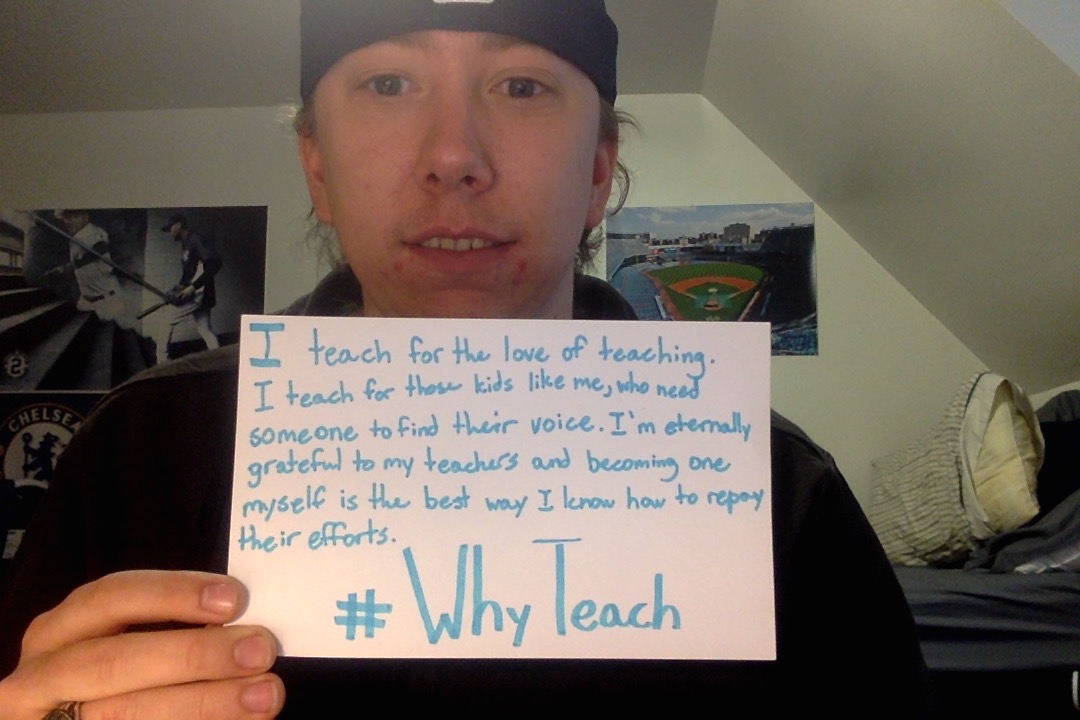
Over the past several years the narrative around public education has grown increasingly negative, and young people are often discouraged from going into the profession at all. One of the main goals of the Young Teachers Collective is to amplify the voices of new and future teachers. We started the #WhyTeach campaign to provide new and future teachers with the opportunity to share their reasons for becoming a teacher despite all of the negative rhetoric. It is a way to reassert our place in the conversation around education and the teaching profession by allowing us the chance to share our thoughts, experiences and visions for the future of education. Because quite frankly we are the future of education.
So are you a new or future teacher that has decided to go into teaching regardless of all of the voices telling us to find another profession? We would love for you to join our campaign! First, write down your reasons for going into the profession and tag it with #WhyTeach. Next, take a photo of yourself with your reason. And lastly, send it to us along with your name to youngteacherscollective@gmail.com. We’ll be sharing images on Twitter, Facebook, and Instagram all day and will continue sharing throughout the following week. And don’t forget to follow the #WhyTeach hashtag. We can’t wait to hear from you.
*                    *                         *                        *
#WhyTeach - Alicia Johal
Alicia Johal – 2nd year teacher: 8th grade science, STEAM science, AVID (middle school)
—————————————
Daniel
Daniel Bergerson, sophomore at Barnard Ed Program at Columbia University, future Secondary Social Studies Teacher
“I teach to grow students’ creative power. We need both imagination and skepticism to transform our world.
When students are treated solely as objects to be tested, assimilated, and subjugated, schooling not only serves the interests of oppressors but destroys the creative power of children. We can ultimately transcend such a system when young teachers collectively take radical action to ensure the only function of a classroom is to liberate everyone. #WhyTeach
— Daniel Bergerson, 20 – Secondary Social Studies Teacher
Barnard Education Program – New York, NY
—————————————-
#WhyTeach - Conor Pierson
Conor Pierson – Bucknell University Senior
———————————–
#WhyTeach - Meg King
Meg King – Rutgers Graduate School of Ed Student
——————————-
IMG_3809
Hajra Syed – Rutgers University Senior
——————————-
Mel
Mel Katz – The College of New Jersey Sophomore
“”I teach because I have a vision for the future of public education and a voice to fight for the change I want to see. My students deserve no less.
As future teachers, it is our duty to use our voices and fight to create policies, inside and outside of the classroom, that #WhyTeach: Our Chance to Push Back | Young Teachers Collective:

Debate over 'backfilling' at charters raises questions of fairness | Philadelphia Public School Notebook

Debate over 'backfilling' at charters raises questions of fairness | Philadelphia Public School Notebook:

Debate over 'backfilling' at charters raises questions of fairness


Charter Schools - Dividing Communities since 1991


 File this story under "wonky but important."

In an era where standardized test scores often determine a school's reputation and, ultimately, its survival, comparing and judging schools based on results has become a commonplace ritual.
Parents often use the scores as a North Star for deciding where to enroll their kids. Districts often use them when considering which schools to shutter or to turn over to new management.
Within this context, a toxicity has brewed between advocates of Philadelphia's traditional District schools and proponents of charters — built mainly on the premise that the two sectors aren't playing by the same rules.
Tension between the two have festered especially in recent years. Steady student migration from traditional public schools to charters caused dozens of schools to close in 2012-13. Funding debates have become especially fraught since Gov. Tom Corbett's 2011 budget, which cut the state aid that helped districts defray the added costs of charter schools.
But those debates often gloss over some of the important differences between and within the sectors that have a very real effect on a school's perceived quality.
A prime example of this is the concept known as backfilling.
Hypothetically speaking, say a charter school is authorized to serve up to 500 students, but, for whatever reason, 50 students leave through the course of a school year. A charter that "backfills" will enroll the next 50 kids on its wait list as space becomes available.
Other schools will replace those empty spots at the beginning of the next school year, including filling seats in the upper grades.
Charters that don't do this will watch their total enrollment in a grade dwindle year by year — retaining only the students tenacious enough to persist.
In contrast, District-run neighborhood schools and renaissance charters must enroll all students living within a prescribed catchment zone, no matter what time of year or grade, when they show up asking for a seat.
At first glance this difference may seem a subtle nuance, but Philadelphia educators say the policy difference tremendously affects school culture and performance.
"Most of the time, the students that we start off with in ninth grade with us in September, they're usually fine. That's usually not the problem," said South Philadelphia High School principal Otis Hackney. "The most disruptive part is really getting new students throughout the year."
Hackney says his school enrolls new students almost daily. Some return from the District's alternative placement schools; some have had chronic truancy issues; many, he says, have been "coached" out of charter schools.
"And that's a real experience. We do keep track of where students come from," he said. "They don't always come with the most stellar grades or the behavioral disposition that you would want, but we work hard to make sure they understand quickly what they need to do here."
Hackney says his team does well with limited resources, but the constant influx of new, often more-challenged students, makes progress more difficult.
"Even if you have a school with a strong culture, new people coming in, they have to learn what the expectations are," said Hackney. "You have to constantly remind them: This is how we do things here in South Philadelphia High School. This is how we handle crisis. This is how we handle conflict."

Rigor and attrition

Charter schools, independent by design, cannot be painted with a broad brush. It's no different when it comes to backfilling.
Some charters actively work to keep attrition rates low and backfill whenever possible — seeing it as a chance to whittle down long waiting lists. Others proudly defend the fact that Debate over 'backfilling' at charters raises questions of fairness | Philadelphia Public School Notebook:

Schools Matter: Felony Convictions and Up to 20 Years for Teachers: No Convictions and $20 Million Bonuses for Banksters

Schools Matter: Felony Convictions and Up to 20 Years for Teachers: No Convictions and $20 Million Bonuses for Banksters:


Felony Convictions and Up to 20 Years for Teachers: No Convictions and $20 Million Bonuses for Banksters

Otherwise faced with sure failure for their schools, these Atlanta teachers made the wrong choice:  They coached children and changed answers, rather than doing the morally responsible thing, which would have been to build a bonfire in the front of the school with all the boxes of Pearson tests.


Facebook page for Justice for APS 12 here, with link to petition and GoFundMe effort.

Teacher Turnover At Success Academy Charter Schools | Shanker Institute

Teacher Turnover At Success Academy Charter Schools | Shanker Institute:

Teacher Turnover At Success Academy Charter Schools


 A recent New York Times article about the Success Academies, a large chain of New York City charter schools, focuses a great deal on the long working hours and heavy stress faced by teachers at these schools. The article reports that three Success Academy (SA) schools had teacher turnover rates above 50 percent. Officials from the network, however, dispute these figures, which they say are inflated by the fact that many teachers who leave SA schools simply transfer to other SA schools (i.e., they are counted falsely as leaving SA when they are in fact staying within the network).

In fact, SA officials claim that, when one account for these intra-network transfers, their true turnover rate across all their schools ("attrition from the network," in the article) between June 2013 and June 2014 was 17 percent, which is far lower than many critics suggest. Now, on the one hand, these ongoing debates about teacher turnover at SA schools, which have been occurring regularly for years, are a little strange. It is clear that SA teachers work unusually long hours in high stress, tightly regulated environments, and do so for salaries that are lower than those offered by most other professional jobs with similar working conditions. It is, therefore, hardly surprising that turnover would be high; indeed, high teacher churn, like student mobility, is in many respects part of the model of schools such as the Success Academies (and, of course, some turnover, such as that among poorly performing teachers or those who are not a good fit for their schools, can be beneficial).
On the other hand, however, SA officials are making an empirical claim about turnover at their schools, one that includes an interesting and somewhat unusual angle (intra-network mobility). And this claim is very easy to examine with teacher-level data that we happen to have available via a public records request. So, let’s take a quick look at turnover at SA between 2012-13 and 2013-14 (the latest year-to-year transition we have).
In our dataset, there were 284 teachers employed in 12 SA schools in 2012-13. The simple table below presents the distribution of turnover outcomes for these teachers in 2013-14.
As you can see, just over 52 percent of these teachers remained in the same school between 2012-13 and 2013-14, while an additional 15.1 percent switched from one SA school to another within the network. This means that SA officials’ claim -- that many teachers who leave their schools are just transferring within the network -- is correct, at least in these years. Simple turnover rates, in SA's case, are overstating "real" churn. 
It also, however, means that roughly one in three SA teachers (32.8 percent) either switched to a different (non-SA) school, in NYC or elsewhere, or exited the teaching profession entirely. This is almost twice the rate of 17 percent provided by SA officials to the New York Times reporter.
It is unclear why their figures are so far off. The only possibility I can think of is that SA officials weren’t counting involuntary turnover (i.e., dismissals) – that is, their figure of 17 percent represents the 

NEA - “Opportunity for All: ESEA Week of Action” Twitter Storm

NEA - “Opportunity for All: ESEA Week of Action” Twitter Storm:


#GetESEARight TWITTER STORM INSTRUCTIONS

Goal: to generate as many tweets possible from NEA members, leaders, partners, parents and activists onThursday, April 9 between 7 -- 8 PM EST.
The hope is that such a flurry of activity will help push our hashtag -- #GetESEARight -- to generate online attention from members of Congress and media that turns in to offline action as Congress works to reauthorize ESEA.

HOW THIS WORKS

1. Mark you calendar and set a reminder for 7 — 8 PM ET on Thursday, April 9, 2015.
2. Use NEAs Twitter Tool and enter your zipcode.
3. Send your Representative and/or Senator the message to #GetESEARight using the prepopulated tweet or customize one of the sample tweets found below.
4. Share NEAs Twitter Tool with your friends and ask them to join you in the Twitter Storm!

EXTRA CREDIT

1. Download one of these template signs:
#TimetoLearn ( PDF, 66.3 KB, 1 pg.) or #OpportunityForAll ( PDF, 67.2 KB, 1 pg.)
and add your message.
2. Snap a photo and use one of the sample tweets below.
3. Use NEAs Twitter Tool to find your Representative and/or Senator’s Twitter handle and @mention them in a Tweet with your photo and message.

COLLEAGUES, FAMILY AND FRIENDS CAN DO IT, TOO!

1. Download and print #TimetoLearn ( PDF, 66.3 KB, 1 pg.) signs and #OpportunityForAll ( PDF, 67.2 KB, 1 pg.) signs.
2. Distribute them with markers to event attendees and ask that they fill in the sign with a message they want their Member of Congress to see.
3. Ask them to take a photo holding their sign, or take it for them using their phone.
4. Compose a tweet with the photo using the relevant Twitter Storm hashtag - #GetESEARight — and @mention the Member of Congress.
5. Hit “tweet” to join the Twitter Storm!

SAMPLE TWEETS

  • #Opportunityforall means knowing where schools need resources and measuring success on more than just a test score#GetESEARight.
  • Close opportunity gaps! #GetESEARight w/ better resource distribution so all students get same high-quality public education.
  • #GetESEARight! Measure what helps students develop critical thinking skills with Opportunity Dashboardhttp://bit.ly/1IUhbrY.
  • Two musts to #GetESEARight: ensure opportunity for students regardless of zip code and more learning time with fewer tests.

Governor Cuomo Started This War: Teachers and Parents, Let's Prepare For Battle | M. Shannon Hernandez

Governor Cuomo Started This War: Teachers and Parents, Let's Prepare For Battle | M. Shannon Hernandez:


Governor Cuomo Started This War: Teachers and Parents, Let's Prepare For Battle


As a public education activist, who focuses most of my efforts on local school-based, student-centered reform, I have literally been sick to my stomach since the New York State Legislature approved a budget, complete with education "reforms" proposed by Gov. Andrew Cuomo, on April 1. It wasn't a joke -- and I am angry, upset, and devastated, to say the least.
If you read my blog posts, either on my own blog, or here at The Huffington Post, you know a few things generally ring true:
  1. I don't tackle politics often.There are people who are far better versed in this type of education reform writing than I am.
  2. I seem to write posts generally weighing in over 1200 words. I want to provide value and insight into a new way of thinking about education reform -- through the lens of compassion, love, and gratitude.
  3. I rally teachers, students, and parents to take action.
Well, today, I am tackling a political issue, rallying teachers, parents, and students, and going to try and keep this rather short.
As if the NY State Teacher Evaluation System wasn't already a huge burden on teachers and their students, Cuomo has just made it worse. I'm not even sure how this was a possibility -- I worked under his brutal evaluation system just two years ago.
Once again, this bill was bundled into the budget, signed off by our lovely legislators, and no one asked educators to weigh in on the issues.
Cuomo demanded that student test scores comprise 50 percent of a teacher and principal's evaluation. It passed.
But worse yet? Neither did the legislature, nor governor, stop here. They also included into the law that lesson plans, student feedback, and parent feedback can not be included in teacher evaluations.
This means that no longer will teachers be evaluated on the relationships they are building with their students, the families they serve, and the communities they are enriching.
This is ludicrous and it's time to mobilize and take action.
  • What if... we all decided that we had had enough of the bullying and pushing around, and that we are going to get creative in how we respond to government officials who continue to demoralize our profession, our students, and our schools?
  • What if... every teacher in this state said "NO" and called out sick on all testing days? It would be quite hard to evaluate teachers based on test scores, wouldn't it?
  • What if.. .every parent in this state got behind the teachers, and said "NO" and didn't send their children to school on testing days? It would be quite hard to continue the false narrative that our students are failing the tests -- because they wouldn't be taking them.
  • What if... every administrator in our public schools said "NO" and began opting their school out of state testing? It would be quite hard to rate a school as "failing" if there wasn't any data to prove it.
It's quite clear to me that we must start thinking out-of-the-box. As educators, we've stayed in this box for too long. We are boxed in by scripted curriculum, tests that areGovernor Cuomo Started This War: Teachers and Parents, Let's Prepare For Battle | M. Shannon Hernandez:

Change the Stakes | Because a Good Education Can’t Be Measured By a Test Score

Change the Stakes | Because a Good Education Can’t Be Measured By a Test Score:


WHAT’S NEW FROM CTS

NY State tests begin on April 14th! Find everything you need to refuse the tests in NYC here.

Also see Opting Out of the State ELA & Math Tests in NYC: Frequently Asked Questions

Spring 2015 Testing Schedule

Grades 3-8 English Language Arts (ELA): April 14-16
Grades 3-8 math: April 22-24
Grades 4 & 8 science, performance: May 20-29 (school selects date)
Grades 4 & 8 science, written: June 1
NYSESLAT Speaking: April 14-May 15 (school selects date)
NYSESLAT Listening, Reading, Writing: May 4-May 15 (school selects date)

Why Opt Out

How to Opt Out

Sample Opt Out Letters

State exams / English: .html | .doc
State exams / Spanish: .html | .doc

NYC DOE Frequently Asked Questions (FAQ): Student Participation in Grades 3-8 NYS Tests, Parent Guide

Will My School Lose Funding?

Why You Can Boycott Standardized Tests Without Fear of Federal Penalties to Your School (Fairtest)
The 95% Participation Rate and How Schools Do NOT Lose Funding (NYSAPE)

Teachers of Conscience: Teachers Who Refuse to Administer Tests

Resources on Student Promotion


Privacy Laws Inadequate to Protect Student Data from Advertisers and Others | National Education Policy Center

Privacy Laws Inadequate to Protect Student Data from Advertisers and Others | National Education Policy Center:

Privacy Laws Inadequate to Protect Student Data from Advertisers and Others


 NEPC releases 17th annual report

on Schoolhouse Commercialism Trends
 
Contact: 
William J. Mathis, (802) 383-0058, wmathis@sover.net
Faith Boninger, (480) 390-6736, fboninger@gmail.com
Alex Molnar, (480) 797-7261, nepc.molnar@gmail.com
URL for this press release: http://tinyurl.com/mmq4vw5
 
BOULDER, CO (April 9, 2015) – The computer technology that enables school districts to aggregate, collate, analyze and store massive amounts of student information – and the heavy reliance on private contractors to help manage that information collection, analysis and storage – pose significant concerns about the privacy rights of students, a new report released today shows.
While state and federal lawmakers have sought to expand the privacy rights of students and their families in the collection and dissemination of personal data collected by and for schools, those efforts have been piecemeal, incomplete, and often inadequate, the report suggests.
Those conclusions are among the findings of the 17th Annual Report on Schoolhouse Commercialism Trends, On The Block: Student Data and Privacy in the Digital Age. The report, by Alex Molnar and Faith Boninger, is published by the National Education Policy Center, housed at the University of Colorado Boulder.
In a new educational environment that emphasizes the computerization of student data and work, questions over how long information is held, who has the right to see it, and how students and their families might correct errors and inaccuracies it contains, are far from resolved and have become “critical policy issues,” the authors write.
In particular, Molnar and Boninger note the ease with which schools themselves may become vehicles for subjecting children to increased marketing efforts. Of special concern is “anonymized” meta-data that can be used to market to students and their families, and the increased time that students are encouraged to spend working online. When children enter the Internet environment, even if they enter from a responsible site with a transparent privacy policy, they are quickly exposed to other commercial sites that may be less concerned about their privacy. “The hard truth,” Molnar and Boninger contend, is that “when schools send children into the open online environment, they are in reality often offering up these children to be tracked for the purpose of serving them ads for products that algorithms predict they will want to buy.”
Their report concludes with recommendations that lawmakers look to comprehensive guidelines in the Electronic Privacy Information Center’s Student Privacy Bill of Rights to help shape stronger privacy protections for students and their families. They also recommend the development of stronger policies to address “not only the privacy of student educational records but also the wide variety of student data (including anonymized data that may now be collected and shared)” – with particular attention to the commercial use of such data. Additionally, the authors write, as policymakers engage this issue, they need to place the burden of protection of student data “not only on schools and districts but also on any private vendors with access to student data.”
“This would align the interests of all parties, public and private, in protecting student privacy,” Molnar and Boninger write.
Find On the Block: Student Data and Privacy in the Digital Age – The Seventeenth Annual Report on Schoolhouse Commercialism: 2013-2014, by Alex Molnar and Faith Boninger, on the web at:
http://nepc.colorado.edu/publication/schoolhouse-commercialism-2014

The mission of the National Education Policy Center is to produce and disseminate high-quality, peer-reviewed research to inform education policy discussions. We are guided by the belief that the democratic governance of public education is strengthened when policies are based on sound evidence.  For more information on NEPC, please visithttp://nepc.colorado.edu/.
Funding for the Annual Reports on Schoolhouse Commercialism is provided in part by Consumers Union.