Latest News and Comment from Education

Thursday, March 26, 2015

Education Leaders Who Have Never Taught - HUFFPOST

Largest Teachers Union Already Involved In 2016 Presidential Race:


Arne Duncan
While our nation's foremost leader in education policy has extensive experience in education administration, he was never actually a teacher. In the early '90s, Duncan headed the Ariel Education Initiative, a program that helped fund college for inner-city kids in Chicago. He became the CEO of the Chicago Public Schools system in 2001, before assuming his post as U.S. Secretary of Education.


Bill Gates
Microsoft mogul Bill Gates has risen as an education influential in recent years through the Bill & Melinda Gates Foundation. The foundation's education initiatives have pumped billions of dollars into advocacy groups and research organizations that support pro-education reform causes like charter schools and teacher evaluation systems. 


David Coleman
David Coleman, a figure The Huffington Post has dubbed "the most influential education figure you've never heard of," is the president of the College Board, a national educational organization that is currently redesigning the SAT. Prior to his post at College Board, he helped design the Common Core Standards.


Michael Bloomberg
Changing education in New York City was a centerpiece of Michael Bloomberg's agenda during his three terms as mayor. A 2002 law, which was renewed in 2009, granted the mayor direct control over the city's public schools. During the rest of his time in office, Bloomberg worked to expand charter schools in the city, make teachers more accountable through evaluations tied to student test scores and close what he deemed to be failing schools. 
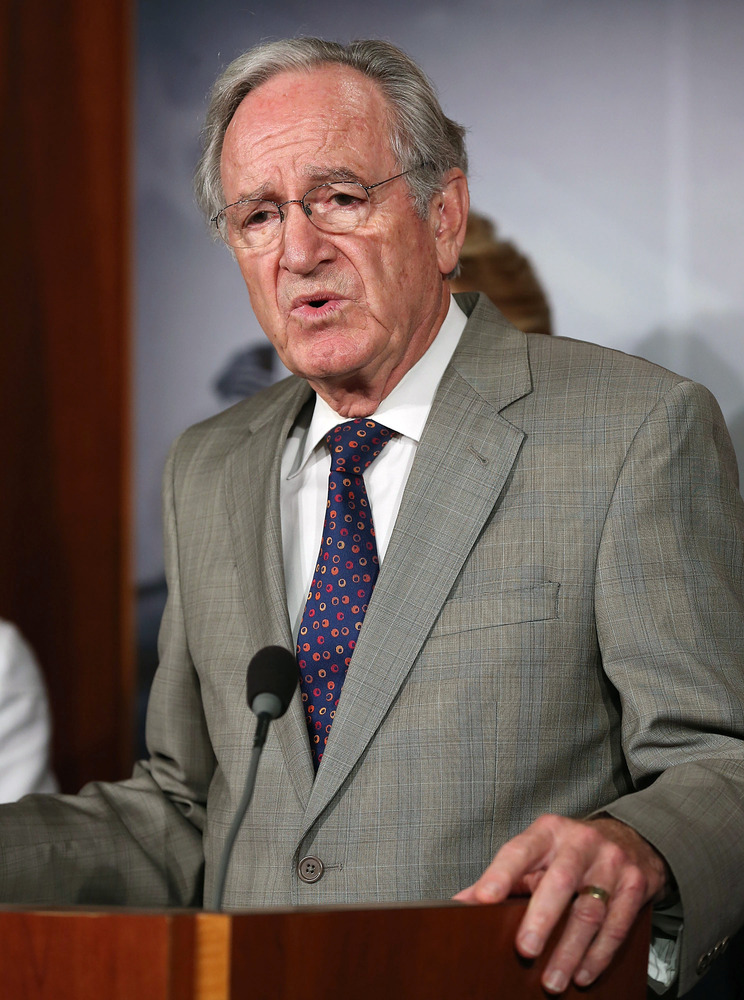

Tom Harkin
Sen. Tom Harkin (D-Iowa), the chair of the Senate Health, Education, Labor and Pensions committee, is attempting to secure a lasting legacy in the field of education through his rewrite of the highly controversial No Child Left Behind Act. While his version of the bill passed the education committee this past summer, it has yet to come to a full vote. If passed, Harkin's bill would overhaul the act that transformed American education. 
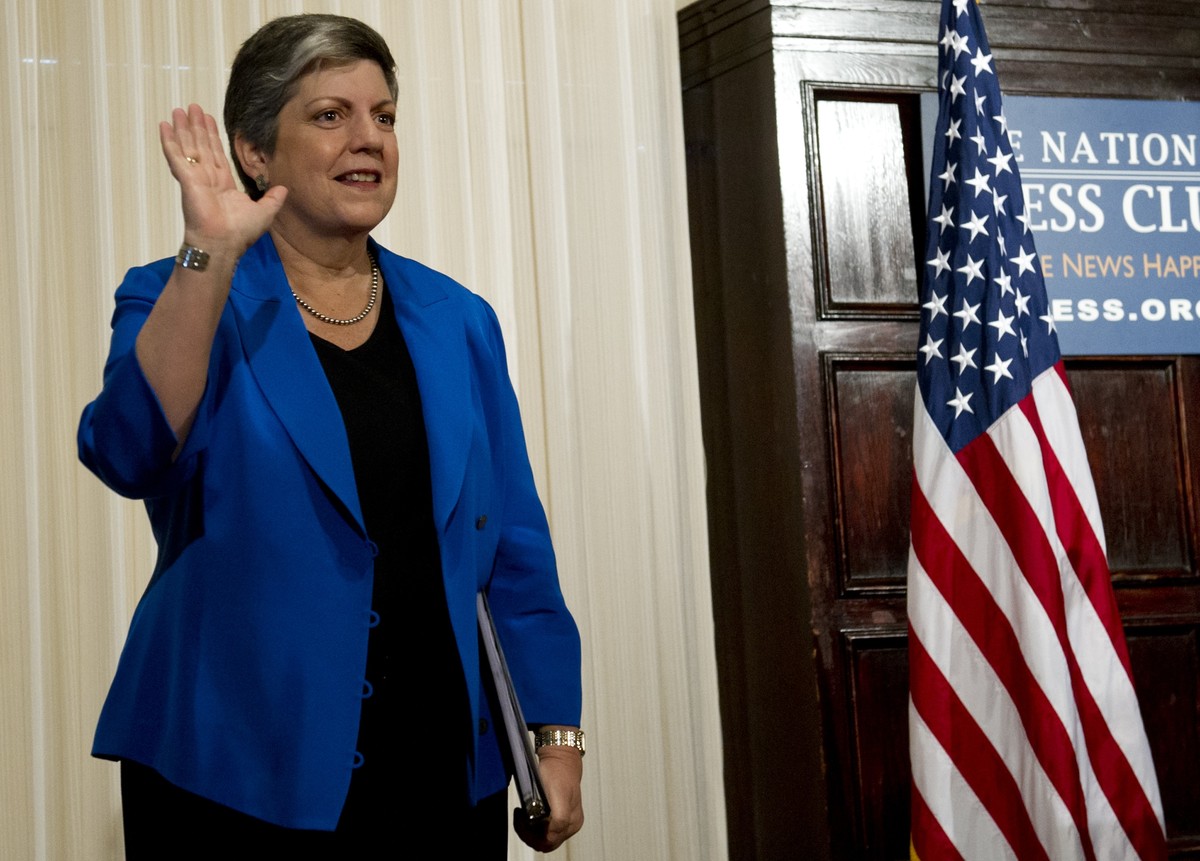

Janet Napolitano
Janet Napolitano's resume is long and impressive: attorney, governor of Arizona, secretary of the Department of Homeland Security. However, her resume does lack the title of educator, something one might consider to be an essential qualification for the head of the University of California system.


Kevin Johnson
Kevin Johnson, the mayor of Sacramento, Calif., has made splashes in the education world through his founding of a charter school network and involvement in a major Sacramento education reform initiative. In 2010, he was appointed the chair of a Mayors Task Force on Public Schools at the U.S. Conference of Mayors. He is also married to education reform powerhouse Michelle Rhee.


Wendy Kopp
Wendy Kopp is the founder and chair of the Board of Teach For America, an organization that puts thousands of recent college graduates and professionals in classrooms with disadvantaged youth. Yet, she was never actually a teacher herself.


Rupert Murdoch
Rupert Murdoch, the founder and CEO of News Corporation, inherited his father's string of newspapers at the age of 21, which didn't leave much time for teaching.
Yet, in recent years, Murdoch has extended his influence into the education world, starting an education division of News Corp called Amplify. The division's main product is the Amplify tablet, which the group hopes will transform classrooms through technology. This year, the group was awarded a grant to develop a digital library of Common Core teaching tools for educators.


Cory Booker
The former mayor of Newark, N.J., and newly elected Sen. Cory Booker is an outspoken proponent of education reform. While Booker had little formal control over the city's state-run schools during his term as Newark mayor, he oversaw a $100 million donation from Mark Zuckerberg to the city's schools and is a board member of the group Democrats For Education Reform. 


Mark Zuckerberg
Mark Zuckerberg, the founder and CEO of Facebook, made a big splash in the education world in 2010 when he agreed to donate $100 million to public schools in Newark, N.J. In 2013, Zuckerberg and other technology influentials launched a political group that pushes for issues including school accountability and STEM education.

Big Education Ape: Oligarchs and Corporatist: Dad Warned Us About You! http://bit.ly/1GX5GPk

The high price of for profit education & Jeb Bush - Cashing in on Kids

The high price of for profit education & Jeb Bush - Cashing in on Kids:

THE HIGH PRICE OF FOR PROFIT EDUCATION & JEB BUSH


Big Education Ape: Oligarchs and Corporatist: Dad Warned Us About You! http://bit.ly/1GX5GPk

Profits ahead of education: Bloomberg news has an extensive article on K12 Inc. and the myriad problems that their charter schools are facing across the country. The article even features a former marketing director of K12 Inc. who goes on the record with criticism about the company putting profits ahead of education. The former executive, Houston Tucker,makes an allegation made by public education advocates for years: that K12’s brand of digital learning is focused on profits and not serving the 130,000 students that it’s supposed to serve. The article goes on to describe how the focus of the schools is marketing and recruiting new students to make up for the churn as kids are pulled, or just churn out of their schools. Tucker even pulled his kids from K12 Inc.’s school in Tennessee because teachers weren’t able to provide individualized instruction.

“In the early years, K12’s mission was something to rally around,” Tucker said. “It was brand new in the world of education. The K12 I joined isn’t the one I left.”


Tucker, the former K12 marketing director, said that one of his sons had scant feedback from his teacher at Tennessee Virtual. The school put profit ahead of education, said Tucker. He now works as a consultant, helping regular public schools with online programs.

Extreme Workloads for Teachers: As a teacher at Pennsylvania’s K12-run Agora virtual academy points out in the article, teachers are often administering classes of 150 or more students with a high turnover of staff and students.

Michael McNulty teaches online high school math to 150 Agora students, and sometimes more because of “massive staff turnover,” he said. “We were scrambling to hire enough teachers.”

As enrollment surged, Agora drew more students who had been truants at regular schools, and they didn't show up online either, neglecting to log on or hand in homework, he said.

Student-teacher ratios in online schools are “generally higher than traditional classrooms where space constraints and classroom management are issues,” K12 said. Agora students’ improvement on test scores is “competitive with other Pennsylvania cyber charter schools,” K12 said.

Agora monitors truancy, contacting families and school districts to get students back in class, the company said. It removes students from its rolls after 10 consecutive unexcused absences, it said.

K12 Inc.’s spokesperson is right that Agora charters perform as well as Pennsylvania virtual charter schools. Since their inception reporters, regulators and parents have complained about the poor performance of Pennsylvania’s virtual schools. As Bloomberg makes clear, K12 is putting profit margins and investors over the future of their students--as their performance shows. There’s a long history of K12 Inc. trying to squeeze as much money from taxpayers as The high price of for profit education & Jeb Bush - Cashing in on Kids:

And Now from the Twilight Zone: Opting out, race, and reform | The Thomas B. Fordham Institute

Opting out, race, and reform | The Thomas B. Fordham Institute:

Opting out, race, and reform


There used to be a wry and mildly provocative blog called “Stuff White People Like.” Briefly popular in its heyday, it was described by the New Republic as a “piquant satire of white liberal cultural mores and hypocrisies.” The site’s creator stopped updating it a few years back after landing a book deal. But if it were still active, “opting out of tests” might have been right up there with craft beer, farmers’ markets, NPR, and Wes Anderson movies on that list of mores. Maybe hypocrisies, too.
list compiled by the teachers’ union in New Jersey, where PARCC testing began earlier this month, claims that there have been more than thirty-five thousand test refusals statewide. On the order of one million young New Jerseyans are supposed to take the test, yet the state data documenting how many of them opted out won’t be available for at least a month. An informal analysis of the New Jersey Education Association (NJEA)’s list, however, shows that the highest numbers of test refusals are concentrated in communities that are affluent, left-leaning, and heavily white. 
A blue state with a Republican governor, New Jersey features a mix of affluent suburbs and pockets of deep and persistent urban poverty, including closely watched education reform hubs like Newark and Camden. Thus, the Garden State offers an interesting lens through which to view both the prerogatives and the politics of opting out and education reform. Assuming that the list compiled by the union is even directionally sound, it puts the state’s affluent white progressives potentially at odds with low-income and heavily Democratic families of color, since there is little evidence that such families are opting out in significant numbers.
My Fordham colleague Dominique Coote put the districts with the highest-reported unofficial numbers of refusals on a spreadsheet, which you can see here. As of the most recent update on March 20, fourteen districts had five hundred or more reported refusals. All but two of these have median household incomes above (usually well above) the state average. There’s no way to determine the political leanings of families of individual children who refuse the exams, but the communities with the most refusals—Cherry Hill, Livingston, and Princeton, for example—are suburban and strongly left-leaning. Only three of the fourteen top opt-out districts are Republican-majority; most are disproportionately Democrat, some extremely so. And yes, extremely white. Indeed, only one district with five hundred or more reported refusals, East Orange, is not majority white. 
Now take a look at the refusal numbers for districts that serve predominantly low-income, black, and Hispanic families—places like Newark, Camden, Paterson, and Trenton. Actually, you can't. They’re not among the approximately 250 districts on the NJEA list. Of the thirty-one so-called “Abbott Districts” in the state, named for the 1985 court case aimed at ensuring adequate education funding for schools serving poor children, only seven are on the NJEA list. East Orange, with 520 reported PARCC refusals, is the only Abbott District to see significant opt-outs. The other six range from thirty refusals in Hoboken to a single reported refusal in Long Branch.
Does that mean there are no opt-outs in other low-income districts? Not necessarily. Steve Wollmer, the NJEA’s communications director, tells me that the list represents an aggregate ofmedia accounts, reports from NJEA members in schools, and parents registering their intention to refuse the test on NJ Kids and Families, a web site set up by the union to “give a voice and organizing platform” for opting out.
“The vast majority of opt-outs are taking place in non-urban, non-disadvantaged districts,” agrees Wollmer, “because parents tend to be better informed in those districts and tend to communicate among themselves a lot more.”
Fair enough. Still, if New Jersey is a litmus test, and the move to opt out of testing remains “a thing” chiefly among affluent, white, progressive, families, it puts them on a political collision course with the low-income families of color who have been the primary beneficiaries of testing and accountability in the reform era. Blacks, Latinos, and low-income kids have generally benefitted from test-driven accountability, particularly in the increased number of charters and school choice options, as well as some promising (but not necessarily causal) upward trends in NAEP scores and graduation rates during the accountability era. Test scores have created a powerful catalyst for reform—both educationally and politically—that disproportionately benefits low-income families.
“Kids who are not tested end up not counting,” observed Kati Haycock, president of the Education Trust, one of more than two dozen civil rights groups (including the NAACP, the Children’s Defense Fund, and the National Center for Learning Disabilities) that issued a call in January for the federal role in education to “be honored and maintained in a reauthorized Elementary and Secondary Education Act (ESEA).” The statement specifically included annual statewide tests.
Yet a story on the liberal news service Alternet named opting out one of the biggest education stories of 2014, noting that "the whole school reform machine falls down without the data." That prompted Lynnell Mickelsen, a longtime progressive Democrat and Minneapolis blogger, to observe tartly, “So do the movements around climate change, civil rights, public health, banking reform, industrial safety, economic justice and more.” All but the most hardline anti-reform activists will acknowledge that, for all the faults of test-based outcomes data, such Opting out, race, and reform | The Thomas B. Fordham Institute:

Parents Can Opt Out - United Opt Out National

Click Here to go to United Opt Out National: 


Click Here to go to the WebsiteUnited Opt Out Team
Home
Click Here to go to the Website FairTest

Image result for Thomas B. Fordham Institute
Big Education Ape: Oligarchs and Corporatist: Dad Warned Us About You! http://bit.ly/1GX5GPk

990s and Audited Financials

2013 Audited Financials
2013 990 (Institute) 2013 990 (Foundation)
2012 Audited Financials
2012 990 (Institute) 2012 990 (Foundation)
2011 Audited Financials
2011 990 (Institute) 2011 990 (Foundation)

Recent Funders*

Bloomberg Philanthropies/America Achieves
Brookhill Institute of Mathematics
Carnegie Corporation of New York
Charles and Helen Schwab Foundation
CityBridge Foundation
Collaborative for Student Success
College Board
Doris and Donald Fisher Fund
Education Reform Now
GE Foundaton
Hertog Foundation
Hoover Institution on War, Revolution and Peace
Kern Family Foundation
Laura and John Arnold Foundation
Leona B. and Harry M. Helmsley Trust
National Alliance for Public Charter Schools
Nord Family Foundation
Noyce Foundation
Overdeck Family Foundation
Searle Freedom Trust
The Achelis and Bodman Foundations
The Bernard Lee Schwartz Foundation
The Bill and Melinda Gates Foundation
The Eli and Edythe Broad Foundation

The Ewing Marion Kauffman Foundation
The Houston Endowment
The Joyce Foundation
The Koret Foundation
The Kovner Foundation
The Louis Calder Foundation
The Lovett & Ruth Peters Foundation
The Lynde and Harry Bradley Foundation
The Randolph Foundation
The Searle Freedom Trust
The William and Flora Hewlett Foundation
The Walton Family Foundation
* Does not include individual funders

Common Core and Common Values - Bloomberg View

Common Core and Common Values - Bloomberg View:

Common Core and Common Values


 Learning how to distinguish between fact and opinion would seem to be a pretty fundamental piece of any education. In the bizarre world of U.S. public schools, though, it's proving to be controversial.

For several years, schools across the U.S. -- with significant help from the Bill and Melinda Gates Foundation -- have been putting in place something called the Common Core, a set of standards on what students from kindergarten through 12th grade should learn on topics including English, mathematics, science and history. Along the way, they’ve faced ample criticism, some of it reasonable. Teachers, in particular, think they haven't had adequate preparation.
One strain of criticism in particular, though, sounds more like an assault on learning itself. Consider the argument of philosopher Justin McBrayer, of Fort Lewis College in Colorado: He complains that Common Core undermines moral education by teaching that some questions -- Who was the first president of the United States? -- have factual answers, while others -- Is it wrong to eat meat? -- don't. Specifically, it requires that students be able to “distinguish among fact, opinion, and reasoned judgment in a text."
In a thoughtful and philosophically careful way, McBrayer suggests such an approach will actually confuse kids into thinking that rights and wrongs are nothing but opinion. “If it’s not true that it’s wrong to murder a cartoonist with whom one disagrees,” McBrayer writes, “then how can we be outraged?” He notes that many students today don't think cheating is wrong, and he attributes this to their being taught that “moral facts do not exist.”
It's a powerful point, but made in a somewhat deceptive way. Do we really need absolute and metaphysically founded moral facts to be outraged at murder, or to see cheating as bad? I don't think so. History, evolution and anthropology explain perfectly well why certain values – against people killing for fun, for example -- have been etched deep into most of our emotional natures: These values influence and channel behavior in a way that is hugely conducive to human well-being in groups. We've evolved to have these values because they work pretty well, as tested by countless societies in the past.
Indeed, modern science has gone a long way toward understandinghow social norms of behavior and institutions emerge to support cooperation. It also suggests that we shouldn't be surprised to find a diverse range of beliefs and values among distinct societies and Common Core and Common Values - Bloomberg View:

Five Years In, It's Unclear if Common Core Is Helping Students - US News

Five Years In, It's Unclear if Common Core Is Helping Students - US News:

Reports Show Small Gains After Common Core

Some student test scores have inched up, but it's not clear whether Common Core is the reason.


Years after most states adopted the Common Core State Standards, it's unclear if the academic benchmarks are having a positive impact on student learning. And it might be a while before we know for sure.
Two studies released this week – one from the Brookings Institution's Brown Center on Education Policy and the other from the National Center for Analysis of Longitudinal Data in Education Research – showed small gains on students' scores nationally on the National Assessment of Educational Progress and in Kentucky on the ACT. But it hasn't been determined whether those gains can be attributed to the Common Core standards, which most states only fully implemented within the last one to two years. 
Some supporters of the standards have said in the past that it's too soon to measure the impact of Common Core and that national exams such as NAEP only test every other year – 2011 and 2013, for example – when implementation arguably wasn't very far along. Students also have been making incremental gains in reading and math on the NAEP exam for years.
Morgan Polikoff, an assistant professor of education at the University of Southern California, says there are several factors that complicate research design on this issue. Because only four states didn't adopt Common Core, it's difficult to come up with a solid comparison group, he says. 
"With those two issues – the lack of data and the newness of this all, plus the fact that it's hard to define a good comparison group – to me, it's not really worth doing these studies yet," Polikoff says. "I worry that they might actually provide misleading evidence. By trying to be first out of the gate, they might make people think these things aren't working and so we should change course, when in fact it could just be that we don't yet have the data to do a really good study." 
Tom Loveless, a nonresident senior fellow in governance studies at the Brown Center, in his report brings up another issue that complicates how the value of Common Core is measured. It's hard to determine the true "starting point" for Common Core, Loveless writes. Not all states adopted Common Core at the same time – although most did between 2010 and 2011 – and implementation timetables have also varied. 
"You can’t figure out whether a policy worked or not unless you know when it began," Loveless writes in the report. "The goal is not only to estimate [Common Core's] early impact, but also to lay out a fair approach for establishing when the Common Core’s impact began – and to do it now before data are generated that either critics or supporters can use to bolster their arguments."
The Brookings report compares the fourth grade reading scores on the NAEP exam among states, categorizing them based on how strongly they implemented the standards. The 19 states categorized as "strong implementers," Loveless writes, spent money on more activities and aimed for full implementation by the 2012-13 school year. Another 27 states were "medium implementers," while four states – Alaska, Nebraska, Texas and Virginia – were grouped together since they never adopted Common Core.
Overall, Loveless found a 1.1 point advantage in reading gains among strong implementers over non-adopters, similar to the 1.27 point advantage the center found last year in eighth grade math.
"These differences, although certainly encouraging to [Common Core] supporters, are quite small, amounting to (at most) 0.04 standard deviations on the NAEP scale," Loveless writes. "A threshold ... five times larger ... is often invoked as the minimum size for a test score change to be regarded as Five Years In, It's Unclear if Common Core Is Helping Students - US News:

Largest Teachers Union Already Involved In 2016 Presidential Race

Largest Teachers Union Already Involved In 2016 Presidential Race:

Largest Teachers Union Already Involved In 2016 Presidential Race

NATIONAL EDUCATION ASSOCIATION


The National Education Association, the largest U.S. teachers union, has already jumped into the 2016 presidential race, even though only one major candidate has announced a campaign.
NEA president Lily Eskelsen GarcĆ­a told reporters on a conference call Wednesday that the union and its 3 million members are considering candidate endorsements earlier than ever. The goal, GarcĆ­a said, is making education a top issue in the election.
"It is not too early to be thinking about who the next president of the United States is going to be, even though it's one and a half years away," said GarcĆ­a. "We know that educators have to step up and have our voices heard in this 2016 presidential election."
In the past, GarcĆ­a said, the NEA would send politicians questionnaires about their views on education after candidacies had been announced. This time, the union has already sent questionnaires to all viable candidates in both political parties, said Carrie Pugh, NEA political director. The union wants to determine potential candidates' stances on issues that include the role of standardized tests, ballooning costs for university education and the rising number of students who come from low-income families.
The NEA also has begun hiring organizers in states with early voting, including Iowa and New Hampshire, and is putting up billboards in Des Moines and Manchester.
"You can read a poll, and a poll will tell you teachers are trusted and Americans want strong public schools," said GarcĆ­a. "A lot of people running for high office are not professional educators. We want them to know what we know are the right answers."
NEA leaders wouldn't say how much the union plans to spend on the election. During the 2014 midterm elections, the NEA and smaller American Federation of Teachersspent unprecedented sums.
The AFT also has begun engaging members on who to endorse in the 2016 campaign, a spokesperson told The Huffington Post, though it's no earlier than in past presidential races.Largest Teachers Union Already Involved In 2016 Presidential Race:
http://www.huffingtonpost.com/2015/03/25/nea-2016-election_n_6943004.html#slide=start 

The States with the Best K-12 Schools | SmartAsset.com

The States with the Best Schools | SmartAsset.com:

The States with the Best Schools

As of 2011, total spending for all public elementary and secondary education in the United States surpassed $630 billion per year, more than $12,300 per student. The vast majority of that funding, roughly 88%, came from state and local governments.  State governments have an especially important role: they maintain standards for curriculum, make sure that school districts with faltering local tax bases are adequately funded and assess the efficacy of public schools by administering statewide achievement tests.
Thinking about college? Try our free student loan calculator.
So which states are doing the best job of maintaining strong public school systems? To answer that question, SmartAsset looked at ten across-the-board metrics of education, placing a special emphasis on how well states are preparing students for college. For each state, we considered the percentages of students taking the SAT, ACT and AP tests, and the average scores for those tests. We also looked at the state-level funding-per-student, the student-teacher ratio, the high school dropout rate and the percentage of high school graduates attending college after graduation (read more about our methodology below).

Key Findings

Good schools in the northeast. Led by Connecticut, each of the top four states in our study is located in the northeast, and seven of the top ten are on the east coast. Most notable among these states was the high rate of college-attendance. In New York, Massachusetts, New Jersey and Connecticut, over 70% of high school graduates attend college within 12 months of graduating.


The west can do better. The west is home to all four of the lowest-grading states in our study, and six of the eight states that received an overall F are west of the continental divide. Washington, Arizona, Oregon and Nevada all have below average college-attendance rates, below average per-student spending levels and higher-than-average student-teacher ratios.


1 k12 table The States with the Best Schools

Data & Methodology

To assess the quality of state k-12 public education, we looked at data from the College Board, the ACT, the National Center for Education Statistics, the U.S. Census Bureau and the National Education Association. Specifically, we looked at the following ten metrics:
  1. High school dropout rate (double weight).
  2. Percent of high school graduates who attend college within 12 months of graduation (triple weight).
  3. Funding per student (full weight).
  4. Student-teacher ratio (double weight).
  5. Percent of high school juniors taking either the ACT or the SAT (double weight).1
  6. Percent of high school juniors taking a second admissions test (half weight).
  7. Average SAT scores (quarter weight).2
  8. Average ACT scores (quarter weight).
  9. Number of students taking at least one Advanced Placement exam as a percentage of high school seniors (full weight)
  10. Average A.P. test score (quarter weight).
For each of those ten metrics, we ranked all fifty states and applied a score from 0-100 based on that ranking. A school ranked first would receive a 100, while a state ranked last would receive a zero. After applying the weights listed above, we calculated an average score for each state. Grades were assigned on a curve, based on the percentile of each school’s raw score.

Southern California legislators call for charter school reform

Southern California legislators call for charter school reform:

Southern California legislators call for charter school reform


 California legislators took to the steps of the State Capitol on Wednesday to call for reform of the state’s charter school law, including requiring them to be run as non-profits.

“The public is paying for them,” Assemblyman Roger Hernandez, D-West Covina, said afterward. “The accountability ought to be there and the protection for the employees ought to be there.”
Four Democrats, flanked by representatives of the California Teachers Association, the California Federation of Teachers and the California Labor Federation, announced four new pieces of legislation the legislators said will ensure the charter schools fulfill their stated mission.
Hernandez introduced Assembly Bill 787, which would not allow charter schools to be run for profit. Instead, it allows a charter school to operate as, or be operated by, a nonprofit public benefit corporation.
“Some, if not many, of the charter schools throughout California and the nation run their charter schools with some of their focus on bringing in profit at the end of the year,” Hernandez said. “This is an effort to ... make sure that our dollars are focused on a student-centered approach, not for the profiteering of CEOs.”
Not everyone believes the new law is necessary, though.
“Overall, I think charter schools are working reasonably well in California. There’s always room to improve, but I think we need to make sure this is about improving charters, rather than just going after charter schools,” said Gabe Rose, chief strategy officer of Parent Revolution, the organization that led to the passage of the 2010 parent-trigger law, which enables parents to force changes at failing public schools.
Those changes include potentially turning them into charter schools, as happened in the High Desert city of Adelanto.
“My impression,” Rose said, “is that there’s basically no for-profit charter schools in California right now, so this is a bit of a red herring.”
Assemblyman Mike Gipson, D-Compton, introduced Assembly Bill 709, which explicitly states that charter school board meetings are covered by California’s open meeting law, the Ralph M. Brown Act. (Charter schools receive their operating charter from public schools, are funded by public tax dollars and are officially public schools.)
California legislators approved the Charter Schools Act in 1992. As of fall 2013, there were 1,130 charter schools operating in the state, according to the California Charter Schools Association.
“Over the years, charter school enrollment in California has grown to the largest percentage in the nation,” Gipson wrote in an email Wednesday afternoon. “However, despite this growth, our state laws have not been updated to ensure these expanding schools are required to maintain an acceptable level of accountability and transparency with our teachers, students, and parents. Assembly Bill 709, which I have authored this year with the support of the California Teachers Association, is part of an ongoing effort to make sure all of our schools are held to a consistent standard.”
The assemblymen were joined on the steps by state Sens. Mark Leno, D-San Francisco, and Tony Southern California legislators call for charter school reform:
Assemblyman Mike Gipson, D-Compton, announces his bill, which would explicitly make charter school board meetings subject to California’s open records law. (Photo courtesy of the California Teachers Association) 
Assemblyman Roger Hernandez, D-West Covina, speaks Wednesday at a Sacramento news conference calling for more accountability of California’s more than 1,100 charter schools. (Photo courtesy of the California Teachers Association) 

A Brief History of the "Testocracy," Standardized Testing and Test-Defying

A Brief History of the "Testocracy," Standardized Testing and Test-Defying:

A Brief History of the "Testocracy," Standardized Testing and Test-Defying


CHICAGO- 24 April, 2013: Demonstrator holds sign at a rally against school closings and over testing. (Photo: Sarah Jane Rhee)
Demonstrators rally against school closings and testing in Chicago, April 24, 2013. (Photo: Sarah Jane Rhee)


In this excerpt from More Than a Score, Jesse Hagopian explains who the “testocracy” are, what they want - for everybody else’s children and for their own - and why more people than ever before are resisting tests and working collectively to reclaim public education.
Who are these testocrats who would replace teaching with testing? The testocracy, in my view, does not only refer to the testing conglomerates—most notably the multibillion-dollar Pearson testing and textbook corporation—that directly profit from the sale of standardized exams. The testocracy is also the elite stratum of society that finances and promotes competition and privatization in public education rather than collaboration, critical thinking, and the public good. Not dissimilar to a theocracy, under our current testocracy, a deity—in this case the exalted norm-referenced bubble exam—is officially recognized as the civil ruler of education whose policy is governed by officials that regard test results as divine. The testocratic elite are committed to reducing the intellectual and emotional process of teaching and learning to a single number—a score they subsequently use to sacrifice education on the altar devoted to high-stakes testing by denying students promotion or graduation, firing teachers, converting schools into privatized charters, or closing schools altogether. You’ve heard of this program; the testocracy refers to it as “education reform.”

Among the most prominent members of the testocracy are some of the wealthiest people the world has ever known.

Among the most prominent members of the testocracy are some of the wealthiest people the world has ever known. Its tsars include billionaires Bill Gates, Eli Broad, and members of the Walton family (the owners of Walmart), who have used their wealth to circumvent democratic processes and impose test-and-punish policies in public education. They fund a myriad of organizations—such as Michelle Rhee’s StudentsFirst, Teach for America, and Stand for Children—that serve as shock troops to enforce the implantation of high-stakes testing and corporate education reform in states and cities across the nation. Secretary of Education Arne Duncan serves to help coordinate and funnel government money to the various initiatives of the testocracy. The plan to profit from public schools was expressed by billionaire media executive Rupert Murdoch, when he said in a November 2010 press release: “When it comes to K through 12 education, we see a $500 billion sector in the U.S. alone that is waiting desperately to be transformed by big breakthroughs that extend the reach of great teaching.”
Testing companies got the memo and are working diligently to define great teaching as preparing students for norm-referenced exams—available to districts across the country if the price is right. The textbook and testing industry generates between $20 billion and $30 billion dollars per year. Pearson, a multi-national corporation based in Britain, brings in more than $9 billion annually, and is the world’s largest education company and book publisher. But it’s not the only big testing company poised to profit from the testocracy. Former president George W. Bush’s brother Neil and his parents founded a company called Ignite! Learning to sell test products after A Brief History of the "Testocracy," Standardized Testing and Test-Defying:

Parents Can Opt Out - United Opt Out National

Click Here to go to United Opt Out National: 


Click Here to go to the WebsiteUnited Opt Out Team
Home
Click Here to go to the Website FairTest