Latest News and Comment from Education

Tuesday, March 3, 2015

Better neighborhood schools - Jesus "Chuy" Garcia for Mayor of Chicago

Better neighborhood schools - Jesus "Chuy" Garcia for Mayor of Chicago:


I believe it is necessary to change course dramatically from the so-called "reforms" offered by Mayor Emanuel and instead take a new, holistic approach.

The Garcia education platform

My program involves giving the school system back to the people through an elected school board; reducing to the barest legal minimum the plethora of high-stakes, standardized tests by which we falsely judge schools, students, and teachers; placing a moratorium on further charter schools; expanding public education to include pre-kindergarten and even earlier; and reducing class size, which is one of the largest in the state.
We must further provide a multitude of proper books, libraries, and recreational facilities and course offerings in languages and the arts.
As Mayor, I will make sure critical bilingual and dual-language programs will be available to all students that need and desire them. We need a serious expansion of dual language programs into all communities in Chicago. There is solid evidence that fluency in a second or even third language, starting at an early age, helps students academically across the board, putting them in position to be truly college and career ready.  These programs are also essential in our increasingly globally tied economy, as recognized by the recently established Illinois State Seal of Biliteracy.
I would like to establish more small schools, such as the one I helped create in Little Village, which includes students from North Lawndale, where several specialized schools operate creatively in a single high-school building.
We can add more excellent schools within the public system rather than adding more charters. We have great selective enrollment schools, which should be used as examples of what can be done within the public system.  We should use them in the way that charters were originally intended—to adapt and utilize the techniques developed there to proliferate throughout the system.

The key points in my education platform are:

Halt school closings

The recent school closings have been a disaster for affected students and the neighborhoods in which schools were shuttered. We should do all in our power to undo the damage to students and neighborhoods that suffered from the needless mass closings of some 50 schools under the Emanuel regime.
Closings were promoted as matters of economy, yet a recent NBC 5 investigation showed that "Utility bills are almost as much as they were when all of those school buildings were open, and some have incredible amounts of vandalism damage."  One building alone will require $12 million to repair.

Restore democracy with an elected school board

We are the only school district in the state with an appointed, not an elected, school board, thanks to state legislation passed in 1995—which I voted against as state legislator. This is the board that closed our schools and cut the education budget, following Mayor Emanuel’s orders. Would this have happened with an elected board, responsible to the citizens?
This raises the question of constitutional rights and civil liberties: the right to elect those who govern an institution so vital to our city.  School systems are perhaps the main governmental bodies touching the lives of a majority of our citizens. That's why I believe an elected school board is a constitutional right.
Therefore, one of my first acts as mayor will be to go to Springfield and ask the legislature to revoke the mayoral control legislation and let Chicago take its place with the rest of Illinois by having an elected board.
Lacking action in the legislature, I will file a federal voting-rights lawsuit based on the Constitution and civil rights laws.

Pull the plug on high-stakes standardized testing

When it comes to standardized, high-stakes testing, our kids are over-tested and under-educated. Let's be clear: “grade level” standards in reading and math are seriously flawed from the start. The current “grade level” or passing mark is a number agreed upon in a jurisdiction, usually in collaboration with the publishers of the tests themselves. Even US Secretary of Education Arne Duncan acknowledges that “standards” vary wildly from place to place.
Worse yet is the reinforcement of the notion that testing well in one or two subjects—important as reading and math may be—is any real measurement of genuine education. Educating kids to be good citizens includes teaching reasoning, critical thinking, creativity, about human relationships and so forth.
Making everything dependent on test scores in two subjects simply builds in larger failures. Ultimately it causes teachers, schools and entire systems to narrow educational goals and teach to the tests—or cheat, which we’ve seen recently around the country and in Chicago in past years.
It is especially unfair to teachers to evaluate their performance on how their students do on standardized tests. There are far better ways, including peer review and collaborative teaching.
On testing, according to a recent article in The Nation,"The teachers’ arguments were bolstered by 88 researchers from 16 Chicago-area universities who had signed an open letter to Mayor Rahm Emanuel opposing the city’s plan for using student test scores to evaluate teachers and principals. The letter said, ‘The new evaluation system… centers on misconceptions about student growth, with potentially negative impact on the education of Chicago’s children.’” 
Although the new standards for evaluating schools recently announced by CPS are said to reduce the proportion that tests will play in evaluating schools, there is still far too much reliance on those tests—65 percent for elementary schools and 45 percent for high schools.
Standardized test proliferation has given rise to a national opt-out movement. And it is small wonder that thousands of kids and parents, here and elsewhere, have boycotted them. Several jurisdictions including some in Florida and the entire state of Colorado are working on opting out.
I must note that at present I have deep reservations about Common Core, which sounds at first like an improvement on the standardized tests on math and reading, but it was thrust upon the country untried and untested—not ready for prime time.

Stop starving public schools to feed charters

Charter school proponents like Rahm Emanuel and Chicago Public Schools CEO Barbara Byrd Bennett, argue that those publicly funded, semi privatized schools offer communities greater choice in education because dropping union regulations enable the schools to develop innovative new programming and thus improve education by creating models for public schools to adapt.
This may have been the case historically, but charters long ago ceased offering anything new that public schools could utilize, particularly since teachers unions in today’s world have reformed significantly, focusing more on education than protecting the jobs of teachers. Credit American Federation of Teachers President Randi Weingarten and Chicago counterpart Karen Lewis for this.
Critics raise several issues about charters. Students at some perform well, but in Chicago and New York even the best charters are outperformed by the best public schools. Furthermore, charters drain increasing amounts of public money while paying staff lower wages. Many believe that the charter movement’s ultimate goal is privatizing public education.
Further, Chicago has shamefully allowed some charter schools to openly flout state requirements for many years by not offering necessary bilingual services. Many students enter the Chicago Public Schools without sufficient fluency in English nor the ability to master academic subjects that are taught in English.  It is critical that Chicago offer the best bilingual education programs so that these students can learn English while not falling behind in their other subjects.
Last year CPS slashed the budget and closed 50 schools, claiming closures will reduce the $1 billion debt, however they have not provided any proof of savings. And here’s Alice-in-Wonderland part: Mad Hatter Emanuel now wants to open 22 new charters, some in areas where he closed schools because of “underutilization.” These will cost Chicagoans $225 million over the next decade.
Why all the new charters? Because they are the new coin of political patronage. A glaring example is the UNO group, until recently led by Juan Rangel, who was forced out after exposes of cronyism and corruption in its charter network. UNO received more than $100 million in state money and Rangel, who earned $260,000 a year, was a co-chair of Emanuel’s mayoral campaign at the same time that UNO personnel worked against Emanuel’s critics in local political campaigns.
One of the first steps I would take is to require that charters report the same data as traditional public schools—and data that is unique to them related to lotteries, student discipline, declines in student population from grade to grade, etc—so that real comparisons can be made to inform intelligent decisions.
Share the education platform with your friends!


Monday, March 2, 2015

Star-Bellied Sneetches and PARCC Testing

Star-Bellied Sneetches and PARCC Testing:


sneetch

Star-Bellied Sneetches and PARCC Testing

When the Star-Belly children went out to play ball,
Could a Plain Belly get in the game… ? Not at all.
You only could play if your bellies had stars.
And the Plain Belly children had none upon thars.
Dr. Seuss from The Sneetches
How ironic that today, when children should have been celebrating Dr. Seuss’s birthday with activities to rejoice about the joy of reading, schools across America really got into the full swing of PARCC testing.
Partnership for Assessment of Readiness for College and Careers (PARCC)measures math and English/language arts K-12. The assessments are supposedly designed to determine if students are on track for college.
Is your kindergartener or third grader on the right college track? Is this something parents of young children should be worrying about already? Can’t everyone just enjoy their children when they are young? Won’t college come soon enough?
One of my favorite Dr. Seuss stories is called The Sneetches and it is rich with analogy about following, fitting in, and the one-size-fits-all mentality. It is also about being scorned. I thought about this story when I was reviewing all the troubling stories about the PARCC testing.
Right now it is easy to see the Sneetches story playing out across the country when it comes to public schools. The reformers want everyone on the same page doing what Star-Bellied Sneetches and PARCC Testing:

Dear Commissioner Hespe: The Floodgate of Refusals are Breaking Open | The Education Activist: From Student to Teacher

Dear Commissioner Hespe: The Floodgate of Refusals are Breaking Open | The Education Activist: From Student to Teacher:


DEAR COMMISSIONER HESPE: THE FLOODGATE OF REFUSALS ARE BREAKING OPEN


Dear Commissioner Hespe,
It’s 11:00 on a Monday night. I have my student teaching tomorrow, so I promised myself I would log off my computer and get some good sleep tonight. But before logging off, I ran across an NJ.com article in which you were quoted reacting to the PARCC test that began in many districts today. In part you stated:
“We had some district problems, but not many,” Hespe said of technology issues. “Far fewer than we expected to be completely candid with you.”
THIS IS FAR FEWER THAN YOU EXPECTED? With all due respect, the blatant dismissal of reality is astounding here. Students sitting for hours in some cases waiting for the tests to start working, glitches all during the testing window, and even district having to completely shut down the test only a few minutes in because the system was not performing. This is far fewer technology issues than you expected?
Here is a little summary of what happened in one district today, reported by students:
At start of day, 11th graders (approximately 740 students) were set to take the test in the two different school cafeterias. They were set up with 4 -5 kids at each table. Each kid received their own set of headphones. It is our understanding that the test started 45 minutes late in one cafeteria due to connectivity issues. The other cafeteria started few minutes late. Block 1 (the high school runs on a block schedule of 4 blocks a day, A days and B days – this is when testing was for juniors) was to be released out of testing at 10:30ish, but students were not, and therefore late for next set of classes (Block 2). Approximately 1/2 of the kids in the one cafeteria refused the test (that’s approximately 90 students). Kids who refused were listening to music and reports say kids were talking to one another the entire time. Apparently students were to test only 1 section, but many kids did all 3 sections because they were given codes to 3 sections. This raises the question of whether the test would be invalidated or not. Kids were also supposed to read district provided material but many kids read what they wanted to read. Many students are angry, and some were crying because parents forced them to take the test. Regularly scheduled Dear Commissioner Hespe: The Floodgate of Refusals are Breaking Open | The Education Activist: From Student to Teacher:

Refuse PARCC - Check it OUT and Refuse PARCC

Refuse PARCC:


Refuse PARCC
no-parccing1

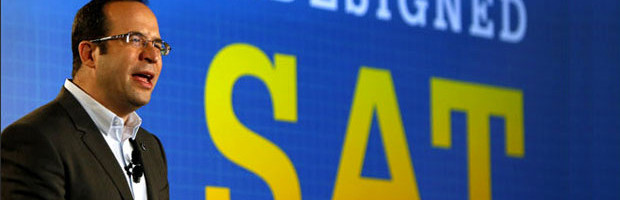
The Seriousness of Aligning the SAT to Common Core

The Seriousness of Aligning the SAT to Common Core:


SXSWedu in Austin, Texas.

The Seriousness of Aligning the SAT to Common Core

There are two very serious issues surrounding the Common Core and the SAT. The SAT is the test students must conquer to get into many colleges. There is a reason David “nobody gives an expletive what you think or feel” Coleman, a central figure involved in the development of the Common Core, is now President of the College Board. He is aligning the Common Core to the SAT. If a student wants to get into a particular college they will likely need the Common Core State Standards.
It is also serious that by aligning the SAT to the Common Core, we will never get a picture whether students are doing better in school than they did before the Common Core. You can’t compare the new SAT, with the old SAT, if the new SAT is all about Common Core, so there is no way to show that the Common Core State Standards lack credibility. This is pretty tricky if you ask me. I wrote about it once before when Coleman first came out talking about changes. HERE.
There are all kinds of serious questions about the importance of the SAT without considering the Common Core. The College Board is not-for-profit and it is easy to wonder why. A lot of money is made on, not only the SAT, but Advanced Placement (AP) with its series of class preps and tests. But aligning everything a student does in school to the SAT seems particularly troubling.
In addition, if you like the idea of a college entrance test, it is important to note that students have been doing well on the SAT for a number of years. Most Ivy League schools have to turn away very capable students who have proven themselves on the SAT. Why Coleman needs to change the SAT, making it simpler, or making it more difficult, should raise further questions. I am not saying I like the SAT. I, quite frankly, have mixed feelings about the test itself. But that’s for another post maybe.
The point here is that they are making the test so you cannot escape the Common Core no matter where you go to school.
And, parents who think they can dip into their savings and flee public schools to avoid Common Core will probably be disappointed. Both private and parochial schools will The Seriousness of Aligning the SAT to Common Core:

House Vote On ESEA Postponed To This Week -- Elementary and Secondary Education Act | The National Law Review

House Vote On ESEA Postponed To This Week -- Elementary and Secondary Education Act | The National Law Review:


National Law Review


House Vote On ESEA Postponed To This Week -- Elementary and Secondary Education Act

Legislative Activity

House Vote on ESEA Postponed to This Week


The House will continue to consider its Elementary and Secondary Education Act (ESEA) reauthorization bill – the Student Success Act (H.R. 5) – that was brought to the House floor last week. Last Thursday, House members began floor consideration of 44 amendments to the legislation— 9 Republican amendments, 9 bipartisan amendments and 26 Democratic amendments. The House planned to vote on the bill last Friday, but the final vote was postponed due to consideration of the FY 2015 Department of Homeland Security appropriations bill and concerns that Republican leadership did not have enough support for the bill.
The Student Success Act faces opposition from both sides of the political spectrum – from Democrats, for what they think to be weak accountability standards and portability funding, and from conservative groups, such as the Club for Growth and Heritage Action, for not going far enough to free states from annual testing and school performance ratings. Secretary of Education Arne Duncan has been very vocal about his opposition to the measure, and President Obama said last week he would veto the bill in its current form.
On the Senate side, Health, Education, Labor and Pensions (HELP) Committee Chairman Lamar Alexander (R-TN) and Ranking MemberPatty Murray (D-WA) are working closely to draft a bipartisan ESEA reauthorization bill. Chairman Alexander recently announced plans to mark up the bill in the Committee sometime in March.

Senate to Consider HEA Legislation by the End of the Year

Chairman Alexander plans to pass a Higher Education Act (HEA) reauthorization bill through the Senate by the end of year. In the next few weeks, he will be working with Ranking Member Murray to lay out a process for reauthorizing HEA and will likely begin a series of hearings on various topics in April. Chairman Alexander hopes to mark up an HEA reauthorization bill in the Committee sometime just before or after the August recess. While the House Education and the Workforce Subcommittee on Higher Education and Workforce Training ChairmanVirginia Foxx (R-NC) had previously indicated the House would introduce an HEA bill in early March, the timeline for HEA reauthorization in that chamber is less clear now due to the debate over ESEA.

Senator to Introduce Legislation to Repeal Burdensome Regulations

In the next couple of weeks, we expect Senator Richard Burr (R-NC) to introduce legislation that would repeal regulations on defining credit hours, state authorization, gainful employment, and teacher accreditation. This legislation is similar to the Supporting Academic Freedom through Regulatory Relief Act (H.R. 970) that House Education and the Workforce Higher Education Subcommittee Chair Virginia Foxx (R-NC) introduced earlier this month.

Senators Reintroduce Sexual Assault Legislation

Last week, Senator Claire McCaskill (D-MO) and a group of 12 bipartisan Senators reintroduced the Campus Accountability and Safety Act (CASA). While the new version of CASA retains much of its original language from the 113th Congress, it has several new provisions based on additional input from survivors, students, colleges and universities, law enforcement and advocates. One new provision of note is the reallocation of financial penalties collected from universities in violation of Title IX process that would be distributed back to campuses through a new competitive grant program authorized in the bill. The program would be focused on researching best practices for preventing and responding to sexual harassment, sexual assault, domestic violence, dating violence and stalking on college campuses. Numerous stakeholders were present during the reintroduction of the legislation to reinforce their support for the bill including representatives from Students Active for Ending Rape (SAFER), Rape, Abuse & Incest National Network (RAINN), the American Federation of Teachers, and the Chancellor of the State University of New York (SUNY).

This Week’s Hearings

  • Wednesday, March 4: The House Appropriations Subcommittee on Labor-HHS-Education will hold a hearing on the Department of Education’s FY 2016 Budget.

Executive Branch Activity

Department of Education to Increase Monitoring over Private Collection Agencies
After a review of all private collection agencies with which the Department of Education’s Federal Student Aid (FSA) Office works, the Department announced last Friday that it will wind down contracts with five agencies that were providing inaccurate information to borrowers, particularly regarding the loan rehabilitation program. Additionally, due to FSA’s findings, the Department announced it “will provide enhanced Fair Debt Collection Practices Act and Unfair, Deceptive, or Abusive Acts or Practices monitoring and guidance for all private collection agencies that work with the Department to ensure that companies are consistently providing borrowers with accurate information regarding their loans.” As such, the Department will issue enhanced guidance for the remaining 17 private collection agencies, increase internal FSA staff training, enhance the private collection agency manual, and refine its internal escalation practices.House Vote On ESEA Postponed To This Week -- Elementary and Secondary Education Act | The National Law Review:


Embedded image permalink

 #NOonHR5

#STOPHR5 #NOonHR5 US Representatives on Twitter Find your Member Hit them with a Vote No on HR5 Tweet http://bit.ly/17s6O1b

Charter Members: A School Reform Nightmare

Charter Members: A School Reform Nightmare:


Charter Members: A School Reform Nightmare

If you run a modern school like a modern American corporation, you'll likely be treated accordingly


 It's always worth checking out Diane Ravitch's blog if you're trying to keep up with the various ongoing scams of the education "reform" grifter-industrial complex. Sometimes, what you find there is funny. Sometimes, it's not.

Ravitch links to a 2014 story about one of the nation's biggest -- and, allegedly, most successful -- charter school operations, Basis Schools, Inc. (And, yes, the "Inc." is a nice touch when we talk about educating kids.) The story is what Tom Brown's School Days would have been, had it been written in this century.
After the first day of school, all communication from the school stopped. Our son was never provided a progress report until the end of the first grading period. No emails sent to the teachers were returned. Calls and emails to teachers and to the Head of School were not returned. The lack of leadership and quality administration of the school was profound. We discovered that the qualifications of the Head of School were not accurate on the website and were misrepresented in writing. The BASIS San Antonio Parent/Community Facebook page was administered by cyberbully parents. According to children attending the school, the students were kind, respectful and courteous but the parents were bullies to each other and the students. By the end of the school year, mandatory detention for any and all infractions was developed and highly enforced with no oversight by the Head of School.
Proof: Why education should be run like Comcast.
There is not a requirement /regulation of a nurse at BASIS San Antonio. Our son became ill with the flu in December. Because there was no nurse and no nurse's station, when our son became extremely ill at school, he was sent to the boy's bathroom and was unsupervised by an adult for over 45 minutes while young boys using the restroom walked in and out of the restroom. When I arrived at the school, he was lying on his backpack under the urinals in the boy's bathroom. As a result, our son was placed in the PICU for treatment of pneumonia and the flu and missed three weeks of school.


 Proof: Why education should be run like Walmart.

After my son was found in the restroom, violently ill under the urinals, the Head of School, Tiffany O'Neil, was contacted about what happened to my son on her campus. She was called and emailed repeatedly by both myself and my husband. She finally responded four days after the incident with our son with a call to us after 9 pm.
Proof: Why education should be run like a garment factory.
We have a 22 year old daughter with a terminal illness. I emailed all of our son's teachers/administrators to let them know that our son may need additional support and at times could be sad due to the situation at home. Not one teacher or administrator communicated back. I called and left messages with all teachers. No calls were returned. I contacted Mr. Ross, new Assistant Head of School and he claimed that he received the email but he was transitioning into his new role and just forgot to contact us.
Proof: Why education should be run like Blackwater.
The whole thing is a nightmare, especially the superior-being attitude of some of the parents in response Charter Members: A School Reform Nightmare:

Michael Klonsky : An insurgent movement wins in Chicago | The Rag Blog #Chuy2015

Michael Klonsky : An insurgent movement wins in Chicago | The Rag Blog:

An insurgent movement wins in Chicago

An alliance of union activists, teachers, and community-based organizations took Rahm and his machine candidates to the woodshed.

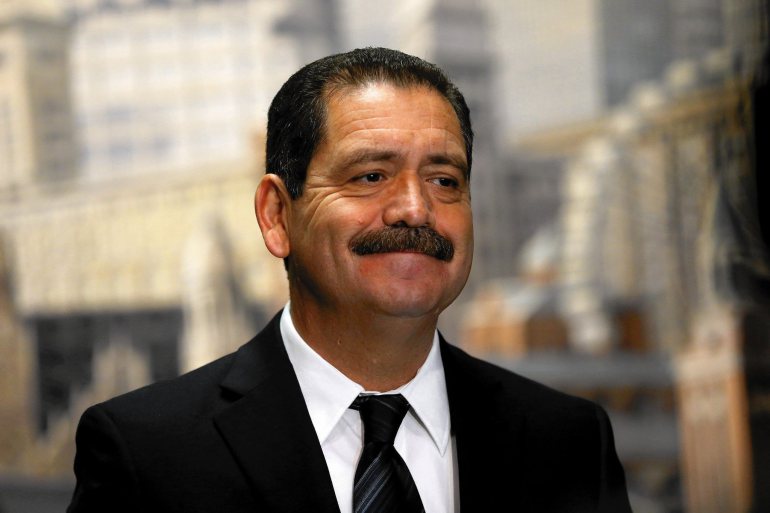
Mayoral candidate Jesus "Chuy" Garcia
Jesus “Chuy” Garcia: A big smile. Photo from the Chicago Tribune.
By Michael Klonsky | Special to The Rag Blog | March 2, 2015
“We are sick and tired of being sick and tired.” 
 Chuy Garcia quotes Fanny Lou Hamer in his election-night speech
CHICAGO — We used to have party primaries in Chicago. But after Harold Washington defeated Jane Byrne and Rich Daley in the 1983 Democratic primary, and went on to become the city’s first black mayor, they changed the rules. No longer would it be possible for a black or Latino candidate to split the white vote in a primary and win a three-way primary with less than 50% of the vote.
As a result, Chicago’s Democratic Party machine candidates have dominated the electoral scene with mayors like Rich Daley and Rahm Emanuel, with millions in their pockets, locking up City Hall and bringing in with them a gaggle of eager yes-men into the City Council. But change is in the air and it’s coming fast.
choose chuyLast week’s nonpartisan elections saw an alliance of union activists, teachers, and community-based organizations take Rahm and his machine candidates to the woodshed and spank the hell out of them. Rahm had the benefit of a $30 million campaign war chest and warm embraces from the Obamas, Nancy Pelosi, Eric Holder, and you-name-it from the national Democratic hierarchy. Yet long-time community activist and Washington ally Jesus “Chuy” Garcia and three other oppositions candidate were able to keep Rahm under 50% and force an April 7 runoff between Rahm and Chuy, the second highest vote-getter. Rahm became a national embarrassment to his party and his wealthy backers.
‘Nobody thought we’d be here tonight. They wrote us off…’
Chuy spoke to his supporters at an election-night victory rally:
Nobody thought we’d be here tonight. They wrote us off … said we didn’t have a chance … said we didn’t have any money … while they spent millions attacking us. Well … we’re still standing. We’re still running. And we’re going to win.
He had only weeks to mount a campaign. Chicago Teachers Union President Karen Lewis was a leading contender to run against Rahm. Lewis was leading in the polls last fall, until her candidacy was derailed by a brain tumor. With Lewis’s encouragement, Chuy stepped up and won the backing of the CTU and a large section of the union movement and an alliance of community groups.
With a late start and with little chance of winning, Chuy could only raise a fraction of the money that Karen could have raised. Yet he was able to ride a wave of anti-Rahm sentiment that transcended traditional racial and community lines.
rahm emanuel mugRahm’s three years of attacks on public employee unions; his mishandling of teacher union contract negotiations which led to the 2012 historic teachers strike; the closing of 50 public schools mainly in black neighborhoods on the south and west sides; his throwing of billions in city Michael Klonsky : An insurgent movement wins in Chicago | The Rag Blog:

Capitol Confidential » NYSUT calls out Moskowitz charter school network for planned rally (updated X2)

Capitol Confidential » NYSUT calls out Moskowitz charter school network for planned rally (updated X2):


NYSUT calls out Moskowitz charter school network for planned rally (updated X2)

As with part of the public conversation surrounding public education that has taken place since late last year, the state’s largest teachers union has sent a letter to the governor and state education officials questioning Wednesday’s planned charter school rally.
New York State United Teachers officials are wondering (in seemingly rhetorical fashion) if it’s sound educational practice for Success Academy Charter Schools, a New York City charter network run by Eva Moskowitz, to close its schools on Wednesday to bring students and staff to Albany for a rally, which it did last year as well. The NYSUT officials call out the charter school CEO for forcing parents whose children won’t be coming upstate to find alternate child care or take a day off from work.
“As a matter of policy, should Success Academy Charter Schools, Inc., as taxpayer-funded public schools, be permitted to close their doors and transport students, parents and staff to Albany for a rally?” NYSUT President Karen Magee and Executive Vice President Andrew Pallotta wrote. “Even if they use substantial private funds, is this the “right thing for students?”
Last year’s charter school rally outside at the Capitol was held on the same day as a universal pre-kindergarten rally held at the Washington Avenue Armory. Thousands more supporters showed up for the charter rally, which drew Gov. Andrew Cuomo and then Senate Co-Leader (now the Senate’s only leader) Dean Skelos, than did for the UPK rally.
NYSUT and public education advocates have held their fair share of rallies — large and small, during school days and during days off — over the years as well. But Magee and Pallotta, in another seemingly rhetorical set of questions, asked Cuomo and education officials if they too could get school boards and superintendents to close their schools to bring kids, parents and staff to the Capitol to lobby for state aid.
“If school boards and superintendents in the state’s nearly 700 school districts also wish to close en masse for a day and transport thousands of their students, parents and staff to Albany to lobby for additional state funding, would that be permissible?” they wrote. “Would you consider closing traditional public schools for a rally to be good public policy and the ‘right thing’ for all students?”
Wednesday will bring with it a pro-public education rally. The United Federation of Teachers, New York City’s teachers union, will hold its lobby day at the Capitol as well.
The competing rallies come at a time when public education advocates are up in arms over Cuomo’s proposed education policies. The headliner is his plan to allow outside entities, such as a nonprofit or another school district, to take the reins of schools deemed to be failing for three years. His office released a failing schools report last week to bolster his claims that such a proposal, based on a Massachusetts model, is essential.
You can read the full letter below:
Update: For what it’s worth, NYSUT is holding a rally Monday at the Capitol. The union says more than 1,000 people will be in attendance, but it doesn’t say in its release that students will be partaking. “Parents, educators and public school Capitol Confidential » NYSUT calls out Moskowitz charter school network for planned rally (updated X2):

Schools reschedule Dr. Seuss’s birthday fests so kids can take Common Core tests - The Washington Post

Schools reschedule Dr. Seuss’s birthday fests so kids can take Common Core tests - The Washington Post:


Schools reschedule Dr. Seuss’s birthday fests so kids can take Common Core tests


 March 2 is Dr. Seuss’s birthday, or, rather, the day 111 years ago when Theodor Seuss Geisel, the famous children’s author, was born, and for years, thousands of schools around the country have celebrated the day with book readings (“Cat in the Hat, “Green Eggs and Ham,” etc.) and Seuss character costumes. This year, some of those celebrations have been changed. Why? It’s the start of the spring 2015 testing season, and at many schools students will be taking PARCC Core standardized tests instead.

theannual “Read Across America Day,” he National Education Association in partnership with Dr. Seuss Enterprises. Millions of students traditionally participate as their schools host Seuss readings inwhat is billed by the NEA as the “nation’s largest reading observance.”
Many students and schools will still participate on Monday, but not as many as usual. Monday is the first day that schools can give some of the new Common Core tests, and many students will be taking the PARCC (the exam created by the Partnership for the Assessment of Readiness for College and Careers) instead of sitting down for a Seuss reading.
For example, in Illinois, North Elementary School in Sycamore held a “Cat in the Hat” celebration last week. According to the Daily Chronicle:
Reading specialist Amy Gehant and reading paraprofessional Elisa Rubeck organize the event annually as a way to mark Read Across America, which falls on Seuss’ birthday, which is Monday. This year they held the celebration early because of state-mandated testing taking place next week.
The same was true for schools in New Jersey and other states where the PARCC is starting on Monday — at least at those schools that were not closed or delayed because of bad weather.
PARCC is one of two new tests created by two multi-state consortia with some $360 million in federal funds from the U.S. Department of Education to design new accountability tests aligned to the Common Core State Schools reschedule Dr. Seuss’s birthday fests so kids can take Common Core tests - The Washington Post: