Latest News and Comment from Education

Thursday, October 2, 2014

10-2-14 Cali Education Headlines | CSIS – California School Information Services

Fiscal Crisis & Management Assistance Team | CSIS – California School Information Services:


Stop the Power Grab
www.StopThePowerGrab.org


Education Headlines

  • Group renews push for school mergers


    The group trying to consolidate Tuolumne County school districts into one will be back out on the streets this fall, trying to keep momentum for what is expected to be a long battle.
     
  • ‘Sexting’ investigation at Coachella Valley High School


    The Riverside County Sheriff’s Department has launched an investigation into the distribution of nude photographs among several Coachella Valley High School students.
     
  • Irvine Unified plans new schools as enrollment keeps rising


    Irvine Unified School District has built a school just about every year in the past decade to keep up with the fastest student growth in Orange County and possibly the state, while the county’s overall enrollment slipped.
     
  • Gov. Brown vetoes Sweetwater-inspired reform bill


    Gov. Brown on Tuesday vetoed an anti-corruption bill inspired by revelations of a “pay-to-play” culture among contractors and South Bay public officials at Southwestern College, the Sweetwater Union High School District and the San Ysidro School District.
     
  • L.A. school board authorizes talks on departure agreement with Deasy


    The Los Angeles Board of Education has authorized its attorneys to discuss terms of a possible departure agreement with schools Supt. John Deasy, The Times has learned.
     
  • Student ‘intimidated’ into standing for Pledge of Allegiance gets apology


    Compelling an atheist high school student to stand for the Pledge of Allegiance against his will was a mistake rooted in ignorance of his 1st Amendment protections, a misperception that apparently existed throughout the Oak Park Unified School District, the superintendent said.
     

Note: FCMAT provides links to California K-12 news stories as a service to the industry. However, some stories may not be accessible because of newspapers' subscription policies.

10-1-14 Cali Education Headlines | CSIS – California School Information Services
Fiscal Crisis & Management Assistance Team | CSIS – California School Information Services: Stop the Power Grabwww.StopThePowerGrab.orgEducation HeadlinesTeachers file grievance, say Stockton USD not bargaining in good faithThe Stockton Teachers Association said Tuesday it has filed charges with the Public Employment Relations Board over what is alleges is “the district’s failure to bargain in

Critique of Chetty et al.’s ASA Critique Published in TCR |

Critique of Chetty et al.’s ASA Critique Published in TCR |:


Critique of Chetty et al.’s ASA Critique Published in TCR


 You might recall from this past summer a post I wrote titled “Chetty Et Al…Are “Et” It “Al” Again!” The post was about how Raj Chetty and his colleagues (Harvard academics who have been the sources of other posts here, here, and here) took it upon themselves to “take on” the American Statistical Association (ASA) and their recently released “Statement on Using Value-Added Models for Educational Assessment.” Yes, the ASA as critiqued by Chetty et al., as yet another sign of how Chetty et al. feel about their own work in this area.

Anyhow, I consulted a colleague to write a critique of Chetty et al.’s critique that we published first on VAMboozled (here). Soon thereafter, also given some VAMboozled followers’ feedback, we consulted another colleague/statistician, built this critique into a more thorough/scholarly commentary, and recently found out that the highly-esteemed, peer-reviewed journal – Teachers College Record – picked it up for publication.
Congrats to my colleagues, Assistant Professors Margarita Pivovarova and Jennifer Broatch.
For followers, here is the piece in full in case you’re all interested in reading the revised (and now more thorough with citations) post. Here also is the direct link to the commentary online.Critique of Chetty et al.’s ASA Critique Published in TCR |:

Missouri Parents: Look into the Crystal Ball of NY State & Common Core Effect on Children | Missouri Education Watchdog

Missouri Parents: Look into the Crystal Ball of NY State & Common Core Effect on Children | Missouri Education Watchdog:


Missouri Parents: Look into the Crystal Ball of NY State & Common Core Effect on Children

show me state

NY parents are showing us the Common Core effect on their children. Still like Common Core?

Building The Machine has released a second video on Common Core.  The second part consists of parent interviews from NY parents on the effects of Common Core instruction and/or curriculum on their children.  NY state fully implemented the standards two years ago so it is a good bet Missouri parents will have the same experience as these parents.  Unless, of course, the New York teachers were clueless in implementation since the standards are so stellar.  I’m sure that if the Missouri teachers ‘just’ understand the implementation process Missouri parents won’t see the issues those in New York are experiencing.
Unless we eradicate the standards from Missouri and you don’t believe it’s ‘just’ an implementation problem, this might just be the future in our state.


Making Money Off Students - You're Bats!

Money Off Students:


Making Money Off Students


Money Off StudentsTennessee Students, ‘Fastest Improving’ at Making Money for Venture Capitalists

In the article, “Venture Capitalists Are Poised to ‘Disrupt’ Everything About the Education Market,” Lee Fang raises the following two questions, “What kind of influence will the for-profit education sector attempt to exert over education policy? and, “If school reform is crafted to maximize the potential for investor profit, will students benefit, as boosters claim—or will they suffer?”
These questions are relevant and timely considering the current educational climate in the state of Tennessee, which, according to U.S. Secretary of Education Arne Duncan, Tennessee Governor Bill Haslam, and Tennessee Education Commissioner Kevin Huffman, is currently the “fastest improving” state in the nation. While these so-called ed-reformers would have us believe that Tennessee is making great gains in the testing arena, in actuality, we are making great gains FOR testing companies, Charter schools, and corporations, NOT our students.
In Tennessee, the “ influence….exerted over education policy ” is being exercised by the strong arm of the Achievement School District, or ASD (modeled after the failing Recovery School District in New Orleans ) which took over Memphis City Schools last year in a controversial merger with Shelby County, and which has recently gained entrance to Nashville through a vote backed by the local school board. According to the ASD website, the ASD “… is both an operator of schools and an authorizer of high quality public charter schools.” Obviously, “high quality” is open to interpretation as the ASD is modeled after a school system that, instead of “recovering” the community and students it serves, has destroyed and failed them miserably.
This year, there will be 22 ASD-run “high quality” public Charter schools in Memphis and one in Nashville. The ASD is intent on controlling public education in Tennessee and selling Tennessee students, schools, and their data to the highest bidders: the Bill and Melinda Gates Foundation, Eli and Edythe Broad Foundation, the Walton Family Foundation, and the British-owned company, Pearson Publishing, Inc.
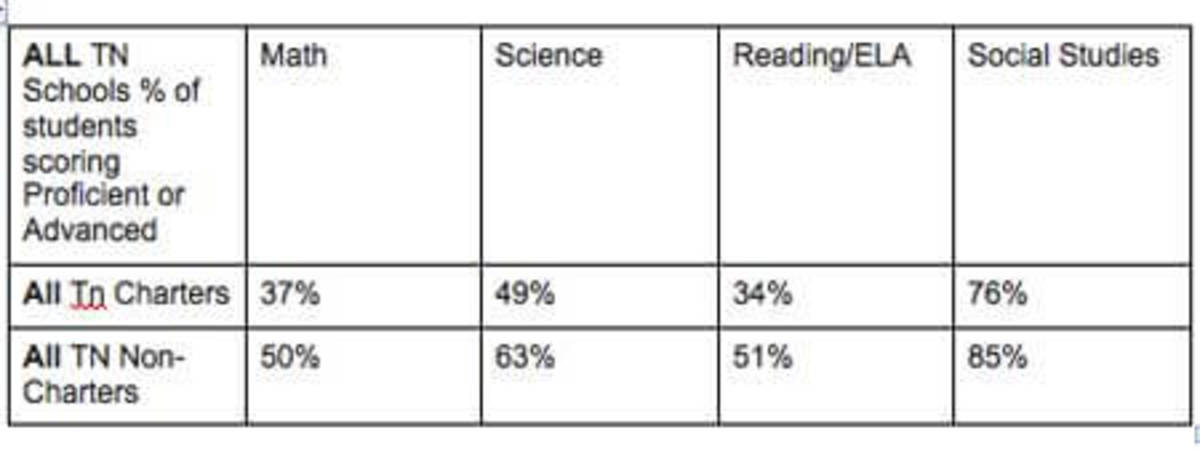
sanson-tableWhy would the ASD choose to take over Tennessee schools and sell our children to these non-profits and corporate giants? The answer lies in the ASD’s mission statement: “The Achievement School District was created to catapult the bottom 5% of schools in Tennessee straight to the top 25% in the state. In doing so, we dramatically expand our students’ life and career options, engage parents and community Money Off Students:

What is a state education funding formula? | Philadelphia Public School Notebook

What is a state education funding formula? | Philadelphia Public School Notebook:


What is a state education funding formula?

By 
Dale Mezzacappa
 on Oct 2, 2014 10:37 AM


Although most education funding comes from local sources, all states contribute to school district costs, compensating for differences in property wealth, income levels, and taxing capacity among districts. Most states have a formula that guides how the aid is distributed among districts, based on factors such as enrollment, local wealth, and student characteristics.
Ideally, formulas are designed to make sure all districts have adequate funds and increase equity among districts. The particulars of each formula differ, but normally, richer districts get less state aid, while poorer districts depend on the state for much of their education money.
Is anyone proposing an education funding formula for Pennsylvania?
The state’s General Assembly has established a bipartisan House-Senate group – the Basic Education Funding Commission. Its 15 members, mostly lawmakers, are charged with “developing and recommending” to the legislature a “new formula” to govern how basic education aid is distributed to districts. Basic education makes up more than half of state aid to districts, accounting for $5.5 billion this year.
There is also renewed political and legal pressure. A statewide coalition of advocacy groups is pushing Harrisburg to enact a formula that promotes equity for students and fairness for taxpayers. Some organizations are also preparing a lawsuit based on the state constitutional guarantee that all students are entitled to a thorough and efficient education.
What exactly will the Basic Education Funding Commission consider?
The commission’s job is to improve how Pennsylvania distributes basic education aid, which could help address the equity issue. The group says it will take into account a district’s “relative wealth, local tax effort, geographic price differences, enrollment levels, local support,” and other factors.
The commission is not charged with examining “adequacy” – determining what each district needs and how much the state should contribute.
Are there disagreements about how much money is needed to adequately educate each student?
Yes. Some officials conclude that weak student outcomes, such as low graduation rates, are evidence that districts like Philadelphia do not make good use of money and so should not get any more. Others say that high-poverty districts like Philadelphia get low student outcomes because their students have great needs and the district does not have enough resources to meet them.
Are there disagreements about where the money should come from?
Although almost all states divide up education costs between local and state sources, determining how to do this and what the balance should be is the subject of political negotiation and conflict.
Most policymakers agree that state aid is meant to be a leveler and that poorer districts should get more state aid than richer ones. But states and localities often squabble over who is more responsible for meeting educational needs and whether local districts carry their fair share.
When states cut back education spending, more of the burden falls on local taxes, usually property taxes. Sometimes those taxes become intolerable, especially for seniors on fixed incomes. This has led to proposals to eliminate local property taxes and raise school money through other means, such as payroll or sales taxes.
Are there disagreements about how state aid should be distributed?
Most state funding formulas look at overall district needs. But some experts, including Geoorgetown University professor Marguerite Roza, who is a consultant to the Basic Education Funding Commission, advocate a system that starts by calculating the needs of the individual child, including any special services required, and provides each with a virtual “backpack” of money that follows the child to his or her school. Although some advocacy groups also favor this approach as a way to target more funds to the neediest students, they are leery that it could be used to send students and public funds to private schools.
Another area of controversy is the “hold-harmless” provision, which guarantees that every district will get no less than the year before, even if its student population goes down. And the school code now guarantees that every district, no matter how rich, will get some state money – that’s called “minimum subsidy.” As a result, wealthier districts get millions in state aid that they arguably could manage without, while students in poorer districts may go without basic services.
Is there any prospect for immediate change?
The Basic Education Funding Commission, which is holding hearings statewide, is expected to make a report in June. Its recommendations and whether they pass muster with the legislature will likely be influenced by who wins the November gubernatorial race.
Gov. Corbett and his Democratic challenger, Tom Wolf, have fundamentally different views on education spending. While Corbett has declined to raise taxes for education, Wolf says he wants to tax fracking and close corporate loopholes to raise more money.

Sub Title:  Few districts have borne the brunt of the state’s current system as much as Philadelphia. Author:  Dale Mezzacappa The point of a state education funding formula is to be fair, help all districts reach spending levels adequate to their needs, and adjust for demographic and other changes. Funding should be predictable so that districts can plan. But Pennsylvania long ago aba


A look back: How Pennsylvania has distributed money for education since the 1960s
1960s There were 2,277 school districts in Pennsylvania. Under Gov. William W. Scranton, a series of consolidations reduced the number of districts to fewer than 700 (it fell to 505 by the late 1970s). read more


Notes from the news, Oct. 2
In Philadelphia debate, Corbett and Wolf spar again on education cuts. Notebook In Tom Corbett/Tom Wolf race, being the 'education governor' is hallowed ground: debate coverage. Patriot-News Corbett-Wolf debate in Philly heated. Morning Call Groups charge $30 million in charter school fraud, call for tougher oversight. NewsWorks City schools to accept new charter applications. Inquirer Fitch down
Comparing Wolf and Corbett on 'Radio Times'
Listen to Radio Times on WHYY at 10 a.m. this morning as Notebook editor Dale Mezzacappa talks differences in approaches to education between gubernatorial candidates Tom Wolf and Tom Corbett.  Reporters Marielle Segarra and Holly Otterbein from WHYY and Katie Colaneri from StateImpact Pennsylvania will be on the same hour to discuss the candidates' views on taxes, jobs, the economy, and the envir

'Dems for Public Ed' Releases Poll Showing Overwhelming Support for Public Schools - Democrats For Public Education

'Dems for Public Ed' Releases Poll Showing Overwhelming Support for Public Schools - Democrats For Public Education:


‘Dems for Public Ed’ Releases Poll Showing Overwhelming Support for Public Schools

Democrats For Public Education

Those Slamming Public Ed Out-Of-Step With Parents & Voters
(WASHINGTON, D.C.) – Today, Democrats For Public Education (DPE) released the results of a national voter survey recently commissioned on public schools and public education. Conducted by  Harstad Strategic Research – a Colorado-based firm which worked on President Barack Obama’s 2008 election and 2012 re-election – this poll shows how voters back public education in large numbers.
Roughly 2/3 of Americans agree with traditionally Democratic positions when it comes to education – especially when it comes to overwhelming support for neighborhood schools and teachers. Overall, 82% of those voters able to rate their local teachers believe them to be excellent, very good, or good. Moreover, solid majorities (61%) back more funding for public schools – including 79% of Democrats, 57% of Independents, and even 45% of Republicans.
The survey validates that those who castigate public schools and teachers are simply out-of-step and out-of-touch with the American people, parents and voters. It’s also troubling that teachers are being laid off and public school funding is being slashed, while additional tax breaks are handed out to corporations and the uber-wealthy. Respondents believe that precious taxpayer dollars should go toward funding education, rather than corporate profits, CEOs or advertising budgets.
“Schools should be about learning, not profit,” said DPE Co-Chair Ted Strickland, former Governor of Ohio. “This poll backs up that we must support our neighborhood public schools. That means backing up teachers and listening to the parents and educators who know what’s best for kids in the classroom. It means bringing forth engaging curriculum that focuses on critical-thinking and problem-solving, rather than this obsession with standardized testing and educators being forced to teach to the test.”
“These poll results clearly show that, contrary to what some naysayers push, the American people are proud of their public schools. And they’re proud of public school teachers,” said DPE Co-Chair Denise Juneau, Montana State Superintendent. “As Democrats For Public Education, we believe we should be lifting up and championing both – by investing time, energy and resources.”
“I’ve seen an awful lot of polling through the years, and any politician or elected official would love to have the favorability ratings enjoyed by local public schools and teachers in this survey,” said DPE President Steve Rosenthal. “The facts are on our side, and we are beyond pleased with these findings. This information could – and should – be used as a roadmap for those who want to speak out loud and clear in support of neighborhood schools and public education.”
Launched just last month, DPE is a 527 formed to show that Democrats remain united around a core set of principles to ensure public education thrives for generations to come. Already, elected officials, party leaders and activists at all levels of government and from communities in 43 states have signed up as supporters at www.DemocratsForPublicEducation.com.
Below please find a memo detailing core results from the national telephone survey. Over 1200 individuals were polled from September 11th-16th.
****
To: Interested Democratic Candidates and Elected Officials
From: Paul HarstadDate: September 22, 2014Re: Findings and Talking Points from a National Voter Survey on Public Schools

Harstad Strategic Research conducted a national telephone survey among 1202 active voters on behalf of Democrats for Public Education from September 11 to 16, 2014. The survey focused upon a series of education issues. Set forth below are the key survey findings and recommended talking points on various education issues.

1. Americans are widely supportive of public schools and their teachers.
Solid majorities back more funding for public schools and teacher pay, and overwhelming majorities rate local public schools and their teachers highly.
  • A 61% majority of voters believe that state funding for public schools should be increased – including 79% of Democrats, 57% of Independents and even 45% of Republicans.
  • And 56% of voters with an opinion believe pay for public school teachers falls short of what it should be.
  • Fully 82% of voters able to rate their local public school teachers rate them as excellent, very good, or good – versus just 8% who rate them as marginal or poor. Among public school parents, 93% rate public school teachers as excellent, very good, or good.
  • Speaking of public school parents, 84% give their children’s schools an A (53%) or B (31%) grade. Ten percent offer a C, and 3% say D or F. While there is certainly room for improvement, the median grade would in effect be an A-minus.
2. Teachers are not seen as the problem.
When given four broad reasons for why public schools might not be performing better'Dems for Public Ed' Releases Poll Showing Overwhelming Support for Public Schools - Democrats For Public Education: