Latest News and Comment from Education

Tuesday, October 29, 2019

Jeff Bryant: Wait, It Gets Worse: Eli Broad’s School Corruption Legacy | OurFuture.org by People's Action

Wait, It Gets Worse: Eli Broad’s School Corruption Legacy | OurFuture.org by People's Action
Wait, It Gets Worse: Eli Broad’s School Corruption Legacy

Billionaire charter-school boosters like Education Secretary Betsy DeVos and Eli Broad and have turned school leadership into a cartel system focused on advancing careers and enriching businesses. One can see, in the track record of Broad-infused school leaders like John Covington, the workings of this cartel.
In leadership positions in both Kansas City and Detroit, Covington is considered by many observers to have had an impact on student achievement that was minimal or negative. Yet, in both Kansas City and Detroit, his impact on the community disruption was profound.
During his tenure in Kansas City, Covington generally angered teachers and parents and focused on leadership imperatives more familiar in the business community, such as “right-sizing.” Student scores on standardized tests declined under his tenure, and after he left, the Kansas City district lost its accreditation due to continuing low achievement. In a 2014 article, Kansas Star reporter Joe Robertson wrote, “Most of the classroom reforms Covington started in Kansas City were subsequently dropped.”
Covington also left his Michigan position under a cloud of controversy over the lack of academic progress in the schools and questions about tens of thousands of dollars a month spent on travel expenses by his administration. The state-operated district he led was regarded as a failure and was shut down in 2017.
But what Covington brought with him from Kansas City to Detroit was his connection to Broad and his relationships with private businesses—most notably, a software company called Agilix, its Buzz learning platform, and the School Improvement Network (SINET) consulting firm.
As was reported in the Detroit Metro Times by Curt Guyette, the same journalist who would later break the Flint water crisis story, after Covington was instrumental in bringing Agilix and its software platform to Kansas City, he then promoted the product to the Education Achievement Authority (EAA) as a critical component of “student centered learning.” Under the EAA’s direction, CONTINUE READING: Wait, It Gets Worse: Eli Broad’s School Corruption Legacy | OurFuture.org by People's Action

The Walton Family: Ungrateful Graduates of Public Schools | Diane Ravitch's blog

The Walton Family: Ungrateful Graduates of Public Schools | Diane Ravitch's blog

The Walton Family: Ungrateful Graduates of Public Schools

No philanthropy has spent more money to undermine and privatize public schools than the Waltons. The Waltons are the richest family in the U.S., possibly in the world, with a net worth in excess of $200 billion.
The Walton Family Foundation claims credit for launching at least one of every four charter schools in the nation. The foundation aims to eliminate public education, crush teachers’ unions, and destroy the teaching profession. The foundation has given nearly $100 million to Teach for America to supply inexperienced, ill-trained teachers to public and charter schools.
It is hard to understand the Waltons’ animus towards public schools, since the patriarch Sam Walton, his wife Helen, and all of his children were graduates of small-town public schools.
Sam graduated from David H. Hickman High School in Columbia, Missouri. His wife Helen was the valedictorian of her public high school in Claremont, Oklahoma.
John Walton (who died in a plane crash in 2005) graduated from the Bentonville High School in Bentonville, Arkansas.
Alice Walton, the richest woman in the world, graduated from Bentonville High School in 1966.
Jim Walton, net worth exceeding $40 billion, graduated CONTINUE READING: The Walton Family: Ungrateful Graduates of Public Schools | Diane Ravitch's blog

FYW Students Respond to Warner’s The Writer’s Practice: Progress, Not Perfection | radical eyes for equity

FYW Students Respond to Warner’s The Writer’s Practice: Progress, Not Perfection | radical eyes for equity

FYW Students Respond to Warner’s The Writer’s Practice: Progress, Not Perfection

When John Warner released The Writer’s Practice: Building Confidence in Your Nonfiction Writing soon after his Why They Can’t Write, I highly recommended both volumes for those teaching writing (here and here). Of course, a much better barometer of the value of books on how to write and how to teach writing is to put them in the hands of students and teachers.
A bit past midway through this fall semester of 2019, my first-year writing students have just finished reading and reflecting on The Writer’s Practice; the final reflections and our in-class debrief yesterday revealed high praise and key lessons we who teach writing can learn from what my students valued about the book, and how they framed those lessons for them as students and writers.
One student began her reflection as follows:
As I opened up The Writer’s Practice to read the final section, I felt myself experiencing emotions similar to those when I am about to finish a really wonderful piece of fictional writing. This feeling for me is more guttural, and it comes about when I am truly sad or upset to be finishing a piece. Most of the time it is because there is a change in the plot that I didn’t enjoy, or I just truly don’t want the happily ever after to conclude. But I was genuinely confused as to why I experienced this feeling when reading the final few sentences of this piece. Never in my life has I been saddened by the conclusion of reading a book for school, fiction or nonfiction, besides The Catcher and the Rye and now this book. Because of this, I have come to the conclusion that I truly did enjoy reading this book. And I believe it was mostly because of the informal language used throughout. The way in which Warner speaks to the audience is something very intriguing to me, and it made me feel like I was holding a conversation with an actual person instead of reading a boring and monotonous book for school.
In the two sections of FYW I teach, I read in reflections and heard in our discussion some powerful patterns throughout the student endorsements of Warner’s book as an effective textbook for teaching writing. Those CONTINUE READING: FYW Students Respond to Warner’s The Writer’s Practice: Progress, Not Perfection | radical eyes for equity

NANCY BAILEY: The Haunted Third Grade Classrooms Children Fear: Enter and… Stay Forever!

The Haunted Third Grade Classrooms Children Fear: Enter and… Stay Forever!

The Haunted Third Grade Classrooms Children Fear: Enter and… Stay Forever!

Children fear third grade retention. It doesn’t motivate them to learn. They don’t read earlier because of it. Retention is not effective. It’s scary and could haunt a child forever.
Third grade retention laws are real for children in nineteen states. NEA Reports noted in 2017 that 16 states and Washington D.C. make it mandatory that students who don’t read at a certain level by the end of third grade will fail. Some exceptions are made for students with disabilities, ELL students, and students of color. Alaska, Colorado, Maine, Maryland, New Jersey, New Mexico, Oklahoma and West Virginia permit retention, but don’t mandate it.
It’s hard to imagine legislators so uninformed they would encourage, let alone mandate laws that are harmful to children!
Schools have always used retention, especially in earlier grades, but it was not mandatory, and not based on one test. Parents and teachers determined whether it might help a child. Even then, it wasn’t always a good strategy. The stigma attached to retention is often hurtful.
A year is eternity when a child is left behind. In some places, children have been kept back twice! Aside from the hurt of watching your friends move forward, most children CONTINUE READING: The Haunted Third Grade Classrooms Children Fear: Enter and… Stay Forever!


College Board Under Fire for How It Shares SAT and PSAT Data - Non Profit News | Nonprofit Quarterly

College Board Under Fire for How It Shares SAT and PSAT Data - Non Profit News | Nonprofit Quarterly

College Board Under Fire for How It Shares SAT and PSAT Data
Parent Coalition for Student Privacy - https://www.studentprivacymatters.org/

The College Entrance Examination Board (The College Board) is a membership nonprofit with a budget of $900 million. It receives $1 billion in revenue to prepare students for institutions of higher learning. Now, several Illinois lawmakers want the organization to be investigated regarding the alleged sale of students’ data.
The College Board offers the Scholastic Aptitude Test (SAT) and Preliminary Scholastic Aptitude Test (PSAT), which high school students take as part of applying to colleges—although Nonprofit Quarterly has noted the trend of colleges eliminating the SAT requirement. The College Board is a vendor for the Illinois State Board of Education with a $29 million contract to provide the SAT and PSAT. Last year, the state paid them $2 million in fees to College Board to cover the Advanced Placement tests for low-income students.
Nine lawmakers have called on Illinois Attorney General Kwame Raoul to investigate how The College Board disseminates the data it gathers from those who take its tests.
“Although the College Board asks students for their consent (including those under age 18) for disclosing their data to colleges, universities and scholarship providers, they do not inform either students or parents that they will be providing the data to these organizations in exchange for a monetary payment,” the lawmakers said in a letter to Raoul.
Red flags were raised a year ago by the FBI regarding the vulnerability of various education technology, and the threat to students’ privacy across the grades, elementary through secondary and higher learning. Following stories by the New York Times, the Washington Post, and others, Illinois lawmakers decided to probe the actual data trail as part of a reinforcement of the Student Online Personal Protection Act, which prevents the sale or leasing of student information.
Students sitting for the standardized tests fill out survey questions along with the exams. The data that is sold contains, along with test scores, their interests and extracurricular CONTINUE READING: College Board Under Fire for How It Shares SAT and PSAT Data - Non Profit News | Nonprofit Quarterly

Diane Tavenner’s new gig and our updated Summit fact sheet as it moves further into Chan-Zuckerberg’s control | Parent Coalition for Student Privacy

Diane Tavenner’s new gig and our updated Summit fact sheet as it moves further into Chan-Zuckerberg’s control | Parent Coalition for Student Privacy

DIANE TAVENNER’S NEW GIG AND OUR UPDATED SUMMIT FACT SHEET AS IT MOVES FURTHER INTO CHAN-ZUCKERBERG’S CONTROL


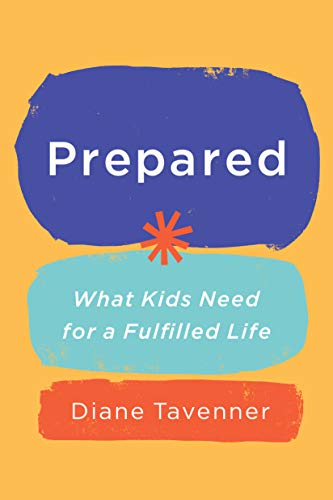
Diane Tavenner is appearing in NYC  on Nov. 6, to talk about her new book with Angela Duckworth, sponsored by the Walton Family Foundation.  You can RSVP here, “for an intimate conversation between two of America’s leading CEOs, educators, researchers and mothers.” Doors open at 5:30 with a cocktail reception.  According to the invitation, “Each attendee will receive a copy of Prepared and will have the opportunity to have it signed by the author.”
As our updated Summit fact sheet explains, the controversial Summit Learning Platform that has aroused such fierce opposition from parents and students alike at public schools across the nation has now been handed off to  a new organization called T.L.P., run by a board led by Mark Zuckerberg’s wife, Priscilla Chan.
Diane Tavenner continues to run the west coast chain of Summit charter schools, which are involved in ongoing battles with teachers intent on organizing a new union.  At the same time, Taverner is launching a bunch of new initiatives, including promoting her new book that features advice for parents called “Prepared: What Kids Need For a Fulfilled Life.
The book has its own website as well as a glowing blurbs from Todd Rose, director of Harvard Graduate School of Education,  Angela Duckworth, Linda Darling Hammond and Wendy Kopp.   According to Amazon, the book is #30 in Charter Schools, #65 in Education Leadership   and #97 in Business Education.
The website says that the book will be “Your Roadmap to What Kids Need for a Fulfilled Life” and will educate parents that their children “deserve opportunities to discover their unique interests and talents” as well as  “pursue the lives they want to live—filled with financial security, CONTINUE READING: Diane Tavenner’s new gig and our updated Summit fact sheet as it moves further into Chan-Zuckerberg’s control | Parent Coalition for Student Privacy

Rollout and Webinar Series - California School Dashboard and System of Support (CA Dept of Education)

Rollout and Webinar Series - California School Dashboard and System of Support (CA Dept of Education)

2019 CALIFORNIA SCHOOL DASHBOARD: ROLLOUT AND WEBINAR SERIES

This letter is to notify you of the timeline for the release of preview data on the state indicators for the 2019 California School Dashboard (Dashboard) and invite you to participate in the Dashboard webinar series. During the month of November, the California Department of Education (CDE) will release the state indicator data on a rolling basis. The Dashboard public release is scheduled for the week of December 9, 2019.
To support local education agencies (LEAs) with the rollout of the state indicators, the CDE will host a webinar series. Following each webinar, the PowerPoints will be made available on the California School Dashboard and System of Support web page at https://www.cde.ca.gov/ta/ac/cm/. Information on accessing the webinars is provided in Attachment 1 along with the dates and times.
The Dashboard preview, along with downloadable data files, will be available on password-protected web sites. The link and single password to access these sites will be sent in a separate email to Dashboard and Secure Accountability Coordinators on November 5, 2019.

Charter Schools and the 2019 Dashboard

Additionally, on October 30, 2019, the CDE will host a webinar regarding the eligibility of charter schools for differentiated assistance under the Local Control Funding Formula (LCFF) which begins with the 2019 Dashboard. Information on accessing this webinar is also provided in Attachment 1. Charter school administrators and charter school authorizers are encouraged to participate in this webinar.

Reminder to Upload the Local Indicators by November 1, 2019

November 1, 2019, is the deadline for LEAs and charter schools to upload their local indicators to the Dashboard. If you have any questions regarding local indicators, please contact the Local Agency Systems Support Office by e-mail at lcff@cde.ca.gov or by phone at 916-323-5233.
If you have questions about the private preview and state indicators, please contact the Academic Accountability Unit by e-mail at aau@cde.ca.gov or by phone at 916-319-0863.
If you have any questions regarding the data elements discussed in the Charter LCFF Eligibility webinar, please contact the Data Visualization and Reporting Office at LCFFESSAData@cde.ca.gov, questions about Charter Schools can be directed to CHARTERS@cde.ca.gov, questions about the System of Support and school/district improvement can be sent to CaSystemofSupport@cde.ca.gov or SISO@CDE.ca.gov and questions about Local Indicators can be directed to LCFF@cde.ca.gov.
Sincerely,
/s/
Cindy Kazanis, Division Director
Analysis, Measurement, and Accountability Reporting
cc: LEA Accountability Coordinators
Dashboard Coordinators
Rollout and Webinar Series - California School Dashboard and System of Support (CA Dept of Education)

The unintended consequences of forcing schools to share the same building - The Washington Post

The unintended consequences of forcing schools to share the same building - The Washington Post

The unintended consequences of forcing schools to share the same building


A growing number of schools across the country share buildings and other facilities with other schools, a practice called “co-location.” Although on the surface it seems to make sense to give empty space in a public school building to, say, a charter school without a brick-and-mortar home, there are a variety of issues that make this a far more problematic “solution” than it seems.

In this post, academics Kathy Schultz, Wagma Mommandi and Melia Repko-Erwin of the University of Colorado at Boulder look at those unintended consequences, which affect teachers, students and entire communities.
Schultz is dean of the school of education at the University of Colorado at Boulder, and her new book is “Distrust and Educational Change.” Mommandi and Repko-Erwin are doctoral students at the school.

By Kathy Schultz, Wagma Mommandi and Melia Repko-Erwin

When teachers and students started the 2019-20 school year, most returned to their own school buildings — though many found themselves sharing their facilities with one or more schools. It’s a phenomenon known as “co-location,” and it has become an increasingly common practice, especially in urban school districts. But while the decision to co-locate schools may seem like an obvious solution when one school is in need of space and another has extra, the unintended consequences of this decision can lead to distrust between students, teachers and administrators.
Image result for Distrust and Educational Change.
An all-too common scenario occurs when district leaders decide to house two distinct schools within a single building because an existing school has extra space and a newly approved school is in need of space. Some link this seemingly paradoxical issue of having too much and too little space to the proliferation of school choice and changing urban demographics; for instance, in 2000, California voters approved Proposition 39, which stated that available or “unused” space in district school CONTINUE READING: The unintended consequences of forcing schools to share the same building - The Washington Post

Distrust and Educational Change: Overcoming Barriers to Just and Lasting Reform: Katherine Schultz: 9781682532973: Amazon.com: Books - https://www.amazon.com/Distrust-Educational-Change-Overcoming-Barriers/dp/1682532976


Educators Rack Up Wins with Student-Centered Advocacy - NEA Today

Educators Rack Up Wins with Student-Centered Advocacy - NEA Today

Educators Rack Up Wins with Student-Centered Advocacy


Something remarkable is happening. It’s happening right now: more than 35,000 members of the Chicago Teachers Union and SEIU Local 73 are on strike for the schools Chicago students deserve. Sound familiar? It should.
More and more educators across the country are organizing around issues that extend beyond wages, hours, and professional working conditions and are unifying around a set of demands that benefit students and the wider community. It’s called student-centered bargaining and advocacy.
We’ve seen it in California where member of the United Teachers of Los Angeles included in its bargaining demands a stop on the so-called random wanding of students, which has resulted in racial profiling in schools.
And it happened in Minnesota, where members of the St. Paul Federation of Educators put a proposal on the table to forbid the school district from doing business with banks or other financial institutions that foreclose on the homes of school-age children during a school year, do not pay their employees a $15 an hour minimum wage, and do not offer paid sick leave to their employees.
Efforts like these have increased, and many local unions have launched impressive bargaining campaigns that elevate educators, advocate for students, and advance the common good. Columbus, Ohio, home to the largest school district in the state with over 56,000 students, is one such place.
The Tipping Point
In 2018, after years of neglect by the Columbus City Schools, frustration reached a tipping point. Class sizes were high, art and music were taken out of classrooms CONTINUE READING: Educators Rack Up Wins with Student-Centered Advocacy - NEA Today


How a lawsuit over Detroit schools could have an 'earth-shattering' impact

How a lawsuit over Detroit schools could have an 'earth-shattering' impact

How a lawsuit over Detroit schools could have an 'earth-shattering' impact
"Every school in the country would be affected," one expert said. "There could be a lot of litigation."


After two years of struggling to pass any of his community college classes, Jamarria Hall, 19, knows this for certain: His high school did not prepare him.
The four years he spent at Detroit’s Osborn High School were “a big waste of time,” he said, recalling 11th and 12th grade English classes where students were taught from materials labeled for third or fourth graders, and where long-term substitutes showed movies instead of teaching.
What’s less certain, however, is whether Hall's education in Detroit’s long-troubled school district was so awful, so insufficient, that it violated his constitutional rights.
That’s the question now before a federal appeals court that heard arguments last week in one of two cases that experts say could have sweeping implications for schools across the country.
The cases, now snaking their way through the federal courts, could yield “enormous, almost earth-shattering change in terms of educational funding and educational opportunity,” said Derek Black, a law professor at the University of South Carolina whose research has focused on educational rights and constitutional law.
The Detroit case was filed in 2016 on behalf of Hall and other students who attended rodent-infested, crumbling schools that lacked certified teachers and up-to-date textbooks. It argued that appalling conditions, including an eighth grader who taught math to his classmates for a month after his teacher quit, denied students a basic right to literacy.
similar case was filed on behalf of students in Rhode Island last year, asserting that they were denied a basic civics education.
If either case succeeds and is ultimately upheld by the Supreme Court, Black said, it would establish for the first time that students have a “fundamental right” to an education that meets minimum standards of quality.
“It would lay down a huge marker in terms of how all the states CONTINUE READING: How a lawsuit over Detroit schools could have an 'earth-shattering' impact


Monday, October 28, 2019

Peter Greene: Is Big Brother Watching Your Child? Probably.

Is Big Brother Watching Your Child? Probably.

Is Big Brother Watching Your Child? Probably.
One of the current trends in education is the increasing surveillance of students.
The idea is not new. For several years now companies have sold versions of student monitoring as an educational tool. There were pitches for software that would read facial expressions and eye movement to determine if students were learning. Companies are lining up sales pitches for software that will measure the social and emotional well-being of students. Testing company NWEA is prepared to measure student engagement based on the speed with which they answer multiple choice questions. A Dutch company believes they can accomplish amazing things with audio surveillance of students.
These ed tech wonder-programs overpromise and underdeliver, but while they’ve been struggling to establish their education bona fides, surveillance companies have found another sales pitch for extending their reach into schools.
Florida has been on the cutting edge of this development. After the Marjorie Stoneman Douglas High School murders, the legislature passed the Marjorie Stoneman Douglas School Public Safety Act. The part of the act that got attention at the time was the raising of the CONTINUE READING: Is Big Brother Watching Your Child? Probably.


Parent Coalition for Student Privacy - https://www.studentprivacymatters.org/

Chance the Rapper advocates for Chicago teachers as host of 'Saturday Night Live' - CNN

Chance the Rapper advocates for Chicago teachers as host of 'Saturday Night Live' - CNN

Chance the Rapper advocates for Chicago teachers as host of 'Saturday Night Live'

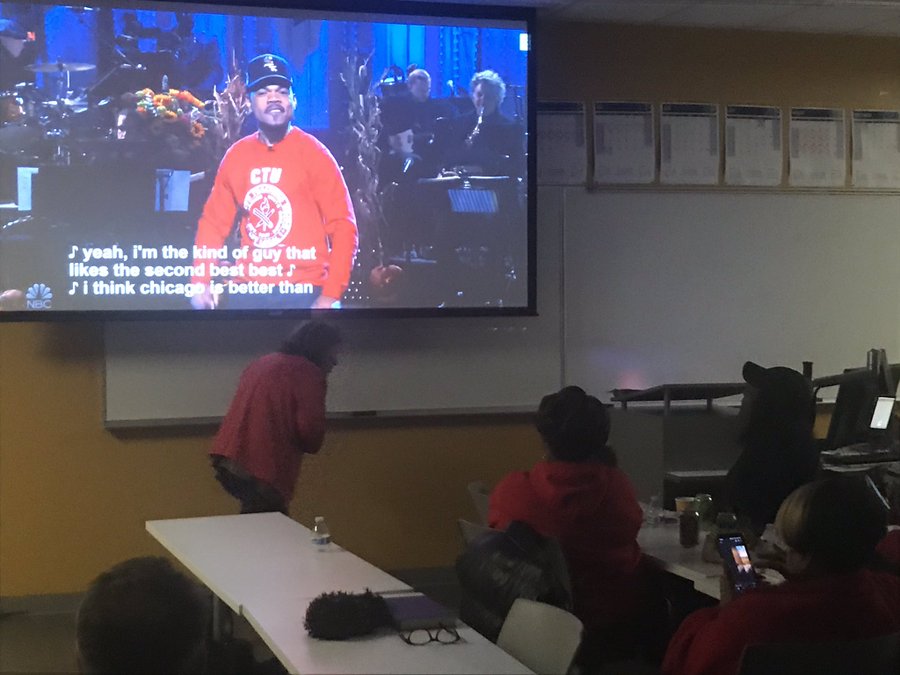
Chance the Rapper donned a red Chicago Teachers Union sweatshirt while hosting "Saturday Night Live" in a show of support to the teachers who have been on strike.
Chance the Rapper showed support for the Chicago teachers on strike by wearing a Chicago Teacher's Union Sweatshirt when he hosted "Saturday Night Live."
Chicago teachers have been on strike since October 17 demanding more support staff, higher raises and limits to class size. Chicago Public Schools is the third biggest school district in the country.
"To the teachers in Chicago, I know you guys are on strike right now. I fully support you," Chance said Saturday, adding the joke "I just wish that when I was in school my teachers had gone on a strike."
    Chance, who is from Chicago, also rapped about the city's nickname "The Second City" and how he's a fan of all things in second place.
    Michelle Gunderson, a public school teacher and trustee for the teacher's union, tweeted during SNL that the bargaining team was working but took a break to watch the rapper.
    "Your teachers thank you," Gunderson tweeted.
      Several SNL cast members were seen at the end of the show wearing Chicago Teachers Union T-shirts.
      This isn't the first time Chance has shown support for Chicago educators. In 2017, he donated $1 million to the city's public schools to support arts and enrichment programming.


      Chance the Rapper advocates for Chicago teachers as host of 'Saturday Night Live' - CNN