Thursday, January 3, 2019

How Restorative Practices Can Improve School Climate - The Atlantic

How Restorative Practices Can Improve School Climate - The Atlantic

How to Turn Schools Into Happier Places
A strong student-teacher relationship can help put a dent in school suspensions, according to a new study.
When the Trump administration’s released its school-safety report last month, it landed with a thud—and only partly because it’s a clunky 180 pages. Many of the recommendations in the report, authored by the Federal Commission for School Safety, are aimed at fostering a better school climate—how a schools feels to the students who attend it—whether that’s through improved access to counseling and mental-health services or a greater emphasis on social-emotional learning. But other recommendations were met with derision, such as a proposal to rescind an Obama-era rule urging schools to be mindful of whether they might be punishing minority students at a higher rate than white students.
Study after study has shown that black students are unevenly suspended or expelled from schools nationwide. The 2014 school-discipline guideline was the Obama administration's attempt to remedy that. The Trump commission, however, argued that deciding how students should be disciplined should not be the federal government's job, but the teachers’. Both administrations, at least, agreed that discipline was also a matter of school climate—something educational leaders have been trying desperately to improve.

A new study by the RAND Corporation, a non-partisan think tank, shows just how crucial improving the climate at school can be to helping decrease suspensions. In 2013, Pittsburgh’s public schools were trying to figure out how to remedy racial disparities in discipline. At the time, they had mandatory diversity training for staff that sought to address implicit bias and discrimination in the classroom, but they wanted to do more. Restorative practices, non-punitive ways of responding to conflicts, had been gaining momentum among school leaders as a way to help curb suspensions.
So, the district got a grant to try out restorative practices in their schools, randomly selecting 22 of them to receive the restorative treatment, while 22 others went about business as usual. The basic goal of restorative practices is to build relationships between teachers and students, so that students will be less likely to act out. Teachers start off the school year by asking students innocuous questions such as what the students did that summer. As the year goes on, the questions grow more personal and introspective, and students build trust with the adults and classmates around them. Of course, formal times for such CONTINUE READING: How Restorative Practices Can Improve School Climate - The Atlantic
Image result for TEACHER HAPPY PLACE CARTOON

NOLA IS THE NATIONAL CHARTER SCHOOL CHURN LEADER: Algiers Charter school employees must reapply for their jobs next year | The Lens

Algiers Charter school employees must reapply for their jobs next year | The Lens

Algiers Charter school employees must reapply for their jobs next year


Employees at two West Bank charter schools must reapply for their jobs at the end of the school year.
The new policy at Algiers Charter comes as the charter-school network is preparing to shrink — from four schools under its control to two by the end of this school year. Orleans Parish schools’ Superintendent Henderson Lewis Jr. did not renew the charter contractsof F-rated McDonogh 32 Charter School and William J. Fischer Academy. They will close at the end of this school year.
At its height, Algiers Charter ran nine schools and was one of the first to reopen schools after Hurricane Katrina. Now, employees at its remaining two schools — Landry-Walker High School and Martin Behrman Charter School — are unsure whether they’ll keep their jobs next year.

Algiers Charter’s two remaining schools those schools have slid academically over the past few years. In 2014, both were rated B’s by the state Department of Education. This year, Landry-Walker slid to an F and Behrman is a C.
Tammi Griffin-Major, the network’s chief of staff,  said the policy requiring employees to reapply is new this year.
“Algiers Charter is committed to academic excellence, therefore Landry-Walker and Martin Behrman employees are required to reapply for their positions for the 2019-2020 school year,” Griffin-Major said. “As we work to reinforce our commitment to academic excellence, this is the first year we have asked employees to reapply.”
Last fall, Lewis hinted that action could be taken at four schools when he halted enrollment. That included McDonogh 32 and Fischer, which moved into one campus due to declining enrollment.
Most New Orleans charter schools employ teachers on year-to-year contracts. But many send out renewal offers to current teachers CONTINUE READING: Algiers Charter school employees must reapply for their jobs next year | The Lens


CURMUDGUCATION: Not Quite Seven Reasons To Ditch Teachers Unions

CURMUDGUCATION: Not Quite Seven Reasons To Ditch Teachers Unions

Not Quite Seven Reasons To Ditch Teachers Unions


The Foundation for Economic Education may be the oldest libertarian thinky tank in the US, and they are a missionary group, set "to make the ideas of liberty familiar, credible, and compelling to the rising generation." So it comes as no surprise to find them running an article entitled "7 Reasons To Say Goodbye to the Teachers Union."

Author Daniel Buck is a bit of a mystery on line, but he lays claim to a masters in education and a teaching job in someplace that's urban/diverse; probably 9th grade English, judging from all the Romeo and Juliet tweets. And writes/edits for a site called "The Lone Conservative." From reading his tweets, I learned that he would pay to keep the union rep out of the lounge and once shook Scott Walker's hand and thanked Walker "for all he's doing to improve education in Wisconsin." He dresses up for school, appears to take a serious and conscientious approach to the work, and he's in his second year of actual teaching. If I worked next door to him, I think we'd get along and I'd probably like him. But this thing he wrote...

Preliminary disclaimers

I should say right up front that I am not knee jerk booster of the union. I've been a local president, and I've been on the phone telling my state president what he's messing up. A scan of this blog will find more than a few criticisms of the teachers unions. I know some reasons that the teachers union CONTINUE READING: 
CURMUDGUCATION: Not Quite Seven Reasons To Ditch Teachers Unions


DeVos Department of Ed Cancels Obama-Era Guidance Aimed at Reducing Racial Disparities in School Discipline | janresseger

DeVos Department of Ed Cancels Obama-Era Guidance Aimed at Reducing Racial Disparities in School Discipline | janresseger

DeVos Department of Ed Cancels Obama-Era Guidance Aimed at Reducing Racial Disparities in School Discipline


Here is some news you may have missed. On Friday, December 21, as everybody took off for the holidays, the Education and Justice Departments rescinded Obama-era school discipline guidance designed to address vast racial disparities in school discipline practices.  Particularly important was the purpose of the guidance: reducing overuse of suspension and expulsion, encouraging schools to handle discipline policies in ways that keep students in school, and developing restorative discipline programs to create a safe school climate. Officials in the Trump administration, including Betsy DeVos and her Federal Commission on School Safety, continue to endorse punitive discipline.
The Washington Post‘s Laura Meckler describes the Obama-era guidance and the recent decision to cancel it: “The guidance, which was not binding, put school systems on notice that they could be violating federal civil rights law if students of color were disciplined at higher rates than white students.  It laid out scenarios and explained how they would be viewed by federal authorities.  And it offered suggestions for alternatives to discipline that could foster positive school climates.
Why did DeVos’s Federal Commission on School Safety recommend rescinding the guidance? Meckler explains: “In its report, the school safety commission criticized the guidance as an example of federal overreach and said it had created unsafe school environments by allowing bad behavior to go unpunished.  The report also attacked the legal principle of ‘disparate impact’ that the guidance relied upon—that discrimination can be proved by examining the effects of policies, not just the intention.”
Meckler continues, quoting Rep. Bobby Scott (D-VA), who is the new chair of the education CONTINUE READING: DeVos Department of Ed Cancels Obama-Era Guidance Aimed at Reducing Racial Disparities in School Discipline | janresseger

Badass Teachers Association: An Open Letter about the Federal School Safety Commission Report

Badass Teachers Association: An Open Letter about the Federal School Safety Commission Report

An Open Letter about the Federal School Safety Commission Report


We, the undersigned individuals, share many concerns about the recommendations put forth in the Final Report of the Federal Commission of School Safety. We urge you to take a deeper look into these issues and create recommendations that will be proactive instead of reactive while still upholding previous legislative guidance that pushes schools to examine how students in different racial groups are punished as a result of disciplinary procedures. Disparities found in school districts still need to lead to a federal review to make a determination whether a district had violated a civil rights law.
The largest concern with these recommendations is the call to rollback the “Rethink School Discipline” guidance. With a workforce that has a higher proportion of white educators, this guidance was put into place to make sure school systems become aware of and are thinking about internal implicit biases that affects decision making when considering school discipline.
The creation of this guidance has lead to the dismantling of school discipline rules that fed into a system of institutionalized racism by negatively impacting a larger portion of youth of color. Without such guidance, schools will no longer be held accountable for maintaining an awareness of how implicit biases affect our youth. The recommendation calling for an upholding of investigations around cases of intentional discrimination to not go nearly far enough in addressing issues within our school systems and society.
Training School Personnel to Help Ensure Student Safety recommendations are another example of the reactive nature of this report and are nothing more than a nod of approval for increased guns in schools and the arming of teachers. This goes against the intent of working to provide a safe school environment. Guns are not a failsafe measure to the possibility of gun violence and we should not be subjecting students to a climate that carries a message of never-ending potential violence. This includes the increasing exposure to active shooter shooter drills that are damaging the mental health stability of students and increasing anxiety.
We maintain that the creation of a safe atmosphere for our students starts with the knowledge of brain development and an understanding of the needs of children that need to be met before education will have a positive impact. While this report circles around the creation of a safe learning environment, it does nothing to proactively make changes that will place educators in the forefront of this endeavor. Instead, as an additional measure, it calls for the placement of retired military personnel and law enforcement officers, suggesting that understanding child development and education is not a crucial component of creating safe school environments.
The framing of this report as well as the related solutions proposed because of what seems to be a “law and order” mindset operates under the premise that view students as potential criminals. Calls for an increase monitoring of social media and personal interactions put us dangerously close to a police-state existence that can potentially border on an infringement of privacy. Add to that a normalization of a reporting system for suspicious behaviors and we move a step closer to an Orwellian society.
When addressing youth mental health issues, caution needs to be exercised so that the the educational systems do not become an outlet for pharmaceutical companies to oversee youth care and push psychotropic medications on youth that are not absolutely necessary. Without a comprehensive understanding of the developing executive functioning processes and decision-making capabilities within youth, the immediate response to turn toward psychotropic medications to supplement or even replace effective positive mental health care can be concerning.
The Final Report of the School Safety Commission outlines several recommendations for policy writers and decision makers to consider. But the report itself is merely an overview of suggested recommendations - not concrete changes that are being dictated down to our states and our districts. As educators, we know what our students need, what our schools need, and what our communities need. We must stand strong to reject recommendations that instead of providing safety for our students, cause irreparable harm and move us backwards away from closing racial disparities. We urge you to uphold policies and procedures that have been established and proven to be effective in doing so. 
Please join us in signing this statement! 

Badass Teachers Association: An Open Letter about the Federal School Safety Commission Report


Donors Reform Schooling: Evaluating Teachers (Part 1) | Larry Cuban on School Reform and Classroom Practice

Donors Reform Schooling: Evaluating Teachers (Part 1) | Larry Cuban on School Reform and Classroom Practice

Donors Reform Schooling: Evaluating Teachers (Part 1)


The Bill and Melinda Gates Foundation’s Intensive Partnerships for Effective Teaching  aimed at identifying effective teachers whose practices raised students’ test scores, giving minority and poor students access to such teachers, and creating new ways of evaluating teachers than currently exist. I offer this example to illustrate how policy elites (top public education officials, civic and business leaders including donors) influence every step of the policy process: framing the problems to be solved, proposing top-down solutions, relying (or not relying) on research, and making requisite policy changes that ripple through the entire decentralized system of U.S. schooling.
Intensive Partnerships for Effective Teaching
Between 2009 and 2016, three school districts (Hillsborough County, Florida; Memphis City Schools, Tennessee; Pittsburgh Public Schools, Pennsylvania) and four California-based charter networks (Alliance College-Ready Public Schools, Aspire, Green Dot, and Partnerships to Uplift Communities) spent over a half-billion dollars of which Bill and Melinda Gates Foundation contributed $213 million in creating IPET policies that would identify, recruit, train, and evaluate effective teachers while giving low-income minority children and youth access to those effective teachers. Giving children heretofore excluded from having the best teachers would offer equal opportunity to children and youth, one goal of the project. [i]
Teachers would learn how to do peer evaluations, collaborate with other teachers, receive professional development and dollar bonuses if their students scored well on tests. Finally, the project would determine whether student test Donors Reform Schooling: Evaluating Teachers (Part 1) | Larry Cuban on School Reform and Classroom Practice


If You’re Wondering About Haas Hall Academy (Arkansas), Read This Post. | deutsch29

If You’re Wondering About Haas Hall Academy (Arkansas), Read This Post. | deutsch29

If You’re Wondering About Haas Hall Academy (Arkansas), Read This Post.


The following post is written by Elizabeth Lyon-Ballay, who identifies herself as a “former professional violinist and public charter school teacher” and “current stay-at-home mom and agitator for change.”

IMG_1404
Elizabeth Lyon-Ballay
Lyon-Ballay has been exercising her right to view public records via Arkansas’ Freedom of Information Act (FOIA). Her desire to understand education in Arkansas stems from her “brief, tragic stint as a teacher in an open-enrollment charter school.” In this January 02, 2019, post, she offers extensive information gleaned from public records requests related to Haas Hall Academy, a Fayetteville, Arkansas, charter school with a student body notably lacking in special education students and English language learners, and including a mere 1% of black students.
Some excerpts from Layon-Ballay’s section about what she has “learned so far” from her Haas Hall Academy FOIA requests:
  • Haas Hall does not require all of their employees (who work daily with public schoolchildren) to have employment contracts or undergo background checks — even though the Arkansas Department of Education clearly requires it even for charter school staff.
  • Haas Hall doesn’t keep minutes from school board meetings that show a record of who is on the school board, which board members were present at each meeting, who was absent from each meeting, and what the vote on each agenda item was. That’s required by state law, too, since school board meetings are supposed to be the public’s opportunity to participate in school governance.
  • Haas Hall isn’t a sustainable public school. It’s a subsidized Potemkin village. Haas Hall has a huge slush fund in the form of a private foundation, so it doesn’t have to budget money to pay for “occupancy” expenses (its own buildings,) most of its advertising campaigns, or to reimburse its faculty/staff for their travel and lodging when they CONTINUE READING: 
  • If You’re Wondering About Haas Hall Academy (Arkansas), Read This Post. | deutsch29

“Choice” Has Become An Excuse For Charter And Voucher Schools To Discriminate

“Choice” Has Become An Excuse For Charter And Voucher Schools To Discriminate

“Choice” Has Become An Excuse For Charter And Voucher Schools To Discriminate

When prominent advocates for “school choice,” such as U.S. Secretary of Education Betsy DeVos, talk about how a market-based approach for education works, the very stories they might cite as successes actually reveal serious shortcomings of charter schools and vouchers, especially about how they can have detrimental effects on parents, children, and communities. Take, for example, the case of Krystl Newton.
When the private Christian school Newton’s daughter attended closed, she was able to find a charter school near their home in Wake County, North Carolina, that provided a school culture similar to the private academy, with strict discipline, high academic standards, and none of the “gang stuff” (her words) she heard plagued the public schools.
Her daughter thrived in the new charter, so when Newton’s younger son reached kindergarten age, she was pleased the charter would enroll him under their family-members-first policy.
But after his kindergarten year, when he was ready to move to first grade, there was a problem.
Early in the boy’s development, Newton had observed symptoms of what she came to believe was a developmental disability resembling Tourette’s Syndrome. Although an official diagnosis of the disorder couldn’t be made until the child turned eight, Newton had already consulted specialists and gone to the trouble of developing an Individualized Education Program (IEP), a document that is developed for each public school child who CONTINUE READING: “Choice” Has Become An Excuse For Charter And Voucher Schools To Discriminate


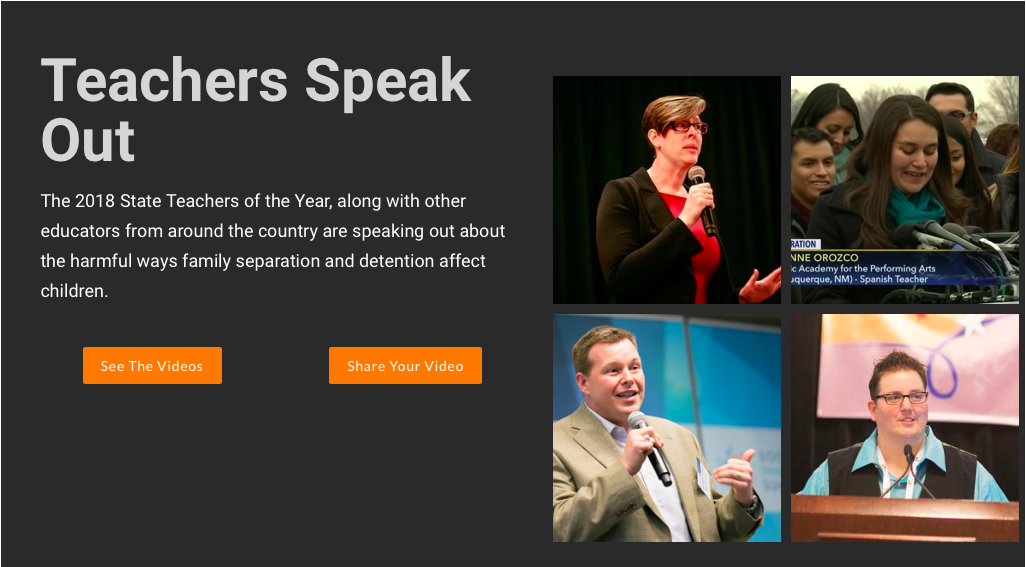
Join the Teachers of the Year in Speaking Out Against the Detention of Children - Network For Public Education : Network For Public Education

Join the Teachers of the Year in Speaking Out Against the Detention of Children - Network For Public Education : Network For Public Education

Join the Teachers of the Year in Speaking Out Against the Detention of Children


Last year, the administration began enforcing a “zero tolerance” immigration policy. This policy resulted in about 3,000 children being separated from their parents or guardians and being detained in federal detention facilities. Currently 2,800 minors remain at the center and the number continues to grow.
Next month, educators led by many of our states’ Teacher of the Year will lead a “teach-in” outside the massive detention camp in Tornillo, Texas. The teach in, with lessons delivered by educators, will tell the nation what is happening with the children and who they are.
The coalition sponsoring the teach-in is Teachers Against Child Detention. The Network for Public Education strongly supports their efforts and asks you to go here and sign up to do a simple action in support!
https://www.teachersagainstchilddetention.org
Happy New Year and thanks for all that you do!

Join the Teachers of the Year in Speaking Out Against the Detention of Children - Network For Public Education : Network For Public Education

Wednesday, January 2, 2019

Please Note that NYC Department of Education Is Infested with Broadies, Not Bugs | Diane Ravitch's blog

Please Note that NYC Department of Education Is Infested with Broadies, Not Bugs | Diane Ravitch's blog

Please Note that NYC Department of Education Is Infested with Broadies, Not Bugs


I received a complaint about the wording of the title accompanying the post by Leonie Haimson. Leonie’s post was titled: “Leonie Haimson: Warning! The New York City Department of Education Is Infested with Broadies, TFA!”
Mike Petrilli of the Thomas B. Fordham Institute (and Foundation) [net assets: $44 million] was offended by the title. He asked me not to refer to people as “bugs,” because an “infestation” of Broadies and TFA implies bugs. I wrote the title, not Leonie. I have been writing snappy titles ever since I worked as an editorial assistant at the now-defunct Democratic Socialist magazine called “The New Leader” in the early 1960s (where it was always “Five Minutes to Midnight” somewhere in the world.)
So out of deference to Mike’s wishes, I want to make clear that people who are Broadies and TFA are definitely not bugs.
The term “infestation” usually refers either to pests or parasites. But not always.
They might be zombies. There is such a thing as a “zombie infestation,” like when a whole lot of people trained by Eli Broad or Wendy Kopp (neither of whom was ever a teacher) arrive to kill your school and scatter the children. I googled and found that “zombie apocalypse” and “zombie infestation” are interchangeable. There are numerous references to “zombie-infested” as an adjective and “zombie infestation” as a noun. The CONTINUE READING: Please Note that NYC Department of Education Is Infested with Broadies, Not Bugs | Diane Ravitch's blog


Big Education Ape: NYC Public School Parents: How corporate reformers have become embedded in the Office of District Planning - http://bigeducationape.blogspot.com/2018/12/nyc-public-school-parents-how-corporate.html

Common Schools and the Nationalistic Aims of Public Education in the U.S. | Dissident Voice

Common Schools and the Nationalistic Aims of Public Education in the U.S. | Dissident Voice

Common Schools and the Nationalistic Aims of Public Education in the U.S.


This article is part of a project that critically analyzes the historical and present day purposes of U.S. public education. Related articles focus on the history of Secondary Education, the undemocratic nature of Local Control and the finacialization of education via Impact Investing, Social Impact Bonds and Personalized Learning. The point of this project is to further expose the underlying social control function of U.S. public education and the interests it has consistently served over time, which cannot be extracted from the undemocratic nation-state it was designed  – and continually redesigned – to preserve. 
*****
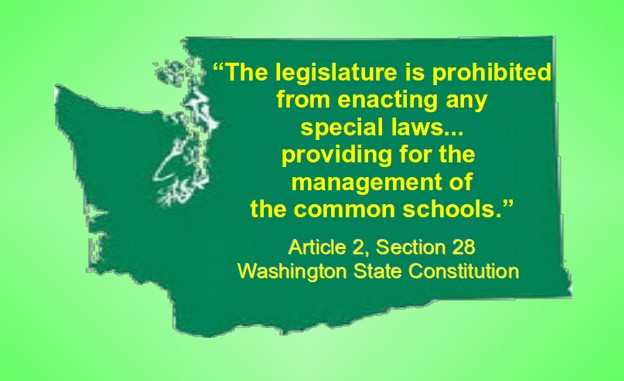
Over the past forty-years education reform policies intended to marketize, privatize and ultimately financialize the U.S. education system have spurred significant resistance across the political spectrum. Often galvanized by claims that reform policies undermine public education as a vital institution of U.S. democracy, many progressive public education advocates call to “save our schools” and return them to their original common good design. Within this “good ole days” or “Make America Great Again” narrative, romanticized notions of the original Horace Mann Common School movement are often referenced. This storyline is premised on the belief that the current attack on public education is therefore an attack on American democracy, which presupposes that the United States was founded as a democracy and struggled to remain so thereafter. While the National Education Association and the American Federation of Teachers often reproduce this storyline as they collude with education reformers, many individuals and groups who actively oppose education reform policies also disseminate this tale.
In a 2014 interview with Bill Moyers, education historian Diane Ravitchadvanced this storyline when expressing her concerns about the future of public education by claiming, “I believe it is one of the foundation stones of our democracy: So an attack on public education is an attack on democracy.” In a 2013 blog posting, Jeff Bryant of the Education Opportunity Network claimed, “the earliest advocates for public schools – Thomas Jefferson, George Washington, Horace Mann – all agreed that democratic citizenship was a primary function of education.” In 2016 the National Education Policy CONTINUE READING:  Common Schools and the Nationalistic Aims of Public Education in the U.S. | Dissident Voice

Image result for COMMON SCHOOL WASHINGTON STATE

Education Research Report

Education Research Report


Education Research Report

Math Pathways: Expanding Options for Success in College Math

Download This report, released in collaboration with the Center for the Analysis of Postsecondary Readiness, explains a new model of college math education that has come to be called math pathways. Three prominent examples of math pathways – with research evidence on their effectiveness – are included.
Transitions and Alignment From Preschool to Kindergarten

Download This special report – focused on early learning and kindergarten – examines effective transition programs and practices, and the importance of alignment across basic pedagogical components.
50-State Comparison: State Policies on School Discipline

Recent data show significant disparities in the application of suspension and expulsion based on race, gender and disability status. The emergence of these data, coupled with research showing the long-term negative impact of removing students from the learning environment, has prompted many state education leaders to re-examine their school discipline requirements. This has led to legislation aim
50-State Comparison: Teacher Leadership and Licensure Advancement

On the path to strengthen teacher pipelines, support excellent teaching and improve retention, many states have developed opportunities for teacher leadership and advancement. While most states offer advanced licenses to encourage ongoing learning and growth within the teaching profession, many are now also including supports and incentives to encourage more teachers to become leaders in their cl
50-State Comparison: Developmental Education Policies

Developmental education assessment and placement policies guide how students may demonstrate college readiness and are placed into college-level courses. States and postsecondary systems use a variety of measures to determine a student’s college readiness. Often, policies require that students submit scores from a national, standardized test. Some states and postsecondary systems allow students t
Governance in Early Childhood Education

Download This Education Trends report examines the different structures and strategies — including the creation of state offices, the consolidation of others, and collaboration and coordination across several state agencies – used in the states to govern early education. State examples and policy considerations are included to provide insight and help address the many challenges policymakers face
Too much credit given to most recent teaher for improved student learning

The federal Race to the Top competition provided significant impetus for states to adopt value-added models as a part of their teacher evaluation systems. Such models typically link students to their teachers in the spring semester when statewide tests are administered and estimate a teacher's performance based on his or her students’ learning between the test date in the previous school year and
What Constitutes Prudent Spending from Private College Endowments?

This study examines how private colleges and universities choose to spend versus reinvest resources in endowment funds that have suffered investment losses. The analysis takes advantage of a market downturn and public policy shift, which together revealed how colleges define prudent spending. Investment losses during the financial crisis of 2008 left many endowment gift funds below their original
Positive Effects of Court-Ordered Finance Reforms

This study provides new evidence about the effect of court-ordered finance reforms that took place between 1989 and 2010 on per-pupil revenues and graduation rates. Seven years after reform, the highest poverty quartile in a treated state experienced an 11.5 percent to 12.1 percent increase in per-pupil spending, and a 6.8 to 11.5 percentage point increase in graduation rates.

DEC 31 2018

Teacher Characteristics, Student Beliefs, and the Gender Gap in STEM Fields

This article uses data from the U.S. High School Longitudinal Study of 2009 to investigate the relationship between high school students’ beliefs about female abilities in math and science and their teacher gender, beliefs, and classroom behaviors. Estimates are obtained by comparing the same ninth graders between math and science classes, thus controlling for student fixed effects. Students were
College Students’ Reflections on Their High School Peer Crowds

High school peer crowds are fundamental components of adolescent development with influences on short- and long-term life trajectories. This study provides the perspectives of contemporary college students regarding their recent high school social landscapes, contributing to current research and theory on the social contexts of high school. This study also highlights the experiences of college-bo
The impact of Social Security on retirement timing: comparing covered and non-covered teachers

This study documents an important role for Social Security income in workers' retirement timing. About 40 percent of public school teachers are not covered by Social Security. This provides an opportunity to analyze the causal impact of Social Security on retirement timing by comparing covered and non-covered teachers. Using individual-level data from the American Community Survey, we find robust

DEC 27 2018

Distinguishing between students who guess and those who know

Measuring the knowledge of students in online courses poses a number of challenges. Researchers from the Higher School of Economics and the University of Leuven made improvements to the model for assessing academic achievements and published their results in the journal Heliyon . Several systemic factors make it difficult for the developers of online courses to assess students' proficiency accura
The Effect of Grade Retention on Adult Crime

This paper presents the first analysis in the literature of the effect of test-based grade retention on adult criminal convictions. The rsearchers use math and English test cutoffs for promotion to ninth grade in Louisiana using administrative data on all public K-12 students combined with administrative data on all criminal convictions in the state. They use the promotion discontinuity as an ins
Schools of choice less likely to respond to inquiries from students with low achievement

School choice may allow schools to “cream skim” students perceived as easier to educate. To test this, researchers sent emails from fictitious parents to 6,452 schools in 29 states and Washington, D.C. The fictitious parent asked whether