Latest News and Comment from Education

Saturday, October 1, 2016

WHEN IT COMES TO MEANINGFUL REFORM AT LAUSD, THE L.A. TIMES ALWAYS GIVES THE TRUTH A PASS - Perdaily.com

WHEN IT COMES TO MEANINGFUL REFORM AT LAUSD, THE L.A. TIMES ALWAYS GIVES THE TRUTH A PASS - Perdaily.com:

WHEN IT COMES TO MEANINGFUL REFORM AT LAUSD, THE L.A. TIMES ALWAYS GIVES THE TRUTH A PASS

Sonali Kohli.jpeg


The continuing generational fraud and purposeful failing of predominantly Latino and African American students at what remains over 90% de facto segregated LAUSD is accomplished by never at any time addressing these minority students' subjective academic levels and needs. Such an open fraud could never take place without the collusion of both commercial and public media, which scrupulously refuse to report any facts as to what is actually going on academically at LAUSD and which LAUSD literally makes no attempt to hide.

In just the latest example of media parroting of disingenuous LAUSD party line ideas like "LAUSD board pushes for 100% graduation rate" by Los Angeles Times Reporter Sonali Kohli- without any real reporter examination of such a goal in light of easily discoverable facts attainable through Public Records Requests- reporters continue to never address whether this pie in the sky LAUSD administration goal of 100% graduation has any real possibility of coming to fruition- it doesn't as long as the truth as to what is going on at LAUSD is never reported.

How much real reporting would it take for reporters like Sonali Kohli to uncover the following publicly accessible facts that show:

LAUSD Cumulative Enrollment Counts

2014----------2015----------2016

608,478------598,298------595,840

Student Truancy Counts

2014----------2015----------2016

275,983------209,105------297,844

And then, might she ask those like Supt. Michelle King and the LAUSD Board members- who have the gall to talk about 100% graduation- the following questions:

How can you honestly expect to increase graduation rates if WHEN IT COMES TO MEANINGFUL REFORM AT LAUSD, THE L.A. TIMES ALWAYS GIVES THE TRUTH A PASS - Perdaily.com:

CURMUDGUCATION: How Much Democracy Is Too Much?

CURMUDGUCATION: How Much Democracy Is Too Much?:

How Much Democracy Is Too Much?

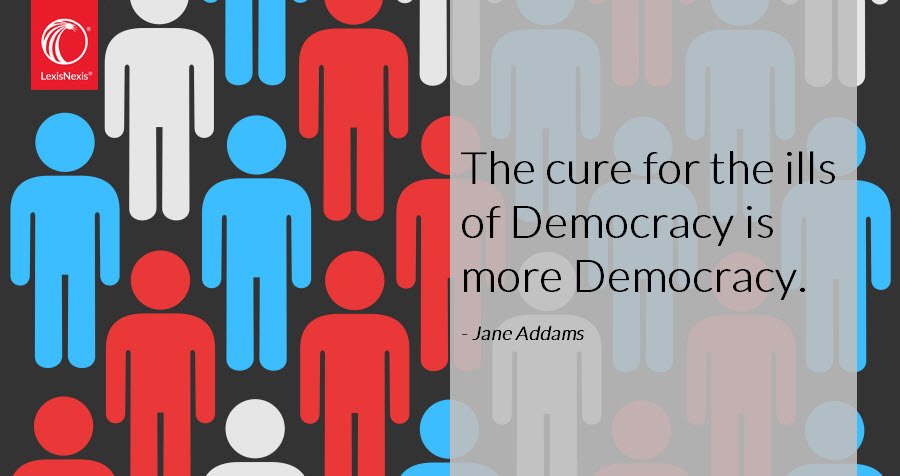
Image result for the cure for the ills of democracy is more democracy


The march of market-based education reform has come in lockstep with an assault on democracy. From Philly to Detroit to Chicago, the repeated policy message has been that Some Folks really shouldn't have democracy, that Some Folks need to have things decided for them. Of course, Some Folks invariably turn out to be non-wealthy, non-white folks. If you are poor and black, democracy is apparently a luxury that you do not need.


Reformsters have made the case for this silencing of black and brown voices in a variety of ways.

Democracy, they may argue, is not really democracy because school board elections are dominated by teachers unions. Here'sTerry Moe, at the time a Stanford professor and fellow at Stanford's conservative Hoover Institute, "explaining" the issue way back in 2006:

School-board elections are supposed to be the democratic means by which ordinary citizens govern their own schools. The board is supposed to represent “the people.” But in many districts it really doesn’t. For with unions so powerful, employee interests are given far more weight in personnel and policy decisions than warranted, and school boards are partially captured by their own employees. Democracy threatens to be little more than a charade, serving less as a mechanism of popular control than as a means by which employees promote their own special interests.

This refrain has been echoed down through reformster annals-- school boards are the puppets of the 
CURMUDGUCATION: How Much Democracy Is Too Much?:


Teachers, Fairness, and Ideological Purism | The Patiently Impatient Teacher

Teachers, Fairness, and Ideological Purism | The Patiently Impatient Teacher:

Teachers, Fairness, and Ideological Purism 

public-school-sinking-cartoon-via-philly-com_1

Blogging and tweeting about education policy has led me to interact with a lot of people across a very broad ideological spectrum. I have found that across the ideological spectrum, the gulf between teachers and non-teachers in the world of education policy is especially wide. Teachers are eternally frustrated that they are left out of meaningful policy discussions. Policy folks are frustrated that often when they seek input they only get apathy, anger, and negativity in return…and still get accused of not listening even when they are under the impression that they tried to.
We simply don’t speak the same language.
The term compassion fatigue is often used in conversations about teachers (and nurses and other caregivers). Teachers also suffer from BS fatigue and plan old physical fatigue too. A nearby city explodes in anger over racial injustice. More of my most talented colleagues resign. A talented and hardworking student is deported back to the country where the people who committed the political assignation of her father have threatened her own life. A project which I have been working on for three years, with enormous potential to benefit students, is denied approval at the last minute. All of those events occurred in same day recently and it is still wasn’t the most frustrating or heartbreaking day I have had as teacher. As teachers tend to gaping wounds like these, we are subjected to being called selfish and self-interested and incompetent. We are called perpetuators of racism by those that choose to be blind to the fact that they are too.
And we scream, cry, and entertain our spouses with nonsensical monologues of rage. Then we quietly pack the left over anger and frustration up into neat little packages. We will do something to process that later, perhaps. As a teacher, when we say we feel attacked, the response is one of gas lighting. “Oh no, of course we love and support teachers…no one is bashing you!” “Of course we don’t mean all teachers, just those bad ones.” (Because it is good practice to destroy the morale of the 95% or more of teachers that we know are excellent to weed out those terrible 5%).
The gulf between teachers and non-teachers is not so much about ideology, but about Teachers, Fairness, and Ideological Purism | The Patiently Impatient Teacher:

Parents: Why our second grader is not going back to school - The Washington Post

Parents: Why our second grader is not going back to school - The Washington Post:

Parents: Why our second grader is not going back to school

(Used with permission of family)
How to educate children with disabilities is one of the most difficult conversations in education.
Federal law requires that school districts provide the least restrictive environment with nondisabled peers, to the maximum extent appropriate, but there is a difference of opinion in the disability world about what that means for students with severe disabilities.  Are self-contained classes better? Should they be in regular classrooms with supports? How do you decide which students should be in which environment?
In this post, the mother and father of a child with autism write about why they want her in a regular classroom and believe that self-contained special education classrooms can be damaging.  This was written by Vikram Jaswal, an associate professor of psychology at the University of Virginia, and Tauna Szymanski, an attorney and volunteer chair of the Arlington Inclusion Task Force.

By Vikram K. Jaswal and Tauna M. Szymanski
Like most children across the country, our 7-year-old should be returning to school this fall. She is a happy kid with a thirst for knowledge. The second-grade curriculum in our public school involves experimenting with magnets, writing stories, analyzing graphs, and learning about Susan B. Anthony’s legacy. It looks perfect for her.
But our daughter has a disability, and we learned a few weeks ago that she was not going to be allowed to be educated with the other second-graders. Instead, for the third year in a row and like 1 million other children[1] with disabilities in the United States, she would have to spend at least half of each day in a segregated, “self-contained” classroom with other children with disabilities — an educational practice we have come to learn is questionable at best.
When our daughter started school, we embraced this model of special education. We thought that she would be better off in a smaller class with fewer distractions, where the instruction could be tailored to her specific needs. We knew that she would be isolated from her peers, but Parents: Why our second grader is not going back to school - The Washington Post:

Catch up with CURMUDGUCATION:

CURMUDGUCATION:


When a Charter Closes (and Choice Is Not Choice)
The free market acolytes, lovers of the modern charter school, have a pretty neat and clean vision of the future. Well-informed parents choose from within a wide array of charter schools, and at appropriate moments, the market sloughs off those schools that either do a lousy job or are just not providing something that a large slice of the market wants.The whole process should be as tidy and blood

YESTERDAY

OK: Teach Like a Robot
This week Tulsa news outlets were covering an exciting non-innovation innovation arriving in local classrooms-- real time coaching. See, in normal coaching, a principal watches a teacher and then it is hours, or even days, before the teacher gets the feedback. But in real time coaching, the coach directs the teacher through an earpiece, presumably because the technology to simply control her body

SEP 29

NC: Charters Get Their More-Than-Fair Share
The North Carolina Justice Center has just released a study of charter school funding, and if anyone was worried that poor NC charters were not getting sufficient support, they can relax. " Fair Funding for Charter Schools: Mission Accomplished " comes from Kris Nordstrom . Nordstrom is a NC economist who has worked in government before joining NCJC. He's no anti-charter zealot; witness this quote

SEP 28

Outsourcing College
The Education Management Corporation is based right up the road from me in Pittsburgh, PA. They're a for-profit education provider whose best-known outlet is the Art Institute chain. (They should not be confused with the Education Credit Management Corporation, an outfit that is also in the for-profit college biz, having bought up the pieces of the Corinthian empire.) They've had their problems. Y
TX: Denying Special Education
You must read this piece of investigative reporting from the Houston Chronicle. In " Denied:How Texas keeps tens of thousands of children out of special education ," reporter Brian M. Rosenthal lays out the secret of yet another Texas miracle-- getting special education numbers down by systematically denying support and services to the students who need them. The bottom line is simple-- and chilli
Professor Bush Goes To Harvard
So, Jeb Bush is going to be a visiting fellow at Harvard at the Kennedy School's Program on Education Policy and Governance. Huh. I suppose he could open his lecture with a recap of all the educational successes he had in Florida with programs that helped teachers teach and led to greater students success, but after that two minutes were up, what would he talk about for the rest of the time. It is

SEP 27

FL: Bad Retail Management As Ed Policy
If you have worked in the retail world, you have probably had this experience. If you teach in Florida, you're about to. Somewhere way up the corporate ladder, some guys in a board room declare that they predict an awesome quarter for the corporate coffers. This awesome result is based on an uptick in revenue and that uptick is based on... well, it's based on pressuring the sales force. Not improv

SEP 26

Center for Ed Reform All In on Privatizing
The Center for Education Reform, Jeanne Allen's charter-and-choice advocacy group, is having a senior moment. Under the breathless headline, "Nation's Most Senior Education Reform Group Relaunches," CER has issued a press release about "its complete refocus on the changing landscape of American education, taking on the most difficult issues that no other national organization is currently pursuing
NAEP Board Still Includes Few Educators
See, John King. This is one more reason we have a hard time taking you seriously. Because for all your big talk about teachers being leaders and raising the profession and teach to lead and all the rest, when it comes time to put people in charge of Important Stuff, actual teachers do not get the call. The National Assessment of Educational Progress (NAEP) is sometimes called the nation's report c

SEP 25

ICYMI: Readings from the week (9/25)
As always, remember to share and spread the word. Everyone can be an amplifier. Don't Believe the Charter School Hype Charles Pierce is one mainstream journalist who has taken up the cause of public ed and given reformsters some serious grief. Here's his take on the charter push in Massachusetts Preaching to the Educhoir William Ferriter reminds us why preaching to the educhoir is not a waste of t

SEP 24

Essential Reading for Education Activists (and Wonks)
Corporate, privatized, market-driven education reform hasn't worked-- and now there's a book chock full of research to prove it. The National Education Policy Center is based at the University of Colorado (Boulder) School of Education. They look kind of like what I always imagined when I thought of an actual think tank-- one that was interested in real inquiry and research, and not just put togeth
The Gates Plan for College
Some days I feel kind of Rip Van Winklesque, as if I went to sleep and when I woke up the world had changed. Apparently while I was sleeping, the electorate rose up and elected Bill Gates the Grand Uber Head of Education. "Please," a bunch of you non-sleeping people said. "Redesign our entire education system. Redefine what it means to be an educated person, and redefine how a person gets an educa
The Word Charters Leave Out
The sales pitch, in various versions, pops up every time charter cheerleaders are pushing charters as the Big Solution in education. "We know how to educate poor minority students." The implication, of course, is that public schools don't 


CURMUDGUCATION:

My Questions for Whitney Tilson | Diane Ravitch's blog

My Questions for Whitney Tilson | Diane Ravitch's blog:

My Questions for Whitney Tilson

Image result for big education ape  Whitney Tilson

A few months back, Whitney Tilson invited me to participate in an exchange of views. Whitney is a hedge fund manager and the founder of Democrats for Education Reform, a group of hedge fund managers who support charter schools and high-stakes testing. I gladly accepted his invitation. Our exchanges were posted, unfiltered, on his blog and this one. (See here and here and here.) After the three exchanges, I decided it was time for me to ask questions, so I sent him the piece below. I thought it would be the first of another three or four exchanges. Unfortunately, Whitney has been very busy and has not had time to write his response or continue the dialogue. I asked for and received his permission to post my statement/questions. He promised to answer at some point in the future.
Hi, Whitney,
I have enjoyed our exchanges, and I thank you for initiating this dialogue. It shows you are willing to listen, and that is a very important trait in our democracy. There are too many echo chambers, where people hear only what they already agree with. That doesn’t advance knowledge or understanding. I am reminded of something that Robert Hutchins said many years ago. He said you always have to keep listening to people you disagree with, because they might be right. So I will listen to you, and I hope you will listen to me.
I have a series of questions for you. We will likely have to cover these issues in several posts.
The topics are
1) The nomenclature of the reform movement you lead;
2) privatization (charters and vouchers);
3) high-stakes testing;
4) merit pay;
5) teacher evaluation;
6) Teach for America (you were there at the creation);
7) the future of the teaching profession;
8) the political goals of groups like Democrats for Education Reform, which you helped to found;
9) the long-term aspirations of the movement you lead.
First, let’s talk about nomenclature. Your side calls itself the “reform movement,” because you want to shake up and disrupt public education. People who believe in the importance of free and universal public education, like me, don’t think you are reformers. You don’t “reform” an institution by tearing it apart. Reform requires steady, persistent work, and it can be done best by those with knowledge of the institution they are changing. There have been education reformers numerous times in the history of American education. They always wanted to make the public schools better. They wanted better-educated teachers, higher salaries for teachers, more funding for schools, more equitable funding for schools, desegregation of schools, higher standards, better curricula, etc. Now, for the first time in the history of American education, we have a group of people who call themselves reformers but seek to replace public schools with school choice via privately managed charters and vouchers that may be used for religious schools. Unlike past reformers, this movement wants to replace public schools, not improve them. This is in reality a privatization movement, not a reform movement.


Speaking for the many educators and parents I know, we think that you are disrupters who are ill-informed about the challenges facing teachers and public schools. We think you are wrong to say that public schools are failing. In fact, as I showed in my last book, Reign of Error, students in public schools today have the highest test scores, the highest graduation rates, and the lowest dropout rates ever recorded. This is My Questions for Whitney Tilson | Diane Ravitch's blog: