Latest News and Comment from Education

Thursday, March 3, 2016

Schools find campaign talk conflicts with no-bullies message :: WRAL.com

Schools find campaign talk conflicts with no-bullies message :: WRAL.com:
Schools find campaign talk conflicts with no-bullies message


 — Ryan Lysek rose to become vice president of his fifth-grade class at Lorraine Academy in Buffalo, New York, after the sitting vice president was ousted for saying things that went against the school's anti-bullying rules. So the 10-year-old is a little puzzled that candidates running to lead the entire country can get away with name-calling and foul language.
The nasty personal tweets and sound bites of the 2016 Republican presidential campaign are reverberating in classrooms, running counter to the anti-bullying policies that have emerged in recent years amid several high-profile suicides.
For teacher David Arenstam's high school class in Saco, Maine, the campaign has been one long civics lesson: "Can you really ban a whole group of people from coming into the country?" the students will ask, or "What's the KKK (the white supremacist Ku Klux Klan), and do they still really exist?"
But mostly, Arenstam said, when it comes to Republican Donald Trump, students "can't believe nobody calls him on the carpet the way that they would be called on the carpet if they said those things."
There's Donald Trump calling Ted Cruz a "loser" and a "liar" and singling out Muslims and Mexicans for criticism. And there's Marco Rubio mocking Trump's "worst spray tan in America" and calling him a "con artist."
Cruz says nearly every day on the campaign trail, "I don't respond to insults" and he has been careful not to engage when Trump and others call him names. But during the Jan. 28 Republican debate which Trump didn't attend, it was Cruz who made some quasi-insults he said Trump would have lobbed: "Let me say I'm a maniac and everyone on this stage is stupid, fat and ugly," Cruz said, snickering that he was getting "the Donald Trump portion out of the way."
On Thursday, Mitt Romney, the 2012 Republican presidential nominee, jumped into the fray, branding Trump "a phony, a fraud."
"Imagine your children and your grandchildren acting the way he does," Romney said. "Would you welcome that?"
In the battle for the Democratic presidential nomination, Hillary Clinton and Bernie Sanders have focused more on policy than on each other. The Republican race is a different story.
"If students are following this election — and they should be — we have a lot of re-educating to
Read more at http://www.wral.com/schools-find-campaign-talk-conflicts-with-no-bullies-message/15467291/#xtT0GypypMLY1y1g.99


What’s WRONG with Florida and its Treatment of Students with Disabilities?

What’s WRONG with Florida and its Treatment of Students with Disabilities?:

What’s WRONG with Florida and its Treatment of Students with Disabilities?

hurricane tropical storm coconut palm tree leaves cloudy gray sky
Why are we having this conversation again?
Today, I am going to highlight Paula Drew, who, as the mother of a student with profound disabilities, has run up against bullies who want unnecessary, unrealistic Florida testing. Paula has kindly shared her moving speech to the Sarasota County School Board which you can find below.
Paula’s 15 year-old-daughter, Maddy, has cerebral palsy and is nonverbal. Paula requested that Maddy be exempted from the test. Maddy’s doctor listed reasons, in a letter, why Florida’s State Alternative testing was inappropriate, but Education Commissioner Pamela Stewart denied the request.
At first, Paula was threatened that her child would be removed from her special school if she did not comply and have Maddy take the test. Officials have since changed their minds or attribute this to a misunderstanding.
Let’s be clear.
There have been, for many years, fair, observational assessments for students with profound disabilities. But that is not what this is about. This is about alternative testing What’s WRONG with Florida and its Treatment of Students with Disabilities?:

Wisconsin's mandatory Civics test: State mandated racism by omission. | BustED Pencils

Wisconsin's mandatory Civics test: State mandated racism by omission. | BustED Pencils:

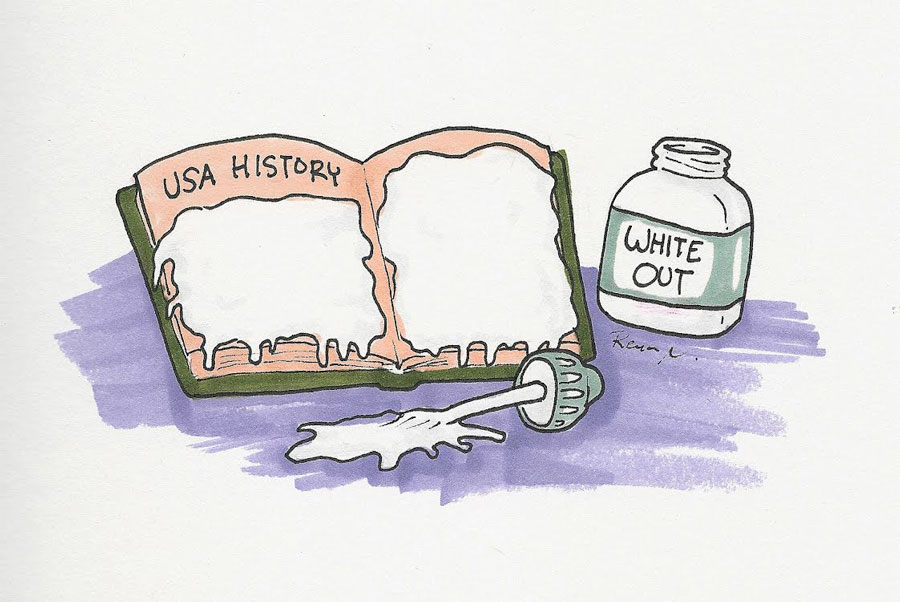
Wisconsin’s mandatory Civics test: State mandated racism by omission.

White-outWEBSITE


 A few months ago I wrote about about opting out of the new “mandatory” civics test that recently became a graduation requirement in Wisconsin.  Remember, this is the test that  Representative James “Jimmy Boy” Edming thought was “a good idea.”  I also went onCapital City Sunday with Representative Terese Berceau to talk about the problems associated with mandatory graduation requirements and to promote an opt out movement against this new test.

However, it is clear to me now that the opt out movement I tried to start failed miserably—and I now know why. This is not an opt out movement against a misguided graduation requirement backed by a simple minded political hack with little to no understanding of real teaching and learning.  This is not an opt out against one more test.  This is an opt out of state sanctioned racism and the structural implementation of a exclusively Eurocentric view of America.
How can I make such a claim?  Simple.  I look at what is NOT required for graduation.

CURMUDGUCATION: TOYT Shill For PARCC

CURMUDGUCATION: TOYT Shill For PARCC:

TOYT Shill For PARCC


PARCC is touting two new radio spots that feature a couple of Teacher of the Year winners touting the wonderfulness of the PARCC.

The National Network of Teachers of the Year produced a "research report" last year that determined that the Big Standardized Tests are super-duper and much more better than the old state tests. Was the report legit? Weelll.....

The report was reviewed by three-- well, "experts" seems like the wrong word. Three guys. Joshua Starr was a noted superintendent in Maryland, where he developed a reputation as a high stakes testing opponent. He lost that job, and moved on to become the CEO of Phi Delta Kappa. Next,Joshua Parker was a compliance specialist with Baltimore Schools, a teacher of the year, and a current member of the reform-pushing PR operation, Education Post. And the third reviewer was Mike Petrilli, head of the Fordham Institute, a group dedicated to promoting testing, charters, etc.

The study was funded by the Rockefeller Philanthropy advisors, while the NNTOY sponsors listincludes by the Gates Foundation, Pearson, AIR, ETS and the College Board-- in other words, every major test manufacturer in the country that makes a hefty living on high stakes testing.

So the study's conclusion that tests like the PARCC and the SBAC are super-excellent is not exactly a shock or surprise, and neither can it be surprise that one follow-up to the study is these two radio spots.

The teachers in the spots are Steve Elza, 2015 Illinois TOYT and applied tech (automotive trades) teacher, and Josh Parker, a-- hey! Wait a minute!! Is that? Why, yes-- it appears to be one of the 
CURMUDGUCATION: TOYT Shill For PARCC:

Senate Democrats press Education Department to rescind reviews of loan servicers - The Washington Post

Senate Democrats press Education Department to rescind reviews of loan servicers - The Washington Post:
Senate Democrats press Education Department to rescind reviews of loan servicers


 Sen. Patty Murray (D-Wash.), the ranking Democrat on the Health, Education, Labor and Pensions Committee, and other Senate Democrats are asking the Department of Education to retract the findings from a review that its inspector general called “unsupported and inaccurate.”

Democratic lawmakers have been critical of the department’s audit of its student loan servicers, the middlemen who collect and apply payments to debt, conducted after the Justice Department fined Navient Solutions $60 million in 2014 for unlawfully charging active-duty service members high interest rates on student loans. The department said it would comb through the records of all its servicers to make sure the violations were not widespread, and later announced there was little evidence of wrongdoing.
A report released earlier this week by the inspector general challenged those findings and characterized the investigation as deeply flawed.
On Thursday, a group of Senate Democrats, including Elizabeth Warren (Mass.) and Richard Durbin (Ill.), sent a letter urging acting Education Secretary John B. King Jr. to rescind the review of the department’s four largest servicers — Navient, Great Lakes, Nelnet and American Education Services. The lawmakers want the department to conduct a full review to determine the number of service members who were unlawfully denied the right to have their student loan interest rate capped at six percent while on active duty between 2005 and 2014. They are essentially asking the department to redo the investigation and report back to the Senate Education and Veteran’s Affairs Committees.
The department, the senators said, has yet to identify and refund all military borrowers who were overcharged between 2009 and July 2014, the original Senate Democrats press Education Department to rescind reviews of loan servicers - The Washington Post:

Judge backtracks on release of California student records - San Jose Mercury News

Judge backtracks on release of California student records - San Jose Mercury News:

Judge backtracks on release of California student records
Responding to overwhelming public protest, a federal judge has decided records of 10 million California students won't be released to attorneys in a special-education lawsuit.
Instead, Judge Kimberly Mueller ruled that the huge database will remain solely with the California Department of Education, which must respond to queries from attorneys seeking evidence that the state has failed to ensure an adequate education for special-needs children.
Previously, the judge had indicated that the attorneys could get a copy of the state's huge database on students and teachers, including names, addresses, disciplinary records, grades, test scores, jobs and in some cases Social Security numbers.

(ThinkStock Photo)
The court, following federal privacy rules, also had offered parents the option to protest -- but not necessarily prevent -- the release of their children's data.
After news of the pending data release spread, the court has been so inundated with objection forms that it can't even read them. Mueller this week ordered the forms archived in sealed boxes.

In her order, Mueller wrote that she "construes the objections as reinforcing the need for the protection of personal identifying information in the CDE's educational records" and the need to modify her protocol for releasing data.
Her latest order covers only the comprehensive student and teacher California Longitudinal Pupil Achievement Data System, the largest of seven sets of records sought by the plaintiffs. Mueller's protocol calls for releasing other records, including standardized STAR tests, emails, parent complaints and special-education documentation, to attorneys.
The suit was originally filed by parents in the Morgan Hill Unified School District. They since have been joined by parents from throughout the state.
Last year, she appointed a special master, attorney Winston Krone, to oversee the data release.
Check back for updates to this story.

Teacher Retirement Fund Invests in Online Charter Schools, Private Prisons - Living in Dialogue

Teacher Retirement Fund Invests in Online Charter Schools, Private Prisons - Living in Dialogue:

Teacher Retirement Fund Invests in Online Charter Schools, Private Prisons


 By Anthony Cody.

Teacher retirement funds represent the largest amounts of money under the control of working educators. The California State Teacher Retirement System (CalSTRS) is the second wealthiest retirement fund in the nation, with $179.4 billion in assets.
CalSTRS counts among its many investments a major stake in several enterprises that are working against the interests of California teachers and students. According to this listing from June of 2015, CalSTRS owns 154,838 shares of K12 Inc, valued then at $1,959,000. (The shares have since dropped in value by about $20%).
K12 Inc is the nation’s largest chain of “virtual” charter schools, which operate by enrolling mostly vulnerable students and homeschoolers in online courses. Recent research has confirmed that these schools are delivering very poor results. This study conducted by CREDO found that:
More than two-thirds of online charter schools had weaker overall academic growth than similar brick-and-mortar schools. In math, 88 percent of online charters had weaker academic growth than their comparison schools.
On average, online charter students achieved each year the equivalent of 180 fewer days of learning in math and 72 fewer days of learning in reading than similar students in district-run brick-and-mortar schools.
This confirms the findings of a 2012 study focused on K12 Inc in particular which found that student learning and graduation rates were low at these schools.
The mean performance on state math and reading assessments of K12-operated virtual schools consistently lags behind performance levels of the states from which the schools draw their students.
Across grades 3-11, the K12 schools’ scores were between two and 11 percentage 
Teacher Retirement Fund Invests in Online Charter Schools, Private Prisons - Living in Dialogue:

Who Keeps Billions of Taxpayer Dollars Flowing to For-Profit Colleges? These Guys - ProPublica

Who Keeps Billions of Taxpayer Dollars Flowing to For-Profit Colleges? These Guys - ProPublica:

Who Keeps Billions of Taxpayer Dollars Flowing to For-Profit Colleges? These Guys

Accreditation agencies are supposed to make sure that colleges are putting students in a position to succeed. That’s not happening at schools overseen by one accreditor in particular.

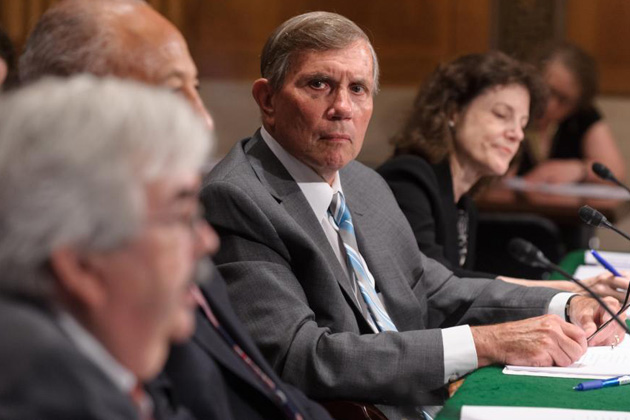
Albert C. Gray, president of the Accrediting Council for Independent Colleges and Schools, during a Senate hearing in June. (help.senate.gov)


 For-profit universities have had another rough year, with big players facing federal scrutiny for everything from predatory loans to outright fraud.

Now attention is turning to the schools’ accreditors.
Accreditors are supposed to make sure that schools provide students with a quality education. They are not government agencies, but wield enormous power: Schools need accreditors’ stamps of approval to maintain access to the government’s annual $170 billion in federal student aid.
Losing accreditation would be fatal for most for-profit schools since they rely on federal aid for much of their income. But accreditors rarely crack down, even when students are struggling. One of the areas where students at for-profits face extra burden is debt: While only one-tenth of college students attend for-profit schools, they account for nearly half of all students’ defaults.
What role are accreditors playing? Using recently released federal data, ProPublica analyzed how students are faring under the various accreditors that oversee many for-profit schools.
One accreditor stands out: The Accrediting Council for Independent Colleges and Schools, also known as ACICS. It oversees hundreds of mainly for-profit schools where students struggle at remarkably high rates.
Just 35 percent of students at a typical ACICS-accredited four-year college graduate, the lowest rate for any accreditor. Nationally, the graduation rate at four-year schools is around 59 percent. (Read our methodology for details on how we crunched the numbers for our analysis.)


“If you don’t graduate anyone, you can’t make claims that your program is any good,” said Ben Miller, senior director for postsecondary education at the Center for American Progress.
Students at ACICS-accredited four-year schools also take on more debt than students at other schools with similar accreditors, typically about $26,000 in federal loans.
And then students struggle more to pay off the loans: At a typical ACICS-accredited school, about 60 percent of students were unable to repay even $1 of their loan principal within three years of graduation. That’s 23 percentage points higher than the national average. (Miller also did a study this summer that found that more than one in five students at ACICS-accredited schools default on their loans.)
Anthony Bieda, vice president for external affairs at ACICS, told ProPublica that the organization does hold schools accountable. While ACICS does not track student debt load and loan repayment, it does look at other indicators, such as job placement figures and default rates.
Bieda also says there’s a reason ACICS-accredited schools may look worse: they enroll poorer students. At a typical ACICS-accredited school, 75 percent of students receive federal grants designed for low-income families, a much higher proportion than similar accreditors.
“The primary predictor of whether or not a student will default on their student loan is their economic circumstances, not the quality of the institution that they enroll in,” he said.
Targeting poor students is exactly what regulators are concerned with. Take Corinthian Colleges, for example, which was the second-largest for-profit college chain in the country until it went bankrupt earlier this year. Before it closed down, the for-profit empire faced federal allegations of using deceptive advertising to lure poor students into predatory loans. Last week, a federal district court in Illinois found Corinthian liable for more than $530 million, the entire amount of the predatory loans.
Miller, who previously served as a senior policy advisor at the U.S. Department of Education, said that a student’s socioeconomic background is not the only factor that determines whether loans are repaid. “No one would pretend that there aren’t demographic factors that influence results, but we can’t pretend the schools don’t have any effect too,” he said.
The Obama administration appears to agree. A few weeks ago, the Department of Education announced that it’s about to launch a push for accrediting agencies to focus more closely on student outcomes.
Incoming Education Secretary John King, who will replace Arne Duncan at the end of the year, said in a press briefing on the changes that the focus in higher education needs to Who Keeps Billions of Taxpayer Dollars Flowing to For-Profit Colleges? These Guys - ProPublica:

How do students at accredited schools fare?

Our analysis shows that ACICS-accredited schools fare worse than at schools accredited by other agencies. See how ACICS stacks up compared to its peers.
Graduation Rate
ACCET
63%
ACCSC
51%
COE
51%
ACICS
35%

Non-Repayment Rate (Three Years After Leaving School)
ACCET
39%
ACCSC
46%
COE
47%
ACICS
60%

Three-Year Default Rate
ACCSC
15%
ACCET
15%
ACICS
22%
COE
23%

Median Debt of Students who Graduate (four-year schools)
COE
$14,673
ACCET
$20,750
ACCSC
$22,250
ACICS
$25,834

Source: Department of Education Data; Note: We focused on the five largest national accreditation agencies and this chart only shows data for four-year programs. (See our methodology for more information.)
Credit: Annie Waldman and Sisi Wei/ProPublica