Latest News and Comment from Education

Friday, December 4, 2015

Peg with Pen: TS Gold - A Child's Report Card

Peg with Pen: TS Gold - A Child's Report Card:

A Child's Report Card


I have written two previous blogs on Teaching Strategies Gold, an assessment that is used to assess children from birth through third grade. My previous blogs explained the teacher's perspective in regard to entering the data (literally thousands of data points per class of children - robbing children of instructional time) and the second blog was a refusal letter for parents wishing to opt their children out of TS Gold.

Today I want to share a child's TS Gold report card.  This particular district sends out a TS Gold report card to the parents or guardians every trimester. This child's report card is 11 pages long. The child's name was listed 121 times on the document. There are 60 indicators assessed with accompanying bar graphs. Each bar graph includes a statement about "where" the child is currently, in terms of mastering that indicator, and also lists a next step. You will notice that many of the indicators assess soft skills - skills that are not academic, but rather, deal with a child's emotion, interaction with others, and more.

See the report card below.  Please check my previous two blogs for more information, and I will be doing a follow up blog to share more on the data mining component of TS Gold.

Who wants a report card like this? Not parents. Not teachers. Corporations who like data?  The new gold? Yes. And, finally, why does a five year old need an 11 page report card? I can't fathom anyone needing an 11 page report card, can you?

Here it is. It's crazy long and crazy in general. Click on each picture for best visibility. I'm not going to comment anymore on it because I think the best way to view it is like a parent 
Peg with Pen: TS Gold - A Child's Report Card:


A “What not to say guide” for charter school advocates | Seattle Education

A “What not to say guide” for charter school advocates | Seattle Education:

A “What not to say guide” for charter school advocates

imrs


For charter school advocates, the message is more important than the content charter schools offer.
To view the entire booklet that Valerie Strauss refers to, go to Scribed.
From the Washington Post:
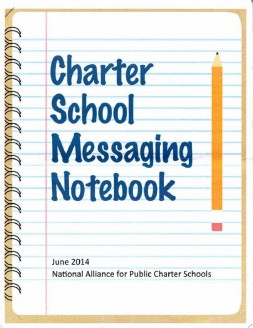
It appears as if the charter school sector believes that it needs to better hone its public messaging. At its recent annual convention, the National Alliance for Public Charter School handed out an 18-page “Charter School Messaging Notebook” that actually has sections that include, “Say This, Not That,” and “Who Are ‘Our People?’ ” (See below for the entire notebook).
The notebook was published by public education advocate Jennifer Berkshire on her Edushyster blog, and a spokesperson for the charter school alliance said the guide was handed out at last month’s convention. It was written by the Glover Park Group, a communications firm founded by former Clinton-Gore aides Joe Lockhart and Carter Eskew, to help charter supporters “fine-tune the messaging” they use when they talk or write about charter schools.
The Table of Contents includes sections on “Defining Charter Schools,” “Nine Positive Messages About Charter Schools, and “Who Are Our People?’” In the “Say This, Not That” section, it is suggested that people:

Apparently the words on the right side of the list, the stuff not to say, sends out too corporate a message about the reality of many charter schools today.
As you might expect, the guide doesn’t mention that most charter schools don’t do any better than traditional public schools when it comes to standardized test scores, which is the metric school reformers seem to care most about. Nor does it mention any of the A “What not to say guide” for charter school advocates | Seattle Education:

Happy Haynes raised and spent big money in final days of Denver school board campaign | Chalkbeat

Happy Haynes raised and spent big money in final days of Denver school board campaign | Chalkbeat:

Happy Haynes raised and spent big money in final days of Denver school board campaign


Last-minute donations continued to flood the campaign coffers of Allegra “Happy” Haynes up until Election Day, when the incumbent Denver Public Schools board member narrowly defeated an upstart challenger by just over 900 votes, the latest campaign finance reports show.
While contributions to other DPS candidates slowed to a trickle in the week before the election, Haynes continued an eleventh-hour push to fend off opponent Robert Speth, a relative unknown who entered the at-large school board race late but proved to be a formidable contender.
Haynes, a well-known Denver political figure and head of the city’s parks and recreation department, raised $32,325 between Oct. 26 and the election on Nov. 3. Speth, a father of two who works in the telecommunications industry, raised just $4,485 during that period.
In total, over the course of the campaign, Haynes raised nearly twice as much as Speth.
Haynes’s campaign benefitted from sizable contributions made by notable donors. Billionaire former New York City mayor Michael Bloomberg, who oversaw more than a decade of aggressive school reforms in New York, donated $5,000 on Oct. 29.
Billionaire Fort Collins heiress Pat Stryker gave $5,000 on Oct. 28. The biggest donation came from David Scanavino, a doctor and healthcare executive who is a founding board member of University Prep charter school in Denver. Scanavino gave $8,000 on Oct. 27.
FOLLOW THE MONEY
See all donations to the six DPS board candidates HERE.
Between Oct. 26 and Nov. 28 — the time period covered in the candidates’ final fundraising and spending reports, which were due Thursday — Haynes also spent far more money than Speth.
Haynes’ spending totaled $54,845 and included $13,365 for robocalls, $9,523 for mailers and $2,000 for a fundraising consultant. Speth spent $10,802, mostly on a mailer and digital ads.
Haynes’ last-minute campaigning may have made a difference. Thirty-six percent of the 124,117 ballots cast were cast on Election Day, according to the Denver Elections Division.
The candidates weren’t the only ones who raised and spent money in the election, however. Committees and organizations not officially affiliated with the candidates spent a substantial amount as well, but that money is more difficult — and in some cases impossible — to track.
In all, six candidates were running for three seats on the seven-member DPS school boardHappy Haynes raised and spent big money in final days of Denver school board campaign | Chalkbeat:


Judge grants injunction against big Alliance charter in battle with UTLA - LA School Report

Judge grants injunction against big LAUSD charter in battle with UTLA - LA School Report:

Judge grants injunction against big LAUSD charter in battle with UTLA


Alliance Educators United


A Los Angeles County Superior Court judge issued a preliminary injunction yesterday against Alliance College-Ready Public Schools, the latest development in the effort by the LA teachers union, UTLA, to unionize Alliance teachers.
The injunction, which was sought by the California’s Public Employment Relations Board (PERB), follows a temporary restraining order the judge issuedin late October when he ordered Alliance to cease activities that PERB and UTLA claimed were blocking the unionization effort.
The injunction is another legal blow to Alliance, which is LA Unified’s largest charter organization with 27 schools and around 700 teachers who are currently not represented by any union. After PERB sided with UTLA, the union won the restraining order, and PERB took the rare legal step of going to court itself against Alliance, filing a formal complaint in August.
Alliance officials have made no secret of their opposition to its teachers’ unionizing and have maintained that their actions are legal. Alliance spokesperson Catherine Suitor asserted that PERB and the court based their rulings on inaccurate information provided by UTLA and that UTLA is using delay tactics in court because it has not garnered the support of a majority of Alliance teachers.
“The filing of unfair labor practices is a standard tactic in labor organizing, particularly when efforts are not accelerating at a rate deemed acceptable by union leaders,” Suitor said today in a statement to LA School Report. “Despite an intense year-long unionization campaign, the majority of Alliance teachers have shown no interest in allowing UTLA leadership to speak on their behalf.”
She added, “The recent ruling on UTLA’s request for injunctive relief changed nothing in the earlier decision by the court. We continue to respect the rights of our teachers’ rights to freely and openly discuss unionization.”
In his  ruling, Judge James C. Chalfant said Alliance administrators should be enjoined from:
  • Maintaining or sponsoring petitions on its website soliciting employee signatures that affirm opposition to unionization.
  • Polling certified employees about their positions on unionization.
  • Denying UTLA representatives access to school sites after-hours.
  • Blocking UTLA emails to Alliance employees.
The judge also ruled that Alliance officials must refrain from approaching any UTLA official within 100 feet outdoors or within 40 feet indoors (unless student safety is involved) and that Alliance officials must meet with UTLA officials to discuss Judge grants injunction against big LAUSD charter in battle with UTLA - LA School Report:

High-poverty schools often staffed by rotating cast of substitutes - The Washington Post

High-poverty schools often staffed by rotating cast of substitutes - The Washington Post:

High-poverty schools often staffed by rotating cast of substitutes


Mya Alford dreams of studying chemical engineering in college, but the high school junior is at a disadvantage: Last year, her chemistry teacher at Pittsburgh’s Westinghouse Academy quit just weeks after school started, and the class was taught by a substitute who, as Mya put it, “didn’t know chemistry.”
The year before, there was no permanent biology teacher until December. Students at Westinghouse, a high-poverty school in one of Pittsburgh’s roughest neighborhoods, often see a rotating cast of substitutes, Mya said.
“You’re looking at test scores,” Mya said of the school’s low performance on state standardized tests in math, science and reading. “But we didn’t have a stable teacher.”
Every U.S. classroom needs a sub from time to time. But in the troubled schools that serve some of the nation’s neediest children, it is not uncommon for classrooms to churn regularly with substitutes as teachers leave in large numbers each June, or quit midyear, and principals struggle to fill the positions.
The disruption of teachers coming and going and the frequent use of substitutes with varying levels of skill and commitment effectively steals learning time from students who can least afford it, experts say.
Just 27 states require substitutes to be certified teachers, according to theNational Council on Teacher Quality. The council’s database of teacher-related policies in 118 districts, including the 50 largest and the largest in each state, shows that just 61 districts — about half — require subs to have a bachelor’s degree. Eleven require no more than a high school diploma or GED, and eight have no policies addressing substitutes’ qualifications.
“It’s the elephant in the room,” said David Sapp, director of education High-poverty schools often staffed by rotating cast of substitutes - The Washington Post:

ESSA and the Dismantling of Programs for Students with Disabilities and/or Gifted Students

ESSA and the Dismantling of Programs for Students with Disabilities and/or Gifted Students:

ESSA and the Dismantling of Programs for Students with Disabilities and/or Gifted Students

showing difference and outstanding using color pencil


I am excited I will be interviewed about special education by educator/blogger Steven Singer, on the BAT’s segment on The Rick Smith Show, Saturday, December 5 at 12:30 Eastern.
The Rick Smith Show | Where Working People Come To Talk http://bit.ly/1Yv7OYW
What are the problems with the Every Student Succeeds Act (ESSA) and students with disabilities and/or gifted students?
First, A Little History
Politicians have never wanted to pay for special education. Everything you see today in the way of policy and rhetoric concerning the instruction of students with disabilities and/or gifted students springs from that statement.
Reformers chipped away at P.L. 94-142 which provided parents with options—a continuum of services—first, with the IDEA 97, and then with IDEA 2004, tied closely to No Child Left Behind. Both re-authorizations involved cuts to special education services with claims that all students were served better in the general education classes.
But students, with P.L. 94-142, had never been denied placement in those classes, unless they had difficulties that required more individualization. Teachers always worked to mainstream students if they could.
Now you will find students with special needs denied services.
Students with Disabilities and Standards
If the new ESSA bill ultimately passes, and unfortunately it looks like it will pass, students with disabilities will have to reach the same standards as students without disabilities, unless they have severe cognitive disabilities—but even then, the standards ESSA and the Dismantling of Programs for Students with Disabilities and/or Gifted Students:

Seattle Schools Community Forum: Baffling News from OSPI on Charter School Students

Seattle Schools Community Forum: Baffling News from OSPI on Charter School Students:

Baffling News from OSPI on Charter School Students


State Superintendent Randy Dorn issued guidelines for districts that want to take in charter school students under ALEs (Alternative Learning Education.) 

He says:


As a result of the Washington State Supreme Court announcing that it will not reconsider its September decision declaring the state's voter-approved law establishing charter schools unconstitutional, OSPI no longer has legal authority to allocate apportionment to charter schools.  OSPI plans to take steps to ensure that students continue to get a quality public education during a transition period.
Okay, first, there IS something that students and their parents can do - enroll in public schools.  I'm sorry that the Superintendent doesn't suggest this and seems to imply that a "quality public education" is found elsewhere.

Next, what "transition period?" Does the Superintendent know something we don't because I'm unclear on what that means.

He continues on sayings that some of the charters are intending to contract with "public school districts" to allow them to continue "providing education services" for their students.   That may just be covering the bases but is there 
Seattle Schools Community Forum: Baffling News from OSPI on Charter School Students:

Race baiting by charter school advocates | Seattle Education

Race baiting by charter school advocates | Seattle Education:

Race baiting by charter school advocates


a-Bertha%20Lewis_3
Bertha Lewis, President of the Black Institute
From Politico:
“They found a way to make money and profit off little black boys and girls,” she said. “They act as if they are here to save us.”
A coalition of elected officials, community organizations and union-allied groups criticized a new Families for Excellent Schools ad Friday, accusing the pro-charter group of “race-baiting” in order to advance its political agenda.
The ad, first reported by POLITICO New York, is called “Tale of Two Boys” and argues that Mayor Bill de Blasio is forcing minority students into failing schools. It began running Friday, though it was not publicly promoted by FES.
The ad buy will cost FES about half a million dollars this week and will become a multimillion-dollar ad buy over the next few weeks, according to a source.
The ad contrasted the educations of a young white boy and a black boy in New York City, saying the white child would attend a good school and go to college while the black child would be trapped in a struggling school and never make it to college.
Bertha Lewis, the president of the Black Institute, called it “the most racist ad I’ve seen in my life.”
“They found a way to make money and profit off little black boys and girls,” she said. “They act as if they are here to save us.
Zakiyah Ansari, the advocacy director of the Alliance for Quality Education, made a similar argument. AQE is partially funded by city and state teachers’ unions.
“They are using a black face to push their political agenda, and they make the assumption that all black people are poor,” she said. “They used our children in a race-baiting commercial.”
Some called on FES to remove the ad on Friday.
Brooklyn Assemblyman N. Nick Perry called on FES to “do the right thing” and pull the Race baiting by charter school advocates | Seattle Education:


Lusher must provide name of admission test, state attorney general says | The Lens

Lusher must provide name of admission test, state attorney general says | The Lens:

Lusher must provide name of admission test, state attorney general says


In a blow to Lusher Charter School, administrators must disclose the name of its admissions test, according an attorney general’s opinion released Thursday.
The selective-admission charter school came into the spotlight earlier this year when it refused to release the name of the test given to prospective kindergarten students after a parent requested it.
Parent Jacob Landry asked CEO Kathy Riedlinger for the name only after his son took the test. His son did not get in and attends a different charter school.
According to Landry, Riedlinger told him he would have to sue to find out what test Lusher uses.
Riedlinger did not immediately respond to a request for comment this afternoon.
In June, Riedlinger said she would leave it up to the Attorney General, “to make the decision as to whether or not this policy should stand, and follow his opinion.”
Riedlinger has said that releasing the name would give some parents an unfair advantage in gaining access to the test, for instance, if they worked in education.
“Even if we don’t provide you with test questions and answer keys, if prospective parents know the name of the test, they might be able to access the test that is used year after year,” Riedlinger told Landry in a followup email.
Landry wanted the name to ensure the test being used was not an intelligence quotient examination, which is barred by the state for being used in admissions processes.
In her letter, Riedlinger said Landry asked for “information concerning the entrance exam.” She cited an exception to the state Public Records Law that shields “testing instruments” administered by the state, as well as answers or student scores for those tests.
“If the admissions exam does not fall under the above referenced exemptions, then virtually all tests given in Louisiana primary and secondary schools would be subject to the Public Records Act,” Riedlinger wrote. “For example, a parent could use the Public Records Act to request a copy of his or her child’s biology exam before it is administered.”
Landry said he just wanted to know the name of Lusher’s test.
The opinion sides with both. It says the contents of the exam may be kept private but the name must be released.
An attorney general’s opinion does not have the force of law, but it’s the state’s analysis of how a court likely would rule.
The opinion references two statutes which would prevent the school from releasing the Lusher must provide name of admission test, state attorney general says | The Lens:


Global Study: U.S. Educators Spend More Hours Teaching But Wide Pay Gap Remains - NEA Today

Global Study: U.S. Educators Spend More Hours Teaching But Wide Pay Gap Remains - NEA Today:

Global Study: U.S. Educators Spend More Hours Teaching But Wide Pay Gap Remains

OECD_Education


The Organization for Economic Cooperation and Development (OECD) recently released 2015 Education At a Glance, its annual report surveying the global education landscape, including education funding to trends in learning to access to higher education. The report also offers a wealth of data on the “working lives” of teachers (class sizes, salary, workload, etc.) and what it found was U.S. educators spend more hours teaching in the classroom than teachers in almost every other OECD nation. The OECD average number of hours spent in the classroom per year for lower elementary or middle school teachers was 694 hours. In the United States, that total increases to 981. Only teachers in Chile, Mexico, and Colombia spent more hours in the classroom.
What does this ranking really mean? Do educators in Finland and Korea – two perennially high-performing nations on the Program for International Student Assessment (PISA) – have a smaller workload because they spend on average 600 hours per year in the classroom? Not necessarily. The number of actual teaching hours in the classroom measures just that – teaching hours in the classroom, not time spent preparing lesson plans, assessing students participating in professional development, collaborating with colleagues, or other non-teaching activities. As the OECD report points out, comparing the number of teaching hours between countries is more an exercise in comparing demands placed on educators and how their time is spent either teaching or preparing to teach.
Hours-in-Classroom-OECDBut how much are they being paid? The effects of the economic crisis of 2008 continue to curb any significant increases. According to the OECD report, teacher salaries rose between 2000 and 2013 in almost all countries, but those improvements slowed down dramatically after 2005. Teacher pay in the U.S. is actually fairly competitive with other OECD countries. The average U.S. salary for a middle school teacher with 10 years experience is $53, 758 (OECD average: $39,268). For a high school teacher, it increases marginally to $54,843 (OECD average: $41,077). The best paid teachers can be found in Luxembourg, where a middle school teacher with 10 years experience, for example, makes almost $100,000.
But here’s the catch: In the United States, educator pay stacks up much worse Global Study: U.S. Educators Spend More Hours Teaching But Wide Pay Gap Remains - NEA Today:

NYC Public School Parents: Zuckerberg unbound: the impact of his new LLC on student privacy and real personalized learning

NYC Public School Parents: Zuckerberg unbound: the impact of his new LLC on student privacy and real personalized learning:

Zuckerberg unbound: the impact of his new LLC on student privacy and real personalized learning

Zuckerberg's open letter to his daughter


I'm quoted in Time magazine and Politico about what the Zuckerberg billions portends in terms ofstudent privacy and real personalized learning.  And check out this wonderful spoofof edtech balderdash from the Institute for Disruptive Innovation and Mark Vander Venal of the Parsimony Institute.  

Tuesday was a startling day for parents concerned about children’s data privacy and the outsourcing of instruction to education technology companies. First was the news that the V-tech breach had exposed the personal data of more than 6.3 million children – rather than the 200,000 that was first described.  

The information exposed for children includes names, gender and birthdates. Security experts who have reviewed the data say that it is possible to link children’s information with their parents’ data, thereby revealing the kids’ full addresses and other information.

Stolen data for the parents includes mailing and email addresses, security questions used for password resets, IP addresses, passwords and download historiesChat logs between parents and children were also inappropriately accessed, as well as photos of children.


Then the Electronic Frontier Federation filed a FTC complaint against Google for violating thestudent privacy pledge the company signed the year before.  The complaint alleges that Google is collecting and data-mining the information of students while logged into their Google Apps for Education accounts at school:

While Google does not use student data for targeted advertising within a subset of Google sites, EFF found that Google’s “Sync” feature for the Chrome  browser is enabled by default on Chromebooks sold to schools. This allows Google to track, store on its servers, and data mine for non-advertising purposes, records of every Internet site students visit, every search term they use, the results they click on, videos they look for and watch on YouTube, and their saved passwords.

Google, it is alleged, is using children’s browsing history to improve their products, and not for any educational purposes, as the privacy pledge specifies.  A day later EFF added:

Google has promised not to build profiles on students or serve them ads only within Google Apps for Education services. When a student goes to a different Google service, however, and they’re still logged in under their educational account, Google associates their activity on that service with their educational account, and then serves them ads on at least some of those non-GAFE services based on that activity.


Finally, came the most horrifying news of all: Mark Zuckerberg announced that with the birth of his daughter Max, he and his wife Priscilla NYC Public School Parents: Zuckerberg unbound: the impact of his new LLC on student privacy and real personalized learning:

Teachers For Social Justice: A response to “Teaching About Laquan McDonald: A Toolkit for Teachers”

Teachers For Social Justice: A response to “Teaching About Laquan McDonald: A Toolkit for Teachers”:

A response to “Teaching About Laquan McDonald: A Toolkit for Teachers”


A response to “Teaching About Laquan McDonald: A Toolkit for Teachers”

December 3, 2015
By:  Danny B Martin, PhD, professor of curriculum and instruction and mathematics
       Josh Radinsky, PhD, associate professor of curriculum and instruction
       Cecily Relucio Hensler, PhD Curriculum Studies student
       David O. Stovall, PhD, professor of educational policy studies
Download this analyis as a PDF | Short URL for online version:  education.uic.edu/toolkit
In anticipation of the release of video of the killing of 17-year-old Laquan McDonald by a Chicago police officer, Chicago Public Schools (CPS) created a document titled “Teaching About Laquan McDonald: A Toolkit for Teachers” that was made available to teachers over the Thanksgiving holiday. The toolkit is “designed to help guide a difficult conversation, if you choose to discuss the case in class.” It aims “to ensure teachers feel comfortable and prepared,” anticipating that many CPS students will have seen the video of the shooting and media coverage of the ensuing protests.
As teachers and teacher educators at the University of Illinois at Chicago (UIC) College of Education, we support CPS’s aim of helping teachers and students productively discuss LaQuan McDonald’s killing and its aftermath. This is a critical and tragic moment that demands our attention, and teachers need to be supported in their efforts to create educational spaces for young people to make sense of these events.
However, the CPS toolkit raises many questions and concerns for us. There is no mention of the reasons why this case has sparked massive protests, nor that it is one of numerous police killings and assaults on African American citizens that have been documented and protested within the last year alone. While the details of this case are unique, the events surrounding it are not isolated. A culmination of similar historical moments nationwide (many not captured on videotape) has led up to this moment in Chicago.
As public educators, we wish to offer some suggestions of how to better serve youth, communities and educators in Chicago. We are all struggling to understand these events, and how they reflect larger historical, social and political forces and conditions. We hope to reframe the discussion on the important teaching and learning that needs to happen at this time.

CPS’ Summary of the Case

The Introduction to the lesson plan describes the killing of Laquan McDonald on October 20, 2014, and offers an account of the events that followed. This account mirrors the account given by City and police department officials: it uses the word immediately (twice) and the phrase several days later to suggest a timely investigation, and emphasizes that the officer was charged with first degree murder, as if to imply an aggressive prosecution of the case. Not mentioned are the reports that officers at the scene dispersed witnesses, failing to take statements from those who might have provided a different account. There is no mention of the fact that the video contradicts CPD testimony, that the charges were not brought until a judge ordered the video’s release (against CPD’s wishes), or of widespread demands for the resignation of the States Attorney, CPD Chief, and Mayor.
The introduction to the lesson plan also makes excuses for delays by the City and State’s Attorney Anita Alvarez throughout the investigation. These delays have been widely criticized by local and national press, and especially by local community members. The introduction fails to point out that the $5 million settlement with the family was not the result of a lawsuit, but was initiated by the City in apparent acknowledgment of the egregiousness of the case. Also omitted is the fact that the murder occurred four months before the mayoral primary election of 2014, and the $5 million settlement was finalized one week after the runoff election. It is Teachers For Social Justice: A response to “Teaching About Laquan McDonald: A Toolkit for Teachers”:

NYC Public School Parents: NYSAPE Survey Shows New Yorkers Overwhelmingly Reject Common Core Standards, Tests & Evaluation Policies

NYC Public School Parents: NYSAPE Survey Shows New Yorkers Overwhelmingly Reject Common Core Standards, Tests & Evaluation Policies:

NYSAPE Survey Shows New Yorkers Overwhelmingly Reject Common Core Standards, Tests & Evaluation Policies


In response to NYS Education Department’s AimHighNY survey on the Common Core that many parents and teachers found excessively complex and not open to general comments, New York State Allies for Public Education created a user-friendly survey and posted it online between November 23 and November 30. Close to 12,000 New Yorkers filled out our survey in just a week’s time.  According to Commissioner Elia, only 5500 completed NYSED survey in three weeks’ time.  Governor’s Common Core task force has received 1,798 submissions since December 2, according to Politico.

The respondents to the NYSAPE survey overwhelmingly reject the Common Core standards, believe the state exams and test-based teacher evaluation system are flawed, and that these reforms have worsened instruction in both English Language Arts and Math at the classroom level.

Parents, teachers, administrators, school board members and concerned NY residents all took part in the NYSAPE survey.  Of special note, 11 percent of our survey respondents also completed NYSED’s survey and 32.9 percent attempted to complete NYSED’s survey but gave up.

Of those who responded to the NYSAPE survey, 70 percent oppose the Common Core standards, 4 percent support them, 23 percent have concerns with them, and 3 percent are undecided.  An even higher percentage --83 percent -- believe the Common Core standards in both ELA and Math have worsened instruction. 83 percent also disagree with the shift to close reading strategies.

Over 80 percent of respondents indicated that they believe ELA and Math standards in grades K-3 are developmentally inappropriate for many students. Fewer than 4 percent of respondents say that the ELA and Math standards for grades 4-8 are well designed.​

For grades 9-12, only 2 percent of respondents approve of the ELA and Math Standards. Only 6.2 percent agree with the Common Core’s quota for informational text versus literary text.

An overwhelming number  – 91 percent –say that the Common Core exams in grades 3-8 are flawed, while fewer  than 1 percent believe they are valid or well-designed. Among those who find the tests to be flawed,​  many believe the tests are developmentally inappropriate, too long, not useful for assessing students with disabilities and/or English language learners and that reading passages and questions are too difficult and confusing.

Of our respondents, 54 percent indicated that high schools should use the previous NYS Regents exams rather than new exams aligned to the Common Core standards, while roughly 40 percent believe that students should not have to pass any high stakes exams to graduate.

Those who took the NYSAPE survey are nearly unanimous, at 96 percent, that test scores should not be linked to principal or teacher evaluations.  86.5 percent say that the state should abandon the Common Core standards and return to the New York’s former standards until educators can create better ones.

The full results of the survey are posted here:  http://www.nysape.org/nysape-cc-survey-results.html

“NYSAPE’s findings are in line with the poll results and most of the testimony to the Governor’s Common Core Task Force.  There is no way around this; the Governor and the legislature must eliminate these Standards, revamp the tests, and reverse the harmful education laws,” said Lisa Rudley, Westchester County public school parent and NYSAPE founding member.

One of the survey respondents said, “As a teacher who trained at Bank Street College of Education, I find the standards developmentally inappropriate. As a reading specialist, I find the kindergarten standards far too high in reading and writing. As a parent, I am very concerned because I have a child who hates reading because it was pushed so hard at his school.”

"The results of the survey confirm that the vast majority of parents and teachers do not approve of the Common Core, and oppose the rigid quotas for informational text and ‘close reading’ strategies that have straitjacketed instruction throughout the state. They want to abandon these standards, and return to our previous ones until educators can craft better ones. We hope that state policymakers, including the Commissioner, the Governor, the Board of Regents and our legislators, will listen,” said Leonie Haimson, Executive Director of Class Size Matters.

“The tremendous response to NYSAPE's survey underscores that parents and educators are eager to be heard. The fact that the Commissioner Elia could not create an accessible survey only fuels concerns about her competence and willingness to truly engage parents and practitioners,” said Bianca Tanis, Ulster County public school parent, Rethinking Testing member and educator.

"Vice Chancellor Bottar attempted to portray the appointment of Commissioner Elia as a positive change, assuring the public that she would be able to communicate more effectively with parents and educators to find common ground. Vice Chancellor Bottar's continued poor judgement and complicity with the failed reform agenda can no longer be tolerated; it is time for him to step down," said Jessica McNair Oneida County public school parent, educator and Opt Out Central NY founder.

NYSAPE, a grassroots organization with over 50 parent and educator groups across the state, is calling on parents to continue to opt out by refusing high-stakes testing for the 2015-16 school year.  Go to www.nysape.org  for more details on how to affect changes in education policies.NYC Public School Parents: NYSAPE Survey Shows New Yorkers Overwhelmingly Reject Common Core Standards, Tests & Evaluation Policies:

With A Brooklyn Accent: Why ESEA Must Be Fought by People on the Left as Well as on the Right

With A Brooklyn Accent: Why ESEA Must Be Fought by People on the Left as Well as on the Right:

Why ESEA Must Be Fought by People on the Left as Well as on the Right


There was a time when you needed the power of the federal government to counteract local tyrannies shaped by racist electoral practices and corporate control of local governments No more. Today, it is the federal government which is controlled lock stock and barrel by large corporations, insuring that any federal policy will contribute to their enrichment and an expansion of their power. A defense of federal power is no longer a "progressive" position. In education, it has led to disastrous consequences ranging from the mindless impositions of test driven curricula and assessments, to the destruction and privatization of public education in many of the nation's cities. This is why I am utterly opposed to the passage of ESEA legislation currently being debated in the Senate. Given the powerful corporate interests ready to move into action in every section of the nation to seize the federal dollars this legislation will appropriate, it is incumbent upon parents and teachers to try to prevent its passage and then to organize massive resistance through an expansion of opt out and rolling one day strikes by teachers, whether they are endorsed by unions or not.


Do not trust your elected officials to protect your interests. They are no more immune to the big money interests shaping this legislation than the last two Presidents,
With A Brooklyn Accent: Why ESEA Must Be Fought by People on the Left as Well as on the Right:

CURMUDGUCATION: MA: Boston's Lying Problem

CURMUDGUCATION: MA: Boston's Lying Problem:
MA: Boston's Lying Problem


Boston Mayor Marty Walsh is sad. He seems to be sad specifically because he is "taking heat" But I think Walsh may be sad because of all the lying that's going on in Boston.

About a month ago in Esquire, Charles Pierce said that Marty Walsh was going "full Scott Walker" by first defeating an opponent of being a education reform "grifter" who was trying to destroy pubic ed. And then, Pierce said, Mayor Walsh dumped Candidate Walsh and worked out a plan to close down 36 of Boston's roughly 120 school buildings, taking the BPS total to 90-- all part of a cozy partnership with charteristas in MA.

Not so, said the mayor's office. The Esquire article was untrue and unsourced-- in other words, Pierce was a lying liar who just made this stuff up.

But Pierce's article linked right back to the blog of Mary Lewis Pierce (no relation) who had filed the FOIA and posted the documents that showed the driving partnerships behind the mayor's plan.

So somebody is surely lying. Maybe the blogger Pierce is lying about having the documents. Maybe she made them up. Maybe she never filed a FOIA request, or maybe when she did, somebody who sent her the documentation sent her fake documents. Or maybe Marty Walsh was lying about the allegations being untrue and unsourced.

And Walsh was also sad about that number 90. True, he intended to "consolidate" some schools, but "closing" is such an ugly word. And he certainly wasn't going to do whatever it is to 36 schools.

  
And that was perhaps true, because at the December 15 meeting of the (unelected) School Committee, only 20 Boston public schools will be merged, closed or taken over by charters.

This would fit in with Walsh's unified enrollment plan, where students fill out just one handy application and the school district puts the students in a school of the district's choice, thereby allowing the district to funnel students directly into the charter "partners" of the public system. This is a system favored at the folks at the Boston Compact, a group built on partnership between public and charter schools. What a great idea, since by its very existence, the group legitimizes charter claims to taxpayer education dollars.

The Boston Compact also has ties to the New Schools Venture Fund, a group devoted to funneling 
CURMUDGUCATION: MA: Boston's Lying Problem: