Latest News and Comment from Education

Friday, October 9, 2015

National Union Leader Says 'Demonization' Of Teachers At Heart of Kansas's Struggles | KCUR

National Union Leader Says 'Demonization' Of Teachers At Heart of Kansas's Struggles | KCUR:

National Union Leader Says 'Demonization' Of Teachers At Heart of Kansas's Struggles


For the past seven years, Randi Weingarten has led the American Federation of Teachers, one of the largest teachers' unions in the United States. 
In an interview with KCUR, she discussed what may be behind the persistent teacher shortages in Kansas, the politically tinged process to rewrite Missouri's learning standards and a case currently before the U.S. Supreme Court that could forever alter how unions like hers do business. 
But first, what are your reflections on the departure of U.S. Education Secretary Arne Duncan? He's been in that position nearly as long as you've been in yours and you've crossed paths frequently. 
I think it's a mixed bag. Arne is a great person and his soul is really with kids. In Obama's second term, they did some really important things with early childhood education, career-tech education, teacher and principal leadership and focusing on equity to level the playing field for poor kids.
But in the first term, they picked the wrong strategy, the one that fixated on testing and sanctions instead of supporting teachers, parents, and kids. As a result, the gold-standard NAEP (National Assessment of Educational Progress) scores have flattened, parents are frustrated and teachers are demoralized. 
There does seem to be rising momentum against the Common Core standards championed by Duncan. Here in Missouri, the Legislature this year defunded Common Core and teachers have gotten together recently to rewrite the state learning standards. How do you see this political situation from your vantage?
Common Core standards got conflated with testing. People don't think about the standards as what kids need to learn and know how to do. They look at them as a way to measure how they or their child did on a test, as something that is going to National Union Leader Says 'Demonization' Of Teachers At Heart of Kansas's Struggles | KCUR:

CURMUDGUCATION: Career Ready

CURMUDGUCATION: Career Ready:

Career Ready


Today, as I do every year, I took a half of a professional day to take to of my yearbook staffers up to the county Tech Center-- what we used to call a vocational-technical school.

Our county's version is a shared school, shared and supported by several different school districts in the area. The school has its own staff and administration, and oversight is exercised by representatives of each of the contributing school districts. The school offers over a dozen programs, from home health care to welding to cosmetology to auto repair technician to machinist to heavy equipment. The construction shop regularly works on what we in the stodgier corners of education would call a performance task-- they build a house.

Most of the instructors are men and women who have worked the field they teach. There's a protective services track taught by retired cops, and the heavy equipment shop now has a focus on the oil industry, aided by folks who know it first-hand.

I love this day. It humbles me and reminds me of just how much is being accomplished by the same students who are not, shall we say, deeply inspired by grammar worksheets and long-form essays. It reminds me to see my classroom through their eyes-- all morning this student was operating heavy machinery that could easily kill a person, exercising responsibility and mature judgement, like a grown professional, and this student was doing heavy lifting and lugging and standing for three hours. Now these same students have to sit in a desk and ask permission to go pee. Is it any wonder they get a bit itchy in my classroom?

They all do plenty of book learning at the tech school, and most work with some version of computer technology. They learn how to gather and exercise professional expertise and judgment. They learn how to make adult choices and they learn how to see the connection between actions and consequences.

What possible benefit will they get from being drilled on how to select "correct" answers on a one-
CURMUDGUCATION: Career Ready:

UNESCO: Most Nations Fail Gender Parity Goal for Education - ABC News

UNESCO: Most Nations Fail Gender Parity Goal for Education - ABC News:

UNESCO: Most Nations Fail Gender Parity Goal for Education


More than half of the world's countries have failed to achieve gender parity in education for girls in primary and secondary schools, according to a new U.N. report.
The document released Friday by the U.N.'s cultural agency UNESCO focused on the evolution of education for girls since 2000, when 164 countries agreed on common education goals.
Although 62 million girls are still denied their basic right to an education, the number of out-of-school girls has declined by 52 million in the last 15 years, according to the Paris-based organization.
The number of countries that did reach gender parity, achieving equal participation of girls and boys based on their proportion in the relevant age-groups, has risen in both primary and second education from 36 to 62 from 2000 to 2015.
Child marriage is a persistent barrier to girls' education. UNESCO statistics show in 2012, almost one in five women married were between 15 and 19 years of age.
The report also stressed that "the lack of progress in literacy among adult women is especially stark". In 2015 an estimated 481 million women, aged 15 and over, lack basic literacy skills, 64% of the total number of those who are illiterate, a percentage virtually unchanged since 2000.
The report recommends that governments recruit, train and support teachers to address gender inequality. It also calls for school fees to be abolished, and costs for textbooks, uniforms and transport to be covered.
"Educating a girl educates a nation. It unleashes a ripple effect that changes the world unmistakably for the better. We have recently set ourselves a new ambitious agenda to achieve a sustainable future. Success in this endeavor is simply not possible without educated, empowered girls, young women and mothers", Irina Bokova, the director-general of UNESCO, said in a statement.UNESCO: Most Nations Fail Gender Parity Goal for Education - ABC News:

Retiring Chicago Principal Takes On Charter Schools, Teacher Layoffs, and Rahm Emanuel | Nonprofit Quarterly

Retiring Chicago Principal Takes On Charter Schools, Teacher Layoffs, and Rahm Emanuel | Nonprofit Quarterly:

Retiring Chicago Principal Takes On Charter Schools, Teacher Layoffs, and Rahm Emanuel


The essence of an effective civil society in the U.S. is so much more than people working in 501(c)(3) organizations. It also takes individuals of courage willing to stand up to institutions of power and tell them the truth about the way things are.
In Chicago, an award-winning retiring school principal did just that. Elizabeth Heurtefeu, the principal of the LaSalle Language Academy, a magnet school on Chicago’s North Side, gave a speech at a ceremony in honor of the school’s winning a National Blue Ribbon Schools Program award from the U.S. Department of Education. In the ceremony were Mayor Rahm Emanuel and the new CEO of the Chicago Public Schools, Forrest Claypool. Heurtefeu’s speech was apparently a gem of a political flea-flicker as she unexpectedly upbraided the Emanuel/Claypool political agenda with a gracious manner and charming smile.
A language teacher, Heurtefeu opened her speech with greetings in six languages, but then she turned to Claypool: “I’m going to make a plea not to cut any more language positions in the future,” she said. “Mr. Claypool—deal?” What a move! She extended her hand to Claypool, and Claypool, sort of stuck for what to do, took it. “That’s a deal,” she said as the cameras captured the moment. “And we have seen it.” So now Claypool, who has threatened to fire 5,000 teachers if the teacher’s union doesn’t accept a new contract with a seven percent pay cut, has been put in the awkward position of promising, at least for language teaching positions, no additional cuts.
“I wanted to be a little political,” she explained to the Chicago Reader’s Ben Joravsky later. “I think I was speaking for many principals who can’t speak up.”
Later in the talk, Joravsky reported, Heurtefeu denounced school privatization, which in Chicago at this moment is manifest in the issue of charter schools. The CPS websiteidentifies 60 charter elementary schools and 70 charter high schools in addition to 11 “contract schools” operated by private entities currently within the school system. It seems that most members of the Chicago City Council are in favor of a one-year moratorium on the establishment of new charter schools, but Joravsky reports that Retiring Chicago Principal Takes On Charter Schools, Teacher Layoffs, and Rahm Emanuel | Nonprofit Quarterly:

In teaching versus testing, teaching must win

In teaching versus testing, teaching must win:

In teaching versus testing, teaching must win


In the continuing debate over teaching versus testing, new State Superintendent of Public Instruction, Brian Whiston, and the Michigan Department of Education recently came down firmly on the side of teaching.
Responding to calls from those on the front lines of public education, Whiston and MDE reduced student testing time for the upcoming school year for the M-STEP and the Michigan Merit Exam. Testing for students in middle school will be reduced by 2.5 hours, while 11th graders will see an 8 hour reduction in testing time.
Changes were also made so students will spend shorter periods sitting for tests, allowing for tests to be completed over multiple sittings, and reducing the overall window for testing – all of which will leave more time for computers to be used for teaching instead of testing.
Whiston and MDE should be applauded for listening to the concerns expressed by students, parents, educators and other stakeholders. Too often, policymakers don’t ask for or listen to important feedback from the front lines. We hope this marks the beginning of a new era where that’s no longer the case.
However, reducing the amount of time spent on standardized tests is only one component of needed reform. There must be a corresponding reduction in the emphasis placed on these tests.
High-stakes tests should not be a dominant force in measuring student and school success, nor teacher evaluation and compensation. If they are, administrators and teachers will continue to be pressured to teach to the test – at the expense of spending time exploring ideas with students and developing their critical thinking skills.
That’s not only bad for the intellectual development of students, it also harms their future employment opportunities. Over the past several years, prospective employers continually speak of their need for employees who possess critical thinking skills and In teaching versus testing, teaching must win:


AFT Issues Groundbreaking Report on Racial Equity | American Federation of Teachers

AFT Issues Groundbreaking Report on Racial Equity | American Federation of Teachers:

AFT Issues Groundbreaking Report on Racial Equity


WASHINGTON—Leaders and members of the American Federation of Teachers have spent the past year having blunt, tough, uncomfortable, but courageous conversations about how to address the lingering effects of racism and inequity in our nation—especially related to black males. Today, as a result of those conversations, the AFT became the first public sector union in modern history to issue a substantive, action-oriented report on achieving racial equity in America.
The report, Reclaiming the Promise of Racial Equity: In Education, Economics and Our Criminal Justice System, provides a framework for the development of policy in national and state legislation, at the school board level and inside the AFT itself. As the AFT approaches its 100th year, this report serves as a capstone to a legacy of fighting for democracy and championing fairness and economic opportunity for all.
“I have been humbled and heartened by the overwhelming response from leaders and members around the country who participated in these courageous conversations,” says AFT Secretary-Treasurer Lorretta Johnson, who chairs the AFT’s Racial Equity Task Force. “I am proud that the AFT is the first union in the labor movement to address the crisis facing black males in a significant way. And for this work to continue, it will take the effort of all our members, including our white brothers and sisters, and the entire labor movement coming together.”
“This report offers concrete steps to create schools where parents want to send their children, where students—particularly boys of color—are engaged, and where educators want to work,” says AFT President Randi Weingarten. “It focuses on ways to end the institutional racism that pervades our criminal justice system, and on ways to challenge the systems that give one-percenters obscene advantages. We must do everything in our power to make sure that black lives matter in every classroom, on every street and in every court in America. This report is a
- See more at: http://www.aft.org/press-release/aft-issues-groundbreaking-report-racial-equity#sthash.ZEvnYgUb.dpuf


for the love of learning: Sexual Orientation and Gender Identity

for the love of learning: Sexual Orientation and Gender Identity:

Sexual Orientation and Gender Identity


I listened to Dr. Kristopher Wells who is an Assisstant Professor and Institute for Sexual Minority Studies and Services (iSMSS) University of Alberta. He spoke about Sexual Orientation and Gender Identity in Canadian Schools. You can follow Kristopher on Twitter here.

Here is some of what I learned:


  • After decades of silence, more and more of our public institutions (like our schools) want to have a better understanding for gender identity and sexual orientation. 
  • Kristopher started www.nohomophobes.com. Homophobic language isn't always meant to be hurtful, but how often do we use it without thinking?
  • Kristopher worked with the Alberta Teachers Association to author a Safe Spaces Initiative.
  • For the longest time, the Edmonton Oilers would have nothing to do with supporting LGBTQ until Andrew Ference marched in the Edmonton Pride Parade with his Oilers jersey.
  • Understanding and allying with LGBTQ is about inclusion and humanizing schools.
  • What is LBBTTTIQQAAP? Lesbain, gay, bisexual, transgender, two spirit, transexual, intersex, queer, questioning, asexual, ally, pansexual.
  • Those who are not LGBTQ may be in the best position to use their privilege to ally and advocate for those who are LGBTQ.
  • LGBTQ are sexual and gender minority, an invisible minority, are disproportionate targets for violence and victimization, and are coming out at younger ages.
  • People who say "there are no gay students in my school" are really saying "there are no visible gay students in our school" because the school is likely not a safe space for them to be visibly gay.
  • Confidentiality for students is important especially when it comes to their sexual orientation and gender identity. When students are "outed" by breaches of their confidentiality they are put at risk.
  • Some parents might say "if the school knows my child is gay, I demand they tell for the love of learning: Sexual Orientation and Gender Identity:

Jersey Jazzman: Who Tanked @campbell_brown's Education Forum? Campbell Brown.

Jersey Jazzman: Who Tanked @campbell_brown's Education Forum? Campbell Brown.:

Who Tanked @campbell_brown's Education Forum? Campbell Brown.


Perpetual pearl-clutcher Campbell Brown gets very, very cross when she doesn't get exactly what she wants:
Democratic presidential candidates are blowing off an education forum that anchorwoman-turned-activist Campbell Brown was expected to host in Iowa this month, and Brown blames pressure from traditionally Democratic teachers unions eager to move the party away from President Barack Obama’s school reforms. 
In August, six Republican candidates appeared at a New Hampshire forum sponsored by Brown’s education reform news site, The Seventy Four, along with the school choice advocacy group the American Federation for Children. Those groups had announced a similar October event for Democrats in conjunction with the Des Moines Register, but the former CNN anchor said that none of the candidates would commit to attend even in principle before last week’s deadline, and that operatives from several campaigns told her privately that the unions had urged them to stay away. 
Obama and his outgoing education secretary, Arne Duncan, have often pursued policies that unions hate, like promoting charter schools and linking teacher evaluations to student test scores. Unions are also angry about Obama’s decision to replace Duncan with his like-minded deputy, John King. Brown has battled with unions as well, and she said the decisions by Hillary Clinton, Bernie Sanders and the other Democrats to skip her event reflected their discomfort with Obama’s education agenda and their fear of the unions. 
What happened here is very clear: The teachers unions have gotten to these candidates,” Brown told POLITICO. “All we asked is that
- See more at: http://jerseyjazzman.blogspot.com/2015/10/who-tanked-campbellbrowns-education.html#sthash.vgNRVZih.dpuf


Mike Klonsky's SmallTalk Blog: This goes way beyond Byrd-Bennett

Mike Klonsky's SmallTalk Blog: This goes way beyond Byrd-Bennett:

This goes way beyond Byrd-Bennett


The Sun-Times lays it out perfectly:

Consider this sequence of events:
In October 2012, Byrd-Bennett was hand-picked by Mayor Rahm Emanuel to be CEO of the public schools. Byrd-Bennett’s appointment was approved by Mayor Emanuel’s hand-picked school board. 
On the same day the mayor’s hand-picked board signed off on his hand-picked CEO, the board also awarded a $20 million no-bid contract to Byrd-Bennett’s hand-picked education consulting firm, SUPES Academy. 
Did the board have reason to question that no-bid contract? You bet. The board has reason to question every no-bid contract. But more specifically, just weeks earlier a nonprofit group, the Chicago Public Education Fund, had declined to fund SUPES for that very same Mike Klonsky's SmallTalk Blog: This goes way beyond Byrd-Bennett:


Why Columbus Day Should Be A Front In The Progressive Fight For Public Education | The Progressive

Why Columbus Day Should Be A Front In The Progressive Fight For Public Education | The Progressive:

Why Columbus Day Should Be A Front In The Progressive Fight For Public Education

https://commons.wikimedia.org/wiki/File:Taino_petroglyphs,_Puerto_Porico_%E2%80%94_Geoff_Gallice_001.jpg


When we progressives turn our attention to the content of the public school curriculum, we often find ourselves engaged in battles over testing and standards or defending science and the Establishment clause of the First Amendment against the advance of Creationism.
But equally deserving of our attention are the creation myths of our nation. Just as ignorance of science threatens students’ ability to make informed choices about everything from their own bodies to the future of our planet, ignorance of history threatens their understanding of how people create and change societies—and thus, how they can be powerful members of their own society.
Near the beginning of every school year, one of the creation myths that upholds a White-dominant narrative of the Americas is Columbus Day. Each year, we as educators, parents, and community members face a choice: Will we use this day as an opportunity to empower students by delving into the complexities of our country’s past and present, or will we let Eurocentric nostalgia overshadow the truth?
A growing number of teachers have started to complicate the traditional “In 1492/Columbus sailed the ocean blue” line on Columbus. Some school districts, such as my own in Maryland, no longer take the day off in Columbus’ honor. Some cities and districts, such as Seattle, are taking a step beyond that by opting to observe Indigenous Peoples’ Day in honor of those who were already here, instead of the person who helped initiate several centuries of genocide against them.
But for our country as a whole, the day remains on the calendar, though most regard it as a day off to shop and hold parades. Many conservatives, on the other hand, often undermine any attempt to restore the Taínos’ narrative of history. They paint the organizing done by Native Americans and their allies as a “politically correct” assault on Italian-Americans’ heritage and American history as a whole.
For instance, an effort to declare Indigenous People’s Day narrowly failed in Oklahoma City. And the debate over whether the day should be Indigenous Peoples Day or Columbus Day has become a yearly observance on Fox News since at least 2010, when a commentator there declared that it was time to “Take back Columbus Day.” True to form, the folks at Fox believe that America should stop being “guilty” about the accomplishments of European explorers, and bask in our “commitment to the life-serving values of Western civilization: reason and individualism.” The fact that said civilization was built upon the large-scale slaughter and exploitation of others is apparently not worth dampening the celebration.
This backlash falls in line with similar assaults on Mexican-American Studies in Arizonaslights to the Civil Rights movement and other moments in Black history in Texasattacks on AP US History in the right wing media (and in schools in places like Jefferson County, Colorado); revisionism around the rise and defense of the Confederacy, as well as the purposes of the Civil War, and more. These are all attempts to re-establish America’s history classes as a place to glorify the accomplishments of a small number of privileged white men,
- See more at: http://progressive.org/news/2015/10/188355/why-columbus-day-should-be-front-progressive-fight-public-education#sthash.QAlAgCnG.dpuf


VIDEO: 2011: When the Billionaires Bought BESE | deutsch29

VIDEO: 2011: When the Billionaires Bought BESE | deutsch29:

VIDEO: 2011: When the Billionaires Bought BESE 


The 28-minute video near the end of this post, 2011: When the Billionaires Bought BESE, was produced by Louisiana journalist Mike Stagg.
mike stagg  
Mike Stagg
It is the edited-for-television version of his video research on the 2011 state board of education (BESE) elections in Louisiana– a BESE election in which an unprecedented amount of out-of-state cash flowed into Louisiana in order to advance a test-score-obsessed, corporate education reform agenda.
The video is set to air as follows:
LAFAYETTE
KLAF
Sunday, October 11: 10:30 am
Sunday, October 18: 10:30 am
KADN
Sunday October 11 thru Friday October 16: 6:30 am
Sunday, October 18: 6:30 am
NEW ORLEANS
WVUE
Saturday 10/10 5:30 AM
Sunday 10/11 5:30 AM
Saturday 10/17 5:30 AM
Sunday, October 18: 1:30 pm
LAKE CHARLES
NVHP
Sunday 10/11 11 am
Sunday 10/18 11 am
KVHP
Sunday 10/11 9:30 am
Thursday 10/15 6:30 am
Friday 10/16 6:30 am
ALEXANDRIA
KLAX
Saturday 10/10 10:30 pm
Sunday 10/11 12:30 pm
Saturday 10/17 6 am
Sunday 10/18 6 am
SHREVEPORT
KTBS
Sunday, October 11 4 pm
Sunday, October 18 1:30 pm
MONROE
KTVE NBC
Sunday, October 11 11:30 am
BATON ROUGE
WAFB (time not known)

<p><a href=”https://vimeo.com/141902704″>2011: When the Billionaires Bought BESE</a> from <a href=”https://vimeo.com/freelouisiana”>Mike Stagg</a> on <a href=”https://vimeo.com”>Vimeo</a&gt;.</p>


It’s 2015, and the out-of-state money continues to flow, with California billionaire Eli Broad donating $250,000, and Arkansas billionaires, Alice and Jim Walton, contributing $450,000.
The election is October 24, 2015, with early voting starting Saturday, October 10:
State and local officials want to remind residents that early voting will take 
VIDEO: 2011: When the Billionaires Bought BESE | deutsch29:


Eight K-12 Education Questions Every Candidate Needs to Answer – The Network For Public Education

Eight K-12 Education Questions Every Candidate Needs to Answer – The Network For Public Education:

Eight K-12 Education Questions Every Candidate Needs to Answer

cropped-NPE-logo-ORIGINAL.png


Education Policy Must Be Addressed 

The subject of K-12 education was given little attention in the 2012 Presidential campaign. Mitt Romney issued a white paper supporting privatization, and President Obama stood behind his Race to the Top program, which has promoted high-stakes testing and charter schools. But neither candidate questioned the direction in which the nation is headed for our nation’s children, our educators, and our public schools.
We must not let that happen again in 2016.
We propose the following K-12 education agenda for 2016, and we encourage members of the media to question candidates for the presidency on these issues to determine their views.

TESTING: Will you end the federal mandate for annual high-stakes testing?


  • We oppose annual standardized testing. No high performing nation in the world tests every child every year. The hundreds of millions (or billions) of dollars and the weeks of instructional time now devoted to preparing to take these tests and to administering them is a misuse of money and time.

  • We oppose high-stakes testing, in which test results are used to evaluate teachers, grade schools, award bonuses, fire staff, or close schools. Putting so much emphasis on bubble tests of questionable educational value and quality encourages teaching to the test, narrowing the curriculum only to what is tested, gaming the system, cheating, and distorts the purpose of education.

  • We believe that teachers should make their own tests, not be billion-dollar corporate conglomerates.   Teachers know what they taught and what their students need to learn. We oppose the use of standardized testing in the early grades, and we oppose their misuse and overuse in grades 3-12. These tests should be used only for their diagnostic value in helping teachers understand what children need. The current Common Core tests provide very little useful information. Those who wish to compare the test scores of states can refer to the results of the National Assessment of Educational Progress, which has been gathering this information since 1992.

  • We support assessments that measure what was taught, through projects, portfolios, teacher-designed tests and activities in which students can demonstrate what they have learned.

  • We support the evaluation of teachers by professionals, not by unreliable test scores.

SCHOOL CLOSURES: Will you put an end to school closures based on test scores?


  • We oppose the closing of public schools based on test scores because by and large standardized test scores are a measure of family income, rather than the quality of the schools. We must address the issues of poverty at the same time we are improving our schools. We support helping schools that are struggling by providing additional resources not by closing or privatizing them. School closures have primarily targeted neighborhood schools in African American and Latino communities, damaging the fabric of those communities.

PRIVATIZATION: Will you put an end to the privatization of public education?


Louisiana’s PARCC-ish Raw Scores Released– with Contradiction | deutsch29

Louisiana’s PARCC-ish Raw Scores Released– with Contradiction | deutsch29:

Louisiana’s PARCC-ish Raw Scores Released– with Contradiction


On September 21, 2015, 32 individuals, including two legislators and four state board members, filed a publi records request for the immediate release of Louisiana’s PARCC-styled raw score information.
On September 29, 2015, Louisiana superintendent John White made the following comment regarding those raw scores, as reported in The Lens:
In a call with reporters Monday, White said he would recommend the same cut scores to BESE as several other states are using. Like 10 other states and the District of Columbia, Louisiana students took a test devised by thePartnership for Assessment of Readiness for College and Careers, or PARCC.
Students across Louisiana “took the exact same form as did kids across the country,” White said. “Same questions. Same order. Nothing different.” [Emphasis added.]
However, in an October 08, 2015, article in the News-Star, White changed his story:
On Wednesday, the Louisiana Department of Education released the raw scores, or the preliminary average number of points earned by students statewide by grade and subject on the PARCC test, or the raw score. To see the data, click here. …
For PARCC testing, he said,”the raw score formula is going to be very different from year to year and from state to state. That’s why you need to convert it into a scale, and that scale ultimately determines the cut scores because the cut scores will be the point on the scale at which students have typically demonstrated a basic command, a mastery command and so on and so forth.”
Statewide scaled scores will be shared Monday. [Emphasis added.]
So, which is it: Did Louisiana students take the “same questions, same order, nothing Louisiana’s PARCC-ish Raw Scores Released– with Contradiction | deutsch29:

Beaumont 13-year-old girl opts out of taking STAAR, and sparks o - 12 News

Beaumont 13-year-old girl opts out of taking STAAR, and sparks o - 12 News:

Beaumont 13-year-old girl opts out of taking STAAR, and sparks online campaign against the state-required exam


BEAUMONT -

Alex Trevino has grown up in a creative environment.  Her parents Mundo and Aubrey own a tattoo and piercing shop in Beaumont, but the 13-year-old Vincent Middle School student says that creativity is being stifled in the classroom.
Alex blames the state-required State of Texas Assessments of Academic Readiness test, or STAAR.
Alex told 12News, "I feel that we are not learning anything that we can use in life, we're taught to a test, nothing comes out of it."
So the eighth grader has opted out of taking the test.  Although the Texas Education Agency tells 12News refusing to take the STAAR is not an option.  The state requires fifth and eighth graders to pass the STAAR test to be promoted to the next grade.  High school seniors who sit it out won't graduate.
Alex's parents fully support their daughter, saying the test is not a true assessment of a student's knowledge.  Her mom, Aubrey, fears that the STAAR actually limits learning.  She said, "We are having our kids do standardized testing, learn to a test all year long.  All to memorize something, basically if they can't bark it back, they fail."
About her daughter's actions, Aubrey said, "I'm very proud of her for what she's doing, absolutely will face consequences for whatever comes."
Aubrey claims the STAAR test is not about education, it's all about money, and she believes ti contributed to the recent corruption allegations at Beaumont Independent School District.
Aubrey told us, "Salaries are connected to the STAAR testing, if children do better, they get a raise, if they do not, they don't"
Alex is not backing down.  She has started a Facebook page called STAAR SOS to encourage others to take a stand.  To her surprise in the first four hours that the page was up, it gained more than 9,000 followers.
12News has learned that at the next BISD board of managers meeting, some parents will express their concerns about the STAAR exam.Beaumont 13-year-old girl opts out of taking STAAR, and sparks o - 12 News:

Common Core Testing Fiasco – More evidence the entire scheme is a failure - Wait What?

Common Core Testing Fiasco – More evidence the entire scheme is a failure - Wait What?:

Common Core Testing Fiasco – More evidence the entire scheme is a failure


The Corporate Education Reform Industry and its allies like President Obama, Former President George W. Bush, presidential candidate Jeb Bush and governors Andrew Cuomo and Dannel Malloy has repeated claimed that the Common Core, the Common Core testing scheme, diverting scarce public funds to charter schools, privatizing public education and evaluating teachers based on the Common Core test results would be good for the nation’s public school students, their parents and the country’s future.
As a result of their ill-conceived policies billions of dollars in public taxpayer funds at the federal level and tens of millions of dollars here in Connecticut are being shifted away from classroom instruction so that corporate education reform companies can continue to make even more money.  Taxpayers, students, parents, teachers and public schools are the losers and the truth about the absurd Common Core testing scam becomes clear every day.
A new independent study authorized by Florida’s legislatures report recently reported that,
“[This year’s Common Core Test] passing scores were not established through a formal standard setting process and therefore do not represent a criterion-based measure of student knowledge and skills”
A statement is a condemnation of a failed testing system that some officials, especially here in Connecticut, continue to defend.
The new Florida report was authored by Alpine Testing Solutions and edCount, LLC and was completed as a result of Florida House Bill 7069 which was signed into law on April 14, 2015.
The Florida law required that, “An Independent Verification of the Psychometric Validity of Florida’s 2015 Common Core testing program” be completed and that a reported on the Common Core Testing Fiasco – More evidence the entire scheme is a failure - Wait What?:

Parental Engagement: Crucial Element of Successful Schools

Parental Engagement: Crucial Element of Successful Schools:

Parental Engagement: Crucial Element of Successful Schools

by Daniela Yu and Tim Hodges


STORY HIGHLIGHTS

  • Parental engagement is more than involvement and participation
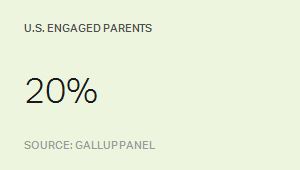
  • One in five parents are fully engaged with their kids' schools
  • Key drivers help schools tap potential to engage parents
As U.S. students begin another school year, conversations and even heated debates revolve around school quality and definitions of student success.
But the narrative is changing. The 47th Annual PDK/Gallup Poll of the Public's Attitudes Toward the Public Schools found that student engagement and hope are more important measures of school effectiveness than test scores.
And here's another key ingredient to school success: parents themselves. More specifically, parental engagement.
Parents can be involved in their child's education in many ways, including reading to their child, setting expectations for their child's success and participating in school activities and conferences. More than 70 studies have explored the relationship between parental involvement and increased student achievement, and this research suggests that parental involvement is good. But Gallup has found that parental engagement, which goes far beyond involvement and participation, could have an even more significant impact.
US_parent_engagement
The science of parental engagement builds on Gallup's extensive work with customer engagement. Far more than satisfaction, engagement encompasses a customer's emotional or psychological attachment to a brand, product or company. Similarly, parental engagement extends beyond "participation" or "involvement" to encompass a proactive, interactive relationship with the school that the parent's child attends.
Engaged parents do more than participate in school or classroom-related activities, such as attending a parent-teacher conference or asking their child about their day at school. Engaged parents experience a strong feeling of pride for the school and serve as the school's advocate when discussing it with friends and neighbors. In short, engaged parents have an emotional relationship with their child's school.
Measuring Parental Engagement
Gallup's approach to measuring and managing parental engagement is based on the science of behavioral economics, which theorizes that people's decisions are far more influenced by emotional than by rational factors. For customers of any service or industry, feelings are facts -- which means that most of their decisions are made from the heart rather than from the head.
Gallup's measure of parental engagement builds on customer engagement and behavioral economic principles to get to the heart of a parent's emotional connection with his or her child's school. Three key items help measure their engagement:
  1. My child's school always delivers on what they promise.
  2. I feel proud to be a parent at my child's school.
  3. My child's school is perfect for my child.
Based on parents' answers to these three key questions, Gallup categorizes parents into three distinct groups:
  • Fully engaged parents are emotionally attached and rationally loyal to their child's school. They are strong ambassadors of the school, and they'll go above and beyond to promote and support the school.
  • Indifferent parents are emotionally and rationally neutral. While not necessarily negative about the school, they lack the positive energy that is found with fully engaged parents.
  • Actively disengaged parents are emotionally detached from their child's school. When given a choice, they would be more likely to send their child to another school. If changing schools is not an option, they may voice their negativity about the school to others.
To better understand current levels of parental engagement, Gallup conducted a major study with a nationally representative sample of 3,356 parents across the United States. The study found that 23% of parents strongly agreed they participated in classroom and school activities and 41% strongly agreed their child's school provides a variety of ways for parents to become involved.
However, simply providing opportunities for participation and involvement doesn't necessarily lead to engagement. Only 20% of parents in the study were fully engaged with their child's school. Another 57% of parents in the study were indifferent, and 23% of parents were actively disengaged with the school their child attends.
In comparison, Gallup's recent research with customers in industries such as banking, insurance and healthcare finds between 30% and 40% of customers are fully engaged.
Though it may be discouraging that such a low percentage of parents are fully engaged, parental engagement is not fixed; instead, it is something that school leaders can intentionally measure and improve over time. New Gallup research points to several key drivers of parental engagement, suggesting specific actions school leaders can take to improve their relationships with parents.
Parents are looking for strong school leadership, high academic standards, a positive school culture, personalized education for their child and opportunities to contribute to the school's success. This research suggests that there is untapped potential in engaging parents as a strategy to achieve excellence in schools.
Survey Methods
Results are based on a Gallup Panel Web study completed by 3,356 national adults, aged 18 and older, with at least one child in a U.S. public school. The survey was conducted May 26-June 10, 2015. The Gallup Panel is a probability-based longitudinal panel of U.S. adults who are selected using random-digit-dial (RDD) phone interviews that cover landlines and cellphones. Address-based sampling methods are also used to recruit panel members. The Gallup Panel is not an opt-in panel and members are not given incentives for participating. For results based on this sample, one can say that the maximum margin of sampling error is ±1.7 percentage points, at the 95% confidence level. Margins of error are higher for subsamples. In addition to sampling error, question wording and practical difficulties in conducting surveys can introduce error or bias into the findings of public opinion polls.Parental Engagement: Crucial Element of Successful Schools: