Latest News and Comment from Education

Thursday, April 16, 2015

Controversy swirls around Burbank Unified school superintendent candidate | 89.3 KPCC

Controversy swirls around Burbank Unified school superintendent candidate | 89.3 KPCC:

Controversy swirls around Burbank Unified school superintendent candidate


 Fallout from Los Angeles Unified’s high-profile technology troubles is being felt in a neighboring school district.

Teachers in Burbank Unified School district are up in arms over a superintendent candidate who helped direct the LAUSD technology programs and whose hiring is before the school board Thursday night. 
Matt Hill, Los Angeles Unified's chief strategy officer, was a deputy of former LAUSD Superintendent John Deasy and was hired by Deasy to guide that district’s technology and curriculum improvements. 
If Hill is approved by Burbank Unified’s school board, he would take over as superintendent of the 16,000-student district in July, succeeding Jan Britz who is retiring.
Hill's involvement in the LAUSD iPad and MiSiS projects have been cited by his opponents who argue he should not hold the top job in the Burbank district.
His connection to Deasy, who frequently clashed with the Los Angeles teachers union over such issues as teacher evaluations, has brought out union members who view Hill as a reformist in the Deasy mold.
At a public forum this week in Burbank, teachers grilled Hill about his views on job protections and teacher evaluations, and his role directing Deasy’s controversial tech programs.
Teacher Dana Ragel told Hill he shouldn’t be superintendent if he hasn’t taught in a classroom.
"I’m sure that you’re a wonderful person and parent but someone without an instructional background should not have been considered for the position of superintendent," Ragel said.
Hill distanced himself from his former boss.
"Working for our superintendent, with John Deasy, was very aggressive and combative, and sometimes that baggage comes with me as part of that leadership team," Hill said "As you can tell, I have a different style. I believe in the outcome he was trying to achieve. He knows he burned some bridges, but I have a different approach."
Hill said he would follow the Burbank school board’s direction on issues such as charter schools, accepting funds from pro-charter school foundations, and using student data for teacher evaluations.
Burbank Teachers Association President Lori Adams said Hill’s LA Unified resume has some negatives.
"We found out he was directly involved in the iPad scandal, directly involved in the MiSiS program, which caused teachers not to be able to take attendance or know which students were in their class," she said.
School board member Larry Applebaum said Hill owned up to the mistakes made at LAUSD and talked about how he helped fix the problems.
Applebaum said Burbank Unified’s students don’t need a superintendent who is a master teacher. The district’s teaching is good, he said. Instead, Applebaum said, the district needs someone to create a long-term plan for its finances, staff, and facilities.
"We cobble together policies and are without a cohesive long-term strategic plan as an organization," Applebaum said.
While her union has voiced strong opposition to Hill’s appointment, Adams says she’ll respect the board’s decision on Hill.
"I will work with anyone, but I definitely will keep a very strong eye on him and I will make sure that he follows the rules. I will watch any hirings and firings," she added.

Why the debate between Diane Ravitch and Merryl Tisch was remarkable - The Washington Post

Why the debate between Diane Ravitch and Merryl Tisch was remarkable - The Washington Post:

Why the debate between Diane Ravitch and Merryl Tisch was remarkable


 Diane Ravitch, the former assistant secretary of education who has led a national revolt against standardized-test-based school reform, sat down next to Merryl Tisch, the chancellor of the New York State Board of Regents, this week to “debate” policy and practice on the MSNBC show “All In With Chris Hayes.”

The event was remarkable, and not because Tisch agreed to sit down with Ravitch, as fierce a critic of hers as there is (and there are many).
What was so striking was the way Tisch repeatedly countered — or, rather, didn’t — Ravitch’s direct critiques of the New York testing and teacher evaluation regime as well as the growing opt-out movement in which parents are choosing to disallow their children from taking the state-mandated exams. In fact at one point, after Ravitch listed problems with the Common Core-aligned standardized tests that New York students are mandated to take, and Tisch responded to her, Hayes said this to Tisch:
“I just want to point out something. That was interestingly non-responsive to what she said, right? She’s saying this does not work as a diagnostic tool for the child or for the teacher, you’re saying this is a diagnostic tool for the taxpayer who is funding the system to see if the system is working, right? Those are distinct.
It was equally striking how Tisch repeatedly talked about the “diagnostic nature” of the Pearson-created tests, saying that school districts have told the Board of Regents that they want to design curriculum around the results of the tests. What? As Ravitch noted, the test results aren’t returned until the new school year has begun and students have new teachers. Even if the results came back a day later, teachers nor students are allowed to see which questions the students got wrong. Teachers don’t consider these tests “diagnostic.” Educators want to design curriculum that is rewarding and useful for students, not around tests that have sometimes controversial content and highly questionable value.
Tisch also seemingly attempted to diminish the opt-out movement. When asked by Hayes if she wanted to say anything to parents about the tests, she said: “Actually, I would say to our parents that our kids have got caught in the labor dispute between the governor and the teacher’s union.” What she means is that Gov. Andrew Cuomo has pushed through the legislature changes to the state’s teacher evaluation system that use standardized test scores to a larger degree to evaluate teachers than before — an assessment method condemned by many assessment experts. In her remark to Hayes, she seems to be suggesting that parents opting out their children don’t really understand the political dimensions of their decision.
She also made the following statement:
If you talk about income inequality in this country, income inequality is directly tied to the achievement gap for our poor students. Those students, if they are not given access and opportunity to high-quality education, they simply cannot move along at a continuum.
As Hayes briefly pointed out, the causal connection she seems to be implying — that achievement gaps cause income inequality — is not fact. It’s true that students who don’t have access and opportunity to high-quality education can’t move along an academic continuum, but she didn’t ever explain exactly what the Common Core tests that New York State is using have to do with high-quality education.
You can judge all of this for yourself by watching the video below and reading the transcript that follows.
Here’s the transcript, which I am publishing with permission from MSNBC. It starts with Hayes giving an introduction to the issues and his guests.
CHRIS HAYES: Eight former Atlanta public school teachers were sentenced to prison today, some ordered to serve up to seven years for their convictions in the cheating scandal that rocked the city and the nation two years ago. Investigators found that Atlanta teachers, under intense pressure to meet targets, had changed or erased student’s answers on standardized tests. And that scandal, one of the worst cheating scandals in the country’s history, provides one small window into the possible impact that high stakes testing can have on some school districts.
In the past 13 years of No Child Left Behind, many teachers across the country have openly revolted against testing regimes that they say put too much focus on data and force them to teach to the test.
Now parents are getting involved and organized and they’re turning the push to opt out of standardized tests into a full-fledged movement. Today, in New York State, tens of thousands of students in grades three through eight sat down to take the English language arts examine as part of a state assessment designed around New York’s Common Core standards. The math test is next Tuesday.
But many of their classmates were sitting out the test today amid outcry from parents concerned about the pressure it puts 
Why the debate between Diane Ravitch and Merryl Tisch was remarkable - The Washington Post:

The New Orleans model: Praised but unproven - Caitlin Emma - POLITICO

The New Orleans model: Praised but unproven - Caitlin Emma - POLITICO:

The New Orleans model: Praised but unproven


 Back in 2010, Education Secretary Arne Duncan called Hurricane Katrina the best thing to happen to public education in New Orleans because it gave reformers a rare chance to reset the entire system.

Since then, mayors and governors from Nevada to Tennessee have sought to replicate the New Orleans model by converting struggling public schools into privately run charters and giving principals unprecedented autonomy to run their own staffs, budgets and curricula — as long as they deliver better test scores.
But behind all the enthusiasm is an unsettling truth: There’s no proof it works.
To be sure, as the 10-year anniversary of Katrina approaches, there are positive signs. New Orleans used to have the worst public schools in the state, but high school exam results and graduation rates are nearing the state average. Fewer students are attending failing schools and more are enrolling in college.
“What New Orleans has proven is that you can go, in layman’s terms, from an F to a C,” said Neerav Kingsland, former CEO of New Schools for New Orleans and now an independent school consultant in the city. “We’ve taken what was arguably one of the most underperforming school districts in the country and we’ve stabilized it so that it’s now performing near the state average.”
“Of course, that being said, Louisiana ranks 49th in the nation, so the state average is not a measure of excellence,” Kingsland added. “I don’t think we have proven that this system can deliver excellence. I don’t think anyone would say it’s excellent.”
The average ACT score for the high school class of 2014 in the state’s Recovery School District, the one created to take over failing schools statewide — was 16.4 — considerably below the minimum score required for admission to a four-year public college in Louisiana. Analysts say that school quality is uneven, political


Read more: http://www.politico.com/story/2015/04/the-new-orleans-model-praised-but-unproven-116982.html#ixzz3XVxFNp1T


Big Education Ape: 'Historic': First Katrina state takeover school returns to New Orleans control | NOLA.com http://bit.ly/1CQU4u1

Big Education Ape: Charter Schools Threaten a Cornerstone of American Democracy - US News http://bit.ly/1CSaam6

Big Education Ape: Teachers unions on the rise again in New Orleans, 10 years after charters pushed them out - The ... http://bit.ly/1DctMVE

Big Education Ape: John McDonogh Flunkie “Manager” Steve Barr Is Doing Just Fine in Los Angeles | deutsch29 http://bit.ly/1E73kjM

Big Education Ape: Good News, Transparency: Louisiana CREDO Data No Longer Exclusive to CREDO | deutsch29 http://bit.ly/1c0U7go

Real Crisis in Education: "Reformers" Refuse to Learn - Living in Dialogue

Real Crisis in Education: "Reformers" Refuse to Learn - Living in Dialogue:

Real Crisis in Education: "Reformers" Refuse to Learn


 By John Thompson.

The Education Post is a school reform site that claims to seek a “better conversation, better education.”  It supposedly wants to elevate the voices of teachers and others as an antidote to the “politicized debate that pushes people to the extremes.” However, many or most contributors to their blog repeatedly question the motives of persons who disagree with them.
I’m a teacher who seems to never learn. I keep trying to engage reformers in a constructive dialogue. I submitted a guest post and it prompted two rebuttals. I hoped to post a response to a response but, ultimately, it was rejected. This is the reply that the Education Post did not see fit to print.
On a recent episode of NPR’s Planet Money, the hosts told the joke about three econometricians who went deer hunting. The first fires and misses three feet to the right of the deer. The second shoots and misses three feet to the left. The third jumps up and down and cheers, “We got it!”
As NPR explained, economists aim to be within the margin of error, and that is fine when developing statistical models for studying social policy theory and economic trends. But, in a dubious effort to assess so-called performance “results” or student “outputs,” teachers across the nation are being evaluated with value-added estimates that are not reliable or valid for holding individuals accountable.
Educator Jessica Waters, in “Results Matter More than Practice” replied to my Education Post contribution with the claim that teachers should be evaluated by student “outputs.” She gave no evidence that this is possible or desirable. She seems to assume that it is possible to use test score growth to guess-timate the amount of students’ learning that can be linked to each teacher in every school across this diverse nation.
I wonder if Waters has read any of either the economists’ regression studies that were used to promote evaluations that supposedly estimate the “results” of teachers’ practice, or the social science which explains why those algorithms aren’t appropriate for evaluating individuals. She made no effort to address the likely scenario that this misuse of test scores will prompt even more destructive teach-to-the-test rote instruction and increase the exodus of teaching talent from schools where it is harder to raise test scores.
In “A Teacher Proposes a Different Framework for Accountability,” I argued “federal interventions should favor ‘win-win’ experiments, not innovations that will inevitably hurt some children in an effort to help others.” I thought that was pretty clear. After all, it is hard to imagine an inner city high school teacher who hasn’t witnessed the harm done to poor children of color by the test, sort, and punish policies of the last 15 years. Even an educator who believes that test-driven accountability produced benefits in her own school must have also witnessed the damage that is widely imposed on so many children in a hasty experiment to help others.
Waters seemed to misunderstand my argument, however. She replied, “I don’t believe there is such a thing as a win-win experiment. I have never seen one as a science teacher or in my many practicum hours as an aspiring principal.”
So, I will further explain. In a sincere effort to improve schools, the federal government has encouraged experiments like value-added teacher evaluations, the Race to the Top (RttT), and School Improvement Real Crisis in Education: "Reformers" Refuse to Learn - Living in Dialogue:

It's Spring Broadies are in Full Bloom: Palm Beach picks Robert Avossa as new schools chief - Sun Sentinel

Palm Beach picks Robert Avossa as new schools chief - Sun Sentinel:

It's Spring,  Broadies are in Full Bloom:  PB picks Georgia superintendent as new schools chief


Robert Avossa, a schools superintendent in Georgia, has been selected to lead the Palm Beach County school district as its new chief.

The School Board picked Avossa Thursday after back to back interviews with three finalists. Avossa edged two other candidates: Desmond Blackburn, chief of school performance and accountability in Broward County and Jesus Jara, deputy schools superintendent in Orange County, Fla.

"This is home to me," said Avossa. "Every community has challenges, the question is does this community have the courage to face those challenges and the fortitude to hold it together when things get tough."

The School Board unanimously and without much discussion picked Avossa after holding public hour-long interviews with the three candidates.

Avossa will replace outgoing superintendent Wayne Gent, who will step down in July to lead St. Lucie County's public schools.

Avossa, a former teacher and principal, leads 96,500 students in Atlanta as superintendent for Fulton County. In his application, he said he's helped boost academic achievement, graduation rates and participation in SAT tests.

Jara is the deputy superintendent in Orange County and previously served as superintendent in Monroe County. He's held various education positions across the state and worked as a principal and assistant principal in Massachusetts.

Blackburn works in Broward, where he said he helped build support for the $800 million bond that voters passed in November and helped repurpose schools to fight dwindling enrollment and competition from charter schools.

This story will be updated as more information becomes available. Follow @karen_yi on Twitter for live updates from the meeting.

kyi@tribpub.com, 954-356-4528 or Twitter @karen_yiPalm Beach picks Robert Avossa as new schools chief - Sun Sentinel:

WANTED: Progressive Candidate With the Guts to Stand Up For Public Education - Badass Teachers Association

Badass Teachers Association:


WANTED: Progressive Candidate With the Guts to Stand Up For Public Education

By:  Steven Singer
Originally published on his blog:  https://gadflyonthewallblog.wordpress.com/2015/04/15/wanted-progressive-candidate-with-the-guts-to-stand-up-for-public-education/
weird-help-wanted-9
Wanted:
Progressive presidential candidate.
MUST SUPPORT PUBLIC EDUCATION.
No. Not just the words. Not as a soundbite. Must actually support policies that help public schools – not tear them apart and sell them away piece-by-piece while you smile and brag about how much you support education.
This means you must:
1) Repudiate and Vow to Repeal Common Core State Standards
-Must know how they were created by unqualified partisans with little input from real educators.
-Cash strapped states were coerced into accepting them – in many cases even before they were done being written – as a condition for increased funding.
-They have never been proven to help kids learn and are in fact a massive social experiment at taxpayers’ expense and students’ peril.
-They are a huge payday for the testing and test prep industry who provide the new standardized assessments and new textbooks necessary for their implementation.
-They are developmentally inappropriate, demanding all students to learn at the same rate and at a time frame that is inconsistent with the way children cognitively develop.
2) End Annual Standardized Testing
-Must promise to end policies forcing public schools to give standardized tests in reading and math to all students in grades 3-8 and once in high school. Ideally, standardized tests should be completely eliminated.
-Must understand that standardized tests are poor assessments that have never been proven to measure academic achievement. However, they do an excellent job of demonstrating a student’s parental income – rich kids do well, poor kids less so.
-Must realize these tests are nothing but a money-maker for private industry and are used as an excuse to close under-funded schools predominantly serving children of color.
MUST REPUDIATE THE MEDIA NARRATIVE OF FAILING SCHOOLS, which is not supported by facts and merely the propaganda of an industry feeding off of our public taxes and children’s misery.
3) Stop the Expansion of Charter Schools
-Must understand how for-profit charters siphon away public money for use as private profits. Charters reduce services for children to increase the bottom line.
-Must vow to protect funding meant for traditional public schools that is lost when charters open in the district.
-Must know that no research has ever shown charters to be better than public schools, and many studies have shown them to be drastically worse.
-Must appreciate the lack of transparency charters are afforded feeds the growing plague of national charter financial scandals.
4) Work to Stop School Segregation
-Our public schools are more segregated now than they were before Brown vs. Board of Education 60 years ago. This is intolerable and makes it easy to disenfranchise students of color.
-Must not only recognize this, but have a plan to solve the problem.
5) Promise to Increase Public School Funding – Especially to the Poorest Districts
-Must understand that nationwide, rich schools spend on average 15.6% more than high poverty schools. Being born poor should not mean you get a worse education. In fact, impoverished students have greater needs than wealthy ones. It costs MORE to educate them.
-Must champion an effective plan to address funding inequalities with an emphasis an equity.
6) Have a Plan to Address Child Poverty
-Must have an effective plan to help children, parents and families rise Badass Teachers Association:
NY TESTING HORROR STORIES
ELA TESTS - DAY 2

THANK YOU TO LONG ISLAND OPT OUT FOR SHARING AND ALLOWING BATs to PUBLISH AND GET THE WORD OUT.  Yesterday was Day 1 of NYS ELA CC testing.  We will be posting the Day 2 and Day 3 stories in coming blogs.  Stay tuned and share!!


You can join LIOO here  https://www.facebook.com/groups/Longislandoptout/
You can get NY test refusal information here at NYSAPE  http://www.nysape.org/
You can get National test refusal information here at United Opt Out   http://unitedoptout.com/


Today's third grade ELA had passages from Drag Racer. Grade level 5.9 and interest level 9-12th grade.


The second reading in 6th grade exam given today was titled A Master Teacher by Helen Bledsoe. It was a story about Confucius and how he was credited with the exam system in China.
Printed in bold letters on the second page was: Let exams do the ranking
It spoke about how people had to take exams and how those that did well received positions in government based on the results.
We were appalled and angry that this found its was onto the exams today. To us it spoke to how little NYSED and Pearson care about parent wishes, students and the testing climate and quietly "attacked" it yet again.


Today's 4th grade assessment had a passage from "The Clay Marble" from Mingfo Ho. Jeanette Deutermann googled it. Here's the grade level:


Grade 7: Excerpt from Under the Lilacs by Alcott. Published in 1878. Included 10 footnoted vocabulary, some with 2 in one sentence. It also included "old" English such as "recognising", Badass Teachers Association:

Day of Silence - National Day of Silence: The Freedom to Speak (Or Not)

Day of Silence:


Day of Silence:


Know Your Rights
Read National Day of Silence: The Freedom to Speak (Or Not) by Lambda Legal to learn about your legal rights to participate in GLSENs Day of Silence.
 Day of Silence:


Report It!
Are you experiencing resistance to GLSENs Day of Silence organizing or activities from your school administrators or faculty? If you are a student in a U.S. K-12 school and feel like your rights are not being respected, please click here to let us know!Day of Silence:


Day of Silence:


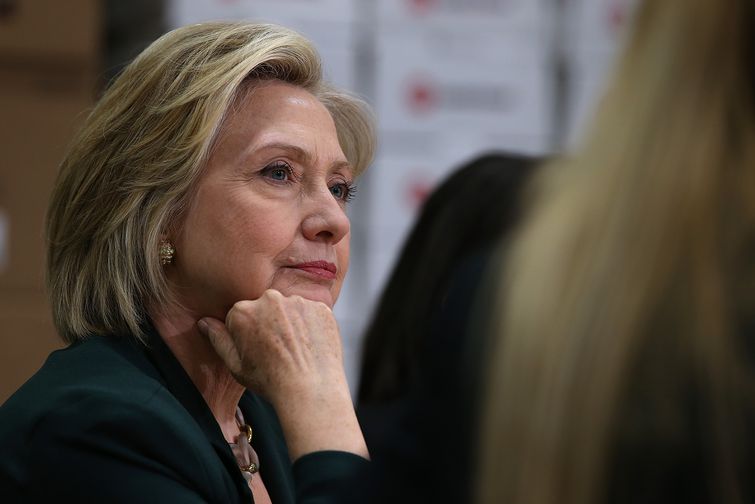
Who's most excited for Hillary Clinton to replace Obama? Teachers unions. - Vox

Who's most excited for Hillary Clinton to replace Obama? Teachers unions. - Vox:

Who's most excited for Hillary Clinton to replace Obama? Teachers unions.


 Hillary Clinton is unlikely to offer a meaningfully different domestic policy agenda than Barack Obama. But if you're looking for an exception to the rule, look at K-12 education.

Obama has picked fights with teachers unions by promoting the Common Core, charter schools, and merit pay for teachers. Clinton has a better relationship with unions who either oppose those policies or are concerned about how they're being implemented.
"I think she’s going to be different," said Randi Weingarten, president of the American Federation of Teachers union. "It doesn’t mean she’s going to agree or disagree." But she suggested Clinton's point of view on some issues might align more closely with her own: "What we’ve learned about her in all these years is she understands teachers are really important to kids."
So while Clinton will lay out themes and messages that sound a lot like Obama's on many issues, there is room for substantive difference on education. A Clinton presidency could mean a significant shift in policy away from the Obama administration's aggressive reforms.

How the Obama administration embraced education reform and alienated unions


For the past seven years, Education Secretary Arne Duncan has wielded more power than his predecessors — and he's used it to promote policies opposed by teachers unions.
The most controversial among them requires states to evaluate teachers based in part on their students' test scores. If states wanted their schools to escape penalties under No Child Left Behind, the federal education law that required all students to be proficient in reading and math in 2014, the Education Department required them to overhaul teacher evaluation.
When the Obama administration took office, only three states used students' test scores as a factor in their evaluation systems. Now more than 40 have designed systems to do so. Those systems usually rely on value-added scores, which try to estimate the impact of an individual teacher on the progress students make during an academic year, as well as classroom observations and other factors.
Economic research has found that the students of teachers with higher value-added scores are more likely to attend college and earn higher salaries later in life. But teachers unions arguethat value-added systems are at best too narrow in their definition of good teaching, and at worst fatally flawed. The new systems have led some states to create assessments for less academic subjects like art and gym. And a study of value-added scores found they're only weakly linked to teachers' performance in the classroom.
This isn't the only reason for the rift between Obama and teachers unions. The Education Department has encouraged states to make it easier to open charter schools, schools that are publicly funded but privately run and that are typically not unionized. And Duncan praised the verdict in a California lawsuit that overturned teacher tenure in the state.
The Obama administration's education agenda is controversial even within the Democratic party — and it's in force not due to legislation, but due to how Obama and Duncan have wielded executive power. They've pushed states to make changes with competitive grants and waivers from No Child Left Behind. The lack of underlying legislation makes Obama's education agenda particularly vulnerable to the whims of the next administration, Democratic or Republican.

Clinton has historically been closer to unions


At least for now, Clinton has preserved traditional Democratic ties with unions — a contrast with Obama that was most obvious in a small dispute in the 2008 Democratic primary over merit pay.
Obama supported merit pay for individual teachers. Clinton wanted entire schools to be rewarded, arguing that merit pay for individual teachers was "demeaning" and would lead to unhealthy competition between educators. She eventually won the AFT's endorsement. (The NEA, the other major teachers union, sat out the primary endorsement process before endorsing Obama in the general election.)
"She’s passionate about children, and she’ll follow the evidence, and she’ll talk to people and give people their due, instead of thinking about things ideologically, as you’ve seen in the last 10 years," Weingarten said.
But where Clinton will be in 2016 is difficult to predict. She is best known for her support of early childhood education, a priority for Obama and Duncan that could become a focus of the next Democratic administration. She hasn't dealt with the more contentious world of K-12 policy since leaving the Senate.
The Clinton campaign did not respond to an email asking about her education plans. At a roundtable conversation in Iowa on Monday, Clinton focused on education and its role in the economy and said the "really unfortunate argument that's been going on around Common Core" has been "really painful."
But there are early signs that she might work with unions. The Center for American Progress, a think tank now closely allied with Clinton, worked with the American Federation of Teachers onrecommendations for overhauling No Child Left Behind. They recommended testing students every year, as under current law. But states would only be required to include one test from elementary school, one from middle school, and one from high school in their systems for evaluating schools, rather than using annual test results.
Education reformers criticized the joint AFT-CAP approach as being less stringent on accountability. The framework suggests that after the Obama administration, Democrats and teachers unions might align more closely on policy than they have in the past six years.
A board member of Democrats for Education Reform told the New York Times's Maggie Haberman in March that he was concerned about Clinton's "longstanding ties" with unions. The group said in a statement Sunday that it celebrated her candidacy and is "hopeful that she … carries on President Obama's legacy of promoting quality teachers and benchmarks that give every student a chance to succeed no matter their background."

Why the Obama administration's brand of reform might not survive


Clinton wouldn't have to pursue more union-friendly policies in order to break with the past. She'd simply have to abandon some of the more controversial parts of the Obama administration's approach.
It's possible that she won't even get the option: a compromise draft for overhauling No Child Left Behind proposed by Democratic Sen. Patty Murray and Republican Sen. Lamar Alexander would tie the Education Department's hands, cutting back on the amount of influence the secretary could exert over state policy. If that bill becomes law, it would significantly limit how much influence Clinton could have on K-12 education.
The waivers from No Child Left Behind's penalties have been a powerful inducement for states to do what the administration wants. But they have also created a complicated interplay between states and the federal government, where states are constantly monitored to see if they're living up to their side of the deal.
If No Child Left Behind limps on into a Clinton administration, when it would be a decade late for an overhaul, the next Education Department could simply create waivers with fewer conditions.
Stepping back slightly from reform wouldn't require a broad array of new policy proposals. It would just require doing slightly less.
The federal government didn't write the standards, but it has promoted them. The stimulus bill included $4.4 billion in Education Department grants for states that adopted "college- and career-ready standards."
States weren't explicitly required to adopt the Common Core in order to compete for the federal money; they could have used their own standards if they proved to the Education Department that those standards prepared students for college. Nearly all of them adopted Common Core instead, and all of the states who eventually won the grants were Common Core states. Another grant program was created to help develop tests based on Common Core standards.
The federal government has other levers to promote Common Core, too. It waives some requirements of No Child Left Behind, the 2002 education reform law, for states that (among other things) adopt "college and career-ready standards" and assessments based on those standards. But Texas, Virginia, and Minnesota got waivers from the law without adopting the Common Core by proving that that their standards could prepare kids for college and careers.