Latest News and Comment from Education

Tuesday, November 6, 2012

Open Letter; Governors Christie, Cuomo and Mayor BloombergSave Our Schools

Open Letter; Governors Christie, Cuomo and Mayor BloombergSave Our Schools:


Open Letter; Governors Christie, Cuomo and Mayor Bloomberg

An Open Letter to Governors Christie, Cuomo and Mayor Bloomberg


By Denny Taylor
Originally Published on November 4, 2012
Hurricane Sandy; Research Findings on Children and Trauma Support the Halting of Testing in K-12 Public Schools
Dear Governor Christie, Governor Cuomo, and Mayor Bloomberg,
I write to applaud your rapid response to Hurricane Sandy. You have been decisive in your decision making and tireless in your efforts to care for all those who have suffered because of the brute force of the storm. Many of the decisions you have made have been courageous, some unexpectedly so. I urge you now to make one more decision for the sake of the children whose lives have been so tragically impacted by Sandy.
It is imperative that executive decisions are made so that displaced students are not required to take benchmarking assessments in their new, “temporary” schools. Of equal importance is the suspension of all testing of children whose lives have been deeply affected by the storm. The focus on all new evaluative procedures should be postponed. The push to fully implement APPR, SLOs, DASA, HEDI, summative evaluations, benchmarks, and baseline rubrics, should also be suspended.
An immediate necessity is the push back of the end of the marking quarter. “For my district and I imagine most others, missing this past week means projects, essays, and tests upon return to round out the quarter average that is already stunted by the APPR benchmarking assessments,” a teacher states. “We are scheduled to close our gradebooks Friday and report grades by Tuesday the November 13.
Such pressures in times of catastrophe increase the possibility that children will experience lasting effects on their health and well being as well as their academic development. In the immediate aftermath of a catastrophic event or in an on-going emergency, school administrators and teachers need all testing to be suspended so that they can work together to: (1) support the social and emotional well-being of children; and (2) create classrooms that encourage resiliency. It is of vital importance that all pedagogical initiatives ensure that every child has the opportunity to engage in activities that support their learning in healthful and productive ways.
Two research findings provide a framework for schools to establish safe learning environments for K-12 students in the aftermath of Hurricane Sandy. Both findings are supported by ethnographic research in locations where catastrophic events have taken place and/or emergency situations exist; and by medical, psychiatric and psychological research on children and mass trauma.
The first finding is that it is important that we do everything we can to restore the social fabric of children’s everyday lives if they are to have the best chance possible to recover when catastrophic events take place. Thesecond finding is that children need to experience joy if they are going to have the best chance possible to recover from potentially traumatic experiences.
In the aftermath of Hurricane Sandy these two findings support the focus on schools as social environments that can enhance the health and well being of students as well as their academic development.. The research based recommendations are presented in depth in “Recommendations for Administrators and Teachers Reopening Schools in the Aftermath of the Storm” Summarized here, they are deceptively simple:
1. Establish schools as safe, joyful places for children and teachers;
2. Ensure that schools are nurturing environments in which children who have been evacuated can become welcome members of the school community;
3. Promote children’s health and well being by providing them with increased opportunities to participate in art, music, drama, dance, and physical education;
4. Enhance academic learning through meaningful literacy activities, listening to and reading stories, participating in constructivist math and science projects, and other meaning making activities;
5. Encourage family and community participation in the daily life of the school;
6. Make sure that the school takes part in community events and activities.
These recommendations are not earth shattering suggestions, but to implement them will take a suspension of stressful mandated requirements. There is no doubt that the current intense focus on testing and value added assessment increases the pressures on children and teachers who have experienced a potentially traumatizing disaster such as Hurricane Sandy. Thus suspending these testing policies and mandates becomes critically important if teachers are to focus on creating environments in schools which will contribute to the restoration of the social fabric of children’s everyday lives. In such circumstances creative, imaginative and joyful learning experiences that are responsive to the social, emotional and intellectual needs of children, and which support their learning in healthful and productive ways, are absolutely essential.
Sincerely,
Denny Taylor
Professor of Literacy Studies
Founding Director of the International Center for Everybody’s Child
Hofstra University

“Recommendations for Administrators and Teachers Reopening Schools in the Aftermath of the Storm” is available on DennyTaylor.com

A baker’s dozen of races that matter to education

A baker’s dozen of races that matter to education:


A baker’s dozen of races that matter to education

There’s a lot at stake for public education in the 2012 elections including and well beyond the presidential choice. Seats on state boards of education are being contested in nine states, and there are gubernatorial races in eight states where governors appoint school board members, Education Week reports. About one-sixth of the approximately 600 state board seats could change as a result of the elections, it said. Four states are voting on state schools superintendents, numerous states have ballot initiatives on a variety of topics, and there are a number of education-related races for the U.S. House and Senate. (Ed Week has a complete education voting guide here.)
Here are 13 races to watch around the country in Tuesday’s election that will affect public education:
1) In Florida, voters will decide whether to drop from the state constitution language in the Blaine Amendment that prohibits the use of state funds at religious institutions. This would lead the way to a statewide voucher program.
2) In Georgia, voters will decide whether to approve a state commission that would have the authority to approve new charter schools over the objections of local school boards.
3) In Washington, voters will decide whether to allow charter schools to open across 

Teacher Evaluation for Effectiveness — Whole Child Education

Teacher Evaluation for Effectiveness — Whole Child Education:


Megan Wolfe

Teacher Evaluation for Effectiveness

Teachers know it, parents know it, and even students know it, but there seems to be no consensus across states, districts, and schools about how to measure it and ensure that it is measured fairly. I'm talking about teacher evaluations. Having an effective teacher at the head of the class is the most important in-school factor influencing student learning and teacher evaluation systems are supposed to assess just how good teachers are in the classroom, with the goal of helping them improve as needed. But many teachers report that they are not evaluated often enough and, in some cases, are not even evaluated in the subjects they teach.
Research shows that students with high-performing teachers can progress three times as fast as students with low-performing teachers. Students deserve access to highly effective teachers in every subject, including (but certainly not limited to) math, science, language arts, history, civics, music, art, foreign languages, and physical education. To help teachers understand their own performance and help them improve, they deserve a fair and accurate assessment of their skills. Teacher effectiveness is dependent on accurate and fair evaluations based on multiple measures, including their students' performance in the subjects they teach.
Unfortunately, too many school systems use student test scores in math and language arts as a measure in evaluating teachers in all subjects and disciplines. Unfair? Yes, of course. This evaluation strategy results in 

It’s NOT Paranoia « Deborah Meier on Education

It’s NOT Paranoia « Deborah Meier on Education:


It’s NOT Paranoia

When you read this I’ll be enjoying the Coalition of Essential School’s Fall Forum in Providence (8th/9th). By the time I return (Nov 17th) I’ll have been many places where I’ll get feedback on the elections and on teaching this side of the Mississippi–including breakfast with Karen Lewis, president of the Chicago AFT. But will it cure my “paranoia”?
Thanks to Ann Cook for reminding me that my “paranoia” about teachers holding a special place in the hearts of the corporate establishment is well-founded. Has anyone asked the policemen or firemen or sanitation workers (not to mention …) to work extra hours because there’s a “crisis” in NYC? They may, like teachers, do so without even being asked. Why then are teachers expected to solve the crisis facing the entire nation? Maybe even the rich need the goodwill of cops and firemen? Of course, it may not be long before they have created a truly separate world for themselves with their own cops and firemen–as they have in education, with their own schools.
The claim that our schools are in crisis goes back… actually, to every time there’s a dip in the financial well-being of America–a time when ordinary folks are looking around for someone to blame. I have a collection of 

A letter from one Washingtonian (DC) to his west coast brethren: Reasons for rejecting charter school Initiative 1240 | Seattle Education

A letter from one Washingtonian (DC) to his west coast brethren: Reasons for rejecting charter school Initiative 1240 | Seattle Education:


A letter from one Washingtonian (DC) to his west coast brethren: Reasons for rejecting charter school Initiative 1240

Education Inc. How private companies are profiting from Texas public schools | The Texas Observer

Education Inc. | The Texas Observer:


Education Inc.

How private companies are profiting from Texas public schools.
by Abby Rapoport Published on 


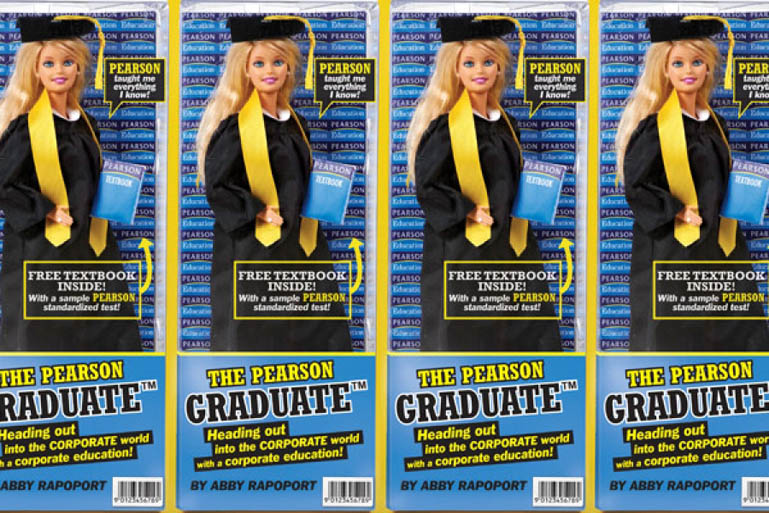
IT’S NOT HARD TO IMAGINE Pearson’s vision of utopia.
Pearson is a London-based mega-corporation that owns everything from the Financial Times to Penguin Books, and also dominates the business of educating American children. The company promotes its many education-related products on a website that features an idyllic, make-believe town. It’s called Pearsonville, and it looks like the international conglomerate version of SimCity. In this virtual town, school buses whizz through tree-lined streets, and the city center features skyscrapers and a tram. Tabs pop up to show you just how many Pearson products are available. A red schoolhouse features young kids using Pearson products to learn math (with Pearson’s enVision Math) and take standardized tests online. Nearby, at the Pearsonville high school, students use the company’s online instructional materials to study science. The high school also features online testing. Pearson online courses are available at the town library. At the model home, parents can use Pearson’s student information system to track their children’s grades. The “test centre,” not shockingly, provides even more testing options. It’s a beautiful little town. A Las Vegas-style sign welcomes you, while a biplane flies through the sky trailing a Pearson banner behind it.
It’s a computer-generated reality. But when it comes to Texas education, it’s not far from the truth.
Pearson, one of the giants of the for-profit industry that looms over public education, produces just about every product a 

"In the End, we will remember not the words of our enemies, but the silence of our friends." - Martin Luther King, Jr. - Wait, What?

"In the End, we will remember not the words of our enemies, but the silence of our friends." - Martin Luther King, Jr. - Wait, What?:


“In the End, we will remember not the words of our enemies, but the silence of our friends.” – Martin Luther King, Jr.

UPDATE:Seattle Schools Community Forum: An Interesting Read from an Unlikely (for us) Source

Seattle Schools Community Forum: An Interesting Read from an Unlikely (for us) Source:


"Record Number Complete High School and College"

So goes today's headline in the NY Times. 

Although the United States no longer leads the world in educational attainment, record numbers of young Americans are completing high school, going to college and finishing college, according to a Pew Research Center analysis of newly available census data. 

The share of high school graduates in that age group, along with the share of those with some college, have also reached record levels. This year, 90 percent were high school graduates, up from 78 percent in 1971. And 63 percent have completed some college work, up from 34 percent in 1971.  

Okay, do we have an educational crisis in this country?  Yes and no.

We certainly are continuing to graduate students from our K-12 system in continuing to rise numbers. 


An Interesting Read from an Unlikely (for us) Source

I'm sure most of you have heard of the right-wing think-tank, the American Enterprise Institute.  Their director of educational-policy studies is Frederick M Hess who, back in Fall 2011, wrote a lengthy essay, Does School Choice "Work".

I would grab a cup of coffee if you intend to read the whole thing but honestly, it's quite illuminating to hear from someone who I might think I wouldn't normally read for information on educational policy.  To whit:

A few years ago, the Manhattan Institute's Sol Stern — author of Breaking Free: Public School Lessons and the Imperative of School Choice — caused a stir when he backed away from his once-ardent support. Howard Fuller, an architect of Milwaukee's school-voucher plan and the godfather of the school-choice movement, has wryly observed, "I think that any honest assessment would have to say that there hasn't been the deep, wholesale 


Illinois House GOP Leader Tom Cross is a liar and an ingrate. The IEA leadership played for suckers. « Fred Klonsky

Illinois House GOP Leader Tom Cross is a liar and an ingrate. The IEA leadership played for suckers. « Fred Klonsky:


Illinois House GOP Leader Tom Cross is a liar and an ingrate. The IEA leadership are played for suckers.


Illinois House GOP Leader Tom Cross writes to the Chicago Tribune today:
When it comes to identifying a critical roadblock impeding the efforts of those working to reform Illinois’ budget and addressing our state’s pension crisis, Bruce Rauner’s “Government unions and the downfall of Illinois” (Perspective, Nov. 1) makes a compelling case. Unfortunately, however, he used an overly broad stroke that mischaracterizes the true nature of where many legislators stand on reform.
No honest assessment can lump legislative Republicans into the same category as the Speaker Michael Madigan/President John Cullerton-controlled majorities in the General Assembly. Republicans have been sounding the alarm on the need for comprehensive pension reform for several years. We have, in fact, spearheaded several reforms into law that curb abuses in state pension systems and put forward specific, detailed proposals to meet the challenge posed by the 


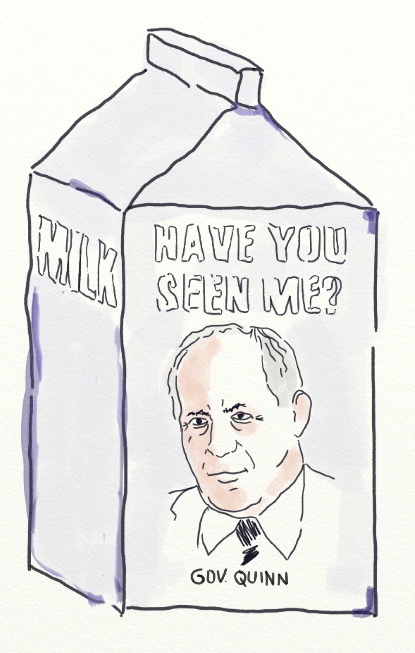
Ten minute drawing. Have you seen me?

Jersey Jazzman: Darcie Cimarusti For Highland Park BOE

Jersey Jazzman: Darcie Cimarusti For Highland Park BOE:

save image

Darcie Cimarusti For Highland Park BOE

I missed a big endorsement: Darcie Cimarusti is running for the Highland Park Board of Education. Darcie is the famous Mother Crusader and a fierce fighter for public education.

If you live in Highland Park, vote for Darice and the rest of her slate. It's important.