Latest News and Comment from Education

Wednesday, June 14, 2023

THE RIGHT TO EDUCATION IS A HUMAN RIGHT AND A KEY TO FREEDOM

THE RIGHT TO EDUCATION IS A HUMAN RIGHT AND A KEY TO FREEDOM 

Education is like a superpower that can change lives and transform societies. It can help people escape poverty, achieve equality, and enjoy freedom. However, millions of children and adults around the world are still denied their right to education due to various obstacles and challenges.

What is the right to education?

The right to education means that every human being has the right to quality education and lifelong learning opportunities. It's like having a VIP pass to the world of knowledge and wisdom. Education should be free, compulsory and universal at the primary level, accessible and progressively free at the secondary and higher levels, and relevant and inclusive for all.

The right to education is not just a fancy idea or a utopian dream. It's a legal obligation for all countries that have signed international conventions and treaties, such as the Universal Declaration of Human Rights, the Convention against Discrimination in Education, and the International Covenant on Economic, Social and Cultural Rights. These instruments oblige states to respect, protect and fulfill the right to education for everyone within their jurisdiction.

Why is the right to education important?

The right to education is important because it can make you smarter, healthier, happier, and cooler. Some of the benefits of education are:

  • - It can boost your brainpower and creativity by exposing you to new ideas, concepts, and perspectives. It's like doing mental gymnastics or yoga.
  • - It can improve your job prospects and income potential by equipping you with skills, knowledge, and credentials that employers value. It's like having a golden ticket to the job market.
  • - It can enhance your social status and well-being by connecting you with diverse people, cultures, and communities. It's like having a passport to the world.
  • - It can empower you as a citizen and human being by enabling you to participate in civic life, express your opinions, and defend your rights. It's like having a superhero cape.

What are the challenges to the right to education?

Despite the awesomeness of education, many people still face hurdles and barriers in accessing quality education. Some of the challenges are:

  • - Lack of resources and political will to provide adequate funding, infrastructure, teachers, materials, and curricula for education systems. It's like having a party without music, food, or drinks.
  • - Social and cultural norms that exclude or marginalize certain groups from education, such as girls, women, minorities, refugees, migrants, persons with disabilities, and indigenous peoples. It's like having a VIP party that only allows rich white men.
  • - Conflicts, disasters, and emergencies that disrupt or destroy educational facilities and services. It's like having a party that gets crashed by zombies or aliens.

In conclusion, education is not only a right but also a privilege that should be available to everyone. It's like having a ticket to ride the rollercoaster of life. So let's make sure that we respect, protect, and fulfill the right to education for all. After all, knowledge is power, but also fun!

The Right to Education Is a Key to Freedom https://www.rollingstone.com/culture-council/articles/the-right-education-is-a-key-to-freedom-1234769483/ via @RollingStone 

BROOKINGS: RIGHT SIZING EDUCATION FOR PRIVATIZING AND DESTRUCTION


BROOKINGS: RIGHT SIZING EDUCATION

FOR PRIVATIZING AND  DESTRUCTION

Scaling impact in education for transformative change is a complex and multifaceted process that requires a systemic approach to achieve meaningful outcomes. In today's rapidly changing world, education plays a critical role in shaping the future of individuals and societies. Therefore, it is essential to ensure that education systems are equipped to meet the needs of learners and prepare them for the challenges and opportunities of the 21st century.

To achieve transformative change in education, scaling impact is necessary. Scaling impact refers to the process of expanding successful educational interventions to reach a larger population and achieve a greater impact. However, scaling impact is not just about expanding the reach of educational interventions; it is also about ensuring the quality and sustainability of these interventions.

One of the key challenges of scaling impact in education is ensuring that educational interventions are evidence-based and effective. Educational interventions must be grounded in research and data to ensure that they are effective in achieving their intended outcomes. Additionally, educational interventions must be adaptable to different contexts and cultures to ensure that they can be scaled effectively.

Another challenge of scaling impact in education is ensuring that interventions are sustainable and have a long-term impact. This requires a focus on building local capacity and empowering communities to take ownership of educational interventions. For example, providing professional development opportunities for teachers and involving parents and community members in the design and implementation of educational interventions can help to build local capacity and ensure sustainability.

To scale impact in education, it is also important to address systemic barriers that prevent access to quality education. This includes addressing issues such as poverty, inequality, and discrimination that can limit access to education. Additionally, it requires a focus on policy change at the national and international levels to ensure that education systems are adequately resourced and supported.

In recent years, there has been growing concern about the privatization of education systems and the role of billionaires in shaping education policy. Privatization can have negative consequences for access to quality education, particularly for marginalized communities. Therefore, it is essential to ensure that education systems remain public and adequately resourced to meet the needs of all learners.

In conclusion, scaling impact in education for transformative change requires a systemic approach that addresses both the quality and sustainability of educational interventions. It requires a focus on evidence-based practices, building local capacity, addressing systemic barriers, and advocating for policy change at the national and international levels. By working together, we can ensure that education systems are equipped to meet the needs of learners and prepare them for the challenges and opportunities of the 21st century.

Scaling impact in education for transformative change https://www.brookings.edu/research/scaling-impact-in-education-for-transformative-change/


MAGA PARENTS' RIGHTS ALL WRONG


MAGA PARENTS' RIGHTS

ALL WRONG

Are you ready to learn about the world of education rights? Buckle up, because we're about to explore the wild world of MAGA parents' rights versus student rights. And let me tell you, it's a real doozy.

First up, we have the right-wing front groups. These include Moms for Liberty, Nation Parents Union, and a whole bunch of dark money groups. These groups are all about fighting against things like mask mandates, vaccines, and critical race theory. Because who needs science and social justice when you've got good old-fashioned ignorance?

And let's not forget about the American Legislative Exchange Council (ALEC), the Koch brothers, Betsy DeVos, the Mercers, and all those MAGA billionaires. They're all in on the action, funding and influencing these attacks on education. Because who needs a well-educated populace when you've got a bunch of brainwashed minions?

But it's not just the right-wing groups that are causing a ruckus. Politicians on both sides of the aisle are pandering to parents' rights, signing bills left and right to appease their constituents. Texas Governor Greg Abbott recently signed four parental rights bills, proclaiming that "our schools are for education, not indoctrination." Because who needs critical thinking when you've got blind obedience?

But what exactly do parents' rights mean legally for schools? Well, it's a bit murky. Education Week reports that at least 30 states have laws that explicitly recognize parents' rights in education, but the extent of those rights varies widely. So basically, parents can argue for just about anything and it might hold up in court. Because who needs consistency when you've got chaos?

Liberals are trying to reclaim parents' rights from conservatives in education, but it's an uphill battle. They're up against a well-funded and well-organized machine that's determined to keep their kids ignorant and compliant. But hey, at least they're trying. Because who needs apathy when you've got hope?

So what can we do to make sure students' rights are protected in education? Well, for starters, we can listen to the experts. Harvard Graduate School of Education reminds us that "public education is a public good" and that "parental rights should not be used as a political tool." We can also support educators who are working tirelessly to provide students with a well-rounded education that includes critical thinking and social justice.

In conclusion, the battle between parents' rights and student rights in education is a complicated mess. But one thing is clear: we need to prioritize the needs of students over the desires of parents who are more concerned with their own agendas than with the well-being of their kids. Because who needs selfishness when you've got empathy?

Liberals groups like 'Stop Moms for Liberty' seek to redefine 'parents' rights' - The Washington Post https://www.washingtonpost.com/education/2023/06/12/progressive-education-activist-m4l/ 

James Meredith: Time for an American Child's Bill of Rights https://dianeravitch.net/2014/02/08/james-meredith-time-for-an-american-childs-bill-of-rights/ via @dianeravitch 

Big Education Ape: Gov. DeSantis Should Veto Florida’s Tragically Flawed So-Called ‘Parents’ Bill of Rights’ | by Bruce Lesley | Voices4Kids | Apr, 2021 | Medium https://bigeducationape.blogspot.com/2021/04/gov-desantis-should-veto-floridas.html 

Big Education Ape: Educators say parental rights bill could harm trust with students | The Texas Tribune https://bigeducationape.blogspot.com/2016/11/educators-say-parental-rights-bill.html 

OKLAHOMA STATE EDUCATION SUPERINTENDENT MY ASS, MAGA HITMAN IS MORE LIKE


OKLAHOMA STATE EDUCATION SUPERINTENDENT MY ASS

 MAGA HITMAN IS MORE LIKE 

In the world of education, there are those who prioritize the success of their students above all else. And then there's Oklahoma State Education Superintendent Ryan Walters, who seems to prioritize something else entirely: being a MAGA hitman.

Yes, you read that right. According to some reports, Walters has been using his position as superintendent to push a political agenda rather than focusing on what's best for the students of Oklahoma. Instead of working to improve the quality of education in the state, he's been busy promoting a certain political ideology.

Now, I don't know about you, but when I think of a superintendent, I picture someone who spends their days making sure that students have access to the best possible resources and opportunities. But apparently, Walters has a different idea of what his job entails. Instead of worrying about things like teacher retention rates or student achievement, he's been busy trying to turn Oklahoma into a MAGA stronghold.

It's hard to imagine how this is supposed to benefit the students of Oklahoma. Are they supposed to be inspired by Walters' political leanings? Will they be more likely to succeed in life if they're taught to blindly follow a certain political party? It all seems a bit ridiculous, if you ask me.

But hey, maybe I'm just not seeing the big picture here. Maybe there's some grand plan behind Walters' actions that I'm just not privy to. Or maybe he's just a MAGA hitman with his priorities seriously skewed.

Either way, it's clear that something needs to change. If Walters wants to truly make a positive impact on the education system in Oklahoma, he needs to start focusing on what really matters: the students. They're the ones who will be shaping the future of our country, after all.

So here's my advice to Mr. Walters: put down the MAGA hat and pick up a textbook. It's time to get back to the basics and start prioritizing education over politics. Trust me, your students will thank you for it.

School Boss’ Pro-Trump Rant Is Definition of Indoctrination https://www.thedailybeast.com/oklahomas-top-education-official-chooses-politics-over-students?source=twitter&via=desktop via @thedailybeast

State Superintendent Ryan Walters orders staff to investigate 2 teachers accused of indoctrination https://www.koco.com/article/oklahoma-ryan-walters-investigate-teachers-indoctrination/42485535 

Tuesday, June 13, 2023

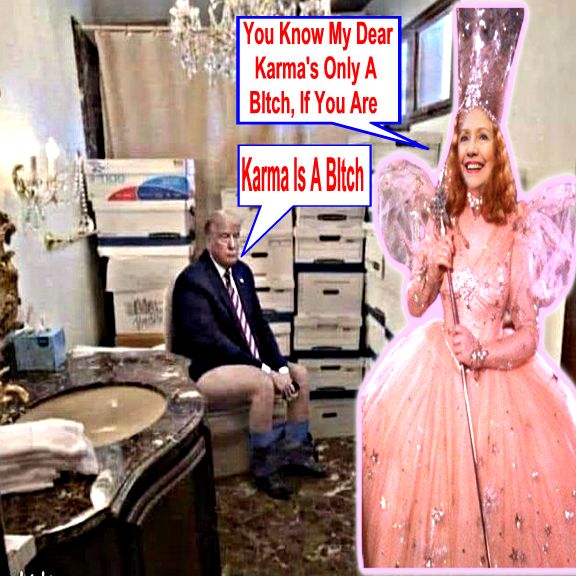
FLORIDA PACK RAT PLEADS NOT GUILTY TO FEDERAL CHARGES THAT HE'S A PACK RAT


FLORIDA PACK RAT PLEADS NOT GUILTY TO FEDERAL CHARGES THAT HE'S A PACK RAT

Former President Donald Trump has once again found himself in hot water, this time for allegedly illegally keeping classified documents at his Florida estate. But let's be real, is anyone surprised? Trump has been in more legal battles than a professional wrestler.

The charges against Trump stem from an investigation into his handling of sensitive information during his presidency. Critics have pointed out that Trump's history of careless handling of confidential information, including his use of a personal cell phone for official business, could have put national security at risk. But who needs national security when you have Twitter?

Trump has pleaded not guilty to the charges, but let's not forget his track record of denying any wrongdoing. Remember when he claimed he had the largest inauguration crowd in history? Or when he said he won the 2020 election? The man is about as trustworthy as a used car salesman.

The case against Trump is expected to be a long and complex legal battle, with both sides presenting extensive evidence and arguments. But let's be real, the only evidence we need is his Twitter account. The man couldn't keep a secret if his life depended on it.

This latest legal challenge is just one in a string of controversies surrounding Trump. From allegations of election fraud to accusations of sexual misconduct, the former president has been a one-man drama factory.

Regardless of the outcome of this case, it's clear that Trump's legacy will be forever tarnished by his legal troubles. But hey, at least he'll have something to talk about at his next Mar-a-Lago cocktail party.

As the legal battle continues to unfold, many Americans will be watching closely to see how justice is served. And by justice, we mean watching Trump squirm like a worm on a hook.

Trump pleads not guilty to federal charges that he illegally kept classified documents at Florida estate | AP News https://apnews.com/article/trump-classified-documents-indictment-miami-court-e9412bb71b63ab1b7cfb8e8b122e9809

Trump pleads not guilty to federal charges that he hoarded classified documents in Florida | PBS NewsHour https://www.pbs.org/newshour/politics/trump-pleads-not-guilty-to-federal-charges-that-he-hoarded-classified-documents-in-florida


MOMS FOR LIBERTY: THE PISTOL PACKING MERCENARY MILITIA OF THE RIGHT WING

MOMS FOR LIBERTY: THE PISTOL PACKING MERCENARY MILITIA OF THE RIGHT WING

Right wing front groups like Moms for Liberty are like a mercenary army? Well, that's news to me! I mean, sure, they're organized, armed, and motivated by a political agenda, but are they really like a group of hired guns? Let's take a closer look.

First of all, let's define what we mean by "right wing front groups". According to NPR, these are groups that promote extremist views such as white supremacy, anti-immigration, anti-federalism, pro-gun-ownership, and survivalism. Wow, sounds like a fun bunch! They also envision or seek to advance a civil war or a violent overthrow of the government. Yikes! And they engage in street violence, especially against left-wing protesters or activists. Double yikes!

So where does Moms for Liberty fit into all of this? Well, according to the Southern Poverty Law Center, Moms for Liberty is an extremist group that engages in anti-student inclusion activities. They were founded by conservative women in Florida who opposed COVID-19 safety measures in schools. Since then, the group has expanded its presence across the country and has campaigned to ban books, limit discussion about race and LGBTQ+ identities, and populate local school boards with conservatives. So basically, they're like a bunch of overprotective moms who want to shield their kids from anything that doesn't fit into their narrow worldview. How charming!

But are they really like a mercenary army? I mean, sure, they're willing to use force, intimidation, and propaganda to achieve their goals, regardless of the law or the will of the majority. And they're not exactly loyal to the country or its constitution, but only to their own ideology or interests. But do they really have the skills and training to be a group of hired guns? I'm not so sure.

So how do we stop these right wing extremists? According to experts and organizations, we need to strengthen law enforcement and intelligence capabilities to detect, disrupt, and prosecute right wing extremists who plan or carry out violent acts. We also need to counter radicalization and recruitment efforts by right wing extremists, especially online and on social media platforms. And we need to support exit programs and rehabilitation initiatives for individuals who want to leave right wing extremist groups or ideologies. In other words, we need to take this threat seriously and work together to combat it.

But let's not forget to have some fun along the way! After all, laughter is the best medicine. So why not organize a comedy night fundraiser to support organizations that are working to counter right wing extremism? Or how about a satirical sketch show that pokes fun at the absurdity of these extremist groups? We can use humor as a weapon against hate and intolerance.

In conclusion, right wing front groups like Moms for Liberty may not be exactly like a mercenary army, but they are still a serious threat to our democracy and our way of life. We need to take action to stop them, but we can also have some laughs along the way. So let's get creative and use humor as a tool for change!

Moms for Liberty rises as power player in GOP politics after attacking schools over gender, race | AP News https://apnews.com/article/moms-for-liberty-2024-election-republican-candidates-f46500e0e17761a7e6a3c02b61a3d229

Moms for Liberty rises as power player in GOP politics after attacking schools over gender, race | PBS NewsHour https://www.pbs.org/newshour/politics/moms-for-liberty-rises-as-power-player-in-gop-politics-after-attacking-schools-over-gender-race 

Big Education Ape: RYAN WALTERS + MOMS FOR LIBERTY: MY MOMMIES CAN BEAT UP YOUR MOMMIES https://bigeducationape.blogspot.com/2023/06/ryan-walters-moms-for-liberty-my.html 

Big Education Ape: RIGHT WING FRONT GROUP MOMS FOR LIBERTY NAMED AN EXTREMIST IN NEW SPLC REPORT https://bigeducationape.blogspot.com/2023/06/right-wing-front-group-moms-for-liberty.html

Big Education Ape: SOUTHERN POVERTY LAW CENTER: 2022 THE YEAR IN HATE AND EXTREMISM COMES TO YOUR SCHOOL https://bigeducationape.blogspot.com/2023/06/southern-poverty-law-center-2022-year.html 

Big Education Ape: NEWS FROM THE MOMS FOR LIBERTY OUTHOUSE - SH*TTER'S FULL https://bigeducationape.blogspot.com/2023/06/news-from-moms-for-liberty-outhouse.html 

Big Education Ape: THE GREAT MOMMY WAR: THE BATTLE BETWEEN MOMS FOR LIBERTY AND THE OTHER MOTHERS https://bigeducationape.blogspot.com/2023/05/the-great-mommy-war-battle-between-moms.html 

CHRONIC ABSENTEEISM: SHOWING UP IS HALF THE BATTLE

CHRONIC ABSENTEEISM

SHOWING UP IS HALF THE BATTLE

Are you a chronic absentee? Do you skip school more often than you attend? Well, don't worry, because according to the Stephen Hawking, just showing up is half of the battle. So, if you show up for half of your classes, you're good to go!

But in all seriousness, chronic absenteeism is a real problem that affects millions of students and teachers across the country. And with the COVID-19 pandemic, it's only gotten worse. I mean, who wants to attend virtual classes all day when you could be binge-watching Netflix instead?

But let's not forget the consequences of chronic absenteeism. Lower achievement, disengagement, course failure, and dropping out of school are just a few of the outcomes. Plus, it can also affect your health, social skills, and emotional well-being. So, maybe it's time to put down the remote and pick up a textbook.

Now, I know what you're thinking. "But I have so many excuses for why I can't attend school!" Lack of access to technology, difficulty with online platforms, loss of motivation, increased stress and anxiety, family responsibilities, health concerns, economic hardships...the list goes on.

But here's the thing: chronic absenteeism not only affects students, but also teachers. They have to adapt to new modes of instruction and assessment, communicate with students and families, provide academic and social-emotional support, balance work and personal obligations, and cope with burnout and frustration.

So, what can we do to address chronic absenteeism during the pandemic? Well, schools need to adopt a comprehensive and collaborative approach that involves everyone - students, families, teachers, administrators, and community partners. And maybe a little humor wouldn't hurt either.

For starters, let's provide clear and consistent expectations for attendance policies and procedures. And let's form an attendance team that monitors and analyzes attendance data regularly and accurately. Plus, let's intervene early and reach out to students and families who are at risk of chronic absenteeism.

But let's not forget about the positivity ratio. By creating a more positive school culture that fosters student interest and participation, we can help reduce chronic absenteeism. And let's offer flexible learning options that meet the needs and preferences of students.

Of course, we can't forget about providing access to technology, internet, devices, and technical support for remote learning. And let's provide academic and social-emotional interventions and supports for students who are struggling.

But let's also recognize and reward positive attendance behaviors and achievements. And let's provide professional development and wellness resources for teachers who are facing challenges.

And last but not least, let's build positive relationships and communication among students, families, teachers, and school staff. And let's collaborate with community partners who can provide additional services and supports.

In conclusion, chronic absenteeism is a complex problem that requires a holistic and coordinated response. But with a little humor and a lot of collaboration, we can help ensure that all students have the opportunity to learn and thrive during the pandemic and beyond. So, put down the remote and pick up a textbook...or at least show up for half of your classes!

Education dilemma: Why are kids (and teachers) missing so much school? https://www.usatoday.com/in-depth/news/education/2023/06/12/why-students-teachers-miss-so-much-school/70258140007/ 

How to Reduce Chronic Absenteeism in Schools

Chronic absenteeism is a serious problem that affects millions of students and teachers across the country. It is defined as missing at least 10% of school days in a year for any reason, including excused and unexcused absences¹⁴. Chronic absenteeism is linked to lower achievement, disengagement, course failure, and dropping out of school¹². It can also affect students' health, social skills, and emotional well-being⁶.

The COVID-19 pandemic has made chronic absenteeism even worse, as many schools have shifted to remote or hybrid learning models. The U.S. Department of Education released the first set of national data on school attendance during the pandemic in April 2021, but more schools skipped the attendance question than any other question on the federal survey³. This suggests that tracking and reporting attendance during the pandemic has been challenging and inconsistent.

Some of the factors that may contribute to chronic absenteeism

There are many factors that may cause students to miss school, especially during the pandemic. Some of them are:

  • - Lack of access to technology, internet, or devices for remote learning
  • - Difficulty with online platforms or applications
  • - Loss of motivation or engagement with virtual instruction
  • - Increased stress, anxiety, or depression due to isolation, trauma, or loss
  • - Family responsibilities, such as caring for siblings or relatives
  • - Health concerns, such as illness, exposure, or quarantine
  • - Economic hardships, such as unemployment, food insecurity, or housing instability

These factors may vary depending on the student's age, grade level, background, and individual circumstances. For example, younger students may need more parental support and supervision for remote learning, while older students may face more peer pressure and social challenges. Students with disabilities, English learners, homeless students, and foster youth may also face additional barriers to attendance.

How chronic absenteeism affects students and teachers

Chronic absenteeism can have negative consequences for both students and teachers. For students, missing school can lead to:

  • - Gaps in learning and skill development
  • - Lower test scores and grades
  • - Reduced academic confidence and self-esteem
  • - Less participation and interaction with peers and teachers
  • - Increased risk of dropping out of school
  • - Poorer health outcomes and quality of life
  • For teachers, dealing with chronic absenteeism can lead to:
  • - Difficulty planning and delivering effective instruction
  • - More time and effort spent on catching up absent students
  • - Less feedback and communication with students and families
  • - Lower morale and satisfaction with teaching
  • - Higher stress and burnout levels

Some of the strategies that may help reduce chronic absenteeism

To address chronic absenteeism during the pandemic, schools need to adopt a comprehensive and collaborative approach that involves students, families, teachers, administrators, and community partners. Some of the strategies that may help reduce chronic absenteeism include:

  • - Providing clear and consistent expectations and guidance for attendance policies and procedures¹⁵
  • - Forming an attendance team that monitors and analyzes attendance data regularly and accurately¹⁵
  • - Intervening early and reaching out to students and families who are at risk of chronic absenteeism¹⁵
  • - Tracking the positivity ratio and creating a more positive school culture that fosters student interest and participation¹⁵
  • - Offering flexible and personalized learning options that meet the needs and preferences of students³⁶
  • - Providing access to technology, internet, devices, and technical support for remote learning³⁶
  • - Providing academic and social-emotional interventions and supports for students who are struggling³⁶
  • - Recognizing and rewarding positive attendance behaviors and achievements⁴⁵
  • - Providing professional development and wellness resources for teachers who are facing challenges³⁶
  • - Building positive relationships and communication among students, families, teachers, and school staff³⁶
  • - Collaborating with community partners who can provide additional services and supports²

These strategies may require different levels of resources and coordination depending on the school context and the student population. Schools should also monitor and evaluate the effectiveness of these strategies and make adjustments as needed.

Chronic absenteeism is a complex and multifaceted problem that requires a holistic and coordinated response. By working together, schools can help ensure that all students have the opportunity to learn and thrive during the pandemic and beyond.

(1) Understanding Chronic Absenteeism | American Federation of Teachers. https://www.aft.org/ae/winter2019-2020/marsh.

(2) Chronic absenteeism | American Federation of Teachers. https://www.aft.org/childrens-health-safety-and-well-being/childrens-access-care/chronic-absenteeism.

(3) CHRONIC ABSENTEEISM IN THE NATION'S SCHOOLS. https://www2.ed.gov/datastory/chronicabsenteeism.html.

(4) The Link Between School Attendance and Good Health. https://publications.aap.org/pediatrics/article/143/2/e20183648/37326/The-Link-Between-School-Attendance-and-Good-Health.

(5) New Data Reveals School Attendance Numbers During The Pandemic. https://www.npr.org/2021/04/07/985128487/new-data-reveals-school-attendance-numbers-during-the-pandemic.

(6) School Attendance, Truancy & Chronic Absenteeism: What Parents Need to .... https://healthychildren.org/English/ages-stages/gradeschool/school/Pages/School-Attendance-Truancy-Chronic-Absenteeism.aspx.

Bing, 6/13/2023

Monday, June 12, 2023

SEPARATION OF CHURCH AND STATE AF: CHRISTIAN NATIONALIST CHARTER SCHOOLS


SEPARATION OF CHURCH AND STATE  AF

CHRISTIAN NATIONALIST CHARTER SCHOOLS

Are you ready to take a plunge into the wacky world of right-wing Christian nationalism and charter schools? Hold on tight, 'cause we're about to go on a wild ride!

First, let's define our terms. Right-wing Christian nationalism is a political and religious ideology that seeks to make the United States a Christian nation governed by biblical law and values. In other words, they want to turn America into a theocracy. Charter schools, on the other hand, are publicly funded but privately operated schools that are granted autonomy from some state and district regulations in exchange for accountability for student outcomes. They're part of the school choice movement, which advocates for giving parents more options for their children's education.

So what do these two things have in common? Well, some right-wing Christian nationalists see charter schools as a way to circumvent the separation of church and state and promote their religious beliefs in the public sphere. They also see charter schools as a way to challenge the progressive curriculum and pedagogy of public schools and instill patriotic and moral values in students. Some charter schools are explicitly or implicitly affiliated with right-wing Christian nationalist organizations, such as Hillsdale College, the American Federation for Children, or the Classical Learning Test.

Now, let's take a closer look at some examples of right-wing Christian nationalist charter schools. First up, we have Hillsdale College's Barney Charter School Initiative. Hillsdale College is a conservative Christian college in Michigan that has been influential in promoting right-wing Christian nationalist ideas and policies. Through its Barney Charter School Initiative (BCSI), Hillsdale provides curriculum, training, and funding to charter schools that adopt its classical education model, which emphasizes Western civilization, American history, civic virtue, and moral character. Sounds harmless enough, right? Wrong. BCSI's history textbooks present America as a Christian nation founded on biblical principles, downplay the role of slavery and racism in American history, and glorify American exceptionalism and military prowess. In other words, it's propaganda disguised as education.

Next up, we have American Leadership Academy (ALA), a network of charter schools in Utah founded by Glenn Way, a former Republican lawmaker. ALA's mission is to provide students with "the best educational experience with an emphasis on leadership, patriotism, character development." Again, sounds harmless enough. But ALA's curriculum is based on the Core Knowledge Sequence, which is a back-to-basics approach that emphasizes factual knowledge over critical thinking and cultural diversity. ALA also incorporates religious themes and imagery into its programs, such as patriotic songs, Bible verses, church settings, and references to God. ALA has been criticized for violating the separation of church and state and promoting a Christian nationalist agenda. But hey, at least they're teaching kids how to be good little patriots, right?

Last but not least, we have Great Hearts Academies, a network of classical charter schools in Arizona and Texas that claims to offer "a liberal arts curriculum incorporating advanced math and science, a focus on the arts and foreign language, and a range of extra-curricular activities." Great! Except that Great Hearts has also been accused of fostering a conservative culture that discriminates against students of color, LGBTQ+ students, students with disabilities, and low-income students. Great Hearts has also faced controversy for its curriculum choices, such as using books that contain racist stereotypes, teaching creationism as science, omitting sex education, and excluding diverse perspectives from history and literature. So much for that "liberal arts curriculum."

In conclusion, right-wing Christian nationalism and charter schools are a dangerous combination. They're both part of a larger effort to undermine public education and promote a conservative agenda. But hey, at least they're good for a laugh, right? Just kidding. This is actually really scary stuff. Let's all do our part to fight back against this nonsense and protect our public schools from these ideologues.


New breed of charter school pushes limits on separation of church, state My Washington Post subscription allows me to share access to great journalism. Check out this gift article, at no cost to you.Read here: https://wapo.st/3Clixzz 

Big Education Ape: NETWORK FOR PUBLIC EDUCATION (NPE) REPORT: A SHARP TURN RIGHT - HOW FAR-RIGHT CHARTER SCHOOLS ARE FUELING THE CULTURE WARS http://bigeducationape.blogspot.com/2023/06/network-for-public-education-npe-report.html

Join the movement to support public education. We rely on your support to defend and strengthen public schools. - Network For Public Education https://networkforpubliceducation.org/about-npe/donate/ 


OUR SAVIOR IS BEING CRUCIFIED: THE INDICTMENT OF DONALD TRUMP

OUR SAVIOR IS BEING CRUCIFIED: THE INDICTMENT OF DONALD TRUMP 

In a historic development that has left the nation in a state of shock, former President Donald Trump has been indicted on thirty-seven counts in the special counsel's classified documents probe. The charges include obstruction of justice, destruction or falsification of records, conspiracy and false statements. But the real kicker? Trump is facing a charge under the Espionage Act. Yes, you read that right. The Espionage Act.

The news of Trump's indictment has sent shockwaves across the country, with many Americans taking to the streets to celebrate with a "You're Fired" party. Fireworks lit up the sky as people danced in the streets, singing "Ding dong, the witch is dead" and "Na na na na, hey hey hey, goodbye."

But while the nation celebrates, there are some who are still in shock. "I can't believe it," said one Trump supporter. "I thought he was untouchable. I mean, he's the President. He can do whatever he wants, right?"

Wrong. As it turns out, even Presidents have to follow the law. Who knew?

Of course, the news of Trump's indictment has brought up comparisons to Hillary Clinton's email scandal. But let's be real here – there's no comparison. Trump's case is like comparing a speeding ticket to grand theft auto.

And while some Republicans have tried to deflect attention from Trump's case by bringing up Clinton's emails or Biden's son Hunter, it's clear that this is a whole different ballgame. The allegations against Trump, when paired with the available evidence of his state of mind, are dramatically different from the potential charges considered against Biden, Clinton or Pence.

But enough about politics. Let's talk about the real winners here – the comedians. Late night talk show hosts are having a field day with this news, with Stephen Colbert joking that Trump is "finally getting his day in court – and it's not even his wedding day."

Meanwhile, Jimmy Kimmel quipped that "Trump is going to need more than a Sharpie to get out of this one." And Seth Meyers joked that "Trump is going to have to change his name to Inmate #45."

But perhaps the funniest response came from John Oliver, who said "This is like Christmas, Hanukkah and my birthday all rolled into one. I haven't been this happy since I found out I was getting my own HBO show."

As for Trump himself, he took to Truth Social to announce that he had been informed by the Justice Department he was indicted and that he was “summoned to appear at the Federal Courthouse in Miami on Tuesday, at 3 PM.” But let's be real here – we all know he's not going to show up. He'll probably be too busy playing golf or tweeting about how unfair this all is.

So there you have it – the news of Trump's indictment has left the nation in a state of shock and celebration. But one thing's for sure – this is only the beginning. As the investigation continues, who knows what other surprises are in store? All we can do is sit back, grab some popcorn, and enjoy the show.

In the words of John Oliver – "This is going to be f***ing amazing."

Lindsey Graham on Trump indictment: At least Trump isn't a spy - The Washington Post https://www.washingtonpost.com/politics/2023/06/12/trump-indictment-defense-espionage/ 

Video: John Bolton makes prediction on Trump's political career after indictment | CNN Politics https://www.cnn.com/videos/politics/2023/06/12/john-bolton-donald-trump-indictment-sot-cnntm-vpx.cnn 

Why The Latest Trump Indictment Looks So Bad For Him | FiveThirtyEight https://fivethirtyeight.com/features/why-the-latest-trump-indictment-looks-so-bad-for-him/ 


WTF: DON'T SAY HARVEY MILK? #PrideMonth 🌈 #Pride2023 🌈 #tbats #edchat #K12 #learning


WTF: DON'T SAY HARVEY MILK?

In a shocking turn of events, the Temecula school district is currently being investigated by the California Department of Education. Why, you may ask? Well, it seems that the school board made the grave mistake of blocking a curriculum that mentioned the iconic gay rights leader, Harvey Milk.

Now, I know what you're thinking. "Why would they do such a thing?" And honestly, I wish I had an answer for you. Maybe they were afraid that talking about Milk would turn all the students gay? Or perhaps they were just really big fans of censorship? Whatever the reason may be, it's safe to say that their decision has come back to bite them in the behind.

The investigation is still ongoing, but I have a feeling that it's not going to end well for the school board. I mean, when you actively try to suppress important historical figures like Harvey Milk, you're basically asking for trouble. It's like trying to hide a piece of broccoli in your mashed potatoes - eventually, someone is going to find it and call you out on your nonsense.

But let's not dwell on the negative. Instead, let's take a moment to appreciate just how ridiculous this whole situation is. I mean, we're living in 2021 and there are still people out there who think that talking about gay rights is somehow controversial. It's like they're stuck in a time warp where it's still okay to discriminate against people based on their sexual orientation.

And yet, despite all of their efforts to silence Harvey Milk and erase his legacy, he still remains an important figure in the fight for LGBTQ+ rights. His message of love and acceptance continues to inspire people around the world, and no amount of censorship can change that.

So, to the Temecula school board, I have this to say: good luck with your investigation. You may have thought that blocking a curriculum about Harvey Milk was a smart move, but it turns out that it was just plain silly. Maybe next time, you'll think twice before trying to suppress important historical figures. Or, you know, you could just embrace diversity and inclusivity like the rest of us. It's up to you.

Temecula school district being investigated by California Department of Education – Press Enterprise https://www.pressenterprise.com/2023/06/09/temecula-school-district-being-investigated-by-california-department-of-education/ 


RELIGIOUS CHARTER SCHOOLS - OXYMORON?


RELIGIOUS CHARTER SCHOOLS - OXYMORON?

Charter schools and religious institutions: A match made in heaven? More like a match made in the land of oxymorons. How can we possibly have religious charter schools? Isn't that like having a vegetarian steakhouse? Or a dry water park? It just doesn't make sense.

But here we are, in a world where one person's mythology is another person's religion, and somehow, we're supposed to navigate this tricky terrain. And let's not forget the American value of separation of church and state. So how do we reconcile all of these conflicting ideas?

Well, let's start by taking a deep dive into the world of charter schools. For those who may not be familiar, charter schools are publicly funded schools that operate independently of the traditional public school system. They have more flexibility in terms of curriculum, hiring practices, and budgeting, but they are still held accountable for student performance.

Now, let's add religion into the mix. There are some schools that are specifically designed to incorporate religious teachings into their curriculum. These schools are often affiliated with a particular religion and may require students to adhere to certain religious practices or beliefs.

So, what happens when you combine charter schools and religious institutions? You get religious charter schools, of course! And if you're scratching your head wondering how this is even possible, you're not alone.

The idea of a religious charter school seems like a contradiction in terms. After all, isn't the whole point of a charter school to provide an alternative to traditional public schools? And doesn't the inclusion of religion go against the separation of church and state?

But here's the thing: charter schools are not immune to controversy. There have been numerous debates about their effectiveness, their accountability, and their impact on the traditional public school system. And now, we have the added complication of religious influence.

So, why would anyone want to attend a religious charter school? Well, for starters, some families may feel that their religious beliefs are not being adequately addressed in traditional public schools. They may want their children to receive a more faith-based education that aligns with their values.

But here's the catch: if you're attending a religious charter school, you're essentially signing up for a specific set of beliefs and practices. This can be problematic if those beliefs conflict with your own or if you don't feel comfortable adhering to them.

And let's not forget about the separation of church and state. This is an important American value that ensures that our government does not favor one religion over another. By allowing religious charter schools to exist, are we violating this principle?

It's a tricky question with no easy answers. But one thing is for sure: if we're going to have religious charter schools, we need to make sure that they are held to the same standards as other charter schools. They should be accountable for student performance, they should not discriminate against students based on their religious beliefs (or lack thereof), and they should not receive special treatment from the government.

At the end of the day, it's up to each individual family to decide whether a religious charter school is right for them. But let's not forget that education is about more than just academics. It's also about fostering critical thinking skills, promoting diversity and inclusion, and preparing students for the real world.

So, if you're considering a religious charter school, ask yourself: is this really what's best for my child? And if you're still not sure, just remember: there's always the vegetarian steakhouse down the street.

Carol Burris: The New Christian Nationalist Charter Schools https://dianeravitch.net/2023/06/12/carol-burris-the-new-christian-nationalist-charter-schools/ via @dianeravitch 

CURMUDGUCATION: The Two Faces of Hillsdale https://curmudgucation.blogspot.com/2023/06/the-two-faces-of-hillsdale.html?spref=fb&fbclid=IwAR2rzQTevCCL8vQik8l1Y5Lrzjsjn8tziM27zDbX2oFoVVUKc1O-eX8h6iY

Could religious charter schools upend American education? - Chalkbeat https://www.chalkbeat.org/2023/6/6/23751623/religious-charter-schools-private-oklahoma-explainer-supreme-court 

Big Education Ape: LETTUCE US PRAY: OKLAHOMA APPROVES FIRST RELIGIOUS CHARTER SCHOOL - GOD HELP US http://bigeducationape.blogspot.com/2023/06/lettuce-us-pray-oklahoma-approves-first.html 

Big Education Ape: SCHOOL CHOICE CHOOSES JIM CROW http://bigeducationape.blogspot.com/2023/06/school-choice-chooses-jim-crow.html 

US DEPT. OF EDUCATION: ARTIFICIAL INTELLIGENCE AND THE FUTURE OF TEACHING AND LEARNING

US DEPT. OF EDUCATION: ARTIFICIAL INTELLIGENCE AND THE FUTURE OF TEACHING AND LEARNING

Artificial Intelligence and the Future of Teaching and Learning: DOE's Practical and Policy-Based Recommendations

Are you tired of teaching the same old lessons year after year? Do you wish there was a way to make learning more engaging for your students? Look no further than Artificial Intelligence (AI)!

Yes, you heard that right. AI is the future of teaching and learning, according to the Department of Education (DOE). And they're not just talking about using robots to replace teachers (although that would be pretty cool). The DOE has offered both practical and policy-based recommendations for educators to incorporate AI into their classrooms.

But before you start worrying about being replaced by a machine, let's take a deep dive into what AI in education really means.

First off, AI can help personalize learning for each individual student. No more teaching to the middle of the class or struggling to keep up with advanced learners. With AI, students can receive customized lessons and feedback based on their unique learning styles and abilities.

But wait, there's more! AI can also help with grading and assessment. No more spending hours grading papers or trying to decipher messy handwriting. AI can provide instant feedback on assignments and even analyze student performance to identify areas where they need extra help.

And let's not forget about the fun factor. AI can make learning more interactive and engaging through gamification. Imagine your students competing in a virtual game to learn math or science concepts. It's like Fortnite meets the classroom!

But with all these benefits, there are also some concerns. One of the biggest is the potential for bias in AI algorithms. If the data used to train AI is biased, it could perpetuate existing inequalities in education. So, it's important for educators to be aware of this and ensure that AI is used ethically and responsibly.

So, what are the practical and policy-based recommendations from the DOE? Here are some highlights:

1. Educators should be trained on how to use AI effectively in the classroom.

2. Schools should ensure that AI is used in an ethical and responsible manner.

3. Policymakers should provide funding for research on AI in education.

4. Schools should prioritize data privacy and security when using AI.

Overall, the DOE's recommendations offer a roadmap for educators to incorporate AI into their classrooms in a way that benefits both students and teachers. And who knows, maybe one day we'll all have our own personal teaching robots. Just don't forget to give them a good grade on their programming!

AI in the Classroom – New Guidance From the Department of Education | Baker Donelson - JDSupra https://www.jdsupra.com/legalnews/ai-in-the-classroom-new-guidance-from-9118862/ 

DOE Recommendations 

Artificial Intelligence and the Future of Teaching and Learning  https://www2.ed.gov/documents/ai-report/ai-report.pdf 

Insights and Recommendations 

In light of the opportunities and various considerations, the Department outlined several recommendations for schools and policymakers:

  • Emphasize Humans-in-the-Loop. Educational institutions should not view AI as replacing teachers; but, instead, as a supplement and tool available to educators.
  • Align AI Models to a Shared Vision for Education. The Department is encouraging all stakeholders to review educational technologies based on outcomes and the extent to which the AI-based tools fit in context with a broader vision of teaching and learning.
  • Design AI Using Modern Learning Principles. The Department also believes that AI-based education tools must be based on well-founded pedagogical practices and learning principles.
  • Prioritize Strengthening Trust. The Department is encouraging open dialogue between educators and industry participants to improve transparency and understanding around AI-based educational tools.
  • Inform and Involve Educators. Training of staff will be a critical component of adopting and implementing any AI-based tool.
  • Focus R&D on Addressing Context and Enhancing Trust and Safety. The Department has outlined specific goals for researchers in enhancing trust in AI-based systems and determining whether AI-based tools can provide relevant answers and support in context.
  • Develop Education-specific Guidelines and Guardrails. The Department believes that additional regulatory efforts will be needed to address the use of AI in education and that existing laws and regulations related to student data privacy (such as the Family Educational Rights and Privacy Act (FERPA), the Children's Internet Privacy Act (CIPA), the Children's Online Privacy Protection Act (COPPA), and state student privacy laws) will warrant review to consider emerging technologies in schools. Additionally, other laws, including the Individuals with Disabilities Education Act (IDEA), will be interpreted as new situations arise from the use of AI in the classroom.

Sunday, June 11, 2023

BIBLE PORN AND AMERICAN BOOK BANNING

BIBLE PORN AND

AMERICAN BOOK BANNING

The recent news of the Bible being banned from schools in Utah has caused quite a stir. But is the Bible really the filthiest story ever told? Let's take a deep dive and find out.

Firstly, let's address the absurdity of book-banning in general. Who are these people who think they have the right to decide what others should or should not read? It's like they've never heard of freedom of speech or expression. And when it comes to the Bible, it's even more ludicrous. This is a book that has been around for centuries, revered by millions of people, and yet some school districts think they have the right to remove it from their shelves. It's madness.

Now, let's get to the question at hand. Is the Bible really the filthiest story ever told? Well, let's see. It does have its fair share of violence, that's for sure. From Cain killing Abel to the plagues of Egypt to the crucifixion of Jesus, there's no shortage of bloodshed in the Bible. But is that really enough to warrant a ban?

And what about vulgarity? Are there really swear words in the Bible? Well, not exactly. But there are some pretty graphic descriptions of sex and sexuality. Take, for example, the Song of Solomon. This book is basically a love poem between two people, and it gets pretty steamy. Here's a sample: "Your breasts are like two fawns, like twin fawns of a gazelle that browse among the lilies. Until the day breaks and the shadows flee, I will go to the mountain of myrrh and to the hill of incense." Yeah, that's not exactly PG-13.

But here's the thing: the Bible is not meant to be read like a novel or a work of fiction. It's a religious text, meant to be studied and interpreted in a specific context. To ban it from schools because of its content is not only ridiculous, but also misses the point entirely.

And let's not forget that the Bible is not the only book with violent or sexual content. Shakespeare's plays are full of both, and yet they are still taught in schools around the world. The same goes for classic novels like Lady Chatterley's Lover or Lolita. These books may be controversial, but they are also important works of literature that have stood the test of time.

So, is the Bible the filthiest story ever told? No, probably not. But even if it were, that wouldn't be a good enough reason to ban it from schools. Let's focus on teaching our children critical thinking skills and exposing them to a wide range of ideas and perspectives, rather than sheltering them from anything that might be deemed "inappropriate."

In conclusion, let's all take a deep breath and remember that books are meant to challenge us and make us think. Banning them only stifles our intellectual growth and limits our understanding of the world around us. So let's keep the Bible in our schools, along with all the other great works of literature out there. And let's all have a good laugh at the absurdity of book-banning in general.

Is the Bible the filthiest story ever told? – The Irish Times https://www.irishtimes.com/culture/2023/06/10/is-the-bible-the-filthiest-story-ever-told/ 

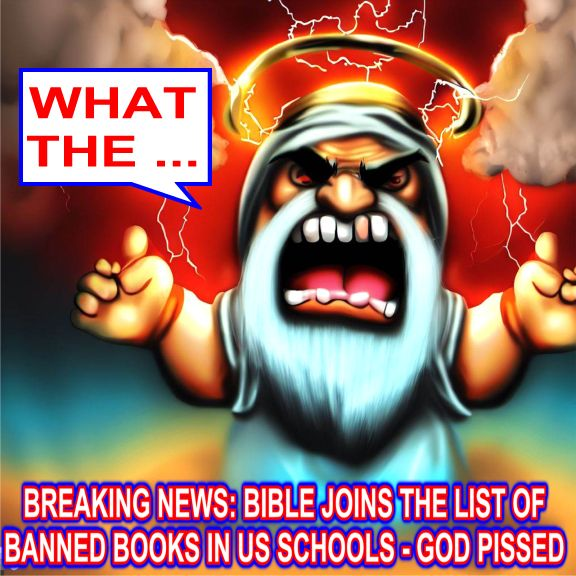
Big Education Ape: BREAKING NEWS: BIBLE JOINS THE LIST OF BANNED BOOKS IN US SCHOOLS - GOD NOT AMUSED http://bigeducationape.blogspot.com/2023/06/breaking-news-bible-joins-list-of.html 

ON THIS DAY: GEORGE WALLACE BLOCKS INTEGRATION IN ALABAMA - LOOK WHO TOOK HIS PLACE


ON THIS DAY: GEORGE WALLACE BLOCKS INTEGRATION IN ALABAMA 

 LOOK WHO TOOK HIS PLACE 

As we all know, billionaires are the new George Wallaces of our time. They stand in the schoolhouse door, blocking the path of progress and equality. But how did we get here? How did we go from a governor physically blocking the integration of a university to billionaires blocking access to education through privatization, massive student debt, defunding, and corporate reforms? Let's take a deep dive into this absurdity.

First, let's talk about George Wallace. The man who famously proclaimed, "segregation now, segregation tomorrow, segregation forever." He was a racist, plain and simple. He stood in front of the University of Alabama on June 11, 1963, trying to prevent two Black students from enrolling. It was a shameful moment in our history, and one that we should never forget.

But fast forward to today, and we have a new breed of segregationists. They may not be standing in front of universities physically blocking Black students, but they are using their wealth and power to prevent access to education for marginalized communities. They are the billionaires who push for privatization of schools, making education a commodity only available to those who can afford it. They are the ones who profit off of massive student debt, trapping young people in a cycle of poverty. They are the ones who defund public schools, leaving them under-resourced and unable to provide quality education to all students. And they are the ones who push for corporate reforms that prioritize profits over people.

It's a sad state of affairs when we have to compare modern-day billionaires to a notorious racist like George Wallace. But the parallels are there. Both groups use their power and influence to maintain a system that benefits them at the expense of others. Both groups are willing to sacrifice the education and future of young people for their own gain.

So what can we do about it? Well, for starters, we can call out these billionaires for what they are: modern-day segregationists. We can demand that they use their wealth and power for good, rather than for their own selfish interests. We can push for policies that prioritize education as a human right, not a commodity. And we can support grassroots movements that fight for educational justice and equity.

In conclusion, it's time to recognize that billionaires are not the heroes they claim to be. They are not benevolent philanthropists, generously giving back to society. They are modern-day George Wallaces, standing in the way of progress and equality. It's up to all of us to hold them accountable and demand a better future for our young people.

On This Day: George Wallace tries to block integration of Univ. of Alabama https://upi.com/1101686414357 via @upi 

Saturday, June 10, 2023

THE HOSTILE STATE TAKEOVER AND OCCUPATION OF HISD: REMEMBER DEMOCRACY...KIND OF NICE WASN'T IT


THE HOSTILE STATE TAKEOVER AND OCCUPATION OF HISD

REMEMBER DEMOCRACY...KIND OF NICE WASN'T IT

Well folks, it looks like the Texas Education Agency (TEA) has decided to take over the Houston Independent School District (HISD), the largest school district in Texas and one of the biggest in the nation. Yes, you heard that right, the democratically elected school board and superintendent are out, and a new board of managers and superintendent appointed by the TEA are in. And let me tell you, the reactions have been mixed, to say the least.

So, what triggered this hostile takeover, you ask? Apparently, it all started with a 2015 law called HB 1842 that mandated an "intervention" and sanction of a public school that has received an academically unsuccessful performance rating for at least two consecutive school years. One of HISD's schools, Wheatley High School, violated this law by failing to meet state standards for seven consecutive years. And so, Mike Morath, the state commissioner of education appointed by Republican Governor Greg Abbott, had no choice but to either order a closure of Wheatley or order a board of managers for the whole district. He chose the latter option, saying it was not in the best interest of kids at Wheatley to close the school.

But hold on a second, some critics of the takeover argue that Wheatley's performance rating was based on flawed standardized tests that do not reflect the quality of education or the challenges faced by students in low-income and minority communities. They also point out that HISD as a whole has improved its academic outcomes and graduation rates in recent years, and that Wheatley was making progress under a new principal and a partnership with Texas Southern University. So, what gives?

Well, on June 1, 2023, TEA announced Mike Miles as the new superintendent of HISD, along with nine new board of managers who will replace the elected HISD trustees following the state's intervention. Miles is a former superintendent of Dallas Independent School District and Harrison School District Two in Colorado Springs. He has a reputation for being a reformer who pushes for higher standards, accountability, and innovation, but also for being controversial and divisive among teachers, parents, and community members.

And who are these nine new board of managers? We've got Janette Garza Lindner, a former HISD teacher and administrator who ran unsuccessfully for an HISD trustee seat in 2021; David Davenport, a former HISD teacher and principal who currently serves as an associate superintendent at Fort Bend ISD; Myrna Guidry, a retired judge who served on the 339th District Court in Harris County; Ed Hugetz, a former interim provost and senior vice chancellor at University of Houston; Judy Long, a former HISD teacher and principal who currently serves as an executive director at Spring Branch ISD; Margaret O'Brien-Molina, a former journalist and communications director at United Way of Greater Houston; Dipak Patel, a business owner and community leader who serves on several boards and committees in Houston; Daniela "Dani" Hernandez, a senior at Eastwood Academy High School and a student representative on the HISD Board of Education; and Kendall Baker, a former city council candidate and community activist who has been vocal in opposing the takeover.

Now, these new leaders have diverse backgrounds and experiences, but some critics question their legitimacy and suitability to lead HISD. Some have raised concerns about the lack of transparency and public input in their selection process, as well as their potential conflicts of interest or political agendas. Some have also noted that the new board does not reflect the racial and ethnic composition of HISD's student population, which is 62% Hispanic, 22% Black, 10% White, and 4% Asian. The new board has four White members, three Hispanic members, one Black member, and one Asian member.

And how have people reacted to all this? Well, it's been quite the mixed bag. Some have welcomed the intervention as an opportunity to improve HISD's performance, governance, and culture. They have expressed confidence in Miles' leadership and vision and hope that he will bring positive changes to the district. They have also praised some of the new board members for their expertise, experience, and commitment to education.

But others have opposed the takeover as an unjustified and undemocratic move that undermines local control and community voice. They have expressed distrust in Morath's authority and motives and fear that he will impose his agenda on HISD without regard for the needs and interests of the students, teachers, parents, and community members. They have also criticized some of the new board members for their lack of connection, representation or accountability to HISD's stakeholders.

The takeover has even sparked protests, lawsuits, and campaigns from various groups who want to stop or reverse the intervention. The Houston Federation of Teachers has repeatedly decried the lack of transparency and due process in the takeover process and has filed a lawsuit challenging the constitutionality of HB 1842. The Houston Education Association has launched a petition calling for a referendum on the takeover and has urged teachers to resist any changes that would harm their working conditions or students' learning outcomes. Several HISD students, parents, educators, and community members have also organized rallies and marches to voice their opposition to the takeover.

So what are the implications and challenges of all this? Well folks, it's gonna be a bumpy ride. The takeover of HISD is not a simple or quick solution to the district's problems. It is a controversial and complicated intervention that will require careful planning, execution, evaluation, and communication. It will also require collaboration, cooperation, and compromise among all the parties involved.

The new leaders of HISD will face many challenges in their attempt to turn around the district and improve its outcomes. They will have to deal with complex and interrelated issues such as academic achievement gaps, school quality and equity, teacher recruitment and retention, student enrollment and attendance, budget constraints and funding disparities, facility maintenance and safety, curriculum standards and assessments, special education and bilingual education services, parent and community engagement, and district culture and climate. They will also have to overcome resistance and skepticism from some of the district's stakeholders who may not trust or support their decisions or actions.

So buckle up folks because we're in for a wild ride. Let's just hope that democracy makes a comeback sometime soon because let's face it - kind of nice wasn't it?

Texas AFT :First Week of TEA’s Takeover of Houston ISD, in Review - Texas AFT https://www.texasaft.org/government/tea/first-week-of-teas-takeover-of-houston-isd-in-review/ 

Community shakes up first HISD board meeting since TEA takeover https://defendernetwork.com/news/local-state/community-shakes-up-first-hisd-board-meeting-since-tea-takeover/ 

Where Houston ISD stands 6 days into TEA's takeover with 1st board meeting ahead https://abc13.com/hisd-takeover-tea-teacher-pay-raise-houston-isd-new-superintedent/13351827/ 

Houston ISD's new board approves temporary contract for new superintendent amid raucous board meeting https://www.khou.com/article/news/education/hisd-board-meeting-takeover/285-f7904fb8-1a36-4f6f-b69c-14febafd98d6 via @KHOU