Latest News and Comment from Education

Sunday, April 19, 2020

CATCH UP WITH CURMUDGUCATION + ICYMI: It's Not Normal Until It's Not New Edition (4/19)

CURMUDGUCATION: ICYMI: It's Not Normal Until It's Not New Edition (4/19)


It's Not Normal Until It's Not New Edition 

In other words, there's no such thing as a new normal. But here we are anyway. Have some reading to pass the time.

My Transition To Emergency Remote Teaching
As always, I would like to be as smart as P. L. Thomas when I grow up. Here, while reflecting on his own transition, he offers insight on what is or is not right with remote teaching.

A Dozen Good Things That Could (Just Maybe) Happen As A Result Of This Pandemic    
Nancy Flanagan has some optimistic thoughts about where we could end up when all this is done.

No, Everyone Is Not Homeschooling Now  
From the blog a Potluck Life, a few thoughts from a homeschooler about how to just relax about this whole schooling at home thing.

Are charter schools public or private?
Jan Resseger takes a look at the recent attempts by charter schools to identify as public or private depending on which designation brings in the most money.

David Berliner: Hoe Successful Charter Schools Cull and Cream
Berliner is one of the top academics looking at ed reform. Here he is guesting at Diane Ravitch's blog to offer some insights into how, exactly, charter schools control which students they serve.

Teachers Could Retire In Droves
Andre Perry looks at what might happen if teachers decide that this is just the last straw and looks like a good time to finally retire.

What Teaching Looks Like Coronavirus  
Well, I'll be. Some reporters at NPR decided to talk to actual teachers about the effects of the pandemic pause. Imagine that.

Google classroom app flooded with 1-star reviews
Students have one way to voice their opinions during crisis schooling.

No, this is not the new normal
Robert Pondiscio checks in at the Fordham blog with some level-headed thinking from the reformster side of the tracks. No, remote learning is not about to become the primary form of US schooling.

Screens and worksheets aren't the answer
Rae Pica takes to Medium to stand up for sensible education ideas for the littles.

What a Global Pandemic Reveals about Inequity in Education  
Christina Torres on Medium to alk about the big fat underlining of inequity that has occurred under the current crisis.

Online Learning Should Return To A Supporting Role
The New York Times offers this from David Deming: "Winner-take-all economics and cost-cutting may make many in-person lectures obsolete, but the best education continues to be intensive, expensive and done in person."


CURMUDGUCATION: ICYMI: It's Not Normal Until It's Not New Edition (4/19)

CATCH UP WITH CURMUDGUCATION


Why Teach Literature? The Whole Collection

I created a series of posts about the teaching of literature, and they ended up being sprinkled here and there. I thought I would just pump them out one after another but after I got started--squirrel!! So for those of you how enjoyed them, I'm putting this up to collect links to all of them in one place so that you can get to them more easily, should you ever wish to. I know these aren't as enter

APR 17

Why Teach Literature Stuff #7 Everything Is Reading

When I was teaching, and I had extra time on my hands, I would reflect on the work--the whys and hows and whats. So in solidarity with my former colleagues, I'm going to write a series about every English teacher's favorite thing-- teaching literature, and why we do it. There will be some number of posts (I don't have a plan here). Also, it would be nice to write and read about something positive

APR 16

Why Teach Literature Stuff: #6 Not For These Reasons

When I was teaching, and I had extra time on my hands, I would reflect on the work--the whys and hows and whats. So in solidarity with my former colleagues, I'm going to write a series about every English teacher's favorite thing-- teaching literature, and why we do it. There will be some number of posts (I don't have a plan here). Also, it would be nice to write and read about something positive
Arne Duncan Smells Katrina 2.0

Arne Duncan said a lot of silly things while he was secretary of education, but perhaps most infamous was his notion that was that Hurricane Katrina was "the best thing" to happen to education in New Orleans. But now he's starting to make similar noises about the current pandemic pause. Here he is in an interview at the 74 : I don’t want us to go back to the old normal. And there’s a whole bunch o

APR 15

Demonstrating Why Business Ideas Don't Help Public Education (Example #3,244,781)

As always, let me say up front that I don't hate the free market and business, and that I believe there are things that they do pretty well. But the free market does not belong within six-to-ten feet of public education (or health care or basically anything that involves taking care of human beings, but let me try to retain some focus here). We are living through yet another demonstration of the w

APR 14

Florida's Troubled Cyber School Launches Alaskan Spinoff

So Alaska's teachers were just getting themselves set up to handle distance learning, when their governor pulled the rug out from under them. He'd had a chat with everybody's favorite failed Presidential candidate and education-busting former governor Jab Bush, who suggested that Alaska would be an excellent fit for Florida's Virtual School. No, really. I wish I were making this up. But I'm not--i

APR 13

FL: Court Delivers Another Blow To Public Education

Florida's HB 7069 is the gift that just keeps on giving. Or rather, taking. This cobbled-together Frankenstein's monster of a bill included a variety of methods for draining the blood from public education, and one of its most astonishing pieces of legalized theft was just upheld by the court. The bill was shepherded through by then-House speaker Richard Corcoran; he's now the state's education he

APR 12

Happy Easter

I love Easter, love it better than Christmas. I have decades of Easter traditions piled up, and of course, today, none of them will happen. I love tradition, but on the other hand, tradition can become an enabler, a means of just sleepwalking through life. I love tradition, but I always told my yearbook students that they were not allowed to make any decisions about the book "because that's what w

APR 11

What Do We Want To Measure When We Get Back?

I have railed against this for years, but now it's apparently time to take the railing up a notch. Lots of folks are worried about--or at least pretending to be worried about--the notion that students may lose a step or two during the coronahiatus, and that's reasonable concern. Every teacher knows that September, not April, is the cruelest month, the month in which you discover just how much info

APR 10


This Is Why You Need A Secretary of Education With Classroom Experience

Betsy DeVos has been pretty much no help at all during the pandemic closing of schools. The US Department of Education has offered next to no guidance to public schools on how best to navigate the current storm. Imagine a country where, in the face of a major disruptive health crisis that cuts acro

CURMUDGUCATION - http://curmudgucation.blogspot.com/

‘the hardest thing I’ve ever had to do’ - The Washington Post

‘the hardest thing I’ve ever had to do’ - The Washington Post

'25 years in teaching and this is the hardest thing I’ve ever had to do’


Larry Ferlazzo, a veteran high school teacher in Sacramento, has been tweeting about his experiences teaching online during the coronavirus pandemic that shut down most schools in the country and sent kids to learn at home — and inviting other teachers to share theirs. He is finding a general meeting of the minds: Meaningful online teaching that began virtually overnight with little to no preparation or training is just plain hard.


It is even harder, according to social media posts Ferlazzo has solicited, for teachers who have children at home who need their attention to help with their own school work. And even worse, according to some teachers, for those who have no reliable Internet access at home.
For example, Cheryl Bost, a fourth-grade teacher who is president of the Maryland State Education Association, said some teachers who live in remote areas are getting in their cars and driving to the parking lots of schools or libraries or even McDonald’s to get Internet access.
“One teacher has two kids of her own, and she is teaching in the car while her own two kids are doing their own lessons in the car, too,” she said.
Ferlazzo has a large following on social media (@Larryferlazzo) and popular education blogs, which you can find here.
Recently, Ferlazzo posted two tweets about how hard online teaching is in these circumstances and here are some of the replies, which reflect reports across the country about the difficulties many teachers are now facing. CONTINUE READING: ‘the hardest thing I’ve ever had to do’ - The Washington Post

Silicon Valley Leverages Pandemic-Induced Poverty To Advance Pay For Success Finance – Wrench in the Gears

Silicon Valley Leverages Pandemic-Induced Poverty To Advance Pay For Success Finance – Wrench in the Gears

Silicon Valley Leverages Pandemic-Induced Poverty To Advance Pay For Success Finance


Waves of crises and disasters, often engineered, have made it hard for most to see the sweeping changes the Fourth Industrial Revolution has in the works. Namely the billionaires’ plan to hand entire job sectors over to robots and algorithms, forcing millions into poverty. Dispossessed of their means of economic support the masses can be more readily transformed into “social impact” data commodities, compelled to navigate an augmented reality police state “game,” otherwise known as “smart” cities.
In the wreckage of the global economy, who’s coming out ahead? Forbes reported ten billionaires netted $51 billion in a market rebound that ended April 9. Among them were tech oligarchs Jeff Bezos, Bill Gates, Larry Page, Elon Musk, Larry Ellison, and Mark Zuckerberg. Indeed they will be well-positioned to invest in the human capital bonds the Federal Reserve will be promoting in the coming years.
As the 2015-2035 timeline of Global Education Futures predicts, portfolios of the future will be portfolios comprised of people. Indeed last summer Microsoft filed a patent at the World Intellectual Property Organization (WIPO) to mine crypto-currency through bodily activity, including brain waves. Great, so perhaps we won’t simply be portfolio items, but actual batteries creating wealth for predators from our human essence. Just like the Matrix. Please, someone get me of this ride that is “stakeholder capitalism.” CONTINUE READING: Silicon Valley Leverages Pandemic-Induced Poverty To Advance Pay For Success Finance – Wrench in the Gears

Help! I Can’t Read! | Teacher in a strange land

Help! I Can’t Read! | Teacher in a strange land

Help! I Can’t Read!


Reading is my greatest pleasure in life. Well, one of my greatest pleasures.
There’s music, and the Lake Michigan beaches and my family and my daffodils and a few other personal items on that list. But I absolutely love to read.
My idea of a perfect afternoon is a good book and a glass of wine and either a toasty fire or a shady patio. We travel west every February for a few weeks of Arizona sunshine, and I usually log a dozen or more books that month, fiction and non-fiction. This year, I read 15, before a looming pandemic chased us back across the country and home.
So you would think I’d be buried in books during the enforced home stay, tucked up and cozy, in my quiet household. But no.
I am finding it incredibly difficult to read books. And I am not alone.
According to Christian Jarrett, PhD, a clinical psychologist based in the U.K.:  “Research shows that chronic stress affects the way the front of the brain works—the area…[that] normally controls our ability to concentrate and switch attention from one thing to another.” Simply put, during something as stressful as living through a global pandemic, “we lose our usual mental flexibility and become highly focused on the source of the threat,” making it difficult to lose yourself in another world.
Which makes sense. Because it is not that I am finding it impossible to read. It’s that CONTINUE READING: Help! I Can’t Read! | Teacher in a strange land

EdAction in Congress April 19, 2020 - Education Votes

EdAction in Congress April 19, 2020 - Education Votes

EdAction in Congress April 19, 2020


Another COVID bill is in the works

NEA continues to work with Congress to highlight priorities for students, educators, public schools, and communities in additional COVID legislation now taking shape. Those priorities include immediate needs like funding as well as long-festering problems ranging from the homework gap to student loan debt. We are also urging lawmakers to see the current crisis for what it is: a wake-up call, not a passing storm. Like 9/11 and the Great Depression, the coronavirus crisis is destined to have a lasting impact on our way of life. Now is time to renew America’s promise of equal opportunity and justice for all. TAKE ACTION

As part of COVID relief, cancel student debt

In a letter led by NEA, more than 30 organizations urged congressional leaders to include student loan debt cancellation in any future COVID-19 relief package. Interest in the issue is sky-high—nearly 2,000 people logged on for an NEA webinar on the issue. The average educator begins a career with about $35,000 in student loan debt. The Student Debt Emergency Relief Act (H.R. 6363), introduced by Rep. Ayanna Pressley (D-MA), would cancel at least $30,000 of outstanding student loan debt, boosting consumer spending and reducing the financial strain on educators and other borrowers. TAKE ACTION

Cheers and Jeers

Thirty-five senators signed a letter urging Senate leadership to include in future COVID-19 legislation “language that ensures proper training and protection for workers on the front lines”—ideally, by requiring the Occupational Safety and Health Administration to issue an Emergency Temporary Standard.
Senator Chuck Grassley (R-IA) voiced support for a short-term increase in Supplemental Nutrition Assistance Program (SNAP) benefits in the next COVID-19 assistance package. Senate Majority Leader Chuck Schumer (D-NY) and House Speaker Nancy Pelosi (D-CA) have listed SNAP benefit increases as priorities for the next bill, as have many other Democrats.
EdAction in Congress April 19, 2020 - Education Votes

An Open Letter to the New New Left from the Old New Left: Vote for Biden | Diane Ravitch's blog

An Open Letter to the New New Left from the Old New Left: Vote for Biden | Diane Ravitch's blog

An Open Letter to the New New Left from the Old New Left: Vote for Biden


Veterans of the political struggles of the 1960s explain in this open letter published in The Nation why they will vote for Joe Biden. In my view, anyone who opposes racism, fascism, and the dominance of the fanatical religious right should vote for Biden.
The letter begins:
On April 13, 2020, Senator Bernie Sanders urged his supporters to vote for the presumptive Democratic nominee, former vice president Joe Biden. Writing as founders and veterans of the leading New Left organization of the 1960s, Students for a Democratic Society, we welcome Bernie’s wise choice—but we are gravely concerned that some of his supporters, including the leadership of Democratic Socialists of America, refuse to support Biden, whom they see as a representative of Wall Street capital. Some of us are DSA members, but do not believe their position is consistent with a long-range vision of democracy, justice, and human survival.
Now it is time for all those who yearn for a more equal and just social order to face facts. All of us have charged for years that Trump is the leader of an authoritarian party that aims for absolute power; rejects climate science; embraces racism, sexism, homophobia, and violence; holds the democratic process in contempt; bids to take over the entire federal judiciary; represses voting rights; and violates plain human decency on many fronts. These CONTINUE READING: An Open Letter to the New New Left from the Old New Left: Vote for Biden | Diane Ravitch's blog

How to reach students without internet access at home? Low tech solutions for students without internet access at home

Low tech solutions for students without internet access at home

How to reach students without internet access at home? Schools get creative
As the coronavirus crisis shines a harsh light on the digital divide, districts must rely on offline methods of communication and instruction to reach students without internet access at home


On the Friday before spring break at Meigs Middle School, special education teacher Matt Coe was busy preparing new lessons for his students now that schools were set to close due to the coronavirus crisis. But while many districts around the country have moved to remote learning platforms like Google Classroom, Coe was using the school’s copy machine to put together printed packets for his students to take home. In this rural Tennessee county of just 12,000 residents, online learning simply isn’t an option for most families.
“A lot of our kids don’t have internet access,” said Coe, who knows students who routinely head to the library or the town’s McDonald’s to get online.
The Federal Communications Commission estimates that about 21 million Americans lack broadband access, with an independent research group indicating the actual number is twice as high. As the coronavirus crisis forces schools across the country to grapple with the challenges of providing remote learning, many schools and districts have had to get creative with low-tech forms of instruction and delivery that don’t require internet connections or digital devices.
In Arkansas, where 23 percent of households lack internet service, and schools will be shut for the remainder of the school year, the local PBS affiliate is now providing daily television programming tied to the state’s distance learning curriculum. They got the idea from a similar arrangement that the Los Angeles Unified School District made with its CONTINUE READING: Low tech solutions for students without internet access at home

NYC Educator: The No Lives Matter Movement

NYC Educator: The No Lives Matter Movement

The No Lives Matter Movement


I can't imagine exactly how much money I'd need to have before I became a Republican. Honestly, no matter how much it was, it boggles my mind how anyone could identify with this particular group of individuals. I mean, sure, they've got a pretty significant propaganda network in Fox, and there's some other network that's even better at kissing up to Trump.

I guess if that's what you deem important, then you have to go for it. And they're not just calling social distancing communism, like the brilliant young woman in the photo. Some are calling it nazism, and it wouldn't surprise me a bit if they didn't know the difference.


Still, I can't see the appeal of the current thrust to put America back to work no matter who dies or how long we prolong a pandemic. I mean sure, I understand your racism. I understand that you don't care about people like me. I understand that the people I've spent my life working for are of no importance to you and that you're fine placing children in cages. Things like that are enough to keep me away.

This notwithstanding, viruses aren't prejudiced. They don't discriminate. Viruses are equal opportunity killers. They don't care what color your skin is, what language you speak, what gender you are, what religion you follow. Your sexual orientation is of no importance to them. This may come as a shock to President Donald Trump, but they don't even care how much money you have or which exclusive club you belong to.

This notwithstanding, the White House is supportive of the movement to resist social distancing. Even one of the idiot doctors who serves Trump says she doesn't want to second guess the idiot governor of Florida keeping schools closed and beaches open. How is it too dangerous for students to attend school, but safe for people to hang out on the beach? CONTINUE READING: 
NYC Educator: The No Lives Matter Movement

Coronavirus Turns School Cafeterias into Soup Kitchens - The New York Times

Coronavirus Turns School Cafeterias into Soup Kitchens - The New York Times

Schools Transform Into ‘Relief’ Kitchens but Federal Aid Fails to Keep Up
Many school cafeterias are now operating more like community soup kitchens, even though the federal school meals program won’t reimburse districts for meals served to struggling adults.


BALTIMORE — On the first day of the coronavirus school closure at Sinclair Lane Elementary School, Janet Bailey, the cafeteria manager, showed up to the school’s kitchen like any other day, ready to do her job. She began fixing the favorites of the 250 or so children who relied on her to feed them daily — chicken patties, a fruit and vegetable, and flavored milk.
On the second day, Ms. Bailey realized that she had answered a calling. By the time the building in northeast Baltimore had opened at 10 a.m., there was a line. Among the first was a man who said he only had a half a loaf of bread in the refrigerator.
“I just packed him up, no questions asked,” said Ms. Bailey, one of dozens of food service workers who signed up to staff meal sites around the city. “I didn’t know his situation, if he had four kids at home or not, like he said. But I know he was hungry. We are supposed to be here to meet the needs of the community. How could I say no?”
After the coronavirus shut down America’s education system, districts fortified their school meals programs to ensure that their most needy students would stay fed. One month in, school leaders realize the federal programs set up to subsidize the meals of tens of CONTINUE READING: Coronavirus Turns School Cafeterias into Soup Kitchens - The New York Times

CEO of Scandal-Ridden IDEA Charter Chain Resigns | Diane Ravitch's blog

CEO of Scandal-Ridden IDEA Charter Chain Resigns | Diane Ravitch's blog

CEO of Scandal-Ridden IDEA Charter Chain Resigns


Tom Torkelson, c-founder of the IDEA charter chain, has stepped down as CEO and will be replaced by the other co-founder JoAnn Gama.
Based in Texas, IDEA is a favorite of Betsy DeVos, who has sent hundreds of millions of taxpayer dollars to the chain to help it expand. Less than two weeks ago, DeVos gave another $200 million to IDEA. The chain previously had received more than $200 million from DeVos. She sure likes IDEA. She has gifted them with nearly $500 million.
Torkelson and Gama arrived in the Rio Grande Valley aspartame’s ofTeach for America and started IDEA in 2000. It has become a charter behemoth in the past two decades.
The chain attracted bad publicity for its free-spending ways. One of its worst ideas was leasing a private jet for nearly $2 million a year for exclusive use of its executives and their families. After getting negative press, the board canceled the lease, and now the executives fly first class.
Jacob Carpenter wrote in The Houston Chronicle:
Torkelson’s resignation caps a remarkable run for the CONTINUE READING: CEO of Scandal-Ridden IDEA Charter Chain Resigns | Diane Ravitch's blog

Who Wants to Return to Normal? | JD2718

Who Wants to Return to Normal? | JD2718

Who Wants to Return to Normal?


Well, everyone, right?  That was an easy question.
But maybe not.
In the last few days I have seen that view challenged in three ways. And all of them are worth thinking about.
First, let’s think about “return to normal” – that means before the pandemic?  But two months ago, it meant before Trump? How much of a difference is there?
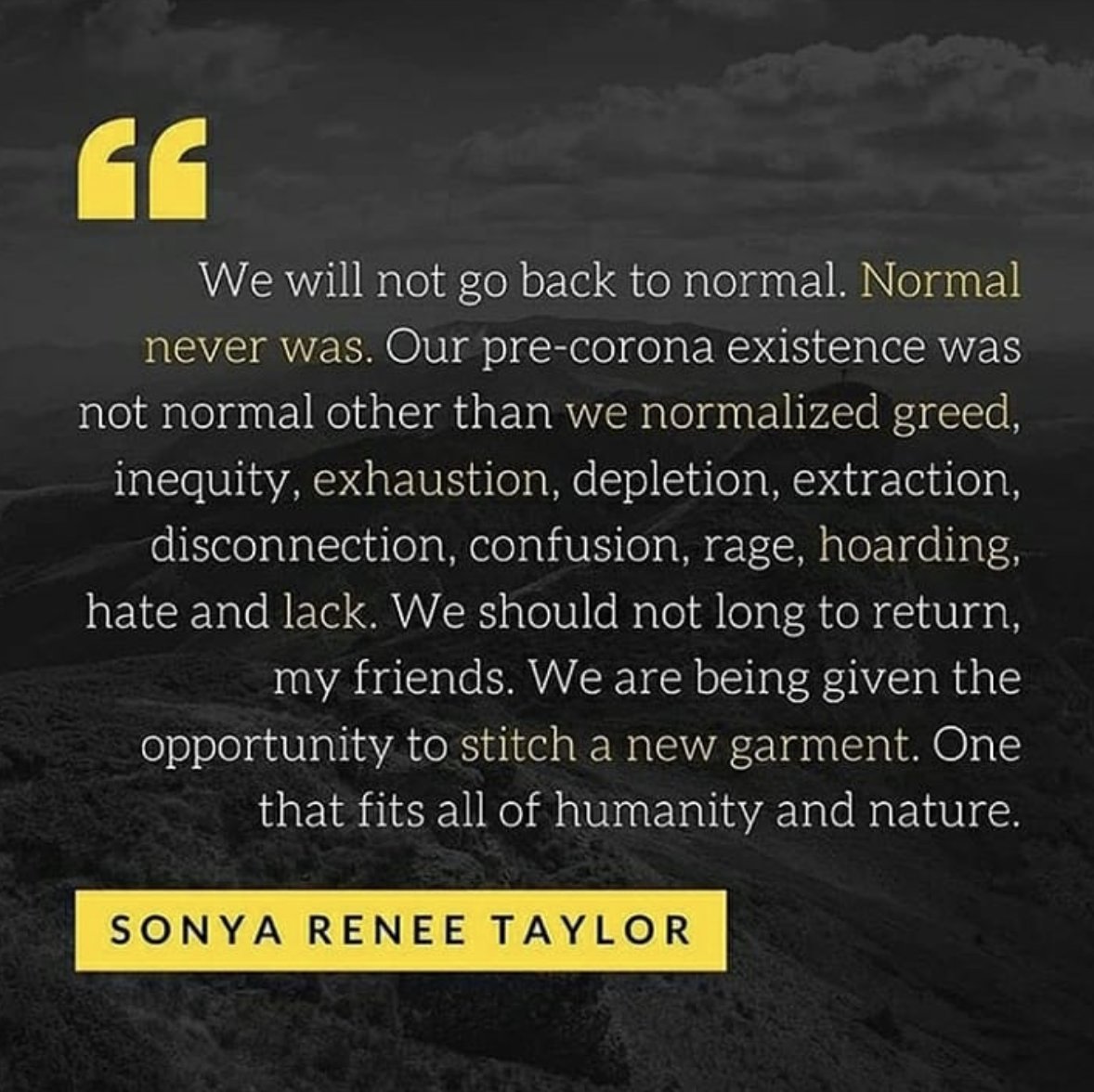
  1. I saw this posted on Instagram:  
Image
The version I saw was attributed to Brené Brown, who tweeted: “I’ve seen this attributed to me, but it’s not my quote. After digging in, we found the original and it belongs to Sonya Renee Taylor. If you’re going to share these beautiful and powerful words – please use this image with her name. Attribution matters.”
Attribution fixed, it’s all good, as Brown indicates.
2. “… the pre-Trump period gave birth to — Trump! ”
Wow. Just wow. Dial things back to 2015, and we have a country about to propel Donald Trump to the CONTINUE READING: Who Wants to Return to Normal? | JD2718

Federal Charter Schools Program a Fountain of Corruption and Disruption | tultican

Federal Charter Schools Program a Fountain of Corruption and Disruption | tultican

Federal Charter Schools Program a Fountain of Corruption and Disruption


By Thomas Ultican 4/19/2020
Last year, the Network for Public Education (NPE) published two investigations of the federal Charter Schools Program (CSP). The first one called Asleep at the Wheel came in March. In it they made several claims including that hundreds of millions of dollars had gone to schools that never opened or were shut down. The authors, Carol Burris and Jeff Bryant, stated, “Therefore, we recommend that Congress end funding for new charter grants coming from CSP.” Betsy DeVos, the Secretary of Education, harshly criticized the report to Congress saying“It makes sweeping conclusions without supporting data or methodological rigor.”  In response, NPE redoubled efforts and in December published Still Asleep at the Wheel where they documented that their conservative claims in the first report under-reported the extent of negligence associated with the CSP.
DeVos Graphic
US Secretary of Education Betsy DeVos

The Charter Schools Program

After Walter Mondale’s crushing defeat in 1984, a group of mostly southern Democrats including Bill Clinton founded the Democratic Leadership Council (DLC). According to a 1997 article in the New Republic,
“… [T]he DLC’s mission was to wrest the Democratic Party away from its left-wing establishment—particularly minority interest groups and labor unions—in order to transform it into a party that championed middle-class values. The old Democrats called for minimum wage increases, antipoverty programs, protectionism, and school busing; the DLC’s self-described new Democrats sought balanced budgets, welfare reform, free trade agreements, and charter schools.”
In his book Kochland, Christopher Leonard wrote, “If the new era was defined by any term, it was still the soupy and ambiguous term of ‘neoliberalism,’ which combined the machinery of a welfare state with deregulatory efforts for the select few special interest groups that had the money and lobbying power to make their case heard in Washington, DC.”
The Charter Schools Program was established in Title 10 of the 1994 reauthorization of the Elementary and Secondary Education Act (ESEA) of 1965. The purposes cited were to provide support for the planning, program design, and initial implementation of charter schools. The intent stated was to enhance parent and student choices among public schools.  The business men and CONTINUE READING: Federal Charter Schools Program a Fountain of Corruption and Disruption | tultican

You Can’t Have My Students’ Lives to Restart Your Economy | gadflyonthewallblog

You Can’t Have My Students’ Lives to Restart Your Economy | gadflyonthewallblog

You Can’t Have My Students’ Lives to Restart Your Economy

It’s okay if a few children die to start up the economy.
That is literally the opinion being offered by media influencers and policymakers as Coronavirus social distancing efforts continue passed the 30-day mark.
In the midst of a global pandemic, we’ve closed down all nonessential businesses while people self quarantine at home waiting for the curve of infection to plateau and then drop off. Medical experts tell us this is the only way to ensure there are enough ventilators and hospital beds for those who get sick.
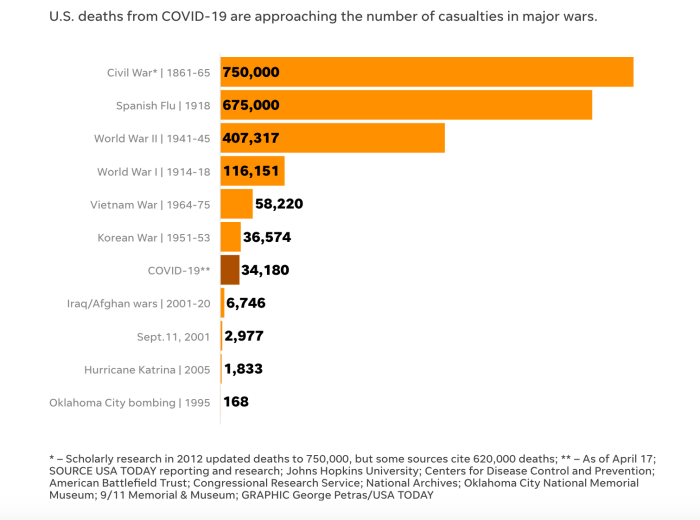
As it is, more than 700,000 Americans have tested positive for COVID-19 and 38,000 have died – more than the wars in Iraq and Afghanistan, the September 11 terrorist attacks, Hurricane Katrina and the Oklahoma City bombing – combined. In fact, the United States has the highest number of Coronavirus deaths in the world.
Screen Shot 2020-04-18 at 4.11.10 PM
Yet there is a concerted effort by the Trump Administration and plutocrats everywhere to get business back up and running. And to do that, they need the schools to reopen so parents can return to work.
They literally want to reopen schools as soon as possible – even if it isn’t 100% safe.
And if that means students, teachers and parents die, at least their sacrifices will CONTINUE READING: You Can’t Have My Students’ Lives to Restart Your Economy | gadflyonthewallblog

NYC Public School Parents: Why is DOE planning to spend $321 million on contracts, including $200 million on busing we aren't using, when schools are closed and facing nearly a billion dollars in budget cuts?

NYC Public School Parents: Why is DOE planning to spend $321 million on contracts, including $200 million on busing we aren't using, when schools are closed and facing nearly a billion dollars in budget cuts?

Why is DOE planning to spend $321 million on contracts, including $200 million on busing we aren't using, when schools are closed and facing nearly a billion dollars in budget cuts?


Sue Edelman of the NY Post just published a story on the proposed DOE contracts being voted on Wednesday, April 22 by the Panel on Educational Policy.

Many of these contracts are simply breathtaking in their expense, especially at a time of school closures and huge budget cuts planned to public schools for next year.

The spreadsheet I created from these proposed contracts shows they add up to $321 million, including extending busing contracts for $200 million for the month of March with an automatic extension for another $200 million in April -- buses we aren’t currently using and don’t need.


The proposed spending also includes $4.4 million to hire nurses for this school year, when we have an oversupply of nurses already on staff, given school closures; and $3.4 million for professional development this year which is also not being used, at a cost of $17 million over the life of the contracts, despite the fact that the Chancellor has said he plans to cut PD next year.

All this is especially incomprehensible given how the Mayor and Chancellor have proposed to slash public education by $827 million in next year’s budget, including $100 million to be taken directly out of school budgets

Among the other items in the list is $1.2 million for Accenture consultants for unspecified "advice" during the Covid crisis, with no hourly wage mentioned, even though in past administrations hourly wages were including in these documents, as well as $40.5 million for IBM to "stage" and send iPads to students.  The cost of the iPADs themselves aren't mentioned.

See  the letter from Comptroller Stringer, sent yesterday, asking the DOE hard questions about about why they are extending the busing contracts, and pointing out that these CONTINUE READING: 
NYC Public School Parents: Why is DOE planning to spend $321 million on contracts, including $200 million on busing we aren't using, when schools are closed and facing nearly a billion dollars in budget cuts?


Mike Klonsky's Blog: The legacy of the '60s freedom movement

Mike Klonsky's Blog: The legacy of the '60s freedom movement

The legacy of the '60s freedom movement


I was fortunate to be invited to take part in a zoom discussion the other night on  "The Black Freedom Movement Then and Now: Organizing Traditions" with veterans of SNCC and lots of younger, mainly black activists. There was lots of talk about lessons learned from the '60s, including how the Freedom Movement benefited from the election of so many local black elected officials, especially mayors.

But I didn't hear one mention of Joe Biden.

That's not to say that these activists and organizers aren't concerned with the national elections or that Biden's support base doesn't include black voters. It does. In fact, if Biden is successful in defeating Trump in November, he will owe his success primarily to a large turnout of African-American voters, especially from the urban centers of battleground states like Michigan, Pennsylvania, and Wisconsin, where Democrats lost the election in 2016.

I mention this only to show the disconnect between the SNCC tradition of organizing, which was community-based, and that of some current left and socialist activists who seem to be totally wrapped up in the debate about whether or not to endorse Biden and the Democrats.

In previous posts and continually on our Hitting Left radio show, I have been clear about my CONTINUE READING: 
Mike Klonsky's Blog: The legacy of the '60s freedom movement