Latest News and Comment from Education

Saturday, March 30, 2019

Jersey Jazzman: Jersey Jazzman: Year 9

Jersey Jazzman: Jersey Jazzman: Year 9

Jersey Jazzman: Year 9


I keep of list of stuff I'm supposed to blog about, and right now that list is long. I've yet to give my thoughts on Bruce Baker's excellent report on New Jersey school funding, which you really need to read. There's also the tax incentive nonsense happening here in Jersey, which is a cautionary tale for the rest of the country. There are the great reports about charter school abuses in New Jersey and California we need to examine.

I still haven't discussed my own work on how charter school growth negatively affects the finances of public school districts. I want to talk about my field trip to Kansas City to party/parry with labor economists. And it's time to go back and look again at all the problems with measuring student growth and attributing that growth to teachers and schools.

But before I get to all that, let me take a minute and talk about this blog on its ninth anniversary.

When I told Mrs. Jazzman last night I've been at this for nine years, she didn't believe it. But in my mind, it makes perfect sense: I started this thing in response to the nonsense coming from the Chris Christie administration way back in the spring of 2010. Now Christie's gone, after wreaking havoc on the state for two terms. Nine years seems just right.

At the time, Christie was running around the state demanding teachers take a pay freeze and pay more toward their health care. He claimed this would make up for a $800 million shortfall, which was largely caused because he refused to renew a millionaire's tax that had been in place for years. Of course, his claim wasn't true, and he forgot that freezing teacher pay would bring down income tax revenues for the state.

What frustrated me at the time was that no one in the press appeared interested in asking about the specifics of Christie's plan -- and yet the specifics were what made the plan viable CONTINUE READING: 
Jersey Jazzman: Jersey Jazzman: Year 9


50 Years of Affirmative Action: What Went Right, and What It Got Wrong - The New York Times

50 Years of Affirmative Action: What Went Right, and What It Got Wrong - The New York Times

50 Years of Affirmative Action: What Went Right, and What It Got Wrong


On cold mornings, Les Goodson shows up early outside the University Club, on a wealthy stretch of Fifth Avenue in Manhattan, and races two panhandlers he has nicknamed Catman and Pimp-the-Baby for a warm spot in front of a steam vent. He launches into “Take Five” on his saxophone, leaving his case open for bills and coins.
In a good week, it’s a living — enough to pay the rent on his railroad flat in Harlem and put food on the table. A few times, he has seen a former classmate, Gregory Peterson, bound into the social club without so much as a nod.
Mr. Goodson, 67, and his classmate were among a record number of black students admitted to Columbia University in 1969. Columbia and other competitive colleges had already begun changing the racial makeup of their campuses as the civil rights movement gained ground, but the assassination of the Rev. Dr. Martin Luther King Jr. in 1968, and the resulting student strikes and urban uprisings, prompted them to redouble their efforts.
They acted partly out of a moral imperative, but also out of fear that the fabric of society was being torn apart by racial conflict. They took chances on promising black students from poor neighborhoods they had long ignored, in addition to black students groomed by boarding schools.

A look back through the decades shows what went right in the early years of affirmative action in college admissions, but also what can go wrong even with the best of intentions.
Those who were able, through luck or experience or hard work, to adapt to the culture of institutions that had long been pillars of the white establishment succeeded by most conventional measures. Others could not break through because of personal trauma, family troubles, financial issues, culture shock — the kind of problems felt by many white students as well, but compounded by being in such a tiny minority. And universities at the time, they said, did not have the will or the knowledge to help.
“I think it’s a fair question to ask: Did we really understand or know what we were doing, or could we have predicted what the issues would be?” said Robert L. Kirkpatrick Jr., who at the time was dean of admissions at Wesleyan University in Middletown, Conn., which was part of these early efforts. “The answer is no. I think we were instinctively trying to do the right thing.”
Columbia — an Ivy League campus right next to Harlem — was a particularly revelatory setting. Perhaps nowhere else were the divisions more striking between the privilege inside university gates and the troubles and demands of black people outside them.
The New York Times tracked down many of the nearly 50 black students in Columbia’s Class of 1973, who arrived on campus as freshmen in 1969. Some of them have remained close friends and CONTINUE READING:  50 Years of Affirmative Action: What Went Right, and What It Got Wrong - The New York Times

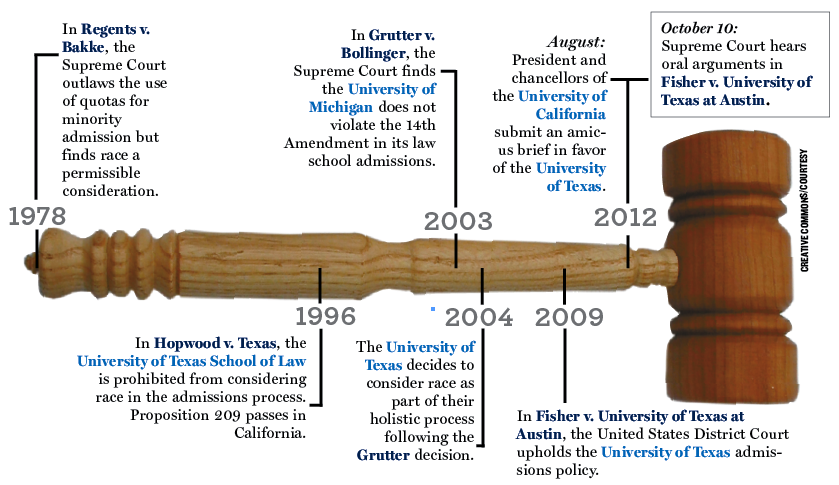
A Timeline of Key Supreme Court Cases on Affirmative Action - The New York Times - https://www.nytimes.com/2019/03/30/us/affirmative-action-supreme-court.html
Image result for A Timeline of Key Supreme Court Cases on Affirmative Action

PART TWO: CASHING IN ON CHARTER SCHOOLS

Central Jersey Arts Charter School was struggling, but kept getting tax money

New Jersey kept sending tax money to troubled charter school and its building project

CASHING IN ON CHARTER SCHOOLS: PART TWO

A series in five parts

Millions of NJ tax dollars were used by Central Jersey Arts Charter School, which was put on probation for a host of deficiencies.

By 2010, four years after it opened, the Central Jersey Arts Charter School in Plainfield was in trouble.
The state had just put it on probation for a host of deficiencies, ordering it to limit spending, develop a curriculum and address problems with its board and student achievement.  
Yet little more than three weeks later, a state agency voted to issue bonds that allowed a fledgling nonprofit called the Friends of Central Jersey Arts Charter School to borrow $8.2 million to buy and renovate a building for the school to rent and, one day, potentially own.
It was a loan whose repayment was based on the tax dollars flowing to the public charter school.
The Friends quickly ran out of cash, and about six months later approached a different state agency seeking millions of dollars in additional financing to finish the project without explaining why they had come up short. The next year, another $1.7 million in bonds were issued, this time with the federal government picking up most of the interest.
While the Friends were permitted to borrow nearly $10 million, the school itself was floundering. A financial report covering the 2010-11 school year stated that Central Jersey Arts was “not in good financial condition” and raised “substantial doubt” about its survival.
The building opened with fanfare as contractors went unpaid. The next year, the school was back on probation, where it stayed until the state shut it down in 2015 for weak finances and “dismal” academic performance — but not before dumping more taxpayer cash into a now-defunct for-profit management company in the hope of turning it around.
This is the story of a charter school that failed, and a building that used up millions in public dollars and continued to receive federal aid long after it was left vacant. It’s a story about dubious decisions by multiple state agencies, one that raises questions about the use of public money and the oversight of private groups that own real estate for public charter schools. CONTINUE READING: Central Jersey Arts Charter School was struggling, but kept getting tax money

With One Reply, Betsy DeVos Told Us Her Real Plan for America’s Public Schools

With One Reply, Betsy DeVos Told Us Her Real Plan for America’s Public Schools

With One Reply, Betsy DeVos Told Us Her Real Plan for America’s Public Schools


In one of Education Secretary Betsy DeVos’s most troubling responses of both days of testimony, she responded to an inquiry by Sen. Jack Reed (D-RI) about this nation’s crumbling school infrastructure. It comes about 1:09:45 into the tape (below) from the PBS News Hour.
It’s important to remember that she has always said that public schools were “in the mix” when it came to Educational Freedom and Educational Savings Accounts. Her statement here indicates that is not what she truly believes.
Sen. Reed states, One emergency I believe at least are crumbling schools throughout the country, elementary and secondary.
He goes on to tell how he and Rep. Bobby Scott (D-VA) have a bill called Rebuild America’s Schools Act to invest, he says, I hope, 100 billion dollars in school infrastructure. I don’t think there’s anyone on this committee who has not visited a school in their state that doesn’t need significant repairs and also updating for technology available now for teachers and young people. And there will be savings with better heating and cooling systems. I would hope you will support this effort. I think it is important and I’d like to get your reaction to helping out with this school CONTINUE READING: With One Reply, Betsy DeVos Told Us Her Real Plan for America’s Public Schools

Family Empowerment voucher paves the way: Choice 2.0 Education Savings Accounts | The Edvocate Blog

Family Empowerment voucher paves the way: Choice 2.0 Education Savings Accounts | The Edvocate Blog

Family Empowerment voucher paves the way: Choice 2.0 Education Savings Accounts


Choice 2.0,  Education Savings Accounts (ESA) are the “reform” endgame and they won’t live up to Florida’s “choice” lore.  With the Family Empowerment Voucher, former Governor Jeb Bush, the Milton Friedman Foundation/Ed Choice, voucher and charter proponents and of course vendors are teetering on the edge of their most ideological, profit-driven dreams. Corporate charter operators are dreaming about converting to private schools as soon as ESAs become a reality. All at the expense of the three million students who attend public schools.
Florida’s Corporate Tax Credit voucher allows corporations to divert their taxes to Step Up for Students, the state’s largest designated Scholarship Funding Organization (SFO). The resulting vouchers are then used primarily for private religious schools that do not have to meet any of the standards imposed by the state on public schools. Since its inception in 2001, lawmakers have expanded Florida’s voucher program so that $1 billion dollars annually, once destined for state general revenue that should have funded a wide range of needs has been diverted to private schools. Keep in mind that Step Up for Students has been paid at least 3% of the gross or $81 million dollars over the years as a “fee.”
Education “reform” is all about chaos and disruption. Because it’s hard to tear down a cornerstone asset like public education, reformers rely on issuing a series of unfounded “studies” in the hopes that the press and politicians will quote their theoretical “findings” as fact. That strategy, called “moving the Overton window,” manipulates public perception with the goal of normalizing radical policy ideas like annually transferring $800 billion public tax dollars into privatizing public schools.

Did you think Betsy DeVos’s terrible, horrible, very bad, no-good week would drive her to quit as education secretary? Guess again. - The Washington Post

Did you think Betsy DeVos’s terrible, horrible, very bad, no-good week would drive her to quit as education secretary? Guess again. - The Washington Post

Did you think Betsy DeVos’s terrible, horrible, very bad, no-good week would drive her to quit as education secretary? Guess again.


If you were hoping Betsy DeVos’s terrible, horrible, very bad, no-good week would drive her to quit as U.S. education secretary, this is going to disappoint you.
No, she did not resign in a huff of indignation after being publicly pilloried over her defense of the Trump administration’s plan to end federal funding for Special Olympics. Nor did she quit after she found herself being reversed by her boss, President Trump, who decided to throw the funding back into his proposed 2020 budget after she spent three days trying to justify eliminating it.
In fact, she appeared Friday before a friendly audience at the National Review Institute’s Ideas Summit in Washington and said with a big smile that she still likes her job. Onstage, DeVos talked about education with Jay Nordlinger, a senior editor of the National Review:
NORDLINGER: I’m glad you’re education secretary. Are you?
DEVOS: I am indeed. Yes, most days I am.
Let’s be clear: People who like their job “most days” don’t usually quit because of a few bad ones — especially those, like DeVos, who find themselves in a position of power to influence government policy and regulations around beliefs fervently held for decades.
Besides, it’s not the first time this has happened to DeVos, and she weathered the previous storms.
During her 2017 confirmation hearing, she was asked whether she thought guns belonged in schools and referred to one Wyoming school and said, “I would imagine that there is probably a gun in the schools to protect from potential grizzlies.” And she did not seem to understand that states could not choose whether to comply with the federal Individuals With Disabilities Education Act.
Her confirmation by the Senate was the first in U.S. history to require a vice president to break a tie. She has been living with opprobrium for a while now.
In 2018, she testified before Congress and was blasted for, among other things, being unable to explain the mission of the Education Department’s Office for Civil Rights.
DeVos’s troubles this week began in earnest Tuesday when she testified before a U.S. House Appropriations subcommittee to defend her proposed 2020 department budget. It included cuts to some special education programs and elimination of federal funding for Special Olympics.
The proposed cut to Special Olympics, which gives people with intellectual and physical disabilities the chance to compete in athletics on a world stage, struck a nerve with lawmakers.
“I still can’t understand why you would go after disabled children in your budget,” Rep. Barbara Lee (D-Calif.) said. “You zero that out. It’s appalling.”
When Rep. Mark Pocan (D-Wis.) asked her why she had proposed cuts to special education programs, she CONTINUE READING: Did you think Betsy DeVos’s terrible, horrible, very bad, no-good week would drive her to quit as education secretary? Guess again. - The Washington Post

NYC Public School Parents: Hilarious video of DeVos testimony on class size - with a more serious message lurking behing it

NYC Public School Parents: Hilarious video of DeVos testimony on class size - with a more serious message lurking behing it

Hilarious video of DeVos testimony on class size - with a more serious message lurking behing it


Check out hilarious clip below of Anthony Cody reacting to Betsy Devos testifying before the US House of Representatives on Wednesday that larger classes have benefits to students.  Anthony, who is a former teacher and a fellow board member of the Network for Public Education, got up at the crack of dawn to attend these hearings and we're glad he did.


Not to detract from the absurdity of her comments, I'd like to point out that individuals including Bill Gates and our Michael Bloomberg have made similar absurd claims.  In fact, Anthony Cody himself rebutted Bill Gates' damaging ideas on class size in the Washington Post.

When he was Education Secretary Arne Duncan also advised districts to increase class size, offering this likely fabricated example: CONTINUE READING: NYC Public School Parents: Hilarious video of DeVos testimony on class size - with a more serious message lurking behing it

Friday, March 29, 2019

CURMUDGUCATION: What Did We Learn From DeVos Hearings This Week?

CURMUDGUCATION: What Did We Learn From DeVos Hearings This Week?

What Did We Learn From DeVos Hearings This Week?


So during Betsy DeVos's terrible horrible no-good very bad week of hearings, what did we learn?

Opposition Parties Matter

This is the third budget in which DeVos tried to zero out Special Olympics. The third. So why so much fuss this time around? Perhaps because somebody made her go before Congress and explain herself (or not) in some exchanges that made for insta-viral hits.

Just imagine what it would be like if more legislators acted more like actual defenders of public education more often.

Finally, Evidence of the Deep State

Donald Trump stepped in to "override" his people, so the Special Olympics are off the chopping block sooner rather than later (this was a cut that was never, ever going to happen). Then DeVos said she was delighted because she has "fought behind the scenes" for the Special Olympics for years. She's the head of the department, and he's the President-- who put that cut in there if neither of them wanted it? It must be--gasp-- the Deep State, trying to make them look bad by somehow sneaking damn fool items into the budget.

But boy-- for someone who fought for it behind the scenes, she sure stood up for it in front of the scenes.

The Benefits of Big Classes

DeVos touted the advantages of larger classes. This is the second time in one month that a North American education official has tried to argue for this piece of fried baloney. It's an idea so bad that CONTINUE READING: 
CURMUDGUCATION: What Did We Learn From DeVos Hearings This Week?


Guess Who’s Not Here for Your Nonsense? | Teacher in a strange land

Guess Who’s Not Here for Your Nonsense? | Teacher in a strange land

Guess Who’s Not Here for Your Nonsense?


First off, I have to credit Shanna Peeples, all-around cool edu-person and 2015 National Teacher of the Year, for the title of this blog, swiped from her Twitter feed. It’s about those marvelous young ladies, high school students in Maryland who confronted the boys who were rating their looks and ranking them on a list with numbers calculated to the hundredth place. And then passing the list around for up-to-the-minute updates.
If you missed the story, it’s well worth a read (here). The blog title should give you a clue: these girls were not having it.
photo-smug
Furthermore, they did something about it. When an administrator limited formal consequences to a single boy and asked the girls not to spread the story around, they organized, confronting their principal, gathering 80 students into an ‘intense’ co-ed meeting where they expressed their anger and discomfort, and putting a series of follow-up responses and conversations into action.
The young women interviewed in the story were powerfully articulate about why they wanted an end to this boys-will-be-boys nonsense.
“Knowing that my closest friends were talking to me and hanging out with me but under that, silently numbering me, it definitely felt like a betrayal. I was their friend, but I guess also a number.”
They also talked clearly about what it felt like to suddenly feel unsafe at school, when they already felt unsafe in the wider world. One boy—the contrite and admittedly ‘privileged’ young man who started the list—says All the Right Stuff. No mention of CONTINUE READING: Guess Who’s Not Here for Your Nonsense? | Teacher in a strange land

DonorsChoose fundraising: Some school districts banning crowdfunding - Vox

DonorsChoose fundraising: Some school districts banning crowdfunding - Vox

Teachers often have to crowdfund for classroom supplies. Some districts are banning the practice.
DonorsChoose and other crowdfunding sites are coming under scrutiny.

As public school budgets get tighter and teacher pay stagnates, a growing number of teachers are turning to crowdfunding sites to pay for everything from classroom supplies to field trips. More than 80 percent of schools across the country have at least one teacher that has used DonorsChoose, a popular crowdfunding site designed for teachers, according to the nonprofit’s own statistics.
The estimated average annual salary for K-12 teachers was just over $58,000 during the 2016-17 school year, according to data from the National Education Association. Ninety-four percent of teachers have used their own money to buy school supplies, according to a survey by the National Center for Education Statistics released last May. Thirty-six percent of the teachers polled spent between $251 and $500 each year, and educators in low-income schools reported spending more. It’s no surprise that teachers are turning to crowdfunding sites to fill the gap.
But some districts have reportedly begun prohibiting teachers from using crowdfunding sites for classroom expenses — which, in many cases, could force teachers to go back to spending their own money on necessary supplies.

Nashville’s crowdfunding ban

Nashville’s public school system recently made headlines for banning crowdfunding sites like DonorsChoose. But as Education Week noted, the district’s ban on crowdfunding services isn’t new: The Metro Nashville board of education’s fundraising policy, which was last updated in January 2018, bans individual staff members from using online fundraising platforms. Schools are allowed to use crowdfunding sites for school-wide fundraisers, but the district has to approve the projects.
The school board has several objections to teachers’ use of crowdfunding sites, the Education Week report shows. “The state Comptroller has indicated that such sites are problematic for school districts because of lack of adequate controls,” K. Dawn Rutledge, the district’s communication officer, told Education Week via email. In other words, administrators appear to be concerned that teachers can order products that don’t meet district standards — and that teachers can claim to be raising money for classroom supplies but instead keep it for themselves.
But DonorsChoose says its platform is designed to assuage all of these concerns — unlike other crowdfunding websites. “When a teacher comes on our site, they must be [accredited] with a school,” Chris Pearsall, the vice president of brand and communications at Donors Choose told me. Teachers write an essay explaining what supplies they need, “and then they actually go shopping on our site to select the products they want for their classroom.” Before the project is posted to the public, it gets vetted by a screener.
“When the project is funded, we purchase the materials the teachers requested and ship them CONTINUE READING: DonorsChoose fundraising: Some school districts banning crowdfunding - Vox

Essential California: On charter school reform, what will break the gridlock? - Los Angeles Times

Essential California: On charter school reform, what will break the gridlock? - Los Angeles Times

California’s broken charter school law has defied reform. Can Newsom break the gridlock?

California is home to about one out of every five charter schools in the United States, but state oversight of them is far from a national model.


Since the Charter Schools Act of 1992 was passed more than a quarter-century ago, a political standoff in Sacramento has made it almost impossible to repair even the parts of the charter law that no one disputes are broken.

Even though Democrats have a firm grip on the Legislature, they are not united on charter schools. Torn between allegiances to pro-charter philanthropists and the powerful teachers union, lawmakers have for years begun each legislative session by introducing a handful of bills favorable to one side or the other. Many have died in committee. Those that have made it to a governor’s desk often have often been vetoed.
With the arrival of Gov. Gavin Newsom, there are signs that the gridlock is ending.

Shortly after he was sworn in, Newsom instructed lawmakers to fast-track charter legislation that politicians had been arguing over for years. The law he signed earlier this month makes charter schools subject to the same public records, open meeting and conflict-of-interest laws that apply to traditional public schools.
“Leadership matters. Who is at the top matters,” said state Sen. Connie Leyva (D-Chino), who chairs the Senate Education Committee. “We have a new governor who is interested in transparency, he’s interested in these issues and he wanted to make it happen.”
How far Newsom will go to tighten regulation of charters remains to be seen, however — and there’s reason to be cautious in predicting legislative support.
For 27 years, the teachers union and pro-charter advocates have been fighting a custody battle over California’s public schoolchildren and the state funding that follows them.
Although the California Teachers Assn. and the California Charter Schools Assn. insist CONTINUE READING: Essential California: On charter school reform, what will break the gridlock? - Los Angeles Times

Fighting teacher stress: Will resilience training exercises help teachers with stress?

Will resilience training exercises help teachers with stress?

Fighting teacher stress
A growing number of mindfulness trainings help teachers cope, but critics say the real problem’s much deeper

few years ago, Amy Lopes, a veteran fifth-grade teacher in Providence, Rhode Island, learned that teachers at her school could try a mindfulness and yoga training along with their students. Her immediate reaction: “What a bunch of baloney!”

“I said, ‘OK, I’ll try it, but it’s not going to work,’ ” recalled Lopes, who teaches at the William D’Abate Elementary School. “But, within a couple weeks, I just let go and became a learner along with my students, and my whole world has changed.”
That training was given by a nearby nonprofit that had recently changed its name — from Resilient Kids to the Center for Resilience — because, said founder and executive director Vanessa Weiner, whenever trainers visited a school to work with students, “we kept hearing from teachers who said, ‘We need this, too.’ ”
Teacher stress is growing, experts say, pushing educators out of classrooms and hurting learning. On top of chronic underfunding for education and the continued pressure of standardized tests, there’s also the unrelenting pace of newer education reforms. CONTINUE READING: Will resilience training exercises help teachers with stress?

After betrayal of Oakland teacher strike, district lays off hundreds, prepares school closures - World Socialist Web Site

After betrayal of Oakland teacher strike, district lays off hundreds, prepares school closures - World Socialist Web Site

After betrayal of Oakland teacher strike, district lays off hundreds, prepares school closures


The betrayal of the seven-day teacher strike by the Oakland Education Association (OEA) has opened the door for the school officials in Oakland, California to accelerate their assault on public education.
On March 4, the day after the strike officially ended, the school board enacted $22 million in budget cuts, including $1.1 million from services for disabled, homeless and foster care youth support as well as $800,000 from music programs. Another $3.6 million was cut from restorative justice programs for conflict mediation, $1.3 million from nutrition for poor students, and $2.9 million from college preparation programs. As part of the OEA’s deal with the Oakland Unified School District (OUSD), the union agreed to help impose these cuts.
Roughly a week later, the district began to distribute layoff notices to 257 educators across the district, including teachers with strong performance reviews, as part of the $22 million in budget cuts. Prior to the strike, the OEA adamantly refused to include teachers’ steadfast opposition to budget cuts as one of its demands at the bargaining table, echoing the district’s claims that this could not be included in collective bargaining.
A similar process has unfolded in Denver, Colorado, where over 220 positions have been cut to pay for a meager salary increase. Like their counterparts in Oakland, the Denver Classroom Teachers Association called the deal to end the strike an “historic victory.”
Last Wednesday, the OUSD school board held another meeting, at which roughly 200 teachers, parents and community members protested. The school board voted to approve the “Citywide Plan,” which envisions the closure or merger of 24 public schools over the next five years, roughly one-third of all public schools in Oakland.
One of the key demands animating Oakland teachers during their strike was a universal hostility to the school board’s long-standing plans to close public schools and convert them to charter schools. Last fall, the unveiling of the CONTINUE READING: After betrayal of Oakland teacher strike, district lays off hundreds, prepares school closures - World Socialist Web Site

Doing the Same Thing and Expecting Different Results | Live Long and Prosper

Doing the Same Thing and Expecting Different Results | Live Long and Prosper

Doing the Same Thing and Expecting Different Results


FLORIDA’S THIRD GRADE READING LAW IS JUST LIKE THE OTHERS
Florida has a third-grade retention law, just like Indiana, Ohio, Michigan, fifteen other states and the District of Columbia. Learning to read by third grade is so important, according to The National Council of State Legislators, that some states find it necessary to retain children who can’t read.
Learning to read by third grade is important because
Research has demonstrated that students not reading proficiently at the end of third grade are four times more likely to not finish high school. Further, the levels of reading proficiency for third graders are linked to specific long-term outcomes: 23 percent of below-basic readers fail to finish high school, compared to 9 percent of basic-scoring readers and 4 percent of proficient readers.
…not to mention the fact that…
Researchers have pointed out that unintended consequences of retention can include increased costs for school districts (national average of $10,700 per retained student).
So it’s an economic issue, too. [I would agree with that, although the problem is the economic status of the children.] And it’s almost as an afterthought that CONTINUE READING: Doing the Same Thing and Expecting Different Results | Live Long and Prosper