Latest News and Comment from Education

Friday, September 28, 2018

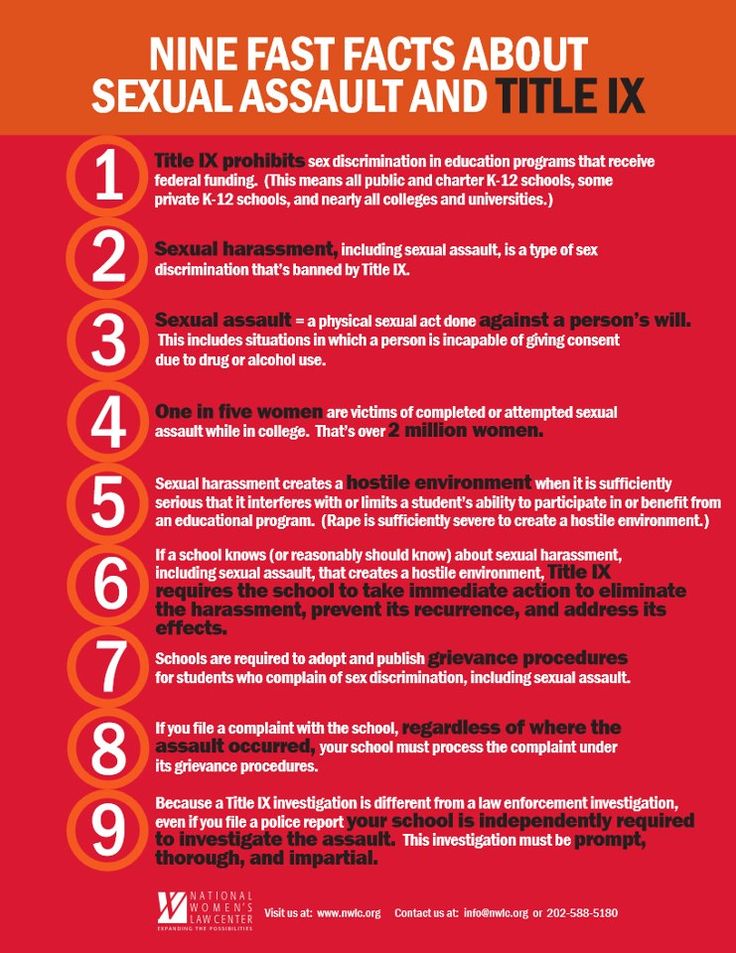
Should We Teach About Consent In K-12? Brett Kavanaugh's Home State Says Yes : NPR #MeTooK12

Should We Teach About Consent In K-12? Brett Kavanaugh's Home State Says Yes : NPR

Should We Teach About Consent In K-12? Brett Kavanaugh's Home State Says Yes
Image result for K-12 sexual assault

When the Access Hollywood tape of Donald Trump, along with sexual assault stories involving Brock Turner and Bill Cosby, hit the news back in 2016, a middle school student in Maryland named Maeve Sanford-Kelly was listening.
"I was frankly really distraught," she recalls. "I felt powerless. I assumed that this was what happened, that sexual harassment and sexual assault was a thing in our society and it wasn't going to change because it was part of the power structure."
Her mother had an idea that might help. Ariana Kelly, a Democrat, is a delegate in the Maryland state legislature, and she introduced a bill that would require the state to include consent in sex ed classes. Maeve and her friends, as well as student groups across the state, campaigned and testified for the bill.
It defines consent as "the unambiguous and voluntary agreement between all participants in each physical act within the course of interpersonal relationships."
Image result for K-12 sexual assault
Before they turn 18, about 8 percent of girls and 0.7 percent of boys experience rape or attempted rape, according to the Centers for Disease Control and Prevention. In the majority of these reported cases, the CDC says, the perpetrator is a peer: either an acquaintance or a current or former intimate partner.
And yet few schools across the country are required to teach about consent or healthy relationships in sex ed classes.
Currently, according to a report in May by the Center for American Progress, under a dozen states mention the terms "healthy relationships," "sexual assault" or "consent" in their sex education programs.


But with the #MeToo movement, that might be changing. Since the beginning of 2018, five states besides Maryland have introduced bills to require the teaching of consent in sex ed.
Amy Tiemann is a neuroscientist and educator and co-author of a new book on child safety, Doing Right By Our Kids. She works with KidPower, a child safety education group. She says the message of respect for others and your own body can be made simple and empowering even for young children.
"They can be 3 years old, they can be 15 years old, they can be in college, and we don't know who might be a potential perpetrator or who might be a potential victim  Continue reading: Should We Teach About Consent In K-12? Brett Kavanaugh's Home State Says Yes : NPR
#MeTooK12 Campaign | Stop Sexual Assault in Schools - https://wp.me/P6aIHy-Q8


Thursday, September 27, 2018

Why A ‘Blue Wave’ May Depend On Changing Education Politics

Why A ‘Blue Wave’ May Depend On Changing Education Politics

Why A ‘Blue Wave’ May Depend On Changing Education Politics


Democratic party strategists and supporters may believe a “blue wave” is coming in the midterm elections because of widespread opposition to President Trump, but they risk their party’s success if they forget that state and local races more often revolve around issues closer to home – like education.
Education, often overlooked during presidential elections because of the federal government’s relatively small footprint on education policy and funding, rises in prominence in off-year political campaigns, because candidates running for state and local offices have to explain how they’ll spend tax dollars on local schools – or not. This year’s contests are not an exception.
“Education is a top issue in the midterms,” declares a headline of an article in TIME that reports on the close contest for governor in Oklahoma, where the Democratic candidate Drew Edmondson is up by a point over his Republican opponent, according to recent polling. The reason for the uncharacteristic advantage the Democratic candidate may have in a deeply red state is “public anger over education funding,” the article contends.
The reporter traces the surprising political turnabout in the Sooner State to “the wave of wildcat teacher strikes” that occurred earlier this year in a number of red-leaning states, including Oklahoma, and finds “a similar dynamic is playing out in” electoral contests elsewhere.
For years, Democrats have more often than not been somewhat agreeablewith their Republican opponents on most education issues. But this Continue reading: Why A ‘Blue Wave’ May Depend On Changing Education Politics


What’s Behind TIME Magazine’s Teacher Hate Turnaround?

What’s Behind TIME Magazine’s Teacher Hate Turnaround?

What’s Behind TIME Magazine’s Teacher Hate Turnaround?


The recent TIME Magazine article about teachers describes beaten-down, courageous individuals, struggling to remain in a profession where they are not honored like they deserve. TIME seems to suddenly love teachers.
It had those of us who support public schools and teachers scratching our heads. TIME hasn’t been kind to teachers in the past. Remember this cover story about rotten apples? Here’s what I wrote about it at the time. I called it “Teacher Hate.”

Or how about this one with the Reform Queen Michelle Rhee sweeping away the “bad teachers”?


TIME is not alone. The media has condemned the teaching profession and public schools for years. They’ve helped to drive corporate school ownership by individuals who know little about children. They’ve made it their business to report unfair high-stakes testing results. They’ve help to foist standards, including Common Core, and strict accountability standards.
They’ve done this all while praising “no excuses” charter schools, like KIPP, or shown off the corporate millions spent on programs like Teach for America. They created an artificial debate that education failed our kids, by pumping up for-private enterprises that were supposed to change the status quo. Remember the bias NBC’s Education Nation, in-part sponsored by the for-profit University of Phoenix?
Scan articles by USA Today, or even the liberal leaning New York Times, and you will Continue reading: What’s Behind TIME Magazine’s Teacher Hate Turnaround?

Diane Ravitch On TIME Magazine's Attack on America's Teachers - https://www.commondreams.org/node/85963 via @commondreams

Rick Hess’s Mistake: Failure of Test-and-Punish Is Not Limited to a Few Districts That Have Disappointed | janresseger

Rick Hess’s Mistake: Failure of Test-and-Punish Is Not Limited to a Few Districts That Have Disappointed | janresseger

Rick Hess’s Mistake: Failure of Test-and-Punish Is Not Limited to a Few Districts That Have Disappointed


Frederick M. Hess, the director of education policy studies at the American Enterprise Institute, has always been a corporate education reform kind of guy. That is why Hess’s honest analysis this week of the ultimate fraud of a succession of school district miracles—Washington, D.C.’s test score and graduation rate miracle under Michelle Rhee and those who followed her, Alonzo Crim’s Atlanta in the 1980s, Houston’s Texas Miracle under Rod Paige, Arne Duncan’s Chicago, and Beverly Hall’s Atlanta—is so refreshingly candid.
In all of these cases, as Hess points out, there was “a remarkable dearth of attention paid to ensuring that the metrics (were) actually valid and reliable.”  Second, it was “tempting for civic leaders and national advocates to accept happy success stories at face value—especially when they (were) fronted by a charismatic superintendent.” And finally “reformers and reporters (made) things worse with their lust for ‘celebrity superintendents’ and ‘model systems.’ Their fascination nurtur(ed) an echo chamber in which a handful of leaders (got) exalted, often for too-good-to-be-true results.”
One must give Hess credit for honestly admitting the failure of so much of what his own kind of school reformers have been exalting for the past quarter century—business school accountability for schools, driven by universal standardized testing, and evaluated by two primary outcomes—standardized test scores and graduation rates. But Hess makes a mistake when he attributes the problem to a few “model” school districts that have disappointed.
Hess’s explanation is inadequate.  Inadequate because the system itself—the whole idea of school reform based on high stakes testing—cannot work.  Daniel Koretz, the Harvard specialist on testing, tells us why in a recent book: The Testing Charade: Pretending to Make Schools Better.
Koretz defines the problem with high-stakes-test-based school accountability by exploring a primary principle of social science research. Forty years ago, Don Campbell, “one of the founders of the science of program evaluation,” articulated a core principle now known as Continue reading: Rick Hess’s Mistake: Failure of Test-and-Punish Is Not Limited to a Few Districts That Have Disappointed | janresseger


Second Draft: A Continuum of Personalized Learning | Larry Cuban on School Reform and Classroom Practice

Second Draft: A Continuum of Personalized Learning | Larry Cuban on School Reform and Classroom Practice

Second Draft: A Continuum of Personalized Learning


A year and a half ago, I published a post that tried to make sense of the spread of “personalized learning” as the “next big thing” in U.S. schooling. To make sense of the heralded innovation in teaching and learning,  I created a continuum of programs self-styled as “personalized learning” based upon my research in Silicon valley districts, schools, and classrooms. I received many comments on the post and continued reading reports from schools and districts after which I revised the continuum. Here is my second draft.
Background
In 2016, when I visited Silicon Valley classrooms, schools and districts, many school administrators and teachers told me that they were personalizing learning. From the Summit network of charter schools to individual teachers at Los Altos and Mountain View High School where Bring Your Own Devices reigned to two Milpitas elementary schools that had upper-grade Learning Labs and rotated students through different stations in all grades, I heard the phrase often (see here).
But I was puzzled by what I saw and heard. When asked what a teacher, principal or district administrator meant by “personalized learning I heard different definitions of the policy.  I heard that PL was an actual program, an instructional application,an academic strategy. Not a surprise since the history of school reform is dotted with the debris of earlier instructional reforms that varied greatly in definition and practice (e.g., New Math, Socratic seminars, mastery learning, individualized instruction). While scores of crisp definitions dot educational journals, social media, and professional organizations, no one definition of “personalized learning” monopolizes the reform terrain.Continue readingSecond Draft: A Continuum of Personalized Learning | Larry Cuban on School Reform and Classroom Practice

Wednesday, September 26, 2018

The $3.5 Trillion West Coast Public School Privatization Plan

Schock Market seeks auction of public schools--for $3.5 Trillion

Schock Market seeks auction of public schools--for $3.5 Trillion


BEND, Ore., Sept. 26, 2018 /PRNewswire/ -- Internet startup, Schock Market, Inc. (www.schockmarket.com) will seek to auction off the public school systems of OregonWashington, and California—for half a trillion dollars.  Success would extrapolate to a $3.5 trillion sale for public schools nationwide.
The auctions are being managed through newly-conceived reservation markets.  These markets have been pioneered by Stanford University graduate, Spencer Schock.  Schock hopes U.S. Secretary of Education, Betsy DeVos, will support the experiment.
The markets are designed to unfold in phases.
In the first phase, individuals and businesses register as investors at www.schockmarket.com/Profiles/Register.  Investors attempt to predict savings that may be achieved by privatizing government agencies.  When investors guess well, they may earn payouts, potentially in the millions of dollars.
In the second phase, corporations bid on these same government agencies.  In the case of schools, corporations will bid to purchase and operate public schools within a state.
During this second phase, proceeds from privatization are revealed to taxpayers.  The California K12 market, for example, could conceivably reap $436 billion for California citizens.  If so, every Californian would receive a check for $11,000.
In the final phase, completed markets are approved through statewide voter initiatives.  These initiatives are backed by winning corporations as well as investors and taxpayers seeking the payouts described above.
Benefits
Schock suggests that democratic societies fail to embrace innovative solutions, often due to uncertainty associated with free markets.  This hesitation causes voters to choose safe, but underperforming, government services over free markets.
Reservation markets resolve this problem by providing a high definition look into the future of a proposed market.  It is important to note that reservation markets do not model a future outcome.  Instead, reservation markets are the future outcome.  Schock achieves this distinction by replacing a single financial transaction, with a multitude of reservations.
Schock suggests knowing market winners in advance will provide citizens with an opportunity to privatize much of the public sector, including schools.  Says Schock, "Reservation markets represent an opportunity to reboot Western civilization . . .  and earn a windfall profit, for everyone, while doing so."
Cost
Individuals and businesses may invest at Schock Market for $3 per month. 
The site opens with three education markets:  Oregon K12, Washington K12, and California K12.  The potential taxpayer payout for each is $36 billion$69 billion, and $436 billion respectively.
SOURCE Schock Market, Inc.

Related Links

Schock Market seeks auction of public schools--for $3.5 Trillion


Big Education Ape: Charter-School Movement Grows—for Real-Estate Investors - WSJ - http://bigeducationape.blogspot.com/2015/10/charter-school-movement-growsfor-real.html

Big Education Ape: Charter Schools: ALL ABOUT THE MONEY - http://bigeducationape.blogspot.com/2018/08/esj-capital-partners-llc-bought-four.html

Big Education Ape: Q&A: Will the New Charter School Bill Impact Commercial Real Estate? WTF is a PRIVATE CHARTER SCHOOL? - http://bigeducationape.blogspot.com/2018/07/q-will-new-charter-school-bill-impact.html


MARKET OVERVIEW
Reservation markets have many potential uses.  In the example below, we discuss the most common application, which is privatization of a government agency.
U.S. taxpayers oversee trillions of dollars in public services.  Taxpayers must choose a government agency or market solution to deliver these services.
Market solutions enjoy a reputation for efficiency.  On the other hand, market outcomes cannot be predicted with certainty.  For this reason, taxpayers often choose government agencies to deliver public services.  For example, only 13% of the U.S., $4 trillion-dollar federal budget is outsourced to private contractors.
Reservation markets address this shortcoming of markets by:
a) Revealing the hidden value of privatization to taxpayers.
b) Revealing market outcomes to taxpayers, before they vote for those outcomes.
In this example, we also discuss the important role investors play in this discovery.
MARKET EXAMPLE
Imagine Schock Market launches a reservation market exploring privatization of a county landfill.  Savings will be split between investors, taxpayers, and local environmentalists seeking restoration of a nearby, polluted stream.
In the first phase, investors enter the market and attempt to predict the savings that will be achieved through privatization.  
When bidding, investors attempt to acquire reservations at a price at or below the actual savings from privatization.  Investors that bid well are eligible to receive a payout. Investors that bid too high, are ineligible to receive a payout.
Over time, market prices will plateau.  Why? Because investors are concerned that the market is reaching full valuation.  If they now bid too high, they risk losing their payout.
The role of investors is to reveal for the public, the value of privatizing a government agency.  When a market plateaus, we assume this value has been revealed and the market is closed.
In the second phase, the market is reopened for corporations.  Corporations that specialize in waste management bid on purchasing the landfill and operating it for the local community.  Imagine the winning bid is $30 million for the purchase of the landfill and $10 million in operational savings over ten years.  In this case, the total windfall for taxpayers is $40 million.
In this phase, the winning corporate bidder is announced along with the total savings of $40 million.
The payout to investors is also announced.  A payout might be 1% of the windfall, or in this example, $400,000.  This payout will be shared among investors that acquired reservations priced at or below a market value of $40 million.
The payout to environmentalists is also announced.  Let’s say the environmentalists have been promised 5% of the windfall or $2 million for restoration of the polluted stream.
Finally, the payout to taxpayers is announced.  Imagine the $40 million in proceeds will be distributed to 50,000 county residents.  This equates to a $752 check for every man, woman, and child living in the county ($40 million - $400,000 for investors - $2 million for environmentalists = $37.6 million / 50,000 = $752).
In the final phase, the now completed market is launched as a voter initiative for county residents.  The initiative is backed by investors, the winning corporation, environmentalists, and taxpayers all wanting their payouts.
If the initiative passes, the landfill is privatized.  The winning corporation purchases the landfill at the agreed upon price.  Money from the sale of the landfill and ongoing operational savings provides for payouts to investors, environmentalists, and taxpayers.
KEY POINTS
Schock Market replaces a financial transaction with a multitude of competing reservations.  This creates a sort of crystal ball where market activity today, reveals an outcome that will occur in the future.
This crystal ball is of immense value to voters.  In the past, voters choosing market solutions could only hope for the desired outcome.  Now, voters can choose a market solution and know in advance what the market outcome will be.
Also note that Schock Market creates advocates for change.  In our example, the investors, winning corporate bidder, environmentalists, and taxpayers all have a financial stake in overcoming the status quo.  They want their payout, so they push for change. This represents a new dynamic for voter initiatives.
INVESTORS
Investors play a critical role at Schock Market.  Here is an overview of their role:
Investors are U.S. citizens that have registered at Schock Market.  The cost of participation is a $3 per month subscription.
Investors receive $5 million in their account at time of registration.  (This high value is required if investors are to make meaningful bets in a nation where government spending and assets are counted in the trillions.)
It is impossible for investors to lose their $5 million.  When an investor cancels a reservation, 100% of the funds spent on that reservation are returned to the investor.
Investors review open markets at Schock Market.  Investors then choose a market in which they would like to predict savings from privatization.
Investors that make accurate predictions are eligible to receive a payout or percent of the actual savings from privatization.
To receive a payout, investors must secure reservations for a price at or below the actual savings from privatization.  Using our example above, investors that make bids at or below a market value of $40 million are eligible for a payout.
Investors that bid above the actual savings from privatization are ineligible for a payout.
Investors compete for a limited number of reservations in each market.  Investors attempt to pay a low price for a reservation and hang on to that reservation for as long as possible.  Payouts are based upon how much time an investor accumulates in a market, at or below the actual savings from privatization.
A low-priced reservation may be taken from an investor by a new investor bidding more for that same reservation.
In this manner, competition for reservations causes the price of reservations to rise over time.
As markets approach what many consider full valuation, investors become cautious and slow their trading.  Why? Because these investors don’t want to bid too high and have all of their accumulated time become ineligible for a payout.
At this point, the market has plateaued and is thus telegraphing a likely maximum savings from privatization.  Investors have fulfilled their role which is to inform the public about possible savings.
At this time, the market is closed to investors.  It is then reopened as a market for corporate bids.
Each reservation market is a proposal.  It is a form of free speech.
Many obstacles stand between this free speech and actual implementation of the market proposal.  Some reservation markets may be contrary to existing local, state, or federal laws, making implementation impossible without changes to applicable law.  Schock Market makes no representation as to whether any particular reserve market will result in tax savings, voter initiative, privatization, or any changes or outcomes proposed by investors or other participants.  Schock Market cannot guarantee that our market proposals will be implemented or that investor payouts will be paid.
All investing is subject to the Market Rules, available here:www.schockmarket.com/marketrules.
http://www.schockmarket.com

Could another Oklahoma teacher walkout happen in 2019?

Could another Oklahoma teacher walkout happen in 2019?

Could another Oklahoma teacher walkout happen in 2019?


WHAT will happen if, as the 2019 legislative session gets rolling, it appears common education isn't in line for another big boost in funding? Will teachers strike again, as they did this year?


It wouldn't be surprising if the answer is yes. And why not? The threat of a walkout paid off handsomely in 2018, with the Legislature approving large tax increases for pay raises that were even larger than the teachers' union had demanded. The new revenue also went to boost pay for support staff and for additional school funding.


All this was approved before the strike, which lasted two weeks and was used to demand more money, including some that wouldn't have necessarily ended up going to education. The end of the strike left many walkout attendees frustrated that the Legislature didn't do more.


Lawmakers this year approved a record $2.9 billion appropriation for common education, but got little to no thanks. The walkout spurred dozens of teachers to file for legislative seats, and more than four dozen made it through to November's ballot. Meanwhile, members of the Legislature who voted against the tax increase were labeled “anti-education” and, in some cases, lost their primaries or runoffs.


That sentiment — if you don't see things as we do, you're the enemy — is sure carry over to next year, fueled by the Oklahoma Education Association with the guidance and support of its parent group, the National Education Association, which directed the Oklahoma walkout and others around the country this spring, and the American Federation of Teachers union.


The AFT sponsored an event Saturday at Northwest Classen High School called “Stand Up Continue reading: Could another Oklahoma teacher walkout happen in 2019?


LA teachers are ready to walk | SocialistWorker.org

LA teachers are ready to walk | SocialistWorker.org

LA TEACHERS ARE READY TO WALK
Image result for UTLA


EDUCATORS IN United Teachers of Los Angeles (UTLA) voted overwhelmingly in late August to authorize a strike in a vote in which an impressive 83 percent of members cast a ballot.
Now a showdown looms in the coming months between a fired-up union and a labor-hating school superintendent — a showdown that could add important new dimensions to the wave of educators’ strikes that began last spring in West Virginia.
If LA teachers do walk off the job, it will build on the strikes this fall in Washington state to show that the miserable conditions facing teachers and public schools aren’t confined to Southern states run by Republicans, but exist in some of the richest and most Democratic states in the country.
A teachers’ strike would also shine a national spotlight on the network of militants who have won leadership in the UTLA; increase pressure on other “blue state” union leaders to use their resources and legal protections join the rebellion started in states dominated by anti-union Republicans; and expose the ways that even supposedly pro-labor laws are used to keep workers from using their power to strike.
Finally, a UTLA strike would show — just as the 2012 Chicago teachers strike did — the importance of “bargaining for the common good” by taking up issues of racial justice and other community concerns, and linking those to issues of teacher pay, in order to build effective resistance to the divide-and-conquer tactics of those trying to destroy public education.
Image result for UTLA

CALIFORNIA — THE home of the most billionaires in the country, as well as mega-corporations like Apple, Chevron and Disney — also has the nation’s highest poverty rate when cost-of-living is factored in, and ranks 43rd out of the 50 states in per-pupil funding.
More than 80 percent of students in the Los Angeles United School District (LAUSD) live at or below the poverty level. The town that gives us #OscarsSoWhite has a public school system with 90 percent students of colorand class sizes “limits” that can reach 46 for many high school classes.
“My classroom is so crowded with student desks that my students and I sometimes can’t get from one side of the room to the other unless we walk outside and enter through the other door,” UTLA activist Gillian Russom wrote in an article for Socialist Worker earlier this year.
“I teach at a large high school with a sprawling campus which once had 18 Continue Reading: LA teachers are ready to walk | SocialistWorker.org


FL Teacher Fired for Giving Zeros When Students Did Not Turn in the Work | deutsch29

FL Teacher Fired for Giving Zeros When Students Did Not Turn in the Work | deutsch29

FL Teacher Fired for Giving Zeros When Students Did Not Turn in the Work


On September 25, 2018, WFTV reported that eighth-grade social studies teacher, Diane Tirado, says she was fired for refusing to assign 50 percent credit to students who did not hand in assignments.
IMG_1264
Diane Tirado
According to the Florida teacher certification website, Tirado was first licensed in 1999.
Tirado began teaching at West Gate K-8 School in Port St. Lucie, FL, in August 2018. She was terminated on September 14, 2018; apparently no details about the terminating event were included since Tirado was still in her probationary period for employment at West Gate K-8.
Upon being fired, Tirado left a message for her students on her classroom’s white board: “Bye Kids. Mrs. Tirado loves you and wishes you the best in life! I have been fired for refusing to give you a 50% for not handing anything in. Mrs. Tirado.”
Tirado posted a picture of her message on Facebook on September 15, 2018:
IMG_1259
Now, here’s where it gets interesting.
The West Gate CIO (chief info officer) denies that such a policy exists. From the Continue reading: FL Teacher Fired for Giving Zeros When Students Did Not Turn in the Work | deutsch29