Latest News and Comment from Education

Friday, June 9, 2017

DeVos Says More Money Won't Help Schools; Research Says Otherwise : NPR Ed : NPR

DeVos Says More Money Won't Help Schools; Research Says Otherwise : NPR Ed : NPR:

DeVos Says More Money Won't Help Schools; Research Says Otherwise


Education Secretary Betsy DeVos made it clear, appearing before a Senate Appropriations subcommittee Tuesday, that she sees no connection between school funding and school performance. As evidence, she criticized the Obama Administration's $7 billion grant program to improve struggling schools, an effort that yielded no significant impacts in test scores or graduation rates.
"The notion that spending more money is going to bring about different results is ill-placed and ill-advised," DeVos said in an exchange with Louisiana Republican John Kennedy.
This is a decades-old debate in education.
To be sure, spending more in troubled schools won't automatically lead to better student outcomes. But, when the dollars are spent wisely and consistently, research suggests, they can have a profound effect in the classroom.
Last year, as part of the School Money project, the NPR Ed Team collaborated with 20 reporters across the country to explore how states pay for their schools and to answer some fundamental questions, including this one: "Can More Money Fix America's Schools?"

Education leaders dissect digital gains in their districts, states

Education leaders dissect digital gains in their districts, states:

Education leaders dissect digital gains in their districts, states

DMAPS, an online database that compiles states' policies for digital instruction, has been updated and expanded.


An online database that details state policy and practices for digital learning in K-12 schools has been updated and expanded to help school leaders better see and understand which states are leading in innovation and digital instruction.
The database, known as DMAPS — Digital Instructional Materials Acquisition Policies for States — and launched initially in 2015 by the State Educational Technology Directors Association (SETDA), now depicts accessibility policy, purchasing consortia and statewide learning and content management systems (LMS and CMS).
The database also allows users to create filters for policies, resources, procurement and funding; view state-by-state comparisons; and explore quick facts, like the number of schools and students in each state.
Two education leaders spoke about some of those changes, and about the state of digital instructional materials in their regions, during a webinar this week hosted by SETDA executive director Tracy Weeks.
Diana McGhee, director of technology and information at Fort Thomas Independent School District in northern Kentucky, described her district’s efforts to eliminate the digital divide among its students, to leverage technology for educational gains and to make the most effective use of available resources.
McGhee’s district, which has 3,100 students and 320 staff throughout five schools, began moving toward one-to-one learning in 2014. All middle and high school students received MacBook Air laptops between 2014 and 2016. In the most recent academic year, elementary school students received iPads.
As Fort Thomas Independent schools began its digital conversion, McGhee Education leaders dissect digital gains in their districts, states:

Will Chicago Become the Epicenter of Charter School Unionization? - Working In These Times

Will Chicago Become the Epicenter of Charter School Unionization? - Working In These Times:

Will Chicago Become the Epicenter of Charter School Unionization?

Image result for Karen Lewis charter school union

In a move sure to worry neoliberal education reformers, unionized charter school teachers in Chicago are voting this week on whether to formally join forces with the most militant teachers’ union in the country.

The proposed merger—which would be a potential first in the country—would see the more than 1,000 member Chicago Alliance of Charter Teachers and Staff (ChiACTS), Local 4343 of the American Federation of Teachers (AFT), amalgamate into a single union local with the nearly 30,000-member Chicago Teachers Union (CTU), AFT Local 1.

ChiACTS president Chris Baehrend said the potential merger “helps all Chicago teachers fight together on the same issues.”
Formed in 2009, ChiACTS is at the national forefront of organizing charter schools. Its members are not only winning union recognition across the city, but also showing a willingness to withhold their labor to win fair contracts, much like their counterparts in the CTU.

Since October, ChiACTS teachers have come close to going on strike at UNOASPIRA and Passages charter schools. But all three walkouts—which would have been the first charter school teacher strikes in history—were avoided by last-minute contract agreements.

In the words of Illinois Network of Charter Schools president Andrew Broy, “Chicago has become the epicenter of charter union organizing in the country.”

Though the CTU is undoubtedly opposed to the expansion of charter schools, as evidenced by the union’s successful effort to win a cap on new charters last fall, its leaders say they are dedicated to building teacher-to-teacher solidarity.

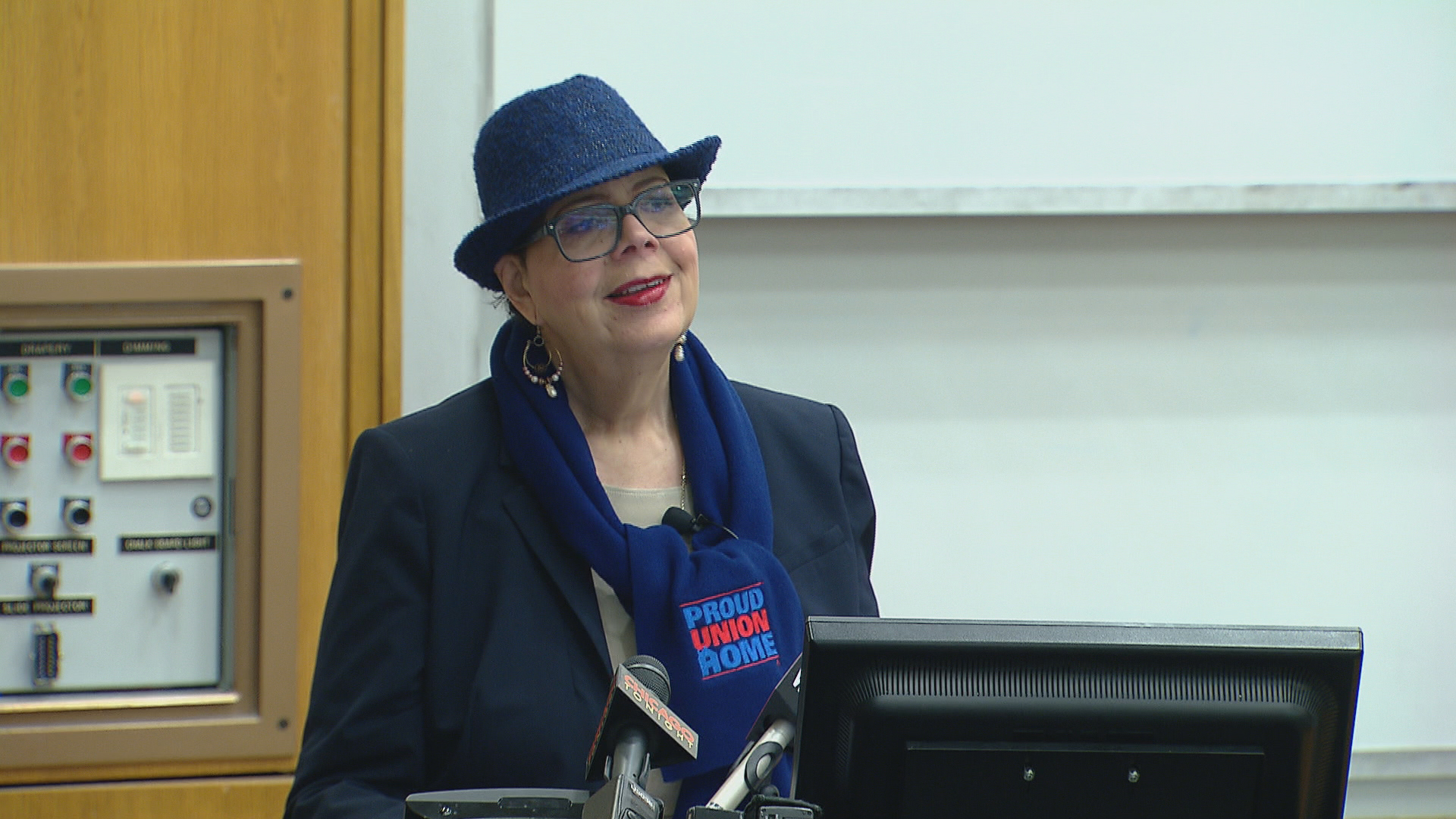
“Charter schools are here; they’re not going anywhere,” CTU president Karen Lewis recently said, continuing: “It’s the management companies we have the issues with, not the charter teachers, not the students, not the parents. The key is, organize people Will Chicago Become the Epicenter of Charter School Unionization? - Working In These Times:


Did NEA Drink the Kool-Aid- As More Schools Look to Personalized Learning, Teaching May About to Change

As More Schools Look to Personalized Learning, Teaching May About to Change:

As More Schools Look to Personalized Learning, Teaching May Be About to Change


Only a couple of years ago, classes at East Pennsboro Area Middle School in Enola, Pa., had between 25 and 35 students, all sitting behind rows of desks dutifully facing forward. Then, chances were high that their classroom instruction was focused upon lectures, plus a few hands-on activities. Lessons were usually developed around books and worksheets.
For Rachael Moola, Dana Schreiber and Lisa Brown, teaching began to feel redundant. They were doing the same thing six times a day. The routine became more entrenched as their class sizes grew and access to potentially transformative technology became more elusive.
“Teachers were all feeling a little frustrated. We were craving a change,” Moola recalls. “Our school just wasn’t structured to provide the kind of higher-order thinking our students needed.”
Today, instead of simply memorizing facts for a test, students dive deeper into subjects that interest them. Textbooks and worksheets no longer dominate, as educators employ multiple instructional models. Smaller class sizes allow for more time for one-on-one instruction.
Best of all, the lifeless classroom setups are gone, and learning spaces have been reconfigured with moveable furniture and walls so that when classroom subjects overlap, teachers can combine lessons. Students rotate through these areas, which fosters a more collaborative learning space.
“They can’t hide in the classrooms anymore. Every kid is involved in every lesson, answering every question,” Moola says.
“As more people read about it, personalized learning has become more popular, but as a term, it’s become more and more melted down and confusing” – Elliot Soloway, professor of computer science, University of Michigan.
These are just some of the highlights of the school’s new blended learning/personalized learning model. And East Pennsboro teachers took a leadership role in design and implementation. Although the plan is still being rolled out, math teacher Lisa Brown says the impact on students and staff has been “rejuvenating.”
Roughly 600 miles southwest of Enola, in Louisville, Ky., personalized learning has also materialized in Paul Barnwell’s Language Arts class at Fern Creek High School. For two years, Barnwell and his colleagues have shared their classrooms with ReadingPlus, an online reading support curriculum that provides specific targeted instruction based on individual student ability.
His students begin each class period by logging onto the program. They remain there for 20 minutes while Barnwell makes himself available for any questions or As More Schools Look to Personalized Learning, Teaching May About to Change


Image result for big education ape gates personalized learning


 The Secret to High-Performing Nations’ Success? A Respected, Professionalized Teaching Force

Teaching is one of the most sought after careers in Finland. About 90% of teachers remain in the profession for the duration of their careers.

If there’s one question from reporters that irritates Linda Darling Hammond, it is this: “So what’s the one sure fix to improve our schools?” Darling-Hammond, a professor of education at Stanford University and president of the Learning Policy Institute, patiently explains that there is no “one thing.”
“It’s the system of things that come together to produce high quality,” she says.
Darling-Hammond is a world-renowned expert on teacher quality and how high-performing systems recruit, train and retain a top-notch teacher workforce. Recently, Darling-Hammond and a team of researchers undertook a ground-breaking, comprehensive study that examines how seven systems across four continents have succeeded on this front.
“Across the jurisdictions we studied, we saw an intentional effort to build systems that produce not just high achievement, but also equitable outcomes,” said Darling- Hammond. “These systems ensure that all teachers are well prepared and supported throughout their careers, that all students have access to great teaching and leaders, that the students most in need of excellent teachers get them and that the schools that need the most funding and support to provide a high-quality education actually receive it.”
On June 6, education leaders and researchers gathered in Washington D.C. at a launch event for the new research, which was funded by the National Center on Education and the Economy (NCEE).
In his opening remarks, NCEE President Marc Tucker said the research makes a  The Secret to High-Performing Nations’ Success? A Respected, Professionalized Teaching Force