Latest News and Comment from Education

Wednesday, October 19, 2016

Google Gallup gender racial gaps computer science learning: new study

Google Gallup gender racial gaps computer science learning: new study:

Google, Gallup find racial, gender gaps in computer science learning

save image
Hispanic and black students are more likely than white students to be interested in computer science education, but face considerable social and cultural barriers to achieving their goals, Google and Gallup said in a report released Tuesday.
“Underrepresented groups face structural barriers in access and exposure to computer science that create disparities in opportunities to learn” for blacks and Hispanics, according to the report by polling expert Gallup and tech giant Google, which reported about the study on its blog.
Those aren’t the only barriers, though, the study determined.
“Underrepresented groups also face social barriers to learning computer science, such as the continuing perception that computer science is only for certain groups, namely white or Asian males,” Google and Gallup reported.
Mountain View-based Google also released some studies that served as companion reports to the primary research.
“Black students are less likely than white students to have access to a computer science class in school,” Google and Gallup reported. “Female students are less likely to be aware of computer science learning opportunities online and in their community.”
Despite those barriers, black students are l.5 times more more likely than white students, and Hispanic students are 1.7 times more likely than white students, to be “very interested” computer science learning, the research determined.
An estimated 47 percent of black students say they have dedicated computer science classes, compared with 58 percent of white students and 59 percent of Hispanic students.
An estimated 58 percent of black and 50 percent of Hispanic students use a computer at least most days at home. That is compared with 68 percent of white students with such usage frequency.
Google reported through the research that 39 percent of girls are being told by parents or teachers that they would be good at computer science. That’s well below the 56 percent of boys who receive such encouragement.
Girls also are less likely than boys to be aware of computer science learning opportunities outside of school.
Gallup surveyed students, parents and teachers during portions of December 2015 and January 2016. The survey polled 1,672 students in grades seven through 12, 1,677 parents with at least one student in those grade levels, and 1,008 teachers in grades one through 12.
The study suggested that school officials have begun to remedy the technology learning gap.
“We found that 40 percent of K-12 principals say they offer CS classes with programming/coding, up from 25 percent the year before,” Google reported. “However, a great deal of work still remains.” Google Gallup gender racial gaps computer science learning: new study:


Can Teachers Unions Bargain for Better -- or Fewer -- Charter Schools?

Can Teachers Unions Bargain for Better -- or Fewer -- Charter Schools?:

Can Teachers Unions Bargain for Better -- or Fewer -- Charter Schools?
A growing number of local unions want a say in authorizing them.


 n cities across the country, teachers unions have been strategizing ways to broaden the demands they bring to the negotiating table. Organizing under the banner of “bargaining for the common good,” educators and their community allies have started to challenge a legal regime that for too many years left unions solely focused on wages and benefits.

One window of opportunity that teacher unions are exploring is charter authorizing—the process of opening, closing, and monitoring charter schools. Though laws vary from state to state, 90 percent of the nation’s roughly 1,000 charter authorizers are local school districts. (The other 10 percent include statewide boards, independent boards, and nonprofit organizations.) Someone looking to open a charter school would in most cases have to apply to a local school district for permission. If their application were approved, the school district would then be tasked with ensuring that the charter meets academic standards and all other relevant laws and regulations.
In recent years, more charter teachers have started to form unions at their schools. But since most are at-will employees who work on year-to-year contracts, the threat of retaliation presents a serious hurdle to unionization efforts, particularly since the charter sector is generally known for its union animus.
As a result, teachers unions representing educators at traditional public schools have started to explore how they might use their leverage at the bargaining table to make union organizing easier for their charter brethren.
“You can see a pathway when school districts are the authorizers, because the union bargains with school districts as employers, and could put proposals on the table around rules for charter authorization,” says Shaun Richman, a labor writer who directed the American Federation of Teacher’s charter organizing program from 2010 to 2015.
The first local to do this was the Cleveland Teachers Union. By the middle of the last decade, the Cleveland School District had sponsored several non-union charter schools. With a new round of contract negotiations coming up, the local teachers union wanted to figure out how they might insert their voice into their employer’s charter authorizing process. When bargaining began, the union sought the right to talk freely about organizing with teachers in any charter school authorized by their district. Though ultimately unsuccessful in winning this demand, the union did win language in its 2010 contract requiring their school district to remain neutral if teachers at any charter school it authorizes sought to unionize.  
This neutrality language has proven useful, according to David Quolke, the Cleveland Teachers Union president. He says that when three Cleveland charter schools organized unions this past year, their anti-union charter operator, I Can, wanted the school district to intervene. “The employer was trying hard to stop the union, but the school district had to stay out of it,” Quolke says.
While his union did not get everything it wanted in 2010, Quolke says its “foot is now in the door” and he can envision pushing for more authorizing concessions in the future.
The Chicago Teachers Union took Cleveland’s efforts one step further in its recent round of collective bargaining. Rather than push for a commitment that their employer—the Chicago Public Schools—remain neutral, the union demanded that Can Teachers Unions Bargain for Better -- or Fewer -- Charter Schools?:

Once in place, will school accountability system really work? | EdSource

Once in place, will school accountability system really work? | EdSource:

Once in place, will school accountability system really work?

Image result for it's tough being green


Image result for California State Board of Education is designing a multidimensional school accountability system


The State Board of Education spent two years creating a new district and school accountability system – revising multiple drafts in response to thousands of public comments – before adopting it in September.
The plan is ambitious in concept and impressive on paper, but passage was the easy part. Now comes the big challenge for districts and schools: to use data they’ll get to engage the community, set achievement goals, take steps to improve, track progress, and change course when results don’t measure up.
That’s what advocates of the system, like Stanford University education emeriti professors Linda Darling-Hammond and State Board of Education President Michael Kirst call “continuous improvement.” After more than a decade of a prescriptive federal accountability system under the No Child Left Behind law and three years of no state accountability system, most observers agree the switch is a tall order, with no sure path to success before the next pendulum swing of education reform topples it.
Many issues remain unresolved and many variables are at play. Here are 10 questions whose answers may determine whether the new system will make a difference.

1. WILL THE PUBLIC AND THE FEDERAL GOVERNMENT EMBRACE THE DATA?

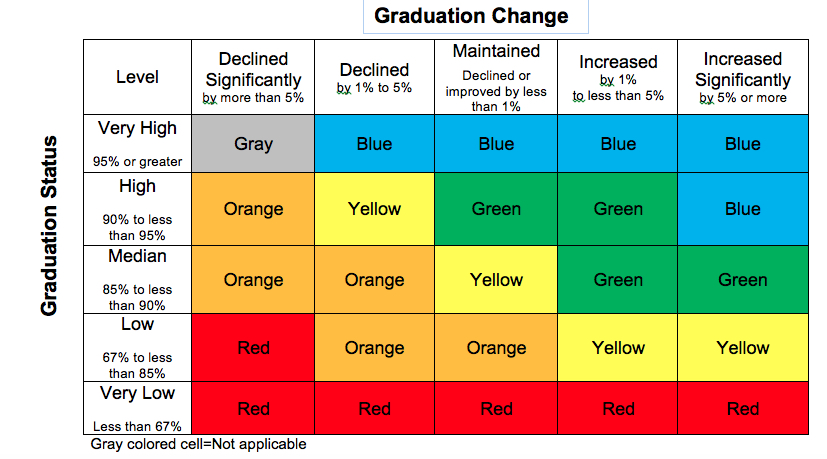
The new accountability system measures performance on a half-dozen statewide indicators, including test results in reading and math, how well English learners are learning English and college and career readiness. There are four “local” indicators based on goals that districts will set. They include parent involvement and school climate.
The state board believes all indicators are important, either as measures of achievement  or, with school climate and suspension rates, as conditions underlying achievement – and should be weighed equally. Some advocacy groups and the U.S. Department of Education, in its draft regulations, favor emphasizing test scores in designating the lowest-performing schools and argue that for parents’ sake, an accountability system should summarize performance with a number or letter. Early in 2017, the state board will publish school report cards, and will then be able to gauge parents’ initial reactions.

2. WILL THE DATA BE RELIABLE?Once in place, will school accountability system really work? | EdSource:


Huntington Park leaders voted to ban new charter schools for a year - LA Times

Huntington Park leaders voted to ban new charter schools for a year - LA Times:

Huntington Park leaders voted to ban new charter schools for a year

Image result for Huntington Park leaders voted to ban new charter schools for a year
 The small, densely populated city of Huntington Park is peppered with schools, about two dozen in 3 square miles. At least 10 are charters, and city leaders contend they’re bringing in unwanted traffic. 
Their solution is to try to ban new charter schools.
Huntington Park City Council members voted 4 to 1 late Tuesday to extend a moratorium on new charter schools until September 2017.
Both charter advocates and opponents were at the council meeting, each side armed with public speakers, wearing color-coordinated T-shirts and carrying signs.
At the back of the chambers, one woman sat holding a white poster above her head that proclaimed, “Give us a chance” and “Save our charter schools.” On the side of the full room, another woman stood holding a yellow poster in front of her that read, “Stand up to unregulated charter schools!”
Outside the meeting room, people on both sides lined the hallway. Some argued with each other about their goals, while others cheered loudly when they heard something they liked.
During public comment, parents and teachers addressed the council in English and Spanish, with charter parents extolling the quality education their kids receive because of school choice, while teachers from United Teachers Los Angeles talked about the schools they've taught in for years and supported city officials’ efforts to ban new charter schools for a year.
Last month, Huntington Park City Council members voted 4 to 1 to place a temporary, 45-day moratorium on new charters in the city. On Tuesday, they voted to extend that restriction for 10 months and 15 days, effectively making the ban yearlong. 
Charter schools are publicly funded but often are privately run. Unlike most traditional public schools, they can accept students from anywhere, not just from the neighborhoods around them.
Huntington Park Mayor Graciela Ortiz isn’t sure drawing students from elsewhere is in the best interest of the city. She also said she wants to see a greater focus on revitalizing businesses.
The city once was a cultural and shopping destination for Mexican and Central American Huntington Park leaders voted to ban new charter schools for a year - LA Times:


 Image result for ban new charter schools for a year

Bringing Black Lives Matter into the schools | SocialistWorker.org

Bringing Black Lives Matter into the schools | SocialistWorker.org:

Bringing Black Lives Matter into the schools

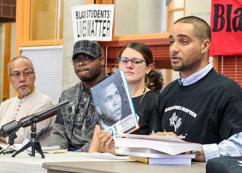
Garfield High School teacher Jesse Hagopian (right) speaks about anti-racism in school curricula (Venice Buhain | The Seattle Globalist)


Over 2,000 Seattle educators have ordered Black Lives Matter shirts to wear to work on October 19, in an action endorsed by the city's teachers union, school board and NAACP. On his I Am An Educator blogJesse Hagopian, a Seattle high school teacher and editor of the book More Than a Score: The New Uprising Against High-Stakes Testing, published an FAQ about the #BlackLivesMatterAtSchool action, written by fellow teachers.


ON OCTOBER 19, 2016, hundreds of Seattle teachers, counselors, paraprofessionals, nurses, instructional assistants, librarians and other educators will be wearing Black Lives Matter shirts to school in an unprecedented action called "Black Lives Matter At School."
Already, some 2,000 shirts have been ordered, and many of these educators will also be teaching lessons that day about institutional racism. Educators at Washington Middle School and other educators from the Social Equality Educators have compiled this list of answers to frequently asked questions about this unprecedented action.
- - - - - - - - - - - - - - - -
HOW DID the October 19th Black Lives Matter At School event get organized?
IN MID-September, two Seattle elementary schools decided to have African American men from their communities welcome students to school with greetings and high-fives. Teachers planned to wear Black Lives Matter t-shirts. One school, John Muir, received a bomb threat from someone opposing the event. Although consideration was given to canceling due to safety concerns, the event was held anyway without any problems.
In an act of solidarity, a few days later the Seattle Education Association (SEA) Representative Assembly passed a resolution unanimously supporting the schools and their actions, and encouraging all schools to participate in a day of solidarity on Wednesday, October 19:
Whereas the SEA promotes equity and supports anti-racist work in our schools; and,
Whereas we want to act in solidarity with our members and the community at John Muir who received threats based on their decision to wear Black Lives Matter t- shirts as part of an event with "Black Men United to Change the Narrative"; and,
Whereas the SEA and SPS promote Race and Equity teams to address institutionalized racism in our schools and offer a space for dialogue among school staff; and,
Therefore be it resolved that the SEA Representative Assembly endorse and participate in an action wearing Black Lives Matter t-shirts on Wednesday, October 19,2016 with the intent of showing solidarity, promoting anti-racist practices in our schools, and creating dialogue in our schools and communities.
On October 8, the Seattle Public Schools noted the event on its website, and stated:
During our #CloseTheGaps kickoff week, Seattle Education Association is promoting October 19 as a day of solidarity to bring focus to racial equity and affirming the lives of our students--specifically our students of color.
In support of this focus, members are choosing to wear Black Lives Matter t-shirts, stickers or other symbols of their commitment to students in a coordinated effort. SEA is leading this effort and working to promote transformational conversations with staff, families and students on this issue.
We invite you to join us in our commitment to eliminate opportunity gaps and accelerate learning for each and every student.
WHO HAS endorsed this Black Lives Matter At School event?
THE EVENT been endorsed by the Seattle Education Association, Seattle PTSA Council board, The Seattle NAACP, Diane Ravitch (former U.S. Assistant Secretary of Education), Dr. Wayne Au (editor at Rethinking Schools and professor at UW Bothell) Carol Burris (Executive Director of the Network for Public Education), and a growing list of academics, organizers and activists from around the country.
WHY ARE school teachers and staff participating?
WHEN PEOPLE know that something is wrong, they often try to change it through social movements. Black Lives Matter is a social movement for racial justice in 21st century United States. Every individual chooses how they show their support of the movement. Some teachers want to be publicly supportive, others would rather be private.
ISNT' THIS a political action, and do political actions belong at school?
THIS IS a consciousness-raising event. School is part of society, students and staff are part of society, and so what is happening within our society deserves and demands our attention. This is a "teachable moment" for the Seattle Public School community.
HOW WILL this event help promote racial equity at our school?
RACIAL EQUITY will never be a reality unless people are willing to talk about it. This event provides an opportunity for conversations that can help our school move toward racial justice.
HOW CAN I show my support?
STUDENTS AND families are welcome to participate at school on racial equity activities in these ways:
1) Wear a Black Lives Matter t-shirt or sticker on October 19th. Contact your school to find out what is happening there on the 19th.
2) Parents and educators, here is list of age appropriate resources you can use to teach about racial justice.
3) Attend the Black Lives Matter At School rally/forum/show organized by Social Equality Educators on the evening of October 19 at Washington Hall at 6 p.m. to 8 p.m.
WHY CALL attention to Black Lives when all lives matter and when there are other groups treated unjustly in our schools and country?
OVER 50 percent of the Seattle Public Schools' student population is non-white students. The call of All Lives Matter is often used to brush aside the concerns, which led to the emergence of the Black Lives Matter movement over the last two years. In some cases, it reflects the universal consciousness and awareness that many members of the younger generations have come to embrace.
However, until the lives of people of color are treated with equal value by the society, the call for all lives to matter rings hollow. By all measures, African-Americans, Native Americans and Latinos, are treated unequally by our society fifty years after the passage of major civil rights laws.
This inequality can be found in incidences of police brutality and killings, imprisonment rates, repeated studies of job and housing bias, health care, and access to quality education resulting in the school to prison pipeline. Black students in the Seattle Public Schools are suspended at four times the rate of their white peers. Until we are treated equally, we must all raise our voices or be complicit in the racism.
ISN'T THE Black Lives Matter Movement only about police killings?
NO. THE origin of the hashtag "#BlackLivesMatter" is in the killing of Trayvon Martin by a vigilante and the ensuing national protests that followed showed the potential a new social movement. Several years later, unarmed African American Michael Brown was killed by a police officer in the streets of Ferguson, Missouri. Then videotaped killing of Eric Garner in New York City helped ignite this movement nationally.
Repeated cases preceded these, and have followed them. Protest actions have been led by BLM activists in hundreds of U.S. cities. But this movement is not only focused on police accountability. This summer, a platform was written under the Movement for Black Lives, advocating economic justice, political empowerment, community control of policing, reparations to the Black community, and for education justice.
The platform writers represented over 50 organizations. BLM activists have also joined with the thousands of Native people and their supporters in their stand for the environment at Standing Rock, North Dakota.
WHY DO some educators' t-shirts include the symbol of a raised fist?
THE RAISED fist has been used by organizers to symbolize solidarity in struggles for racial justice, social justice, labor rights, and human rights for a very long time. It has been used to support such diverse struggles as organizing for workers' rights in 18th century France, organizing for labor rights internationally in the early 20th century, organizing against fascism during the Spanish Civil War, and--most relevantly--organizing for civil rights and racial equity in the United States since the 1960s.
By wearing the raised fist, Seattle educators are demonstrating their solidarity with struggles for racial equity in Seattle schools and U.S. society as a whole. We are also acknowledging the ongoing legacy of struggles led by communities of color, in particular Black Lives Matter and other movements for racial justice in the United States.
WHAT DOES the hashtag #sayhername mean?
THIS HASHTAG was called for in May 2015 to call attention to the Black women and girls who have been killed by the police. This includes the case of Sandra Bland, an Illinois woman who was arrested over a traffic stop in Texas, and died in police custody, hanging in her cell. Black women are outnumbered by white women 5 to 1 in the United States, yet are killed by police in nearly the same numbers.
The statement challenges us to recognize the intersectional nature of oppressive systems including racism and patriarchy and to value and make visible the lives and struggles of black girls and women.
First published at I Am An Educator.
 Bringing Black Lives Matter into the schools | SocialistWorker.org:

‘Teachers’ pay should be doubled to stop the brain drain to other industries’ | News

‘Teachers’ pay should be doubled to stop the brain drain to other industries’ | News:

‘Teachers’ pay should be doubled to stop the brain drain to other industries’

Teachers, pay, Charles Fadel, election
Following the election, the next education secretary needs to significantly increase teachers' social status, says Charles Fadel
Want to keep up with the latest education news and opinion? Follow TES USA on Twitter and like TES USA on Facebook.
As the United States prepares to elect a new President, leading figures in education have given their views on Barack Obama's legacy and what the next education secretary should focus do.
Previously, Diane RavitchAndy HargreavesHoward GardnerRandi WeingartenJulia Freeland Fisher, have all given their opinions. Now, Charles Fadel, visiting practitioner at Harvard’s graduate school of education, and founder and chairman of the Center for Curriculum Redesign, shares his views.

What will be the legacy of Race to the Top and Barack Obama’s other education initiatives?

The new landscape allows states to move ahead at their own rate. The advantage of Common Core was that it can help the weakest performers find a more unified and ambitious floor, but it came at the cost of holding back the better performers from innovating. Although this new landscape may contribute to achievement gaps between best and worst performers, it will also allow experimentation about how to best move forward, which results can then be propagated.
Regarding testing, there has been a significant movement back from the punishing aspects of No Child Left Behind which made so many teachers and jurisdictions teach to the test and game the system. There needs to be a balance between accountability and true assessments.
But there is also a need to address social issues in a comprehensive way: we should educate parents about parenting itself, and about the need to change both the ‘what’ and the ‘how’ of education in order to improve their children’s chances. We must offer free day care/Pre-K care of high quality to ‘Teachers’ pay should be doubled to stop the brain drain to other industries’ | News: