Latest News and Comment from Education

Friday, July 1, 2016

The Bipolar Literature on Technology in U.S. Schools | Larry Cuban on School Reform and Classroom Practice

The Bipolar Literature on Technology in U.S. Schools | Larry Cuban on School Reform and Classroom Practice:

The Bipolar Literature on Technology in U.S. Schools


Reform-minded researchers, techno-enthusiasts, and skeptics in the U.S. have created an immense, convoluted literature on the use and effectiveness of computers in classroom, schools, and districts. It is a literature that is bipolar.
At one end there is the fiercely manic accumulation of success stories of teachers and schools that use devices imaginatively and, according to some researchers, demonstrate small to moderate gains in test scores, increased student engagement, teacher satisfaction, and other desired outcomes (see here andhere). These success stories, often teacher surveys and self-reports, clothed as scientific studies (see here and here) beat the drum directly or hum the tune just loud enough for others to hear that these new technologies, especially if they are student-centered (see here) and “personalize learning” (see here), are just short of magical in their engaging disengaged children and youth in learning.
At the other end is the depressing collection of studies that show disappointing results, even losses, in academic achievement and the lack of substantial change in teaching methods during and after use of the new technologies (see here andhere). Included are tales told by upset teachers, irritated parents, and disillusioned school board members who authorized technological expenditures (see herehere, and here).
These two poles of manic and depressive research studies replicate the long-term struggle between factions of Progressives who vowed to reform public schools beginning in the early 20th century. The efficiency-driven, teacher-centered wing of these Progressives whipped the experiential, whole-child, student-centered wing then but these losers in the struggle have returned time and again to preach and teach the ideology they hold so dear. Each pole of this spectrum, then, recapitulates the century-old struggle but this time the slogans and phrases are embedded in the language of new technologies. “Project-based learning” and “personalized learning” have been appropriated by current reformers who, still seeking efficiency and productivity in teaching and learning have adopted the language of their historical opponents. Knowing this historical backdrop, however, does not create a middle to this continuum. And that is necessary.
Reducing modestly the bipolarity of this literature are individual and collective case studies (see here), carefully done ethnographies (see here), and meta-The Bipolar Literature on Technology in U.S. Schools | Larry Cuban on School Reform and Classroom Practice:

Successful Completion of CAASPP Testing - Year 2016 (CA Dept of Education)

Successful Completion of CAASPP Testing - Year 2016 (CA Dept of Education):

State Schools Chief Tom Torlakson Marks Successful Completion of CAASPP Testing


SACRAMENTO— Superintendent of Public Instruction Tom Torlakson today announced that more than 3.2 million students have completed the California Assessment of Student Performance and Progress (CAASPP), the state's computer-based, online assessments given in grades three through eight and eleven.
The total number of students taking part in summative Smarter Balanced assessments in English language arts/literacy and mathematics has already set state records, with 350,606 students testing simultaneously on May 3 alone. A small number of school districts, however, will continue to conduct testing through July.
"Measuring the academic progress of more than 3 million students in 10,000 schools with one common yardstick is a daunting challenge, but our teachers, principals, administrators, and school employees rose to meet it," Torlakson said. "Their hard work—and the California Department of Education staff —will help schools improve teaching and learning and in turn, help more students graduate ready for college and 21st century careers."
The smooth second operational year of CAASPP allowed individual districts and schools to access online results within three weeks of testing—much earlier than last year. Statewide and other aggregate results will be tabulated and released around the end of August.
"These tests were created specifically to gauge each student's performance as they develop—grade by grade—the skills called for by the state's more rigorous academic standards, including the ability to write clearly, think critically, and solve problems," Torlakson said. "No single assessment can provide teachers with all the feedback they need to tailor instruction to meet the needs of their students, but CAASPP represents an important indicator of progress toward career and college readiness."
Still, Torlakson noted that assessments are sources of information—not an end in themselves. As such, CDE is working with teachers, parents, and others to provide and improve educational tools to help schools analyze test results and other measures of student performance to improve instruction and learning.
Along with optional interim tests and a digital library of resources for educators to use throughout the year, CDE has created new Assessment Target Reports, which allow teachers to understand the relative strengths and weaknesses of groups of students within specific parts of a tested subject by grade level.
In addition, CDE is collaborating with teachers and the non-profit research organization WestEd to develop teacher guides for the Smarter Balanced Assessments.
CDE also held a series of professional development sessions to assist districts with test administration and planning. Educational Testing Service, which administers CAASPP on the state's behalf, held post-test workshops around the state focusing on options for incorporating assessment results into ongoing efforts to improve learning and student achievement.
CDE has also taken steps to provide parents with better information about test results, including revising individual student score reports to make them more reader-friendly and developing testscoreguide.org External link opens in new window or tab. , a new Web site with detailed information about state assessments.
California moved to new, online, computer-adaptive assessments last year based on more rigorous academic standards, part of a comprehensive plan to give every student the opportunity to graduate ready for college and to pursue a career.
# # # #
Tom Torlakson — State Superintendent of Public Instruction
Communications Division, Room 5206, 916-319-0818, Fax 916-319-0100
Successful Completion of CAASPP Testing - Year 2016 (CA Dept of Education):

Check Out Two Fine Reviews of Angela Duckworth’s Best Seller, “Grit” | janresseger

Check Out Two Fine Reviews of Angela Duckworth’s Best Seller, “Grit” | janresseger:

Check Out Two Fine Reviews of Angela Duckworth’s Best Seller, “Grit”

Here are two accessible and important reviews of Angela Duckworth’s best seller, Grit: The Power of Passion and Perseverance. Two thoughtful writers from very different backgrounds and perspectives worrying about our society’s obsession with the idea that we can best help the poorest children in America by toughening up their characters.
David Denby, writing for the New Yorker, reviews the book not as an expert in the field of education, but as a thoughtful and educated citizen considering the book’s arguments and its implications for a generation of children.  In The Limits of “Grit”, Denby notices that Duckworth, a psychologist at the University of Pennsylvania, studied the character traits of high achievers as a way to identify the path toward high achievement: “Tautology haunts the shape of these fervent lessons. ‘Grittier spellers practiced more than less gritty spellers,’ Duckworth assures us.  Well, yes.  She is looking for winners, and winners of a certain sort: survivors in highly competitive activities in which a single physical, mental, or technical skill can be cultivated through relentless practice.”
Denby worries that, “Duckworth’s work… has been playing very well with… a variety of education reformers who have seized on ‘grit’ as a quality that can be located and developed in children, especially in poor children… This snowballing effect among school reformers can’t be understood without recognizing a daunting truth: We don’t know how to educate poor children in this country… For children, the situation has grown worse as we’ve slackened our efforts to fight poverty.  In 1966, when Lyndon Johnson’s War on Poverty initiatives were a major national priority, the poverty rate among American children was eighteen percent.  Now it is twenty-two percent.  If we suffer from a grit deficiency in this country, it shows up in our unwillingness to face what is obviously true—that poverty is the real cause of failing schools.”  Denby concludes: “Duckworth—indifferent to class, race, history, society, culture—strips success from its human reality.”
Denby notes that  Duckworth and her colleagues, “boiled down a long list of character traits—what they called virtues—into a master list of seven that could be quantified and graded in schools.  Grit, of course, is one; the others are self-control (both academic and social), zest, optimism, social intelligence, gratitude, and curiosity.  Now, there’s something very odd about this list.  There’s nothing in it about honesty or courage; nothing about integrity, kindliness, responsibility for others.  The list is innocent of ethics, any notion of moral development, any mention of the behaviors by which character has traditionally been marked… Putting it politically, the ‘character’ inculcated in students… is perfectly suited to producing corporate drones in a capitalist economy.  Putting it morally and existentially, the list is timid and empty.”
And a tough-grit curriculum may actually hurt the most vulnerable students—those living in poverty—children who have been abused.  Here Denby turns to Paul Tough’s new book,Helping Students Succeed, a book in which Tough carefully re- examines the no-excuses schools pushing grit and rejects the idea that grit can be taught with behavioristic and Check Out Two Fine Reviews of Angela Duckworth’s Best Seller, “Grit” | janresseger:

In 2013 , my brother wrote some more about “our friend,” Lamar. | Fred Klonsky

In 2013 , my brother wrote some more about “our friend,” Lamar. | Fred Klonsky:

In 2013 , my brother wrote some more about “our friend,” Lamar

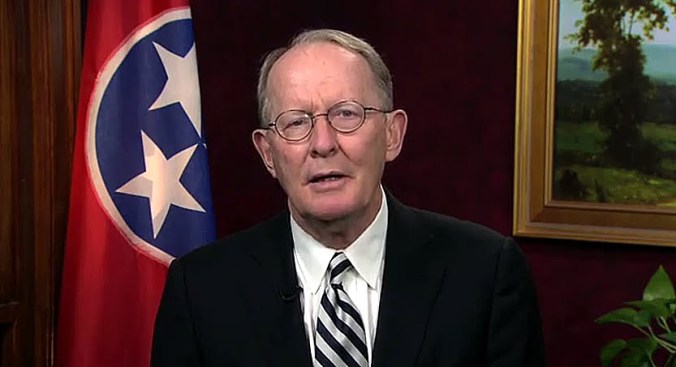
Alexander Lamar

The National Education Association is presenting its 2016 Friend of Education award to Democratic Senator Patty Murray and Republican Senator Lamar Alexander.
In a previous post I looked back on the role of Alexander in the first Bush administration as Secretary of Education and his work with Chris Whittle and the Edison Project. Whittle was an early pioneer in school privatization and worked closely with Alexander.
In 2013 my brother Mike Klonsky commented again on Lamar Alexander. This time he wrote some comments to a post about Alexander on Diane Ravitch’s blog. Ravitch had been an under-secretary of education when Lamar Alexander was the first Bush’s Education Secretary a quarter century ago.
…Yes some people did get rich on holding Edison stock (back then it was Whittle Communications stock), those that bought it cheap and sold it dear. Take Lamar Alexander (and Mrs. Alexander) for example.
Former Department of Education employee and writer Lisa Schiffren says that, “His fortune is founded on sweetheart deals not available to the general public, and a series of cozy sinecures provided by local businessmen. Such deals are not illegal…” Schiffren further notes that, in 1987, Alexander helped found Corporate Child Care 
In 2013 , my brother wrote some more about “our friend,” Lamar. | Fred Klonsky:
 

Big Money Fails to Oust In-Coming Pittsburgh Schools Superintendent | gadflyonthewallblog

Big Money Fails to Oust In-Coming Pittsburgh Schools Superintendent | gadflyonthewallblog:

Big Money Fails to Oust In-Coming Pittsburgh Schools Superintendent

DSC-4973-1
Democracy 1, Oligarchy 0.
That might be the score in the latest contest between corporate education reformers and the Pittsburgh Public School Board.
Special interest groups and the media had stirred up controversy for months over one line in newly hired superintendent Anthony Hamlet’s resume.
The board voted 7-2 not to cancel his contract. He will be sworn in tomorrow to start a 5-year commitment in the city.
He had been unanimously hired May 18 from the Palm Beach County district in Florida where he had distinguished himself with an excellent record of leadership and enacting authentic reforms.
Though critics cited one line in his resume as too similar to a statement in a Washington Post article, the real reasons for the dispute are ideological.
Put simply, Hamlet favors reforms that have nothing to do with teaching to the test, charter school expansion, closing schools and other market driven policies.
This put him at odds with the usual gang of corporate sycophants:
1) The Campaign for Quality Schools Pittsburgh – a PAC recently formed to Make City Schools Great Again by promoting charter schools and other failed neoliberal reforms.
2) A+ Schools, an advocacy organization that used to champion the same kinds of authentic reforms school directors are trying to enact with Dr. Hamlet’s help. However, after getting a fat check from the Gates Foundation, the group has became Big Money Fails to Oust In-Coming Pittsburgh Schools Superintendent | gadflyonthewallblog:


Milwaukee wins major Victory over Edreform. | BustED Pencils

Milwaukee wins major Victory over Edreform. | BustED Pencils:

Milwaukee wins major Victory over Edreform


In the state budget passed this year in Wisconsin was a provision that essentially legalized the theft of public schools from their local communities.  The Kooyenga-Darling heistproposal stated that,
select MPS schools with failing grades would become independent charter schools that do not employ unionized teachers or answer to the Milwaukee School Board.
Instead, those schools would be overseen by a new local board that would entertain proposals from charter-school operators and award five-year contracts to operators that present the most compelling plans, according to the proposal.
Within months, some Milwaukee parents, children, and teachers found themselves in “failing schools” that were now considered an “Opportunity.” These failing schools had the opportunity to be taken over by County Executive Chris Abele.   Abele would “name a commissioner with parallel authority to Milwaukee Public Schools.”  Also, teachers and staff,
Demond Means—superintendent of the Mequon-Theinsville district— was appointed commissioner by Abele.  However, after a short time, it became obvious that the communities in which these failing schools were located had a problem being considered an “opportunity.” They realized quickly that Abele was going to use Means to implement the Kooyenga-Darling legislation and begin the privatization of their community schools.
From the beginning Abele and Means were met with skepticism.  An uncooperative group of teachers, parents and students resisted the privatization of their public schools  This promoted Abele and Means to issue a statement asking for local support and reminding the resistance,
You have clearly expressed your displeasure with this legislation and we have said from the beginning that this legislation is not how we would have approached a turnaround effort. We did not seek this legislation nor did we have any input into its drafting. However, as elected officials, we take an oath to uphold the law.
And then yesterday came the stunning news that Dr. Demond Means was voluntarily Milwaukee wins major Victory over Edreform. | BustED Pencils:

Are Public Schools And Private Equity A Bad Mix?

6/30/2016 – Are Public Schools And Private Equity A Bad Mix?:

Are Public Schools And Private Equity A Bad Mix?


THIS WEEK: School Choice Is Chaos … Teacher Stress Hurts Students … Exercise Improves Achievement … Solve Inequality First … SCOTUS Got Fisher Right

TOP STORY

Are Public Schools And Private Equity A Bad Mix?

By Jeff Bryant

“It’s true … cities and towns are required to offer citizens a free education … That doesn’t mean that schools aren’t fair game for privatization … Charter schools, for instance, are fundamentally less democratic than public schools. And changing from traditional way of funding education – where taxpayers agree to share costs of schools, and those assets are handed from one generation to the next – to a system in which charter school real estate and operations are controlled by private equity takes control out of the community.”
Read more …

NEWS AND VIEWS

A Sea Of Charter Schools In Detroit Leaves Students Adrift

The New York Times

“Michigan leapt at the promise of charter schools 23 years ago, betting big that choice and competition would improve public schools. It got competition, and chaos … 24 charter schools have opened in the city since the cap was lifted in 2011. 18 charters whose existing schools were at or below the district’s dismal performance expanded or opened new schools … It can be a forbidding landscape for families trying to enroll their children, particularly in a city where, historically, federal statistics show that nearly half the adults are not literate enough to function effectively … ‘We’re spreading the money across more and more schools … They’re all under-resourced.'”
Read more …

Classroom Contagion: Stressed-Out Students More Common In Classes Where Teachers Are Burned Out

Medical Daily

“Teacher burnout may contribute to stressed-out students and vice versa, suggesting that stress may actually be contagious … This is the first time research has found a potential link between the two … When teachers get stressed from inadequate support in the classroom or poor educational systems, their lessons are less organized and managed. Students, then, are affected by the stress and burnout, in turn increasing their own levels of anxiety.”
Read more …

To Do Better In School, Kids Should Exercise Their Bodies As Well As Their Brains, Experts Say

Los Angeles Times

“‘Physical activity before, during and after school promotes scholastic performance in children and youth’ … What’s more, exercise and fitness ‘are beneficial to brain structure, brain function and cognition’”… Recess and physical education classes in school, organized youth sports leagues, and old-fashioned outdoor play … are still a good investment in academic achievement.”
Read more …

UN Report: Tackle Inequality To Prevent Children From Dying

Associated Press via ABC News

“69 million youngsters under the age of five will die from preventable causes between now and 2030 if all countries don’t accelerate action to improve health and education for the most disadvantaged … 167 million children will also live in extreme poverty, 60 million won’t be attending primary school, and 750 million women will have been married as children by 2030 unless inequality is tackled now … 147 million children between one- and five-years-old could be saved from preventable death ‘just with a 2% increase in expenditure in 74 countries.'”
Read more …

What Other Universities Should Learn From UT

Houston Chronicle

Education professor Julian Vasquez Heilig writes, “We are fortunate today that the Supreme Court ruled that the University of Texas admission plan ‘clearly reconciled the pursuit of diversity with the constitutional promise of equal treatment and dignity’ … Critics of affirmative action in admissions often frame the matter like that: as a rule that says when two exactly equal candidates apply for a spot in a university, the minority candidate is chosen each time. This is a gross and purposeful simplification of what actually occurs … UT was very thorough in its empirical process … This high standard will likely cause those that oppose the consideration of race … to sue colleges or universities that haven’t been so thorough. So my message to my academic brethren … Be sure that your admissions policies are in the best interest of your students and faculty.”
Read more …
 6/30/2016 – Are Public Schools And Private Equity A Bad Mix?:

Larry Ferlazzo: The best and worst education news in 2016 — so far - The Washington Post

The best and worst education news in 2016 — so far - The Washington Post:

The best and worst education news in 2016 — so far


Larry Ferlazzo is a veteran teacher of English and social studies at Luther Burbank High School in Sacramento, California.  Every year he writes a list of the best/worst education news of the year — but this, so much has been happening that he decided to take a look halfway through the year, and here’s what he’s come up with. Ferlazzo has written numerous books on education, writes a teacher advice blog for Education Week Teacher and has his own popular resource-sharing blog.
By Larry Ferlazzo
I usually do a recap of the year’s education news every December, but thought it would be useful to experiment with  doing a mid-year review.  As usual, I don’t presume to say it’s all-encompassing, so I hope you’ll take time to share your own choices. I’ll list the ones I think are the best first, followed by the worst. It’s too hard to rank them within those categories, so I’m not listing them in any order.
The Best Education News Of 2016 – So Far
* A major effort to decimate teachers unions and, in fact, all public employee unions, was defeated when the U.S. Supreme Court deadlocked in the Friedrichs case.
New research on teachers unions proved to be a disappointment to many school reformers:
The data confirms that, compared to districts with weak unionism, districts with strong unionism dismiss more low-quality teachers and retain more high-quality teachers. The empirical analysis shows that this dynamic of teacher turnover in highly unionized districts raises average teacher quality and improves student achievement.
* The Gates Foundation offered a weak but, nonetheless, welcome mea culpa for some of their strategic missteps.  The Los Angeles Times followed-up with an equally welcome and flawedscathing critique of the foundation’s work in schools.  Anthony Cody and others pointed outThe Times neglected to mention their responsibility in previously promoting some of the policies for which they were criticizing the foundation.  Despite these shortcomings, these kinds of public admissions of mistakes and/or changes of mind by powerful institutions are always welcome news.
A California appeals court overturned the infamous Vergara decision attacking teacher tenure in the state and dealing a setback to anti-union reformers.
* In a pleasant surprise, the Supreme Court refused to weaken efforts by colleges and universities to promote student diversity and supported the University of Texas’ affirmative action program.
* Research shows that health challenges provide learning challenges, and Obamacare has made a big dent in that problem.  The state of California has gone even further by providing health insurance to 170,000 undocumented children under the age of 18.
* In Chicago, educators continue to show their strength in the face of attacks.  Thousands of teachers participated in a one-day strike and a principal who was a vocal opponent of Mayor Rahm Emanuel’s school policies (and who the district was trying to fire because of it) waselected to lead the citywide Principals and Administrators Association.
* No educator will be sad that Michelle Rhee’s organization, StudentsFirst went under (the word “merged” was used, but everybody knows what it really meant) this year.
Changes in the GED, the high school equivalency test, have been disastrous for students, with the numbers of people taking and passing it plummeting since Pearson took it over.  Fortunately, the company has come to its senses and made some adjustments that should help.
New research showing major student academic gains as a result of participating in ethnic studies classes has given even more momentum to districts and schools offering them.
* Millions of students had great learning experiences in their schools this year.

The Worst Education News Of 2016 – So Far
Nine people were killed in Oaxaca, Mexico demonstrations against government reform proposals that scapegoat teachers as the cause of that country’s education ills.  Does that scapegoating strategy sound familiar?
* Teacher’s efforts brought national attention to the terrible physical condition of Detroit’s schools and the fiscal disaster of the school district.  Officials claimed teachers didn’t care for their students when they organized their sick-outs (including one who had earlier donated her kidney to a student). The state legislature and Governor responded, but their bailout package is The best and worst education news in 2016 — so far - The Washington Post:

Education Secretary John King Will Call for More Diverse Schools in Orlando Speech - The Atlantic

Education Secretary John King Will Call for More Diverse Schools in Orlando Speech - The Atlantic:

A New Argument for More Diverse Classrooms

U.S. Education Secretary John King will argue that interactions with children from different backgrounds prepare students for the workforce.


Perhaps no U.S. education secretary has had more personal experience with the power America’s public-school system has to lift up students who have the odds stacked against them than John King. At least when it works as intended.
A Puerto Rican and African American whose parents had both passed away by the time he was 12, King has repeatedly credited New York public schools for saving his life and shaping its trajectory. King attended P.S. 276 in Canarsie and Mark Twain Junior High School in Coney Island, at the time both diverse schools that exposed him not only to high-quality curriculum, but to students and teachers from backgrounds and cultures wildly different from his own.
“As a kid, it gave me a sense of different cultural experiences that people had and different traditions that people had, and as a parent, that has been an important part of thinking about the schools for my daughters,” King said during an interview at his Washington, D.C., office.
On Friday, Secretary King will call on parents and teachers at the National PTA Convention in Orlando to create diverse schools where students of all racial and socioeconomic backgrounds have access to good teachers and learning opportunities like he did. “Like math and reading, like science, social studies, and the arts, diversity is no longer a luxury,” King will say. “It’s essential for helping our students get ready for the world they will encounter after high school and, increasingly, throughout their lives.”
Research has long suggested that all students benefit when they attend diverse schools. But many schools remain largely segregated and those that serve children of color tend to have less-experienced teachers, fewer advanced courses, and resources stretched thin. And while more than half of the nation’s students are now children of color, more than 80 percent of teachers are white, and the majority are female.
Although many parents say they care about all children and support the creation of diverse schools, some, particularly affluent white families, have balked at attempts to integrate schools. So King will make the case that integration benefits not only black and brown students, who are disproportionately low-income, but their affluent white peers, too. “We have this emerging body of research around Education Secretary John King Will Call for More Diverse Schools in Orlando Speech - The Atlantic:
 

Charter Schools May Be Re-Segregating America’s Education System - In These Times - http://inthesetimes.com/article/17441/charter_schools_may_actually_be_re_segregating_americas_school_system

The Racist History of the Charter School Movement | Alternet - http://www.alternet.org/node/669918

Big Education Ape: Why the racist history of the charter school movement is never discussed - http://bigeducationape.blogspot.com/2013/07/why-racist-history-of-charter-school.html

Big Education Ape: The Charter School Swindle – Selling Segregation to Blacks and Latinos | gadflyonthewallblog - http://bigeducationape.blogspot.com/2016/06/the-charter-school-swindle-selling.html

Big Education Ape: Jersey Jazzman: Chris Christie LOVES Segregated Charter Schools - http://bigeducationape.blogspot.com/2016/05/jersey-jazzman-chris-christie-loves.html

Diane Ravitch: Don’t use test scores to judge teacher quality - The Boston Globe

Diane Ravitch: Don’t use test scores to judge teacher quality - The Boston Globe:

Don’t use test scores to judge teacher quality

Click on picture to Listen to Diane Ravitch
The Massachusetts Senate passed a bill repealing the mandate to use test scores in evaluating teacher quality. The approval of the House is needed to enact the bill. The Legislature should act promptly to endorse this bill. Test-based teacher evaluation has been discredited everywhere it has been tried and has been rejected by knowledgeable scholars. Massachusetts should abandon this harmful policy (as Oklahoma, Hawaii, and Houston recently did). The public needs to learn more about why this policy consistently fails.
The idea that teachers should be evaluated by the test scores of their students was a central tenet in former Secretary of Education Arne Duncan’s Race to the Top program. Massachusetts won a federal grant of $250 million in 2011 and agreed to follow Duncan’s wishes, including this untried method of evaluating teachers. The US Department of Education handed out $5 billion to states to promote test-based evaluation and privately managed charter schools. In addition, the Gates Foundation gave away hundreds of millions of dollars to five urban districts to use test scores to evaluate teachers.
Evaluating teachers by test scores has not raised scores significantly anywhere. Good teachers have been fired by this flawed method. A New York judge ruled this method “arbitrary and capricious” after one of the state’s best teachers was judged ineffective.
Test-based evaluation has demoralized teachers because they know it is unfair to judge them by student scores. Many believe it has contributed to a growing national teacher shortage and declining enrollments in teacher education programs.
A major problem with test-based evaluation is that students are not randomly assigned. Teachers in affluent suburbs may get higher scores year after year, while teachers in urban districts enrolling many high-need students will not see big test score gains. Teachers of English-language learners, teachers of students with cognitive disabilities, and teachers of children who live in poverty are unlikely to see big test score gains, even though they are as good or even better than their peers in the suburbs. Even teachers of the gifted are unlikely to see big test score gains, because their students already have such high scores. Test scores are a measure of class composition, not teacher quality.
Seventy percent of teachers do not teach subjects that have annual tests. Schools could develop standardized tests for every subject, including the arts and physical education. But most have chosen to rate these teachers by the scores of students they don’t know and subjects they never taught.
Scholarly groups like the American Educational Research Association and the American Statistical Association have warned against using test scores Diane Ravitch: Don’t use test scores to judge teacher quality - The Boston Globe:

Rick Roach Endorsed by the Network for Public Education Action in SD 13 race | The Orlando Political Observer

Rick Roach Endorsed by the Network for Public Education Action in SD 13 race | The Orlando Political Observer:

Rick Roach Endorsed by the Network for Public Education Action in SD 13 race

Rick Roach
On Thursday, former Orange County School Board member and Candidate for Florida State Senate District 13, announced that he has been endorsed by Network for Public Education Action, an advocacy group, “whose goal is to fight to preserve, promote, improve and strengthen our public school system, an essential institution in a democratic society.”
“This endorsement is attached to one of the most courageous women in America, Dr. Diane Ravitch. She is a fearless fighter for our teachers and kids.” said Roach “I met her at a conference once as a school board member where she received a standing ovation. I asked her how I could fight the misuse of testing. She replied, ” Be ready to take the arrows out of your back, and don’t go it alone.” Later I led a state-wide task force on the topic. Proud to have this endorsement.”
Roach is one of three Democrats running to replace termed out Senate President Andy Gardiner. Other Candidates in the primary include former State Representatives Linda Stewart and Mike Clelland. The winner will challenge Dean Asher in November.
Network for Public Education Action director, Colleen Wood, said “Rick Roach’s support for public education, our students, teachers and communities is unwavering. He will be the type of Senator we need to push back against the ill-conceived and damaging Florida education reforms of the past sixteen years. Rick has always supported us and now it’s time for us to support him in his bid for Senate District 13.”Rick Roach Endorsed by the Network for Public Education Action in SD 13 race | The Orlando Political Observer: