Latest News and Comment from Education

Friday, June 17, 2016

New Infographic: Empowering Trans Students with Super Powers | Schott Foundation for Public Education

New Infographic: Empowering Trans Students with Super Powers | Schott Foundation for Public Education:

New Infographic: Empowering Trans Students with Super Powers


Schott and our partners have been working on this infographic for some time, and it is being released while our nation is mourning and the national narrative around trans students has been singularly focused on bathroom facilities. These current issues only highlight why we need to do more to support transgender students in a more comprehensive way.
The Schott Foundation for Public Education joins the country and the international community in mourning all of the lives lost and injured during the recent shootings in Orlando targeting members of the LGBTQ community specifically, and our humanity more broadly. The hatred exhibited in Orlando calls into question what more our country can do to limit unnecessary gun violence and to ensure the safety and well-being of LGBTQ individuals where they live, work, learn, play, worship, and govern. During this difficult time, Schott reaffirms its commitment to resource advocates and campaigns to institutionalize the policies and practices that create healthy living and learning spaces for all.
We recognize that the threat of homophobic and transphobic violence is very real for many of us, including our children. 
Schott believes that every young person deserves to attend school in a safe, healthy living and learning environment that allows them to thrive and grow to their full potential. For nearly 25 years, Schott has utilized a race and gender lens through our grantmaking and research to understand and address the unique set of challenges facing students across the country that is inclusive of students who also identify as LGBTQ.
"Can we also live for what we believe in? Is that worth more than dying? When do we achieve admiration for our survival? I guess in order for that to happen, people would have to acknowledge just how heroic our survival is. Give us our roses while we're still here."
— Participant in a recent BreakOUT! transgender rights march
Schott and our partners have been focused on the myriad of challenges transgender students and transgender students of color experience every single day beyond the bathroom.
80% of trans students feel unsafe at school because of their gender expression. 49% of trans people reported physical abuse in a 2007 survey. 41% of trans people have attempted suicide. [source] Trans youth of color are especially impacted in a society doubly stacked against them for both their race and gender expression. Students should be able to learn in a safe and supportive public school environment regardless of their gender expression. It's up to all of us to make that happen.
In May 2016, U.S. Departments of Justice and Education released joint guidance to help public schools ensure the civil rights of trans students: when students or their parents notify a school that a student is transgender, the school must treat the student in a manner consistent with the student’s gender identity in every situation, from the restroom to sports. The guidance also suggests schools establish additional privacy options that all students can use for any reason.
Over the past few years, in partnership with the Arcus Foundation, Schott has supported the work of Massachusetts grantee BAGLY, the Boston Alliance of Gay Lesbian Bisexual and Transgender Youth, to elevate the voice of trans students in Boston Public Schools. BAGLY youth leaders have identified several key ways that students, educators, and schools can help make our public education system more safe and supportive of trans students — it’s time to support the super powers of trans youth!New Infographic: Empowering Trans Students with Super Powers | Schott Foundation for Public Education:
[Click for a printable PDF]


Helmet of Knowledge: Students need to first be aware of their rights as afforded to them by Massachusetts’ Department of Elementary and Secondary Education (DESE) guidelines of inclusion and diversity.
Advocacy Shield: When a student is denied treatment according to MA law and DESE guidelines, they should know what resources to contact in order to obtain the support they need to push back against unfair/unequal treatment (BAGLY can connect students to other resources like lawyers, case management, therapy, etc.).
Cape of Protection: Culturally competent mentors should be available in schools (LGBTQ-identified, trans-identified, etc.).
Power Bolt of Systemic Change: Audit school curricula to include LGBTQ-specific issues and social justice history.
Peer Support Rocket Boots: Increase awareness in the student body — hold assemblies focusing on diversity, including sexual orientation, gender identity, and gender expression.

Resources

Connect with these organizations for support, programming, and policy advocacy:

Massachusetts

National

Arrogance: Service, Not Saviors – the becoming radical

Arrogance: Service, Not Saviors – the becoming radical:

Arrogance: Service, Not Saviors


Beyond the obvious—that they are all joined by the field of education—what links the National Reading Panel (NRP) and No Child Left Behind, the edureform documentary propagandaWaiting for “Superman,” Teach For America, and edusavior Steve Perry?
Arrogance.
While I count myself among English language arts (ELA) teachers who are skeptical of the Great Books mindset—that we have essential books all children must read—I am moved today to endorse how many of those works remind we puny humans about the folly of pride. Not the “I am proud of you daughter/son” pride, but the arrogance pride.
The “‘My name is Ozymandias, King of Kings;/ Look on my Works, ye Mighty, and despair!'”kind of pride.
What on earth possessed politicians to form the NRP to find out what we know about teaching children to read? Did anyone point out that we have had a vibrant field of literacy in the U.S. for a good century? Isn’t it sort of obvious that we have dozens upon dozens of people across the U.S. who know exactly how to teach children to read (and have known for decades)?
But it isn’t just the teaching of reading.
Naive experts, often journalists, every week roll out yet another book in which she or he researches a field in which real experts in that field have been doing authentic work for decades—the history of teaching!, how to teach poor children!, the glory of 10,000 hours of practice!
Paternalistic, self-important, blowhard politicians daily puff up in front of the pubic to be that “Superman” at the center of the great lie documentary noted above that ironically serves as a perfect representation of everything that is wrong with education reform.
But one need not go back to that complete failure of film making. Try within the last week.
Educators and activists Andre Perry and Jose Vilson (see also) have assumed the mantle of speaking truth to the cult of personality that is Steve Perry.
I consider myself a student of Andre Perry and Vilson, as I work to navigate my own white Arrogance: Service, Not Saviors – the becoming radical:
 Black Aesthetic, White Supremacy: Steve Perry’s Tweet Needs Cutting More Than Black Boys’ Hair - http://go.shr.lc/1V1nDRG


Big Education Ape: How Dr. Steve Perry Sells Black Kids To The Highest Bidder — Medium - http://go.shr.lc/1XtxmXl

Malloy’s Connecticut – Ripping off Connecticut while keeping citizens in the dark - Wait What?

Malloy’s Connecticut – Ripping off Connecticut while keeping citizens in the dark - Wait What?:

Malloy’s Connecticut – Ripping off Connecticut while keeping citizens in the dark

When Dannel Malloy was running for re-election in 2014 he collected a $6 million+ taxpayer funded Clean Campaign grant from the state of Connecticut with the promise that he would not solicit, accept, coordinate or use private funds to benefit his campaign.
In the following months, not only did he benefit from more than $5 million from an account funded by the Democratic Governors Association, AFSCME and AFT, he and his political operatives directly raised another $5 million, much of it from state contractors, lobbyist and people who have benefited from Malloy’s outrageous corporate welfare program.
The law was clear, if you take money in addition to the state grant, you lose the state grant.
That is, if you take money, you must pay back the $6 million in public funds.
Earlier this week, Malloy’s Democratic Party agreed to a settlement with the Connecticut State Elections Commission in which they paid a fine of $325,000 – or 5 percent – of what the taxpayer were owed.
Fair?
When it comes to Malloy, fair and proper are two terms that simply aren’t used.
In a stunning, courageous and insightful commentary piece, followed by a CT Mirror story, the lead investigator for the State Elections Enforcement Commission – Charlie Urso –  now retired – explains some of the issues that took place behind the scene.
Charlie Urso’s commentary piece – Malloy campaign law settlement was a mockery and a sham and the CT Mirror’s article – Investigator says Malloy settlement keeps voters in the dark – is a MUST READ for those who really want to about Malloy and themodus operandi that permeates his operation.
While some of the details won’t be new for Wait, What? readers, the two pieces shed Malloy’s Connecticut – Ripping off Connecticut while keeping citizens in the dark - Wait What?:


Test Scores Poor Indicator of Students’ Life Outcomes and School Quality: New Consensus? | janresseger

Test Scores Poor Indicator of Students’ Life Outcomes and School Quality: New Consensus? | janresseger:

Test Scores Poor Indicator of Students’ Life Outcomes and School Quality: New Consensus?


According to Education Next, “Jay P. Greene is endowed chair and head of the Department of Education Reform at the University of Arkansas and a senior fellow at the Manhattan Institute.” This Arkansas “Department of Education Reform” epitomizes the far-right think tank posing as a university department. For years, Greene has been at the center of education “reform” orthodoxy, and yet today he is questioning one of its primary tenets—the use of short term test score gains as the primary measure of school improvement.  While federal policy in education as prescribed in the new Every Student Succeeds Act continues to prescribe annual testing and the requirement that states develop plans to turn around schools that can’t quickly raise scores, there seems to be growing consensus in the academic world about problems with accountability that is purely test-based.
Here is what Professor Greene posted on his blog on Tuesday:  “I’ve written several times recently about how short term gains in test scores are not associated with improved later life outcomes for students. Schools and programs that increase test scores quite often do not yield higher high school graduation or college attendance rates. Conversely, schools and programs that fail to produce greater gains in test scores sometimes produce impressive improvements in high school graduation and college attendance rates, college completion rates, and even higher employment and earnings. I’ve described at least 8 studies that show a disconnect between raising test scores and stronger later life outcomes.” Greene devotes the rest of his post to describing a new study that replicates these findings.
Greene concludes: “It’s time that people start paying a lot more attention to this pattern of a disconnect between short term test score gains and long term life outcomes. We can’t just dismiss this pattern as a fluke… If we think we can know which schools of choice are good and ought to be expanded and which are bad and ought to be closed based primarily on annual test scores gains, we are sadly mistaken.  Various portfolio management and ‘accountability’ regimes depend almost entirely on this false belief that test scores reveal which are the good and bad schools. The evidence is growing quite strong that these strategies cannot properly distinguish good from bad schools and may be inflicting great harm on students.”
Paul Tough’s new book, Helping Children Succeeddescribes educational research that confirms Greene’s concerns about test-based accountability.  Tough explains the research of Kirabo Jackson: “What he found was that some teachers were reliably able to raise their students’ standardized-test scores year after year… But Jackson also found that there was another distinct cohort of teachers who were reliably able to raise their students’ Test Scores Poor Indicator of Students’ Life Outcomes and School Quality: New Consensus? | janresseger:


Sinking TFA?: Demise in San Francisco – Cloaking Inequity

Sinking TFA?: Demise in San Francisco – Cloaking Inequity:

Sinking TFA?: Demise in San Francisco


 In the post BREAKING: TFA out in San Francisco I first discussed the SFUSD decision to break their relationship with Teach For America. Episode 10 of the Truth For America podcast features an EXCLUSIVE conversation with Lita Blanc, President of United Educators of San Francisco about the demise of TFA in San Francisco.

The podcast includes discussions about the recent decision by the School Board of the San Francisco Unified School District to stop their association with Teach For America. We discuss teacher shortages, alternative to Teach For America in San Francisco, the role of Teach For America in education reform and much more.
Truth For America is a podcast about Teach For America (TFA) that provides voice to educators, parents, students, and other key stakeholders. Truth For America is co-hosted by Dr. Julian Vasquez Heilig and Dr. T. Jameson Brewer.
Truth For America is sponsored by the Network for Public Education Action.
For all of Cloaking Inequity’s posts on Teach For America click here.
Please Facebook Like, Tweet, etc below and/or reblog to share this discussion with others.
Want to know about Cloaking Inequity’s freshly pressed conversations about educational policy? Click the “Follow blog by email” button on the home page.
Twitter: @ProfessorJVH
Click here for Vitae.
Hear from TFA alums and teachers… binge listen to the entire Truth For America podcast series on YouTube below or iTunes here.
Sinking TFA?: Demise in San Francisco – Cloaking Inequity:

What It Means To Speak Truth To Power (About That Medium Post) | The Jose Vilson

What It Means To Speak Truth To Power (About That Medium Post) | The Jose Vilson:

What It Means To Speak Truth To Power (About That Medium Post)

2Pac
The whole point was to speak truth to power. 20,000 views later, I don’t know what to do about the new eyeballs on my writing.
In subsequent tweets, [Perry] comes within inches of calling himself the next Messiah, stopping kids from stuttering and pulling them from gangs, stepping in for their absent fathers, and keeping them up until midnight for no other reason than his own need to set these boys straight. In subsequent tweets, he shouts down tweeters who resent his anti-Black message, chiding him for implying that dreads and braids?—?hair styles with African traditions?—?make black boys look dirty and, worse yet, unsuccessful. He continues to use this weekend experience of setting boys straight (yes, like the jail, but only with a comedian and an army veteran) to make other wild assertions about the American school system and absentee fatherhood. He admittedly spends 29 tweets extolling the virtues of depriving boys their sleep and cutting their natural hair to detractors, then makes an about face to chastise “y’all” for spending time on Twitter instead of getting to work.
How do you lead an education revolution when your ideas are so revolting?
I didn’t intend on focusing on any one person or restarting the same old education debates. As is my annual tradition, I just wanted to put the conversations so many of us put in our private messages out there for non-educators to see. For a classroom teacher who’s been doing this for 11 years, I’m fascinated by the plethora of critique that I either a) write hit pieces or that b) I have no solutions. What It Means To Speak Truth To Power (About That Medium Post) | The Jose Vilson:
Big Education Ape: How Dr. Steve Perry Sells Black Kids To The Highest Bidder — Medium - http://go.shr.lc/1XtxmXl

Pro-charter school philanthropic group says it will give to traditional schools too, but not yet | 89.3 KPCC

Pro-charter school philanthropic group says it will give to traditional schools too, but not yet | 89.3 KPCC:

Pro-charter school philanthropic group says it will give to traditional schools too, but not yet

The Los Angeles-based Great Public Schools Now announced on Thursday that its first batch of grants totaling $4.5 million would go to a charter school, an after-school program and the teacher preparation program Teach for America.
The group took over a proposal that came to light last year to double the number of charter schools in Los Angeles. L.A. philanthropist Eli Broad promoted the plan. But at the grant announcement, the group’s leaders said non-charter schools will also benefit from its private philanthropy.
“Regardless of whether they are charter schools or pilots or magnets or traditional district schools, if it’s working, we will be there to support,” said Myrna Castrejon, director of Great Public Schools Now.
The group is planning to fund education efforts in ten L.A.-area neighborhoods, including Boyle Heights, Pico Union, and the city of South Gate. Residents of these areas, the group said, are low income while schools have high drop out rates and low test scores.
Funding will go towards community outreach and engagement, training teachers and administrators, finding and building school facilities, and replicating successful schools.  
The group is raising funds from individuals and groups. Donors include the Eli and Edythe Broad Foundation, the W.M. Keck Foundation, and the Walton Family Foundation. Great Public Schools Now is not saying how much it has raised, nor will it say which individuals are donating to the effort.
The initial $4.5 million in grants will be split by the L.A. charter school Equitas, the L.A. branch of Teach for America – which places beginning teachers in charter and public schools – and the after school program Heart of L.A., which serves traditional and charter school students in L.A.’s MacArthur Park area. All three will use the funds to help grow their programs.
The group’s promotion of charter schools has been criticized by United Teachers Los Angeles and L.A. Unified’s school board president. Both said an increase in charter schools would siphon students and money that could lead to the school district’s bankruptcy.
Teachers union officials said they don't see the group’s goal to include of traditional Pro-charter school philanthropic group says it will give to traditional schools too, but not yet | 89.3 KPCC:
 

Call it a racism tax: NJ pays a premium to keep schools segregated |

Call it a racism tax: NJ pays a premium to keep schools segregated |:

Call it a racism tax: NJ pays a premium to keep schools segregated

The Education Law Center's David Sciarra
The Education Law Center’s David Sciarra

What’s crazier? Maintaining a patently inefficient system of public education that has more school districts per capita than probably any other state? Or, believing that the white citizens of New Jersey will get over their fear of black and brown children long enough to end racial segregation that is so bad it has been depicted by experts as a form of “apartheid”—the formal separation of races that was the law in South Africa before the era of Nelson Mandela’s leadership.
Tough questions, tough because the answers do, in fact, suggest a relentless nuttiness in the minds of many in New Jersey—those who would be willing to keep paying for what one state legislator called “the costliest school system on the planet” just so they wouldn’t have to live in a racially mixed community or send their children to a racially mixed school.
Call it a racism tax—everyone in New Jersey pays more than they have to pay for public education so some can live in a shrinking lily-white world.
Paul Tractenberg
Paul Tractenberg
This crazy talk—six hours of it—was the main agenda item at a little-heralded conference this week on the manicured Hopewell campus of the Educational Testing Service (ETS). The meeting was co-sponsored by the ETS—best known for its production of the SAT college-admissions exam—and by the Educational Law Center (ELC), a public interest law firm in Newark that has generated challenges to school funding and other laws
Unlike most conferences on education, the speakers at this one—educators, jurists, politicians, statisticians, experts in various fields, activists—didn’t shy away from bold statements. It was state Sen. Robert Smith (D-Middlesex), for example, who called the state’s public school system “the costliest… on the planet.”
Smith, not usually known for dramatic rhetoric, also promised that the people of the state faced “radical changes” in the years ahead—some he himself would try to generate by pushing for votes o establish county-wide school systems, others that were the inevitable results of past  court decisions demanding that predominantly white and wealthy suburbs increase the availability of low-income housing. Which Call it a racism tax: NJ pays a premium to keep schools segregated |:

Substance Beats Flash: District Superintendents and Minority Achievement Network

Substance Beats Flash: District Superintendents and Minority Achievement Network (S. David Brazer and Robert G. Smith) | Larry Cuban on School Reform and Classroom Practice:

Substance Beats Flash: District Superintendents and Minority Achievement Network (S. David Brazer and Robert G. Smith)

A former high school principal, David Brazer is Associate Professor (Teaching) and Faculty Director of Teaching Leadership Programs at Stanford University; former superintendent of the Arlington (VA) public schools, Robert Smith is Associate Professor of Educational Leadership at George Mason University. They co-authored Striving for Equity (2016).
The contemporary education reform climate seems to value flash over substance, grand ideology over hard work, and narrow quantitative impact over steady progress in nurturing environments. Lost in all this noise is the steady effort of school board members, superintendents, principals, teachers, students, and parents striving to make the most out of school-age years, from pre-school through high school graduation. The gross exaggerations of “the schools are failing” or “this will revolutionize education” are exposed by the deliberate, effective approaches to improving student achievement of 13 superintendents who tell their stories in Striving for Equity: District Leadership for Narrowing Opportunity and Achievement Gaps (Harvard Education Press, 2016). They pursued results rather than headlines.
Instead of chasing a “best practices” holy grail, these superintendents worked with their communities—both within and around their inner-ring suburban school districts—over long periods of time, following a series of steps that adhered to their commitment to equity and reflected their practical experiences as education leaders. They began by helping parents, teachers, and board members understand that inequities were embedded in their districts’ student outcomes. Most of them were ahead of their time, recognizing opportunity and achievement gaps long before these terms were widely used. Publicizing the data demonstrating achievement differences between the majority population and students with disabilities, in poverty, speaking languages other than English, or identifying as non-white helped these superintendents rally their communities to their gap-closing agendas.
Many of the tactics superintendents employed were pedestrian in nature—funding pre-school, unifying elementary curricula, and keeping their boards educated on the nature of the problem and district progress. Other actions were more complicated, such as providing professional development so that teachers were better equipped to implement curricular changes and reach changing Substance Beats Flash: District Superintendents and Minority Achievement Network (S. David Brazer and Robert G. Smith) | Larry Cuban on School Reform and Classroom Practice:

Secondary Education Robot Teachers from SoftBank. Danger, Will Robinson, Danger? – Missouri Education Watchdog

Secondary Education Robot Teachers from SoftBank. Danger, Will Robinson, Danger? – Missouri Education Watchdog:

Secondary Education Robot Teachers from SoftBank. Danger, Will Robinson, Danger? 


 nao robot


Robot teacher secondary educationRobot teacher secondary education
Graphics accessed from robotslab.com

Question.  Why do human capital (school children) need to be trained in STEM when humanoid robots can learn STEM, and in fact, teach it? Robots are currently teaching special needs children in the classroom and robots in the video (below) are in a secondary education classroom.  Each student in the video has his/her own robot; think of the robot as an iPad for every student or individual teacher.  Think how much ‘a robot for every child’ would cost a school district.
If indeed human teachers will become guides on the side, their salaries will reflect their diminished role, possibly allowing districts to provide every student their very own robot.  Districts will be able to slash curriculum directors as common core curriculum will be downloaded directly into the robots:
  nao robot curriculum
Districts will tell taxpayers robots are necessary to teach students STEM, although there is a possibility that these STEM trained students won’t Secondary Education Robot Teachers from SoftBank. Danger, Will Robinson, Danger? – Missouri Education Watchdog:

John Thompson: Two Years in a KIPP Blue Ribbon School | Diane Ravitch's blog

John Thompson: Two Years in a KIPP Blue Ribbon School | Diane Ravitch's blog:

John Thompson: Two Years in a KIPP Blue Ribbon School


John Thompson, teacher and historian, writes here about KIPP in Oklahoma City. Will Oklahoma City surrender its public school to corporate charter chains?
Thompson writes:
A deeply emotional battle has erupted in Oklahoma City after its KIPP Reach Middle School attempted to take over the Martin Luther King Elementary School building, while promising to serve the entire neighborhood. OKC’s KIPP has no experience with pre-school through 4th grade instruction, but it promised to send its school leaders to Success Academy for guidance!?!? The charter not only has a much lower percentage of low-income students than OKC’s neighborhood middle schools, (76% vs 90+%) but it serves about 40% as many special education students as MLK. It co-locates with Moon Elementary where 21% of the students are homeless, and it would take over MLK where 17.2% are homeless. Only 1% of KIPP’s students are homeless.
After 15 years, KIPP has not been able to expand its student population beyond 300, but it now wants to quadruple its student body to 1200. It cites its 2012 Blue Ribbon School award as evidence that the No Excuses middle school could become a neighborhood pre-k to 8th grade school without pushing out excessive numbers of high-challenge students. Ironically, KIPP’s Blue Ribbon School application offers an overwhelming case against their attempt to take over an entire feed group.
2014-2015 STATISTICAL PROFILE 1-28-16 (2).pdf
In August, 2010, 285 students enrolled in KIPP. In October, 81% of its students were low-income, and 11.6% were on special education IEPs. By the spring, however, only 226 remained to be tested, which represented the loss of 1/5th of the students. Ten students, or 10% of the tested students, were alternatively assessed, meaning that they were on special education IEPs. So, at first glance, KIPP’s claim to accept the “same” students would seem to be an exaggeration, but it could not be seen as irrational. But, what did the other grades look like?
By 8th grade in 2011, however only 32 students were tested, and only 22 of them were eligible for free and reduced lunch! Only three special education students remained to be tested. And this was not an unusual year. The Blue Ribbon application provides data for 2006 through 2011, and it reveals a clear pattern. During those years, on average of nine 5th graders were on IEPs. By 8th grade the average number of tested IEP students was 1.4%! From FY2007 to FY2011, KIPP did not report a single 7th or 8th grade student on an IEP who passed an end-of-the-year math or reading test.
The next year, however, this attrition story got even worse. Using data John Thompson: Two Years in a KIPP Blue Ribbon School | Diane Ravitch's blog:


Finally, the feds move to fire an incompetent watchdog over for-profit colleges - LA Times

Finally, the feds move to fire an incompetent watchdog over for-profit colleges - LA Times:

Finally, the feds move to fire an incompetent watchdog over for-profit colleges

corinthian
California Atty. Gen. Kamala D. Harris exposed how Corinthian Colleges targeted vulnerable students in 2013. Corinthian later went out of business, and now its accreditation agency is in hot water. (AP)
Much of the world turns on paper credentials. But the fact that these often aren’t worth the paper they’re printed on has been spotlighted by the accreditation scandal in the for-profit college business. Scores of campuses have been given a seal of approval by accreditation agencies despite coming under state or federal investigation for fraud.
The federal government is preparing to bring down the hammer on one of these toothless watchdogs. Its target is the Accrediting Council for Independent Colleges and Schools, which is renowned for maintaining its accreditation of Corinthian Colleges right up to the day that chain of for-profit schools ceased operating in April 2015. Corinthian filed for bankruptcy days later. ACICS accredits some 900 campuses across the nation, giving those schools the formal imprimatur that allows them to collect an estimated $5 billion a year in federal financial aid on behalf of their students. 
But its role may be ending. The Department of Education staff on Wednesday recommended the revocation of ACICS’s recognition as an accreditation body. That means that schools bearing its seal of approval will have to find a new accreditation body within 18 months or lose their right to collect federal financial aid payments. 
The department’s recommendation isn’t the last word. The next step belongs to the National Advisory Committee on Institutional Quality and Integrity, which will meet next week. The decision ultimately will be rendered by Secretary of Education John King. But things look bad for ACICS; the department staff says it has fallen short on nearly two dozen issues or problems and doesn’t seem equipped to “remedy its compliance issues.”
ACICS has been pedaling furiously to stave off extinction. On June 6, it said it wouldsuspend new accreditations until it can get its house in order. But the Education Department staff recommendation implies it’s moving too late.
The ACICS case underscores the drawbacks of governmental outsourcing of its regulatory authority to outside agencies, especially self-regulatory bodies. These bodies often are dependent for revenue on the very institutions they oversee, which tends to file down their sharp teeth when confronted with the need to bite down hard on a fee-paying target. The phenomenon typically leads to abuses going unaddressed, as happened with credit-rating agencies such as Standard & Poor’s, which has been accused of giving high ratings to deeply impaired mortgage securities in the run-up to the 2008 financial crisis.
For consumers, accreditation seals of approval can look like reliable shortcuts to the checking that individuals should do for themselves. Students interested in Lincoln Technical Institute’s vocational programs, for instance, might be comforted by the word on its website that it’s accredited by ACICS, “one of the most respected, established national accreditors of academic institutions in the United States.” They would be hard-pressed to learn that Lincoln settled a lawsuit last year brought by the Massachusetts attorney general alleging it gave applicants for its criminal justice program bogus data about job placement by its graduates. The school settled for $850,000 without admitting the charges and forgave $165,000 in private student loans.
Big Education Ape: Who Keeps Billions of Taxpayer Dollars Flowing to For-Profit Colleges? These Guys - ProPublica - http://go.shr.lc/1tAxRDd 

Pro-charter group spends big in Los Angeles-area Assembly races | EdSource

Pro-charter group spends big in Los Angeles-area Assembly races | EdSource:

Pro-charter group spends big in Los Angeles-area Assembly races


Among all the state Assembly primaries last week, none raised more eyebrows in Los Angeles education circles than the race for an open seat in District 43, which includes Glendale, Burbank and parts of Los Angeles. The top two spots went to Laura Friedman, a member of the Glendale City Council, and Ardy Kassakhian, Glendale’s city clerk. Both Democrats, they’ll now face each other in a November runoff.
The seat was deemed important enough to The Parent Teacher Alliance, an independent expenditure committeesupporting the California Charter Schools Association, that it spent more than $1.3 million on behalf of Friedman, part of a campaign in which supporters for both of the leading candidates used an image of Donald Trump to tarnish the other. (The Alliance has no connection to the California State PTA.) 
The level of spending, as well as the links to Trump, made the campaign highly unusual for several reasons. First, education was not a major issue in the race, apart from Kassakhian reminding voters that his mother is a public school teacher. Also, there are no charter schools in Glendale and only one in Burbank. Second, Friedman’s campaign manager, Parke Skelton, said Friedman neither sought nor expected any financial support from a political action committee on behalf of charter schools. The level of support, he said, “was a shock to us.”
And finally, like Friedman, Kassakhian is a Democrat.
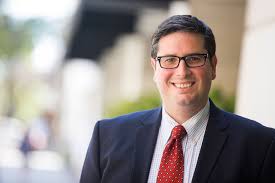
Ardy Kassakhian, second-place finisher in Assembly District 43 primary.
KASSAKHIAN CAMPAIGN
Ardy Kassakhian, second-place finisher in Assembly District 43 primary.
Heavy primary spending by the Parent Teacher Alliance – more than $3.8 million overall – comes as the charter association is pushing to meet its newly stated goal of serving 1 million children statewide by 2022, about double the current number. It also spent heavily for open Assembly seat races in districts 27 and 30.
Beyond that, the spending raises the possibility that charter interests will write more big checks next year, when four members of the L.A. Unified board face re-election, and the most divisive campaign issue is likely to be charter school growth. 
Already, L.A. Unified has more charters than any other school district in the country, about 230, with more planning to seek approval in the year ahead. With so many in operation, the district has become ground zero in the proxy war for resources between charters and teachers unions across California. The charters insist that parents need more choices for their children, while teachers unions argue that charters don’t necessarily improve the academic outcomes they promise and they drain valuable resources from public schools. The conflict is playing out as the district faces budget deficits after next year. 
At the moment, charter schools have only two reliable votes on the board — Mónica García, its longest-serving member and former president, and Ref Rodriguez, a former charter school executive who was elected to the board last year after a bruising campaign in which he defeated Bennett Kayser, the Pro-charter group spends big in Los Angeles-area Assembly races | EdSource:
Big Education Ape: Analysis: EdVoice with an IE for Dodd; Educational Reform Group Has Ties to Vergara Suit and Wa... http://bit.ly/1SJq26U

Big Education Ape: News Analysis: Education fight ‘over shades of Democrat’ | CALmatters http://bit.ly/25csc6L

Big Education Ape: Local legislative races become battleground in statewide fight over educationhttp://bit.ly/1WMlJKA

Big Education Ape: Edvoice pumps cash into Assembly campaign | News | Palo Alto Online | http://bit.ly/1s8OhSi

Big Education Ape: Charter school groups spending big in California legislative races | 89.3 KPCChttp://bit.ly/1TYIvJj
 

Charter schools want to sever ties with management company

Charter schools want to sever ties with management company:

Charter schools want to sever ties with management company

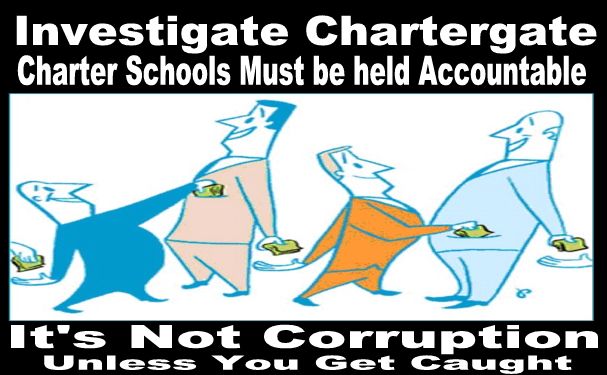
Newpoint Education Partners accused of theft, other crimes

JACKSONVILLE, Fla. - Two local charter schools want to sever ties from their management company, Newpoint Education Partners, which was indicted last month on charges of grand theft, money laundering and aggravated white-collar crime.
Over the last six months, Newpoint has operated charter schools in six counties and has withdrawn from its contracts voluntarily or been terminated by the school districts in four of those counties. The only two schools left under Newpoint management are in Jacksonville -- San Jose Academy and San Jose Preparatory High School.
San Jose Board Chair Bonnie Arnold and the schools' attorney, Gene Wheeler, decided Thursday night to get out of their five-year contract. The decision comes after the schools discovered they've possibly been paying interest on $235,000 worth of apparently non-existent loans from the management company.
"We've been in negotiations for a few days. There wasn't a decision made. We brought it to the board for them to move forward with a decision," Arnold said. 
Two weeks ago, Arnold told the News4Jax I-TEAM that the relationship with Newpoint was good and the indictment against the company in Escambia County didn't affect them. Then, after a public records request made by the media, the schools found out $235,000 in loans they've possibly been paying interest on don't exist, and the schools had a change of heart. 
"Because it's in the best interest of our school, our students, our staff and our community," Arnold said. 
Newpoint has been fronting the payroll, and the school pays them back. A month's payroll totals about $90,000 and San Jose Academy is a few payments behind, according to the board. San Jose Preparatory High School is current. 
Wheeler told the board Thursday evening that Newpoint wants them to pay back about $72,000 in management fees within the next 14 days, but the board doesn't believe it can afford that and keep the Charter schools want to sever ties with management company: