Latest News and Comment from Education

Wednesday, March 2, 2016

Planting a Flag in LAUSD’s District 2

Planting a Flag in LAUSD’s District 2:

Planting a Flag in LAUSD’s District 2


CP2
 To the Parents of District 2:

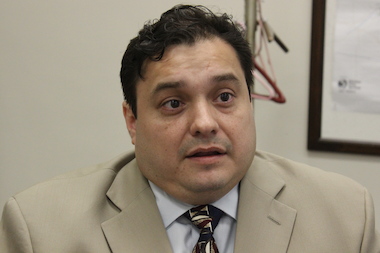
When was the last time you felt that you had a voice in how the LAUSD is run? None of the seven Board members currently has  a student enrolled in the District and cannot empathize with parents fighting to get the best education possible for their children. Those of us with children who require special education services fare even worse as the LAUSD has struggled for twenty years to prove that it no longer needs court oversight to ensure that it provides these students the support that they need. Meanwhile, warnings of an impending bankruptcy have increased as the charter industry, represented by Monica Garcia, diverts education funds from public schools to those that have no public accountability and promote the segregation of the most severe special education students and English language learners.
It is time to give parents a voice on the LAUSD Board of Education and I want to become your microphone. With your support, we can make sure that parents have a seat at the table, along with teachers and administrators, to make sure that our children are given the opportunities that are afforded by a first-class, public education. My wife, Nicole, and I have had two of our children graduate from the LAUSD and our triplets are still enrolled in the District. We know what it is like to fight to secure needed services for our two daughters who are on the autism spectrum. For every parent who has tried to fight the District bureaucracy and met an intractable brick wall, I feel your pain as I have been there. Working together we can win this fight.
Today I filed paperwork with the Los Angeles City Ethics Commission to become a candidate for the District 2 seat on the LAUSD Board. The decision to enter this race does not come easily. Last year, I ran against another Board member supported by the California Charter School Association and understand how difficult it will be to overcome the hundreds of thousands of dollars that they are likely to spend trying to keep this seat. I have felt the sting of personal attacks by the heavily partisan LA School Report and have argued my case before the Los Angeles Times Editorial Board knowing that their minds were already made up. No matter how difficult the fight, our children’s future is at stake. With a firm, personal belief that education is the great equalizer, it is a fight that I cannot walk away from.
There will be people who will be suspicious of the fact that I will move into District 2 to enter this race. I understand your concern and assure you that I am doing so because our children need a parent on the Board to fight for them. I am taking the fight to District 2 because Monica Garcia has lost touch with the needs of the children and represents the worst attributes of our dysfunctional School Board. As an example, the cameras of KNBC accidentally caught a glimpse of Garcia without her public mask during last year’s District-wide shutdown as a result of a terrorist threat. As parents combated fear and scrambled for alternate childcare arrangements, Garcia laughed and joked with the cameraman that she was “going to be the Mexican Oprah.” Only after she realized that she was live did she put on her serious face and confront the crisis at hand. As your representative on the School Board, I will take the issues facing our students seriously, even when the cameras are not present.
During my last campaign, I earned a reputation as a candidate who involved himself in neighborhood school issues, fought for our students and earned each vote by going door to door and listening to the concerns of the community. During the next year of campaigning, I look forward to spending time in the neighborhoods of District 2 listening to your concerns and making your fight our fight. I appreciate the opportunity to earn your trust and hope that you will welcome my family into your community.
Sincerely,

The people of Paterson tell the school board: “Reject this budget!” |

The people of Paterson tell the school board: “Reject this budget!” |:

The people of Paterson tell the school board: “Reject this budget!”

Rev. John Givens tells the Paterson board: "Reject this budget!"
Rev. John Givens tells the Paterson board: “Reject this budget!”

The fear was obvious at Monday night’s school board meeting in Paterson. And sadness. Anger. Frustration. Parents tired of having  children taught by substitutes, upset because sports and band and art and music are gone. Teachers and other school employees worried about their jobs and their inability to deal with out-of-control class sizes. Clergy members disheartened by knowing they are losing children to the streets. But, in Paterson, many are fighting back against budget cuts, raising their voices against the brutalizing effect of unfunded schools.
“What does it look like in Paterson?”cried Nicky Baker, an instructional aide. “It looks like a graveyard.”
“The state of New Jersey is doing to us what they think they can do to us and get away with,” said Benjie Wimberly, a Democratic assemblyman who opened the long meeting Tuesday night. “We should not let that happen–even if we have to shut down the Statehouse.”
Corey Teague, a former school board member, said what many–not just in Paterson, but in every major urban district in New Jersey–believe:
“Gov. Christie wants to destroy public education. ”
He called for a boycott and he used this logic: “Until the schools are fully funded, the children are not getting the quality education they deserve anyway.”
John McEntee, president of Paterson Education Association, says teachers and parents are united against budget cuts
Nearly 500 people jammed into the Paterson school board headquarters–and scores more were turned away because there was no room. A year ago, the board eliminated 300 positions and many employees their jobs and instructional programs were crippled.
Now the same board is about to make additional cuts–the budget is short $45 million–and more jobs and programs are on the chopping block.
It’s happening elsewhere, of course, because Christie and the Legislature are The people of Paterson tell the school board: “Reject this budget!” |:

Seattle Schools Community Forum: Seattle Schools News

Seattle Schools Community Forum: Seattle Schools News:

Seattle Schools News

Great story at KUOW about Highland Park and their "yoga breaths and mustang money."  Kudos to Principal Chris Cronas and his staff for their work.  

"Do you know what grit is?" Cronas asks the students. "It's when you work really, really hard on something and you never give up on it."

Next, the deep breathing. Cronas squeezes a rainbow-colored ball as he speaks quietly.

“Let’s all practice our breathing with the ball and my voice. Ready? Go. In. Hold … one, two, three, four, five, six.”
"This is not rocket science. This is Education 101. Kids need to feel safe. They need to feel respected," Cronas said. “They need to know that the people at their school love them and will give them the structure they need to succeed."
For the School Board meeting tonight, the public testimony list is nearly full.  Most of them, including me, will be speaking to the Seattle Preschool Program Service Agreement.  Others are speaking on discipline, recess, nutrition policy, lunch times, and deaf and hard of hearing. 

On the City Pre-K program, I am sensing a low-key campaign by staff for the program which seems to insinuate that it is expanding in SPS even before a vote has been taken.  There's this video at the district's website about the program.   There's nothing wrong with having a video but I would expect, from the district's side, that the video would be far more information and less hearts and flowers.  That's the kind of video I would expect to see from the City side but maybe the City produced this one.

The Executive Committee agenda for tomorrow's meeting is finally available.  The Executive Committee reviews the agendas for the next two upcoming Board meetings.

 The Board meeting on April 6th sees just a couple of Action items and no less than 26(!) Intro items, with 22 of them BEX or BTA project approvals.  One of the new Intro items is a board policy on Data Privacy which I'll have to learn more about as this is a long-term special interest to me.

The Executive Committee agenda also includes documentation on the
Seattle Schools Community Forum: Seattle Schools News:

Questioning the Questions Asked about Education – the becoming radical

Questioning the Questions Asked about Education – the becoming radical:

Questioning the Questions Asked about Education


 Considering all the things I like about Twitter, having discussions or debates by Tweeting is not one of them because I often get lost and the character count works against elaboration and nuance.

Yesterday, I was added to a debate that appears to be about the impact of poverty on student achievement—and a central question about why some high-poverty students excel although most do not. One person seems to be seeking research that focuses on comparing high-poverty students against each other to tease out the reasons for why some achieve higher than most.
First, let’s consider that when we talk about student achievement we are almost always defaulting to high-stakes test scores. In that context, we must frame all questions about success, excelling, and/or achievement within some solid facts about what standardized tests reveal (and what they don’t).
The SAT remains a fair representation of how all student scores on high-stakes standardized testing remain strongly correlated with race, social class, parental education levels, and gender. See for example from the 2015 SAT:
2015 SAT ethnicity
2015 SAT fam income lev edu
Therefore, in virtually all high-stakes standardized data sets, we find that being affluent, white, and male correlate strongly with high scores while being poor, of color, and female correlate Questioning the Questions Asked about Education – the becoming radical:

What happens when the wrong people make decisions for schools - Defies Measurement on Vimeo

Defies Measurement on Vimeo:

Defies Measurement


Defies Measurement from Shine On Productions on Vimeo.

DEFIES MEASUREMENT strengthens the discussion about public education by exploring why it is so important to address the social and emotional needs of every student, and what happens when the wrong people make decisions for schools. www.defiesmeasurement.com


By downloading this film, you are agreeing to the 3 terms listed below:

1) I will spread the word about the film to others via social media and word of mouth.

2) I will post a photo or comment about the film and/or screening on the Defies Measurement Facebook page

3) I will only use portions of Defies Measurement or the whole film for educational purposes and I will NOT edit or change the film in any way. (Educational purposes = viewing a portion or complete version of the film for an individual, private or public event, free of charge or as a fundraiser)


 DEFIES MEASUREMENT strengthens the discussion about public education by exploring why it is so important to address the social and emotional needs of every student, and what happens when the wrong people make decisions for schools. defiesmeasurement.com

By downloading this film, you are agreeing to the 3 terms listed below: 
1) I will spread the word about the film to others via social media and word of mouth. 
2) I will post a photo or comment about the film and/or screening on the Defies Measurement Facebook page 
3) I will only use portions of Defies Measurement or the whole film for educational purposes and I will NOT edit or change the film in any way. (Educational purposes = viewing a portion or complete version of the film for an individual, private or public event, free of charge or as a fundraiser)
Defies Measurement on Vimeo:

Democracy in Illinois. One unelected group overrules another unelected group on charter schools. | Fred Klonsky

Democracy in Illinois. One unelected group overrules another unelected group on charter schools. | Fred Klonsky:

Democracy in Illinois. One unelected group overrules another unelected group on charter schools.

larger


 Some politicians, like 40th District State Representative Jaime Andrade, may prefer having their sponsorship of HB4268 on their campaign flyer without having to vote for it.

The Illinois Charter School Commission was established in 2011. Its membersare nominated by the governor and appointed by the Illinois State Board of Education (ISBE).
This unelected group has the power to overrule a local school board on charter school applications.
Everywhere in Illinois outside of Chicago it means the Illinois Charter Commission can usurp local control of schools, authorize a charter school after it has been denied authorization by the local community and then force the local community to pay for the school.
In Chicago we don’t have local control of our schools. Our CPS school board is appointed by the Mayor.
Chicago remains the only school district in Illinois with an unelected school board.
Yesterday we saw what democracy looks like in Chicago, where one unelected group overruled another unelected group. The SCSC ordered that three failing Chicago charter schools must remain open.
Three charter schools the School Board sought to close for poor performance won a reprieve Tuesday night as the state charter school commission voted 6-0 to keep them open.
Amandla Charter School in Englewood and Betty Shabazz International Charter School’s Sizemore Academy in West Englewood both were granted permission to stay open for two years — the 
Democracy in Illinois. One unelected group overrules another unelected group on charter schools. | Fred Klonsky:

Who Has Worked for the Presidential Candidates on Education? - Politics K-12 - Education Week

Who Has Worked for the Presidential Candidates on Education? - Politics K-12 - Education Week:

Who Has Worked for the Presidential Candidates on Education?

Politics K-12


 Happy Day After Super Tuesday! As you scour the returns, I'll bet you're wondering: Who is helping these people figure out their education platforms, or who on their campaign team has an education background?

Or, if they don't have a team in place yet, who have these candidates worked with in the past on education issues? And who are their education aides in their day jobs as senator or governor? (Those names can matter down the line—one of President Barack Obama's original White House education advisors, science teacher Steve Robinson, first worked in his Senate office.)
Thumbnail image for electionslug_2016_126x126.jpg
We put our crack research team at the Education Week library on the case. Here's what they came up with:

Democratic Candidates

Former Secretary of State Hillary Clinton: The number one name you need to know when it comes to education issues is Ann O'Leary, a senior policy advisor for the campaign. (Great story on her here.) She was Clinton's legislative director in the Senate and has expertise in early-childhood education, a signature issue of Clinton's. Other folks who worked as top education aides in Clinton's Senate office includeCatherine Brown, who is now a vice-president for education policy at the Center for American Progress, and Mildred Otero, who is now vice president, policy and advocacy, at Leadership for Educational Equity. Otero also helped with Clinton's 2008 campaign, but has no formal role this time around. In decades past, Clinton collaborated with many of the folks who advised her husband on education policy when he was president, including U.S. Secretary of Education Richard Riley and his team.
Sen. Bernie Sanders of Vermont: Phil Fiermonte, the former executive director of the Vermont American Federation of Teachers, is Sanders' field director. And Caryn Compton is his legislative assistant on education, along with a bunch of other issues, according to congress.org.  Another former staffer is Jessica Cardichon, who worked for Sanders from 2010 to 2012 and is now at the Alliance for Excellent Education.

Republican Candidates

Sen. Ted Cruz of Texas: His national political director, Mark Campbell, has a Ph.D. in higher education administration and has worked as a senior advisor to the International Association of University Presidents. And Alec Aramanda is his one-time education legislative assistant, now deputy legislative director, according to linkedin.
Ohio Gov. John Kasich: In the governor's office, his education policy advisor is Jana Fornario. (Her resume here.) As for former Kasich edu-advisors, check out this great Rick Hess Straight Up exit interview from 2012 with Bob Sommers, who had just left his job with Kasich to return to school management.
Sen. Marco Rubio of Florida: J.R. Sanchez previously served as Rubio's point man on education and other issues. And Emily Bouck is his current legislative aide on the issue, according to congress.org.
What about Billionaire Real Estate Developer Donald Trump and Dr. Ben Carson? Our research team couldn't find anyone who had worked for them on education issues. And the campaigns didn't respond to requests for names. We'll update this post if we hear something.
This list is far from the final word, of course. New people join campaigns all the time. (Half the GOP education universe has, at one point or another, provided edu-advice to former Florida Gov. Jeb Bush, for instance, and some of those folks may be shopping around for another candidate now that he's dropped out.) And down the line, the campaigns may release formal, full-fledged lists of education advisors. 
Are you an advisor—formal or informal to one of the campaigns? Are you a former aide whose name we didn't include, or do you know of someone we missed? Email us at aklein@epe.org oraujifusa@epe.org
Library Intern Maya Riser-Kositsky contributed to this report. Who Has Worked for the Presidential Candidates on Education? - Politics K-12 - Education Week:

Teaching “Grit,” Blaming the Poor, and Undermining the Public Will to Address Poverty | janresseger

Teaching “Grit,” Blaming the Poor, and Undermining the Public Will to Address Poverty | janresseger:

Teaching “Grit,” Blaming the Poor, and Undermining the Public Will to Address Poverty


 Our preoccupation in American education with character formation defined as “grit” is integral to our culture’s rock-solid belief in the myth of the American Dream.  It doesn’t matter that economists today are documenting rigidifying inequality with the rise of incomes at the top, wage stagnation for families in the middle, and deepening poverty and segregation among those at the very bottom. It doesn’t matter that Nobel Prize winning economist, Joseph Stiglitz explains: “There’s no use in pretending. In spite of the enduring belief that Americans enjoy greater social mobility than their European counterparts, America is no longer the land of opportunity.” (The Price of Inequality, p. 265)  And it doesn’t matter that last year Robert Putnam published a whole book about the increasing rigidity of social stratification in America: “Graphically, the ups and downs of inequality in America during the twentieth century trace a gigantic U, beginning and ending in two Gilded Ages, but with a long period of relative equality around mid-century… In the early 1970s, however, that decades-long equalizing trend began to reverse, slowly at first but then with accelerating harshness… (I)n the 1980s the top began to pull away from everyone else, and in the first decades of the twenty-first century the very top began to pull away even from the top.  Even within each major racial/ethnic group, income inequality rose at the same substantial rate between 1967 and 2011, as richer whites, blacks and Latinos pulled away ….”  (Our Kids, pp. 34-35)

Despite these economic realities, however, and even though most of us know that some people face overwhelming challenges, we sustain a contradiction by holding fast to our belief in the American Dream.  Heather Beth Johnson, a sociologist, and her team of researchers interviewed hundreds of people about their understanding of the rags to riches story.  Here is a typical transcript of one of those interviews: “*Interviewer: ‘Do you think there are someTeaching “Grit,” Blaming the Poor, and Undermining the Public Will to Address Poverty | janresseger:
 

How Billionaires Use Non-Profits to Bypass Governments and Force Their Agendas on Humanity | Alternet

How Billionaires Use Non-Profits to Bypass Governments and Force Their Agendas on Humanity | Alternet:
How Billionaires Use Non-Profits to Bypass Governments and Force Their Agendas on Humanity
As wealth becomes concentrated in fewer hands, so does political and social power via foundations and non-profits.


 As wealth becomes concentrated in fewer and fewer hands, the billionaire class is increasingly turning to foundations and non-profits to enact the change they would like to see in the world. Amid the rise ofphilanthrocapitalism, growing numbers of critics are raising serious questions about whether this outsized influence is doing more harm than good.

In the January issue of the New York Review of Books, veteran journalist Michael Massing noted that, in the past 15 years alone, “the number of foundations with a billion dollars or more in assets has doubled, to more than eighty.” The philanthropic sector in the United States is far more significant than in Europe, fueled in part by generous tax write-offs, which the U.S. public subsidizes to the tune of $40 billion a year.
As Massing observes, billionaires are not just handing over their money, they have ideas about how it should be used, and their vision often aligns with their own economic interests. For this reason, the philanthropy industry deserves rigorous scrutiny, not a free pass because it is in the service of good.
Massing’s argument followed a study released in January by the watchdog organization Global Policy Forum, which found that philanthropic foundations are so powerful they are allowing wealthy individuals to bypass governments and international bodies like the United Nations in pursuit of their own agendas. What’s more, this outsized influence is concentrated in the United States, where 19 out of the top 27 largest foundations are based. These 27 foundations together possess $360 billion, write authors Jens Martens and Karolin Seitz.
Such dramatic wealth accumulation has disturbing implications. "What is the impact of framing the problems and defining development solutions by applying the business logic of profit-making institutions to philanthropic activities, for instance by results-based management or the focus on technological quick-win solutions in the sectors of health and agriculture?" the report asks.
These questions are not new, as social movements have long raised the alarm about the global impact of the ever-expanding philanthropy sector. In 2010, the international peasant movement La Via Campesina blasted the Bill and Melinda Gates Foundation’s acquisition of Monsanto shares as proof that its role in privatizing the global food supply and exporting big agribusiness, from Africa to North America, should be viewed through a commercial rather than humanitarian lens.
“It is really shocking for the peasant organizations and social movements in Haiti to learn about the decision of the [Gates] Foundation to buy Monsanto shares while it is giving money for agricultural projects in Haiti that promote the company’s seed and agrochemicals,” said Chavannes Jean-Baptiste of the Haitian Peasant Movement of Papaye and Caribbean coordinator of La Via How Billionaires Use Non-Profits to Bypass Governments and Force Their Agendas on Humanity | Alternet:


This teacher's inspiring note about anxiety and standardized testing is going viral

This teacher's inspiring note about anxiety and standardized testing is going viral:

This teacher's inspiring note about anxiety and standardized testing is going viral


 You guys ready to feel some fuzzy feels this morning? Abby Martin, a social media-savvy mom in Indiana, has taken to Facebook and Instagram to spread a loving message sent out by her son’s teacher, and we bet a lot of parents and kids are grateful this morning.

In Abby’s state, kids are preparing to take an annual standardized test called the ISTEP, which measures their abilities in subjects like math and reading comprehension. Part of the No Child Left Behind program, the test is generally meant to be used as a measure of how well the school and the students are doing, but many younger kids, like Abby’s son Ryan, hear the word “test” and can experience a lot of anxiety, even though the tests don’t directly effect their grades or class standing.
Abby was concerned when Ryan told her he had cried at school recently, but when she asked why, she got a lovely surprise: Ryan had welled up over an encouraging letter his teacher had given out in preparation for the ISTEP testing. Abby was so moved, she put it out there immediately, and it’s gone viral!This teacher's inspiring note about anxiety and standardized testing is going viral:

A teacher pay cut in disguise is not a solution - Chicago Tribune

A teacher pay cut in disguise is not a solution - Chicago Tribune:

A teacher pay cut in disguise is not a solution

Forrest Claypool
Chicago Public Schools CEO Forrest Claypool, shown Feb. 29, 2016, hasn't said when the school system will stop picking up 7 percentage points of the 9 percent pension contribution required of teachers. (Brian Cassella / Chicago Tribune)
I may be getting a 7 percent pay cut by April 1 from Chicago Public Schools. CPS CEOForrest Claypool is disguising it as an elimination of the school system's pension pickup instead of actually using the term "pay cut." But to a 12-year veteran nowhere near retirement, this is clearly a pay cut. Claypool should call it what it is instead of connecting it to the word "pension," which conjures up so many negative connotations from taxpayers, politicians and private-sector employees that it makes the thinly disguised action by Claypool and the Chicago Board of Education seem reasonable.

My pension is my primary retirement fund just as Social Security is the primary retirement source for workers in the private sector. Currently, the CBOE funds 7 percent of my pension, and I pay 2 percent. This type of setup is not unique to Chicago. According to the Illinois Policy Institute, more than two-thirds of school districts in Illinois pay for portions or all of their teachers' pension contributions. Yet, this year, only Chicago teachers' pension pickups are being threatened with elimination, even though many school districts in Illinois severely underfund teacher pensions.
Pensions are not just a local and statewide problem. According to the National Council on Teacher Quality, 40 states inadequately fund their public school teacher pension systems. Chicago's solutions surrounding this crisis are likely to set the tone for other school districts, regionally and nationally — just as the Chicago Teachers Union strike in 2012 empowered other educators around the state and nation to follow suit.
A 7 percent pay cut will not solve the long-term underfunding of Chicago's public schools, and it will continue to anger teachers who work diligently, with few resources, to support overcrowded classrooms filled with students who struggle academically, socio-emotionally and financially.
In my dozen years with the district, I have worked on the South Side at two neighborhood schools and one selective-enrollment school, all located in impoverished and violent neighborhoods. At each school I have received high ratings and became a major part of the schools' decision-making body. In the neighborhood schools, I overcame classroom management issues early on and pushed my students to read and write despite the struggles of their young lives. I have sat shoulder to shoulder, bleary-eyed by tears, with my colleagues at students' funerals. I have worked with amazing teachers who are committed to helping students climb out of poverty by empowering them through A teacher pay cut in disguise is not a solution - Chicago Tribune:

Elizabeth Warren: This report’s ‘a stunning indictment’ of the Department of Education - MarketWatch

Elizabeth Warren: This report’s ‘a stunning indictment’ of the Department of Education - MarketWatch:

Elizabeth Warren: This report’s ‘a stunning indictment’ of the Department of Education
The senator and other Dems slam feds’ oversight of student loan companies


 Active duty military members missed out on a key student loan benefit and the government failed to ensure they received it, say Massachusetts Senator Elizabeth Warren and two of her democratic colleagues.

The accusations come after a report released Tuesday by the Department’s Office of the Inspector General found that the Department used a flawed study design to determine whether student loan servicers were denying active duty service members the 6% interest rate cap on their student loans to which they’re entitled, perhaps inaccurately portraying the extent to which servicemembers were denied the benefit.
The Department published a news release on May 26, 2015 based on this analysis, which claimed that service members were incorrectly denied the interest rate cap in less than 1% of cases. That release is “unsupported and inaccurate,” the OIG report found.
“Today’s report is a stunning indictment of the Department of Education’s oversight of student loan servicers, exposing the extraordinary lengths to which the Department will go to protect these companies when they break the law,” Warren said in a statement regarding the report.
Warren and Senators Patty Murray (D-Wash.) and Richard Blumenthal (D-Conn.)wrote to the inspector general in August to ask that she investigate the Department’s review, saying it “left us with more questions than answers.” The report released Tuesday is a response to that request.
The Senators were skeptical of the review, they wrote in the August letter, because it didn’t jive with findings from the Justice Department that just one student loan servicer, Navient, improperly denied the interest rate cap to nearly 78,000 servicemembers. The Justice Department reached a $60 million settlement with Navient in 2014 over claims the company overcharged borrowers. At the time, then-Secretary Arne Duncan vowed to conduct a review of the nation’s four largest student loan servicers over the way they treat service members that could have implications about whether they could continue to service federal student loans. That’s the analysis that the Inspector General announced Tuesday was flawed.
The reasons for the flawed analysis essentially boil down to statistical errors, but the “sham study” as Blumenthal called it in a statement, raises questions about how well the Department is overseeing student loan servicers both in their dealings with service members and other borrowers.
Servicers are typically the face of a student loan for borrowers in repayment. They’re the companies borrowers turn to when they want to access repayment programs or other benefits they’re entitled to with a federal student loan. But consumer advocates say the companies don’t do enough to make borrowers aware of their options and as a result more borrowers than necessary struggle with their loans.
“These findings raise serious questions about whether the Department and its Office of Federal Student Aid can be trusted to protect the millions of borrowers under its care,” Warren said of the OIG report in her statement.
The Department has taken steps in recent years to help ensure that service members get the interest rate cap when they’re entitled to it. Now servicers are required to match their portfolio of borrowers with a Department of Defense database and automatically provide active duty service members with the interest rate cap.
Still, the Department takes “very seriously the issues raised” by the OIG report, Dorie Nolt, the Department’s press secretary wrote in a statement. “We expect to review the OIG’s findings more carefully and take any appropriate steps to ensure that the Department’s reviews of financial institutions meet the highest standards.”

How Mexican immigrants ended 'separate but equal' in California - LA Times

How Mexican immigrants ended 'separate but equal' in California - LA Times:

How Mexican immigrants ended 'separate but equal' in California

Sylvia Mendez
Sylvia Mendez, pictured at age 10, was named a winner of the Presidential Medal of Freedom by President Obama. In 1947 the Mendez v. Westminster case ended official segregation of Mexican students in California schools. (Family Photo)

 the coverage of the 2016 election cycle, you'll hear this time and again: Latinos — immigrants and their families — are playing an important role in electing the next U.S. president. They are the largest minority group in the nation, and they are poised to make a major impact on American democracy.
It won't be the first time. Seventy years ago, Mexican immigrants moved American civil rights forward, away from racial segregation toward integration and equality. It happened eight years before the Supreme Court began to dismantle segregation by handing down its decision in Brown vs. Board of Education in 1954.
In 1943, five Mexican American families took four school districts in Orange County to court, challenging the “separate but equal” education their American-born children were getting in “Mexican schools.” They knew their kids were treated as second-class citizens: taught by underpaid teachers, forced to use books and desks discarded by Anglo students, relegated to shoddy school buildings where the classrooms had so little light that reading was almost impossible.
The lack of resources, however, wasn't what the plaintiffs in the case, Mendez et al vs. Westminster et al, complained about to the courts. Instead, they mounted a frontal attack on segregated schools, even though to many other enemies of segregation, the time wasn't right. Thurgood Marshall, founder of the NAACP's Legal Defense Fund, was convinced that federal courts weren't ready to strike down segregation. Instead of asking them to do so, the NAACP had adopted a tactic of bringing case after case designed to force Southern states to make separate schools truly equal. The goal was to make “separate but equal” so expensive that the states would give it up.
But in California, the Mexican American families and their attorney David Marcus told the courts that equal facilities would not satisfy them. It was segregation itself that was unconstitutional, they said. Separating Mexican American children from their Anglo peers did them “great and irreparable” harm, by making them feel so inferior that their ability to learn was affected. The Constitution's 14th Amendment guarantees equal treatment under the law. Segregation violated that mandate.
The Orange County school systems replied that they were treating the Mexican American children equally by providing an education particularly suitable for them. At trial, they produced experts who testified that the children could not speak English, though no one had given them language tests. The children's hands and faces, said the school districts' witnesses, were “generally dirty,” they lacked proper clothing and “cleanliness” of body and mind, they had no manners, and they were “retarded” in their ability to learn.
Federal District Court Judge Paul J. McCormick, who presided over the case, rejected the schools' case. Segregating children because they were Mexican American, he held in February 1946, violated the Constitution by suggesting “inferiority” among the children “where none exists.” It was exactly the same assertion that the NAACP would later adopt in its argument in Brown vs. Board, telling the courts that forcing minority children into separate schools sent the message that they were not as good as others. Low expectations led to low levels of learning.
“A paramount requisite in the American system of public education is social equality,” McCormick wrote. Public schools “must be open to all children by unified school How Mexican immigrants ended 'separate but equal' in California - LA Times: 

California’s New Sex Education Requirements | California Healthline

California’s New Sex Education Requirements | California Healthline:

California’s New Sex Education Requirements


 California schools are revamping their lesson plans to comply with a new state law that requires them to teach a sex education program at least once in middle school and once in high school.

Previously, districts were required to teach HIV prevention, but sex education was not required.
“Over 90 percent of schools were teaching some sex education, but because it wasn’t mandated, certain elements were slipping through the cracks,” said Phyllida Burlingame, reproductive justice policy director for the ACLU of Northern California.
“This bill creates a consistent, unified way that sex education and HIV education is taught in the classroom.”
The law, which took effect in January, requires the curriculum to include discussions of sexual orientation, gender identity and sex trafficking, as well as information about contraception and HIV treatment.
“This law has kind of caught up with the times that we live in,” said Keith Bray, general counsel for the California School Boards Association. “It’s 2016. The law reflects some awareness as to lifestyles and additional tolerance where it’s needed.”
The bill, authored by Assemblywoman Shirley Weber (D-San Diego), bolstered previous curriculum requirements and added new ones. Instruction must:
  • Be age appropriate and medically accurate, and may not promote religious doctrine.
  • Recognize different sexual orientations and include same-sex relationships when providing examples of couples.
  • Include information about all FDA-approved methods of contraception and prevention of sexually transmitted infections (STIs).
  • Address gender identity, sexual assault, relationship abuse and sex trafficking.
  • Describe abstinence as the only certain way to prevent pregnancy, HIV and other STIs. However, abstinence-only instruction is not permitted.
Parents or guardians must be notified that their child will receive this instruction and be allowed to see the course materials in advance. The law allows them to opt out with a written request.
Because the bill was just signed into law last fall, districts are scrambling to comply.
“This will be a process, probably over the next six to eight months, when districts will catch up with the Legislature,” Bray said.
Some school officials have reached out to the San Francisco Unified School District, which a few years ago created a high school sex education curriculum called “Be Real. Be Ready.”
With some minor exceptions, that curriculum already meets the law’s requirements, said Christopher Pepper, the district’s health project coordinator.
“We make the curriculum available for other educators to use for free,” he said. “I know some teachers in Marin County are now using it.”
The San Francisco district is working to bring its middle school offerings into compliance, he said. The high school curriculum is taught as a separate, one-semester course, while middle schoolers get sex ed from science or physical education teachers.
“Sometimes, there’s just not time to fit in enough of those lessons,” Pepper said. “We’re working with middle schools to expand the number of lessons.”
Before the law, the Fresno Unified School District’s high school sex ed curriculum included six lessons taught in biology class, said Elisa Messing, director of curriculum, instruction and professional learning. This year, it has hired the group Fresno Barrios Unidos to teach four additional lessons to bring the curriculum into compliance.
At the middle school level, the district is training teachers to incorporate the new topics into the lessons they already teach, and it may consider contracting out to supplement middle school instruction in the future, Messing said.
“This is Beta year, we’re learning,” she said.
Barrios Unidos will start teaching lessons this week, the first of 183 presentations it expects to make by the end of the school year at 14 high schools, said executive director Socorro Santillan.
“Some parents and teachers think we’re giving the students this information because we want them to be sexually active,” she said. “But we’re giving them information they’re going to need to be able to thrive in their communities. For some students, the fastest way to end a college education is through an unintended pregnancy.”California’s New Sex Education Requirements | California Healthline: