Latest News and Comment from Education

Wednesday, February 11, 2015

Student Success Act: Corporate Education Reform on Steroids | Education & the Workforce Committee

Student Success Act | Education & the Workforce Committee:

Big Education Ape: Twitter Call to Action! Tweet your trouble with NCLB rewrite! The Network For Public Education | http://bit.ly/1AjngfH


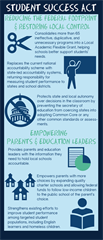
The Student Success Act (H.R. 5) will reduce the federal footprint and restore local control, while empowering parents and education leaders to hold schools accountable for effectively teaching students.
Big Education Ape: Twitter Call to Action! Tweet your trouble with NCLB rewrite! The Network For Public Education | http://bit.ly/1AjngfH

Ed Workforce Twitter Banner

Bill Information
         

Full Committee

February 11, 2015
H.R. 5, "Student Success Act"
The markup is scheduled at 10:00 a.m. in room 2175 Rayburn H.O.B.  
**View a Live Webcast of the Hearing**Please note that this feature is only available when Committee on Education and the Workforce hearings are in progress. 
Contact the committee at least two business days prior to the scheduled event for closed captioning requests.       
MEDIA ADVISORY: Committee to Mark Up the Student Success Act (February 9, 2015)

MARKUP OF THE FOLLOWING BILL:
Big Education Ape: Twitter Call to Action! Tweet your trouble with NCLB rewrite! The Network For Public Education | http://bit.ly/1AjngfH


Oh What A Tangled Web We Weave, When We Make Tests Punitive | Oklahoma Observer

Oh What A Tangled Web We Weave, When We Make Tests Punitive | Oklahoma Observer:


OH WHAT A TANGLED WEB WE WEAVE, WHEN WE MAKE TESTS PUNITIVE


BY JOHN THOMPSON
When I was in school in the 1960s, we occasionally took a standardized test, and we took ACT and SAT tests as a part of the college application system.
These were not the type of tests you could “teach to” or “study for.” Consequently, they provided a huge database of invaluable information about students and schools. These tests were a Consumer Reports on education, and they could have been an essential component of a data-informed – not data-driven – contemporary school reform movement.
I don’t want to get into the weeds of the social science, but the ACT and other tests were Norm Referenced Tests [NRTs] that assessed where students stood in comparison with others on the types of testable knowledge that students needed. They were not appropriate for holding individuals accountable. Back then, we showed a healthy respect for the proper use of test methodology, and ACTs and similar NRTs were not imposed for high-stakes purposes.
So, a new set of tests, Criterion Reference Tests [CRTs], were developed for measuring testable knowledge of Standards of Learning. Fifteen years ago, several outstanding experts in the Oklahoma City Public School System Planning Department explained, chapter and verse, how the seemingly arcane shift from NRTs to CRTs would corrupt tests and accountability systems.
With the passage of No Child Left Behind, the misuse of these new tests expanded further than we could have imagined. Then, Arne Duncan became the nominal secretary of education, and the test-loving Bill Gates became the real driver of school policies, and primitive bubble-in tests were misused in conjunction with not-ready-for-prime-time statistical models.
The entire testing system became hopelessly corrupted, undermining the quality of instruction in Oklahoma and the rest of the nation.
Now, Oklahoma is taking the lead in rescuing our schools from the test, sort, and punish mania known as school reform. A recurring suggestion, by good people who seek to reign in the testing frenzy, is the proposal that the ACT replace Oklahoma’s EOIs [see Rep. David Perryman’s HB 1497, for example].
While I don’t think that’s a good idea, I’d like to suggest a framework of discussing the potential value of using the ACT as a graduation examination.
The good news is that the ACT would help solve some of the problems that vex educators. The bad news is that the ACT could liberate adults, and many students, but dramatically increase the dropout rate.
Like most states, Oklahoma was coerced by the federal government into the use of “value-added” estimates of student test score growth in teachers’ evaluations. As an overwhelming majority of scholars explained, these models [known as VAMs] used inappropriate tests in an unreliable manner. They are biased against educators in high-poverty schools with large numbers of English Language Learners [ELLs] and special education students. If Oklahoma can’t find a way to abandon these invalid value-added evaluations, the exodus of our top teaching talent from poor schools will increase.
The courts have tended to conclude that value-added evaluations are improper and unfair, but that they cannot be struck down until they produce outcomes that are irrational. If systems tried to turn ACT test score into VAMs, that methodology would be so invalid that the entire evaluation system would likely collapse. That would be a great thing for educators and schools, and it would free Oklahomans from the single worst legacy of the education reform blame game.
Unfortunately, because of the way that testing has been misused over the last 12 years, the problem facing students is more complex. It took years to do so, but Oklahomans debated the type of End of Instruction [EOI] graduation tests that would be fair to all. We reached the reasonable conclusion that these exit exams should be minimum skills tests, and that the stakes attached to them should be Oh What A Tangled Web We Weave, When We Make Tests Punitive | Oklahoma Observer:

This Week In Education: Thompson: Reckhow's and Tompkins-Stange's Analysis of Edu-Philanthropic Convergence

This Week In Education: Thompson: Reckhow's and Tompkins-Stange's Analysis of Edu-Philanthropic Convergence:


Thompson: Reckhow's and Tompkins-Stange's Analysis of Edu-Philanthropic Convergence


 Sarah Reckhow’s and Megan Tompkins-Stange’s 'Singing from the Same Hymnbook': Education Policy Advocacy at Gates and Broad begins in the glory days of test-driven, market driven reform, from 2008 to 2010, when the Broad Foundation  proclaimed,  “We feel the stars have finally aligned. With an agenda that echoes our decade of investments—charter schools, performance pay for teachers, accountability, expanded learning time and national standards—the Obama administration is poised to cultivate and bring to fruition the seeds we and other reformers have planted.” 

Reckhow’s and Tompkins-Stange’s excellent contribution to the American Enterprise Institute’s conference of edu-philanthropy, Is the ‘New’ Education Philanthropy Good for Schools?, ends with an illustration of the power of Broad and Gates Foundations’ “purposeful convergence” on advancing their accountability-driven beliefs. They quote a Gates Foundation insider:
There was a twinkle in the eye of one of our US advocacy directors when the Obama administration's...education policy framework came out...this person said...“aren’t we lucky that the Obama Administration’s education agenda is so compatible with ours, you know?”...We wouldn’t take credit...out loud even amongst ourselves....But, you know, the twinkle… 
Rechkow and Tompkins-Stange add that “the notion of a “twinkle”—rather than claiming credit more openly—highlights one of the more problematic aspects of the concentrated influence of Gates, Broad, and other foundations in the policy realm.”
The Gates Foundation had been reluctant to commit to a coordinated federal advocacy campaign until the election of President Barack Obama and the appointment of Arne Duncan as Secretary of Education. Their Ed in ’08 campaign had fizzled but, during the Obama years, 2/3rds of the states made significant changes to their teacher evaluation process.
'Singing from the Same Hymnbook': Education Policy Advocacy at Gates and Broad shows that this dramatic change was conducted in the “absence of a robust public debate.”
It is beyond the scope of Rechkow's and Tompkins-Stange's study but after reading their work, I wonder even more how it would have been possible for the Gates Foundation to have engaged in an adequate, private discussion of the costs and benefits of their favored policy. Behind closed doors, insiders may or may not have exchanged their opinions on value-added evaluations, but since the evidence required for a meaningful debate over the real world effects of those evaluations did not exist, I wonder if the lack of research on the policy implications of value-added was considered. 
Reckhow and Tompkins-Stange chart the public effort by Gates and Broad to “amplify a message regarding teacher performance evaluation” without submitting their ideas to “a rigorous and This Week In Education: Thompson: Reckhow's and Tompkins-Stange's Analysis of Edu-Philanthropic Convergence:

The Constitutional Challenge to School Vouchers (full video) | The Progressive Pulse

The Constitutional Challenge to School Vouchers (full video) | The Progressive Pulse:


The Constitutional Challenge to School Vouchers (full video)

On Tuesday,February 17th, lawyers on both sides of the school voucher argument will appear before the state Supreme Court to make their respective cases.
NC Justice Center staff attorney Christine Bischoff shares the background and current status of the constitutional challenge. Former State Superintendent of Public Instruction Mike Ward, a lead plaintiff in the case explains why he believes the school voucher plan is unconstitutional and a bad policy. Jessica Holmes, staff attorney at the North Carolina Association of Educators (NCAE), shares why school vouchers are bad on both a policy and individual level.
Click below to watch NC Policy Watch’s February Crucial Conversation in its entirety.
- See more at: http://pulse.ncpolicywatch.org/2015/02/11/the-constitutional-challenge-to-school-vouchers-full-video/#sthash.ypimZOnN.dpuf


Public employee unions under fire again - Brian Mahoney - POLITICO

Public employee unions under fire again - Brian Mahoney - POLITICO:


Public employee unions under fire again

And not just from Republicans.


Public-sector workers are under fire again — and not just from Republicans.
Three years after Wisconsin Gov. Scott Walker curtailed collective bargaining and New Jersey Gov. Chris Christie cut pension benefits for public employees in the name of budget austerity, state and local politicians once again are moving to curtail public-sector unions.
Story Continued Below
The most aggressive moves are coming from Illinois’ newly inaugurated Republican Gov. Bruce Rauner. On Monday, Rauner issued an executive order prohibiting unions from collecting so-called fair share fees from non-union members. These mandatory fees come from government workers who choose not to be union members but are nonetheless represented by unions in contract negotiations. In effect, Rauner’s order by fiat makes Illinois a right-to-work state for public employees — a measure that, opponents argue, requires legislation.
But some Democrats have lately put public-employee unions in the hot seat too. For Democrats, the target is typically teachers unions, whose frequent opposition to education reforms has proved infuriating to big-city mayors.
Democratic New York Gov. Andrew Cuomo has spoken of removing “ineffective teachers” and expanding charter schools, prompting the New York State United Teachers to launch a media campaign to “fight back” against the governor’s agenda. “Education is our life. For this you have made us the enemy. This is personal,” a group of teachers said in an open letter to Cuomo printed Monday in the Times Union of Albany.


Emanuel and Rauner, it happens, are friends and former business associates from Emanuel’s time at the investment firm Wasserstein Perella in the late 1990s. Although Emanuel endorsed Rauner’s opponent, incumbent Gov. Pat Quinn, in November’s election, and though the two disagree on many issues, Emanuel and Rauner are, one Democratic strategist told the Chicago Tribune in August, “cut from the same cloth.” One point of agreement is a keen frustration with the CTU.
In addition to differences over education reform, Democratic politicians have sometimes clashed with public-employee unions over pensions that are squeezing state budgets. Here, too, Illinois features prominently, because nowhere does the state pension problem weigh more heavily. The state’s Democratic attorney general, Lisa Madigan, is arguing in court for emergency powers to trim state pension benefits.
“As expenditures on benefits increase,” writes Daniel DiSalvo, senior fellow at the Manhattan Institute, a conservative nonprofit, in his 2015 book “Public Union Power and Its Consequences,” these expenditures “‘crowd out’ government spending on parks, education, public safety and other services on which the poor and middle class rely. In short, government costs more but does less.” Such pressures are felt by Republicans and Democrats alike — indeed, so much so that some Democrats now openly pronounce themselves anti-union. In his book, DiSalvo quotes San Jose Mayor Chuck Reed, a Democrat who’s clashed with public-employee unions, saying, “There’s a difference between being liberal and progressive and being a union Democrat.”
Mostly, though, recent challenges to public employees have come from Republicans. Walker, who halted fair share fees in Wisconsin through legislation,


Read more: http://www.politico.com/story/2015/02/public-employee-unions-states-115090.html#ixzz3RSFJtdL3

School Board majority links reform plans to BTF contract - City & Region - The Buffalo News

School Board majority links reform plans to BTF contract - City & Region - The Buffalo News:

School Board majority links reform plans to BTF contract

Links reform plan to contract talks
Buffalo Teachers Federation President Philip Rumore, shown in foreground during an October protest, says the School Board majority’s plan is designed to help charter schools gain access to closed public schools.
Buffalo Teachers Federation President Philip Rumore, shown in foreground during an October protest, says the School Board majority’s plan is designed to help charter schools gain access to closed public schools. Robert Kirkham/News file photo
Members of the Buffalo Board of Education majority now say they will refuse to act on plans for four struggling schools until they can negotiate a new contract with the Buffalo Teachers Federation, a bold move that likely foreshadows how the board will handle future turnaround plans at other schools.
If the board does not act on the proposed plans, the four schools will continue a gradual phase out that eventually leads to closure. Critics, including BTF President Philip Rumore, say that would facilitate the opening of more charter schools interested in using district buildings.
A resolution that President James Sampson sent board members Monday states that the board asked teachers for their ideas to turn around student performance at the four out-of-time schools. Each school came up with a plan that requires a longer school day and additional teacher training, changes that would require exceptions to the BTF contract.
Rather than make those changes in isolation at the four schools, the resolution says the district should aim to apply those principles throughout the district, where more schools are soon expected to be placed on the state’s list for overhaul or closure.
“The teacher-generated turnaround plans all propose solutions that have a common thread,” states the resolution, which is partly based on recommendations interim Superintendent Donald A. Ogilvie presented last week. “They have told us the school day and year need to be longer; teacher professional development is strategically important and should be mandatory; and the school teaching teams have to be tailored to meet the specific needs of the student population for each unique school. Although these system changes have been proposed for four schools, they should be applied as a strategy for all our schools.”
“It’s sort of logical, right?” Sampson said. “Why would we renegotiate these things 57 times?”
The resolution – from Sampson, Jason McCarthy, Carl Paladino, Patricia Pierce and Larry Quinn – also calls for phasing out Riverside High School by 2016, and exploring other programmatic options such as an elementary visual and performing arts school and a single-sex school for boys.
The proposal adds an unexpected twist to the saga involving the district’s four out-of-time schools – Bennett, East and Lafayette high schools along with the Martin Luther King Jr. Multicultural Institute. The four schools have consistently failed to meet state academic standards, prompting the state to demand the district make dramatic changes to their programs or phase them out. Riverside apparently is targeted because it is expected to be added to the list of out-of-time schools next year.
The majority’s proposal also casts teacher contract negotiations in a new light, for the first time using plans for the schools – and the ultimate threat of closure – as leverage to gain concessions from the union. Some board members now want to form a committee that will take a more hands-on role in the negotiating process, with the aim of incorporating work-rule changes into the contract as well as reforming health care and benefits for retired teachers.
Contract negotiations have been a sore spot for the city schools, with talks for a new agreement mired for more than a decade in a wage freeze, strikes and legal challenges. Under state law, teachers continue working under the terms of the expired contract until a new agreement can be reached. The old contract guarantees them annual raises and fully covered health insurance, something that some board members say gives the Buffalo Teachers Federation little incentive to make concessions.
BTF leaders have lobbied for the board to approve the phase-in plans generated by the individual schools, and said they would support any work-rule changes agreed upon by the staffs at those schools.
Whether they would apply those changes across the board is another question.
Rumore, the union president, criticized the board majority for coming up with the resolution 
School Board majority links reform plans to BTF contract - City & Region - The Buffalo News:

Essay in The American Scholar Is Skeptical on School Reform - Education and the Media - Education Week

Essay in The American Scholar Is Skeptical on School Reform - Education and the Media - Education Week:


Essay in The American Scholar Is Skeptical on School Reform

| No comments
Author and education professor Mike Rose has a thoughtful essay questioning some trends in education reform in the winter issue of The American Scholar, the quarterly journal of the Phi Beta Kappa Society.
"If we determine success primarily by a test score, we miss those considerable intellectual achievements that aren't easily quantifiable," Rose writes in "School Reform Fails the Test." "You will be hard pressed to find in federal education policy discussions of achievement that include curiosity, reflection, creativity, aesthetics, pleasure, or a willingness to take a chance, to blunder."
Rose, an education professor at the University of California, Los Angeles, criticizes not only today's heavy emphasis on testing but rigid curriculum practices that make it hard for classroom teachers to use their own creativity and experience:
Not long ago, a teacher I'll call Priscilla contacted me with a typical story. She has been teaching for 30 years in an elementary school in a low-income community north of Los Angeles. The school's test scores were not adequate last year, so the principal, under immense pressure from the school district, mandated for all teachers a regimented curriculum focused on basic math and literacy skills. The principal directed the teachers not to change or augment this curriculum. So now Priscilla cannot draw on her cabinets full of materials collected over the years to enliven or individualize instruction. The time spent on the new curriculum has meant trims in science and social studies. Art and music have been cut entirely. "There is no joy here," she told me, "only admonishment."
Rose is the author of, among other works, a 1995 book called Possible Lives: The Promise of Education in America. He traveled all around the country talking to teachers for that book, which is his frame of reference for The American Scholar essay. 
American-Scholar-education-blog.jpg
Rose's essay is a bit meandering, from the No Child Left Behind Act to Race to the Top to his criticisms of corporate-minded reformers to the efficacy of teacher evaluation and professional development. Yet it is also the kind of perspective one might enjoy hearing in person over wine and cheese at a meeting of the Phi Beta Kappa Society, if that's what the society does anywhere.
Rose concludes by noting that education historians David Tyack and Larry Cuban have surveyed "the many unsuccessful and hugely expensive attempts at school reform in our past" and "observed the same mistakes being repeated over and over again: top-down remedies, grandiose claims about the latest Essay in The American Scholar Is Skeptical on School Reform - Education and the Media - Education Week:

The Education Choice and Competition Index

The Education Choice and Competition Index:


The Education Choice and Competition Index


The Education Choice and Competition Index (ECCI) is an annual guide to the conditions of K-12 school choice in the nation’s largest school districts. The ECCI examines variation in district-level choice based on objective scoring of thirteen categories of policy and practice. Results from the ECCI are available through an interactive web application. The intent of the ECCI is to create public awareness of the differences among districts in their support of school choice, provide a framework for efforts to examine the impact of choice and competition, and document changes over time in the policies and practices of school choice.
Initiated in 2011, the ECCI has become the principal resource for those wishing to explore differences in choice and competition in K-12 education systems across the U.S. Scroll down for access to each year's ECCI.


The Recovery School District in New Orleans once again ranked first on the 2014 ECCI. New York City also maintained its position in second place overall and first place among the 100 largest school districts. 
Several top performing districts, New Orleans, NYC, Denver, and Newark, stood out for their use of a centralized computer-based algorithm to assign public high school students to schools in such a way as to maximize the match between student preferences and school assignment, conditional on any admission requirements exercised by the school.
U.S. Senator Lamar Alexander
Senator Lamar Alexander, Chairman of the Senate Committee on Health, Education, Labor, and Pensions (HELP) delivered the keynote address at the release of the 2014 ECCI on February 4, 2015. Follow the link above to watch footage of the event. 

Top ten districts in 2013
As in 2012, the 2013 ECCI examined 107 school districts: the 100 largest districts in the U.S. in terms of student enrollment plus seven additional mid-sized districts that were of interest because of their choice and competition policies.
The Recovery School District in New Orleans was the highest scoring district on the 2013 ECCI. The correlation between 2013 and 2012 aggregate district scores was high, illustrating that districts demonstrate little year-to-year change in their commitment to school choice. There are exceptions, however. For example, Denver moved from 24th to 5th place due to its implementation of a unified application process for all its public schools including charters.
U.S. House Majority Leader Eric Cantor (R-VA) presented the keynote address at the release of the 2013 ECCI on January 8, 2014. Follow the link above to watch archived footage of the event. 

Map of 2012 Education Choice and Competition Index districts
The 2012 ECCI examined 107 school districts: the 100 largest districts in the U.S. in terms of student enrollment plus seven additional mid-sized districts that were of interest because of their choice and competition policies.
The Recovery School District in New Orleans (RSD) was the highest scoring district on the 2012 ECCI.  It was the first and only district to receive a grade of A on the ECCI for its choice and competition environment.
Louisiana Governor Bobby Jindal presented the keynote address at the release of the 2012 ECCI on December 11, 2012. Follow the link above to watch archived footage of the event. 

The 2011 Education Choice and Competition Index
School children runnin
The first iteration of the ECCI, in 2011, examined the 25 largest school districts in the United States.
New York City received the highest numeric score, with Chicago coming in second place. Both districts received a letter grade of "B."
Former New York City Schools Chancellor Joel Klein presented the keynote address at the release of the inaugural ECCI on November 30, 2011.

It’s a mess in Indiana - The Washington Post

It’s a mess in Indiana - The Washington Post:


It’s a mess in Indiana

 February 10 at 6:00 PM  
It’s hard to know exactly how to explain the mess, or, as Indianapolis Star writer Tom LoBianco termed it, the “true political disaster … at hand,” in Indiana  over the issue of public education, or  rather, what passes for public education policymaking in the state.
We have the Republican leadership of the state — including the governor, Mike Pence — trying to strip powers from Indiana Superintendent of Public Instruction Glenda Ritz, a veteran educator who won election to the post in 2012 by defeating Tony Bennett, the incumbent who was a protege of former Florida governor Jeb Bush.
We have Pence suddenly seeking to halve the length of a new standardized test — from 12 hours to six — just weeks before it is supposed to be given to students.
And we have various players in the debacle blaming each other while students, teachers and parents can only look on in horror and wonder how it will all play out.
Why is this happening?
It seems important to note that these two facts are not unrelated:
1. There is strife between Ritz and other statewide officials.
2. Ritz is the only Democratic statewide officer in Indiana.
Republicans in the state have been furious with Ritz since she won, because she won, and have been looking for ways to take away the powers she holds as chairman of the policymaking State Board of Education. That position has long been awarded by state law to the elected superintendent, at least until now.
The Indiana House approved a bill Monday, 58 to 40,  that would remove Ritz from her position as chairman of the State Board of Education and change the law that now awards that post to the elected state superintendent. The bill goes on to the Senate, where it is expected to be approved by the Republican majority. The bill would allow board members, who are appointed by the governor, to pick their own leader.
As for the tenor of the discussion, David Long, the Republican president of the Indiana Senate, said by way of explanation for why the legislature would want to remove her as board chair: “In all fairness, Superintendent Ritz was a librarian, okay?” (Actually, Ritz worked as an educator and media specialist who won teacher of the year awards at two different schools.) David Bangert of the Lafayette Journal & Courier noted in this piece that “there aren’t too many nice ways to interpret that statement,” It’s a mess in Indiana - The Washington Post:

Tuesday, February 10, 2015

Kill No Child Left Behind & Do An Autopsy | The Crucial Voice of the People

Kill No Child Left Behind & Do An Autopsy | The Crucial Voice of the People:


Kill No Child Left Behind & Do An Autopsy


Buried in the bowels of the No Child Left Behind (NCLB) law, you will find the 1965 Elementary and Secondary Education Act (ESEA).
Over time the guiding principles of ESEA have become obscured with almost 1000 pages of ideologically and financially driven “projects.” From venture capitalists looking to pocket more public dollars through products and services, to our military gaining access to student data for easier and targeted recruiting, to the establishment of national standards without really talking about who controls them — the No Child Left Behind Acthas been the place to put the devils details. When ESEA was 35 pages long, this was not a problem.
At the heart of ESEA is Title I. Its purpose was to even the playing field for our nation’s youngest citizens.
The signing of ESEA into law by LBJ, 1965
By investing federal funds to meet the needs of “disadvantaged” children, it is known as one of many “War on Poverty” laws because the original funding formula focused on children from poverty-stricken families. That flow of funds, like the major vein coming into the heart, enabled ESEA to function.
The autopsy reveals a couple of large strictures in that main vein.
The original formula fundingused each state’s average dollar per student and allotted half again as much to focus on meeting the educational needs of those children living in poverty. The formula was quickly changed to using the national average in order to better help the “poorer states.” However in 1968, only three years after passage of ESEA, the formula funding was made “conditional upon availability of sufficient appropriations” (Congressional Quarterly.Congress and the Nation: A Review of the Government and Politics During the Johnson Years, Vol. II, 1965–1968, p710. Washington, DC: Congressional Quarterly, 1969).
Availability of federal funds for investment in education took a backseat to the funding for the Vietnam War. The law was crippled but did not die.
Through the shear fortitude of the people willing to keep the dream of equal opportunity alive, the law underwent attempts to make it right with “reauthorization” occurring every five to six years. But in 1978, the focus of funding shifted to whole schools instead of Kill No Child Left Behind & Do An Autopsy | The Crucial Voice of the People: