Thursday, June 19, 2014

Choosing Democracy: Local Control Funding and Sac City Unified Board

Choosing Democracy: Local Control Funding and Sac City Unified Board:


Local Control Funding and Sac City Unified Board

Sacramento City Unified Board meeting tonight.  6 PM. Serna Center.


At the June 5 meeting, the Community Priorities Coalition presented the board with alternatives.
Funding of California’s k-12 public education system is changing fundamentally.  Some schools will get much more money to educate kids. The centerpiece of the change is the Local Control Funding Formula, designed to send additional funds to districts where  “the need and the challenge is greatest.”  The law requires that  parents, students, teachers, and other community members be involved in the process of deciding how new funds are spent. Ed Source has an excellent guide to these changes.

    Sacramento City Unified’s plan for Local Control Funding is here.
   LCAP Timeline and Process- Within a PowerPoint presentation, which the district provides on its website, SCUSD outlines its LCAP development process, Community Planning Process, timeline, and lists potential community partners to engage with in LCFF implementation.
            The following was submitted to the Board on June 5. 
 We, the undersigned organizations, write to respectfully request your support for the consideration of these community needs into the district’s draft LCAP. These issue areas represent the concerns of our community members as found in our conversation with them through community town halls and our own surveys.
1)   Class size adjustments on select high-need schools – beginning with grades K-3 with gradual progress up the grade scale base on three years LCAP implementation
2)   Culturally competent professional training that would enhance school climate on diverse schools and create effective restorative justice and disciplinary policies for students
3)   Afterschool programs that are design to improve class performance and further classroom lessons

The passage of the Local Control Funding Formula (LCFF) provides SCUSD with a unique opportunity to be innovative in the way it addresses the concerns of its high-need students and schools. We believe that this first year of the LCAP is critical and will set strong precedence for the designs of LCAP in the coming years.
Organizations:  Black Parallel School Board, Hmong Innovating Politics, Hmong Mein Lao Community Action Network, La Familia Counseling Center, Making Cents work, People Reaching Out, Area Congregations Together, Democracy and Education Institute, and more.

    SCUSD did not incorporate the suggestions of the Community Priority Coalition to focus on class size reduction, changes in discipline, and faculty in service.  Instead, they propose to use the extra funds to finance the programs they already support.  In this the SCUSD board relies on the district staff.  That is, they plan to continue what they Choosing Democracy: Local Control Funding and Sac City Unified Board:

Would You Recognize Real Parent and Community Engagement If It Jumped Up and Bit You on Your Butt?


Would You Recognize Real Parent and Community Engagement If It Jumped Up and Bit You on Your Butt?


Tonight SCUSD has an opportunity to support real parent and community engagement and authorize a New Charter School at the old Joseph Bonnheim Elementary site. The Plan has the support of students, parents and community leaders. 
From SacBee article Parents want to convert closed Sacramento campus into charter school "A group of parents Thursday night will urge Sacramento City Unified trustees to approve a charter school at Joseph Bonnheim Elementary, one of seven campuses closed last year due to falling enrollment.
The petition – initiated by parents late last year – seeks to educate more than 320 K-6 students starting in the fall. The charter school would hire district teachers, administrators and classified staff subject to collective bargaining. That approach helped parents win support last month of the Sacramento City Teachers Association, which historically has been critical of charter schools.
Many backers of New Joseph Bonnheim Community Charter School opposed the elementary school closures, which predominantly affected lower-income neighborhoods with disadvantaged students. Before Bonnheim’s closure, 94 percent of students at the south Sacramento campus qualified for free or reduced-price meals.
The school’s theme would be based on agriculture, drawing from the industry in the region. It touts support from agricultural organizations and educational institutions. The charter school also would pursue a “body-brain approach to teaching” that incorporates physical activity into academic exercises.
The educational plan, according to the petition, mirrors the Yav Pem Suab Academy on South Land Park Drive, which includes a Hmong-language component. The academy was founded by Dennis Mah and approved as an independent charter in the district in 2010. Mah has offered to lend $300,000 in startup costs and to work for free at Bonnheim, he said."
So what is the problem?

 New Joseph Bonnheim proponents initially submitted an application in December, but district staff recommended that the board reject the school. They said petitioners failed to adequately describe challenges facing the school’s target population, show an understanding of student needs or define approaches that would meet those needs. The board at the time voted to table the petition so that it could be retooled for reconsideration.
The latest petition has found similar district resistance. In a report Friday, staff reviewers found the proposed educational program lacked clarity in governance and hiring matters. And they repeated warnings that the petitioners are unlikely to succeed in launching the charter school and did not meet state Education Code requirements in explaining programs.
My question is why is "STAFF" so opposed to this type of Parent and Community Engagement. You would think that if you could have this level of support for any school that you would find a way to make it work. Not keep saying this is wrong and that is wrong.


So I say to the SCUSD Board, take a chance on Real Parent and Community Engagement and grant this petition.


Read more here: http://www.sacbee.com/2014/06/18/6494392/parents-want-to-convert-closed.html#storylink=cpy


Read more here: http://www.sacbee.com/2014/06/18/6494392/parents-want-to-convert-closed.html#storylink=cpy

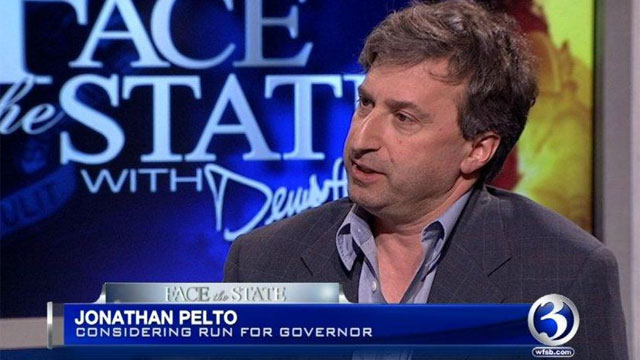
6-19-14 Wait What? - Jonathan Pelto: Gubernatorial Candidate and A Really Nice Guy

Wait What?:


Wait What? 


Malloy fails to make a real difference with home foreclosure crisis

Search the state database of the hundreds of press releases that Governor Malloy has over the past three and a half years and you’ll find numerous PR documents bragging that the Malloy administration was successfully fighting to protect Connecticut families from the predatory foreclosure practices of banks and the lawyers that are working overtime to […] The post Malloy fails to make a real differ


6-18-14 Wait What? - Jonathan Pelto: Gubernatorial Candidate and A Really Nice Guy
Wait What?: Wait What? Insurance Executives Win; Citizens and Mental Health Advocates LoseAt the end of May, Governor Dannel “Dan” Malloy stunned healthcare advocates when he vetoed an important bill that would have required insurance companies to provide data about how much substance abuse coverage and related mental health care they are actually providing Connecticut residents. The legislation w


Unidentified Bloggers Defending Themselves Anonymously |

Unidentified Bloggers Defending Themselves Anonymously |:


Unidentified Bloggers Defending Themselves Anonymously


“People should stand behind their own words…that’s doubly-true of people in public life.”
For those of you who missed it, about two weeks ago Diane Ravitch posted a piece about (and including) a set of emails exchanged between Diane, Raj Chetty, and me about Chetty et al.’s now infamous study, the study at the heart of the recent Vergara v. California win (see Diane’s post here). In the comments section of this blog post, a unidentified respondent by the name of “WT,” as in “What The…,” went after me and my review/critique of Chetty et al.’s study, also referenced in this same post. See WT’s comments, again here, about 40 comments down: “WT on June 2, 2014 at 4:00 p.m.”
Anyhow, it became clear after a few back-and-forths that “WT” was closer to this study than (s)he seemingly wanted to expose. Following these suspicions, I wrote that I was at that point “even more curious as to why the real “WT” [wasn't] standing up? Who [was] hiding behind (a perhaps fictitious) set of initials, or perhaps an acronym? Whoever “WT” [was] seem[ed] to care pretty deeply about this study, not to mention know a lot about it to cite directly from [very] small sections of the 56 pages (something I for sure would not be able to do nor, quite frankly, would I take the time to do given I’ve already conducted two reviews of this study since 2011). Might “WT” [have been] somebody a bit too close to this study, hence the knee-jerk, irrational reactions, that (still) lack[ed] precision and care? Everyone else (besides Harold [another commentator on this blog post]) ha[d] fully identified themselves in this string. So what [was to say] WT?”
Well, “WT” said nothing, besides a bunch of nothingness surrounding his anonymous withdrawal from the conversation string. Perhaps this was Chetty as “WT?” Perhaps not, but I’d bet some serious cash whoever “WT” was was pretty darn close to the Chetty et al. study and didn’t want to show it.
Sooo…now getting to the best part of all of this and how this has, in an interesting and similar turn of events, evidenced itself elsewhere. This video just came out on our local Unidentified Bloggers Defending Themselves Anonymously |:

Almost One Half of Americans Haven’t Heard of Common Core | Truth in American Education

Almost One Half of Americans Haven’t Heard of Common Core | Truth in American Education:


Almost One Half of Americans Haven’t Heard of Common Core

Filed in Common Core State Standards by  on June 19, 2014 • 0 Comments
public-polling.jpgMSNBC/Wall Street Journal released a poll that shows almost one-half of Americans have not heard of the Common Core State Standards.  The poll was conducted between June 11-15 of 1000 adults.  The margin of error is 3.1% +/-.
47% of Americans said they have not seen, read or heard news about the Common Core.  22% said they have heard about it a lot.  30% have said they have heard about this some. 1% said they were unsure.
Now keeping in mind 48% said no or that they were unsure a follow-up question was asked:
Just to make sure that everyone has the same information let me describe the Common Core standards in a bit more detail. The Common Core standards are a new set of education standards for English and math that have been set to internationally competitive levels and would be used in every state for students in grades K through 12.
Based on this information, do you support or oppose the adoption and implementation of the Common Core standards in your state?
59% responded said they supported.  31% said they opposed.  27% strongly supported it while 20% strongly opposed.  First this is a positive spin on the Common Core.  There is zero proof that these standards have been set to internationally competitive levels, but there is evidence that they haven’t been.  Secondly, when 48% of those surveyed know nothing about the Common Core it Almost One Half of Americans Haven’t Heard of Common Core | Truth in American Education:

6-19-14 LA School Report - What's Really Going on Inside LAUSD

LA School Report - What's Really Going on Inside LAUSD (Los Angeles Unified School District):


Vergara aside, CA lawmakers considering bill to expand tenure
Lorena Gonzalez, San Diego Democrat While much of the state waits out the appeal process in Vergara v. California, one member of the California assembly is moving forward with an effort to expand tenure to teachers in smaller school districts who have no tenure at all. The state law that grants tenure after two years was one of the five laws struck down in Vergara. A bill sponsored by Lorena Gonza


Analysis: CA’s season of change (maybe) for public education
Here’s one vision of the future for California public schools: Every teacher is effective. Schools are free of child molesters. Schools provide quality instruction time to every kid in every classroom. These are all possibilities, judging from this season of potential change for the state’s public schools. In recent weeks, a trio of separate but related actions has taken aim at the state in effort


Will water and school bonds contend on November ballot?
Via KQED News | By John Meyers The safe money, so to speak, in California politics for years has been that voters are usually happy to approve long-term government borrowing. In some ways, it has seemed like free money. But in the post-recession era, where debt has become a political hot potato and the incumbent governor has made debt reduction his mantra, a statewide bond measure is a bit more of


Morning Read: Immigrant education key to economy health
Report: Economic prosperity relies on boosting immigrant education Home to one-quarter of the nation’s immigrants and a top-destination for incoming refugees, California must significantly improve educational outcomes for immigrant youth if the state – and the nation – are to stay economically competitive, according to a new report. EdSource Appeals tie up teacher misconduct cases Two years after


6-18-14 LA School Report - What's Really Going on Inside LAUSD
LA School Report - What's Really Going on Inside LAUSD (Los Angeles Unified School District): Morning Read: Legislature votes on school bond bill todayState school bond faces critical vote today With a key committee vote set for today on legislation that would place a $9 billion, statewide school facilities bond on the November ballot, one group backing the proposal is already nearly a third of th


Violent and Legal: The Shocking Ways School Kids are Being Pinned Down, Isolated Against Their Will - ProPublica

Violent and Legal: The Shocking Ways School Kids are Being Pinned Down, Isolated Against Their Will - ProPublica:


Violent and Legal: The Shocking Ways School Kids are Being Pinned Down, Isolated Against Their Will

Carson Luke, a young boy with autism, shattered bones in his hand and foot after educators grabbed him and tried to shut him into a “scream room.” Kids across the country risked similar harm at least 267,000 times in just one school year.
Carson Luke, who is autistic, was 10 years old when public school staff members crushed his hand in a door while trying to close him in a seclusion room at the Southeastern Cooperative Education Program’s Deep Creek facility in Chesapeake, Va., three years ago. (Photos courtesy of the Luke Family)
This story was co-published with NPR.
The room where they locked up Heather Luke's 10-year-old son had cinder block walls, a dim light and a fan in the ceiling that rattled so insistently her son would beg them to silence it.
Sometimes, Carson later told his mother, workers would run the fan to make him stop yelling. A thick metal door with locks—which they threw, clank-clank-clank—separated the autistic boy from the rest of the decrepit building in Chesapeake, Virginia, just south of Norfolk.
The room that officials benignly called the "quiet area" so agitated the tall and lanky blond boy that one day in March 2011, his mother said, Carson flew into a panic at the mere suggestion of being confined there after an outburst. He had lashed out, hitting, scratching and hurling his shoes. Staff members held him down, then muscled him through the hallway and attempted to lock him in, yet again.
But this time, the effort went awry. Staffers crushed Carson's hand while trying to slam the door. A surgeon later needed to operate to close the bleeding half-moon a bolt had punched into his left palm. The wound was so deep it exposed bone.
Carson's ordeal didn't take place in a psychiatric facility or juvenile jail. It happened at a public school.
For more than a decade, mental-health facilities and other institutions have worked to curtail the practice of physically restraining children or isolating them in rooms against their will. Indeed, federal rules restrict those practices in nearly all institutions that receive money from Washington to help the young—including hospitals, nursing homes and psychiatric centers.
But such limits don't apply to public schools.
Restraining and secluding students for any reason remains perfectly legal under federal law. And despite a near-consensus that the tactics should be used rarely, new data suggests some schools still routinely rely on them to control children.

6-19-14 Schools Matter #StopJebNow

Schools Matter:


A Brief Video Tutorial on Why "Poverty [or Zip Code] Is Not Destiny" Remains a Lie

Updating: Downtown School for Seattle
Well, this is interesting.  News from the Puget Sound Business Journal.As you may remember, the former Federal Reserve building - a federal building - was closed years ago.  Under federal law, entities and groups may apply to use the building for public purposes.  The Downtown Association was very interested in the district applying so that downtown would have an elementary school.  It's a good lo


Louisiana Withdraws from PARCC and Jindal Moves to Block Pearson Test Purchase

In the latest bad news for the Oligarchs' Common Core enterprise, Bobby Jindal has moved to sever the head from the Common Core monster in Louisiana.  He knows that without the Pearson tests that PARCC is force-feeding the states without the benefit of a bidding process, the Core will disappear within a couple of years.  Jindal's office has notified the State Department of Education that purchasin


6-18-14 Schools Matter All Week #StopJebNow
Schools Matter: #StopJebNowA clip from the Wall Street Journal:Education policy was Jeb Bush’s political salvation. After his first bid for Florida governor in 1994 ended in defeat, he threw himself into founding the state’s first charter school in a blighted Miami neighborhood. He went on to serve two terms as the state’s “education governor” and become a national policy expert.Twenty years later


“This is a B- student’s opinion”: Why the education reformers’ latest victory is built on sand - Salon.com

“This is a B- student’s opinion”: Why the education reformers’ latest victory is built on sand - Salon.com:


“This is a B- student’s opinion”: Why the education reformers’ latest victory is built on sand

Michelle Rhee may love the recent anti-union ruling from California, but an expert tells Salon it's seriously weak


 Just a little more than a week ago, Los Angeles County Superior Court Judge Rolf M. Treudelivered his ruling on Vergara v. California, a potentially landmark case about tenure and seniority rules for California’s public school teachers. Perhaps ironically, the judge, who was first appointed by Pete Wilson —the state’s former Republican governor, who is now largely remembered for pushing an anti-immigrant measure that many believe turned a generation of California Latinos irrevocably against the GOP — found that tenure rules made it far too difficult for administrators to fire underperforming teachers, harming poor (largely non-white) children in the process.

Unsurprisingly, some of the biggest names in the so-called education reform movement were overjoyed. The case, which was brought forward by Silicon Valley-backed nonprofit Students Matter, resulted in a ruling that was, according to Michelle Rhee, “a clear win for all children in California public schools” as well as “a huge win for California educators and the teaching profession as a whole.” Rhee also praised Treu’s decision to frame the ruling around racial equality, writing that, in her mind, the case “has always been about civil rights.” Treu’s ruling, Rhee announced, was an affirmation of “the simple and undeniable premise that every child deserves equal access to a quality education — regardless of his or her race, ZIP code or family circumstances.”
Tabling the question of whether Vergara is good policy (the Atlantic says probably not; National Review says absolutely yes), Salon wanted to explore whether the ruling is good law. To that end, we called up UCLA School of Law professor Jonathan Zasloff to talk about the constitutional theory undergirding Treu’s decision as well as the quality of the judge’s reasoning. Our conversation is below and has been edited for clarity and length.


For those who don’t know about the ruling, do you mind just giving a quick recap of what was at stake, and what the judge decided?
What was at stake was that there were several plaintiffs that were suing and that were saying the particular provisions in the California education code, certain provisions concerning teacher tenure and layoffs, were unconstitutional in that they represented a violation of the state’s equal protection clause. It’s not particularly clear, but there are aspects of the fact that California, like many states, has a constitutional right to education, and that the provisions that made the time [to reach] tenure extremely quick (usually about 18 months), the difficulty of dismissing a grossly incompetent teacher and the provisions of layoffs (which is essentially last in, first out, as “This is a B- student’s opinion”: Why the education reformers’ latest victory is built on sand - Salon.com:

Shanker Blog » Contrarians At The Gates

Shanker Blog » Contrarians At The Gates:


Contrarians At The Gates

Posted by  on June 19, 2014


Unlike many of my colleagues, I don’t have a negative view of the Gates Foundation’s education programs. Although I will admit that part of me is uneasy with the sheer amount of resources (and influence) they wield, and there are a few areas where I don’t see eye-to-eye with their ideas (or grantees), I agree with them on a great many things, and I think that some of their efforts, such as the Measuring Effective Teachers project, are important and beneficial (even if I found their packaging of the MET results a bit overblown).
But I feel obliged to say that I am particularly impressed with their recent announcement of support for a two-year delay on attaching stakes to the results of new assessments aligned with the Common Core. Granted, much of this is due to the fact that I think this is the correct policy decision (see my opinion piece with Morgan Polikoff). Independent of that, however, I think it took intellectual and political courage for them to take this stance, given their efforts toward new teacher evaluations that include test-based productivity measures.
The announcement was guaranteed to please almost nobody.
Opponents of the Foundation immediately pounced to point out its seemingly contradictory actions – spending so much time and effort promoting test-based teacher evaluation, and then saying it should be delayed (a charge that, while understandable on the surface, isn’t quite fair).
On the other “side,” those who have traditionally supported the Foundation were also predictably upset at this announcement, as they believe it represents an unnecessary delay in many places, and that it may threaten the entire enterprise by enabling those who wish to roll back teacher accountability (though evidence that the transition is “going well” in some places is extremely tentative and mostly anecdotal, and the fear of roll back is more of a political than policy consideration).
There is certainly room for reasonable people to disagree about whether there should be a delay on attaching stakes to the new tests. Regardless of one’s opinion, however, I think there is also room to acknowledge that the Gates Foundation deserves credit for taking this stance. There is a lot of talk in education these days about “bold leadership,” sometimes referring to actions that fall a bit short. In this case, the description seems warranted.
- Matt Di Carlo