Academia's indentured servants |
Outspoken academics are rare: most tenured faculty have stayed silent about the adjunct crisis, notes Kendzior.Last Modified: 11 Apr 2013 11:19 |
     |
 "To work outside of academia, even temporarily, signals you are not "serious" or "dedicated" to scholarship," writes author [AP] |
| On April 8, 2013, the New York Times reported that 76 percent of American university faculty are adjunct professors - an all-time high. Unlike tenured faculty, whose annual salaries can top $160,000, adjunct professors make an average of $2,700 per course and receive no health care or other benefits. Most adjuncts teach at multiple universities while still not making enough to stay above the poverty line. Some are on welfare or homeless. Others depend on charity drives held by their peers. Adjuncts are generally not allowed to have offices or participate in faculty meetings. When they ask for a living wage or benefits, they can be fired. Their contingent status allows them no recourse. No one forces a scholar to work as an adjunct. So why do some of America's brightest PhDs - many of whom are authors of books and articles on labour, power, or injustice - accept such terrible conditions? "Path dependence and sunk costs must be powerful forces," speculates political scientist Steve Saidemen in a post titled "The Adjunct Mystery". In other words, job candidates have invested so much time and money |

Monday, January 20, 2014
Academia's indentured servants - Opinion - Al Jazeera English
Academia's indentured servants - Opinion - Al Jazeera English:


Alternatives to Teach for America | NGS Movement
Alternatives to Teach for America | NGS Movement:
Alternatives to Teach for America
Teach For America has an average acceptance rate of less than 15%, the majority of the applicants from Ivy league schools…tough odds for the majority of young people. The good news is there are plenty of other ways to work to address the education disparity in this country and even in other parts of the world. Some of these programs are service years, other are designed for people who want to become teachers for a longer period of time. If you would like help exploring these opportunities or completing the applications, sign up for an NGS mentor here.
City Year (nationwide)
“City Year’s mission is to build democracy through citizen service, civic leadership and social entrepreneurship. It is through service that we can demonstrate the power and idealism of young people, engage citizens to benefit the common good, and develop young leaders of the next generation.
City Year is wholly focused on fighting the national dropout crisis. We have committed to leverage the talent, energy and idealism of corps members to serve as tutors, mentors and role models in schools to help students stay on track – and get back on track – to graduate. “
World Teach (worldwide)
As a WorldTeach volunteer, you will witness firsthand the challenges and rewards of education in a developing country. You will share the skills and knowledge gained through your education and life experience with your students, and you will make a lasting difference in their lives, opening their eyes to a world beyond their classrooms.
You will gain cultural understanding and the ability to work independently in a new and often challenging environment.
You will develop key skills– including teaching, language, cross-cultural communication, and leadership– that will be useful in any career path.
Americorps Builds Lives Through Education (Buffalo, NY)
“AmeriCorps Builds Lives through Education (ABLE) members serve K-12 students in the city of Buffalo, NY by tutoring and providing academic assistance. ABLE members commit to one year of full-time service as AmeriCorps members at a partner site. Many ABLE members come to the program as certified teachers, but it is not a requirement for service. In addition to serving at a host site, ABLE members participate in continuous professional development including monthly trainings, site visits with ABLE staff, reading & discussion series, and other opportunities provided through ABLE. “
Citizen School (nationwide)
The AmeriCorps Teaching Fellowship at Citizen Schools gives leaders real teaching and non-profit experience, while engaging them deeply in communities and schools. Two years of service helps to
My MLK Post: An Assignment for Test-Driven Reformers | deutsch29
My MLK Post: An Assignment for Test-Driven Reformers | deutsch29:
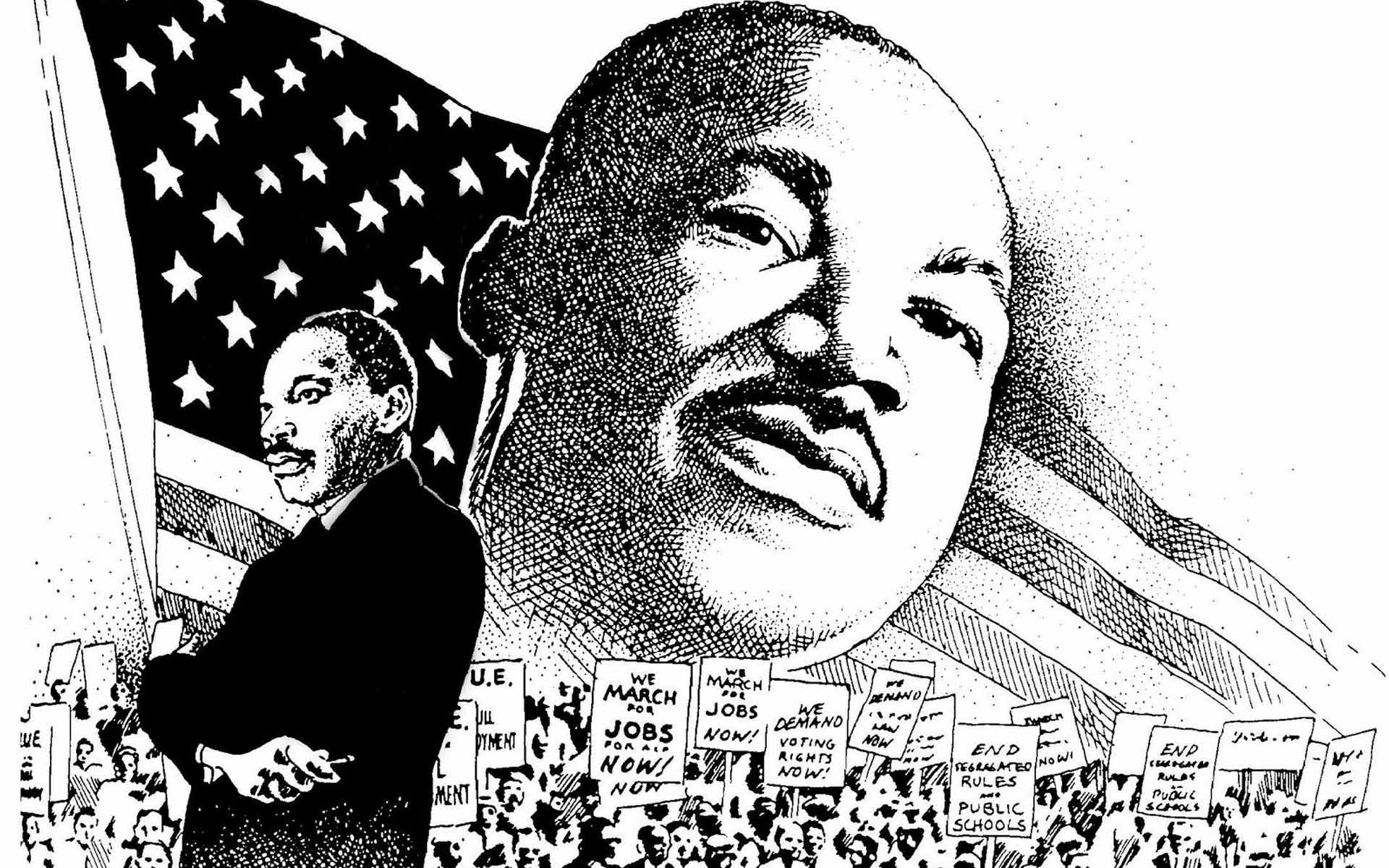
My MLK Post: An Assignment for Test-Driven Reformers
On this day dedicated to the memory of a remarkable man who gave his life (literally) for the sake of civil rights and social equity, I expect that education privatizers will use the opportunity to promote themselves as “overcoming” opposition to their self-serving, destructive policies.
Such grandiose, corporate reformer self-titling is nothing new. Beginning with former President George W. Bush in 2002, reformers have been proclaiming themselves as civil rights saviors.
Bush used the “civil rights ” term during the Martin Luther King, Jr., holiday weekend at the outset of his No Child Left Behind (NCLB) years:
WASHINGTON (CNN) – With the Martin Luther King Jr. holiday weekend under way, President Bush on Saturday called education “the great civil rights issue of our time” and took the opportunity to highlight his agenda for change.
Regarding Bush’s “agenda for change”: This current year presents a particular irony since Bush proclaimed “100% literacy” by 2014.
It’s 2014. As education historian Diane Ravitch notes in
The Shriver Report – Pushing Back Against Poverty
The Shriver Report – Pushing Back Against Poverty:
Pushing Back Against Poverty

In 2010, more than one in five U.S. children lived in poverty – substantially more than in most other wealthy countries. Poverty affects children in a variety of ways, including poor nutrition, housing, health and educational outcomes. No mother would choose poverty for her children – yet, too many cannot avoid poverty.
The youngest children are also more likely to be poor: children under three are at the highest risk of living in poverty. This reflects that young children require care, which can be very difficult to balance with employment. At the same time, low-wage jobs often do not pay enough to support a family, and even many middle-class jobs do not afford parents the opportunities to pay for high quality childcare.
My research (with collaborators Irene Boeckmann, Michelle Budig, Stephanie Moller, Eiko Strader, and Elizabeth Wemlinger) examines how industrialized democracies have worked to support and ensure opportunities for women and their children. We explore employment, wages, income, and poverty, and consider how welfare state policies can create better outcomes. This research gives us robust answers about the policies that are most important for families in the 21st century, providing a safety net that also acts as a trampoline – giving real opportunities to women and their families.
Employment protections are key, and the United States gained significant ground over the 20th century in ensuring that women have more equitable access to education and employment opportunities. Yet while we have seen a growth in educational attainment and employment, we need to consider work scheduling, leaves, and childcare as part of the package that will help women attain true success in the workplace, while supporting their families.
AN OVERWHELMING 96% OF SINGLE MOTHERS SAY PAID LEAVE IS THE WORKPLACE POLICY THAT WOULD HELP THEM MOST
A WOMAN'S NATION PUSHES BACK FROM THE BRINKMany discussions of work scheduling refer to flexibility. Yet calls for flexibility often assume that we need greater flexibility in order to work long hours, and do not recognize the ways flexibility has been used against part-time workers, whose “flexible” schedules are cost-effective for their employers, but
New Jersey Civil Rights Attorney Says School Reform Must Consider Real Issues: Segregation and Poverty | janresseger
New Jersey Civil Rights Attorney Says School Reform Must Consider Real Issues: Segregation and Poverty | janresseger:

New Jersey Civil Rights Attorney Says School Reform Must Consider Real Issues: Segregation and Poverty
On this day as we reflect upon the life and work of Rev. Dr. Martin Luther King, an article by New Jersey civil rights attorney Paul Tractenberg is a sobering reminder that in public education we have a long, long way to go. Tractenberg describes what he calls the two school systems of New Jersey:
“One, the predominantly white, well-to-do and suburban system, performs at relatively high levels, graduating and sending on to higher education most of its students. The other, the overwhelmingly black, Latino, and poor urban system, struggles to achieve basic literacy and numeracy for its students, to close pernicious achievement gaps, and to graduate a representative share of its students. These differences have been mitigated to a degree byAbbott v. Burke‘s enormous infusion of state dollars into the poor urban districts, and some poor urban districts like Union City have been able to effect dramatic improvements. But neither Abbott nor any other state action has done anything to change the underlying demographics.”
Tractenberg describes a new report he co-authored, released jointly by Rutgers University’s Institute on Education Law and Policy and the Civil Rights Project at UCLA, that focuses on apartheid schools “with 1 percent or fewer white students” and intensely segregated schools with “10 percent or fewer white students.” According to the report, “almost half of all black
Teen Birth Rates Drop, But Districts Fight Parent Dropouts - High School Notes (usnews.com)
Teen Birth Rates Drop, But Districts Fight Parent Dropouts - High School Notes (usnews.com):

Teen Birth Rates Drop, But Districts Fight Parent Dropouts
January 20, 2014 RSS Feed PrintWorking with teen parents to develop a plan and support can help districts fight dropouts.
Critics slam MTV's "16 and Pregnant" for glamorizing teen pregnancy, but a new study suggests the hit show helped lower pregnancy rates among high schoolgirls.
The report looked at birth rate, Google search and Twitter data, as well as Nielsen ratings, to determine what effect, if any, the show had on teen girls.
"Our estimates from the data suggest that when the show came on, teen birth rates as a result of this show fell by 5.7 percentage points over this 18-month period," Melissa Kearney, the report's co-author, told NPR last week. "To put that in perspective, that is a third of the overall decline in teen birth rates over that time."
Kearney, an associate professor of economics at the University of Maryland, also pointed out large spikes in Google searches for birth
Legislative Alert: HB 2133 Student Privacy Bill: Contact the House Education Committee now | Seattle Education
Legislative Alert: HB 2133 Student Privacy Bill: Contact the House Education Committee now | Seattle Education:

Legislative Alert: HB 2133 Student Privacy Bill: Contact the House Education Committee now

What is the issue with student privacy?
There are a few:
It used to be that students’ grades, disciplinary records, teachers comments and test scores on standardized tests were kept in files that could only be accessed by personnel in the school or the district. Not so anymore.
The requirements now, thanks to Race to the Top, are that school districts are to hand over more student information than most parents would feel comfortable doing… if they knew what was being collected.
For as little as $1M, our district will be required to turn over a vast amount of information. This will cost the district far more than any amount of money that is rewarded. See The Road Map Project, Race to the Top, Bill Gates and your student’s privacy for the details.
Here are a few items that are being demanded (remarks in italics are mine):
Children ready to succeed in school by kindergarten (will this require pre-K testing?)Students triggering Early Warning Indicator 1 and 2** Early warning indicators are for 6th and 9th grade students. EW1: Six or more absences and one or more course failure(s). EW2: One or more
Sunday, January 19, 2014
NYCDOEnuts Is Back And Has Something to Say! southbronxschool.com
http://www.southbronxschool.com:
 A special welcome and a special thank you for guest blogging, to one of The Crack Team's favorite bloggers, OLDNYCDOEnuts who was the originator ofNYCDOEnuts blog. Kind of like the two Darrin Stevens. With OLD NYCDoenuts as Dick York.
The Crack Team is lying around the SBSB newsroom yesterday when an email from DOEnuts come in. DOEnuts had left witness protection, has something to say and needs a platform (He has reached out to other bloggers as well).
After checking to make sure their were no vulgarities in his message, nothing that might come across as offensive, assuring that any member of a family can read this without blushing, and getting a promise from NYCDOEnuts that he will take The Crack Team out for wings and beer, we are publishing his,- can we say manifesto? welcome back letter? essay? treatise?- here tonight.
Note: Bold, italics, and spelling corrections were added by The Crack Team
A friend at a party during the Bloomberg years:
Friend: “Hey Chuck, it’s nice to meet you”
Stranger: “Thanks. Sooooooo, you’re a teacher?”
Friend: “Yeah, man. It’s a great job. ‘Been at it for ten years now. What do you do?”
Stranger: “I’m a lawyer with DOE legal. I fire teachers for a living”
Friend:“Sh** man. That’s what you do for a living? How do you like it?”
Stranger:“Bonuses are good”
Some people don’t care about these exchanges. Others will pretend to care about them only when it serves their purpose. As a teacher -one who has lived through the Bloomberg days and has been a
NYCDOEnuts Is Back And Has Something to Say!
A special welcome and a special thank you for guest blogging, to one of The Crack Team's favorite bloggers, OLDNYCDOEnuts who was the originator ofNYCDOEnuts blog. Kind of like the two Darrin Stevens. With OLD NYCDoenuts as Dick York.The Crack Team is lying around the SBSB newsroom yesterday when an email from DOEnuts come in. DOEnuts had left witness protection, has something to say and needs a platform (He has reached out to other bloggers as well).
After checking to make sure their were no vulgarities in his message, nothing that might come across as offensive, assuring that any member of a family can read this without blushing, and getting a promise from NYCDOEnuts that he will take The Crack Team out for wings and beer, we are publishing his,- can we say manifesto? welcome back letter? essay? treatise?- here tonight.
Note: Bold, italics, and spelling corrections were added by The Crack Team
A friend at a party during the Bloomberg years:
Friend: “Hey Chuck, it’s nice to meet you”
Stranger: “Thanks. Sooooooo, you’re a teacher?”
Friend: “Yeah, man. It’s a great job. ‘Been at it for ten years now. What do you do?”
Stranger: “I’m a lawyer with DOE legal. I fire teachers for a living”
Friend:
Stranger:
Some people don’t care about these exchanges. Others will pretend to care about them only when it serves their purpose. As a teacher -one who has lived through the Bloomberg days and has been a
V.A.M.: Value Added Measure: Dr. King's Dream?
V.A.M.: Value Added Measure: Dr. King's Dream?:
Some high-ranking educational deformers send their children to private schools, not subject to their mandates. They take private transportation. Let us imagine their children being chauffeured to school in cars similar to the one pictured below.

Charter-school operators claim that their students are also riding, so to speak, the public bus. Charter schools are funded by public as well as private interests. Some of the schools are very well funded. Charter-school operators may make far more money, overseeing far fewer
Dr. King's Dream?
"If you can ride at the front of the bus, but you cannot read, you are not free." (Arne Duncan)
Let's use the imagery of Arne Duncan. Let us imagine students in the United States all riding somewhere. Let us imagine that their transportation symbolizes their school. Public-school students are riding on public buses. After multiple school closures during the Bloomberg administration, many of these N.Y.C. buses are no longer servicing communities.

Some high-ranking educational deformers send their children to private schools, not subject to their mandates. They take private transportation. Let us imagine their children being chauffeured to school in cars similar to the one pictured below.
Charter-school operators claim that their students are also riding, so to speak, the public bus. Charter schools are funded by public as well as private interests. Some of the schools are very well funded. Charter-school operators may make far more money, overseeing far fewer
Size Really Does Matter!
Class size, that is. Sorry, nothing like a cheap, tawdry double entendre to lure in the readers. At the Bloomberg Institute for Advanced Learning, we simply don’t believe in limiting the number of students in a classroom, but we do encourage them to raise their hands when they have a question. We also hire only the best teachers; so a class of 134 kids is a piece of cake for our facilitators. For
1-19-14 Schools Matter
Schools Matter:

Selections from, comments on Ravitch, Everything you need to know about the common core
Selections from, comments on Ravitch, Everything you need to know about the common core
Excerpts from, and a few friendly comments on, Diane Ravitch's essay, Everything you need to know about the common core. (Comments marked with "SK"). My hope is that this very strong essay will turn the tide.http://www.washingtonpost.com/blogs/answer-sheet/wp/2014/01/18/everything-you-need-to-know-about-common-core-ravitch/1. "These two federal programs (NCLB and Race to
1-18-14 Schools Matter All Week
Schools Matter: Schools Matter All WeekA Few More Dots: Corporate School Indiana UpdateBy Doug MartinSince I’m busy preparing my book Hoosier School Heistfor the printers, I've decided to note a few things not in the book and several recent happening in the corporate school movement in the Hoosier state. 1. The Friedman Foundation, which gave out free t-shirts of Milton to anyone who left commen
United We stand; Divided We Fall: Remember the castrated dog. | Reclaim Reform
United We stand; Divided We Fall: Remember the castrated dog. | Reclaim Reform:

 Carrigan and his cohorts appear like Quinn’s lapdogs to Tribune readers. Union officials appear to be licking the same hand that “fixed” them. The gloating Tribune editorial board who approved this gross, insulting, and disgusting cartoon needs to be held accountable by all union members. Union leaders should use the cartoon often to show just what the Tribune and its gleeful corporate ownership feel about unions and union leaders. Read HERE.
United We stand; Divided We Fall: Remember the castrated dog.
“United we stand; divided we fall.”What is there to not understand?
The Chicago Tribune on 12/3/13 depicted the American Federation of State, County and Municipal Employees Union (AFSCME), a part of the AFL-CIO, as a castrated dog – a dog “fixed” by SB1 “Pension Reform” legislation. This legislation was sought by and passed by Illinois’ Democratic Gov. Pat Quinn. (SB1 is presently being brought to court for a Constitutional challenge by unions throughout Illinois.)

Now, the Illinois AFL-CIO President Michael T. Carrigan and the Executive Board endorsed the election of their castraters, including Gov. Pat Quinn.
Quinn has repeatedly and publicly declared that he was “put on God’s Earth” to cut teacher and other public employee pensions. Read HERE.
 Carrigan and his cohorts appear like Quinn’s lapdogs to Tribune readers. Union officials appear to be licking the same hand that “fixed” them. The gloating Tribune editorial board who approved this gross, insulting, and disgusting cartoon needs to be held accountable by all union members. Union leaders should use the cartoon often to show just what the Tribune and its gleeful corporate ownership feel about unions and union leaders. Read HERE.
Obviously, the building trade union members were somewhat happy with Quinn for feeding them the capital bill scraps as he destroyed the public sector unions.
Why have Carrigan and his cohorts
Why have Carrigan and his cohorts
The question no one in Georgia wants answered: How much does... | Get Schooled | www.ajc.com
The question no one in Georgia wants answered: How much does... | Get Schooled | www.ajc.com:
The question no one in Georgia wants answered: How much does it cost to educate students to excellence?
- COMMENT(3)
- 0 0 0 New


SKrashen: Selections from, comments on Ravitch, Everything you need to know about the common core
SKrashen: Selections from, comments on Ravitch, Everything you need to know about the common core:


Selections from, comments on Ravitch, Everything you need to know about the common core
Excerpts from, and a few friendly comments on, Diane Ravitch's essay, Everything you need to know about the common core. (Comments marked with "SK"). My hope is that this very strong essay will turn the tide.
http://www.washingtonpost.com/blogs/answer-sheet/wp/2014/01/18/everything-you-need-to-know-about-common-core-ravitch/
1. "These two federal programs (NCLB and Race to the Top), which both rely heavily on standardized testing, has produced a massive demoralization of educators; an unprecedented exodus of experienced educators, who were replaced in many districts by young, inexperienced, low-wage teachers; the closure of many public schools, especially in poor and minority districts; the opening of thousands of privately managed charters; an increase in low-quality for-profit charter schools and low-quality online charter schools; a widespread attack on teachers’ due process rights and collective bargaining rights; the near-collapse of public education in urban districts like Detroit and Philadelphia, as public schools are replaced by privately managed charter schools; a burgeoning educational-industrial complex of testing corporations, charter chains, and technology companies that view public education as an emerging market. Hedge funds, entrepreneurs, and real estate investment corporations invest enthusiastically in this emerging market, encouraged by federal tax credits, lavish fees, and the prospect of huge profits from taxpayer dollars. Celebrities, tennis stars, basketball stars, and football stars are opening their own name-brand schools with public dollars, even though they know nothing about education."
2."No other nation in the world has inflicted so many changes or imposed so many
Subscribe to:
Posts (Atom)