Latest News and Comment from Education

Wednesday, September 11, 2013

Gubernatorial Candidates on Education | PWC Education Reform Blog

Gubernatorial Candidates on Education | PWC Education Reform Blog:

Gubernatorial Candidates on Education


The biggest issue facing education in the United States right now is the Common Core State Standards initiative.  Public schools in participating states must agree to implement the common core standards, evaluate students with one of the two common core aligned assessments, evaluate teachers based, in part, on student performance data, and must gather and transmit numerous “data points” to the US Dept of Education and any other third parties as directed by the US Dept of Ed.
Virginia is not a full participant in the CCSS initiative, yet.  The only thing preventing us from becoming a full participant is Governor McDonnell, whose term is in its final days.
If Virginia becomes a full participant in the CCSS initiative, what our children are taught, how they’re taught it, how their achievement is evaluated, and what information about them is shared with the federal and state government and unnamed third parties, will fundamentally change.  Any promised reforms of testing or standards will be nullified as the rules and guidelines established by the CCSS initiative and the US Dept of Ed will be the rules we have to follow.
In lieu of the potential impact on public education in Virginia if Virginia were to become a full participant in the CCSS initiative, you’d think the gubernatorial candidates would have something to say about them in their campaign platforms, but they don’t

NYC Educator: First Week Is Stressful

NYC Educator: First Week Is Stressful:

First Week Is Stressful

It is for me, at least. My classroom is kind of a mysterious place for me right now. I haven't quite gotten to know all the kids' names yet, and even when I do, I don't know who they are. I'm seeing flutterings of kids opening up. I'm noticing smiles here and there, and I really like seeing that some of my students are starting to feel comfortable.

Some of them are feeling free to speak spontaneously, but they're a distinct minority. I want them all to know they are free to say what they like, to answer questions, to be right, to be wrong, to speak their minds.

One of the really good things about teaching ESL, about teaching language, is you're successful if you can get students to produce it. On the other hand, it's one of the toughest things you can do. Kids come from other countries and they're set in their ways. What's more basic than speaking your native language?

But then they see me and I tell them NO you may NOT use your native language AT ALL. Not ONE WORD.

And thus there is the girl who sits in the back of my afternoon class not uttering anything whatsoever, the girl who yesterday spoke three times in her native language. On the third time, after having warned her twice, I moved a boy who does not speak her native language between her and the girl with whom she was speaking. He was pretty happy to be sitting between two girls, but 

Van Roekel Talks Class Size, Teacher Voice, and Putting Students First | NEA Today

Van Roekel Talks Class Size, Teacher Voice, and Putting Students First | NEA Today:

Van Roekel Talks Class Size, Teacher Voice, and Putting Students First

September 11, 2013 by twalker  
Filed under Featured NewsTop Stories
EmailShare
By Cindy Long
A new school year offers the promise of a fresh start, but in Portland, Oregon — the first stop on NEA President Dennis Van Roekel’s 2013 Back to School Tour — funding cuts and ballooning class sizes threaten to cast a shadow over the state’s bright new beginning. Oregon’s class sizes are the third largest in the country, and as part of its “What’s Your Number” campaign, Oregon Education Association members wear buttons with the number of students in their classes. One high school English teacher has the number 48 on her button. Her classroom is so crowded some kids have to sit on the floor.
As our students meet the challenges of a new school year, they shouldn’t have to worry about finding a seat in their classrooms or whether there are enough resources for learning. Unfortunately, in the first days of the 2013-2014 year, schools are already underfunded after too many elected officials cashed in on our children by cutting investments in education. It’s time to put students first, and as part of the 2013 Back to School Tour, Van Roekel is taking the message of student-centered education to cities and towns around the country.
“Students are not about profits,” Van Roekel said to a crowd of community members, business leaders, parents and Oregon Education Association members at a breakfast meeting at the Portland Convention Center on September 10. “In too many of our communities, there is too little education, too little opportunity, too little equity, and too little hope. We need to turn it around, and we need to do it together.”
The start of a new year is an exciting time, and it offers a renewed chance to turn public education around. Van Roekel said this year is unique with the advent of the Common Core State Standards. The standards will provide all students, no matter where they live or what their parents earn, the same world-class 

Strong core curriculum – not test scores – top priority for parents SI&A Cabinet Report – News & Resources

SI&A Cabinet Report – News & Resources:

 Strong core curriculum – not test scores – top priority for parents


OMG Wait 'til they Read Diane's New Book!

Will 2014 Be The Year Of "Full On Revolt" Against Standardized Testing?


 Strong core curriculum – not test scores – top priority for parents
A new study on the schooling preferences of K-12 parents has concluded that many families appear far less interested in the status of test scores than the public officials overseeing the education system.
Payroll taxes slip, otherwise August revenues reasonably strong
Revenues collected during the first two months of the fiscal year fell just slightly under projections made in the 2013-14 budget as $6.9 billion was added in August.
Senate passes school testing bill despite federal objections
The California Senate on Tuesday approved a state plan to suspend most K-12 standardized testing despite a threat from U.S. Education Secretary Arne Duncan that doing so could result in sanctions, including withholding federal education funds.

10 Back-To-School Tips From State Schools Chief - Back to School - Roseville, CA Patch

10 Back-To-School Tips From State Schools Chief - Back to School - Roseville, CA Patch:

10 Back-To-School Tips From State Schools Chief

Ten timely back-to-school tips for the start of the traditional school year from State Superintendent of Public Instruction Tom Torlakson.
State Superintendent of Public Instruction Tom Torlakson. Photo courtesy CDE
—Submitted by the California Department of Education 

State Superintendent of Public Instruction Tom Torlakson officially welcomed students, teachers, school employees, and administrators back to school, and provided parents with 10 timely back-to-school tips today for the start of the traditional school year.

"Our state's future depends on our public schools," Torlakson said. "Across California, students are starting the school year with high hopes. And though teachers, school employees, and administrators are coping with enormous challenges, I know they are committed to making this year the very best for each and every student. Welcome back to school, California!"

Tom's Back-to-School Tips
  1. Get your shots. Seventh through twelve graders must get their pertussis shots, and must show proof of immunization to attend public and private schools this fall. Administrators may allow unimmunized students to remain in school for 30 days after the start of school before meeting the vaccine requirement. For more information, please visit Pertussis (Whooping Cough) Vaccine Requirement - Health Services & School Nursing.
  2. Get your sleep. Doctors recommend children in the first through fifth grades get as much as 10 to 11 hours of sleep each night. Lack of sleep can affect a child's ability to learn and may affect their immune systems.
  3. Have a healthy breakfast. Hungry children do not learn as well as well-nourished ones. If you don't have time to pack a healthy lunch, schools usually serve students well-balanced meals. Low-income children may qualify for free and reduced-price meals. Just fill out an application directly at your school.
  4. Stay active. Keep children physically active with bike rides, 


Sacramento County Budget Passes, in the Black
Savings from controlling expenditures have contributed to a surplus of $32.5 million that is available to augment critical services and pay past debt, the county reports.

EduShyster Unmasked | EduShyster

EduShyster Unmasked | EduShyster:

EduShyster Unmasked


Why I’ve decided to come clean…
Reader: I have a problem. As you may recall, I have long nursed shy hopes of attending the education reform event of the year, theEdReformies. But I’ve been vexed by a seemingly insurmountable obstacle. I can’t figure out how to purchase a ticket without using my real name. So I’ve decided to come clean. One gala ticket has just been purchased in the name of—drum roll please—Jennifer C. Berkshire. What do you mean you’ve never heard of me???
Here’s my story. I used to work part-time as a newspaper editor for the American Federation of Teachers in Massachusetts. The position gave me an opportunity most people never get: to see urban schools up close. From the very beginning, I was fascinated by the question of why some schools struggled while others were successfully reaching students despite incredibly challenging odds. I was particularly interested in turnaround stories and returned 

solidaridad: LA Schools Matter: Group to protest Deasy's corporate reform regime

solidaridad: LA Schools Matter: Group to protest Deasy's corporate reform regime:

LA Schools Matter: Group to protest Deasy's corporate reform regime

An anonymous group has announced a protest and press conference at LAUSD Headquarters on September 11, 2013. The rally is planned for Noon and the press conference is slated for 5:00 PM.
Among their list of complaints is the iPad boondoggle and the singular focus on standardized tests.
Los Angeles Unified School District
333 S. Beaudry Ave.
Los Angeles, CA 90017


SKrashen: Afterschool English: Important information lacking...
SKrashen: Afterschool English: Important information lacking...: Sent to the South China Morning Post, Sept 11, 2013 The South China Morning Post reports that "Needy children in Hong Kong benefit fr...

A Commitment to Educating the Whole Child: Inservice Roundup — Whole Child Education

A Commitment to Educating the Whole Child: Inservice Roundup — Whole Child Education:

Tina Byland

A Commitment to Educating the Whole Child: Inservice Roundup

Here at ASCD, the Whole Child Initiative drives our daily work—regardless of what our job descriptions entail. As a former teacher, I am particularly devoted to supporting the whole child and ensuring the safety and health of every student I encounter. Keeping the whole child in mind, I post content for ASCD's Inservice blog that consistently reflects our commitment to fostering a healthy, safe, engaging, supportive, and challenging environment for students.
If you aren't familiar with Inservice, it is the official blog of ASCD. Much like a school inservice meeting,Inservice stimulates conversation. Posts cover the biggest topics in education today and offer insight, information, and resources that empower educators to support the success of each learner. You will also find timely policy updates, association news, and insider details of conferences and more.
Since the school year is in full swing and your time is precious in these first few months, I've compiled a short list of some of my favorite Inservice blog posts that truly reflect an educator's commitment to the whole child:
  • Recently, ASCD CEO and Executive Director Gene R. Carter was recognized by the International Union for Health Promotion and Education's Global Scientific Committee as one of the three award winners for best health promotion practice. Read more about his remarks and his commitment to the whole child in 

NCEE » Tucker’s Lens: Education Markets Are a Myth, Not a Solution

NCEE » Tucker’s Lens: Education Markets Are a Myth, Not a Solution:

Tucker’s Lens: Education Markets Are a Myth, Not a Solution

By: Marc Tucker
TheMythofMarketsinSchoolEducationBen Jensen, education director of the Grattan Institute in Australia, recently produced the best analysis of the way markets do or don’t work to produce improvements in school performance I have yet seen.  Overcoming the methodological difficulties that have plagued such studies in the past, he makes a well-documented case not only that market strategies have failed to improve the performance of schools at the system level, but that, given the nature of this particular market, they cannot do so.  He describes why this market fails to produce the market forces that would produce incentives for schools to improve their performance and he then explains why it is so hard for democratic governments to make policies that would overcome those sources of market failure.
This is, of course, no small matter in the United States.  The expansion of the population of charter schools is right up at the top of the agendas of both the Republican and Democratic parties in this country.  While many people believe that, in a democracy, parents ought to be able to choose their child’s school irrespective of the impact of charters on student achievement, charters have most often been justified on what is taken to be the self-evident proposition that competition in the school market will produce better schools at lower cost, as competition has done in so many other markets.  But what if that is not true?  What if this particular market does not function that way?  What if there are so many sources of market failure and those sources of failure are so hard for government to fix that increasing competition among schools not only will not but cannot lead to improved school performance overall?
Jensen begins his report with a thorough review of the literature on this topic, including the studies done by American researchers.  While he notes that the effect sizes claimed by researchers on both sides of the controversy are very small, he also notes significant differences in findings, which he attributes to methodological difficulties, which he then describes in some detail.
Taken together, these methodological problems make it very difficult to determine how much competition there actually is in any given situation, much less the degree to which parents make their choices on the basis of relative school performance and even less the degree to which competition on school performance leads to a net 

Parents, teachers push for new Pa. schools funding formula | Philadelphia Public School Notebook

Parents, teachers push for new Pa. schools funding formula | Philadelphia Public School Notebook:

Parents, teachers push for new Pa. schools funding formula

by thenotebook on Sep 11 2013 Posted in Latest news
by Holly Otterbein for NewsWorks
Mark Gleason, executive director of the Philadelphia School Partnership (Courtesy of Philadelphia School Partnership)
Pennsylvania lawmakers met in Philadelphia Tuesday to talk about educating funding, just a day after the city's schools opened amid major cutbacks.
Charter school champions, parent activists, a public school student, a teacher, and other residents who testified before the House Democratic policy committee all agreed on at least one point: They want the state to come up with a more equitable way of allocating money to schools.
"We're one of three states that don't truly have a funding formula of some kind that channels money according to the students' needs and where the students are going to school," said Mark Gleason, executive director of the Philadelphia School Partnership, which contributes money to high-performing schools including charters.
Kathleen Melville, a teacher at Constitution High School, may not agree with Gleason on issues like seniority. But she concurs that the state needs a new formula to drive education spending.

Read the rest of this story at NewsWorks

UPDATE: FCMAT » Cali Education Headlines Wednesday, September 11, 2013

FCMAT » Fiscal Crisis & Management Assistance Team:

State Senate approves student testing plan over federal objections


Education Headlines

Wednesday, September 11, 2013

Boy, 8, forgotten on school bus

An 8-year-old special needs student was inadvertently left behind on a Kern County Superintendent of Schools bus for more than five hours Monday.

Lakeside school board tables bond vote

In order to have more time to explore other options for paying down its debt, the Lakeside Union School District Tuesday night tabled a vote on a controversial bond issue. The district has more than $10 million in debt coming due in June 2014 and no way to pay it.

Fillmore district fails to score a budget hit with sports donations

Contributions from athletes’ families are failing to make up a budget gap faced by the Fillmore Unified School District’s sports program, school board members were warned Tuesday.

Union: Flourishing Lodi Unified too cheap

Lodi Unified teachers are going public with demands that the district fully restore pay cuts and rescind furlough days they accepted in 2010 to help bridge multimillion-dollar budget shortfalls.

Freedburg: Arne Duncan unsuccessful in 11th-hour effort to block state legislation

Veteran education watchers in California could not recall a presidential cabinet officer ever attempting to block state legislation and certainly not in the heavy handed way U.S. Secretary of Education Arne Duncan attempted to do on Monday night.

Walters: California school test conflict heating up

A bill backed by the unions, their perpetual ally, state schools Superintendent Tom Torlakson, and Gov. Jerry Brown would suspend almost all academic testing immediately and then, the sponsors say, reinstate it in alignment with Common Core in a couple of years. Thus, were the legislation to be enacted, everything that stems from testing and that the unions dislike would also be suspended and, it’s widely believed, be quietly killed.

Jerry Brown pushes school testing delay despite federal threats

State officials are pushing forward with a plan to suspend mandatory school testing for a year despite U.S. Department of Education threats to withhold federal funds.

Moraga to pay $1.8 million to abused student

The Moraga School District has agreed to pay $1.8 million to a former student who accused a science teacher of sexually abusing her, officials said Tuesday.

District tries new program to modify behavior

A new way to modify student behavior, pioneered at Hans Christensen Middle School, is being implemented in most Menifee Union School District sites this year. The “Positive Behavior Intervention and Support” program — called PBIS — replaces the age-old rewards and punishments method with critical assessment training to help students make the right choice, regardless of consequences.

California schools could lose federal funding over STAR test suspensio

Hesitating to fully embrace a nationwide campaign to bolster schools' accountability, California has turned up its nose at federal carrots and now wants a reprieve from Uncle Sam's stick -- an entreaty that has so infuriated the Obama administration that it is threatening to withhold federal money from the state's schools.

LAUSD moves to facilitate screening for parent volunteers

Trying to encourage more parents to volunteer at local campuses, the Los Angeles Unified school board approved a plan Tuesday to make it easier to get necessary fingerprinting and tuberculosis screenings, although the South L.A. representative asked that her schools be excluded from the plan.

L.A. school board approves new parent trigger rules

Pioneering guidelines to help Los Angeles Unified school staff and parents navigate the complex and controversial process to overhaul failing schools under the state parent trigger law were approved Tuesday by the school board.

LAUSD teacher evaluation system prompts state labor board complaint

The state labor board has issued a complaint charging Los Angeles Unified with implementing a new performance evaluation system without first negotiating key provisions with its teachers union.

Fensterwald: Bill reforming process of firing teachers resurfaces with amendments

A highly contested bill that potentially would make it quicker and less costly to dismiss teachers has risen from legislative purgatory with significant changes that could lead to passage by the Legislature this week.

LA Unified's plan to implement Common Core standards put on hold

The Los Angeles Unified School District's Board of Education on Tuesday delayed approval of the district's proposed $113 million budget to implement standards for Common Core – California’s new English and math standards shared with 46 other states.

State Senate approves student testing plan over federal objections

California lawmakers pushed ahead Tuesday with a new state testing plan despite a threat by the Obama administration to withhold federal education funds unless substantial changes were made.
Tuesday, September 10, 2013

Fensterwald: Duncan threatens repercussions if California ends state tests for all students

Hours before a key vote in the Legislature, Secretary of Education Arne Duncan has warned California not to administer a partial practice or field test on the Common Core standards to some students in lieu of giving the existing tests on state standards to all students next spring – or face consequences.

Ex-San Juan administrator alleges schools chief defamed and bullied her

A former San Juan Unified administrator has become the first to file a tort claim with the school district alleging that a superintendent currently on administrative leave subjected her to harassment, bullying and emotional distress.

Now on school menu: Meatless Mondays

Cafeterias at elementary schools across the San Diego Unified district went vegetarian Monday, eliminating cheeseburgers, chicken nuggets and other popular meaty meals from their menus. They instead offered garden veggie burgers, cheese pizza, salad bars and sunflower-seed butter and jelly sandwiches.

Stockton USD toughens truancy policy

Multiagency cooperation and an influx of new cash are putting teeth into battling truancy in the Stockton Unified School District this year.

Sequester hits special education like 'a ton of bricks'

Sequester hits special education like 'a ton of bricks':

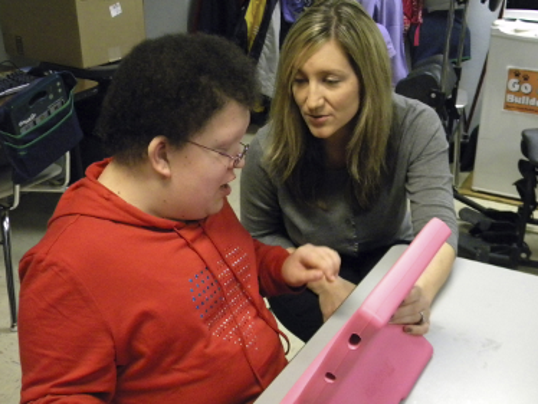
Sequester hits special education like 'a ton of bricks'


Since the first day of class for most schools in Michigan last week, Marcie Lipsitt's phone has been ringing nonstop with parents distraught about cuts to their children's special education services.
A new round of special education cuts were taking hold, prompted by a 5% reduction in federal funding of the Individuals with Disabilities Education Act (IDEA), said Lipsitt, a longtime advocate for disabled children and co-chair of the Michigan Alliance for Special Education.
Lipsitt said it means that many schools have eliminated resource rooms where children can go to get help in areas such as math, reading, writing and organizational skills. Many schools will have fewer speech, occupational or physical therapists, along with social workers and school psychologists, which means students who previously received speech therapy twice a week might only receive it once week, for example. And in some general education classrooms that had two teachers – one for the whole class and one specifically to support students with special needs – the special education teacher has been eliminated.
"For Michigan, it hit like a ton of bricks," Lipsitt said. "Conditions are eroding and children are not being allowed to become taxpayers. They're not being given access to independence, being productive, being ready for a global workforce."
Across the country, advocates for children with disabilities are grappling with the