Latest News and Comment from Education

Tuesday, July 27, 2010

2theadvocate.com | News | School Board might OK teaching creationism — Baton Rouge, LA

2theadvocate.com | News | School Board might OK teaching creationism — Baton Rouge, LA

School Board might OK teaching creationism

  • By VIC COUVILLION
  • Special to The Advocate
  • Published: Jul 24, 2010 - Page: 4B

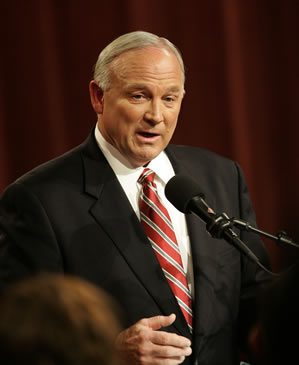
LIVINGSTON — The Livingston Parish School Board will begin exploring the possibility of incorporating the teaching of “creationism” in the public school system’s science classes.

During the board’s meeting Thursday, several board members expressed an interest in the teaching of creationism, an alternative to the study of the theory of evolution, in Livingston Parish public school classrooms.

The discussion came up during a report on the pupil progression plan for the 2010-11 school year, delivered by Jan Benton, director of curriculum.

Benton said that under provisions of the Science Education Act enacted last year by the Louisiana Legislature, schools can present what she termed “critical thinking and creationism” in science classes.

Board Member David Tate quickly responded: “We let them teach evolution to our children, but I think all of us sitting up here on this School Board believe in creationism. Why can’t we get someone with religious beliefs to teach creationism?”

Fellow board member Clint Mitchell responded, “I agree … you don’t have to be afraid to point out some of the fallacies with the theory of evolution. Teachers should have the freedom to look at creationism and find a way to get it into the classroom.”

City Schools, Services Face Cuts As City Hall Fiddles.

City Schools, Services Face Cuts As City Hall Fiddles.

City Schools, Services Face Cuts As City Hall Fiddles.

by DOUG PORTER on JULY 27, 2010
Nero-JPGThe slippery slope of San Diego politics got a little slicker this week, and when the dust settled around City Hall, both the proposed sales tax increase and the schools’ parcel tax were burning hulks, sitting on the side of the Sanders’ feel-good expressway. The battle arena over increasing revenues for local city services and/or public education has now shifted from the voters in November to the back rooms of Sacramento, where, rumor has it, a pending deal between Republican and Democratic legislators will delay upcoming corporate tax breaks granted in past years’ budget negotiations and allow the legislature to ease the budget cut backs for next year that are threatening local finances.
Jerry SandersThe key player in all the machinations over local taxation was San Diego Mayor Jerry Sanders, who shepherded a succession of meetings between various politicos seeking a path towards ballot box victories in a toxic political atmosphere emanating from Tea Party activists and a public hit hard by the recession.
It was San Diego’s Mayor that originally hosted off-the-record discussions earlier this summer incorporating both labor and business interest groups that explored support for a ½ per cent increase in the local sales tax. He publicly abandoned the effort after word of these negotiations leaked

Eduwonk � Blog Archive � M&A Plus An Edujob

Eduwonk � Blog Archive � M&A Plus An Edujob

Schools Matter: Broad Foundation Announces New CIO

Schools Matter: Broad Foundation Announces New CIO

Broad Foundation Announces New CIO

From the PR Newswire:


Marc A. Schwartz Named Chief Investment Officer of The Broad Foundations

LOS ANGELES, July 27 /PRNewswire/ -- The Broad Foundations announced today that Marc A. Schwartzhas been named chief investment officer of its $3 billion portfolio, working closely with founder Eli Broad. He will start Aug. 9.
Schwartz joins The Broad Foundations from Reservoir Capital Group, a more than $4.5 billion hybrid fund where he served for nine years as managing director, principal and vice president. Schwartz was a senior

Blog U.: What the Copyright Ruling Means - Law, Policy -- and IT? - Inside Higher Ed

Blog U.: What the Copyright Ruling Means - Law, Policy -- and IT? - Inside Higher Ed

BlogU


  • What the Copyright Ruling Means

    By Tracy Mitrano July 27, 2010 2:17 pm
    A new ruling from the United States Copyright Office that is making the rounds in higher education and blogosphere circles has a simple core meaning: fair use now applies to section 1200 of the DMCA, the anti-circumvention provision.
    As far back as Princeton's Edward Felton's challenge to content owners from the computer science and engineering perspective and Berkeley's Pamela Samuelson from the legal arena, this question has remained open. Early to identify the issue and its potential deleterious effects that this unanswered question had on innovation and science, these academic leaders were soon supported by William Fisher, John Palfrey and William McGreveran. In a white paper they and others at the Berkman Center published in 2006,The Digital Learning Challenge, they specifically spoke to the effects that the absence of a clear

Good teachers deserve good salaries - Chicago Tribune

Good teachers deserve good salaries - Chicago Tribune

Good teachers deserve good salaries

July 23, 2010
In response to your recent article, "Chicago-area Teachers Top State in Earning Six-figure Salaries," Advance Illinois was neither shocked nor outraged at the report that 4 percent of Illinois teachers are being compensated at levels comparable to other hardworking professionals. Not all teachers merit $100,000 salaries. But there are plenty who do.
At its core, education is an investment in our future. The fact that some districts are able and choose to pay some teachers at this level is far from outrageous if those teachers are making a difference at the classroom level.
In truth, given the vital relationship between a well-educated citizenry and our civic and economic well-being, we arguably cannot pay good teachers what they are worth. (One recent study shows that if U.S. schools performed as well as top-performing countries, we could add $1.3 trillion to our economy  essentially outweighing the impact of the recent recession).
Understandably, especially in today's hard times, taxpayers want to know that salaries reflect talent and impact. Given that currently most teachers are rewarded based on seniority and degrees or licenses, this will take a significant shift in practice. But we are on our way.
Recent legislation passed with the support of teachers' unions ensures new teacher evaluation systems will incorporate student growth and push principals to draw clear distinctions between top-performing teachers and those who are simply not cut out for this demanding profession.
Good teachers and principals are at the heart of good schools, and make the critical difference in how much kids learn. Let's celebrate and reward those who are successful, and in so doing inspire a new generation to do the same.
-- Robin Steans, executive director, Advance Illinois, Chicago

Education Research Report: Characteristics of the 100 Largest Public School Districts

Education Research Report: Characteristics of the 100 Largest Public School Districts

Characteristics of the 100 Largest Public School Districts

Ω

Three states -- California, Florida, and Texas -- accounted for almost half of the 100 largest public school districts, according to new report. Characteristics of the 100 Largest Public Elementary and Secondary School Districts in the United States: 2007–08 is an annual report that provides basic information from the Common Core of Data about the nation's largest public school districts in the 2007-08 school year. The data include such characteristics as the number of students and teachers, number of high school completers, the averaged freshman graduation rate, and revenues and expenditures. Other findings include:

• These 100 largest districts enrolled 22 percent of all public school students and employed 21 percent of all

Are Non-Profit CEO Salaries Too High? | The Atlantic Wire

Are Non-Profit CEO Salaries Too High? | The Atlantic Wire

Are Non-Profit CEO Salaries Too High?

In an article bound to irk both sides of the political aisle (for different reasons), Stephanie Strom at The New York Times reports that "state and federal officials are starting to take their knives to the pay of leaders of nonprofit groups" who are perceived to be earning too much off of their lucrative government contracts. In the piece Strom quotes Republican Senator Tom Coburn who stated that "A nearly $1 million salary and benefit package for a nonprofit executive is not only questionable on its face but also raises questions about how the organization manages its finances in other areas."

That sentiment didn't fly well with bloggers and pundits who ironically note that many of those who support slashing salaries for non-profit CEOs would be aghast at the notion of doing so for their private sector counterparts. (One blogger at Balloon Juice wrote, "Perhaps [non-profits] need to pay a bit more than you might expect because corporations have been...cherry-picking comparable peers"). Others weigh in:
  • This Story Conflates Two Issues counters James Joyner at Outside the Beltway. It shouldn't matter whether non-profits pay their CEOs a "princely salary", they should be judged on the basis [of] their work product." He notes: "We need to distinguish cases of fraud, of course. If a few people get together to start a 'nonprofit' whose main purpose is to funnel

Jablonski's Class Blog NEW Teacher BLOG #edu #education

Jablonski's Class Blog

Jablonski's Class Blog

Room 8 and Beyond…


The Guardian UK has the grim revelations:
A huge cache of secret US military files today provides a devastating portrait of the failing war in Afghanistan, revealing how coalition forces have killed hundreds of civilians in unreported incidents, Taliban attacks have soared and Nato commanders fear neighbouring Pakistan and Iran are fuelling the insurgency.
The disclosures come from more than 90,000 records of incidents and intelligence reports about the conflict obtained by the whistleblowers’ website Wikileaks in one of the biggest leaks in US military history. The files, which were made available to the Guardian, the New York Times

School Fees aka Book Fees � CPS Obsessed

School Fees aka Book Fees � CPS Obsessed

School Fees aka Book Fees

July 24, 2010

One new way that schools are raising a little extra money is through an annual fee. It’s called a school fee, student fee, or book fee.
Well, this seems relatively new in Chicago, but it seems to be pretty standard in the suburban world (meaning the entire country’s suburbs, not just ours.)

The concept is that the school needs to buy disposable materials every year for the students and that the families need to cover that cost.

My son’s school just sent out a matter of fact letter that the fee will be $100. Ouch! That kind of hurts coming off buying what is usually $60+ in school supplies, new backback and lunchbox, clothes. All the random toys I buy my son when we’re out shopping for the aforementioned items. (Although wait, am I the same mom who shelled out $8K per year for Montessori preschool and now I’m screaming about a $100 fee!?)

One thing that interests/amuses me about the $100 fee is that when I was on the LSC at my neighborhood school last year we decided to add a school fee to cover all the one-time-usage workbooks that must be purchased every year (btw, this is a