Latest News and Comment from Education

Thursday, July 2, 2020

A VERY BUSY DAY Larry Ferlazzo's Websites of the Day... The latest news and resources in education since 2007

Larry Ferlazzo's Websites of the Day... | The latest news and resources in education since 2007


A VERY BUSY DAY
Larry Ferlazzo's Websites of the Day...
The latest news and resources in education since 2007


Around The Web In ESL/EFL/ELL
BiljaST / Pixabay Six years ago I began this regular feature where I share a few posts and resources from around the Web related to ESL/EFL or to language in general that have caught my attention. You might also be interested in THE BEST RESOURCES, ARTICLES & BLOG POSTS FOR TEACHERS OF ELLS IN 2019 – PART ONE and THE BEST RESOURCES, ARTICLES & BLOG POSTS FOR TEACHERS OF ELLS IN 2019 – PART TWO. A
It Will Have Been 100 Years In August Since Some Women Were Granted The Right To Vote – Here Are Teaching & Learning Resources
August will mark one-hundred years since the passage of the 19th Amendment. There will be lots of new resources coming online between now and then like today’s NY Times article, My _____ Was a Suffragist. I’ll be adding many to The Best Resources For Learning About Women’s Suffrage .
Study Finds One-Third Of U.S. Fifteen Year-Olds Feel Disconnected From School – & That Was Before The Pandemic
If we high school teachers weren’t feeling bad enough thinking about what the fall might bring, a new study from UNESCO may make us all feel worse. Ed Week’s article about it, Part of Global Trend, 1 in 3 U.S. High Schoolers Felt Disconnected From School Before Pandemic , provides a good summary, and the textbox at the top of this blog highlights the “lowlight” of it. I think it’s a safe bet that
“Q&A Collections: Student Motivation & Social-Emotional Learning”
Q&A Collections: Student Motivation & Social-Emotional Learning is the headline of my latest Education Week Teacher column. All Classroom Q&A posts sharing advice on Student Motivation & Social-Emotional Learning (from the past nine years!) are described and linked to in this compilation post. Here’s an excerpt from one of them:
A Look Back: New Study Finds That Peer Assessment Works – Pretty Much Any Way You Do It
I thought that new – and veteran – readers might find it interesting if I began sharing my best posts from the first half of this year. You can see the entire collection of best posts from the past thirteen years here . The Impact of Peer Assessment on Academic Performance: A Meta-analysis of Control Group Studies is a new meta-analysis on peer assessment, and it’s not behind a paywall. I’ve shar
Would You Like To Write About Your COVID-19 Teaching Experience For Ed Week?
diapicard / Pixabay As you may know, I’ve been doing a very popular teacher advice column in Education Week for ten years. It’s set up so readers send in questions to me, and then I invite guests to contribution 300- or 400-word responses, as well as printing shorter reader comments. In addition to directly inviting scores of educators I know to respond to those questions, I always put out an ann
Just Sent-Out Free Monthly Email Newsletter
geralt / Pixabay I’ve just mailed out the July issue of my very simple free monthly email newsletter . It has over 3,000 subscribers, and you can subscribe here . Of course, you can also join the eighteen thousand others who subscribe to this blog daily. Here Are 8 Ways You Can Subscribe For Free…
June’s Most Popular Posts
As regular readers know, at the end of each week I share the five most popular posts from the previous seven days. I thought people might find it interesting to see a list of the ten most popular posts from the previous thirty days. You might also be interested in It’s The Thirteenth Anniversary Of This Blog – Here Are The Forty All-Time Most Popular Posts. Not to mention THE MOST POPULAR POSTS F
June’s “Best” Lists – There Are Now 2,180 Of Them!
Here’s my regular round-up of new “The Best…” lists I posted this month (you can see all 2,180 of them categorized here ): THE BEST FUN VIDEOS FOR ENGLISH LANGUAGE LEARNERS IN 2020 – PART ONE THE BEST ONLINE LEARNING GAMES – 2020 (PART ONE) THE BEST SCIENCE SITES OF 2020 – PART ONE VISUAL COLLECTIONS OF PROTESTS ABOUT GEORGE FLOYD, POLICE VIOLENCE & RACISM TEACHING RESOURCES ABOUT IF POLICE SHOUL
July 1st Is Canada Day – Here Are Teaching & Learning Resources
July 1st is Canada Day : On July 1, 1867, the nation was officially born when the Constitution Act joined three provinces into one country: Nova Scotia, New Brunswick, and the Canada province, which then split into Ontario and 

Wednesday, July 1, 2020

BREAKING NEWS - Julian Vasquez Heilig is one of the Three candidates named in Kentucky’s education commissioner search | Kentucky Teacher

Three candidates named in Kentucky’s education commissioner search | Kentucky Teacher

Three candidates named in Kentucky’s education commissioner search


The Kentucky Board of Education on July 1 released the names of three candidates vying to become Kentucky’s next commissioner of education.
The board will meet July 6-7 to conduct second-round interviews with the three candidates in Louisville.
The candidates include:
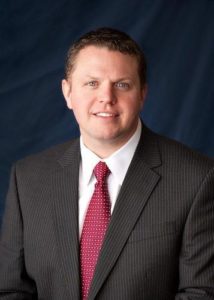
Jason GlassJason Glass
Jason Glass, Ed.D. – Glass has been serving as superintendent and chief learner for Jeffco Public Schools in the metro Denver area since 2017. Prior to that, he served as the superintendent of Eagle County Schools in Colorado and as Iowa’s Director of Education, serving as the chief state school officer from 2010-2013. Glass also was previously the senior director of human capital strategy with Battelle for Kids and has held district leadership posts in human resources and research and assessment, worked as vice president of Quality Ratings with Qualistar Early Learning, held several posts with the Colorado Department of Education; and worked as a university instructor while a graduate student at the University of Kentucky, teaching at UK and Georgetown College. He began his teaching career as a high school social studies teacher for Hazard Independent Schools. A native of Brandenburg, KY, he earned his doctorate in education leadership from Seton Hall University, a master’s in political science, a master’s in education and a bachelor’s in political science and history, all from the University of Kentucky.
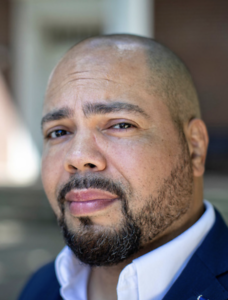
Julian Vasquez HeiligJulian Vasquez Heilig
Julian Vasquez Heilig, Ph.D. – Vasquez Heilig currently serves as the dean of the College of Education and professor of educational policy studies and evaluation at the University of Kentucky. He has served as professor of educational leadership and policy studies and director of the Doctorate in Educational Leadership at California State University. He has held numerous positions at the University of Texas, including associate professor of educational policy and planning, coordinator of the master’s program in educational policy and planning, vice-chair of the Department of Educational Administration’s Graduate Studies Committee, assistant professor of educational policy and planning, associate and assistant professor of African and African diaspora studies, faculty associate for the Center for Mexican American Studies, and faculty affiliate of the Center for African and African American Studies. Vasquez Heilig also served as associate director of research centers for the University Council for Educational Administration and was co-director of the Texas Center for Collaborative Educational Research and Policy. A native of Michigan, he earned his doctorate of educational administration and policy analysis and a master’s of sociology from Stanford University, as well as a master’s in higher education and a bachelor’s in history and psychology from the University of Michigan.
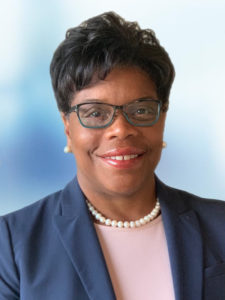
Felicia Cumings SmithFelicia Cumings Smith
Felicia Cumings Smith, Ed.D. – Smith currently serves as the assistant superintendent of teaching and learning in Jefferson County Public Schools (JCPS). She also served as senior program officer for the Bill and Melinda Gates Foundation, director of the National Center on Education and the Economy, executive director of the Collaborative Center for Literacy Development and lecturer at the University of Kentucky, was an associate commissioner and K-12 education program consultant at the Kentucky Department of Education, and began her career as an elementary and reading resource teacher in JCPS. A Kentucky native, Smith earned her Rank I in instructional leadership and school superintendent certification, as well as her doctorate in instruction and administration from the University of Kentucky. She earned her master’s and bachelor’s in elementary education from the University of Louisville.
The KBE retained Florida-based Greenwood/Asher in March to lead the search for the next CONTINUE READING: Three candidates named in Kentucky’s education commissioner search | Kentucky Teacher


Task Force on Safe Schools Address School Reform - Year 2020 (CA Dept of Education)

Task Force on Safe Schools Address School Reform - Year 2020 (CA Dept of Education)

State Superintendent Tony Thurmond and Task Force on Safe Schools Take First Steps to Address Statewide School Police Reform


SACRAMENTO—State Superintendent of Public Instruction Tony Thurmond today convened a hearing that took a comprehensive look at the role of police officers in schools and the impact that law enforcement presence has on students, learning, and campus safety. The hearing was a three-part panel discussion that examined: different models of school policing, research and data on the impact and consequences of police officers in schools, and a framework for potential policy recommendations for reimagining school safety.
An archived broadcast of today’s hearing can be found on the California Department of Education (CDE) Facebook pageExternal link opens in new window or tab..
As many school districts re-examine the role and impacts of police on their campuses, Tuesday’s Task Force on Safe Schools hearing was the first step to address these issues on a statewide level and within the context of equity and racial justice.
“These are tough conversations that we have to have,” said Thurmond. “Addressing these challenges head-on will help steer us in the right direction. In looking at these issues, we do have to acknowledge that implicit bias and racism does exist, but doing this work together and keeping our students as the most important focus, will allow us to provide solutions that will not only keep our students safe but will make our school communities stronger. We must take all steps to ensure our students are not criminalized.”
The Task Force on Safe Schools was created in response to the current social climate that is focused on racial justice and putting a spotlight on implicit bias and institutional racism.
During Tuesday’s hearing, participants heard reports from State Board of Education President Linda Darling-Hammond and researchers from WestEd and the UCLA Ralph J. Bunche Center for African American Studies. Together, they provided an in-depth overview of data that indicates schools with police are not measurably safer than those without. Additionally, the research review indicated that schools with police had a disproportionate number of students of color arrested and removed from campuses.
The meeting also included viewpoints from law enforcement organizations including the National Association of School Resource Officers, the Richmond Police Department and the San Diego Unified School District Police Department, who shared personal stories about the positive relationships school officers have cultivated with the students they serve.
Prior to the hearing the State Superintendent provided a framework for policy recommendations including: establishing immediate best practices and requirements for school police; promoting and funding alternative programs such as restorative justice and intervention programs; and creating more data collection, monitoring, and accountability.
“This framework is not one-size-fits-all,” said Thurmond. “More research needs to be done so we can be clear regarding what the best alternatives are to current school police programs. The reality is that districts may elect to keep police officers on campuses, but there needs to be better training for officers and school staff in restorative justice practices. School police officers should not be viewed as or put in the position to be the school disciplinarian.”
At the conclusion of the hearing State Superintendent Thurmond outlined next steps, including future conversations in the coming weeks with state legislators on exploring funding for resources to implement restorative justice practices and training in areas such as de-escalation techniques and crisis management. Thurmond also announced the formation of a committee comprised of task force research partners and police organizations to review data and trends.
The lawmakers who participated in the hearing were:
  • Senator Holly Mitchell (D-Los Angeles)
  • Senator Nancy Skinner (D-Berkeley)
  • Senator Scott Weiner (D-San Francisco)
  • Assemblymember Rob Bonta (D-Oakland)
  • Assemblymember Eduardo Garcia (D-Coachella)
  • Assemblymember Monique Limon (D-Santa Barbara)
  • Assemblymember Reggie Jones Sawyer (D-South Los Angeles/Huntington Park)
  • Assemblymember Kevin McCarty (D-Sacramento)
  • Assemblymember Shirley Weber (D-San Diego)
# # # #
Tony Thurmond — State Superintendent of Public Instruction
Communications Division, Room 5602, 916-319-0818, Fax 916-319-0100
Task Force on Safe Schools Address School Reform - Year 2020 (CA Dept of Education)

A Hybrid (Remote + Live Instruction) Model that Works | JD2718

A Hybrid (Remote + Live Instruction) Model that Works | JD2718

A Hybrid (Remote + Live Instruction) Model that Works


A teacher described her niece and nephew’s school. A and B weeks. (not high school). Everyone knew the schedule, followed it. Worked. Everyone wore masks. And kids had the option of staying remote, but they did not, and they will go back live in September.
BS fantasy?
No.
NYC?
No. NYC probably cannot successfully do blended learning. Oh, we are still working on it. But most schools are waiting and seeing. The only progress I’ve heard of so far involves keeping over 50% of classes fully remote, or keeping over 50% of students fully remote (and everything’s worse in high schools).  We will find something, and it will be too expensive. Or too limited. And despite demands from politicians, A/B weeks for everyone? I don’t think so.
Not NYC. Read more:
I have family in Germany. today is their last day…they feel comfortable with everything that has been put in place.. One week in building and the next virtual. No parents allowed inside. Teachers and students wear mask, they have been very good at social distancing and washing hands. There is 10 children in the room plus the CONTINUE READING: A Hybrid (Remote + Live Instruction) Model that Works | JD2718

Let's Talk About "Reopening Schools" | Eclectablog

Let's Talk About "Reopening Schools" | Eclectablog

Let’s Talk About “Reopening Schools”


Like many of us, I’ve been paying close attention to the various plans and suggestions for “reopening schools” this fall. It’s been more than a tad confusing to track the various recommendations coming from partisan legislative groups, professional associations, school district task forces, and the governor’s advisory board on reopening schools.I wish more than anything that there was more clear and decisive leadership from “the top” so that we aren’t faced with what amounts to “dueling proposals” regarding the efficacy of various virus mitigation strategies–3 feet vs. 6 feet, masks or no masks, etc.–a cacophony of confusing and contradictory recommendations that serve only to frustrate the public, and not provide any really meaningful advice to help families prepare for an uncertain future.
I’m also observing these deliberations from two distinct vantage points: as a parent of two boys–one a rising high school senior, and the other a third-year college student; and, as a college professor who was thrown into the chaos of distance learning back in March with roughly 48 hours of preparation time.
One of the things that has bothered me throughout this process is the nagging realization that the premise of this “Reopen the Schools!” narrative is the assumption that teachers–those adults that work in schools along with all of those wonderful children–are somehow…expendable.
(And since most teachers are women, this is yet another example of the toxic sexism that runs CONTINUE READING: Let's Talk About "Reopening Schools" | Eclectablog

Oakland is at the forefront of a national movement to abolish police from K-12 schools | Salon.com

Oakland is at the forefront of a national movement to abolish police from K-12 schools | Salon.com

Oakland is at the forefront of a national movement to abolish police from K-12 schools
Amid a national conversation about cops and racism, Oakland Unified abolishes their school police force


Oakland, Calif.— Last week, amid national cries for defunding and abolishing the police, the Oakland school board voted unanimously to abolish the Oakland Unified School District Police Department, a police force specific to the school district. 

The resolution, which was drafted by the Oakland community-led organization Black Organizing Project (BOP), abolishes the Oakland Unified School District's police force of 10 sworn officers and 50 unarmed campus safety officers. The resolution also calls on the superintendent to reallocate the funds — $2.5 million — used for sworn police officers to support services such as social workers, psychologists and restorative justice practitioners.
As the resolution details, throughout the 2013 and 2018 school years, Oakland Unified School District spent over $9.3 million on the Oakland Unified School District Police Department. Meanwhile, in the last three years, 33 restorative justice coordinators were laid off.
Known as the George Floyd Resolution, this action is partly a result of the protests that have erupted since Floyd was murdered in Minneapolis by a white police officer, but it also comes after nearly a decade of pressure from Oakland activists at BOP.
"While the murder of George Floyd was the catalyst for the uprisings across the country, and rightfully so, if we are being transparent, in 2011 there were very few people, individuals, and organizations who would agree with us and support us in identifying that police in schools was an issue," Ni'Keah Manning, a member of BOP and program coordinator, told Salon in an interview. "It definitely was not popular, it was seen as extremely radical." CONTINUE READING: Oakland is at the forefront of a national movement to abolish police from K-12 schools | Salon.com

Supreme Court deals a blow to the separation of church and state ROUNDUP - Vox - NEA - SCOTUSblog - Salon - ABC

Supreme Court deals a blow to the separation of church and state - Vox

The Supreme Court’s big decision on the separation of church and state, explained
Chief Justice Roberts just gave us a reminder that he’s still a conservative Republican.


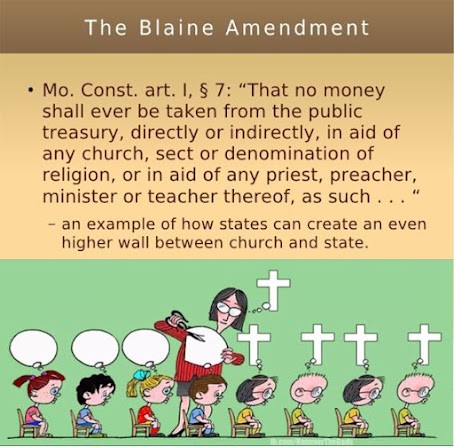
The Supreme Court’s 5-4 decision in Espinoza v. Montana Department of Revenueas Justice Sonia Sotomayor writes in dissent, “weakens this country’s longstanding commitment to a separation of church and state.” Yet Chief Justice John Roberts’ majority opinion, which held that Montana may not exclude religious institutions from a program that provides scholarships to private schools, also reads like the next incremental step in a line of cases permitting the government to fund religious education.
As Roberts argues in his opinion, the result in Espinoza flows from the Court’s previous decision in Trinity Lutheran Church v. Comer (2017), which held that the state of Missouri could not exclude religious organizations from a state program that offered “grants to help public and private schools, nonprofit daycare centers, and other nonprofit entities purchase rubber playground surfaces made from recycled tires.”
But the Montana program at the heart of Espinoza involves something far more profound and important than recycled tires: Montana’s effort to subsidize private schools. The state provides a $150 tax credit to state taxpayers who donate to a scholarship program that pays the tuition of private school students. Espinoza asks whether the state is required to include religious schools in this program.
Writing for himself and the Court’s other four Republicans, Roberts answers this question in the affirmative. “A State need not subsidize private education,” he writes. “But once a State decides to do so, it cannot disqualify some private schools solely because they are religious.”
This is a more moderate position than the Institute for Justice (IJ), a libertarian law firm that represented the plaintiffs in Espinozatook in its brief. That brief seemed to suggest that the Constitution requires states to fund private religious education as an alternative to public school. (After this piece was published, a spokesperson for the Institute for Justice objected to my characterization of their brief. You can read my full analysis of that brief and its implications for public schools here.) CONTINUE READING: Supreme Court deals a blow to the separation of church and state - Vox
Big Education Ape: CURMUDGUCATION: This Case Could Break The Wall ...
Opinion analysis: Court rules that religious schools cannot be excluded from state funding for private schools - SCOTUSblog - https://www.scotusblog.com/?p=294816 via @SCOTUSBlog

Big Education Ape: Symposium: Do Blaine amendments create a public ...
Symposium: RIP state “Blaine Amendments” - Espinoza and the “no-aid” principle - SCOTUSblog - https://www.scotusblog.com/?p=294819 via @SCOTUSBlog
Betsy DeVos cheers Supreme Court ruling that gives taxpayer money to religious schools | Salon.com - https://www.salon.com/2020/07/01/betsy-devos-cheers-supreme-court-ruling-that-gives-taxpayer-money-to-religious-schools/
Supreme Court boosts religious schools seeking public aid - ABC13 Houston - https://abc13.com/supreme-court-boosts-religious-schools-seeking-public-aid/6284979/ via @ABC13Houston
Big Education Ape: Lubienski and Malin: School Vouchers Actually ...
Supreme Court opens door to nationwide school voucher expansion - https://educationvotes.nea.org/2020/06/30/supreme-court-opens-door-to-nationwide-school-voucher-expansion/
Big Education Ape: WAPO, NPR, NEA, HUFFPOST, RAVITCH, DEVOS AND POLITICO - Supreme Court eroded the separation between church and state - http://bigeducationape.blogspot.com/2020/06/wapo-npr-nea-huffpost-ravitch-devos-and.html

Guide to California’s education budget deferrals: pros, cons and costs of delayed payments | EdSource

Guide to California’s education budget deferrals: pros, cons and costs of delayed payments | EdSource

Guide to California’s education budget deferrals: pros, cons and costs of delayed payments
Districts won't be reimbursed for $11 billion in spending until 2021-22


Prevailing in negotiations with Gov. Gavin Newsom, the Legislature passed a state budget that will let K-12 schools spend at the same level in 2020-21 as this year — avoiding the billions in cuts that Newsom had proposed.
But there’s a catch. Spending won’t equate to funding. School and community college districts will have to front $11 billion they would normally get from the state in exchange for IOUs. Districts won’t be paid back until 2021-22.
Deferrals, as the late payments are called, may sound familiar. They also were the Legislature’s go-to strategy during the Great Recession.
The Legislature and Newsom still hope they won’t be needed. Both built budgets assuming Congress would provide enough stimulus aid to fill in for declining state revenues. Newsom proposed a combination of cuts and deferrals if that didn’t happen. The Legislature countered with all deferrals. School districts, looking to an uncertain reopening of school with unpredictable expenses, preferred that option.
But with the proposed $3 trillion HEROES Act now stalled in the Senate, Congress may not come to the rescue in time. And deferrals have their own set of costs and liabilities. They’re not spread equally among school districts and in a prolonged CONTINUE READING: Guide to California’s education budget deferrals: pros, cons and costs of delayed payments | EdSource

Sacramento City Unified removing school resource officers, will use funds for alternative safety plans

Sacramento City Unified removing school resource officers, will use funds for alternative safety plans

Sacramento City Unified removing school resource officers, will use funds for alternative safety plans


SACRAMENTO, Calif. (KTXL) — The Sacramento City Unified School District is taking police officers out of its schools.
On Thursday, the Board of Education approved a budget for the upcoming school year that does not include any money for school resource officers with the Sacramento Police Department.
“There is no designation of funds for Sac PD in the budget,” school board President Jessie Ryan said.
It’s a move activists like Alma Lopez, an organizer with Brown Issues, have been calling for for years.
“School policing in our campuses is inherently part of the school to prison pipeline,” Lopez said. “So this is an action that can undo a racist policy which is policing in our schools.”
According to a report from the ACLU compiling U.S. Department of Education statistics, Black students were arrested three times as often as White students and schools with police reported 3.5 times as many arrests as schools without officers.
“It’s so important that we’re shifting our mindset about what safety looks like because what our students really need are support services and social workers,” Lopez said.
The school board has slowly been reducing the number of officers in recent years. There used to be one in every high school but this last year there were just three school resource officers and one sergeant.
“I think it’s a colossal mistake, frankly. I think it will have long-term implications,” former Sacramento County Sheriff John McGinnis said.
McGinnis used to work as a school resource officer and said he worries removing them will leave students unprotected.
“You’re talking about vulnerable, young kids who need to be able to get through that part of life protected and to have a basic fundamental safeguard of their wellbeing on campus,” he said.
The school board says the $600,000 that previously paid for the resource officers will now go toward alternative safety plans, instructing the superintendent to create a task force of community leaders, parents, staff and students to figure out how to use the money.
But Ryan said the work to fight inequities in schools is just getting started.
“Recognizing the role systemic racism plays in the classroom, on the school site and in every level of our education system,” Ryan said.
The school district declined to comment Tuesday but the police department said in a statement to FOX40, “The safety of our community, including our schools, will always be a priority.”
Sacramento City Unified removing school resource officers, will use funds for alternative safety plans