Wednesday, March 6, 2019

CURMUDGUCATION: Teacher Merit Pay Is A Bad Idea

CURMUDGUCATION: Teacher Merit Pay Is A Bad Idea

Teacher Merit Pay Is A Bad Idea

Florida's governor is planning to boost the state bonus program for teachers, even as Denver teachers walked off the job over their district's version of an incentive program. So it's worth taking a moment to step back and remember why teacher merit pay and bonus systems are just a bad idea.
First, they can't work like a private sector bonus system. In the business world, bonuses and incentives are based on a clear idea of success. Whether the definition of success at Widgetcorps this year is "We made a bunch more money" or "We increased the value of Widgetcorps stock this year" or even "We managed to strip a pile of dollars out of Widgetcorps this year," the end result is a pile of "extra" money (the end result, depending on the definition of success, may be a less healthy company, but let's set that aside for now). The bonus deal between Widgetcorps and its bonus-eligible employees is simple--if there's a pile of extra money here at the end of the year, you get to have some of it.
Public schools, on the other hand, don't make money, and school district success is hugely hard to define. More high school graduates? The football team won a championship? The school musical was really good this year? More students really got into Shakespeare? Larger number of students earned welding certification? The school's culture and atmosphere was so healthy that students really love attending? All of these might count as success, but none of them result in a school district ending the year with "extra" money to be split up for bonuses.
Instead, the pile of bonus money has to be pre-budgeted, and then teachers get to compete with each other for a share of a fixed pie. This may not establish the kind of in-house atmosphere you want for your school ("No, colleague, you may not see my materials for how I teach fractions--my CONTINUE READING: CURMUDGUCATION: Teacher Merit Pay Is A Bad Idea

Jackie Goldberg Wins School Board Election, Again ~ Will Face Runoff ~ L.A. TACO

Jackie Goldberg Wins School Board Election, Again ~ Will Face Runoff ~ L.A. TACO

JACKIE GOLDBERG WINS SCHOOL BOARD ELECTION, AGAIN ~ WILL FACE RUNOFF


With 100 percent of of precincts reporting, Jackie Goldberg was the big winner of Tuesday’s special election to represent L.A. Unified’s 5th District on the Board of Education.
With 48.26 percent of the votes, she fell less than two percent shy of the threshold to avoid a runoff in May with the second place finisher. That appears to be Graciela “Grace” Ortiz (13.3 percent) who is narrowly ahead of Heather Repenning (13.09 percent).
That election is scheduled for May 14. Goldberg’s showing in Tuesday’s elections puts her on the path for her second tenure as a member of the school board.


Goldberg is a former teacher, L.A.City Council member, and California State Representative. She was an LAUSD member and president in the 1980s, when she spearheaded district wide bilingual education initiatives. Goldberg has been a powerful force in local left and progressive politics, especially in the northeastern part of the city, where half of LAUSD’s 5th district lies.
Goldberg is a champion of afterschool programs, authoring state bonds to increase funding for public education, and striking a tone of undaunting support for public education and the UTLA teachers union. She has also signaled a flexibility to work with both local charter school administrators and LAUSD superintendent Austin Beutner.  She racked up support from State Superintendent of Public Instruction Tony Thurmond, Dolores Huerta from the United Farm Workers, the local chapter of the Democratic Socialists of America, and United Teachers Los Angeles.
“Our local charter school administrators, they do believe they are doing a good job, my problem isn’t with them.” Goldberg told L.A. Taco, “The problem is legislation in Sacramento that means that charter and public schools can’t co-exist. The system unintentionally economically undermines schools with parents who keep kids in public schools” by tying public dollars to enrollment, meaning policy at the state level takes money out of public schools when parents enroll their kids in charter schools.  
Goldberg reiterated to L.A. Taco that she didn’t want to close charters. She does want them to be more regulated by the district and the state. She also wants charter schools to submit budgets to the district, a stop to co-location of charter schools inside of LAUSD buildings, and a moratorium on the building of new charter schools until a district wide study is done to assess their impact on public education in the city. CONTINUE READING: Jackie Goldberg Wins School Board Election, Again ~ Will Face Runoff ~ L.A. TACO

Let’s Stop Ignoring the Truths of Puberty. We’re Making It Even More Awkward. - The New York Times

Let’s Stop Ignoring the Truths of Puberty. We’re Making It Even More Awkward. - The New York Times

Let’s Stop Ignoring the Truths of Puberty. We’re Making It Even More Awkward.
Sex education in U.S. schools is lacking, but new efforts to broaden its scope are bubbling up.


It’s Women’s History Month! You’re reading In Her Words, where women rule the headlines. Sign up here to get it delivered to your inbox. Let me know what you think at dearmaya@nytimes.com.

“I’d rather they just don’t teach anything if they can’t be honest.”
— Susan Lontine, a Colorado state representative who introduced a bill that would mandate teachings about safe sex, consent and sexual orientation in the state’s public schools

By the time I was 15, most of my knowledge about puberty was gleaned from one-dimensional tales on TV and in movies. I learned what it meant when a pubescent boy carried a book in front of his body (cue laugh track) and that when girls develop breasts, boys (and men) “can’t help but” ogle them. That’s about it.
In the last year or so, TV and film have made strides in representing pubescent girls as complex and awkward beings who also happen to be sex-obsessed (a trait normally reserved for adolescent boys), my colleague Amanda Hess pointed out in a recent piece about the shows “PEN15” and “Big Mouth” and the movie “Eighth Grade.”


“The lustful adolescent girl is having her moment,” wrote Hess, a Times culture critic. “It is not, to be clear, an altogether glorious time,” she said, adding that “girls’ feelings matter, too. And these girls feel so much.”
Such nuances and acknowledgments of female sexuality are largely missing from sex education in U.S. schools, where curriculum is lacking over all.
The majority of states don’t mandate sex ed at all, and just 13 require that the material be medically accurate. Abstinence education remainsa pillar of most programs. And that is saying nothing of more complex issues like consent, sexual orientation and gender identity. (In seven states, laws prohibit educators from portraying same-sex relationships positively.)
Simultaneously, the influence of pornography is growing. “Easy-to-access online porn fills the vacuum, making porn the de facto sex CONTINUE READING: Let’s Stop Ignoring the Truths of Puberty. We’re Making It Even More Awkward. - The New York Times

Stand for Children and the Democratic Party regulars. Some history. – Fred Klonsky

Stand for Children and the Democratic Party regulars. Some history. – Fred Klonsky

Stand for Children and the Democratic Party regulars. Some history.


Stand for Children would oppose a puppy if the puppy was supported by the Chicago Teachers Union.
Since Stand for Children first came to Illinois it has had a close relationship with the leaders of the Democratic Party.
A poll showing Lori Lightfoot with an overwhelming lead over Toni Preckwinkle has put Stand for Children back in the news. SFC paid for the poll.
TeamToni has trashed the poll results because of what it shows, convinced that it is irrefutable evidence that Stand for Children, a viciously anti-teachers union group, backs Lightfoot.
However, Lightfoot is running a pro-union, pro-public education, anti-charter  campaign.
There is nothing to suggest that Stand for Children has anything to do with Lightfoot’s campaign or has anything in common with Lightfoot when it comes to education policy.
There is plenty to suggest that Stand For Children is trying to stir things up because the Chicago Teachers Union decided early on to back Toni Preckwinkle, current Cook County Board President and Chair of the Cook County Democratic Party.
Stand for Children hates the Chicago Teachers Union.
SFC has had a long friendly relationship with the state and Cook County Democratic Party that Preckwinkle heads. It has thrown tons of money at key members of CONTINUE READING: Stand for Children and the Democratic Party regulars. Some history. – Fred Klonsky

Louisiana Educator: A National Study Confirms Our Worst Fears About Our School Standards and Tests

Louisiana Educator: A National Study Confirms Our Worst Fears About Our School Standards and Tests

A National Study Confirms Our Worst Fears About Our School Standards and Tests

In my opinion, the Common Core based tests such as the Louisiana LEAP tests and our high school end of course tests (EOC) are just not valid for any purpose, and I now have data to back that up. Right now the LEAP and EOC test are used for measuring the achievement levels of our students, the effectiveness of our teachers and the ratings of our schools. The evidence is building that our tests are not good for any of those purposes.

My most recent post on this blog describes how the State Department of Education has lowered the standard for passing LEAP and EOC to appallingly low levels. This was done primarily to show false progress in improving student achievement in ELA and math. My post showed that this so called progress is contradicted by the NAEP tests. But it was also done because the tests are much too difficult for our students. Now a study just released by NEPE (The National Education Policy Center) provides more than adequate cause why these tests should be trashed before they do more damage.

The NEPE study titled "A Consumer’s Guide to Testing under the Every Student Succeeds Act (ESSA): What Can the Common Core and Other ESSA Assessments Tell Us?" is a long technical report that would be extremely difficult for any lay person to comprehend. In addition, it was obviously written in such a way as to avoid offending the powers that keep our school systems chained to the Common Core standards. But buried in the report are some shocking findings, if you look hard enough to find them.

The most shocking finding of the NEPE report is not to be found in the summary of the findings even though it should have been included as one of the most significant concerns. This finding is about the validity of the PARCC tests upon which at least 90% of our Louisiana tests are based and it is just casually mentioned on page 44 of the 60 page report. It reads as follows:


2. Currently, PARCC’s Items are Prohibitively Difficult
Item analysis results from the first operational testing of PARCC  CONTINUE READING: 
Louisiana Educator: A National Study Confirms Our Worst Fears About Our School Standards and Tests

Education Research Report: Trends in Education Philanthropy

Education Research Report: Trends in Education Philanthropy

Trends in Education Philanthropy


Grantmakers for Education’s Trendsin Education Philanthropy: Benchmarking 2018-19 report offers insights on the current and evolving priorities of the education funding community. It can help funders to understand their role in supporting education innovation and identify future priorities that hold the greatest promise for benefiting America’s learners.

This latest report in Grantmakers for Education’s series of benchmarking studies identifies what’s now and what’s next for education philanthropy. Findings are drawn from the survey responses of Grantmakers for Education members and other education funders and presented in the context of the 10-year anniversary of the bench-marking report.

Big Picture: Trends in Education Philanthropy

This new benchmarking study comes at a time of seemingly rapid evolution in the priorities of education funders. Three trends stand out based on the speed with which they have come to the fore, their crosscutting focus and the scale of their current or potential impact on education philanthropy. Based on survey responses:

•Education funders have markedly increased their focus on the learning stages before and after K-12 education.While elementary and secondary education has long dominated U.S. education funding priorities and continues to do so, some of the largest gains in shares of funders and biggest anticipated increases in support reported by respondents were for early learning, postsecondary education and preparation for career and workforce. Among factors driving the growth for early learning are a growing understanding of the critical importance of preparing young learners for success prior to beginning kindergarten, as well as increased public interest and investment in early learning. For postsec- ondary education and workforce and career readiness, a central factor has been a belief in the critical importance of postsecondary education in preparing learners for a rapidly changing labor market.
•Education funders have ramped up support for strategies embracing the whole learner, while moving away from the academic areas of focus that characterized the prior decade of education reform.A growing body of research on the impact of social and emotional intelligence and family and community supports on learners’ academic and life success has fueled funder interest in advancing strategies that support learners’ holistic development. Respondents cited social and emotional learning as the factor or trend they think has the greatest potential for a positive impact on education over the next five years.
•Education funders have lost confidence in federal government leadership on and funding for education reform. Survey findings suggest that many funders have stepped away from direct engagement in the large-scale, academic-focused, national efforts to reform the education system and have migrated back to focusing on local communities. In fact, when asked to identify the factors they think will have the greatest potential negative impact on education in coming years, the single largest share of respondents cited current federal education leadership.

Education Research Report: Trends in Education Philanthropy


Ohio Charter Schools Ruin District Finances: Steal State and Local Taxes, Leave Behind Stranded Costs | janresseger

Ohio Charter Schools Ruin District Finances: Steal State and Local Taxes, Leave Behind Stranded Costs | janresseger

Ohio Charter Schools Ruin District Finances: Steal State and Local Taxes, Leave Behind Stranded Costs


When we evaluate charter schools, I wonder why we rarely consider their fiscal impact on the public schools among which they are nested? I have never heard anybody in Ohio consider the overall impact of charter school expansion on access to education for the entire population of students across a particular community or across the state. Today in Ohio, people are talking about the value of charter schools because charter operators and sponsors—claiming the schools are broke—are asking for an extra $2,000 per pupil.
Usually arguments about the quality of public investment in charters are about whether charters do a good job as measured by test scores.  Proponents of charter schools typically want the public to evaluate charter schools and traditional public schools by comparing their test scores—despite considerable research over the years demonstrating that the results are, at best, relatively comparable.  Steve Dyer uses the test score yardstick in a recent blog post: “Not only have Ohio charter schools not gotten appreciably better on the report card since… 2015, but since the 2012-2013 school year, charter schools overall have received more Fs than all other grades combined on state report cards.” Dyer doesn’t think these schools are performing well enough to deserve additional tax support.
Then there are the arguments about about whether charters mismanage the tax dollars they receive.  In a recent article about Ohio charter schools, three prominent professors of education policy and law examine self-dealing by charter management companies which lease buildings owned by the very same companies back to the Ohio charter schools they are hired to manage—at exorbitant, above-market rents.  The authors of this critique report that, “just a few weeks ago, the National Alliance for Charter Schools was back in Ohio asking the state to increase funding for charter school facilities.”
Here is an example—this time from Sunday’s Cleveland Plain Dealer—of how reporting on charter school accountability and funding often goes.   As he describes the request for more money from the legislature, reporter Patrick O’Donnell considers the academic record of Ohio  CONTINUE READING: Ohio Charter Schools Ruin District Finances: Steal State and Local Taxes, Leave Behind Stranded Costs | janresseger

Report: Most 2018 teacher protests led to big boosts in school funding — but not enough to make up for earlier cuts - The Washington Post

Report: Most 2018 teacher protests led to big boosts in school funding — but not enough to make up for earlier cuts - The Washington Post

Report: Most 2018 teacher protests led to big boosts in school funding — but not enough to make up for earlier cuts


Teacher protests in 2018 helped lead to a big boost in education funding in four states, but a new report says it wasn’t enough to make up for earlier cuts. In those states and more than dozen others, state spending on general education is still less than before the 2008 Great Recession.
And the report, issued Wednesday by the nonprofit, nonpartisan Center on Budget and Policy Priorities, says most of the places that increased general education funding did it in ways that are not sustainable.
The study found that when education spending has grown relative to pre-recession levels, that growth has come at the local level. And that’s a problem for poor districts because local funding is dependent on property taxes. Wealthier areas have more to spend, and funding from the state and the federal government can’t make up the difference between affluent and poor districts.
“These trends are very concerning for the country’s future prospects,” said Michael Leachman, senior director of state fiscal research at the center and co-author of the report with senior policy analyst Eric Figueroa.
The report focuses on general education funding over the last decade in the 12 states that made the deepest cuts during the recession: Alabama, Arizona, Idaho, Kansas, Kentucky, Michigan, Mississippi, North Carolina, Oklahoma, Texas, Utah and West Virginia.
Image result for Report: Most 2018 teacher protests led to big boosts in school funding รข€” but not enough to make up for earlier cuts
Using data from the U.S. Census Bureau and state budgets, the authors said state general education funding in those 12 states “remains well below 2008 levels.”
States distribute most of their education funding through a formula that allocates money to school districts to support general educational activities, including teacher salaries, supplies and textbooks (but usually does not include transportation or pension contributions). Each state has its own formula. Most target some extra money to poorer districts, which disproportionately educate children of color. But those districts can’t raise as much in local money as wealthier ones. CONTINUE READING: Report: Most 2018 teacher protests led to big boosts in school funding — but not enough to make up for earlier cuts - The Washington Post

Image result for Report: Most 2018 teacher protests led to big boosts in school funding รข€” but not enough to make up for earlier cuts

We need to be disruptors of institutional racism in our schools - Lily's Blackboard

We need to be disruptors of institutional racism in our schools - Lily's Blackboard

We need to be disruptors of institutional racism in our schools


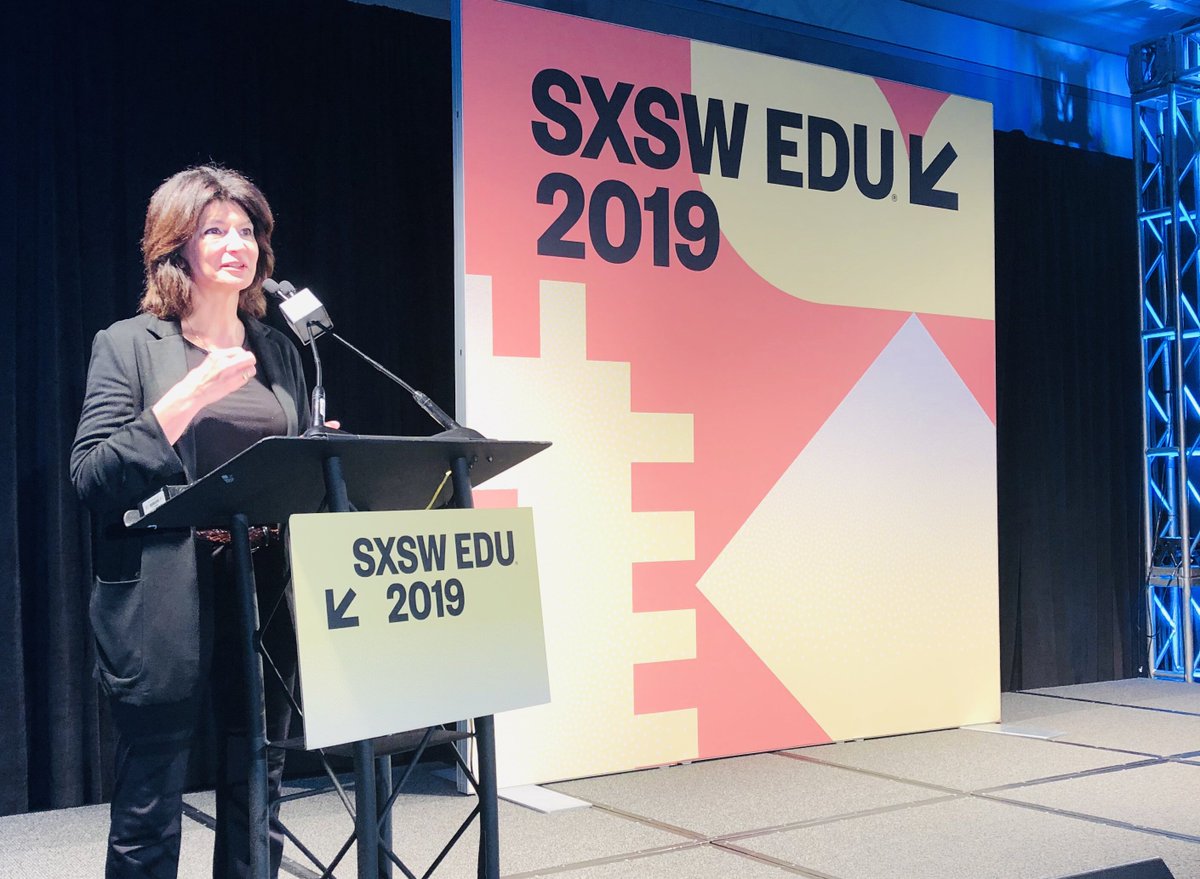
This is a long post, but we can’t talk about race in sound bytes. These are the remarks I delivered at the South by SouthWest conference in Austin, Texas. March 5th, 2019.
Gracias a todos! Gracias por venir a esta conversaciรณn acerca de la justicia.
Thanks for coming to a conversation about justice. Specifically, racial justice – because that’s always easy to talk about. And even more specific than that – racial justice in education.
I feel perfectly qualified to talk about racial justice in education because I am a 6th grade teacher from Utah (where diversity means you found a Presbyterian). Which is not true, but it’s what people think.
I’m also the president of the National Education Association, the largest union in the United States of America. We represent over 3 million teachers, support professionals like school custodians and secretaries, college professors, retired educators and student teachers.
But more than that, I think you should know that I am a fabulous teacher. You would want to be in my 6th grade. I’ve taught suburban kids who’ve never missed a meal. I’ve taught kids with disabilities. I’ve taught homeless kids and foster kids waiting for families. I’ve taught kids who don’t speak English. I’ve taught kids who are gifted and talented.
And I’ve taught more than one Gifted and Talented homeless kid with a disability who was learning English and teaching me Spanish. (Thank you, Julio)
I’ve taught white Mormon kids and black Muslim kids and brown Catholic kids and I’ve taught Sunday school at the Unitarian Church where we pray ‘To Whom it May Concern.”
I think it’s important to have a teacher like me talk to social justice Rabble Rousers like you – about Racial Justice in Education. Because you may not think racial justice and education are necessarily connected, but I want to make the case that it’s where you begin.
First, as a teacher let me say I have done my homework. Our history is clear: We have never in this country from the Mayflower to this very moment EVER achieved Racial Justice in Education. Never.
Half our Founding Fathers were slave holders in states where you could go to prison for teaching a black child how to read. Please let that sink in: Teaching a black person the ABC’s was a criminal offense.

Racial – Justice – Education… Not everyone gets that link. RACIAL – JUSTICE – EDUCATION. These concepts are interconnected. And we have to talk about them together.
That is harder than you might think. I know how hard it is to talk about Race – that our education system was designed CONTINUE READING:We need to be disruptors of institutional racism in our schools - Lily's Blackboard

'Brazen Effort to Distort the Tax Code': DeVos Won't Give Up on Vouchers

'Brazen Effort to Distort the Tax Code': DeVos Won't Give Up on Vouchers

‘Brazen Effort to Distort the Tax Code’: Betsy DeVos Not Giving Up on Vouchers


In her two years as U.S. Secretary of Education, Betsy DeVos has seized on every opportunity to undermine public education. She has called for deep cuts to federal funding, rolled back protections for our most vulnerable students and shilled for the for-profit college industry that has defrauded countless students.
DeVos has floundered, however, in advancing her pet cause: the federal expansion of school vouchers. Even with GOP majorities in the House and Senate and the strong backing of President Trump, Congress in 2017 and 2018 rejected DeVos’ efforts to create federal vouchers to attend private schools.
Despite this setback and the recent 2018 elections that sent a pro-public education majority to the House of Representatives, DeVos’ enthusiasm for school vouchers hasn’t dampened. This was evident last week with the introduction of  something called the Education Freedom Scholarships and Opportunity Act.
In a USA Today op-ed touting the proposal, DeVos, Senator Ted Cruz and Representative Bradley Byrne, the bills’ sponsors in Congress, called it “a historic investment in America’s students.”
The majority of Americans who reject vouchers know better. DeVos’ proposal, said NEA President Lily Eskelsen Garcรญa, is just the “latest attempt to push an agenda that is academically ineffective, fiscally irresponsible and that funds discrimination at the expense of student opportunity.”
The good news is that Congress – who soundly rejected a similar proposal during the 2017 tax debate – isn’t likely to give this reboot a serious look.Still, the corporate interests who have doggedly pursued school privatization for more than a decade are nothing if not persistent, which is why public education activists aren’t about to let down their guard.

What is an Education Freedom Scholarship?

Quite simply, it’s a federal school voucher.  For years now, proponents, CONTINUE READING: 'Brazen Effort to Distort the Tax Code': DeVos Won't Give Up on Vouchers


Using Critical Race Theory (CRT) to Evaluate Teach For America Recruiting | Cloaking Inequity

Using Critical Race Theory (CRT) to Evaluate Teach For America Recruiting | Cloaking Inequity

USING CRITICAL RACE THEORY (CRT) TO EVALUATE TEACH FOR AMERICA RECRUITING


A primarily White organization for decades, Teach For America has recently sought recruit people of color into their 2-year “leadership program.” Notice, I didn’t say new teacher program… see Teach For America: Now With Less Teaching. As a result, academics are starting to publish on TFA’s new recruiting approach. I am excited to announce that we have a new piece that uses Critical Race Theory (CRT) to evaluate Teach For America’s recruiting in the new book Critical Considerations of Race, Ethnicity, and Culture in Fraternity & Sorority Life.


Muรฑoz, C. Vasquez Heilig, J & Del Real, M. (2019) Property Functions of Whiteness: Counter-Narrative Analysis of Teach For America and Their Partnership With Black and Latinx Fraternities and Sororities. In K. Gillion, C. Beatty, & C. Salinas (Eds.), New Directions for Student Affairs: Critical considerations of race, ethnicity, and culture in fraternity/sorority life, (61-71) San Francisco: Jossey-Bass Publishing.
You can read the new piece here. Spring break reading?!
For all of Cloaking Inequity’s posts on Teach For America click here.
Twitter: @ProfessorJVH
Click here for Vitae.
Please Facebook Like, Tweet, etc below and/or reblog to share this discussion with others.
Using Critical Race Theory (CRT) to Evaluate Teach For America Recruiting | Cloaking Inequity


Big Education Ape: Teach For America in Charlotte: Making segregated schools work | The Charlotte Observer - http://bigeducationape.blogspot.com/2016/12/teach-for-america-in-charlotte-making.html

Results for Mar. 5 Special Election, LAUSD District 5 Likely Going to Runoff - NBC Southern California #VOTEJackieGoldberg #TEAMGoldberg

Early Results for Mar. 5 Special Election, LAUSD District 5 Likely Going to Runoff - NBC Southern California

Results for Mar. 5 Special Election, LAUSD District 5 Likely Going to Runoff


A total of 57,201 ballots were processed and counted, and 11.54 percent of eligible registered voters cast ballots in the Mar. 5 General Law and Charter City Elections, according to Dean C. Logan, the Los Angeles County Registrar-Recorder/County Clerk.
Many ballots remain outstanding and uncounted, according to the LARR/CC. The first ballot counting update is scheduled for Mar. 8, and the LARR/CC is scheduled to certify the election results on Mar. 22, with the election due to be officially concluded on Apr. 2, declared by the LA County Board of Supervisors.
For full special election results, click here.
Former school board member Jackie Goldberg led the 10-candidate field in the early returns for Tuesday's special election in the Los Angeles Unified School District's District 5, and was just short of the majority needed to avoid a runoff.
Goldberg received 46.89 percent of the vote, with 10 of 122 precincts, 8.2 percent, reporting and some vote by mail ballots counted, according to figures released by the Los Angeles County Registrar-Recorder/County Clerk.
Heather Repenning, a former teacher and aide to Mayor Eric Garcetti, was second with 13.45 percent. Huntington Park City Councilwoman Graciela "Grace" Ortiz was third at 12.47 percent, followed by educator Cynthia Gonzalez at 9.34 percent and Allison Bajracharya, a former executive of the California Charter Schools Association, at 5.74 percent.
No other candidate had more than 4 percent.
If no candidate receives a majority, a runoff between the top two vote-getters will be held May 14.
The vacancy was created last July when board member Ref Rodriguez pleaded guilty to conspiracy and other charges for laundering campaign donations from family and friends. He resigned from his board seat the same day.
District 5 seat stretches from Eagle Rock, Highland Park and to Atwater Village, Los Feliz, and Silver Lake south to Vernon, Maywood, Huntington Park, Cudahy, South Gate and Bell.
Goldberg, 74, is a former teacher, LAUSD board member, Los Angeles City Council member and Democratic state legislator. Two LAUSD board members last year unsuccessfully tried to have her appointed to the seat to serve out the balance of Rodriguez's term, which runs through next year. But the proposal was rejected in favor of calling the special election.
Goldberg is heavily backed by United Teachers Los Angeles, the union representing the district's teachers. The union has been pouring money into Goldberg's campaign, hoping to undo a board majority that generally favored expansion of charter schools in the district.
Rodriguez's departure left the board with a 3-3 split on the issue, and a Goldberg victory would swing the panel back in UTLA's favor.
"I'm running to be a strong progressive voice on the board who will put the interests of the students first, and as someone who will not have a big learning curve when elected," according to a statement on Goldberg's campaign website. "I believe my experience and passion for helping students will be a steadying force on a board that continues to face turmoil."
Bajracharya is also a former chief operations and strategy officer for Camino Nuevo Charter Academy in the MacArthur Park area.
"As a parent, former teacher and school leader, I understand the strengths and weaknesses of LAUSD from all perspectives," she told City News Service. "I believe it is essential that every child in L.A. have access to great schools that give them the opportunity to graduate and succeed. Unfortunately, that's not the case now. I am running because I believe I have the experience and credentials to turn that around."
Repenning has the backing of Garcetti and several City Council members, along with a host of labor unions.
Repenning told CNS that LAUSD schools are "not currently set up to meet the challenges facing the many students whose families are living in poverty, 80 percent of which qualify for free and reduced lunch.
"Many of our families have enrolled their kids in charter schools which are not subjected to the same level of transparency and accountability as district schools, and many union jobs have been lost in this process," Repenning said.
Ortiz is also a licensed social worker and longtime LAUSD school counselor.
"What I can promise the people who live in Board District 5 is that I will work CONTINUE READING: Early Results for Mar. 5 Special Election, LAUSD District 5 Likely Going to Runoff - NBC Southern California