Latest News and Comment from Education

Wednesday, January 2, 2019

Common Schools and the Nationalistic Aims of Public Education in the U.S. | Dissident Voice

Common Schools and the Nationalistic Aims of Public Education in the U.S. | Dissident Voice

Common Schools and the Nationalistic Aims of Public Education in the U.S.


This article is part of a project that critically analyzes the historical and present day purposes of U.S. public education. Related articles focus on the history of Secondary Education, the undemocratic nature of Local Control and the finacialization of education via Impact InvestingSocial Impact Bonds and Personalized Learning. The point of this project is to further expose the underlying social control function of U.S. public education and the interests it has consistently served over time, which cannot be extracted from the undemocratic nation-state it was designed  – and continually redesigned – to preserve. 
*****
Over the past forty-years education reform policies intended to marketize, privatize and ultimately financialize the U.S. education system have spurred significant resistance across the political spectrum. Often galvanized by claims that reform policies undermine public education as a vital institution of U.S. democracy, many progressive public education advocates call to “save our schools” and return them to their original common good design. Within this “good ole days” or “Make America Great Again” narrative, romanticized notions of the original Horace Mann Common School movement are often referenced. This storyline is premised on the belief that the current attack on public education is therefore an attack on American democracy, which presupposes that the United States was founded as a democracy and struggled to remain so thereafter. While the National Education Association and the American Federation of Teachers often reproduce this storyline as they collude with education reformers, many individuals and groups who actively oppose education reform policies also disseminate this tale.
In a 2014 interview with Bill Moyers, education historian Diane Ravitchadvanced this storyline when expressing her concerns about the future of public education by claiming, “I believe it is one of the foundation stones of our democracy: So an attack on public education is an attack on democracy.” In a 2013 blog posting, Jeff Bryant of the Education Opportunity Network claimed, “the earliest advocates for public schools – Thomas Jefferson, George Washington, Horace Mann – all agreed that democratic citizenship was a primary function of education.” In 2016 the National Education Policy CONTINUE READING:  Common Schools and the Nationalistic Aims of Public Education in the U.S. | Dissident Voice
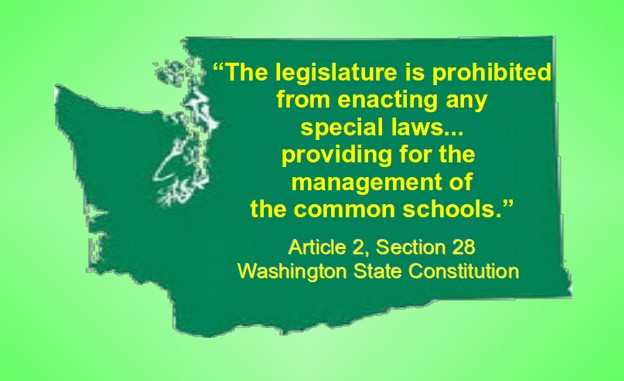
Image result for COMMON SCHOOL WASHINGTON STATE

Education Research Report

Education Research Report


Education Research Report

Math Pathways: Expanding Options for Success in College Math

Download This report, released in collaboration with the Center for the Analysis of Postsecondary Readiness, explains a new model of college math education that has come to be called math pathways. Three prominent examples of math pathways – with research evidence on their effectiveness – are included.
Transitions and Alignment From Preschool to Kindergarten

Download This special report – focused on early learning and kindergarten – examines effective transition programs and practices, and the importance of alignment across basic pedagogical components.
50-State Comparison: State Policies on School Discipline

Recent data show significant disparities in the application of suspension and expulsion based on race, gender and disability status. The emergence of these data, coupled with research showing the long-term negative impact of removing students from the learning environment, has prompted many state education leaders to re-examine their school discipline requirements. This has led to legislation aim
50-State Comparison: Teacher Leadership and Licensure Advancement

On the path to strengthen teacher pipelines, support excellent teaching and improve retention, many states have developed opportunities for teacher leadership and advancement. While most states offer advanced licenses to encourage ongoing learning and growth within the teaching profession, many are now also including supports and incentives to encourage more teachers to become leaders in their cl
50-State Comparison: Developmental Education Policies

Developmental education assessment and placement policies guide how students may demonstrate college readiness and are placed into college-level courses. States and postsecondary systems use a variety of measures to determine a student’s college readiness. Often, policies require that students submit scores from a national, standardized test. Some states and postsecondary systems allow students t
Governance in Early Childhood Education

Download This Education Trends report examines the different structures and strategies — including the creation of state offices, the consolidation of others, and collaboration and coordination across several state agencies – used in the states to govern early education. State examples and policy considerations are included to provide insight and help address the many challenges policymakers face
Too much credit given to most recent teaher for improved student learning

The federal Race to the Top competition provided significant impetus for states to adopt value-added models as a part of their teacher evaluation systems. Such models typically link students to their teachers in the spring semester when statewide tests are administered and estimate a teacher's performance based on his or her students’ learning between the test date in the previous school year and
What Constitutes Prudent Spending from Private College Endowments?

This study examines how private colleges and universities choose to spend versus reinvest resources in endowment funds that have suffered investment losses. The analysis takes advantage of a market downturn and public policy shift, which together revealed how colleges define prudent spending. Investment losses during the financial crisis of 2008 left many endowment gift funds below their original
Positive Effects of Court-Ordered Finance Reforms

This study provides new evidence about the effect of court-ordered finance reforms that took place between 1989 and 2010 on per-pupil revenues and graduation rates. Seven years after reform, the highest poverty quartile in a treated state experienced an 11.5 percent to 12.1 percent increase in per-pupil spending, and a 6.8 to 11.5 percentage point increase in graduation rates.

DEC 31 2018

Teacher Characteristics, Student Beliefs, and the Gender Gap in STEM Fields

This article uses data from the U.S. High School Longitudinal Study of 2009 to investigate the relationship between high school students’ beliefs about female abilities in math and science and their teacher gender, beliefs, and classroom behaviors. Estimates are obtained by comparing the same ninth graders between math and science classes, thus controlling for student fixed effects. Students were
College Students’ Reflections on Their High School Peer Crowds

High school peer crowds are fundamental components of adolescent development with influences on short- and long-term life trajectories. This study provides the perspectives of contemporary college students regarding their recent high school social landscapes, contributing to current research and theory on the social contexts of high school. This study also highlights the experiences of college-bo
The impact of Social Security on retirement timing: comparing covered and non-covered teachers

This study documents an important role for Social Security income in workers' retirement timing. About 40 percent of public school teachers are not covered by Social Security. This provides an opportunity to analyze the causal impact of Social Security on retirement timing by comparing covered and non-covered teachers. Using individual-level data from the American Community Survey, we find robust

DEC 27 2018

Distinguishing between students who guess and those who know

Measuring the knowledge of students in online courses poses a number of challenges. Researchers from the Higher School of Economics and the University of Leuven made improvements to the model for assessing academic achievements and published their results in the journal Heliyon . Several systemic factors make it difficult for the developers of online courses to assess students' proficiency accura
The Effect of Grade Retention on Adult Crime

This paper presents the first analysis in the literature of the effect of test-based grade retention on adult criminal convictions. The rsearchers use math and English test cutoffs for promotion to ninth grade in Louisiana using administrative data on all public K-12 students combined with administrative data on all criminal convictions in the state. They use the promotion discontinuity as an ins
Schools of choice less likely to respond to inquiries from students with low achievement

School choice may allow schools to “cream skim” students perceived as easier to educate. To test this, researchers sent emails from fictitious parents to 6,452 schools in 29 states and Washington, D.C. The fictitious parent asked whether 

The Greedy, Selfish Billionaires Who Rig Taxes in Washington State | Diane Ravitch's blog

The Greedy, Selfish Billionaires Who Rig Taxes in Washington State | Diane Ravitch's blog

The Greedy, Selfish Billionaires Who Rig Taxes in Washington State


Hanna Brooks Olsen writes here about the billionaires of Washington State and their clever strategies to stay very rich whileappearing to be philanthropists.
They give to the poor. They give toworking people. They give to the homeless.
But they make sure that Washington State has the most regressive Taxes in the nation, which protects their fortunes.

Because when billionaires do anything for anyone else, it’s cause for celebration.
We see this a lot out here in Washington state, a place that is uncommonly kind to people with ample wealth. This is not hyperbole; a report released in October found that, once again, the Evergreen State has the country’s most regressive tax structure. The richest percentile of residents — those who earn more than half a million dollars annually — pay three percent of their income in annual state and local taxes. Meanwhile, those who earn under $24,000 per year — many of whom live below the poverty line — shell out 17.8 percent.
This makes it difficult for lawmakers to tackle the big problems; for over a decade, Washington has struggled to fund basic education and provide critical mental health care to those in need. Every year, elected officials head into session wondering how they’re going to pay for new roads and transportation upgrades when property taxes are maxed out.


But this structure is not an accident. It is by design, crafted and upheld by CONTINUE READING: The Greedy, Selfish Billionaires Who Rig Taxes in Washington State | Diane Ravitch's blog


CURMUDGUCATION: How Much Money In That Edusector?!!

CURMUDGUCATION: How Much Money In That Edusector?!!

How Much Money In That Edusector?!!


When you're starting to wonder why so many people are interested in education, even though they have no training, experience, or apparent deep interest in education, it's helpful to see some numbers.

Like 2,600,000,000.

Reportsnreports is an international outfit that provides "market research reports to industries, individuals, and organizations to accelerate decision making process." They offer a library of over a half million reports with coverage of at least 30,000 niche markets. They've got reports on negative pressure wound therapy growth and the zirconium dioxide market. And they pay an average salary of $83K. So this is not some guy writing market reports in his garage.


Reportsnreports has released a report on the "Education and Learning Analytics Market." $2.6 billion is how much money they reckoned was in that sector for 2018. And that's peanuts compared to their projection for 2023, when they figure the sector will involved $7.1 billion.

That's $7,100,000,000.

Analytics are expected to grow in connection with the growth of computer-driven personalized [sic] 
CURMUDGUCATION: How Much Money In That Edusector?!!