Latest News and Comment from Education

Tuesday, November 13, 2018

More on the Public Purpose of Our Public Schools and the Role of Public Governance | janresseger

More on the Public Purpose of Our Public Schools and the Role of Public Governance | janresseger

More on the Public Purpose of Our Public Schools and the Role of Public Governance


There has recently been a debate among guest writers in Valerie Strauss’s “Answer Sheet” column in the Washington Post. The Network for Public Education’s  Carol Burris and Diane Ravitch published a defense of public governance of public schools, a column which critiqued a new report from the Learning Policy Institute.  The Learning Policy Institute’s Linda Darling-Hammond responded with a defense of the Learning Policy Institute’s report, which defends school choice including privately governed and operated charter schools. Finally Diane Ravitch and Carol Burris responded to Darling-Hammond’s response. This blog weighed in here last week.
As it happens, Stanford University emeritus professor of education, David Labaree enhances this conversation with a new column on the public purpose of public education at Phi Delta Kappan: “We Americans tend to talk about public schooling as though we know what that term means.  But in the complex educational landscape of the 21st century… it’s becoming less and less obvious….”
A spoiler: There is no equivocation in Labaree’s analysis.  He is a strong supporter of public education, and he worries that by prizing the personal and individualistic benefit of education, our society may have lost sight of our schools’ public purpose: “A public good is one that benefits all members of the community, whether or not they contribute to its upkeep or make use of it personally.  In contrast, private goods benefit individuals, serving only those people who take advantage of them. Thus, schooling is a public good to the extent that it helps everyone (including people who don’t have children in school). And schooling is a private good to the extent that it provides individuals with knowledge, skills, and credentials they can use to distinguish themselves from other people and get ahead in life.”
Labaree traces the history of public education through the 19th and early 20th centuries, but More on the Public Purpose of Our Public Schools and the Role of Public Governance | janresseger
Screen Shot 2018-11-12 at 7.31.40 AM

Big Education Ape: Linda Darling-Hammond vs. Linda-Darling Hammond – How a Once Great Educator Got Lost Among the Corporate Stooges | gadflyonthewallblog - http://bigeducationape.blogspot.com/2018/11/linda-darling-hammond-vs-linda-darling.html

janresseger  - https://wp.me/3JgEc


Monday, November 12, 2018

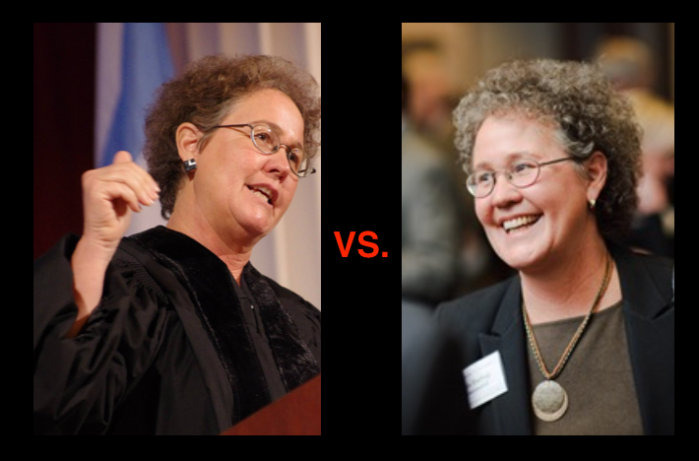
Linda Darling-Hammond vs. Linda-Darling Hammond – How a Once Great Educator Got Lost Among the Corporate Stooges | gadflyonthewallblog

Linda Darling-Hammond vs. Linda-Darling Hammond – How a Once Great Educator Got Lost Among the Corporate Stooges | gadflyonthewallblog

Linda Darling-Hammond vs. Linda-Darling Hammond – How a Once Great Educator Got Lost Among the Corporate Stooges

Linda Darling-Hammond is one of my education heroes.
Perhaps that’s why her recent article in the Washington Post hurts so much.
In it, she and her think tank buddies slam education advocates Diane Ravitch and Carrol Burris for worrying about who governs schools – as if governance had nothing to do with quality education for children.
I’d expect something like that from Bill Gates.
But not Hammond!

Screen Shot 2018-11-12 at 7.31.40 AM
She’s not a know-nothing privatization flunky. She’s not a billionaire who thinks hording a bunch of money makes him an authority on every kind of human endeavor.
She’s a bona fide expert on teacher preparation and equity.
She founded the Center for Opportunity Policy in Education at Stanford University, where she is professor emeritus.
And she was the head of Barrack Obama’s education policy working group in 2008 when he was running for President.
In fact, she was the reasons many educators thought Obama was going to be a breath of fresh air for our schools and students. Everyone thought she was a lock for Education Secretary should Hope and Change win the day. But when he won, he Continue reading: Linda Darling-Hammond vs. Linda-Darling Hammond – How a Once Great Educator Got Lost Among the Corporate Stooges | gadflyonthewallblog


Billionaires, Not Voters, Are Deciding Elections | PopularResistance.Org

Billionaires, Not Voters, Are Deciding Elections | PopularResistance.Org

BILLIONAIRES, NOT VOTERS, ARE DECIDING ELECTIONS


The recent midterm elections offered an opportunity for America’s moneyed elites to spend their ridiculous wealth on a catalog of their favorite causes and candidates. We are locked in a vicious cycle, where billionaires continue to amass wealth due to policies their influence has bought, which in turn enrich them with even more resources with which to shift the American polity in their favor.
Part of the problem is that billionaires’ control over our democracy is largely invisible. As a recent study by The Guardian showed, high-profile wealthy elites like Warren Buffett or Bill Gates are anomalies. To that point, “[M]ost of the wealthiest US billionaires have made substantial financial contributions—amounting to hundreds of thousands of reported dollars annually, in addition to any undisclosed ‘dark money’ contributions—to conservative Republican candidates and officials who favor the very unpopular step of cutting rather than expanding social security benefits,” write the report’s authors. “Yet, over the 10-year period we have studied, 97% of the wealthiest billionaires have said nothing at all about social security policy.”

The midterm races in California saw several examples of the insidious ways in which the billionaire class made its mark on democracy, most notably in the defeat of Proposition 10, the state ordinance that would have expanded local governments’ jurisdiction over rent control. Several years ago, Wall Street hedge fund managers began scooping up rental properties and foreclosed homes in Los Angeles. According to journalist David Dayen, “Hedge funds, private equity firms and the biggest banks have raised massive amounts of capital to buy distressed or foreclosed single-family homes, often in bulk, at bargain prices.” He added, “It’s the next Wall Street gold rush, with all the warning signs of a renewed speculative bubble.”
So it should have come as no surprise that those same firms spent millions to protect their investments from returning lower profits in their fight against Prop 10. Sadly, Californians bought the corporate propaganda hook, line and sinker, and voted it down by a whopping 61.7 percent, saying “no” to rent control. (Incidentally, the opposition to rent control was also bizarrely funded in part by the Pharmaceutical Research and Manufacturers Association.)
Also in California, billionaires bankrolled the campaign of Marshall Tuck, a corporate candidate for school superintendent who strongly supports the privatization of schools. The race between Tuck and his union-backed rival, Tony Thurmond, broke records for the millions of dollars that the candidates raised and the tens of millions that flowed in from outside groups—a shocking Continue reading: Billionaires, Not Voters, Are Deciding Elections | PopularResistance.Org


New Governors Pritzker and Newsom Set Up For Their ReadyNation Gold Rush – Wrench in the Gears

New Governors Pritzker and Newsom Set Up For Their ReadyNation Gold Rush – Wrench in the Gears
New Governors Pritzker and Newsom Set Up For Their ReadyNation Gold Rush


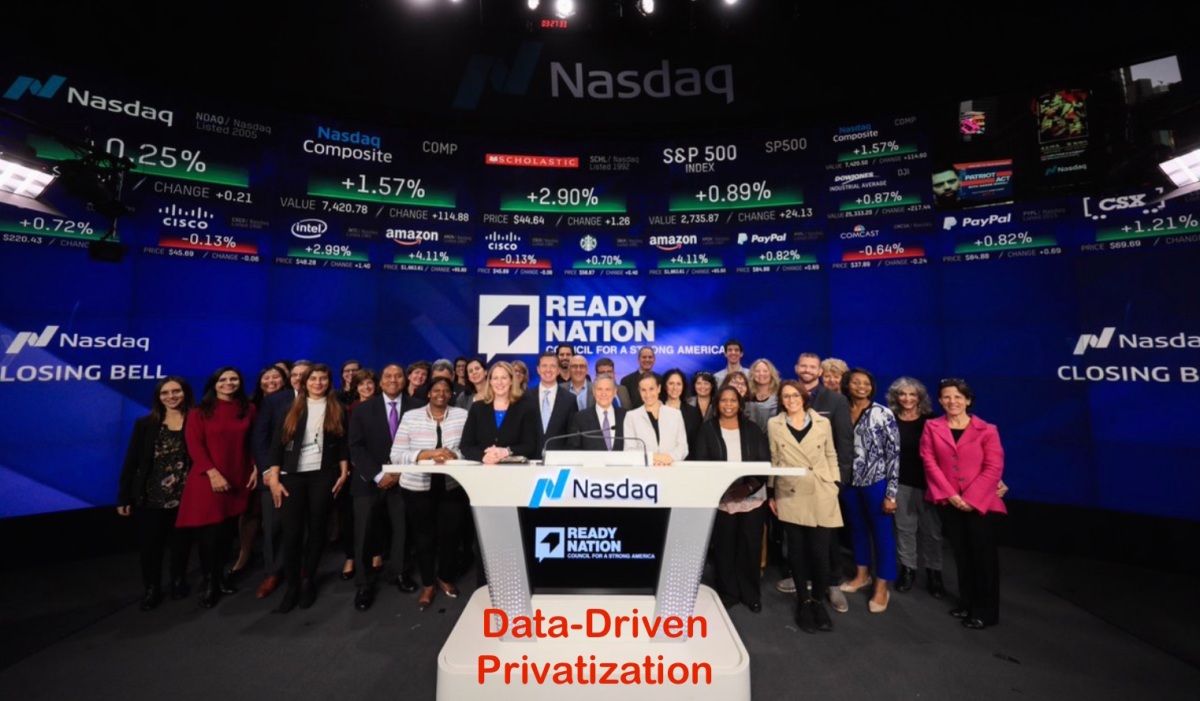
This past week will go down as an auspicious one for social impact investors and a foreboding one for the targets of their interventions: toddlers, job seekers, the unhoused, and those with mental illness. On November 1, 2018 corporate executives, military officers, athletes, and faith leaders converged on New York City to discuss the impending transformation of early childhood into a global investment market. Five days later JB Pritzker became the Democratic governor of Illinois, and former San Francisco Mayor Gavin Newsom became the Democratic governor of California.
JB Pritzker: Impact Investor As Governor
JB Pritkzer, a billionaire heir to the Hyatt family fortune and backer of the first two early childhood social impact bonds in the US, was not on the recent ReadyNation conference program in New York City as he was in the final push of his campaign to oust Republican Bruce Rauner from the Governorship of Illinois. For over a decade, Pritzker’s Children’s Initiative has financed the work of ReadyNation’s Robert Dugger and University of Chicago Economist James Heckman.
Pritzker money paid for the creation of the Heckman Equation, a tool kit promising a 7-10% annual rate of return to investors in early childhood education, up to 13% if health factors were built into the intervention. The tool kit targets very young children ages 0 to 3, identifying “success” metrics for character training, which were felt to have more potential for “growth” than cognitive achievement or IQ. Heckman and a cadre of researchers have since plowed considerable resources into devising tools, many digital, that supposedly measure social-emotional competencies, particularly Big Five “OCEAN” character traits: Openness, Conscientiousness, Extroversion, Agreeableness, and Neuroticism.
Pritzker and Heckman made the rounds, promoting outcomes-based pre-k impact investing to community foundations and institutional investors for quite a few years. In October the complicit NEA (National Education Association) spoke positively of Pritzker’s 5-point, two-generation early childhood education plan, which would allocate $95 million for pre-k expansion in the first year alone. The Annie E. Casey Foundation of Baltimore has been advancing this “two-generation” approach, which hinges on the adoption of vastly expanded integrated data systems.
Interoperable data is a priority for impact investors, because they expect to track impact metrics across multiple interventions to claim “credit” for ALL possible outcomes so they can extract as much profit as possible. It is fitting that the Casey Foundation would be a prominent voice advancing data-interoperability given their funding and organizational leadership are tied Continue reading: New Governors Pritzker and Newsom Set Up For Their ReadyNation Gold Rush – Wrench in the Gears
Data Lab Network.jpg

Impossible to Regulate Deregulated Charter Schools | Dissident Voice

Impossible to Regulate Deregulated Charter Schools | Dissident Voice

Impossible to Regulate Deregulated Charter Schools

Regulations have to do with what is allowed and what is not allowed. They establish what an individual, organization, or business can or cannot do. Regulations shape behaviors, actions, conduct, aims, and outcomes.
Regulations are often used in self-serving ways by different factions of the rich to benefit themselves while disadvantaging other wealthy competitors. Those with the most political-economic power hold sway and fashion regulations as they alone see fit. As in other spheres of capitalist life, “might makes right.” Power, not reason or principles, dominates affairs. The main point is that regulations, like laws and policies, are always political. They have a class character to them. Regulations are not neutral or above class interests because we do not live in a classless society.
The main question is who is creating or eliminating regulations and for what aims? The key issue is not whether regulations are “good” or “bad”, per se, or how many or how few there are, but which one of the two major classes in society do they serve? Regulations are a tool of class warfare. There is a big difference, for example, between capital-centered regulations verses human-centered regulations. The former serve the wealthy few who dominate society while the latter serve the common good.

Regulations and regulators have, of course, frequently failed to block many “bad behaviors” and problems. Regulation does not always work. Regulation does not automatically guarantee quality or progress. A major example of the failure of regulations and regulators is the Wall Street engineered economic crash of 2008 that has left most economies in awful shape for the last 10 years—with no real and sustainable improvement in sight. Indeed, it appears that there is no returning to even substandard pre-2008 economic levels. Multiple regulatory agencies that have been around for decades did not prevent this still-unfolding economic catastrophe that the mainstream media keeps trying to downplay.
In today’s context, having no regulations (deregulation) guarantees chaos, anarchy, and violence—key features of the “free market.” A rules-free environment ensures that only the “strongest” and “fittest” “survive” within the “free market” while the majority keeps losing. Deregulation has little to do with “accountability,” “innovation,” or prosperity and security for all.
Since the late 1970s deregulation has been a major feature of the neoliberal antisocial offensive of the rich to counter the inevitable falling rate of profit under capitalism. Governments at home and abroad have been wreaking havoc in their societies as a result of phony austerity agendas launched to save the rich. Deregulation goes hand in hand with privatization, a major form of which is contracting. Deregulating public agencies and enterprises (e.g., education) allows for greater privatization, often through contracting and public-private “partnerships.” This capital-centered arrangement always increases the wealth of private interests and diminishes the wealth of the public. It is not a “win-win” situation.
Neoliberal ideology insists that the rich not be constrained or regulated in any Continue reading: Impossible to Regulate Deregulated Charter Schools | Dissident Voice


Inside Philanthropy: Billionaires Buying Political Support for Charter Schools, or, Democracy for Sale | Diane Ravitch's blog

Inside Philanthropy: Billionaires Buying Political Support for Charter Schools, or, Democracy for Sale | Diane Ravitch's blog

Inside Philanthropy: Billionaires Buying Political Support for Charter Schools, or, Democracy for Sale

The veil is beginning to fall away from the billionaire-funded charter activity. There are no grassroots in this billionaire-driven “movement.” It is all about money. Without the billionaires’ money, the demand and the supply would dry up.
Inside Philanthropy looks at the funding behind Marshall Tuck, and the article assumes he has won. But millions of votes remain uncounted in California and the contest is not yet decided. At last count, the candidates were less than one percentage point apart. We will have to wait to see who wins the contest between Big Money and teachers.

On the eve of the election, spending for this election had risen to $50 million. The total is likely to be even higher when final reporting is in.
The apparent winner of the contest, Marshall Tuck, is the former president of Green Dot, a charter school network. He wants to expand charters in a state that already leads the nation in the number of such schools. The other candidate, Tony Thurmond, argued for putting the brakes on charters to address issues of transparency and accountability.
Tuck ran unsuccessfully for the same office in 2014 in a race that cost $30 million. In both cases, Tuck outspent his opponent. This year, his campaign had raised $28.5 million by election day.
The money has come from a who’s who of charter school backers and K-12 philanthropists, including Eli Broad, Reed Hastings, Lynn Schusterman, Julian Robertson, Laurene Powell Jobs, Laura and John Arnold, Dan Loeb, Michael Bloomberg and his daughter Emma, and three Waltons: Carrie Walton Penner, Alice Walton, and Jim Walton. 


Among Tuck’s biggest backers was Helen Schwab, wife of the finance billionaire Charles Schwab, who gave $2 million to EdVoice for the Kids PAC, which managed independent campaign committees for Tuck; Arthur Rock, the venture capitalist, gave $3 million to EdVoice, while Doris Fisher gave over $3 million. Along with the Schwabs, Fisher has been a huge Continue reading: Inside Philanthropy: Billionaires Buying Political Support for Charter Schools, or, Democracy for Sale | Diane Ravitch's blog


Sunday, November 11, 2018

Supporting Parents and Students – Carl J. Petersen – Medium

Supporting Parents and Students – Carl J. Petersen – Medium
Supporting Parents and Students
The Northridge East Neighborhood Council (NENC) is one of 99 Neighborhood Councils in the City of Los Angeles. These Councils “are advisory bodies who advocate for their communities” and are comprised of “City officials who are elected by the members of their local communities”. They are designed to be “the closest form of government to the people.
On October 17, 2018, the NENC considered two resolutions proposed by the Education Committee. Both were passed with overwhelming support and have been forwarded to Los Angeles City Councilman David Ryu, Chair of the Health, Education, and Neighborhood Councils Committee.
The first resolution was a result of a presentation to the Education Committee by Rudy Gonzalves, the Director of Los Angeles Alliance for a New Economy (LAANE). As part of the Reclaim Our Schools LA coalition, LAANE helped develop the education platform “Reclaim Our Schools LA’s Give Kids A Chance that promotes the need for investing in teachers, community schools, parents, and most importantly our students within the Los Angeles Unified School District (LAUSD).” This platform includes the following demands:
  • Fund Our Schools: California is the richest state in the nation yet ranks 43 out of 50 among the states in per-pupil funding. LAUSD must fight at the local, state, and national level to increase funding to $20,000 per student by the year 2020.
  • Reduce Class Size: Students have a better chance to succeed with smaller classes. LAUSD must stop ignoring the rules that protect students from huge classes sizes.
  • Charter School Oversight: LAUSD must regulate charter school growth and charter school co-locations on neighborhood school campuses. An unchecked expansion of charter schools drains millions away from our neighborhood schools.
  • Less Testing and More Teaching: LAUSD must increase educator discretion in testing. Let’s limit unnecessary standardized testing that reduces critical instructional time.
With this vote, the NENC stands in support of this platform.
The second motion passed by the Council calls on the Los Angeles City Council “to urge the LAUSD School Board to pass the ‘Board Meeting Accessibility to the Public’ resolution that has been submitted to them for Continue reading: 

The Graphic Truth About Our Education System | The Crucial Voice of the PeopleThe Crucial Voice of the People

The Graphic Truth About Our Education System | The Crucial Voice of the PeopleThe Crucial Voice of the People

The Graphic Truth About Our Education System


Please, take a good look at the graphic truth about public education in America.

National leaders and much of the media repeatedly call the system “failed.” That is their version of the graphic truth. They point to test scores as “evidence.” President Trump described the institution as an …
“education system flush with cash but which leaves our young and beautiful students deprived of all knowledge.”
That’s disturbing. Also disturbing is this reporters response to Trump’s “facts” in Trump’s vision of education begins and ends with schools being bad.
“… it’s true that the United States spends quite a bit, relatively speaking, on education, and test results are fairly disappointing.”
But let’s dig deeper into the Trump/DeVos “facts.”

Look closer at the Graphic Truth About Spending and OutcomesTotal costs DID rise dramatically. So did employees. But why?Blame the teacher’s union? Not so fast. Continue reading: The Graphic Truth About Our Education System | The Crucial Voice of the PeopleThe Crucial Voice of the People


Lessons from the Continuing Attack on Kansas City’s Schools | tultican

Lessons from the Continuing Attack on Kansas City’s Schools | tultican

Lessons from the Continuing Attack on Kansas City’s Schools


For three decades relentless harm has been visited upon public schools in Kansas City, Missouri. This city provides stark evidence for the fallacy of school choice and the folly of employing standardized testing results to gauge school quality.
Leaders from the Kansas City Public Schools (KCPS) presented at the recent Network for Public Education (NPE) conference in Indianapolis, Indiana. This article is in part based on that presentation.
The Major Cause of Racial and Economic Segregation
Richard Rothstein, Senior Fellow of the Chief Justice Earl Warren Institute on Law and Social Policy at the University of California (Berkeley) School of Law, wrote about segregation as a function of government housing policy. He noted,
“With Federal Housing Administration (FHA) and then, after World War II, Veterans Administration (VA) guarantees, white middle-class families could buy suburban homes with little or no down payments and extended 30-year amortization schedules. Monthly charges were often less than rents the families had previously paid to housing authorities or private landlords.
“The government had an explicit policy of not insuring suburban mortgages for African Americans.”
KC Population Change
Population Shift Graphic Presented by Kansas City Public School Leaders at #NPE18Indy
As Rothstein reported, the dramatic population shifts in Kansas City began with the establishment of the FHA in the mid 1930’s and accelerated with the VA guarantees after WWII. The graphic above shows that trend continuing.
In 2007, a popular Democratic state senator from Independence, Victor Callahan, led an effort to remove seven schools from Kansas City by transferring them to the Independence School District. He also claimed that the Kansas City school district should disappear. Gwendolyn Grant, leader of the Greater Kansas City Urban League, supported the move contending that a more racially homogeneous school board would be less contentious. The move was ratified by large majorities in both Kansas City and Independence. It seems that Kansas Continue reading: Lessons from the Continuing Attack on Kansas City’s Schools | tultican


Louisiana’s Fickle 2018 School Grades: “Tougher” Calc Biased Upward for 35 Schools | deutsch29

Louisiana’s Fickle 2018 School Grades: “Tougher” Calc Biased Upward for 35 Schools | deutsch29

Louisiana’s Fickle 2018 School Grades: “Tougher” Calc Biased Upward for 35 Schools


On November 08, 2018, the Louisiana Department of Education (LDOE) released the much-anticipated and somewhat-dreaded 2017-18 school performance scores.
One of the problems in trying to compare school grades across years involves the changes across years to school grade calculations, including but not limited to changes in tests and the grading scale itself. In some cases, the result has been inflated school grades.
In 2018, however, the grading criteria is supposed to be tougher; that was the word in August 2018. For example, consider this August 07, 2018, piece by KALB.com in Alexandria:
Louisiana schools will no longer be graded on a curve. When school performance scores come out in the fall, the results may be lower.
The Advocate reported that there will be changes in the way school performance scores are calculated.
Student testing scores, graduation rates and academic growth are all taken into account during calculation.
The goal is to get student achievement in Louisiana comparable with other states. The change will cause ‘F’ rated schools to rise and ‘A’ rated schools to drop, according to the advocate. …
Before on state assessments students scoring ‘basic’ were proficient. Now the new proficiency level is ‘mastery’. This level gives school districts 100 points toward their performance score, while basic will only give 75 points.
F-rated schools will rise; A-rated schools will drop.
Sounds tougher, doesnt it?
Well, as it turns out, for many schools, the “new” 2018 scoring is tougher than the “old” scoring system used in 2017.
But not for all.
As a matter of fact, for 35 Louisiana schools, the “new,” supposedly tougher, 2018 scoring system produced higher school letter grades than the “old” 2017 formula Continue reading: Louisiana’s Fickle 2018 School Grades: “Tougher” Calc Biased Upward for 35 Schools | deutsch29


NYC Public School Parents: News update on elections, federal investigation into DOE’s violation of student privacy and proposed capital plan – and how you can help!

NYC Public School Parents: News update on elections, federal investigation into DOE’s violation of student privacy and proposed capital plan – and how you can help!
News update on elections, federal investigation into DOE’s violation of student privacy and proposed capital plan – and how you can help!


Much has happened in the last week: 

  • Tuesday’s elections will lead to a real sea-change in the NY State politics.  We will be reaching out to the Assembly and the newly elected Democratic majority in the State Senate with proposals on how to ensure more accountability for charter schools and to reform Mayoral control by adding checks and balances. If you’d like to be part of this effort, please let us know at info@classsizematters.org
  •  Last fall, parent leader and CEC President Johanna Garcia filed a FERPA complaint with the federal government about the DOE’s practice of allowing charter schools to access her child’s personal information so they could send her marketing materials and recruit more students.  Now the US Department of Education and the NY State Education Dept are investigating her complaint, as reported in the NY Post.  More about this on my blog – including the US Dept of Education's letter announcing the launch of this investigation, and an earlier letter from Council Members Dromm, Treyger, Lander and Levin to the Mayor and Chancellor, urging them to stop this practice, which not only violates student privacy but by helping charters expand, diverts more funding from our public schools. If you’d like to add your voice to this campaign, please send a message to the Mayor and the Chancellor now by clicking here.
  • The new proposed five-year capital plan was released last week, and I was quoted in the Daily News and Wall St. Journal about it.  The good news is that it funds 57,000 new seats -- more than the last plan.  Thanks to all of you who signed petitions and sent letters about this. The bad news is that this will not fill the need, either according to DOE’s estimate last fall, or our more realistic estimate that more than 100,000 seats are necessary – considering  there are over 575,000 kids in overcrowded schools already. Moreover, spending on class size reduction in the new plan was cut from $490 million to only $150 million– far less than the $550 million to be spent on new 3K and preK seats, of which $472 million is proposed 3K students alone.

Once again, the Mayor has made clear his priority is to spend hundreds of millions of dollars on the further expansion of 3K and preK, rather than ensure a quality education for students in grades K through 12 – which would require considerably more space for smaller classes than he’s prepared to fund.

NYC Public School Parents: News update on elections, federal investigation into DOE’s violation of student privacy and proposed capital plan – and how you can help!