Latest News and Comment from Education

Monday, October 15, 2018

How are charter schools influencing LAUSD labor negotiations? – Daily News

How are charter schools influencing LAUSD labor negotiations? – Daily News

How are charter schools influencing LAUSD labor negotiations?


If teachers go on strike this school year, it would be the first amid a backdrop of a growing charter school movement that has not only drawn students from the Los Angeles Unified School District, but has also taken teachers with them.
The last time Los Angeles teachers went on strike was in 1989. The California Charter School Act was signed into law in 1992 and charter school growth in Los Angeles particularly exploded within the last two decades.
Los Angeles is now home to the largest number of charter schools in the nation. Charter schools are typically non-union.
“Our members see very clearly the privatization agenda of those who are leading and funding the charter school movement in California,” union president Alex Caputo-Pearl said in an interview.
Contract negotiations between United Teachers Los Angeles, the union that represents teachers, nurses, librarians and counselors, and the district reached a stalemate this summer. And the two sides did not reach an agreement through mediation, district officials said Friday.
“By UTLA’s own admission, the only reason UTLA participated in Mediation was to ensure that it could move quickly to a strike,” district General Counsel David Holmquist said in a statement.
The next step is fact-finding before a strike can legally be called. Caputo-Pearl estimated a fact-finding report wouldn’t produced until late November or early December. This summer, teachers overwhelmingly authorized its union leadership to call for a strike. If there is a strike, it likely won’t be for several weeks.
At the bargaining table, there are a number of proposals regarding charter schools that the union has put forth.
“The district has not been willing to come back with a counter proposals on them, which is part of the reason we’re in mediation,” Caputo-Pearl said Thursday.
Teacher union membership has declined over the past decade. In 2008, the number of teachers, nurses, librarians and counselors in L.A. Unified totaled 43,000. That figure has fallen to 33,000 today. This is partly due to layoffs that occured after the 2008 recession. Also, a number of teachers left the district for charter schools.
UTLA does represent about 1,000 charter school teachers. Teachers at district schools that have converted into charter schools, known as affiliated charters, are part of UTLA as are some independent charter schools. Caputo-Pearl makes a distinction between these schools when he Continue reading; How are charter schools influencing LAUSD labor negotiations? – Daily News


Los Angeles teachers are a step closer to a potential strike after mediation with district ends - Los Angeles Times

Los Angeles teachers are a step closer to a potential strike after mediation with district ends - Los Angeles Times

Los Angeles teachers are a step closer to a potential strike after mediation with district ends
Image result for utla meme

The union representing Los Angeles teachers moved one step closer to a possible strike Friday after ending mediation sessions with the L.A. Unified School District.
Union officials accused the district of “failing to offer any substantial proposals to reinvest in our schools.”
For its part, district leaders announced that they had filed a complaint with a state oversight board. They allege that the union has failed to negotiate in good faith and that any strike would therefore be illegal.
The union “has trounced through the impasse procedure in bad faith, in order to have cover to initiate a strike,” trying to “shortcut the process and achieve its bad faith objectives,” according to the district filing with the Public Employment Relations Board.
The filing also accused the union of making “histrionical demands that the mediation process wrap up quickly.”
Image result for utla meme
The two sides had three sessions with a professional mediator, starting Sept. 27 and ending Friday.
The district is offering teachers a 3% raise retroactive to July 1, 2017, plus an additional 3% retroactive to this past July. The second half would not be permanent unless the county certified the district as financially healthy for the length of the agreement. The district has settled with most other employee unions on terms similar to these.
The teachers have asked for a 6.5% raise that goes back an additional year, to July 1, 2016.
 BREAKING NEWS: Beutner Offers Insulting Bargaining Proposal

The dispute goes beyond wages.
“The district thinks they can buy us off with a modest pay raise, but our fight has never been just about salary,” UTLA President Alex Caputo-Pearl said in a statement. “What’s driving educators is the absolute need to fix what we see every day: too many overcrowded classrooms where kids have to share desks, schools with a nurse only one day a week, and overloaded psychologists and counselors doing their best to triage the socio-emotional needs of our students.”
L.A. schools Supt. Austin Beutner said he also would like to increase staffing and offer larger pay raises but that the district can’t afford it. Meeting the demands of what the union calls its Continue reading: Los Angeles teachers are a step closer to a potential strike after mediation with district ends - Los Angeles Times

Class Size Matters

Private, charter schools at heart of gubernatorial candidate differences

Private, charter schools at heart of gubernatorial candidate differences

Private, charter schools at heart of gubernatorial candidate differences


Will Illinois’ real education governor please step forward?
Although the two major-party candidates in this year’s historically expensive campaign for governor have both pledged to be the “education governor,” Republican Gov. Bruce Rauner and Democratic challenger J.B. Pritzker are on opposite sides of key education issues, particularly those involving charter school expansion and private school funding.
For those looking beyond the state’s crippling financial issues for reasons to favor one candidate over the other, education provides some clear distinctions.
There’s the ultra-political. Should Chicago have an elected school board? Pritzker says yes. Rauner says no.
Then, there’s the highly controversial. Should a private school tax credit scholarship program that most public education supporters oppose be expanded? Rauner says yes. Pritzker says no.
The candidates veer back into the same lane when it comes to investing more in public education and addressing widespread funding inequities in school districts across the state. But even then, education leaders say, they speak different languages when it comes to how that will happen.
“This election is going to have a big impact on public education in Illinois,” said Brian Harris, president of the state’s Large Unit District Association. “Both Pritzker and Rauner — they both say they want to be the education governor, but they have a different perspective on it.”
Most education leaders shied away from endorsing. Their organizations — save the Illinois Education Association — will not make official declarations or contributions in the race despite their agreement that much is a stake.
“Our position on both candidates is that we would hope that they would provide low-income kids with the same Continue reading; Private, charter schools at heart of gubernatorial candidate differences


League of Women Voters of Seattle-King County Urges “No” Vote on Proposition 1 – Seattle Education

League of Women Voters of Seattle-King County Urges “No” Vote on Proposition 1 – Seattle Education

LEAGUE OF WOMEN VOTERS OF SEATTLE-KING COUNTY URGES “NO” VOTE ON PROPOSITION 1

LWV King County


From the League of Women Voters of King County October Newsletter
The Board of Directors of the League of Women Voters of Seattle-King County unanimously voted to oppose Seattle Proposition 1, the Families, Education and Preschool Promise (FEPP) Levy. In addition to urging the city to convene a coalition to address concerns about the proposed levy before taking further action.
Although the Board’s decision to oppose Proposition 1 was unanimous, it was not made lightly. Children from low-income families deserve high-quality preschools. High school graduates deserve to attend college, even when they cannot afford it. But the levy’s vague language and regressive nature make it an inappropriate vehicle for funding these priorities.
Chief among the League’s concerns is the confusing language in the proposition on how levy funds will be spent. Specifically, the measure providers that:
Proceeds may only be leveraged to support Seattle School District and Seattle Colleges, programs or functions with the existence of a current, effective Partnership Agreement (emphasis added). (Prop. 1, Sec. 10)
This clause creates the possibility that levy funds will flow to charter schools, a possibility that city officials have yet to deny. The League has consistently opposed public funding of charter schools because they lack transparency and public accountability. They can also exacerbate segregation and educational disparities.
Moreover, the League has opposed the use of levies as long-term funding sources, particularly in areas where funding responsibility lies with the state. “Taxpayers cannot continue to bear the burden of filling the funding gaps in our communities, the importance of these services notwithstanding,” said LWVS-KC President Stephanie Cirkovich. “Homeowners can expect their taxes to increase by an average of $112 annually under this levy, and they deserve to know how those funds will be spent.”
The League also opposes the Levy because it prioritizes special programming over basic education. Officials concede that it would reduce funding for K-12 over the expiring levy, straining Seattle Public Continue reading: League of Women Voters of Seattle-King County Urges “No” Vote on Proposition 1 – Seattle Education


Delaware Charter School News: As School Closes Abruptly for Low Enrollment, State Receives Fed Grant to Expand | deutsch29

Delaware Charter School News: As School Closes Abruptly for Low Enrollment, State Receives Fed Grant to Expand | deutsch29

Delaware Charter School News: As School Closes Abruptly for Low Enrollment, State Receives Fed Grant to Expand


In examining the two most recent charter school stories on Delaware Public Media (“Delaware’s Source for NPR News”), I was taken with the irony of charter school reality.
The most recent story as of this writing is dated October 12, 2018, and is entitled, “First State Hopes to Expand Charter Seats with Federal Grant.” An excerpt:
The Delaware Department of Education has received a $10.4 million federal grant from the U.S. Department of Education to improve the state’s charter school system.
Officials say the funding will support sharing best practices between charter schools and other public schools and strengthening the charter school authorization process.  It will also provide sub-grants to new charter schools for planning and existing charters for expansion.
Thus, even though there are only so many students in the state (which means that increased charter presence not only puts charters into increased competition with “other” public schools), expanding the charter presence could well put existing charter schools in competition with each other for student enrollment (and, by extension, funding).
Even so, the unlikely line about “sharing best practices” is included, even though competition dictates every school for itself in order to survive (and to possibly figure out how to lure your students to my school).
The article continues by noting that the Delaware Department of Education Continue reading: Delaware Charter School News: As School Closes Abruptly for Low Enrollment, State Receives Fed Grant to Expand | deutsch29


Sunday, October 14, 2018

How Pissed-Off Parents and Teachers Could Expel Scott Walker From Office – Mother Jones

How Pissed-Off Parents and Teachers Could Expel Scott Walker From Office – Mother Jones

How Pissed-Off Parents and Teachers Could Expel Scott Walker From Office
He slashed education funding. Now Wisconsin’s governor is in the race of his life against the state’s education superintendent.


Tom Rulseh was baffled by the email from an angry constituent. Why, the woman demanded to know, had the Three Lakes School District allowed Gov. Scott Walker to film a campaign ad in a public school that had nearly been forced to close thanks in part to Walker’s own budget cuts?
The ad, it turned out, featured employees and teachers from the rural Wisconsin district praising Walker’s education policies. “Governor Walker has been very helpful to us with state funding,” claimed one school board member in the ad.
“I was shocked when I saw it,” says Rulseh, the school board president. “I called a meeting right away—an open meeting the public could attend to address the matter.” In front of a standing-­room-only crowd, the board passeda new policy barring its schools from being used for politicking. Walker declined to take down the ad, leaving it on the air for the rest of the week.
Walker, the union-busting Republican who came to power in the tea party wave of 2010, is running for a third term. And as the Three Lakes outcry illustrates, the race has been dominated by a debate over the state’s public schools, which have suffered from massive funding reductions and teacher shortages during his tenure.
So it’s fitting that Walker’s opponent is Tony Evers, the state’s superintendent of education. A 66-year-old with nerdy glasses that often sit slightly askew, Evers (rhymes with “fevers”) has spent his entire working life in education. He often wears a black T-shirt that says, “I ❤ My Public School,” and he has put education at the center of his campaign—a move that helped him cruise to an easy victory in a crowded primary. Now, he has a chance to do something that liberals have been dreaming about for nearly a decade: remove Walker from the Wisconsin Statehouse.

Wisconsin certainly isn’t the only place where education has become the defining issue of the midterms. Throughout 2018, the country has been gripped by a wave of teacher protests against years of crippling funding cutsand dismal compensation. A nine-day strike in West Virginia resulted in a 5 percent pay raise. The victory there inspired similar statewide strikes in Arizona and Oklahoma, the latter of which had seen roughly one-fifth of its school districts switch to a four-day week to save money. There were also walkouts in Colorado and Kentucky.


Why Teachers are Ticked Off

Wisconsin isn’t the only state where teachers are mad about budget cuts and low pay. See more charts and statistics on the sorry state of education funding across the nation: How Pissed-Off Parents and Teachers Could Expel Scott Walker From Office – Mother Jones


End K-12 Sex Harassment and Assault #MeTooK12 #MeToo #timesup

Fundraiser by Joel Levin : End K-12 sex harassment and assault

End K-12 Sex Harassment and Assault #MeTooK12

End K-12 sex harassment and assault


If there’s one key takeaway from my years of nonprofit work with families, schools, national organizations, and lawmakers, it’s this: there’s an epidemic of sexual harassment and assault in K-12 schools that is preventable, if only schools knew how to address it. 

I’m raising funds to create affordable online training that educates schools about practical steps they can take right now to end the culture of sexual harassment before students enter college and the workplace.

For me it’s a personal calling. Our entire family life was devastated when our 15-year-old daughter was sexually assaulted on a school field trip. The inequitable and unlawful way in which the school district responded to the assault caused her to feel utterly devalued as a human being.  She was betrayed by her school, which failed to take the required steps  that would have allowed her to continue her education, free of retaliation, after the assault.  Today, six years later, she still suffers from the emotional trauma that derailed her education.


The nightmare of our daughter's sexual assaultLike most parents, we believed our child was safe in the care of her school. But our advocacy on her behalf brought us into contact with countless parents whose children also experienced life-altering sexual harassment and assault. I couldn’t remain silent. 

Three years ago, I co-founded Stop Sexual Assault in Schools, a national nonprofit that spearheaded the movement to educate the public about the epidemic of K-12 sexual harassment and assault.  As Director of Programs, I’ve used my background in education and instructional design to create free educational materials for families including the full-length video  Sexual Harassment: Not in Our School! I also helped initiate the national #MeTooK12 campaign, which has been covered widely in the media.


Sexual Harassment: Not in Our School! video

Our schools are in crisis. Research shows that sexual assault, ongoing sexual harassment, and cyber-harassment cause real emotional, psychological, and economic damage to students. Feeling unsafe at school correlates with declining academic performance, skipping school, and dropping out. After their school fails to protect them, some students take their own lives. The victims are girls, boys, and gender non-conforming students. It’s a form of discrimination and it’s against Title IX, a federal civil rights law.   


How our school mishandled sexual assault

Most school districts are unprepared to handle sexual assault incidents--both legally and compassionately. School districts often believe they can avoid lawsuits and bad press by denying or ignoring sexual harassment and assault in their schools.  Schools often retaliate against families and their own staff who report incidents of student harassment and assault.  Because school districts fail to follow the proper procedures, they end up harming the very students they’re supposed to serve.


Schools are unprepared to handle reported sexual assault


CONTINUE READING: Fundraiser by Joel Levin : End K-12 sex harassment and assault

Talking Across The Pond About Ed Reform 2.0 – Wrench in the Gears

Talking Across The Pond About Ed Reform 2.0 – Wrench in the Gears

Talking Across The Pond About Ed Reform 2.0

Virtual Reality and the Globalized Workforce: Talking Across the Pond, Part 2 – Wrench in the Gears - https://wp.me/p7SU8W-1ap 


One of the nice things about working in digital spaces is that you’re able to connect with people across distances and find you have a lot in common. You can help one another and learn new things in the process. The blogger at Privatising Schools based in the UK reached out to me with a proposal that we collaborate on a project that might help British readers get up to speed with the evolving landscape of privatization, since they are a few years behind us. I thought it sounded like a great plan. What follows is the first in a series of ten questions posed by Privatising Schools and my responses. For regular readers, much of this will be familiar ground, but I think it worthwhile to see how developments in the UK and US overlap, and they do in some unexpected ways. Privatising Schools has woven together a somewhat more condensed version with answers to our first round of questions. Check it out here to get more of the UK perspective.

Question 1

First of all, thank you for agreeing to be interviewed. I know that your work is closely tied to your experiences as a parent with a child in the public school system in Philadelphia; the subtitle of your blog is ‘A Sceptical Parent’s Thoughts on Digital Curriculum’. But many people don’t appreciate how hard tech-based schooling – cyber-schools, ‘blended learning’, ‘adaptive’ learning systems using AI, and all the rest – is being pushed, both in the US and here in England. Could you say more about the Continue reading: Talking Across The Pond About Ed Reform 2.0 – Wrench in the Gears

This Disney heiress is here to tell you exactly what the 1% did with Trump’s tax cuts EveryBody vs Trump @EVRYBODYvsTRUMP


This Disney heiress is here to tell you exactly what the 1% did with Trump’s tax cuts
Spoiler: They didn’t create more jobs and increase salaries


Whatever Happened To Service Learning? | Larry Cuban on School Reform and Classroom Practice

Whatever Happened To Service Learning? | Larry Cuban on School Reform and Classroom Practice

Whatever Happened To Service Learning?

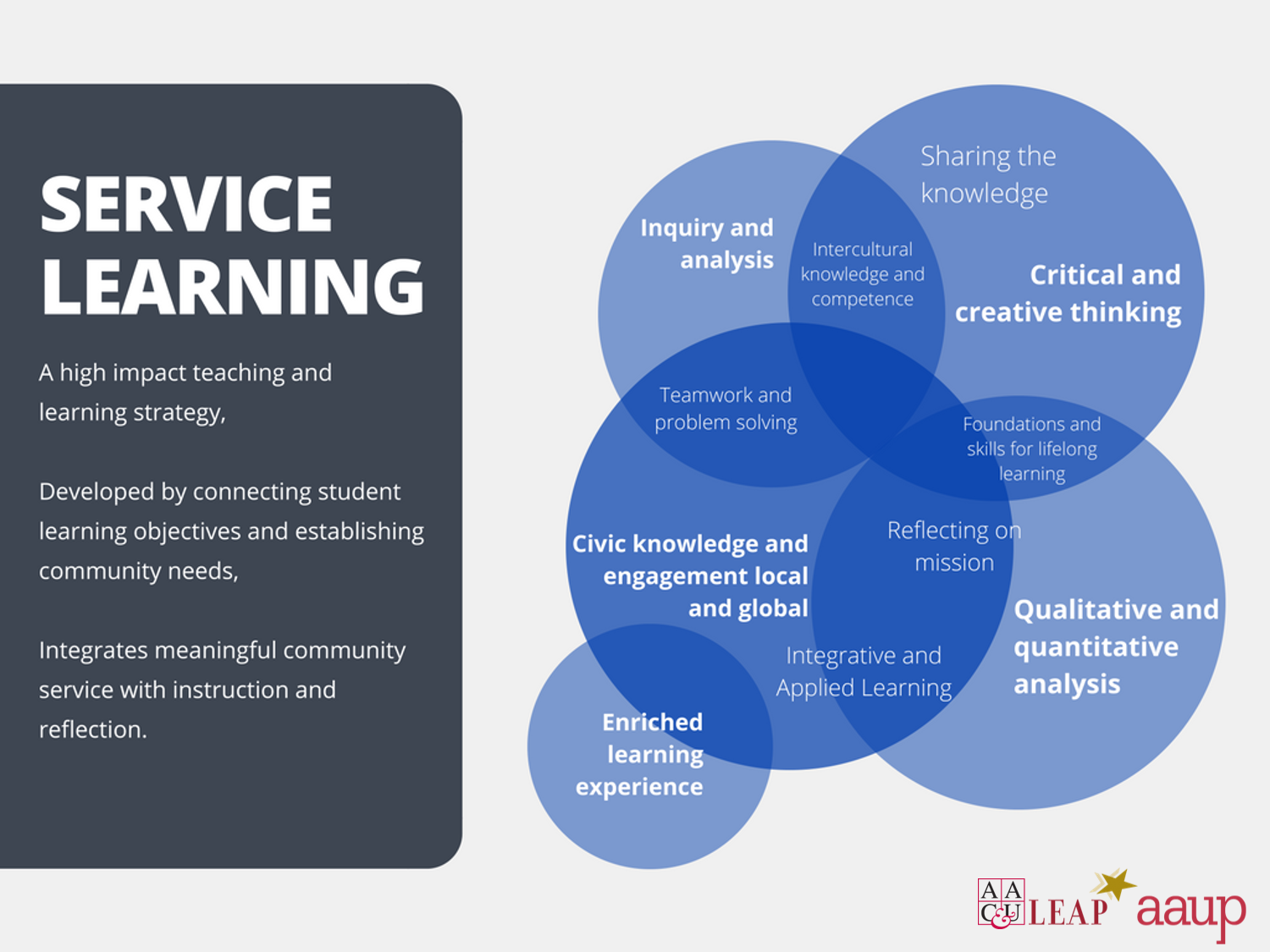
Image result for Service learning

Fads come and go in education as any teacher or administrator over the age of 30 knows. Service learning, however, was not (and is not) a fad. Defined broadly as K-12 students providing “community service” it has been in public and private schools for over a century. But it did have its faddish moments in the 1980s and 1990s–see Ngram. And it remains popular among policymakers and practitioners who see schools’ primary duty as developing “good” citizens. But issues of what exactly is service learning, who benefits most–students? community?–and toward what ends–individual giving back? solving community problems?–persist.
What is service learning and when did it begin?
Like most school innovations, service learning has had multiple meanings since it was introduced into schools in the 1970s. Policymakers, researchers, and practitioners have various definitions. Distinguishing between students doing community service and school-based service learning has made definitions hard to pin down for decades.
Community service (e.g. students visiting  the elderly,  cleaning up parks, feeding the homeless, volunteering in hospitals and early childhood day care centers) has been an feature of schooling for over a century. And it remains so. In a 2008 survey of principals, 60 percent of elementary schools had students engaged in both voluntary or required community service activities while 74 percent of middle schools and 86 percent of high schools did also.
For all the diverse definitions, service learning in K-12 schools comes down to a planned experience integrated into the regular curriculum that contains goals and opportunities for students to reflect on what they do (e.g., internships, field studies, science projects in community) and what they are learning (see herehere, and here).
Some examples:
*Angie started her senior year behind on the service hours her high school  Continue reading: Whatever Happened To Service Learning? | Larry Cuban on School Reform and Classroom Practice
Image result for Service learning