Latest News and Comment from Education

Wednesday, May 16, 2018

Full-Time Virtual and Blended Schools: Enrollment, Student Characteristics, and Performance | National Education Policy Center

Full-Time Virtual and Blended Schools: Enrollment, Student Characteristics, and Performance | National Education Policy Center:

Full-Time Virtual and Blended Schools: Enrollment, Student Characteristics, and Performance


This sixth NEPC Annual Report on Virtual Education provides a detailed overview and inventory of full-time virtual schools and blended learning, or hybrid, schools. Full-time virtual schools deliver all curriculum and instruction via the Internet and electronic communication, usually asynchronously with students at home and teachers at a remote location. Blended schools combine virtual instruction with traditional face-to-face instruction in classrooms.
Evidence related to inputs and outcomes indicates that students in these schools differ from students in traditional public schools. In particular, school performance measures for both virtual and blended schools indicate that they are not as successful as traditional public schools. Nevertheless, enrollment growth has continued.
Compared to prior years, there has been a shift in source of growth, with more school districts opening their own virtual schools. However, these district-run schools have typically been small, with limited enrollment. Thus, while large virtual schools operated by for-profit education management organizations (EMOs) have lost considerable market share, they still dominate this sector. 
This report provides a census of full-time virtual and blended schools. It also includes student demographics, state-specific school performance ratings, and—where possible—an analysis of school performance measures.

Bill Gates gives $44 million to influence state education reform | tbo.com

Bill Gates gives $44 million to influence state education reform | tbo.com:

Bill Gates gives $44 million to influence state education reform 


SEATTLE — Billionaire philanthropist Bill Gates saw an opportunity with a new federal education law that has widespread repercussions for American classrooms.
His non-profit, Bill and Melinda Gates Foundation, has given about $44 million to outside groups over the past two years to help shape new state education plans required under the 2015 law, according to an Associated Press analysis of its grant database.
The grants illustrate how strategic and immersive the Microsoft founder can be in pursuit of his education reform agenda, quietly wielding national influence over how schools operate. Gates’ carefully curated and intersecting web of influence is often invisible but allows his foundation to drive the conversation in support of its vision on how to reshape America’s struggling schools systems.
Critics call it meddling by a foundation with vast wealth and resources. The Gates Foundation says it’s simply helping states navigate a "tectonic" shift in responsibility for education — from the federal government to more local control.

"For 50 states with varying sets of capacities and capabilities and readiness, it was both an opportunity and also a concern that states and partners in those states needed support," said Allan Golston, president of the Gates Foundation’s U.S. work.
The Gates Foundation spent about $44 million focused on the 2015 federal education law called the Every Student Succeeds Act. The law gives states flexibility to create their own education system framework defining what a "good school" is — and in turn states get federal dollars for complying with their own rules.
The law requires academic standards, which means that the backbone for most state education systems is the Common Core — a symbol for many critics during the Obama years of federal overreach in schools. Gates was influential in supporting the Common Core academic standards, and now is doing the same as states sort out the best ways to implement their education policies under the 2015 law.
In Tennessee, a Gates-funded advocacy group had a hand in the state’s new education plan, with its leader sitting on an important advising committee. A media outlet given money by Gates to cover the new law then published a story about research funded by Gates. And many Gates-funded groups have become the de facto experts who lead the conversation in local communities, across states and featured nationally.
Gates also dedicated millions of dollars to protect Common Core as the new law unfolded. Patrick McGuinn, an education policy expert and professor at Drew University, said the Every Student Succeeds Act removed the political pressure from the standards despite how politically toxic Common Core has become. The policy idea suggests every Continue Reading; Bill Gates gives $44 million to influence state education reform | tbo.com:


Tuesday, May 15, 2018

HENRY A. GIROUX: The Slow and Fast Assault on Public Education | Boston Review

The Slow and Fast Assault on Public Education | Boston Review:

The Slow and Fast Assault on Public Education

Image result for big education ape war on teachers
Since Donald Trump’s election in November 2016, there have been few occasions to feel hopeful about politics. But now we are witnessing a proliferation of causes for hope, as brave students from Parkland, Florida, and equally courageous teachers throughout the United States lead movements of mass demonstrations, walkouts, and strikes.
The United States is in the midst of a crisis of values, ethics, and politics. It has been decades in the making, produced largely by a neoliberal system that has subordinated all aspects of social life to the dictates of the market while stripping assets from public goods and producing untenable levels of inequality. What we are now living through is the emergence of a new political formation in which neoliberalism has put on the mantle of fascism.
Amidst this cataclysm, public schools have been identified as a major threat to the conservative ruling elite because public education has long been integral to U.S. democracy’s dependence on an informed, engaged citizenry. Democracy is predicated on faith in the capacity of all humans for intelligent judgment, deliberation, and action, but this innate capacity must be nurtured. The recognition of this need explains why the United States has, since its earliest days, emphasized the value of public education at least as an ideal. An education that teaches one to think critically and mediate charged appeals to one’s emotions is key to making power accountable and embracing a mature sense of the social contract.
Now, as our public schools are stretched to their breaking, their students and teachers are leading the call for a moral awakening. Both argue that the crisis of public schooling and the war on youth are related, and that the assaults on public schooling can only be understood as part of a larger war on liberal democracy.
No one movement or group can defeat the powerful and connected forces of neoliberal fascism, but energized young people and teachers are helping to open a space in which change looks more possible than at any time in the recent past. The Parkland students have embraced a grassroots approach and teachers are following their lead. Both are primed for action and are ready to challenge those eager to dismantle the public education system. They recognize that education is a winning issue because most Americans still view it as a path through which their children can gain access to decent jobs and a good life. The usual neoliberal bromides advocating privatization, charter schools, vouchers, and teaching for the test have lost all legitimacy at a moment when the ruling elite act with blatant disregard for the democratizing ethos that has long been a keystone of our society.
All of the states in which teachers have engaged in wildcat strikes, demonstrations, and Continue reading: The Slow and Fast Assault on Public Education | Boston Review:
The Slow and Fast Assault on Public Education

Any education reform that ignores segregation is doomed to failure

Any education reform that ignores segregation is doomed to failure:

Any educational reform that ignores segregation is doomed to failure

A new report finds that such reforms only placate white people, don't bring equity

Image result for charter school segregation


n education, America does everything but equity.” With these words, Failing Brown v. Board, a new report from the civil rights group Journey for Justice Alliance, makes plain how the machine of educational reform, with all its innovations and disruptive technologies, is missing an essential cog: the resources to deliver a quality neighborhood school.

Most states cut education spending in the 2008 recession. Yet, despite the economy having recovered, there is less funding today for education than even those lean years, according to the Center on Budget and Policy Priorities. Researchers from this non-profit found that in 2015, “29 states were still providing less total school funding per student than they were in 2008.”
No wonder the quality of our schools is suffering, and parents are grasping at straws. But the seductive promise of educational programs that don’t grapple with the roots of inequality will eventually ring hollow.
Yesterday, the director of Journey for Justice Alliance, Jitu Brown — alongside other civil rights groups including the NAACP, the Advancement Project, American Federation of Teachers and the National Education Association — held a press conference on the steps of the Supreme Court in Washington, D.C. The occasion was the release of the report, to do what many reformers openly refuse to — confront a system of segregated schools.
Segregated housing and schools, gerrymandered districts and voter suppression picked up were Jim Crow left off. Housing ghettos are born of racist housing policies that rob the black community of opportunities to amass wealth. According to Prosperity Now, a national nonprofit to expand economic opportunity for low-income families, and the Institute for Policy Studies, a progressive think tank, white households have seven times the amount of wealth as African Americans, and six times as much as Latinos.
Wealthier neighborhoods to hoard wealth and maintain a racially separate school system through a financial structure based on property taxes. Local school districts rely heavily on the revenue that comes from local property taxes, creating funding disparities between rich and poor districts. These primary sources of inequality continue to limit opportunities, suppressing the social mobility of subsequent generations. Yet many education reformers avoid, accept — or even embrace! — segregation, knowing that federal policy got Continue reading; Any education reform that ignores segregation is doomed to failure:


Image result for charter school segregation

Monday, May 14, 2018

Education Department Unwinds Unit Investigating Fraud at For-Profits - The New York Times

Education Department Unwinds Unit Investigating Fraud at For-Profits - The New York Times:

Education Department Unwinds Unit Investigating Fraud at For-Profits


WASHINGTON — Members of a special team at the Education Department that had been investigating widespread abuses by for-profit colleges have been marginalized, reassigned or instructed to focus on other matters, according to current and former employees.

The unwinding of the team has effectively killed investigations into possibly fraudulent activities at several large for-profit colleges where top hires of Betsy DeVos, the education secretary, had previously worked.

During the final months of the Obama administration, the team had expanded to include a dozen or so lawyers and investigators who were looking into advertising, recruitment practices and job placement claims at several institutions, including DeVry Education Group.


The investigation into DeVry ground to a halt early last year. Later, in the summer, Ms. DeVos named Julian Schmoke, a former dean at DeVry, as the team’s new supervisor.

Now only three employees work on the team, and their mission has been scaled back to focus on processing student loan forgiveness applications and looking at smaller compliance cases, said the current and former employees, including former members of the team, who spoke on the condition of anonymity because they feared retaliation from the department.

In addition to DeVry, now known as Adtalem Global Education, investigations into Bridgepoint Education and Career Education Corporation, which also operate large for-profit colleges, went dark.

Former employees of those institutions now work for Ms. DeVos as well, including Robert S. Eitel, her senior counselor, and Diane Auer Jones, a senior adviser on postsecondary education. Last month, Congress confirmed the appointment of a lawyer who provided consulting services to Career Education, Carlos G. MuƱiz, as the department’s general counsel.


The investigative team had been created in 2016 after the collapse of the for-profit Corinthian Colleges, which set off a wave of complaints from students about predatory activities at for-profit schools. The institutions had been accused of widespread fraud that involved misrepresenting enrollment benefits, job placement rates and program offerings, which could leave students with huge debts and no degrees.

Elizabeth Hill, a spokeswoman for the Education Department, attributed the reduction of the group to attrition and said that “conducting investigations is but one way the investigations team contributes to the Continue reading: Education Department Unwinds Unit Investigating Fraud at For-Profits - The New York Times:


Sunday, May 13, 2018

Charter school teachers: ‘We won’t be a Trojan Horse for dismantling public schools’ | The Herald Sun

Charter school teachers: ‘We won’t be a Trojan Horse for dismantling public schools’ | The Herald Sun:

Charter school teachers: ‘We won’t be a Trojan Horse for dismantling public schools’


Last week, Central Park School for Children in Durham decided to close our two public charter campuses May 16 so we can stand with North Carolina public schools and public school educators in Raleigh. Here’s why:
Charter schools were meant for something greater. When the two of us applied to teach at Central Park School for Children, we each saw in the school’s mission the original promise of charter schools in North Carolina: a collaborative community school with the flexibility to meet student and community needs in new and exciting ways. If you look around our school on a typical afternoon, you will see sixth graders studying botany and history by planting tomatoes in our garden and building models of ancient aqueduct systems, third graders using research to design proposals for more diverse books in our libraries, and kindergartners buzzing as they return from interviewing local business owners in downtown Durham.
All students deserve these experiences, and while teachers across North Carolina are supporting their students with creativity and passion every day, our state does not provide the resources for public schools to provide all students with this type of transformative learning. As the 10th largest economy in the nation, North Carolina is currently ranked 39th for per-pupil spending. Public school teachers often reach into their own pocketbooks to buy essentials like pencils and copy paper for overcrowded classrooms, nevermind having the financial support to take 95 sixth graders on a bus to a local farm for project work.
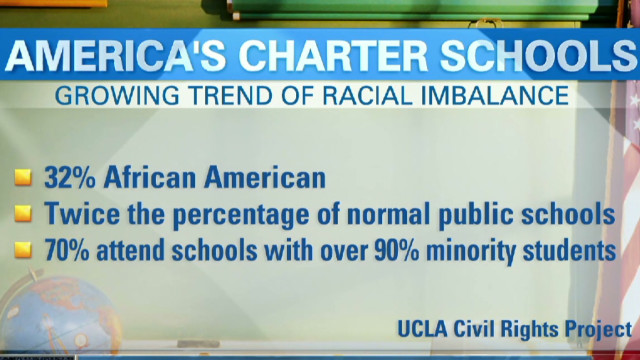
Adding to these challenges is the broken system of creating and managing charter schools in our state, a system that includes our own school. Soon after we arrived at Central Park, structural shortcomings became apparent. Students of color comprised 81 percent of the demographics of Durham Public Schools in 2013, while students of color at Central Park comprised only 29 percent of the student population. Whereas 66 percent of students in Durham Public Schools were eligible for free and reduced lunch, only 7 percent of CPSC students were eligible for the program.
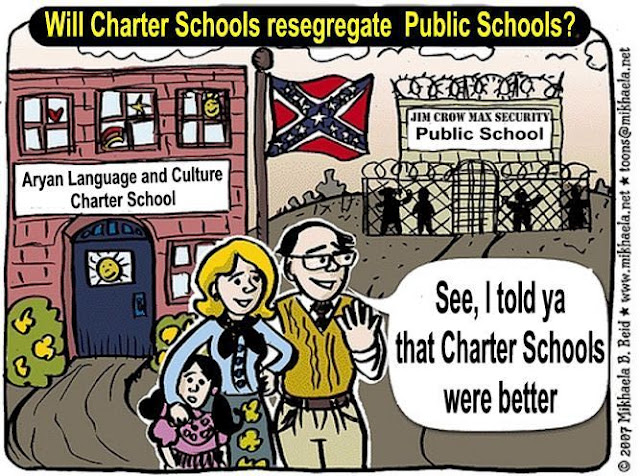
This realization led to greater clarity: regardless of our intentions, we had become part of the problem of school resegregation. We petitioned the state to become the first charter school to give weighted lottery preference to economically disadvantaged families. We have changed our policies to provide free and reduced-price lunches and transportation assistance. While there is more work to be done, each year the socioeconomic diversity of our student body better reflects the strengths found in the rich diversity of our community and delivers on the mandate for NC charter schools to provide increased learning opportunities for those most in need.
In 2018, Central Park is arriving at another moment of clarity. We recognize that, despite positive intentions, we are still part of the problem. As a charter school, we play into a system that has strayed from the original goals. The charter school system has been turned into a Trojan horse that severely underfunds our state’s public schools, creates competition for resources, resegregates our schools, and provides blinders to cover the increasing privatization of North Carolina’s educational institutions through for-profit charter schools. The mission of our school, and the original mission of charter schools, forbid us from staying Charter school teachers: ‘We won’t be a Trojan Horse for dismantling public schools’ | The Herald Sun:

Saturday, May 12, 2018

How Unequal School Funding Punishes Poor Kids | The Nation

How Unequal School Funding Punishes Poor Kids | The Nation:

How Unequal School Funding Punishes Poor Kids
Our system for funding education is broken, and it’s hurting society’s most vulnerable.


hile a wave of proteststeacher strikes, and student walkouts has exposed the outrageous inequality plaguing the public education system, the budget numbers reveal how unfair funding programs dictate what our children are worth, depending on where they live, the color of their skin, and their families’ wealth.
School funding levels, according to the analysis of the Education Law Center (ELC), vary most dramatically along school-district lines, generally dictated by local property taxes, which renders the education of some wealthy children funded at double the rate of a poor kid’s. There are also stark disparities across state lines, with statehouses primarily managing education policy. Fifteen years after “No Child Left Behind” promised to “close the achievement gaps” in race and socioeconomic background, children in more than one-third of the states are not just stagnating, they’re sliding backward with what the ELC calls “regressive” funding. In 17 states, including relatively affluent Connecticut and Maine, the school systems “provide less funding to their higher poverty school districts, even though students in these districts require more resources to achieve.” In many states, including Michigan and Arizona, poor kids are priced out of educational equity: “only the lowest-poverty districts have sufficient funding to reach national average student achievement outcomes.”
In other states, concentrated in the South, funding is both inadequate and stagnant. The worst-funded states also tend to neglect the basic educational interventions that could close the gaps in academic performance by underfunding early-childhood education, paying their teachers lower wages, and failing to tackle high turnover rates and major gaps in staffing levels. The massive workload on teachers is compounded by low student-to-faculty ratios that keep children cycling through overburdened schools, overworked teachers, and curricula inadequate for meeting basic state standards—which in turn results in year upon year of “underperforming” ratings for the district.
Nationwide, most states maintained “flat” or “regressive” funding patterns that ignore the need for additional funding in high-poverty districts, and just 11 states allocated additional funds to offset the barriers of concentrated poverty. That’s just half the number of schools making the extra effort to tackle poverty a decade ago, as the country was just diving into the Great Recession.
Under the Obama administration, school reformers led a drive toward testing and assessment as the chief measure of academic “achievement,” which, when coupled with the punishing austerity budgets that states imposed on many of their school services and programs, caused schools to become more unequal across the country, between districts, and even within communities. Despite the promises of equity in education, poor families’ children are being left far behind with wildly unequal funding levels: There’s a threefold difference between per-student spending in New York (with more than $18,500 spent on each child—though schools remain highly segregated) and Idaho (with less than $6,300 spent per student). In Utah, poor districts are actually punished financially, receiving 25 percent less funding than per child in a richer neighboring district.
The report also found more subtle ways that underfunding undermines Continue reading: How Unequal School Funding Punishes Poor Kids | The Nation:


Friday, May 11, 2018

Weingarten rips Trump’s push for teachers to carry weapons | New York Amsterdam News: The new Black view

Weingarten rips Trump’s push for teachers to carry weapons | New York Amsterdam News: The new Black view:

Weingarten rips Trump’s push for teachers to carry weapons


American Federation of Teachers President Randi Weingarten slammed President Donald Trump for his pro-armed teachers remarks at a National Rifle Association event.
One of the NRA’s top goals is to allow trained teachers to carry concealed weapons in the classroom and add more armed security guards to schools around the country. Trump is a fan of that proposal and parroted a familiar talking point about how gun-free zones are invitations to potential attackers to harm children.

“They love their students and they’re not going to let anybody hurt their students. But you have to give them a chance,” said Trump at the rally. “In America, we trust the people to be wise and good…that is why in America, we’ve always trusted the people to keep and bear arms.”
That did not sit well with Weingarten.
“Gun violence now kills more young people in our country than car accidents,” said Weingarten in a statement. “Instead of being a champion for children and working to fight our nation’s gun violence epidemic, the president wants more guns in schools regardless of the consequences.”
Nine states, including New York, have enacted laws that ban domestic abusers from purchasing guns. Florida’s law came after the Marjory Stoneman Douglas High School shooting in Parkland, Fla., Feb. 14 of this year.
“The president should be a cheerleader for students, parents and educators, not for the NRA and gun manufacturers,” stated Weingarten. “President Trump continues to call for arming teachers and school staff with guns, but he’s been completely silent when it comes to what educators have asked to be armed with—the respect and resources they need to teach students.”

New York’s state government is pushing for more gun reform as well. A Continue reading: Weingarten rips Trump’s push for teachers to carry weapons | New York Amsterdam News: The new Black view:


Top NAACP official slams charter schools – People's World

Top NAACP official slams charter schools – People's World:

Top NAACP official slams charter schools

Image result for Top NAACP official slams charter schools
WASHINGTON—The president of the California NAACP is slamming the nation’s burgeoning charter school movement as bad for teachers, bad for kids and bad for accountability to parents. And it especially hurts kids in inner-city schools, Alice Huffman says.
Huffman headed a special NAACP commission on the charters after her state chapter raised the issue at the last convention of the nation’s oldest civil rights group, she told a May 9 symposium on charters and their impact on public schools.
It found, in so many words, that charters were a mess: Most did not fulfill their promises, they keep their budgets and spending secret, they discriminate against the disabled, and they yank due process protections from disciplined kids and from their teachers, too.
The American Federation of Teachers, which has been skeptical of charters — and which is also trying to organize many of them – sponsored the symposium, along with the union’s Albert Shanker Institute.
“I don’t have the data” the other panelists presented, Huffman said. “I want to talk about the kids.”
“Believers in privatization” of schools, including for-profit charter school operators, “want to get the pot of dollars” states make available to public schools, she said. “And the one group they hated more than African-Americans was unions.”
She also set charters as one of several public school “remedies” that hurt minority-group kids. Charters, Huffman said, were preceded by vouchers and tuition tax credits funneling public dollars to parents of private school kids.
In the South, after the Supreme Court’s 1954 school desegregation ruling, the response was to close the public schools rather than integrate. But charters take advantage of parents’ desires for the best education for their children, Huffman noted – a desire mostly left unfulfilled, the NAACP report last year found.
Other panelists at the May 9 session also criticized charters, for different reasons. Most pointed was David Arsen, a Michigan State University education policy professor. He faulted the state’s politicians for bending to a strenuous lobbying campaign by GOP big giver Elizabeth “Betsy” DeVos against public schools in general and for charters.
Overcoming opposition from the state’s teachers’ unions and even the Chamber of Commerce, she won. Michigan’s charters, Arsen said, have virtually no accountability for their results, which have sunk the state to the bottom of national rankings in achievement, per-pupil spending and other measures.
DeVos, a vitriolic foe of public schools in general and unions in particular, is now carrying on the same crusade as GOP President Donald Trump’s Education Secretary – over opposition from the AFL-CIO, AFT, the National Education Association, the School Administrators (AFSA) and other unions.
Cities nationwide often use charters to evade union contracts, financial accountability to parents and, sometimes, teacher standards. The for-profit charter operators promise better student performance, but often – including in Detroit and Milwaukee – haven’t delivered.
That’s what prompted California’s complaint and the NAACP panel Huffman headed. It visited charter systems in New Orleans, New York, Detroit, Milwaukee, Cleveland and elsewhere.
Ironically, Huffman noted, Shanker, the union’s dominant president in the 1960s, first came up with the idea of charters. But he envisioned them as cooperating with public schools and demonstrating best practices Continue reading: Top NAACP official slams charter schools – People's World:


Thursday, May 10, 2018

Teachers Are Leading the Revolt Against Austerity | The Nation

Teachers Are Leading the Revolt Against Austerity | The Nation:

Teachers Are Leading the Revolt Against Austerity

The strikes aren’t just about pay. They’re a rejection of tax cuts for the wealthy and a rallying cry for public goods and services.
Arizona-Teacher-strike-2018-ap-img

In less than three months, rank-and-file teachers and educational support staff in five states—West Virginia, Kentucky, Oklahoma, Colorado and Arizona—have turned the entire country into their classroom. They haven’t just pushed for—and won—better pay and working conditions for themselves. They’ve also mounted a direct challenge to decades of bipartisan tax cuts for corporations, helping us all understand what austerity means. And by championing a raft of policy proposals to redistribute wealth away from the 1 percent and back to the working and middle-class, they’ve shown us how austerity can be defeated. As Emily Comer, a middle-school Spanish teacher who was a leader in the strikes in West Virginia, put it, “The phase we are in now—to win a real, progressive solution to the health-insurance crisis—forces us to dream bigger. This isn’t just about our healthcare plan. It’s about rebalancing the power of workers and corporations in our state.” 
Remarkably, these strikes have garnered overwhelming support from the public, despite years of well-funded attacks on teachers unions. In a recent NPR/Ipsos poll, just one in four respondents said they think teachers are paid enough, and three-quarters said teachers have the right to strike. Remarkably, this support cut across party lines. “Two thirds of Republicans, three-quarters of independents and nearly 9 in 10 Democrats” support the teachers’ right to strike, the poll showed. 
The most recent walkouts have shifted to western states. On April 26, 50,000 teachers and their supporters march through Phoenix in 100 degree heat. That same day, thousands of protesters descended on the capitol of Colorado.
Every walkout has resulted in victories, some more than others. In Kentucky, educators forced the governor’s veto of new taxes to be overturned, providing some additional funds for schools. But they fell short of preventing the conservative legislature from weakening their pension plan. In Oklahoma, while educators failed to stop a raft of tax cuts and increase overall funding, they still won their first raise since 2007 by $6,000 a year, which by is huge by local standards. In Arizona, the teachers won a 9 percent immediate raise, with Governor Doug Ducey pledging 11 percent more to achieve what he calls the 2020 deal, a 20 percent pay raise Continue Reading: Teachers Are Leading the Revolt Against Austerity | The Nation:
Image result for Teachers Lead


Wednesday, May 9, 2018

Arne Duncan and Margaret Spellings: What ails education? ‘An absence of vision, a failure of will and politics’ - The Washington Post

What ails education? ‘An absence of vision, a failure of will and politics’ - The Washington Post:

What ails education? ‘An absence of vision, a failure of will and politics’


We have long benefited from a broad coalition that has advanced bold action to improve America’s education system.
That coalition has waned. It’s time to rebuild it.
Today, education is blessed with bipartisan agreement on what works, and cursed with bipartisan complacency at every level on taking action.
Both sides recognize the need to balance strong federal accountability with local innovation; to support high standards for teachers; and to encourage choice and diversity while keeping public schools as the core focus of national policy.
Current federal education policy, governed by the Every Student Succeeds Act, encourages states to implement those principles in accordance with local needs and context. But today, even the country’s greatest champions for local control see state efforts as underwhelming and insufficient.
In the absence of an aggressive national push, even the best ideas lack the momentum to create effective change on the ground.
It wasn’t always like this. While we didn’t always agree about the best way to get there, for years we agreed on the destination. Far-sighted presidential and legislative leadership, an engaged business community and an enduring civil rights movement saw quality education as the key to all other forms of progress.
 That alliance allowed President Ronald Reagan to oversee “A Nation at Risk,” a report that made education a priority in the national consciousness; President George H.W. Bush to convene the governors and catalyze state-level education progress; President Bill Clinton to push for rigorous student achievement standards and charter school expansion to promote school innovation; President George W. Bush to champion the bipartisan No Child Left Behind to address achievement gaps through strong federal standards; and President Barack Obama to create Race to the Top and incentivize continuous improvement in school performance.

For decades, national leadership rejected the soft bigotry of low expectations and insisted that every student, regardless of race, background or economic hardship, deserved the American ideal of equal opportunity. A promise that’s given life through education.
Today, we lack the national leadership to fulfill that promise. We see the consequences in state education plans that lack vision, commitment or ambition, and in recently released National Assessment of Educational Progress scores showing stagnant progress in our “national report card.” Students are suffering because of an absence of vision, a failure of will and politics that values opposition over progress. There is a moral imperative to act.
Last month, four U.S. secretaries of education representing 16 years of experience as secretary, serving under George W. Bush and Obama, shared a stage at the Reagan Institute. We were marking the 35th anniversary of “A Nation At Risk,” which galvanized national resolve around education.
The stark report outlined our national failure: “We have, in effect, been committing an act of unthinking, unilateral educational disarmament.”
After decades of momentum across different administrations, all of us believe we’re headed toward another round of unilateral disarmament. Federal education policy is rudderless and adrift.
What, today, is the national priority for K-12 schools? For higher education? What policy proposal exists today that can plausibly achieve the progress we need?
At a moment when students are marching in the streets for their right to a safe, quality education; when teachers across the country are demanding attention and investment from their political leaders; when every economic indicator confirms the growing importance of a sound education in forging a full, productive life, what is our shared national vision for our children?
Higher expectations and strong standards — backed by federal policy that protects the enormous taxpayer investment in K-12 schools and higher education — are bipartisan concerns. Respect for teaching, and the accompanying need for better preparation and support for teachers, must be one unifying goal.
Each of us has different views about the right balance of federal oversight and incentives when it comes to America’s schools and colleges. We all welcome a lively debate on the best way for Congress, the president and the Department of Education to encourage school improvement.
But whatever the precise policies, we believe there’s a crucial role for national policymakers to set ambitious goals, marshal resources and enact policies that benefit our students. That’s not happening with the urgency we need.
Education is what makes America the country it is. An educated populace, versed in civics, trained to reason and empowered to act is what safeguards our democracy. Equitable access to education — our greatest force for economic mobility, economic growth and a level playing field for all — is what underwrites the American meritocracy.
We urgently need a new generation of business leaders who see the alignment between their corporate priorities and the national interest. We need teacher unions and school leaders ready to play a vital, constructive role in setting fair standards. We need civil rights advocates who can mobilize around the foundational importance of equal access to education. And we need political leaders who know that a fair, prosperous country is forged in classrooms, not at campaign rallies.
Without that renewed coalition, we are once again a nation at risk. After decades fighting for equitable, high-quality education, many across the country are exhausted. We know. But our progress is real, and the consequences if we relent are real as well. It’s time for us to rally, to step up to the plate once more and rebuild American education’s grand coalition.
Arne Duncan, managing director of the Emerson Collective, was U.S. education secretary under President Barack Obama. Margaret Spellings, president of the University of North Carolina System, was U.S. education secretary under President George W. Bush.What ails education? ‘An absence of vision, a failure of will and politics’ - The Washington Post: