Latest News and Comment from Education

Saturday, November 5, 2016

Catch up with CURMUDGUCATION: Student Suicide + Where the Free Market Fails

CURMUDGUCATION:

Catch up with CURMUDGUCATION


Student Suicide
I knew it was a growing issue. I didn't know it was this bad. Between 2007 and 2014 the suicide rate for children aged 10-14 doubled. Doubled. That's according to the Center for Disease Control . If you want to put that in perspective, the rate of death by auto accident has been dropping steadily since 1999 (the beginning of the charted data), cut by more than half. In 2014, the suicide rate climb
Where the Free Market Fails
Donald Trump has proposed that we just get rid of Obamacare and replace it with free market forces. This is as original as any of his policy ideas (i.e. not at all), but it's still a bad idea because health care is like education in that the freemarket cannot possibly succeed in accomplishing what we claim to want as a society. I'll explain in a moment, but first, let me insert my usual disclaimer

NOV 03

Common Core: Victim of Inadequate PR?
We've often heard that poor old Common Core was a swell thing that fell victim to bad implementation. But over at EdSource yesterday, Pat Reilly identified a different culprit. Messages, backed up with data and brought to life through emotive language, are fundamental to changing minds in the 21st century. Yet too often, education advocacy is stopped in its tracks because critical concepts aren’t
Is Pre-K A Waste of Time?
There's plenty of research out there wrestling with the eternal question-- does pre-school actually make any difference in the long run? It's an important question, but it's important to pay attention to exactly how it is being asked, because that little bit of nuance has everything to do with what policymakers think Kindergarten is supposed to look like. As reported by Brookings, of all places, t

NOV 02

Are High Standards Leading To Better Outcomes?
The Collaborative for Student Success was created to help push the Common Core State Standards, and it remains devoted to that goal, proudly announcing " The Results Are In: High Standards Are Leading to Better Outcomes ," a headline we can take just about as seriously as a headline from the Ford PR department announcing that the new Ford Taurus Is Awesome! CSS is an astro-turf advocacy group, a g

NOV 01

WA: Buying the Court
When reformsters aren't busy trying to buy seats on school boards or flood a state with outside money to influence charter school legislation, sometimes they turn their money and attention to the courts. Washington State has been a disappointment to many of its tech billionaires. Bill Gates and his friends had to spend several million dollars on several different tries to get a charter school law

OCT 31

Welcome to Charter Cafeteria
Welcome to the new Charter Choice Cafeteria! Can I help you? Wow! It's so clean and shiny here. And is that.... is that steak?? Why yes. We believe that all students should have the chance to eat steak for lunch. Well, that's great. My usual public cafeteria only has meatloaf every other day, and it's not so good. So I would really love steak for lunch. Can I just-- Just a second. Charter Choice C

OCT 30

PA: State Rep Compares School Boards to Hitler
Brad Roae is running for re-election for the PA House of Representatives for District 6. First elected in 2006, Roae has had some interesting things to say about education in Pennsylvania. Hitler blamed the Jews for everything that was wrong with the world and school boards blame charter schools. This was on Facebook, in response to a question about the currently-off-the-table HB 530, a bill that
ICYMI: Catching Up with Reading (10/30)
I've been home for about a week and I am just about back up to speed. There's a lot to read this time around. As always, I encourage you to share wildly whatever you like here. What Are the Main Reasons Teachers Call It Quits NPR takes a look at why some folks are getting out of the teaching biz. No surprises 
CURMUDGUCATION:

Teacher: ‘I love my students, I love my job, and I feel fulfilled. But I’m broke.’ - The Washington Post

Teacher: ‘I love my students, I love my job, and I feel fulfilled. But I’m broke.’ - The Washington Post:

Teacher: ‘I love my students, I love my job, and I feel fulfilled. But I’m broke.’

Image result for I’m broke
Teachers have long been underpaid — and just how much was underscored in a recent studywhich found that the difference between what teachers and comparable public workers earn is larger than ever. Among the key findings:
  • Average weekly wages (inflation adjusted) of public-sector teachers decreased $30 per week from 1996 to 2015, from $1,122 to $1,092 (in 2015 dollars). In contrast, weekly wages of all college graduates rose from $1,292 to $1,416 over this period.
  • For all public-sector teachers, the relative wage gap (regression adjusted for education, experience, and other factors) has grown substantially since the mid-1990s: It was ‑1.8 percent in 1994 and grew to a record ‑17.0 percent in 2015.
Here is a personal story of one teacher and how she and her family are affected by her profession’s low salary base. She is Rachel Wiley, an elementary school teacher in Washington state and a member of Teachers United, an organization of teachers in Washington state that is funded by the Gates Foundation. This appeared on the organization’s website of Teachers United and I was given permission to republish it.
By Rachel Wiley
I am 29 years old. I have two children, ages 10 and 8. Anyone with a decent grip on basic math can figure out that means I was a teen mom.
When I was 18 years old, I learned that I was pregnant with my first child. I was a new college student, had a part-time job at a local retail store, and was scared to death. How would I support a child? Would I end up on welfare? Was I destined to become another statistic? I was faced with a choice: should I leave school and get a full-time job, or should I continue in school, knowing that a degree would ultimately (I thought) mean higher wages and better quality of life.
I decided that there was no way I was going to allow my circumstances to determine my fate. Despite the grim outlook for teen moms, I determined that I was going to be different. I wanted my kids to look up to me, to see that if you work hard and stay focused, you can achieve your goals.
I stayed in school, eventually graduating with my AA. I transferred to the University of Washington at Tacoma and earned a bachelor’s degree. Then, I decided to become Teacher: ‘I love my students, I love my job, and I feel fulfilled. But I’m broke.’ - The Washington Post:

Teachers at four L.A. campuses want no part of funding from pro-charter school group - LA Times

Teachers at four L.A. campuses want no part of funding from pro-charter school group - LA Times:

Teachers at four L.A. campuses want no part of funding from pro-charter school group


Teachers at four Los Angeles campuses overwhelmingly voted this week to oppose a program that could provide extra resources because the money would come from a pro-charter school organization.
The school district said Friday that it has withdrawn grant applications for two of the schools.
Faculties voted at Drew Middle School and Gompers Middle School in South Los Angeles and Pacoima Middle School and San Fernando High School in the northeast San Fernando Valley. 
The potential funding being rejected would come from from Great Public Schools Now, a nonprofit formed to replicate successful schools across low-income Los Angeles neighborhoods in which the neighborhood campuses have low test scores.
The nonprofit said it is agnostic over the type of school to be created and has pledged to fund the planning of up to five projects submitted by the Los Angeles Unified School District.
The offer was embraced by L.A. schools Supt. Michelle King, whose strategic plan includes starting new programs to keep and attract students. Others involved in L.A. Unified, including school board President Steve Zimmer, have been skeptical because Great Public Schools Now evolved from a proposal, spearheaded by philanthropist Eli Broad, that talked only of a massive charter school expansion.
Charters are independently operated and exempt from some rules that govern traditional campuses. They have proved popular with many parents, but critics have accused them of undermining traditional schools by attracting students who are easier and less expensive to educate. L.A. Unified has more charters than any other school system in the country, enrolling about 16% of district students.


Great Public Schools Now would not confirm which schools had applications filed on their behalf, saying the process was confidential.
A district spokeswoman confirmed that the district had wanted to apply on behalf of the four schools.  
“This is nothing but an insulting billionaire publicity stunt,” union President Alex Caputo-Pearl said of the Great Public Schools Now funding. “Charter growth has drained millions of dollars from LAUSD schools serving our highest-needs students.”
Caputo-Pearl referred to the grants, which would range from $50,000 to $250,000, as “chump change” compared to the millions given to charters by Broad and the foundation overseen by the Walton family, which started Wal-Mart. Great Public Schools Now’s board includes a representative of the Eli and Edythe Broad Foundation and Marc Sternberg, K-Teachers at four L.A. campuses want no part of funding from pro-charter school group - LA Times:


Relay Is A Very Bad Joke-One That Hurts Kids  (By Ann Cronin) - Wait What?

Relay Is A Very Bad Joke-One That Hurts Kids  (By Ann Cronin) - Wait What?:

Relay Is A Very Bad Joke-One That Hurts Kids  (By Ann Cronin)

Image result for big education ape Relay Graduate School of Education

Writing on her blog, Real Learning CT, educator, education advocate and education blogger Ann Cronin explains;
The Relay Graduate School of Education recently applied to be a graduate school of education in Pennsylvania, California, and Connecticut. That application was denied in Pennsylvania and California. That application was approved in Connecticut.
What is the Relay Graduate School of Education? Daniel Katz, Director of Secondary Education and Secondary Special Education Teacher Preparation at Seton Hall University sums it up like this:
It is a “Graduate School of Education” that has not a single professor or doctoral level instructor or researcher affiliated with it. In essence, it is a partnership of charter school chains Uncommon Schools, KIPP, and Achievement First… Relay’s “curriculum” mostly consists of taking the non-certified faculty of the charter schools, giving them computer-delivered modules on classroom management (and distributing copies of Teach Like a Champion), and placing them under the auspices of the “no excuses” brand of charter school operation and teachers who already have experience with it.
Pennsylvania and California made worthy decisions  in rejecting the Relay Graduate School of Education. So how did it get approved in Connecticut?
On November 2, 2016, the Connecticut State Board of Education held a 
Relay Is A Very Bad Joke-One That Hurts Kids  (By Ann Cronin) - Wait What?:


Real Learning CT | Educators Reclaiming the Conversation - http://wp.me/5fCzT 

Is School Choice Wisconsin Head, Jim Bender, Accusing MPS SupDr. Driver of Only Caring About Money and Not Children

Is School Choice Wisconsin Head, Jim Bender, Accusing MPS Superintendent Dr. Driver of Only Caring About Money and Not Children in Her Proposed Reform Agenda? | Educate All Students: Larry Miller's Blog:

Is School Choice Wisconsin Head, Jim Bender, Accusing MPS Superintendent Dr. Driver of Only Caring About Money and Not Children in Her Proposed Reform Agenda?

MPS Superintendent Darienne Driver
Jim Bender states in WUWM interview comments, “They (MPS) want to become the only charter authorizer. They want to do that so they can capture cash flow, and count those students in their head count and generate revenue off those students… I don’t know that it’s any other purpose for improving education. I think it’s got a lot more to do with the bottom line.”


MPS Superintendent Introduces Aggressive Reform Agenda

By Rachel Morello 11/4/16 WUWM

The superintendent of Milwaukee Public Schools is putting forward some big ideas for change in her district. This week, Darienne Driver presented the MPS board with a slate of reforms designed to boost achievement.
Some of the most attention-grabbing ideas focus on improving student performance. They include a proposal to create a “network” of support and training for staff at for the lowest-performing schools. Dr. Driver also wants to develop an “Office of Black and Latino Male Achievement” that would work to close the achievement gap between those students and their peers.
And she wants to make organizational changes.
The most notable would be petitioning the state to make MPS the only entity in town that could charter schools. Right now, the district oversees about half of Milwaukee’s charter schools. The other chartering authorities are UWM and the City of Milwaukee.
Dr. Driver would also like to put all MPS schools on the same academic calendar, and mandate uniforms across the district.
The push for change and a kick-start to improvement is welcome. In general, immediate reaction is that people need more information before they can pass judgment.
“I and many other people are really, truly looking forward to hearing more of what the meat behind the titled components of this proposal are,” says Danae Davis, executive director of local organization Milwaukee Succeeds. “I hope that none of us throws darts until we know what it is that we’re talking about.”
A conversation has definitely begun about the scope of some of these ideas.
Dr. Driver has said she wants to see her turnaround plans implemented at all of Milwaukee’s lowest-performing schools – not just those in MPS, but at independent charter and voucher schools, too.
This idea of letting MPS create a template for struggling public, charter and private schools is bound to stir the pot.
“MPS at its core has a conflict,” says Jim Bender, president of School Choice Wisconsin. “They are so desperate to keep market share, that they can’t afford to lose many more students,  Is School Choice Wisconsin Head, Jim Bender, Accusing MPS Superintendent Dr. Driver of Only Caring About Money and Not Children in Her Proposed Reform Agenda? | Educate All Students: Larry Miller's Blog:

Schools Matter: Understanding KIPP Model Charter Schools, Part 13: The Reach of the KIPP Model

Schools Matter: Understanding KIPP Model Charter Schools, Part 13: The Reach of the KIPP Model:

Understanding KIPP Model Charter Schools, Part 13: The Reach of the KIPP Model

Get 20% Off w/code: RLEGEN16

With the help of the media and national marketing campaigns paid for by white philanthropists and their hedge fund managers, the "no excuses" KIPP Model has had a huge impact on others charter schools, as well as on public schools that serve the poor.  

Below is Chapter 13 from Work Hard, Be Hard: Journeys through 'No Excuses' Teaching (2016).  


Chapter 13

The Reach of the KIPP Model

During the early years of charter schools, policymakers who were eager to see various types of charters expand emphasized the philosophy of “let a thousand flowers bloom,” which led to new charter school growth with a variety of pedagogical approaches and organizational options.  By 2009, however, Secretary of Education Arne Duncan was looking to discourage the proliferation of models and to replicate and scale up the test score successes among the charter school industry’s “biggest brands” (Toch, 2009, p. 26). 
With most of funded charter research focused on test score successes of KIPP, the influence of the KIPP Model reaches far beyond the KIPP’s 183 schools.  For the 6,700 other charter schools with 2.89 million students (in 2015), the KIPP Model has been and remains the charter school system to emulate. 
With billions of dollars in federal Race to the Top (RTTT) grants available in 2009-2010 to fund new charter schools to replace as many as 5,000 low-scoring public schools nationwide, highly touted charter models like KIPP suddenly became even more prominent.  Even in 2009, the short list of highly regarded charter chains, which included Aspire, Green Dot, Yes Prep, and Uncommon Schools, all sought to emulate the longer hours, high expectation, and No Excuses of KIPP. 
By 2014, there were more than a dozen other highly-touted charter networks emulating the No Excuses and “joyful rigor” of the KIPP Model. These charter chains and those that share their commitment Schools Matter: Understanding KIPP Model Charter Schools, Part 13: The Reach of the KIPP Model:

With A Brooklyn Accent: Hamilton Remix- A Bright Ray of Sunshine Amidst a Cataclysmic Election- Guest Post By Alison Dobrick

With A Brooklyn Accent: Hamilton Remix- A Bright Ray of Sunshine Amidst a Cataclysmic Election- Guest Post By Alison Dobrick:

Hamilton Remix- A Bright Ray of Sunshine Amidst a Cataclysmic Election- Guest Post By Alison Dobrick

Image result for Hamilton


Today’s release of two songs on the HamiltonMixtape a long-awaited labor of love was a bright ray of sunshine during this cataclysmic storm of an election. My Shot (Rise Up Remix), by the Roots, featuring Busta Rhymes, shows definitively that Hamilton’s multiracial, up-to-the-minute portrayal in hip hop and song of idealized, distorted history was just the beginning of its cultural power.

Hamilton has become a cultural legend in its year and a half of existence. Accolades and superlatives cannot express the musical’s brilliance, beauty, and innovation; I am joined in this opinion by so many, from the Obamas to PBS to the corporate and government institutions funding opportunities for students to experience the groundbreaking show. Yes, I am a grown adult, and yes, upon listening I very quickly developed the intense fan-ship now known throughout the internet as “Hamilaria,” symptoms of which include playing/performing the album daily in the car; spouting verses and references (admittedly, to a possibly exasperating extent); and going into significant debt for a ticket with an obstructed view. For many of us, the excellent musical provided brilliant, Americana-themed escapism, especially needed during these troubling, pre-election days.

My musical- and hip hop-loving soul was enraptured, but my mind was still bothered about the ways in which history’s portrayal in Hamilton can be considered problematic or even offensive. Activist Ishmael Reed provocatively contends that having “black actors dress up like slave traders” does not mitigate the effects of presenting history in a way “that endowed slave traders and Indian eliminators the status of deities” (Counterpunch, 8/21/15). In The Public Historian (2/16),Rutgers scholar Lyra Monteiro compellingly analyzes Hamilton’s “erasure of black history.” The horrors of With A Brooklyn Accent: Hamilton Remix- A Bright Ray of Sunshine Amidst a Cataclysmic Election- Guest Post By Alison Dobrick:


Honored to Make This List – Cloaking Inequity

Honored to Make This List – Cloaking Inequity:

Honored to Make This List

Image result for big education ape bats

Honored to make the BAT’s list for the next US Secretary of Education! But I am enamored with the other esteemed members of the list and most impressed by Linda Darling-Hammond. Here is their press release:
PRESS RELEASE
The Badass Teachers Association
FOR IMMEDIATE RELEASE
CONTACT:
MARLA KILFOYLE, Executive Director BATs
MELISSA TOMLINSON, Asst. Executive Director BATs
contact.batmanager@gmail.com
516-987-4405
BATs – The Next Secretary of Education
The Badass Teachers Association, a network of over 80,000 teachers and education activists throughout the United States, demand the next Secretary of Education be someone who has a clear vision of support for public education, understands clearly the importance of equity, and will set the education of our children back on the right track.
For over ten years this country, our schools, and our children have had to endure education secretaries who have had only one agenda – the attempt to privatize public education in this country.  Arne Duncan, and now John King, will have as their legacy the initiation of some of the most disastrous education policies in education history.  Our children, our communities, and our schools will not be able to withstand another Secretary of Education who is blind to the impact that privatization has had on communities, children, and families.
“The next Secretary of Education must be an experienced classroom teacher with 5 or more years and must have an earned at least two degrees in teacher education. We cannot allow those who have never played the sport to lead the field. Improving public education begins with utilizing the experience of actual teachers to develop policy and programs that address the real issues.” ~Dr. Denisha Jones, BAT Board of Director Member
“Our next Secretary of Education must recognize that a teacher’s work environment is a student’s learning environment. When teachers are marginalized, so are their students, and those marginalized children are the future of our nation.” ~Jamy Brice-Hyde, Director BATs Quality of Worklife Team
“We need a Secretary of Education who 1) Respects the Constitutional limits of the job, 2) pushes for more federal funding for public schools, 3) encourages states to enact accountability measures that have nothing to do with standardized tests, 4) stops federal funding to charter schools, Teach for America and Common Core and 5) increases teacher autonomy, respect, pay and training.” ~ Steven Singer, Director of BATs Blogging/Research
The BATs Board of Directors has a few names for this important position.  Here they are in alphabetical order:
  • Dr. Julian Vasquez-Heilig – Professor, Educational Leadership and Policy Studies Director, Doctorate in Educational Leadership, California State University, Sacramento, California.
  • Michael Matsuda – Superintendent Anaheim Union Free School District, California
  • Dr. Barbara Nevergold – Board of Education Trustee,  Buffalo, New York.
  • Dr. Diane Ravitch – Research Professor of Education at New York University and a historian of education.  Assistant Secretary of Education 1991-1993.  New York.
  • Dr. Betty Rosa – Chancellor of the Board of Regents, New York.
  • Dr. Lauren Wells – Former chief education officer for Ras Baraka, New Jersey
  • Dr. Yohuru Williams – Professor of History and Dean of the College of Arts and Sciences at Fairfield University and former chief historian of the Jackie Robinson Foundation, Connecticut
From October 1st  through October 13th members of the BAT Board of Directors surveyed our network.  Here were the most popular choices: Diane Ravitch, Carol Burris, Linda Darling-Hammond, Stephen Krashen, Karen Lewis, Bernie Sanders, Jonathan Kozol, and Pedro Noguera.
As BAT Co-Director of State Administrators stated about the qualities that the next Secretary should have:  “Respect teachers as professionals and students as individuals. Stop pretending that inequity in resources can produce equity in outcomes. Eliminate racist institutional structures in our schools.”
Our children, our communities, our schools, and our teachers need a strong advocate for equity and equality in public education.  We do not need, and will not accept, an Education Secretary who supports corporate education monopolies or billionaires who have financed the attack on our public schools.  In a time when we have ESSA calling for authentic stakeholder involvement, we will not accept an Education Secretary that supports the Pearson monopoly, or caters to Bill Gates and others with a continuing education agenda that is tested upon other people’s children.  The next Secretary of Education must make his or her top priority equitable resourcing of our schools and supporting public education, not privatization.
After you read our press release please send a letter to Senator Alexander and Senator Murray telling them to STOP JOHN KING from implementing ESSA! Let’s wait for the next Sec. of Education to do this! https://actionnetwork.org/letters/stop-john-king?source=direct_link&referrer=badass-teachers-association


Please Facebook Like, Tweet, etc below and/or reblog to share this discussion with others.
Want to know about Cloaking Inequity’s freshly pressed conversations about educational policy? Click the “Follow blog by email” button on the home page.
Twitter: @ProfessorJVH
Click here for Vitae.
Honored to Make This List – Cloaking Inequity:

Teaching Science at Jordan Middle School: Joint Planning and Technology Integration | Larry Cuban on School Reform and Classroom Practice

Teaching Science at Jordan Middle School: Joint Planning and Technology Integration | Larry Cuban on School Reform and Classroom Practice:

Teaching Science at Jordan Middle School: Joint Planning and Technology Integration

Image result for teaching science

Team planning can be mandated by a principal or can happen naturally between like-minded teachers. At Jordan Middle School*, two science teachers in rooms adjacent to one another began slowly but steadily a few years ago to plan units of instruction for their 8th graders. A generation apart in age, these two teachers, one in her sixth year at Jordan, and Sue Pound, a New Zealand native and late-comer to teaching–she is in her 18th year of teaching–have planned units together.  The team has planned many units together including the lessons I observed two consecutive days. In connecting rooms, I saw both teachers, come and go into each other’s rooms, checking on students and materials for their jointly prepared lessons.
The state-approved physical science text they have for their students is outdated and soon to be obsolete with the state-approved Next Generation Science Standards for grades 5-8. These new standards concentrate on integrating concepts across science disciplines rather than content of each subject as in physical science, a course that both teachers have been teaching for years. The jointly-planned unit project is on Phase Changes and what I describe here is consistent with these new standards.
These two teachers, then, have managed over time to cobble together readings, worksheets, exercises, and examples gotten from many sources including colleagues and the Internet, an alternative text that would be consistent with the new science standards,
The hour-long lesson I observed Sue Pound teach on October 15, 2016 was on the jointly-planned project about Phase Changes of solids, liquids and gases.
The spacious room is furnished like her team-mate’s: tables seating 3-5 students facing one another with containers of rulers, colored pencils, and markers distributed on counter tops in front and back of room.
Pound room Jordan.jpg
By the time the buzzer sounds to begin class, 19 eighth graders are in their seats. Pound taps her laptop and two Jordan students come on-screen to make Teaching Science at Jordan Middle School: Joint Planning and Technology Integration | Larry Cuban on School Reform and Classroom Practice:


California Charter Schools Association (CCSA) Sues Huntington Park to Keep Its Traffic Problem | deutsch29

California Charter Schools Association (CCSA) Sues Huntington Park to Keep Its Traffic Problem | deutsch29:

California Charter Schools Association (CCSA) Sues Huntington Park to Keep Its Traffic Problem


On October 18, 2016, the Huntington Park (Los Angeles) City Council voted 4 to 1 to enact a moratorium on establishing new charter schools in its 3-square-mile jurisdiction. The tiny area is already home to 30 schools (12 charters); so many schools in the limited area are posing problems for Huntington Park, including traffic congestion.
Note that it isn’t the number of traditional public schools that is expanding; it’s the number of charter schools.
Note also that 30 schools in 3 square miles equals an average of ten schools in a single square mile.
The Huntington Park city council’s decision to put the establishment of future charter schools on hold for a year was met with displeasure by the California Charter Schools Association (CCSA).
So, it should come as little surprise that on November 01, 2016, CCSA decided to sue Huntington Park in an attempt to prevent the moratorium.
Interestingly, the CCSA’s central argument is that CCSA provided “unrefuted expert evidence demonstrating that the moratorium would displace charter school development, along with their resulting ‘vehicle circulation, parking, and noise’… to neighboring communities.
In other words, CCSA wants California’s Superior Court to tell Huntington Park that it will just have to put up with as much traffic and noise as can be packed within its 3-square-mile boundary via the establishment of as many charter schools as CCSA cares to push onto Huntington Park.
CCSA maintains that “CCSA and its member schools are harmed and will continue to California Charter Schools Association (CCSA) Sues Huntington Park to Keep Its Traffic Problem | deutsch29:


Patrick, Gates, and the Destruction of Texas Education | BustED Pencils

Patrick, Gates, and the Destruction of Texas Education | BustED Pencils:

Patrick, Gates, and the Destruction of Texas Education


I had all sorts of amazing an profane things to write, but nothing sticks out more to me about how Texas, and America, is screwing the public school system, especially in communities of color than this line: “It was a “conversation” in which a middle-aged white man having a “conversation” in a room filled with middle-aged white men and women, talking about “people in the inner city.”
Until we can change the narrative- the narrators, the the story, the pathways through which the oppression continues- nothing can change.
Patrick, Gates, and the Destruction of Texas Education | BustED Pencils:


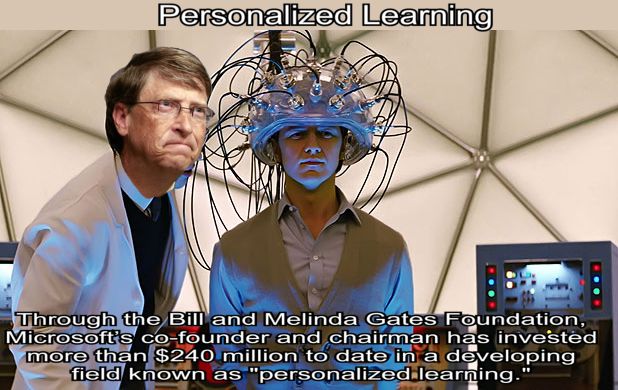
Gates Foundation Post Two New Ads for Personalized Learning

Gates Foundation Post Two New Ads for Personalized Learning

Forget Big Data—Little Data Is Making Learning Personal | WIRED - https://www.wired.com/2016/11/forget-big-data-little-data-making-learning-personal/

Computers are replacing foreign language teachers in US high schools — Quartz - http://wp.me/p2G6tR-3sPp


Teachers union wants no part of charter-backed group's grant competition for LAUSD | 89.3 KPCC

Teachers union wants no part of charter-backed group's grant competition for LAUSD | 89.3 KPCC:

Teachers union wants no part of charter-backed group's grant competition for LAUSD


The union representing Los Angeles' public school teachers said Friday its members want no part of a grant competition for L.A. Unified School District campuses funded by some of the city's biggest supporters of charter schools.
The non-profit organization Great Public Schools Now — an organization backed by charter school megadonors like the Eli and Edythe Broad Foundation — plans to offer up to $3.75 million to help L.A. Unified expand five promising schools in targeted neighborhoods.
But this week, United Teachers Los Angeles members at four district-run campuses in those neighborhoods voted to condemn those grants as token offerings to L.A. Unified schools who have already lost greater sums of money to competition with charter schools.
“It’s a public relations stunt,” said UTLA president Alex Caputo-Pearl, "that offers chump change to a couple of LAUSD efforts while they continue to put tens of millions of dollars into unregulated charter growth."
Great Public Schools Now executive director Myrna Castrejón said UTLA leaders were ginning up unnecessary conflict, saying L.A. Unified leaders have also called for expansions of the district's most successful programs to satisfy parent demand for more school options.
"When there are significant waiting lists both on magnets and in charter schools," Castrejón said in an interview, "the prime directive has to be, 'how do we get a better educational opportunity to kids who really need it?'
"In the end," she continued, "both the charter growth and the magnets' growth and the ability of the district to diversify its portfolio and increase the number of high-quality options is something that has to remain the north star."
Last year, a draft of the Broad Foundation's "Great Public Schools Now Plan" outlined an aggressive fundraising effort to double the number of students in charter schools in Los Angeles. L.A. Unified leaders saw a grave threat to their enrollment and finances in those expansion plans.
Great Public Schools Now — the non-profit organization — sprouted out of that initial plan, but with what its leaders insist is a significantly different mission. The L.A. Unified grant program was to be a "turning point," as Castrejón has said, underscoring Great Public Schools Now's new mission: to expand both high-quality charter and non-charter public schools in Los Angeles.
The competition would be open L.A. Unified schools located in Great Public Schools Now's 10 target neighborhoods — essentially South and East L.A. and the East San Fernando Valley — with high-needs student populations and strong test scores. Five winning schools would ultimately receive grants of up to $250,000 per year for three years. The competition's stated goal: "do more of what works."
(In addition, Great Public Schools Now is currently reviewing applications for $20,000 planning grants. It's not clear how many schools have applied.)
The grant criteria are intentionally narrow. A KPCC analysis found just 32 schools in Teachers union wants no part of charter-backed group's grant competition for LAUSD | 89.3 KPCC:


What if Diane Ravitch were U.S. education secretary? - The Washington Post

What if Diane Ravitch were U.S. education secretary? - The Washington Post:

What if Diane Ravitch were U.S. education secretary?

Click on picture to Listen to Diane Ravitch

Soon we’ll know. The election is next week, and not too long after we know who who, a new Cabinet will start to be formed. We can speculate on who will ultimately be the next U.S. education secretary, but let’s pursue another thought experiment. Author C.M. Rubin has asked six people prominent in the world of education what they would do if they were named U.S. secretary of education, and this is one post in her interview series.
The first interview was with Andy Hargreaves, author and Thomas More Brennan Chair in Education at the Lynch School of Education at Boston College. The second was with Randi Weingarten, president of the American Federation of Teachers, the second largest teachers union in the country. The third was with Howard Gardner, Hobbs Professor of Cognition and Education at Harvard University’s Graduate School of Education and creator of the famous theory of multiple intelligences. She also interviewed Charles Fadel, author, inventor and the founder and chairman of the Center for Curriculum Redesign; Julia Freeland Fisher, author and director of education research at the Clayton Christensen Institute; and Diane Ravitch, the subject of the following post.
C.M. Rubin is the author of two widely read online series for which she received a 2011 Upton Sinclair award, “The Global Search for Education” and “How Will We Read?” She is also the author of three best-selling books, including “The Real Alice in Wonderland,” as well as the publisher of CMRubinWorld, which launched in 2010 to explore what kind of education students need in a rapidly changing world. She is also a Disruptor Foundation Fellow. You can follow her on Twitter: @cmrubinwor This first appeared on Huffington Post and I was given permission to republish it.
Ravitch is a well-known and controversial figure in the education world. She was a former assistant secretary of education and counselor to then Education Secretary  Lamar Alexander in the administration of President George H.W. Bush who was a big supporter of No Child Left Behind — until she wasn’t. Ravitch, a research professor of education at New York University and a best-selling education historian, published a book in 2010 called “The Death and Life of the Great American School System: How Testing and Choice Are Undermining Education,” that explained why she changed her mind about standardized test-based school reform and No Child Left Behind. She became the titular leader of a movement among parents, educators, students and others to oppose the administration’s reform policies, and a few years ago co-founded a public education advocacy group called the Network for Public Education.

Here’s the interview by C.W. Rubin:
 Q) Diane, what will be the legacy of Race to the Top and President Obama’s other education initiatives?
A) In years to come, when historians look back on the early twenty-first century, they are likely to refer to the “Bush-Obama policies,” because No Child Left Behind (NCLB) and Race to the What if Diane Ravitch were U.S. education secretary? - The Washington Post: