Latest News and Comment from Education

Friday, June 3, 2016

Failing the Test: A New Series Examines Charter Schools- CAPITAL & MAIN

Education Archives - CAPITAL & MAIN:


CAPITAL & MAIN


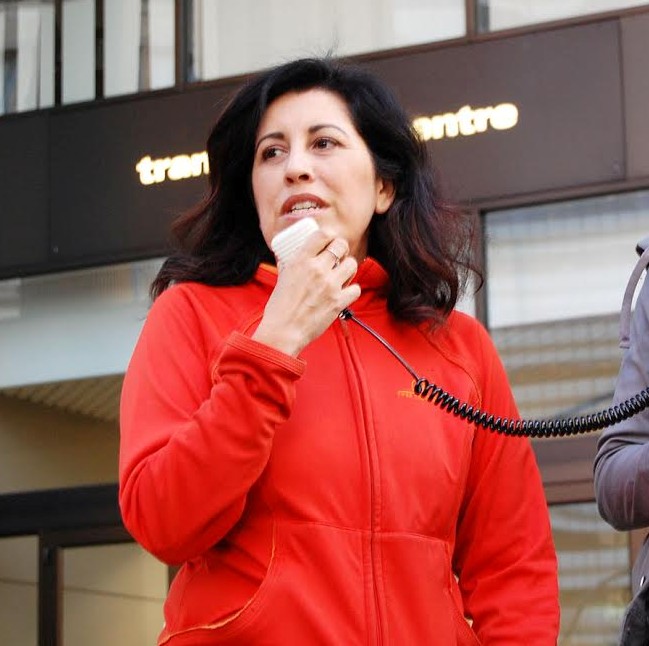
 Yolanda Rios (Photo by Pandora Young)

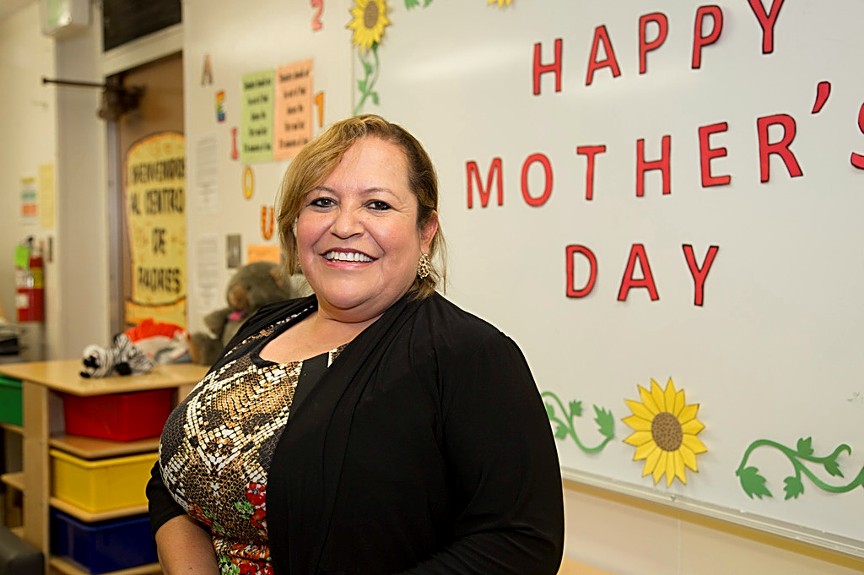
(Photo by Pandora Young)

Failing the Test: Nine Solution Takeaways

Despite the trendy popularity of charter schools in some circles, their wholesale replacement of traditional public schools is unnecessary. Not only do decades of data and research show this, but ...
READ MORE


Photo by Pandora Young

Failing the Test: Charter School Powerbrokers

The Billion Dollar Investment Charter proponents, most notably the Walton Family Foundation, contribute large amounts of money to expand charter schools in select cities around the nation. The foundation says ...
READ MORE

Failing the Test

Failing the Test: UCLA’s John Rogers on Charter Schools and Exclusion of Special Needs Students

...
READ MORE

Education Archives - CAPITAL & MAIN:

Title I funding often still doesn’t make it to our poorest schools, half a century later.

Title I funding often still doesn’t make it to our poorest schools, half a century later.:

Title I Is Supposed to Fund Our Poorest Schools

Somehow $2.6 billion of it still ends up in the hands of wealthier-than-average districts.


n Wednesday, U.S. News & World Report released a comprehensiveanalysis showing that Title I, the federal program created as part of civil rights–era legislation to meet the needs of low-income students, is still flawed. A significant portion of the $14.5 billion spent via Title I each year is funneled to students in wealthier districts: Nearly 20 percent, or $2.6 billion, goes to wealthier-than-average districts, while many districts with high concentrations of poverty are shortchanged.
The mission of Title I, created in 1965 as part of President Lyndon B. Johnson’s “war on poverty,” was to provide federal funding to help meet the educational needs of low-income students. It’s been reauthorized regularly since then, and it’s a key part of the most recent federal education law, the Every Student Succeeds Act, signed into law in December by President Barack Obama to replace 2001’s No Child Left Behind Act. The funding is meant to provide supplemental resources for low-income, struggling students, such as instructional coaches, reading and math intervention programs, professional development, and additional guidance counselors. But it is notoriously difficult to correctly allocate these funds—how do you know how to fairly disperse money so it benefits just the poor students in more than 13,000 school districts?
Over the years, Title I has been modified in attempts to address misuse. One of the most significant amendments, passed in 1970, requires districts to use Title I funds to supplement, not supplant, state and local funding. In other words, it prohibits local districts from intentionally underfunding schools serving poor students because they assume they can backfill the shortfall using federal money. A more recent modification helped curb blatant misuses of funds, such as using it to build twoOlympic-sized swimming pools in Claiborne Parish, Louisiana, which at the time had a child poverty rate of 36 percent.
Despite the overall intent that Title I funding help poor students, it doesn’t always work out that way in practice. That’s because of the inherent difficulty in pinpointing exactly which schools should get funding and how much. If a school in a wealthy district enrolls students who live below the poverty line, should it still get a piece of the cake, and if so, how much? Is it the number of poor students that matters or the percentage of students who are poor? (The current formulas take both into account, although more weight is given to the number of poor students.) Title I also incentivizes states to provide higher levels of financial support by offering additional funds when they do.
There are other considerations, too; for example, there’s the fact that states with small populations, which are presumed to be rural, receive additional funding. While this makes sense for a state such as New Mexico, it also means that states such as Delaware, whose small population is due to its small size, not its ruralness, also receive this Title I bump—in fact, they end up receiving more Title I funds per student than other states with higher rates of child poverty.
Another quirk of the law: In schools where at least 40 percent of students come from low-income families, Title I funds can be used on schoolwide programs that benefit all of the students.
The net result is that the distribution of funds is uneven and often counterintuitive. SoTitle I funding often still doesn’t make it to our poorest schools, half a century later.:

Charter schools and allies pour it on in California legislative races | The Sacramento Bee

Charter schools and allies pour it on in California legislative races | The Sacramento Bee:

Charter schools and allies pour it on in California legislative races


Charter school advocates and their allies, largely bankrolled by a handful of wealthy donors, are dominating the state’s political landscape this primary season, pouring nearly $9 million into legislative races around the state.
Saying they are tired of current conditions in California schools, they are spending in 12 different districts, seeking to elect lawmakers they believe will be more sympathetic to their cause on such issues as teacher performance, tenure and the way schools are governed.
The California California Charter Schools Association, EdVoice and the charter-school funded Parent Teacher Alliance are spending significantly more than those groups committed during the last three legislative primary seasons, through Wednesday spending a third of all outside money seeking to influence legislative elections.
EdVoice, which has spent nearly $5 million in six districts since April 1, is supporting candidates it believes will be receptive to changing the education system, either through charter schools or changes in public schools, said Bill Lucia, the organization’s president and CEO.
12Number of legislative districts where charter schools or EdVoice have spent money.
“It’s about eliminating inequities and providing opportunities to all kids. The Legislature has an important role in that,” Lucia said. “But there are too many who are perfectly fine being defenders of the status quo.”
As they grow in popularity, charter schools have cut into public school enrollment and funding, particularly in larger urban districts like Los Angeles. Their advocates regularly clash with teachers unions in the California Legislature, the state education board and courtrooms.
But any semblance of a campaign fight with teachers unions in legislative races on next Tuesday’s ballot is decidedly lopsided.
Until last week, the 330,000-member California Teachers Association was all but a non-player in primary races around the state, two years after putting more than $5 million outside spending efforts leading up to the June 2014 primary. The group could be saving its money: a top goal for the teachers union this year is to help pass a proposed November measure to extend higher income taxes for the wealthy to support schools and other programs, a campaign that would cost millions.
This spring’s spending disparity increases the likelihood that the November ballot will include multiple candidates, all Democrats in safely Democratic districts, who advance to the fall runoff with the strong backing of self-described education reform groups. Results in the fall election could give the interests a significantly stronger voice in the union-friendly Legislature.
“Right now, we’re involved in just a handful of races in the primary,” said Becky Zoglman, a spokeswoman for the teachers union. “We’ll reassess for the November election,” she said. So far, the union has contributed almost $4 million to efforts to extend a version of the temporary income tax increases in Proposition 30 of 2012.
“It’s definitely a top priority for CTA this cycle,” Zoglman said.
Outside spending by Ed Voice and charter schools
DistrictCommitteeAmountSupportOppose
AD43Parent Teacher Alliance$1,261,785Laura FriedmanArdy Kassakhian
1 of 1
The charter schools association is the sole source of money for the Parent-Teacher Alliance, which has spent $3.5 million in four Assembly districts. The charter schools association itself is spending another $264,000 in two Assembly districts.
More than 80 percent of the association’s donations since last July have come from five people: GAP co-founder Doris Fisher, Netflix CEO Reed Hastings, developer Eli Broad, Texas billionaire and former hedge fund manager John D. Arnold and Carrie Walton Penner, the granddaughter of Wal-Mart founder Sam Walton. The association’s own committee hasCharter schools and allies pour it on in California legislative races | The Sacramento Bee:


Read more here: http://www.sacbee.com/news/politics-government/capitol-alert/article81488362.html#storylink=cpy
 

Big Education Ape: Analysis: EdVoice with an IE for Dodd; Educational Reform Group Has Ties to Vergara Suit and Wa... http://bit.ly/1SJq26U

Big Education Ape: News Analysis: Education fight ‘over shades of Democrat’ | CALmatters http://bit.ly/25csc6L

Big Education Ape: Local legislative races become battleground in statewide fight over educationhttp://bit.ly/1WMlJKA

Big Education Ape: Edvoice pumps cash into Assembly campaign | News | Palo Alto Online | http://bit.ly/1s8OhSi

Big Education Ape: Charter school groups spending big in California legislative races | 89.3 KPCChttp://bit.ly/1TYIvJj

Nguyen Mailer Highlights Major Endorsements, Education Heavyweights; Davis Tries Maternal Appeal -
Elk Grove News.net

Nguyen Mailer Highlights Major Endorsements, Education Heavyweights; Davis Tries Maternal Appeal - 

Nguyen Mailer Highlights Major Endorsements, Education Heavyweights; Davis Tries Maternal Appeal 

 With the June 7 primary just five days away, the two most visible candidates for the Area 6 Sacramento County Board of Education hit Elk Grove mailboxes with mailers today. Those candidates are Heather Davis and Stephanie Nguyen (pictured above) and each employed a distinct strategy. 


Davis, whose mailer was paid for by the state's leading charter school advocate and employer of her husband, Elk Grove Gary Davis, the California Charter School Association seems to be aimed at women voters. This mailer, titled "Teachers Say: "Put a Mom on the School Board"" features four female teachers from the Elk Grove Unified School District and seems to be targeting maternal instincts suggesting that a mother needs to serve on the board. 

Among the four educators endorsing Davis is Cua Lo-Ly, the wife of Elk Grove Vice Mayor Steve Ly. Vice Mayor is the political protege of Mayor Davis.

Countering those four endorsements, Nguyen, a mother herself, highlights educational and political heavyweight endorsements. Among the educational heavyweights endorsing her candidacy are former legendary Elk Grove Unified School District school principal Marielle Tsukamoto and Los Rios Community College Board Member Kay Albiani.  

In addition to Tsukamoto and Albiani, Nguyen's major endorsements include local Democratic heavyweights Assembly Members Jim Cooper and Kevin McCarthy, Former California State Senate Leader and current Sacramento Mayoral Candidate Darrell Steinberg, and Sacramento County Supervisor Patrick Kennedy. 

Nguyen, a Democrat, is also endorsed by the California Schools Employee Association, California Teachers Association, and the Sacramento Central Labor Council. Although not registered as a Democrat, Davis, a charter school advocate, has tried appealing to Area Six voters by appearing on a slate mailer targeted to Democratic voters. 

Closer to Elk Grove, Planning Commissioners Frank Maita and Kevin Spease and Maggie Ellis, former President of the Elk Grove Education Association are among others on the lengthy list of endorsements.

On the flip side of Nguyen's mailer, which by our count her third and was paid for my her own campaign committee, is perhaps the more significant endorsement, and that is from the Sacramento Bee. The pull quote from the Bee's editorial board endorsement says "She wants to improve collaboration between the county and community-based non-profits to close the achievement gap ... Her rivals ... lack the understanding of the board." , 

In addition to Davis and Nguyen, the other two candidates for the Area 6 seat are Orlando Fuentes and Jrmar Jefferson. Although neither of these candidates has sent mailers, Fuentes won the endorsement of the Elk Grove-South County Democratic Club.   
- See more at: http://www.elkgrovenews.net/2016/06/nguyen-highlights-major-endorsements.html#sthash.ScX3QLvn.dpuf


Big Education Ape: Analysis: EdVoice with an IE for Dodd; Educational Reform Group Has Ties to Vergara Suit and Wa... http://bit.ly/1SJq26U

Big Education Ape: News Analysis: Education fight ‘over shades of Democrat’ | CALmatters http://bit.ly/25csc6L

Big Education Ape: Local legislative races become battleground in statewide fight over educationhttp://bit.ly/1WMlJKA

Big Education Ape: Edvoice pumps cash into Assembly campaign | News | Palo Alto Online | http://bit.ly/1s8OhSi

Big Education Ape: Charter school groups spending big in California legislative races | 89.3 KPCChttp://bit.ly/1TYIvJj

Standardized testing put to the test - The Boston Globe

Standardized testing put to the test - The Boston Globe:

Standardized testing put to the test

Every new year, I ink all nine SAT test dates on our calendar. Why? Because my husband, John, is a high school tutor, with SAT prep a big wedge of his business. Those last weeks before each test (June 4 is the finale for this school year) bring down a mighty squall for him, full of long hours, revved students, and fretful parents.
So I have a stake in testing — but I’m ambivalent about it too. You’d think roughly half of the education books would be in favor of standardized testing, half against. No way. They’re almost all inimical to the acronym-ical, and not just the SAT. Each state, after all, has its own assessment, from our MCAS, to the TAKS (Texas), to Utah’s yearningly named U-PASS, some of them created years ago and the rest after a nudge from the federal No Child Left Behind Act (2001).
With such an alphabet soup, I needed to get the FYI ASAP. One cover blurb grabbed me: The New York Times declares “the [anti-testing] movement now has a guidebook,” which is the lure for “The Test: Why Our Schools Are Obsessed with Standardized Testing — But You Don’t Have to Be” (PublicAffairs, 2015). The guidebook’s guide is Anya Kamenetz, NPR reporter and former Fast Company senior writer.
She offers ten arguments, like: “1. We’re testing the wrong things. 2. Tests waste time and money. 3. They are making students hate school and turning parents into preppers.” Other points explore how the tests penalize diversity and the states game the system to get federal funds. To sum up the problem, Kamenetz cites an economist’s koan from 1975, known as Goodhart’s Law: “When a measure becomes a target, it ceases to be a good measure.”
There is a long tail here. Her short history of standardized tests goes from a psychologist measuring “the more elementary powers” on visitors to the 1893 Chicago World’s Fair, to the Binet-Scale I.Q. tests introduced in 1905 in France, to a series of chilling mental acuity tests that were grounded in eugenics. In World War I, the military took over, giving Army Alpha tests (for the literate recruits) and Army Beta (for the not). One of the Alpha test creators helped develop the SAT.
“The Big Test: The Secret History of the American Meritocracy” (Farrar, Straus and Giroux, 1999) fills in even more ovals, and it’s a fascinating if unwieldy read (the afterword acts as a good SparkNotes). Author Nicholas Lemann, then a staff writer at The New Yorker and now dean emeritus of Columbia Journalism School, had full access to the archives of the Educational Testing Service. And so he colors in the major players: Henry Chauncey, head of the ETS, and Harvard president James Bryant Conant, who hammer out a test to select bright public school students for Harvard, thus breaking the stranglehold of the private-school elite.
These democratic origins seem ironic now, since questions have been raised about how race, class, and ethnicity play into aptitude tests results. Thus to the front lines with “More Than a Score: The New Uprising Against High Stakes Testing” (Haymarket, 2014). It’s an anthology edited Standardized testing put to the test - The Boston Globe:

Chicago Kids Dodge Gunfire, Now Face Closed Schools? Union Rips Rauner, CPS - The Loop - DNAinfo Chicago

Chicago Kids Dodge Gunfire, Now Face Closed Schools? Union Rips Rauner, CPS - The Loop - DNAinfo Chicago:

Chicago Kids Dodge Gunfire, Now Face Closed Schools? Union Rips Rauner, CPS

 The Chicago Teachers Union blasted CPS CEO Forrest Claypool for suggesting schools will not open without a state budget deal.


THE LOOP — Angry at the prospects of city schools not opening in the fall, the Chicago Teachers Union on Thursday slammed Gov. Bruce Rauner and Chicago Public Schools chief Forrest Claypool over their use of schoolchildren as pawns in the state's budget battle.
Claypool, the district's chief executive officer, lashed back that he was "shocked" the union was "surrendering to Gov. Rauner and letting him off the hook." Claypool charged that it was the governor who was holding students hostage across the state and "he should let the children go."
The union's comments came in response to Claypool insisting that CPS won't open in the fall without a state budget, or at least an education spending plan. The state has been without a budget for over a year, and legislators failed to ink a deal this spring.
 A day after Claypool called on legislators to stay in session in the General Assembly to reach an education funding deal with Rauner, he told media outlets Wednesday that Chicago schools and many districts statewide would not be able to begin the fall term without it.

"Now we need the governor to end his strategy of pitting one region against another and fix the funding for all the districts suffering under Illinois’ worst-in-the nation approach," Claypool said.
Claypool's comments are an "admission of failure" on behalf of the city and CPS to find stable funding for the school system, said Jesse Sharkey, vice president of the teacher union. The union has long suggested that the city could stabilize CPS's budgets through shifting priorities and levying new, progressive taxes.
"Claypool has a lack of a vision for Chicago Public Schools," Sharkey said Thursday at a press conference at the union's River North offices in the Merchandise Mart. "This is the impact failed leadership has had on our children.
"Children can't play outside out of fear of being shot. Now they can't go to school," Sharkey said.
The union is planning a June 22 rally Downtown to put pressure on the state and city to find new revenue for schools.
Sharkey acknowledged that Claypool's comments about next school year might be a negotiating tactic with Springfield, but said the possibility of schools being closed to students in September is a possibility.
What's more likely, Sharkey said, is that the district would have enough cash to open Chicago Kids Dodge Gunfire, Now Face Closed Schools? Union Rips Rauner, CPS - The Loop - DNAinfo Chicago:

Thursday, June 2, 2016

The latest on the School to Prison Pipeline – Cloaking Inequity

The latest on the School to Prison Pipeline – Cloaking Inequity:

The latest on the School to Prison Pipeline


The school-to-prison pipeline refers to the policies and practices that push school children, particularly low-socioeconomic and racial/ethnic minority youth, out of classrooms into the juvenile and criminal justice systems. Critically, school failure for these youth appears to be driven by inadequate and persistently low-performing schools, disproportionate disciplinary and school suspension practices, and the combination of zero-tolerance discipline policies and the increased prioritization of test scores as the measure of success in educational contexts.
This Society for Prevention Research symposium held in San Francisco on June 1, 2016 highlighted policy, practice, and programmatic efforts aimed at dismantling the link between schools and justice systems. Specifically, Nayna Gupta (ACLU, Northern California), Daniel Losen (UCLA Civil Rights Project) and Julian Vasquez Heilig (California State University Sacramento) outlined 1) the extent to which disproportionate school discipline policies have initiatives have led to exclusionary practices thus affecting youth of color in terms of denying access to an equitable education; 2) the impact of state and federal policy initiatives addressing this issue, 3) the extent to which police presence in urban schools (e.g., Oakland, Richmond) affect the school-to-prison pipeline, given the community context, and how the community has responded to this phenomenon; and 4) a discussion about a set of community-based solutions to address the school to prison pipeline.


I discussed a about a set of community-based solutions including School-based Youth Courts, better data and restorative justice practices in The latest on the School to Prison Pipeline – Cloaking Inequity:

What Do Changes to the SES Program Mean for Expanded Learning Programs?

What Do Changes to the SES Program Mean for Expanded Learning Programs?:

What Do Changes to the SES Program Mean for Expanded Learning Programs?

With the passage of the federal Every Student Succeeds Act (ESSA), California is now in the process of transitioning from the No Child Left Behind (NCLB) law to the new law. California is required to implement a Transition Plan to provide districts guidance on how to utilize federal dollars and programs during this interim phase (the 16/17 school year) until ESSA is fully implemented later in 2017. 

One federal program affected of particular significance to the expanded learning community is the Supplemental Educational Services program, or SES. Under NCLB, SES required districts to use a portion of their Title 1 dollars for additional academic support services for socioeconomically disadvantaged students struggling in core academic subjects. Districts were required to give parents options for these services based on a state-approved list of SES providers. For some time there have been mixed feelings about the efficacy of SES, and districts generally did not like the restrictions of the SES funding requirements, including that they had little control over where parents would opt to seek academic assistance for their students, and a disproportionate amount of this funding went to for-profit tutoring services. While our existing publicly funded after school programs would have been great partners for this, there was no incentive in the law for this to happen - and in fact these programs were infrequently utilized or included in district SES plans. 

With the new law, this is all changing. The SES program has been eliminated entirely so once full implementation of ESSA happens, Title 1 districts will have increased flexibility around expenditure of all their Title 1 funds to support students in a variety of ways. For the transition year, the expanded learning field has an excellent opportunity to talk with districts about how to collaborate and leverage Title 1 with After School Education and Safety Program (ASES) and 21st Century Community Learning Centers programs, and new guidance from CDE about the Transition sets the expanded learning field up well for these conversations. 

The CDE guidance to districts on the SES Transition, which was approved by the state board in May, states that students previously eligible for SES - defined as socioeconomically disadvantaged students attending a Title 1 school in Program Improvement Year 2 and beyond - will still be eligible for “alternative supports” in the 16/17 school year, but with much more flexibility in how to provide those supports. As the guidance states, “Alternative supports shall be locally defined and administered by the LEA to provide a well-rounded program of instruction to meet the academic needs of students.” Further, the guidance explicitly suggests districts “Leverage existing programs that currently provide successful expanded learning opportunities for students, such as ASES.”

ASES and 21st CCLC program administrators and partners should review this guidance and reach out to the appropriate school district staff as soon as possible to ensure that district transition plans for former SES dollars and activities include leveraging existing after school and summer learning programs. Go tohttp://www.cde.ca.gov/re/es/essa1617transplan.asp to see the full guidance document. An enormous thank you goes to CDE’s After School Division for advocating for strong language around expanded learning opportunities in this transition guidance document.What Do Changes to the SES Program Mean for Expanded Learning Programs?:
Big Education Ape: SES IS A MESS: 
 Tutor center scammed $2M in federal funds |  http://bit.ly/1L714f6

Top New Orleans Charter Schools Have Impossible Admissions Tests

Top New Orleans Charter Schools Have Impossible Admissions Tests

Impossible Admissions Tests Prevent Many Poor Students from Getting Into New Orleans' Best Schools

thinkstockphotos464709220
New Orleans no longer has "right to attend" neighborhood schools.Sam Camp/Thinkstock
Do some public schools, allegedly open to all comers, go out of their way to attract families with more money, more connections, and more flexibility—and in the process shut out families who lack those resources? It’s a familiar question in the age of school choice, and one that a recent New Orleans Times-Picayune report tackles head on in a disturbing story on the admissions’ processes at three of the city’s most “exclusive, privileged” public charter schools. (Most schools in New Orleans are charters.)
In post-Katrina New Orleans, there is no longer such an institution as a “neighborhood school”—all families must apply for admission to their preferred schools. Since this process can get pretty onerous, the vast majority of New Orleans charter schools use a transparent common-lottery application, similar to the ones used in other cities like New York and Washington, D.C. These applications—and I speak from personal experience—generally take little to no effort to complete: You plug in your desired schools in order of preference, note any priority (geographic proximity, sibling enrollment), hit “send,” and in due time a computer algorithm matches you, or not, with available slots.
But a small minority of New Orleans public schools has yet to embrace the common application, known as OneApp, which was designed to make the admissions process both easy and equitable. The Times Picayune story examines the “mind-numbingly complex application processes that test a parent's savvy, access to transportation and ability to get off work” at three of these schools, which happen to be among the top-ranked in the city.
If you want to send your child to one of the three schools in this story, you must complete “a unique set of requirements so complicated that parents have made spreadsheets to keep track of the steps,” including some combination of: parent attendance at a school curriculum meeting (no tardiness allowed); a questionnaire; an application hand-delivered to the school during business hours (but not, at one school, between the hours of 11 a.m. and 1 p.m.), a “portfolio of the student's work,” whatever that could possibly mean for an early-elementary-age kid; the child's attendance record; and “scores from a single sitting of a standardized exam, with no retests allowed.”
One of the schools requires a “hand-drawn self-portrait, a second piece of artwork and a handwriting sample” for prospective kindergarteners. (Oh, and this work can only be submitted in a specific color of folder that changes every year.) It’s no wonder that one parent in the article compared the admissions process to competing in theTop New Orleans Charter Schools Have Impossible Admissions Tests

Failed Idaho charter schools received $2.3 million in federal grants

Failed Idaho charter schools received $2.3 million in federal grants:

FAILED IDAHO CHARTER SCHOOLS RECEIVED $2.3 MILLION IN FEDERAL GRANTS


Over several years, more than $2.3 million in federal grants went to Idaho charter schools that later closed their doors.
The grants came from $1.8 billion in federal programs designed to provide startup dollars for charter schools. And the U.S. Department of Education concedes the grant recipients include more than 400 failed charter schools.
Idaho no longer receives money from the feds’ Charter Schools Program. That decision has nothing to do with the program’s failure rate. Instead, the State Department of Education found the feds’ rules too cumbersome.

IDAHO’S TRACK RECORD


Wings Charter School
Twin Falls’ Wings Charter School closed in May 2014, after receiving more than $616,000 in federal startup grants.


All told, Idaho received more than $21.6 millionfrom the Charter Schools Program. The vast majority of that money went to charter schools that remain in operation. The list of recipients includes some of Idaho’s more stable and high-performing charter schools.
But the list, released by the U.S. Department of Education in December, also includes several Idaho charter school failures:
  • Southern Idaho Learning Center in Twin Falls, later renamed Wings Charter School. Wings closed in 2014, due to financial problems stemming from low enrollment. The school received a total of $616,750 in federal grants.
  • Garden City Charter School, later renamed DaVinci Charter School. DaVinci closed in 2013 due to financial problems, after receiving $592,308 from the feds.
  • OWL Charter Academy in Nampa, which closed in 2011 due to financial troubles. The school received a $408,000 federal grant.
  • Idaho Leadership Academy in Pingree. Closed in 2008, as the result of low enrollment and related funding shortfalls. The school received a $381,107 grant.
  • Nampa Classical Charter School. The school battled with state officials over its plan to use the Bible as a literary source, but financial troubles ultimatelyFailed Idaho charter schools received $2.3 million in federal grants: