Monday, August 24, 2015

Benioff takes hands-off approach with donations to S.F. schools - SFGate

Benioff takes hands-off approach with donations to S.F. schools - SFGate:

Benioff takes hands-off approach with donations to S.F. schools


The list of high-tech moguls looking to disrupt, remake, revamp and ultimately “fix” public education is long — from Bill Gates to Steve Jobs to Mark Zuckerberg, not to mention William Hewlett and David Packard, to name a few.
In San Francisco, the big name in education philanthropy is Marc Benioff, but his patience and hands-off approach to change are a departure from many of his peers.
The Salesforce.com founder continues to test that approach, and will announce Monday that his long-term commitment to city schools will include a $6 million grant for this school year.
It’s the third year in a row the CEO and his Salesforce.com Foundation has written a multimillion-dollar check to the school district — and not the last, Benioff said in an interview. This is the third year in a long-term investment program, he said, with a goal of $100 million and the best schools in the country.
Public education in the U.S. is a big liability, and it will take the full weight of society to turn it into a great asset, Benioff said. But people overestimate what they can do in one year, while underestimating what they can do in 10.
Benioff is in it for the 10 years, he said.
“We’ll do anything to make SFUSD a successful school district,” Benioff said. “You can see we’re taking this very seriously.”
Benioff’s nondisruptive, few-strings-attached tech philanthropy is rare in the public school world, where “fixing” often means take-it-or-leave-it funding tied to a giver’s vision. Many have their own ideas about how to fix schools, focusing funds on pet projects to improve teaching, reorganize high schools or push a more modern version of vocational education.
Donor stipulations vary
The Gates Foundation, for example, pushed the small schools movement several years ago, offering districts like Oakland Unified millions of dollars, but only if they opened new schools that limited the number of students enrolled. The effort left the city with too many schools and not enough money to support them after the Gates infusion ran out.
In New Jersey, Zuckerberg donated $100 million to “save” public schools through an imposed reform agenda that focused on charter schools and a union-opposed idea to revamp teacher compensation, a controversial effort that produced questionable results.
“Philanthropy is a long-term game, and not many people get that or have the patience for it,” said Suzanne DiBianca, president of the Salesforce.com Foundation. “You have to shoulder up support in a way that’s much deeper than just throwing Benioff takes hands-off approach with donations to S.F. schools - SFGate:

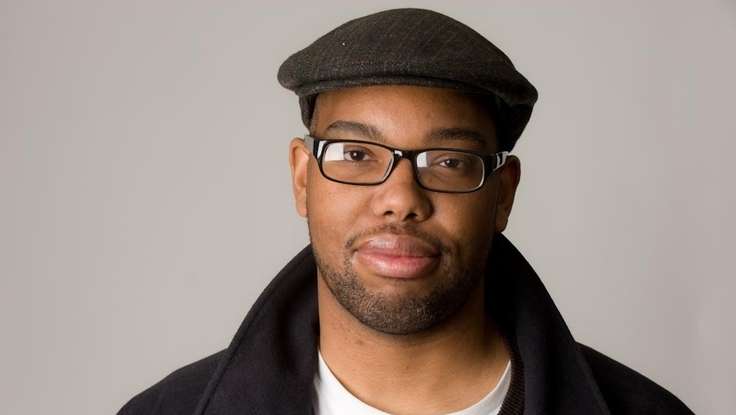
Ta-Nehisi Coates and the History Our Kids Need to Contemplate | John Thompson

Ta-Nehisi Coates and the History Our Kids Need to Contemplate | John Thompson:

Ta-Nehisi Coates and the History Our Kids Need to Contemplate


Toni Morrison rightly compares Ta-Nehisi Coates to James Baldwin. I hope all high school students read Coates' Between the World and Me"The Case for Reparations,"and/or his other journalism. I have my doubts that enough students are reading Coates in class, so I'll offer some of his insights that should be worked into schools' standards of instruction.
Coates shares a letter to his teenage son with us. Teachers should share his writing with our students. Coates is pleased that his son will be able to know about the whole world, but even as he expresses the "cosmopolitan wish," Coates recalls "the old power of ancestry ..." He wants his son "to know the world in its entirety," and that it can't be found "in the schools, alone, nor on the streets, alone." Referring to the famous insult by Saul Bellow, he wants "'Tolstoy is the Tolstoy of the Zulus' to immediately be obvious to you."
Coates tells his son that there is strength in the hood and wisdom in those streets, and that he must respect the common struggle. When doing so, Coates reminds his son "that wisdom is not unique to our people," but "I think it has special meaning to those of us born out of mass rape."
I hope history teachers already introduce students to the complex story of the concept of "race," and how it comes from history, economics and power relationships, not biology. I doubt many of us convey that lesson as concisely as Coates, who explains that "naming 'the people' has never been a matter of genealogy and physiognomy so much as one of hierarchy." In other words, "race is the child of racism, not the father."
Coates realizes that white Americans also are a "new people." They were Catholic, Corsican, Welsh, Mennonite and Jewish before they were white. White people are "like us, a modern invention. But unlike us, their new name has no real meaning, divorced from the machinery of power." Coates finally concludes, "They made us into a race. We made ourselves into a people."
From an early age, Coates was politically conscious. Although he did not feel comfortable in school, he was home in the library. He "was made for the library, not the classroom. The classroom was a jail of other people's interests." And, Coates teaches his son the lesson that all teachers should pass on to their students, that Ta-Nehisi Coates and the History Our Kids Need to Contemplate | John Thompson:

With A Brooklyn Accent: Six Good Reasons for Parents in NY State to Support the Opt Out Movement

With A Brooklyn Accent: Six Good Reasons for Parents in NY State to Support the Opt Out Movement:

Six Good Reasons for Parents in NY State to Support the Opt Out Movement


1.Testing in the state has reached abusive proportions. Third graders in NY take have six days of tests that are more time consuming than the LSAT's, the MCAT's, and the SAT's There are too many tests which take too much time
2. The mathematical forumulas used to rate teachers on the basis of the tests are wildly innacurate. Some of the best teachers in the state. at some of the highest pareforming schools have been given unfavorable ratings, prompting lawsuits which are likely to increase in frequency.
3. The tests have been so poorly designed that the state was forced to cancel the contract with the major test vendor- Pearson- replacing it with another company whose track record is barely better.
4. The use of testing to designate schools or school districts as "failing" and in imminent danger of closing or a state takeover has led to the transformation of all instruction into test prep in high poverty districts, and the cancellation of recess and school trips to create more study time for students.

CURMUDGUCATION: Duncan: Magical One Size Fits All Test Unicorn

CURMUDGUCATION: Duncan: Magical One Size Fits All Test Unicorn:

Duncan: Magical One Size Fits All Test Unicorn


One of the central tenets of Arne Duncan's edu-amateur structure of beliefs is that Low Expectations Are Bad. This has led him to the corollary that special education, adaptations, modified curriculum, and specially altered assessments are all bad things, that special ed is a morass of perfectly capable students who have been shunted into learning support programs because of race or misbehavior or any number of reasons. Once in special ed, these students go into academic free fall because they are surrounded by teachers who expect them to do poorly.

Like much that comes out of Duncan, this is not 100% baloney. If we're honest, we all know stories of students who ended up labeled special needs for every reason from being a behavior problem to having insistent parents-- but not actually needing a Learning Support label.

But Duncan's continues suggesting that the entire system of structures, rules, and pedagogy that has sprung up a some sort of complex dodge, a bizarre lie perpetuated as a way to keep students, selected almost at random, held back and stomped down. This is just... weird. One would think that in all his years in Chicago, he would have met at least one student who struggled with the difficulties of a disability that truly rendered her unable to achieve at the same level and pace of her fellow students.

We've seen Arne argue that all students with disabilities just need teachers who expect them to do well. We've watched him struggle through a grilling about USED's (non-existent) policy for helping students with dyslexia.

Well, here comes the latest USED pronouncement on the subject: Improving the Academic Achievement of the Disadvantaged; Assistance to States for the Education of Children with Disabilities, a rule that is supposed to take effect in about a month.

The rule is laced with the now-usual Department of Education balderdash. Let's open with this:

High standards and high expectations for all students and an accountability system that provides 
CURMUDGUCATION: Duncan: Magical One Size Fits All Test Unicorn:

Why Teach? In Defense of the Public Good

Why Teach? In Defense of the Public Good:

Why Teach? In Defense of the Public Good


normal_education


By Jim Miller
These days it seems a new school year can’t start without being greeted by yet another pronouncement that my profession and/or higher education itself is heading for the dustbin of history.
Last year around this time, I pondered the proclaimed death of the English major and this year the front page of the most recent issue of Harper’s is bemoaning “The Neoliberal Arts: How College Sold Its Soul.”
In this insightful piece William Deresiewicz hits on themes familiar to anyone who has been around higher education for the last few decades. Neoliberal education is a product of “market fundamentalism,” an “ideology that reduces all values to money values. The worth of a thing is the price of a thing. The worth of a person is the wealth of a person. Neoliberalism tells you that you are valuable exclusively in terms of your activity in the marketplace—in Wordsworth’s phrase, your getting and spending.”
Deresiewicz goes on to outline more familiar facts such as the plummeting not just of majors in English and the Humanities but also in the physical sciences such as physics, chemistry, geology, and astronomy that have declined by 60 percent. Even math, by 2013, had fallen to be the chosen major of only 1.1 percent of graduates. Instead, it is all about the instrumental needs of the marketplace–critical thinking, imagination, and any notion of the public good outside of the market be damned.
In the neoliberal world, we have “reached the end of history” and capitalism as we know it will go on “replicating itself forever” so there is no need to think beyond the present moment or in anything other than an individualistic and materialistic fashion.
And, as Deresiewicz notes, it’s a bipartisan mission:
harpers coverWe see it in our president’s swipe, last year, at art-history majors. “I promise you,” said our intellectual in chief, “folks can make a lot more, potentially, with skilled manufacturing or the trades than they might with an art-history degree.” We see it in Governor Rick Scott’s proposal to charge liberal-arts majors higher tuition at Florida’s state universities. We see it, most spectacularly, in Governor Scott Walker’s attempt to rewrite the mission statement of the University of Wisconsin, one of the country’s great public systems. According to the Milwaukee Journal Sentinel, Walker “proposed striking language about public service and improving the human condition, and Why Teach? In Defense of the Public Good:

Seattle Schools Community Forum: Feds Told NY State that Financial Penalities for Opt-Outs up to State

Seattle Schools Community Forum: Feds Told NY State that Financial Penalities for Opt-Outs up to State:

Feds Told NY State that Financial Penalities for Opt-Outs up to State


The NY Times has devoted much coverage to the issue of how the state/feds would deal with the massive number of students who opted out of their state testing (about 20%).  Naturally that number of opt-outs caused NY state to fall way below the feds' required participation rate of 95% under NCLB.  That below-the-mandated rate meant possible financial sanctions to states (likely withholding of some Title One dollars).

I missed this but on August 20th, the Times reported this:


As recently as last week, the state education commissioner, MaryEllen Elia, said that she was not sure if the federal Education Department would withhold money from districts with high opt-out rates. She declined to rule out the possibility that the state would do so on its own.


But on Thursday, the chancellor of the State Board of Regents, Merryl H. Tisch, said that the federal Education Department informed the state’s Education Department “a couple of weeks ago” that it was leaving any decision about financial penalties to the state. And Ms. Tisch, whose board oversees the state agency and appoints the commissioner, said the state did not plan to withhold money from districts.

But, the Washington Post reports that Ms. Elia also said this:


“I think opt-out is something that is not reasonable. I am absolutely shocked if, and I don’t know that this happened, but if any educators supported and Seattle Schools Community Forum: Feds Told NY State that Financial Penalities for Opt-Outs up to State:

Out-of-state money floods into fight over Mississippi education funding - Watchdog.org

Out-of-state money floods into fight over Mississippi education funding - Watchdog.org:

Out-of-state money floods into fight over Mississippi education funding


Photo illustration by Steve Wilson
PAINFUL EQUATION: The Mississippi Adequate Education Program funding calculation is not exactly easy to figure.
Out-of-state money is flowing into the fight over the controversial Nov. 3 ballot initiative that could force the Mississippi Legislature to increase K-12 education funding.
Two left-leaning groups — the Washington, D.C.-based New Venture Fund and the Atlanta-based Southern Education Foundation — have given more than $2.5 million in the past two years to the 42 for Better Schools political action committee, the biggest proponent of Ballot Initiative 42. The New Venture Fund has provided $712,500 so far this year, while the Southern Education Foundation has provided $480,000. Last year, the New Venture fund gave 42 for Better Schools $864,500, while the SEF supplied$480,000.
The Republican-leaning political blog Y’all Politics first raised the issue of 42 for Better Schools‘ funding streams.
The New Venture Fund, as detailed by its IRS Form 990, supports issues such “family planning, alternative energy sources and the reduction of fossil fuels and the support of the Common Core Initiative.” The fund’s board of directors president is Eric Kessler, a former appointee in the Clinton administration.
The Southern Education Foundation says on its website it “believes that economic and social progress in the region are inextricably linked to halting the disinvestment in public education” and is strongly against vouchers and tax credit scholarships. One of its trustees is former Mississippi secretary of state and Democratic gubernatorial candidate Dick Molpus.
Patsy Brumfield, director of communications for 42 for Better Schools, said the out-of-state money is a nonissue for supporters of the ballot initiative.
“Opponents of Initiative 42 will say anything to confuse supporters of public education in Mississippi,” Brumfield said. “Our campaign finance reports are filed with the Mississippi Secretary of State for all to see and contain all of the information required by state law.”
Initiative 42 would add a requirement to the state constitution to force the Legislature to “fully fund” education funding according to the Mississippi Adequate Education Program funding formula, a brain-busting calculation that determines each district’s share of the more than $2 billion state taxpayers spent on K-12 in fiscal year 2016. Forcing the Legislature to fully fund the MAEP amount would increase the K-12 Out-of-state money floods into fight over Mississippi education funding - Watchdog.org:


Moskowitz: Running for mayor is an 'interest' | POLITICO

Moskowitz: Running for mayor is an 'interest' | POLITICO:

Moskowitz: Running for mayor is an ‘interest’


Success Academy founder and CEO Eva Moskowitz said Friday that she is interested in running for mayor, and that she will "let everyone know" when she decides whether to run against Mayor Bill de Blasio in 2017.
"It's an interest," Moskowitz told the New York Post's Fred Dicker on his radio show, after Dicker asked Moskowitz about her oft-rumored mayoral ambitions. 
"I'm not being coy, I just honestly haven't decided yet," said, adding, "my husband doesn't know, my children don't know."
"It's a ways away, so I don't feel the need to decide immediately," Moskowitz said. 

MORE ON POLITICO

Moskowitz, who served six years on the City Council, added that she "believes deeply in public service and elective office, having great public servants is really important."
De Blasio, whose poll numbers have dipped to an all-time low this summer, said Thursday that he welcomes all potential challengers in 2017. 
"Come one, come all," he said, when asked about the 2017 race. 
Dicker heaped praise on Moskowitz, and said she should be the state education commissioner after noting that he did not know how to pronounce the name of the newly-appointed commissioner, MaryEllen Elia. 
Moskowitz has been on a brief media tour this week. 
She appeared on NY1's Inside City Hall on Thursday night and spoke, as she often does, about what she and her allies call New York's "failing school" crisis. 
"I'd think there would be more people up in arms about what is really a segregated school system in New York City," she said, adding that affluent white students typically go to high-quality schools and poor, minority students often get stuck in low-performing schools. 
The 34 schools in the Success Academy network opened this week, several weeks ahead Moskowitz: Running for mayor is an 'interest' | POLITICO:


CURMUDGUCATION: PDK Factoid Parade

CURMUDGUCATION: PDK Factoid Parade:

PDK Factoid Parade


The Phi Delta Kappa poll of US attitudes about education is out, and education writers are on that puppy like a lake full of carp on a loaf of bread. I'm scanning the report. It's a report that establishes PDK's bona fides right off the bat because-- well, when a pool is commissioned by somebody to prove something, it generally arrives cloaked in a cloud of obtuseness that's meant to discourage any sort of examination. "Just take our word for it," the sponsors say. "The poll shows that school choice cures cancer and reverse male pattern baldness." But PDK's published poll results are perfectly accessible to ordinary civilians. Almost like they're not trying to hide anything.

So what did I learn?

How You Ask Matters

Okay, here's a thing I totally did not know, found in the introduction and straight from Gallup methodologist Stephanie Kafka:

“When a respondent sees response categories visually, they’re much more likely to gravitate toward the middle,” Kafka said. “When they hear the same items, they’re more likely to latch on to the ends.”

So, that's interesting. Also, "Stephanie Kafka" would be a great name for a gumshoe detective, so Kafka might want to consider a career change.

It's the Money, Stupid

Americans of all types, shapes and sizes agree that the biggest problem facing their local schools. This is not a new result, but I find it interesting because politicians and policy-makers generally consider this the last item on their list of solutions to try working.


Too Much Testing, And Test Fans Should Be Worried

Speaking of seeming contradictions, the public overwhelmingly agrees that there is too much emphasis on standardized testing in their local schools (64% overall). Among the subgroups, Democrats lead the pack at 71% saying "too much" which creates an interesting conundrum for the reformster alleged Democrats like Andy Cuomo, Arne Duncan, and the fine folks at CAP (who swear 
CURMUDGUCATION: PDK Factoid Parade:


Jersey Jazzman: The American Public Understands: Our Schools Are Underfunded

Jersey Jazzman: The American Public Understands: Our Schools Are Underfunded:

The American Public Understands: Our Schools Are Underfunded


The evidence has been accumulating for a while: America's schools do not have the funds they need to achieve the results that we expect. Most states have flat funding systems that do not move resources into high-poverty districts where it is needed. School funding is, in most states, still suffering from the effects of the Great Recession. Yet we know that money matters in education.

It appears that the American public understands this (click to enlarge):


72 percent of Republicans say funding is at least "somewhat important" for the schools. Perhaps more interesting, the view of the public at large on the importance of school funding tracks very closely to the view of public school parents.

You'll also notice blacks are more likely to say funding is "very important" than whites. Perhaps because too many black children are attending schools with inadequate funding?

This attitude toward school funding is not an anomaly:
Lack of financial support is the biggest problem facing American schools, according to respondents to the PDK/Gallup poll. That’s been a consistent message from the public for the past 10 years. Having sufficient money to spend would improve the quality of the public schools, according to a sizable portion of American adults. Nearly half of public school parents said having sufficient money was key to improving the quality of the public schools. [emphasis mine]
The message from the public is quite clear. And yet, according to the Republican presidential candidates and what I perceive to be the majority of the education "reform" industry, funding reform isn't nearly as important as implementing test-based accountability systems, expanding "choice," and gutting teacher workplace protections.

Yes, it appears the public likes some forms of school choice... but why is that? Could it be that no one wants to "choose" an inadequately funded school for their child? Those who point to allegedly long waiting lists for charter schools neglect to mention that those waiting lists are only for a few, select, high-performing schools. Most of those charters enjoy a resource advantage over both their fellow less-affluent charters ("research" by the charter - See more at: http://jerseyjazzman.blogspot.com/2015/08/the-american-public-understands-our.html#sthash.yCAhSw0Z.dpuf


Randi Weingarten to Deliver Keynote at the 2015 WIN Summit Presented by The Negotiation Institute

Randi Weingarten to Deliver Keynote at the 2015 WIN Summit Presented by The Negotiation Institute:

Randi Weingarten to Deliver Keynote at the 2015 WIN Summit Presented by The Negotiation Institute


NEW YORK, Aug. 24, 2015 (GLOBE NEWSWIRE) -- The Negotiation Institute announced today that Randi Weingarten, president of the American Federation of Teachers, AFL-CIO, will deliver the closing keynote address at the Women’s Insights on the Art of Negotiating (WIN) Summit on October 1, 2015 at the New York Hilton.
The two-day executive development conference will also feature keynote addresses given by the 23rd Secretary of the U.S. Air Force, Deborah Lee James and Cathie Black, former chairman of Hearst Magazines.
The WIN Summit is a powerful forum dedicated to helping women advance into higher positions of leadership and achieve greater success for themselves and their organizations through the art of negotiation. The Summit will feature a remarkable group of leaders from both academia and corporate America including Sara Laschever, Lisa Gersh, Laura Maxwell, Wendy Finerman, Jeanne Brett and many more to provide attendees with a powerful set of tools to enhance their negotiation and leadership skills.  For more information and a full list of WIN speakers, please visit: http://winsummit.com/#speakers
“There is no more fitting way to learn negotiation skills than by hearing from Randi Weingarten, a woman whose negotiating and leadership skills are legendary,” said Jack Simony, Chairman of the Negotiation Institute. “Weingarten and our other renowned speakers will challenge women to not only learn from one another but help each other climb to the highest rungs of the corporate ladder.”
The WIN Summit is presented by The Negotiation Institute- the first and longest running negotiation training organization in the world. WIN is also generously underwritten by our dedicated sponsors including Reed SmithThe New York TimesElizabeth Arden Red Door SpasLeidosMilberg LLPPayScaleCozen O’ConnorADPRankAboveWicked Los Angeles, and Wells Fargo.
“The Summit fosters discussion and provokes thought on important topics in the science and art of negotiation.  It brings together an unparalleled array of female leaders and experts in a wide variety of fields, with the common core of expertise and success in negotiation,” said Leigh Hansson, Washington-based Leader of the International Trade & National Security Team at Reed Smith.   “We are very proud to be a part of this fantastic event, and look forward to an informative and exciting two days,” added James McCarroll, the New York-based Chair of Reed Smith’s Investment Management Group.
For more information on registration, group discounts, sponsorship sales, or general inquiries for The WIN Summit please visit www.winsummit.com or call 212-796-5600 or email registration@winsummit.com.
About The Negotiation Institute
Founded in 1966, The Negotiation Institute (TNI) provides on-site corporate training programs and public conference events designed to provide executives a competitive advantage in today's global marketplace. The first and longest-running negotiation training organization in the world, the Institute legacy and depth of experience enables us to provide clients with unparalleled solutions across a variety of executive competencies—negotiation, high-performance sales, procurement, supply chain management, leadership and presentation skills. The TNI commitment to excellence is reflected throughout our global faculty of instructors, thought leaders and business experts. To learn more, please visit us at www.negotiation.com.

- See more at: http://globenewswire.com/news-release/2015/08/24/762856/0/en/Randi-Weingarten-to-Deliver-Keynote-at-the-2015-WIN-Summit-Presented-by-The-Negotiation-Institute.html#sthash.MspEeLQb.dpuf


#TzomDyett. | Fred Klonsky #FightForDyett ‪#‎wearedyett

#Tzom Dyett. | Fred Klonsky:

#Tzom Dyett.


TZOM DYETT
-By Brant Rosen. Brant is the Rabbi of the newly formed social justice Jewish Congregation Tzedek in Chicago.
11895081_10153652065913534_6987602601288590811_o
Since Monday, twelve Bronzeville parents, grandparents, and community members have been on hunger strike to save Dyett High School, the last open enrollment school the historic Bronzeville Community.
The hunger strikers have called for a fast day of solidarity tomorrow, Tuesday, August 25 and we encourage Tzedek Chicago members to join with people of conscience across Chicago in this action.
I’m particularly mindful that In Jewish tradition, a communal fast (“ta’anit” or “tzom”) is held in times of crisis, both as an expression of mourning and as a call to repentance. As we approach the high holidays, we recall the Yom Kippur haftarah in which Isaiah calls for a righteous fast without oppression.
In addition to fasting, here are some suggestions on how you can show your solidarity with the Dyett hunger strikers:
Take a photo of yourself and share on Facebook/Twitter/Instagram to publicly show your commitment to the fast.
The photo can include a expression of solidarity. Write “This is the fast I desire” (Isaiah 58), with a statement of your solidarity. Some examples might include:
“Community members have been on hunger strike for 8 days”
“111 Chicago Public schools closed since 2001”
“There are no more community high schools in Washington Park”
“Because Education is a Human Right”
“Because Children should come before profit”
“Because CPS Should be accountable to communities, not corporations”
#Tzom Dyett. | Fred Klonsky:


Share Ellen Gradman’s graphic: #FightForDyett


– Ellen Gradman is a Chicago artist and educator. Please share her #FightForDyett graphic on your Facebook and other social media sites.
11856553_10206691687503707_3742723720052938339_o
AFT: edTPA has no respect for teacher professionalism.


imgres
The American Federation of Teachers adopted the following resolution on edTPA in 2014.
WHEREAS, for more than two decades P-12 public schools, teachers and teacher education programs have been blamed for the purported crisis in public education. Also, No Child Left Behind and Race to the Top legislation have responded to the assumed failures of teachers, public schools and teacher preparation programs by instituting value-added accountability systems that rely on high-stakes testing measures to track the impact teachers and those who prepare them have on student learning; and
WHEREAS, the current use of these standardized tests narrows the curriculum, fails to accurately assess student learning and deprofessionalizes teachers. Accordingly, teachers and parents as well as some of their unions and organizations have called for more authentic assessments, greater autonomy for teachers, more resources, smaller class sizes and the withdrawal of for-profit corporate intrusion into public education; and
WHEREAS, federal and state mandates placed on teacher education programs have received less critical attention. Teacher Performance Assessment protocols and exams are now being imposed by state governments (e.g., “edTPA”), on schools of education, and on teacher education faculty. Originating from Stanford and designed by teacher educators, much of the content of edTPA contains important components of good teaching and some of the component evaluative methods represent good practices, such as the use of portfolios and multidimensional assessments. edTPA, however, “is designed to be educative and predictive of effective teaching and student learning.” (Stanford Center for Assessment, Learning and Equity, 2012); and
WHEREAS, the central, “predictive claim of edTPA must be placed within the dominant historical context of the testing regime that pervades federal and state assessment policies. As an assessment measure, edTPA is to be linked to existent student success measures (high-stakes testing) that are, in turn, used to evaluate teachers. In these circumstances, what edTPA will predict are successful outcomes valued by federal and state policymakers, and not necessarily successful teachers; and
WHEREAS, when edTPA was introduced by the New York State Department of Education, the New York State United Teachers (NYSUT) passed the following resolution on edTPA at the 2014 representative assembly:
  • Resolved, NYSUT rejects the notion that edTPA constitutes an appropriate assessment of teacher candidate performance, and takes the position that the New York state regents’ rushed implementation will undermine the preparation of teacher candidates in New York state; and
  • Resolved, the New York State United Teachers calls on the regents of the state of New York to stop the implementation of edTPA and engage in discussions with NYSUT to seek agreement on certification and assessment policies and implementation practices that will best educate and prepare students for the teaching profession; and
WHEREAS, there was an outpouring of criticism of edTPA in concept and implementation by teacher educators, students and parents across New York AFT: edTPA has no respect for teacher professionalism.