Latest News and Comment from Education

Thursday, August 22, 2013

FACT SHEET on the President’s Plan to Make College More Affordable: A Better Bargain for the Middle Class | The White House

FACT SHEET on the President’s Plan to Make College More Affordable: A Better Bargain for the Middle Class | The White House:

FACT SHEET on the President’s Plan to Make College More Affordable: A Better Bargain for the Middle Class


A higher education is the single most important investment students can make in their own futures. At the same time, it has never been more expensive. That’s why since taking office, President Obama has made historic investments in college affordability, increasing the maximum Pell Grant award for working and middle class families by more than $900, creating the American Opportunity Tax Credit, and enacting effective student loan reforms eliminating bank subsidies and making college more affordable.  
However, despite these measures, college tuition keeps rising. The average tuition at a public four-year college has increased by more than 250 percent over the past three decades, while incomes for typical families grew by only 16 percent, according to College Board and Census data.  Declining state funding has forced students to shoulder a bigger proportion of college costs; tuition has almost doubled as a share of public college revenues over the past 25 years from 25 percent to 47 percent.  While a college education remains a worthwhile investment overall, the average borrower now graduates with over $26,000 in debt. Only 58 percent of full-time students who began college in 2004 earned a four-year degree within six years. Loan default rates are rising, and too many young adults are burdened with debt as they seek to start a family, buy a home, launch a business, or save for retirement.
Today, President Obama outlined an ambitious new agenda to combat rising college costs and make college affordable for American families. His plan will measure college performance through a new ratings system so students and families have the information to select schools that provide the best value. And after this ratings system is well established, Congress can tie federal student aid to college performance so that students maximize their federal aid at institutions providing the best value. The President’s plan will also take down barriers that stand in the way of competition and innovation, particularly in the use of new technology, and shine a light on the most cutting-edge college practices for providing high value at low costs.  And to help student borrowers struggling with their existing debt, the President is committed to ensuring that all borrowers who need it can have access to the Pay As You Earn plan that caps loan payments at 10 percent of income and is directing the Department of Education to ramp up its efforts to reach out to students struggling with their loans to make sure they know and understand all their repayment options. 
A Better Bargain for the Middle Class: Making College More Affordable

Paying for Performance
  • Tie financial aid to college performance, starting with publishing new college ratings before the 2015 school year.
  • Challenge states to fund public colleges based on performance.
  • Hold students and colleges receiving student aid responsible for making progress toward a degree. 
Promoting Innovation and Competition
  • Challenge colleges to offer students a greater range of affordable, high-quality options than they do today.
  • Give consumers clear, transparent information on college performance to help them make the decisions that work best for them.
  • Encourage innovation by stripping away unnecessary regulations.
Ensuring that Student Debt Remains Affordable
  • Help ensure borrowers can afford their federal student loan debt by allowing all borrowers to cap their payments at 10 percent of their monthly income.
  • Reach out to struggling borrowers to ensure that they are aware of the flexible options available to help them to repay their debt.

Pay Colleges and Students for Performance
The federal government provides over $150 billion each year in student financial aid, while states collectively invest over $70 billion in public colleges and universities. Almost all of these resources are allocated among colleges based on the number of students who enroll, not the number who earn degrees or what they learn. President Obama’s plan will connect student aid to outcomes, which will in turn drive a better, more affordable education for all students:
  • Tie Financial Aid to College Value:  To identify colleges for providing the best value and encourage all colleges to improve, President Obama is directing the Department of Education to develop and publish a new college ratings system that would be available for students and families before the 2015 college year. In the upcoming reauthorization of the Higher Education Act, the President will seek legislation allocating financial aid based upon these college ratings by 2018, once the ratings system is well established. Students can continue to choose whichever college they want, but taxpayer dollars will be steered toward high-performing colleges that provide the best value. 
  • New College Ratings before 2015. Before the 2015 school year, the Department of Education will develop a new ratings system to help students compare the value offered by colleges and encourage colleges to improve. These ratings will compare colleges with similar missions and identify colleges that do the most to help students from disadvantaged backgrounds as well as colleges that are improving their performance. The results will be published on the College Scorecard. The Department will develop these ratings through public hearings around the country to gather the input of students and parents, state leaders, college presidents, and others with ideas on how to publish excellent ratings that put a fundamental premium on measuring value and ensure that access for those with economic or other disadvantages are encouraged, not discouraged.  The ratings will be based upon such measures as:
    • Access, such as percentage of students receiving Pell grants;
    • Affordability, such as average tuition, scholarships, and loan debt; and
    • Outcomes, such as graduation and transfer rates, graduate earnings, and advanced degrees of college graduates.
  • Base Student Aid on College Value by 2018. Over the next four years, the Department of Education will refine these measurements, while colleges have an opportunity to improve their performance and ratings. The Administration will seek legislation using this new rating system to transform the way federal aid is awarded to colleges once the ratings are well developed. Students attending high-performing colleges could receive larger Pell Grants and more affordable student loans. 
  • Engage States with a Race to the Top for Higher Education that Has Higher Value and Lower Costs: The President requested $1 billion in Race to the Top funding to spur state higher education reforms and reshape the federal-state partnership by ensuring that states maintain funding for public higher education. About three-quarters of college students attend a community college or public university, and declining state funding has been the biggest reason for rising tuition at public institutions. The Race to the Top competition will have a special focus on promoting paying for value as opposed to enrollment or just seat time. States typically fund colleges based on enrollment rather than on their success at graduating students or other measures of the value they offer. There are notable exceptions, like Tennessee, Indiana and Ohio, which fund colleges based on performance. To build on their examples, the President’s plan would also encourage states to provide accelerated learning opportunities, smooth the transition from high school to college and between two- and four-year colleges, and strengthen collaboration between high schools and colleges.  
  • Reward Colleges for Results with a Pell Bonus and Higher Accountability: To encourage colleges to enroll and graduate low- and moderate-income students, the President will propose legislation to give colleges a bonus based upon the number of Pell students they graduate. And the Administration will prevent the waste of Pell dollars by requiring colleges with high dropout rates to disburse student aid over the course of the semester as students face expenses, rather than in a lump sum at the beginning of the semester, so students who drop out do not receive Pell Grants for time they are not in school.  
  • Demand Student Responsibility for Academic Performance: To ensure students are making progress toward their degrees, the President will also propose legislation strengthening academic progress requirements of student aid programs, such as requiring students to complete a certain percentage of their classes before receiving continued funding.  These changes would encourage students to complete their studies on time, thereby reducing their debt, and will be designed to ensure that disadvantaged students have every opportunity to succeed.   
Promote Innovation and Competition
A rising tide of innovation has the potential to shake up the higher education landscape.  Promising approaches include three-year accelerated degrees, Massive Open Online Courses (MOOCs), and “flipped” or “hybrid” classrooms where students watch lectures at home and online and faculty challenge them to solve problems and deepen their knowledge in class. Some of these approaches are still being developed, and too few students are seeing their benefits. The federal government can act as a catalyst for innovation, spurring innovation in a way that drives down costs while preserving quality. 
To promote innovation and competition in the higher education marketplace, the President’s plan will publish better information on how colleges are performing, help demonstrate that new approaches can improve learning and reduce costs, and offer colleges regulatory flexibility to innovate.  And the President is challenging colleges and other higher education leaders to adopt one or more of these promising practices that we know offer breakthroughs on cost, quality, or both – or create something better themselves: 
  • Award Credits Based on Learning, not Seat Time. Western Governors University is a competency-based online university serving more than 40,000 students with relatively low costs— about $6,000 per year for most degrees with an average time to a bachelor’s degree of only 30 months. A number of other institutions have also established competency-based programs, including Southern New Hampshire University and the University of Wisconsin system. 
  • Use Technology to Redesign Courses. Redesigned courses that integrate online platforms (like MOOCs) or blend in-person and online experiences can accelerate the pace of student learning. The National Center for Academic Transformation has shown the effectiveness of the thoughtful use of technology across a wide range of academic disciplines, improving learning outcomes for students while reducing costs by nearly 40 percent on average. Carnegie Mellon University’s Open Learning Initiative has developed a hybrid statistics course used at six public universities, and its students performed as well as their peers in a traditional course in only 75 percent of the time. Arizona State University’s interactive algebra lessons helped students perform 10 percent better, despite meeting half as often, and at a lower cost.  The University of Maryland redesigned an introductory psychology course, reducing costs by 70 percent while raising pass rates.  New York’s Open SUNY initiative brings together every online program offered system-wide, helping students complete more quickly. 
  • Use Technology for Student Services.  Online learning communities and e-advising tools encourage persistence and alert instructors when additional help is needed. Technology is enabling students from across campuses and across the world to collaborate through online study groups and in-person meet-ups.  MOOC-provider Coursera has online forums in which the median response time for questions posed by students is 22 minutes. To help students choose the courses that will allow them to earn a degree as quickly as possible, Austin Peay State University has developed the “Degree Compass” system that draws on the past performance of students in thousands of classes to guide a student through a course, in a similar manner to the way Netflix or Pandora draw on users’ past experience to guide movie or music choices.  
  • Recognize Prior Learning and Promote Dual Enrollment. Colleges can also award credit for prior learning experiences, similar to current Administration efforts to recognize the skills of returning veterans.  Dual-enrollment opportunities let high school students earn credits before arriving at college, which can save them money by accelerating their time to degree. 
To help colleges innovate and improve quality and outcomes, the Administration will:
  • Empower Students with Information:  New college ratings will help students compare the value offered by different colleges.  The Department of Education will enlist entrepreneurs and technology leaders with a “Datapalooza” to catalyze new private-sector tools, services, and apps to help students evaluate and select colleges. The effort will be complemented by earnings information by college that will be released for the first time on Administration’s College Scorecard this fall. 
  • Seed Innovation and Measure What Works:  To demonstrate what works, President Obama has proposed a new $260 million First in the World fund to test and evaluate innovative approaches to higher education that yield dramatically better outcomes, and to develop new ways for colleges to demonstrate that they are helping their students learn. In addition, the Department of Labor is planning to grant an additional $500 million to community colleges and eligible four-year colleges and universities next year.  A portion of these resources will be used to promote accelerated degree paths and credentials that would drive more high-quality and affordable options for adult workers and students. Through these efforts, the Administration will work with business and philanthropy to support industry partnerships to enrich student learning with valuable job exploration and experience.  
  • Reduce Regulatory Barriers: The Department will use its authority to issue regulatory waivers for “experimental sites” that promote high-quality, low-cost innovations in higher education, such as making it possible for students to get financial aid based on how much they learn, rather than the amount of time they spend in class. Pilot opportunities could include enabling colleges to offer Pell grants to high school students taking college courses, allowing federal financial aid to be used to pay test fees when students seek academic credit for prior learning, and combining traditional and competency-based courses into a single program of study.  The Department will also support efforts to remove state regulatory barriers to distance education. 
Finally, the President will challenge leaders in states, philanthropy, and the private sector to make their own commitments to improve college value while reducing costs.  For example, states can redesign the transition to postsecondary education and commit to strategies to improve student learning and enhance student advising, such as hybrid learning pilots, adaptive learning platforms, and digital tutors. Philanthropists can create initiatives, pilots and prizes for colleges that advance competency-based education, accelerated degrees, and the integration of new technologies into on-campus teaching and learning.  Investors and entrepreneurs can directly support and develop new technologies and innovations that accelerate student learning while evaluating the effectiveness of different approaches.  And employers and industry groups can collaborate with postsecondary institutions and new providers to develop high-quality, low-cost degrees in growing sectors of the economy, offer work-based learning experiences to students, and hire graduates who demonstrate the knowledge and skills employers need.
Ensure Student Debt Is Affordable
While bringing down costs for current and future college students, President Obama will also help students with existing debt to manage their obligations. Income-driven repayment plans allow borrowers to take responsibility for their federal student loan debt with more flexible repayment terms, while helping professionals like teachers and nurses who take on critical jobs in our society that require significant education but may result in modest salaries. These plans allow students to fully repay their student debt on a sliding scale that adjusts monthly payments based on changing income and growing families.  Nearly two-thirds of people that currently participate in the income-driven repayment plans make less than $60,000 a year. Currently, about 2 million of 37 million federal student loan borrowers are benefitting from income-driven plans.
  • Make All Borrowers Eligible for Pay As You Earn: To make sure that students and families have an easy-to-understand insurance policy against unmanageable debt now and in the future, the President has proposed allowing all student borrowers to cap their federal student loan payments at 10 percent of their monthly income. Currently, students who first borrowed before 2008 or have not borrowed since 2011 are not eligible for the President’s Pay As You Earn plan. In addition, the Administration will work with Congress to ensure that the benefits are targeted to the neediest borrowers. 
Launching an Enrollment Campaign for Pay As You Earn: Beginning this fall, the Department of Education will contact borrowers who have fallen behind on their student loan payments, undergraduate borrowers with higher-than-average debts, and borrowers in deferment or forbearance because of financial hardship or unemployment to ensure they have the information they need to choose the right repayment option for them.  Starting in 2014, the Department of Education and the Department of Treasury will work to help borrowers learn about and enroll in Pay As You Earn and Income-Based Repayment plans when they file their taxes.   And to assist guidance counselors and other advisers who guide students through the process of selecting and financing their higher education, the Administration will launch a “one-stop shop” that will include important resources for choosing among various income-driven repayment options.

Wait 8-22-13 What? Certification? Please! Gov. Christie follows Gov. Malloy over the cliff

Wait What?:


Deck Chairs on the Titanic Failure of American Education
  It was George Orwell who provided us with the powerful reminder that, “In a time of universal deceit – telling the truth is a revolutionary act.” But more and more hero educators and education heroes are standing up to do just that. Diane Ravitch, the country’s leading voice for public education, defines a “hero […]The post Deck Chairs on the Titanic Failure of American Education (A must read) a

Certification? Please! Gov. Christie follows Gov. Malloy over the cliff
Governor Christie and Governor Malloy Connecticut Commissioner of Education Stefan Pryor and New Jersey Commissioner of Education Chris Cerf. Paul Vallas (Bridgeport) and Paymon Rouhanifard (Camden) The story and message are the same… Politicians who propose tougher standards and demand “better teacher prep” while appointing friends and colleagues who don’t even have the most basic […]The post Cer


8-21-13 Wait What?
Wait What?: Special Master Steven Adamowski: Busy exceeding his authority…at taxpayer expenseAs Rome burns, Adamowski tells Windham taxpayers which companies to hire and what they must do with their public funds…. (An update on Windham by Jonathan Pelto and Mary Gallucci, a Windham parent and education advocate) As a result of inadequate state funding, Windham’s public schools are among the most u

Education and Justice Departments Announce New Research Showing Prison Education Reduces Recidivism, Saves Money, Improves Employment | U.S. Department of Education

Education and Justice Departments Announce New Research Showing Prison Education Reduces Recidivism, Saves Money, Improves Employment | U.S. Department of Education:

Education and Justice Departments Announce New Research Showing Prison Education Reduces Recidivism, Saves Money, Improves Employment


Contact:  
 Press Office, (202) 401-1576, press@ed.gov 

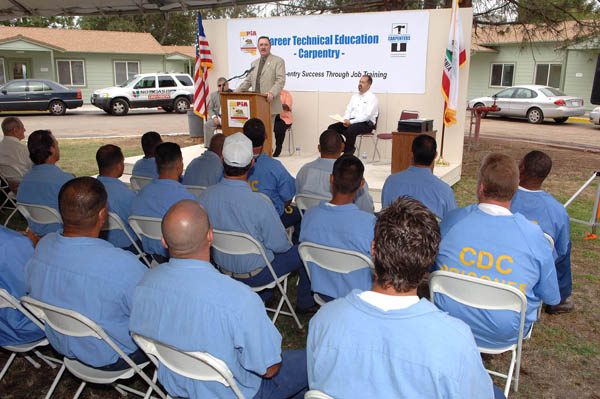
Attorney General Eric Holder and Secretary of Education Arne Duncan today announced research findings showing that, on average, inmates who participated in correctional education programs had 43 percent lower odds of returning to prison than inmates who did not. Each year approximately 700,000 individuals leave federal and state prisons; about half of them will be reincarcerated within three years. The research, funded by the Justice Department's Bureau of Justice Assistance, was released today by the RAND Corporation.
"These findings reinforce the need to become smarter on crime by expanding proven strategies for keeping our communities safe, and ensuring that those who have paid their debts to society have the chance to become productive citizens," said Attorney General Holder. "We have an opportunity and an obligation to use smart methods – and advance innovative new programs – that can improve public safety while reducing costs. As it stands, too many individuals and communities are harmed, rather than helped, by a criminal justice system that does not serve the American people as well as it should. This important research is part of our broader effort to change that."
The findings, from the largest-ever analysis of correctional educational studies, indicate that prison education programs are cost effective. According to the research, a one dollar investment in prison education translates into reducing incarceration costs by four to five dollars during the first three years after release, when those leaving prison are most likely to return.
"Correctional education programs provide incarcerated individuals with the skills and knowledge essential to their futures," said Secretary of Education Duncan. "Investing in these education programs helps released prisoners get back on their feet—and stay on their feet—when they return to communities across the country."
With funding from The Second Chance Act (P.L. 110-199) of 2007, the RAND Corporation’s analysis of correctional education research found that employment after release was 13 percent higher among prisoners who participated in either academic or vocational education programs than among those who did not. Those who participated in vocational training were 28 percent more likely to be employed after release from prison than those who did not receive such training.
The report is a collaborative effort of the Departments of Justice and Education, two of 20 federal agencies that make up the federal interagency Reentry Council. The Reentry Council’s members are working to make communities safer by reducing recidivism and victimization; assisting those who return from prison and jail in becoming contributing members of their communities; and saving taxpayer dollars by lowering the direct and collateral costs of incarceration. Attorney General Holder chairs the Reentry Council which he established in January 2011.
For more information about the federal interagency Reentry Council, please visit:http://csgjusticecenter.org/nrrc/projects/firc/.

What’s Her Number? Zip Codes Tell Us A Lot About Public School Quality | NEA Today

What’s Her Number? Zip Codes Tell Us A Lot About Public School Quality | NEA Today:

What’s Her Number? Zip Codes Tell Us A Lot About Public School Quality

August 22, 2013 by twalker  
Filed under Education FundingFeatured NewsTop Stories
EmailShare
In the old saw about real estate, the three most important factors are location, location, location. The same is true of our nation’s public schools. A location that is desirable usually has good public schools because good schools attract families and businesses, which drive up real estate prices. In turn, high-priced real estate increases property taxes, which help fund public schools, which attract more affluent families. And so on.
Location matters for schools in rural areas, where family farms are fading into history, as well as for segregated and impoverished inner-city neighborhoods where many businesses have shut down and middle-class families have moved away.
When it comes to location, a ZIP code—a mere five digits—can frequently describe the quality of the education that public school students receive and sometimes even the direction their lives will take. During this school year, NEA Today will be visiting Zip codes across the nation to examine the significance of location on public education. Here’s part one of the series:

53916 – TRENTON, WISCONSIN: WHERE HAVE ALL THE COUNTRY SCHOOLS GONE?

Beverly Smith was a teaching assistant at Trenton Elementary School in a tiny Wisconsin farming town before the school closed in June 2013 after more than half a century.
Like many rural schools shuttering their doors around the country, Trenton Elementary consolidated with a larger school—Prairie View Elementary—which absorbed Trenton’s nearly 100 students and six classroom teachers, but not its three teachers’ assistants. For educators at small, country schools, there are no 

Rand Paul Teaming Up With Dems? For This Cause, He Thinks It's Worth It

Rand Paul Teaming Up With Dems? For This Cause, He Thinks It's Worth It:

Rand Paul Teaming Up With Dems? For This Cause, He Thinks It's Worth It

Posted:   |  Updated: 08/22/2013 11:00 am EDT
Like I have been sayin'


 As Sen. Rand Paul (R-Kentucky) explores the possibility of a presidential run, he's trying his hand at something that's become a rite of passage for the GOP's other 2016 hopefuls: Expanding the appeal of the Republican Party by turning to policies important to minority voters. Specifically, the state of the nation's schools.
Since the 2012 presidential election, expected 2016 contenders like Sen. Marco Rubio (R-Fla.) and Rep. Eric Cantor (R-Va.) have flirted with education policy as a way to attract minority voters. Now Paul is entering the fray, with a Thursday appearance in Louisville to promote a new campaign to bring charter schools to his state. He'll be joining the National Association for Public Charter Schools, Sen. Mitch McConnell (R-Ky.), the Black Alliance for Education Options, and -- a strange bedfellow, of sorts -- Democrats for Education Reform.
Republicans face an uphill battle with the growing demographic of minority voters. To bridge the gap, politicians are focusing on issues like school choice -- a topic that resonates strongly with many minority voters due to the fact that minorities are so often stuck with bad schools in poor neighborhoods, without the ability to buy their way into pricier alternatives.
"It's like trying to attract the youth vote," Paul said in an interview. "If you want young people to vote for you and all you talk about is taxes and regulations, they 

Free Bradley Manning! | Bill Ayers

Free Bradley Manning! | Bill Ayers


Free Bradley Manning!


1984 is not some random hypothetical notion, or some abstract and distant possibility, or simply a fascinating metaphor—1984 is a reality; it’s upon us; Big Brother is watching you, and everyone knows it.
And now comes Bradley Manning, Edward Snowden, Wikileaks, and Anonymous (among others) to provide an indispensable service: they are representatives of We, the People, delegates of the sovereign citizenry. Bradley Manning and Edward Snowden are our people watching them watching us.
As we work to stop the growing militarism and the steady descent into barbarism, to dismantle the surveillance nation and to annihilate the carceral system and the garrison state—it’s the hackers and the 

8-22-13 Perdido Street School

Perdido Street School:


Mulgrew "Frightened" By Opposition To Common Core
From Gotham Schools:The opposition has alarmed many who say they continue to support the idea behind the standards, which is to teach students to think more deeply and critically, even as they have criticized the state’s implementation. “This debate about whether Common Core is good or bad … is what frightens me,” United Federation of Teachers President Michael Mulgrew, another panelist, said this

Georgia Joins States Looking To Pull Back From Common Core
The list of states where Common Core is facing serious opposition grows:Gov. Nathan Deal has ordered a sweeping review of the Common Core national guidelines and asked the State Board of Education to “formally un-adopt” a part of the program that includes sample English test selections that infuriated some parents.Deal also asked the board to develop a new social studies curriculum that emphasizes

Race To The Top Comes To College
The tentacles of the federal government look to grow longer:President Barack Obama begins a speaking tour in New York on Thursday to push his plan to make college more affordable at a university in Buffalo, N.Y., and a high school in Syracuse, N.Y. The plan the president will propose focuses on tying funds for schools to performance, spurring innovation and competition and keeping student debt aff

DFER's Ally With Tea Party To Bring Charter Schools To Kentucky
One of the arguments we have heard from education reform groups like Democrats For Education Reform for why progressive educators shouldn't ally with right wing Tea Party types in a common cause against Common Core is that right wing Tea Party types hold views in anathema to progressives on other issues - from vouchers to teaching evolution in schools to sex education and Obamacare - and progressi


8-21-13 Perdido Street School
Perdido Street School: Someone Tell Merryl Tisch - The Public Doesn't Hate TeachersRegents Chancellor and testing doyenne Merryl Tisch used the following argument to support tying teacher evaluations to test scores:Merryl H. Tisch, chancellor of the Board of Regents, said that because of the new “scientific, objective” evaluation system, the public would see that teachers were being held to a rigo

LISTEN TO DIANE RAVITCH 8-22-13 Diane Ravitch's blog | A site to discuss better education for all

Diane Ravitch's blog | A site to discuss better education for all:

Click on picture to Listen to Diane Ravitch


A Teacher in North Carolina Writes to His Legislator: Please Don’t Shut the Door to Opportunity
Received in my email:   From: Justin Ashley Date: Tue, 6 Aug 2013 12:41:44 -0400 To: “Thom.Tillis@ncleg.net” Subject: A message to the NC General Assembly: Reopen the door (please) Mr. Tillis, I wanted to first thank you for your service to our state. I can’t imagine how difficult it must be to make so many decisions that impact so

I Got It! The First Copy of “Reign of Error”!
Forgive a moment of exultation. That’s the moment when the first hardcover copy of your book arrives, and you know it is real. And it has a beautiful handwritten note from a great editor. The editor for “Reign of Error: The Hoax of the Privatization Movement and the Danger to America’s Public Schools” was Victoria Wilson. She is probably, no, certainly, the best editor in American publishing toda


Blood-Letting Kills the Patient
Bill Phillis, who was deputy superintendent of schools in Ohio, now spends his time advocating for public education in Ohio. He runs the Equity and Adequacy Coalition. He writes: “State policies supporting the privatization of public education are draining the life’s blood of the public common school “8/22/13 “From the advent of the 1851 thorough and efficient clause in the Ohio Constitution unt
My Comments on Blow Column, Cross-Posted at Huffington Post
Please leave a comment so that HuffPost readers will hear you. I made a few changes, adding a new ending.
Geoffrey Canada’s Charter Schools Get Mixed, Unimpressive Results on Common Core Tests
Four years ago, New York Times’ columnist David Brooks declared Geoffrey Canada’s charter schools to be miracle schools. The column was titled “The Harlem Miracle.” He did so based on the assurances of Harvard economist Roland Fryer and his colleague Will Dobbie. Fryer said in an email to Brooks that the charter schools of the Harlem Children’s Zone had produced “enormous gains.” Brooks wrote: “In


Seattle: Status Quo Crowd Fears Sue Peters
Sue Peters is an experienced journalist and parent leader who is running for Seattle school board. I have blogged about Sue because I have met her and I know how committed She is to strengthening the public schools of Seattle and standing up to the powerful corporate raiders. These corporate forces, the ones who wield great power in Seattle, do not want her elected to the school board. They fear h
A Hero Superintendent in Tulsa
Whenever a school superintendent stands up and speaks the unvarnished truth about what the federal government and the elites are doing to hurt their students, it takes courage. When that district superintendent is in a state where his views are unlikely to be well received by the state education department, it requires even more courage. The superintendent of schools in Tulsa, Lloyd Snow, is a her

How Sad that Charles Blow is So Misinformed
Charles Blow is one of the columnists in the New York Times that I usually count on to challenge the conventional wisdom and to speak up for the powerless. Sadly, in this column, he parrots the conventional wisdom and voices the opinions of the elites. Imagine, he calls the Broad Foundation a “reform” organization. The readers of this blog know the Broad Foundation as the source of malicious pol

Mercedes Schneider Compares AP and Gallup Polls
Most of us don’t have the time to dig down into polls and figure out the nuances of wording and responses. Fortunately for us, Mercedes Schneider has done it for us. She here compares the AP-NORC poll which concluded that most parents like standardized testing to the PDK/Gallup poll, which found that only 22% of parents thought that standardized testing improved their school. How did the two pol
Are AP Courses Ripping Off Minority Students?
Two news stories shine a bright line on the allure and failed promise of AP courses. Liz Bowie of the Baltimore Sun has an outstanding article about AP courses in Maryland, which has invested heavily on this strategy to lift achievement. She writes that the expansion of AP courses has not lived up to its claims. “It has not delivered vast numbers of students from low-performing high schools to sel

Diane Ravitch's blog | A site to discuss better education for all
Diane Ravitch's blog | A site to discuss better education for all: A Parent’s Modest ProposalHere is an idea: Monetize your son or daughter. A reader suggests:   I am thinking maybe I should auction off the placement of my daughter, an excellent test taker with consistently high scores, to the highest bidding teacher. The teacher gets to keep their job and I get to add to the college fund. Win Win


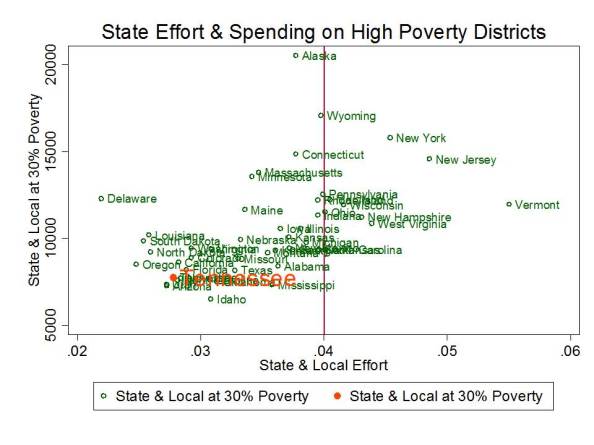
Smoky Mountain Smokescreen: A Tennessee Story | School Finance 101

Smoky Mountain Smokescreen: A Tennessee Story | School Finance 101:

Smoky Mountain Smokescreen: A Tennessee Story

Posted on August 22, 2013

Slide1


My last post was about the Commonwealth of Pennsylvania’s role in starving the Philadelphia school district into submission. The failure by deprivation of the city district has now been used as a basis for blaming the district and its employees – primarily teachers, for that failure.
Of course, once the district has been quietly squeezed into submission over time, the obvious reformy answer for fixing Philly schools (along with expanding the policies that have not worked so well for the past 10 years, including charter expansion and private management), is to subvert existing employee contracts and district/city policies to break the union stronghold that protects the interests of teachers over those of children. Two steps toward this end game include eliminating “last in, first out” layoff preferences and adopting “mutual consent” teacher placement (save discussion of slashing contractually obligated pensions for those who put in years of service at modest wages for another day).
These are classic smokescreen reforms which a) have little to do with the district’s current mess and b) do little to improve conditions. First of all, a simple back of the napkin cost-benefit analysisshows that the supposed gains from replacing seniority based layoffs are very small [nickles & dimes won’t close this gap]. Second, yet another study has (first study summarysecond study) shown that seniority provisions in district contracts aren’t associated with or a drive within-district, between-school disparities. Besides, it’s not like “within district” disparities across schools were/are the primary problem facing Philly!?!
The bottom line is that none of this stuff has anything to do with actually improving the conditions of public schooling in Philadelphia. If proponents of these resource-free (yeah… $50 million in the Philly context is still relatively resource-free) policy changes really think it does, then they are 

Research Links Preschool Program to Third Grade Reading Success |

Research Links Preschool Program to Third Grade Reading Success |:

Research Links Preschool Program to Third Grade Reading Success

Photo: Micaela Bedell for Strategies for Children
The Denver Preschool Program (DPP) is celebrating good news. According to new findings, children who participated in this program have shown reading gains compared to their peers. Participants have gone on to earn higher scores on the state’s third-grade reading test — the Transitional Colorado Assessment Program (TCAP) — than peers who did not participate in the program. “A total of 64 percent of DPP children posted advanced or proficient reading scores compared to 58 percent of non-DPP students,” according to a Denver Preschool Program press release.
“When you really dig and look into the data you’ll start to see that something is going on that is really positive,” Denver Preschool Program’s CEO Jennifer Landrum told the Denver Post.
This is an important finding, and it adds to a growing list of studies that connects preschool participation with third grade reading outcomes.
“Third-grade reading is a critical indicator of a child’s academic future,” according to a white paper summarizing Denver’s results. “Children who have not learned to read by the end of third grade are more likely to fall behind peers who are ‘reading to learn’ by fourth grade.”
Program Background
Denver’s program is publicly funded through a citywide 12 cent sales tax on