Latest News and Comment from Education

Thursday, September 1, 2011

ARRA Section 1512 Reporting September 2011 - Letters (CA Dept of Education)

ARRA Section 1512 Reporting September 2011 - Letters (CA Dept of Education):


Dear American Recovery and Reinvestment Act Subrecipients:
AMERICAN RECOVERY AND REINVESTMENT ACT OF 2009 SECTION 1512
REPORTING—SEPTEMBER 2011
I would like to thank you for your assistance over the last two years in providing information for the quarterly reporting required by the American Recovery and Reinvestment Act (ARRA) of 2009 and for updating your data as necessary during the correction periods to ensure that the data being reported is accurate. The California Department of Education (CDE) has consistently maintained a 96 to 98 percent response rate and appreciates your efforts in making the ARRA data collection and reporting process a success.
This letter provides information on: (1) September 2011 Quarterly Reporting under ARRA Section 1512; (2) Availability of ARRA Funds; (3) Final State Fiscal Stabilization Fund (SFSF) Apportionments; (4) Final ARRA Title I Apportionments; (5) Final Expenditure Reports; and (6) Instructions for Reporting.

September 2011 Quarterly Reporting Under American Recovery and Reinvestment Act Section 1512
The ARRA Data Collection and Reporting System will be open on Wednesday, September 14, 2011, for data submission. This reporting cycle covers the period from the effective date of each grant through September 30, 2011. The deadline for the September 2011 ARRA Section 1512 Quarterly Report is Friday, September 23, 2011.

Availability of American Recovery and Reinvestment Act Funds
The end of the grant period for most of the ARRA grants is quickly approaching, so this will be the final quarterly reporting period for those ARRA grants. Subrecipients must obligate and/or expend funds from expiring ARRA grants by September 30, 2011. The continuing grants are the Education Jobs Funds and the ARRA School Improvement Grant.

Final State Fiscal Stabilization Fund Apportionments
Subrecipients should be aware that the final SFSF apportionment will be determined based on data collected on the September 2011 ARRA Section 1512 quarterly report. The final SFSF apportionment will be on a reimbursement basis only; the amount apportioned to each subrecipient will equal the difference between total obligations and/or expenditures reported on the September 2011 Section 1512 quarterly report as of September 30, 2011, and SFSF funds previously apportioned. Please ensure that your local educational agency (LEA) reports all obligations and/or expenditures incurred since the effective date of the SFSF grant, April 17, 2009, through the end of the reporting quarter, September 30, 2011.
To view SFSF entitlement and apportionment information, please visit the CDE SFSF Web page athttp://www.cde.ca.gov/fg/aa/ca/arra.asp. For a summary of entitlements, apportionments, and balance information to date, please select the link for the SFSF-Total Entitlement and Apportionment Schedule Excel Spreadsheet located under the heading “Entitlements.” If you have fiscal questions regarding the SFSF apportionments, please contact Thi Huynh, Education Fiscal Services Consultant, School Fiscal Services Division, by phone at 916-324-4555 or by e-mail atthuynh@cde.ca.gov.
As a reminder, SFSF funds may be used for any activity authorized under: (1) The Elementary and Secondary Education Act of 1965, including Impact Aid; (2) The Individuals with Disabilities Education Act; (3) The Adult Education and Family Literacy Act; or (4) The Carl D. Perkins Career and Technical Education Act of 2006. Additional information on the allowable uses of SFSF funds is available from the U.S. Department of Education State Grants under the SFSF Web page athttp://www2.ed.gov/programs/statestabilization/applicant.html (Outside Source).

Final American Recovery and Reinvestment Act Title I Apportionments
The final ARRA Title I apportionment will be determined based on data collected on the September 2011 Section 1512 quarterly report and will be on a reimbursement basis only; the amount apportioned to each subrecipient will equal the difference between total obligations and/or expenditures reported on the September 2011 Section 1512 quarterly report and ARRA Title I funds previously apportioned. Please ensure that your LEA reports all obligations and/or expenditures incurred since the effective date of the ARRA Title I grant, February 17, 2009, through the end of the reporting period, September 30, 2011.
Title I entitlement and apportionment information, including ARRA, is available at the CDE No Child Left Behind: Title I, Parts A & D & ARRA Web page at http://www.cde.ca.gov/fg/aa/ca/nclbtitlei.asp. If you have fiscal questions regarding the ARRA Title I apportionments, please contact Leslie Sharp, Education Fiscal Services Assistant, School Fiscal Services Division, by phone at 916-323-4977 or by e-mail at lsharp@cde.ca.gov.
Title I, Part A ARRA funds must be used consistent with all statutory and regulatory requirements applicable to Title I, Part A, including civil rights laws and the cost principles in the federal Office of Management and Budget Circular A-87. Additional information on the allowable uses of the ARRA Title I funds is available in the U.S. Department of Education Title I, Part A ARRA Funds Guidance Web document at http://www2.ed.gov/policy/gen/leg/recovery/guidance/titlei-reform.pdf (PDF; 269KB; 43pp.; Outside Source).

Final Expenditure Reports
In addition to the ARRA Section 1512 reporting, several of the ARRA grant awards require that subrecipients complete a final expenditure report for the grant program office. Questions related to specific program-required final expenditure reports should be addressed directly to the grant program office.

Instructions for Reporting
The CDE will continue to use the data collection system on the CDE ARRA Reporting and Data Collection System Web page at http://www.cde.ca.gov/ar/rr/rptingdatcol.asp to collect information for each grant from subrecipients to comply with the ARRA Section 1512 reporting requirements. Please continue to use the passwords issued to you for the prior reporting periods. If your password has been misplaced, please contact the CDE immediately by e-mail at arra@cde.ca.gov to request that your password be resent.
Note that LEAs that receive ARRA Child Care and Development Block Grant (CCDBG) funds should use their ARRA LEA passwords. Non-LEA child development agencies receiving ARRA CCDBG funds should use their Child Development Management Information System username and passwords.
Subrecipient level information is available to the public on the CDE ARRA Funding, Reporting and Compliance Web page at http://www.cde.ca.gov/ar/rr/. In addition, statewide aggregate level information can be accessed on the U.S. Government Recovery Web site at http://www.recovery.gov/Pages/home.aspx (Outside Source).
If you have any questions regarding Section 1512 quarterly reporting, please contact Linda M. Lewis, Education Fiscal Services Consultant, Fiscal Policy Division, by phone at 916-319-0658. You can also send your questions to the Fiscal Policy Division by e-mail at arra@cde.ca.gov.
Sincerely,
Tom Torlakson

Cursive removed from K-12 curriculum | Kansan.com

Cursive removed from K-12 curriculum | Kansan.com:

Cursive removed from K-12 curriculum

Lexie Forman-Ortiz, a senior from San Francisco, is unknowingly becoming the exception rather than the norm for students in college. She stands out because of something she does every day: write in cursive. Some educators now consider cursive to be outdated and unnecessary, and this year’s state educational standards no longer require that it be taught.

Last October, Kansas adopted a set of education standards aimed at regulating the information taught in schools across the country. The standards are part of the Common Core State Standards Initiative, which has also been adopted by 45 other states. which has also been adopted by 45 other states. The education standards laid out in the initiative seek to create one universal set of concepts that students in kindergarten through 12th grade (K-12) will need to know before graduating high school. This would ensure that all K-12 students received the same quality of education and would all get the necessary knowledge and skills needed to go on to college or

Is “The Experiment” Working? | IDEA

Is “The Experiment” Working? | IDEA:

Is “The Experiment” Working?

Posted in Education PolicySocial Justice on Sep 01, 2011 - 10:55 AM

It was a classy affair with an attendance of perhaps fifty guests, and I was lucky enough to be granted an invitation to an exclusive screening of The Experiment at The New Orleans Museum of Art.

I walked into the place – a tad bit under-dressed – and filled my hands with an Abita Amber and a flat mushroom-filled pastry, which turned out to be delicious. In the buffet line, I met a well-dressed young man (about 10 or 11) wearing a (fake?) diamond-encrusted cross on a silver chain and questioning me as to whether I’d purchased a ticket.

When I said no, he seemed disappointed, saying, “Man, so they just giving tickets away to anybody?!” I asked if he had paid for one and he told me, no, he was in the movie. This kid turned out to be Gerald Carter, the precocious crowd-pleaser of the film.

I was afraid I would have no one to chat with during the reception, but fortunately I ran into Damekia Morgan, one of New Orleans’ social justice advocates. We chatted about our upcoming mission to reopen New Orleans Free School as a 300-student Type II Charter democratic school. I quiver with anticipation!

The film began promptly after the audience made way into the screening room and into the padded, reclining chairs. In the opening scene, we were introduced to a crime scene and a near-hysterical woman demanding to know if the dead child was hers.

Ben Lemoine, producer/director of The Experiment, gave us a glimpse into his life as a reporter. He told us how his job was to take a complex story and “package” it for consumption; how he became desensitized to the corpses lyin

Education Nation 2011: 2011 Teacher Town Hall

Education Nation 2011: 2011 Teacher Town Hall:


2011 TEACHER TOWN HALL
NBC News will convene the largest gathering of teachers from across the country for the second-annual nationally televised "Teacher Town Hall." This special event will be held on Sunday, September 25th, and broadcast live on MSNBC at Noon/ET.

And we want to hear from you. As hundreds of teachers get together in-person at Rockefeller Plaza in New York City, NBC News is also inviting teachers from across the country to join the conversation online. We’ll be hosting a live chat during the Teacher Town Hall in our NEW "Teachers’ Lounge", EducationNation.com’s teachers-only online forum. The Teachers’ Lounge will open in early September so we can get the conversation started leading up to the Teacher Town Hall.

Sign up now!

Six premises, seven ideas for better teacher training | Taking Note

Six premises, seven ideas for better teacher training | Taking Note:

Six premises, seven ideas for better teacher training


As always, remember that John’s book The Influence of Teachers is for sale at Amazon.

At the Twitter Town Hall with Education Secretary Arne Duncan (related: the full transcript of that dialogue is online) on August 24, he promised some new initiatives regarding schools of education. In the hope that the suggestion box is still open, I have a suggestion — not for the Secretary but for schools and colleges of education.

Full disclosure: I do write as a graduate of one (Harvard) and a Trustee of another (Teachers College at Columbia University), but nothing I say should be construed as either representing those institutions or having their stamp of approval.

Regarding both undergraduate and graduate schools of education, I begin with six premises so the

Fresh Fruit & Vegetable Program

Fresh Fruit & Vegetable Program:

The Department of Agriculture's Food and Nutrition Service (FNS) administers the Fresh Fruit and Vegetable Program (FFVP) at the national level. Within participating States, FFVP is primarily administered through State Departments of Education. Texas and New Jersey are the exceptions, where FFVP is administered by their Departments of Agriculture.

FFVP can be an important catalyst for change in our efforts to combat childhood obesity by helping children learn more healthful eating habits. The Program has been successful in introducing school children to a variety of produce that they otherwise might not have the opportunity to sample.

The various partnerships that FNS and State agencies have developed in the public and private sectors, as well as the dedicated work of school administrators, have contributed to the overall success and acceptance of the program. FFVP is consistent with and supports the recommendations of a recent report by the Institute of Medicine (IOM) to provide healthier snack choices in schools, including fruits and vegetables.

West Virginia learns Finland's 'most honorable profession': Teacher - CNN.com

West Virginia learns Finland's 'most honorable profession': Teacher - CNN.com:

West Virginia learns Finland's 'most honorable profession': Teacher

By Paul Frysh, CNN
August 31, 2011 12:54 p.m. EDT
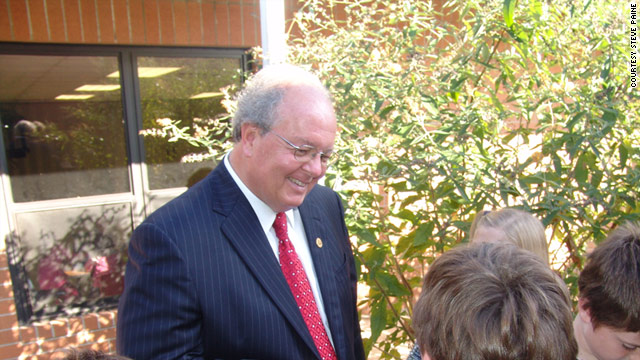
Former West Virginia Schools Superintendent Steve Paine went to Finland to learn how to improve West Virginia schools.
STORY HIGHLIGHTS
  • Only 10% of 7,000 teacher applicants to primary school programs accepted in Finland
  • Finland tops international tests rankings, but doesn't use standardized tests domestically
  • "It is a patriotic, national calling to be a teacher," said one Finnish teacher

(CNN) -- When newly minted West Virginia Schools Superintendent Dr. Steven Paine told parents, teachers and educators in 2005 that he wanted to use Finland as a model for their education system, he got a lot of blank stares: Finland? What, people asked, does West Virginia have to do with Finland?

The contrast couldn't be more stark: In West Virginia, many children face poverty, illiteracy and broken homes and lack easy access to health care or proper nutrition.

Finland has a largely literate and relatively homogeneous population, little immigration and almost no poverty or social problems. They also offer a vast network of social supports including free meals and health care for school children.

Still, Finland was -- and remains -- at the top of international test

Poverty and Testing in Education: “The Present Scientifico-legal Complex” | Truthout

Poverty and Testing in Education: “The Present Scientifico-legal Complex” | Truthout:

Poverty and Testing in Education: “The Present Scientifico-legal Complex”

by: Paul Thomas, The Daily Censored | News Analysis

Part I: Poverty

Jim Taylor has entered the poverty and education debate by asking US Secretary of Education Arne Duncan and billionaire/education entrepreneur Bill Gates a direct question:

“I really don’t understand you two, the US Secretary of Education and the world’s second richest man and noted philanthropist. How can you possibly say that public education can be reformed without eliminating poverty?”

Taylor’s discussion comes to an important element in the debate when he addresses Gates: “Because without understanding the causes of problems, we can’t find solutions,” explains Taylor, adding. “You’re obviously trying to solve public education’s version of the classic ‘chicken or egg’ conundrum.”

Sue Bordelon on NOLA charters and her special needs son « Parents Across America

Sue Bordelon on NOLA charters and her special needs son « Parents Across America:

Sue Bordelon on NOLA charters and her special needs son

See the video below of Sue Bordelon and her son Clark, speaking about his abusive treatment at the hands of New Orleans charter schools – in a system that has been praised by Arne Duncan and others as a model for the nation.

Their powerful testimony was filmed during the inaugural press conference held by the new chapter of Parents Across America NOLA, along with the John McDonogh Alumni Association, the Downtown Neighborhood Improvement Association, and the Esplanade Ridge/Treme Civic Association in on August 29, 2011, to commemorate the sixth anniversary of Hurricane Katrina, to review the state of public education in New Orleans six years later, and to set a course to save their public schools.


Jersey Jazzman: Seven Questions for Chris Cerf

Jersey Jazzman: Seven Questions for Chris Cerf:

Seven Questions for Chris Cerf

Acting Commissioner of Education Chris Cerf has a new op-ed out today extolling the virtues of a pilot program to track teacher evaluations. May I ask a few questions?

1) When will you run a comprehensive cost/benefit analysis of this program? It seems to me that is a critical step in determining whether or not this will be a success. For that matter, where is the cost/benefit analysis of the entire state testing regime - including local district costs?

2) How will you have time to run this analysis if you are "launching a statewide initiative in 2012"? The NJASK scores that will inevitably be used for this pilot aren't released until well into the next school year - probably January of 2013, if history serves as a guide. Yet your schedule would mean implementing the

voiceofsandiego.org: Alpert's Out for a While, But School Reporting Is Still In

voiceofsandiego.org: Education:


Alpert's Out for a While, But School Reporting Is Still In
Dearest readers: I'm going to Bolivia for a fellowship with the International Reporting Project, a nonprofit that provides opportunities for U.S. journalists to report on issues that aren't often covered in the U.S. media.
I'll be gone from the beginning of September to early November. But that doesn't mean that our education reporting is coming to a halt. Will Carless will be picking up the education beat while I'm gone. I can't think of anyone better to do it. Please send him all your tips and suggestions, and be just as welcoming to him as you were to me in my newbie days.
In the meantime, if you'd like to learn more about what I'm up to in Bolivia, keep an eye on the International Reporting Project website. I'm focusing on education reform under President Evo Morales and may also branch into other topics while I'm there. My work will not run in voiceofsandiego.org, but my wonderful boss has given me the freedom to pursue this opportunity and expand my horizons. (By the way, thanks, wonderful boss.) See you in November!
Read the rest of this article

Guest Post: Feminism: Much More than Women’s Rights « Feminist Teacher

Guest Post: Feminism: Much More than Women’s Rights « Feminist Teacher:

Guest Post: Feminism: Much More than Women’s Rights

Meiling Jabbaar, former high school feminism student, and Ileana Jiménez (Feminist Teacher).

Last year, I launched an on-going guest post series written by my former high school students reflecting on the impact of learning feminism(s) in high school. To mark the beginning of the school year and to inspire teachers to bring a feminist vision to their curricula, I’m posting a piece written by my former student, Meiling Jabbaar, who took my course on feminism her senior year last fall. In this essay, Meiling teaches all of us that learning

Schools Matter: Texas-Sized Stupidity in San Antonio

Schools Matter: Texas-Sized Stupidity in San Antonio:

Texas-Sized Stupidity in San Antonio

From the Imperfect Parent:
A Texas first grader has learned the hard way the saying “no good deed goes unpunished.”

Gareth Shand, 6, had grown his hair out over the summer with plans on eventually cutting it and donating the hair to the charity Locks of Love, which uses the hair to make wigs for cancer victims who lose their hair due to treatment.

But long hair on boys is a no-no in Gareth’s school district, and he received an in-school suspension for the infraction, according to KENS-5.

The district’s rules handbook says that boys must keep their hair “must be kept neat, clean and