Latest News and Comment from Education

Showing posts with label COLLEGE. Show all posts

Friday, May 14, 2021

Code Acts in Education: Valuing Futures | National Education Policy Center

Code Acts in Education: Valuing Futures | National Education Policy Center
Code Acts in Education: Valuing Futures


The future of education in universities is currently being reimagined by a range of organizations including businesses, technology startups, sector agencies, and financial firms. In particular, new ways of imagining the future of education are now tangled up with financial investments in education technology markets. Speculative visions and valuations of a particular ‘desirable’ form of education in the future are being pursued and coordinated across both policy and finance.

Visions and valuations

Edtech investing has grown enormously over the last year or so of the pandemic. This funding, as Janja Komljenovic argues, is based on hopes of prospective returns from the asset value of edtech, and also determines what kinds of educational programs and approaches are made possible. It funds unique digital forms of education, investing speculatively in new models of teaching and learning to enable them to become durable and, ideally, profitable for both the investor and investee.

We’ve recently seen, for instance, the online learning platform Coursera go public and reach a multibillion dollar valuation based on its reach to tens of millions of students online. New kinds of investment funds have emerged to accelerate edtech market growth, such as special purpose acquisition companies (SPACs) that exist to raise funds to purchase edtech companies, scale them up quick and return value to both the SPAC and its investor, plus new kinds of education-focused equity funds and portfolio-based edtech index investing that select a ‘basket’ of high-value edtech companies for investors to invest in.

The result of all this investment activity has been the production of some spectacular valuation claims about the returns available from edtech. The global edtech market intelligence agency HolonIQ calculated venture capital investment in edtech at $16bn last year alone, predicting a total edtech market worth $400bn by 2025.

But, HolonIQ said, this isn’t just funding seeking a financial return—it’s ‘funding backing a vision to transform how the world learns’. These edtech investments tend to centre on a particular shared CONTINUE READING: Code Acts in Education: Valuing Futures | National Education Policy Center

Friday, March 12, 2021

Code Acts in Education: Pandemic Privatization and Digitalization in Higher Education | National Education Policy Center

Code Acts in Education: Pandemic Privatization and Digitalization in Higher Education | National Education Policy Center
Code Acts in Education: Pandemic Privatization and Digitalization in Higher Education


The state of emergency in higher education systems around the world during the Covid-19 pandemic has opened up the sector to an expanding range of education technologies, commercial companies, and private sector ambitions. In our new report commissioned by Education International (the global federation of teacher unions), entitled ‘Pandemic Privatisation in Higher Education: Edtech and University Reform’, we examine various ways commercialization and privatization of higher education have been pursued and advanced through the promotion of edtech and ‘digital transformation’ agendas during campus closures and disruptions over the last year. Although we recognize that digital technologies and private or commercial organizations can bring many benefits to HE, they also raise significant challenges with long-term implications for HE staff, students and institutions. Many of these challenges are long-term political and economic matters as much as they are short-term practical matters of online teaching.

The report is detailed and long enough, but even since we finished it in late 2020, the developments we identified have accelerated and expanded. These include investors seeking to capitalize on new visions of teaching and learning, and multisector coalitions coming together to reimagine the future of HE through digital infrastructure and platform-based transformations — ultimately ‘re-infrastructuring’ and ‘platformizing’ universities to operate according to design principles imported by the digital tech industry. These are profoundly political issues about control, power, influence and governance in HE, mirrored by similar shifts of control to technology in the health sector.

Maybe most of the proposed changes associated with so-called digital transformation won’t work CONTINUE READING: Code Acts in Education: Pandemic Privatization and Digitalization in Higher Education | National Education Policy Center

Monday, March 1, 2021

CURMUDGUCATION: FL: College Is For Meat Widgets, Not That Learnin' Stuff

CURMUDGUCATION: FL: College Is For Meat Widgets, Not That Learnin' Stuff
FL: College Is For Meat Widgets, Not That Learnin' Stuff


Oh, Florida.

GOP State Senator Dennis Baxley wants only some students to have Bright Futures. Under his bill SB 86, the scholarship program would be targeted only for those students who are pursuing majors that lead "directly to employment."

Baxley offers a folksy justification for this, saying his own sociology degree was very nice and all, but wouldn't buy him a cup of coffee, and not until he got that associate degree that he was able to make a buck opening his funeral parlor. As God is my witness, I am not making this up.

This "refocus" comes with an endorsement from Senate President Wilton Simpson, who points out that "All too often the debate surrounding higher education focuses on the cost to the student, in terms of tuition and fees, but never the cost to the taxpayer or the actual value to the student." 

More from Baxley:

We want all of our students to succeed in meaningful careers that provide for their families and serve our communities. As taxpayers we should all be concerned about subsidizing degrees that just lead to debt, instead of the jobs our students want and need. We encourage all students to pursue their passions, but when it comes to taxpayer subsidized education, there needs to be a link to our CONTINUE READING: CURMUDGUCATION: FL: College Is For Meat Widgets, Not That Learnin' Stuff

Monday, January 18, 2021

MLK warned that colleges could produce ‘close-minded, unscientific, illogical propagandists’ - The Washington Post

MLK warned that colleges could produce ‘close-minded, unscientific, illogical propagandists’ - The Washington Post
MLK: ‘If we are not careful, our colleges will produce … close-minded, unscientific, illogical propagandists’


Here, as I have published in recent years to mark the federal holiday honoring the Rev. Martin Luther King Jr., are some of his prophetic writings related to the purpose of education and the U.S. government’s efforts toward educating its citizens.

Just read these excerpts:

— King attended Morehouse College, and this is an excerpt from “The Purpose of Education,” a piece he wrote in the February 1947 edition of the college’s student newspaper, the Maroon Tiger:

As I engage in the so-called “bull sessions” around and about the school, I too often find that most college men have a misconception of the purpose of education. Most of the “brethren” think that education should equip them with the proper instruments of exploitation so that they can forever trample over the masses. Still others think that education should furnish them with noble ends rather than means to an end.
It seems to me that education has a two-fold function to perform in the life of man and in society: the one is utility and the other is culture. Education must enable a man to become more efficient, to achieve with increasing facility the ligitimate goals of his life.
Education must also train one for quick, resolute and effective thinking. To think incisively and to think for one’s self is very difficult. We are prone to let our mental life become invaded by legions of half truths, prejudices, and propaganda.
At this point, I often wonder whether or not education is fulfilling its purpose. A great majority of the so-called educated people do not think logically and scientifically. Even the press, the classroom, the platform, and the pulpit in many instances do not give us objective and unbiased truths. To save man from the morass of propaganda, in my opinion, is one of the chief aims of education. Education must enable one to sift and weigh evidence, to discern the true from the false, the real from the unreal, and the facts from the fiction.
The function of education, therefore, is to teach one to think intensively and to think critically. But education which stops with efficiency may prove the greatest menace to society. The most dangerous criminal may be the man gifted with reason, but with no morals.
The late Eugene Talmadge, in my opinion, possessed one of the better minds of Georgia, or even America. Moreover, he CONTINUE READING: 
MLK warned that colleges could produce ‘close-minded, unscientific, illogical propagandists’ - The Washington Post

Monday, December 7, 2020

How to Return to Campus Safely: Test, Then Test Again - The New York Times

How to Return to Campus Safely: Test, Then Test Again - The New York Times
How to Return to Campus Safely: Test, Then Test Again
Some colleges are using lessons from the fall to bring back more students in spring


This is the Coronavirus Schools Briefing, a guide to the seismic changes in U.S. education that are taking place during the pandemic. Sign up here to get this newsletter in your inbox.

The fall semester has been hell for most colleges — canceled classes, dorm closures, outbreaks and deaths. No one wants a repeat.

But the failures and rare successes of the semester might help universities prepare for next year. Many schools plan to bring more students back for the spring semester, even though coronavirus cases in their communities continue to rise.

In part, that’s a financial consideration: Students paying room and board are crucial for strained budgets. But it also reflects schools’ confidence that they have learned how to handle the pandemic.

A picture of successful campus containment has emerged: Maintain social distancing. Contact trace assiduously. Put more faith in students by calibrating restrictions properly.


The most important piece of the puzzle seems to be aggressive testing. Many colleges that ran their own testing programs successfully kept cases low; those that didn’t often became hot spots.

New England, home to many American colleges, could have had a disastrous semester. But colleges prioritized testing, with many joining a partnership with the Broad Institute, and kept cases low. In Vermont and Massachusetts, college presidents and officials credited aggressive testing regimens with low positivity rates on CONTINUE READING: How to Return to Campus Safely: Test, Then Test Again - The New York Times

Friday, December 4, 2020

Beware of Fake Colleges. Learn to Recognize Them. | deutsch29: Mercedes Schneider's Blog

Beware of Fake Colleges. Learn to Recognize Them. | deutsch29: Mercedes Schneider's Blog
Beware of Fake Colleges. Learn to Recognize Them.


My seniors are in the process of considering postsecondary education, and given the proliferation of fraudulent sites purporting to offer postsecondary degrees (and the reality that online education is increasingly attractive during a pandemic), it is important for graduates and their parents to know identifiers of potentially fraudulent or otherwise shady online *insitutions of higher learning.*

To that end, I found a listing of fake universities (“degree mills”) on the site, geteducated.com. For each fake or otherwise suspicious school, the site offers a brief explanation of the problems with the school, including important information about accreditation (i.e., the way in which the public can know that a program or institution actually delivers a quality education), cautions about fraudulent operators choosing names that sound similar to respected institutions, and even the web address can be an indicator (ending in .edu is likely legit, but ending in .com is suspect).

Below are a few excerpts from the hundreds of entries on the geteducated.com “Degree Mills” listing:

Abet International University

This online college is not accredited by any agency recognized by the Council of Higher Education Accreditation or the US Department of Education. This college is licensed to operate as an educational business in the State of Michigan.

Abet International posts a telephone contact number in Michigan (USA). No mailing address can be confirmed in the USA. No college accreditation can be confirmed to award degrees. This business has previously advertised as operating from Florida and offering cheap, fast MBA degrees. …

American Capital University (Various Locations)

There is no accreditation status for this school.  It is not recognized by the US CONTINUE READING: Beware of Fake Colleges. Learn to Recognize Them. | deutsch29: Mercedes Schneider's Blog

Monday, November 30, 2020

Making the Transition from Writing in High School to Writing in College – radical eyes for equity

Making the Transition from Writing in High School to Writing in College – radical eyes for equity
Making the Transition from Writing in High School to Writing in College


Three behaviors have over the course of about 40 years come to constitute a significant percentage of who I am—writing, teaching, and cycling.

Of those three, I have received the most formal education in teaching, completing all three of my degrees (BA, MEd, EdD) in education; in many ways, I am self-taught as a writer and a cyclist even though I would argue that I have developed a level of expertise in all three that are comparable.

Recently, I bought my first gravel bicycle and have been making the small but noticeable transition to gravel riding that has forced me to experiment with decades of cycling knowledge built on road and mountain bicycling in order to ride gravel at a level comparable to road cycling (my first and deepest cycling love).

This, I think, is at the core of all of my personas as writer, teacher, and cycling—behaviors that are all journeys and not aspects of my life that I can (or should) finish.

Even though, as I noted above, teaching is my primary career and what I have the most education in, I am perpetually learning to teach; and I count on my CONTINUE READING: Making the Transition from Writing in High School to Writing in College – radical eyes for equity

Wednesday, November 18, 2020

CURMUDGUCATION: College Debt Sucks

CURMUDGUCATION: College Debt Sucks
College Debt Sucks


I passed a milestone a couple of months back--I paid off the last of my children's college loans.

I went to college back in the 70s. My entire undergrad education cost about $16K. I could have paid for some of it with the proceeds of my summer job, but my parents covered the costs and that allowed me to save for grad school and to start out on my feet. Lots of my friends from high school worked their way through college and started out life largely debt free; it wasn't that hard a trick to pull off in those long-ago days.

But by the time my older children had graduated from high school in the 00s, the world had changed. Paying for college with summer job proceeds was not remotely feasible. Meanwhile, college costs had gone berserk. My children worked summers and, some years, during the school year. Our deal was that I would pay college costs, and they would cover their own living expenses (their mother kicked in as well). 

Simply procuring and managing the loans was trouble enough. Sometimes it was like when you apply for your first home loan, and the bank treats you like you're a twelve-year old delinquent borrowing money to buy cases of beer. Bad beer. Other times it was simply confusing, as when the loans were sold from one handler to another resulting in a complete change of account numbers and payment amounts. And the phone calls from loan consolidators! Like many college-adjacent industries, these folks try so hard to suggest they are official government entities trying to do you a favor or help you comply with rules you didn't know existed. I can't begin to imagine how many young college students are hoodwinked by this stuff. 

I had advantages as an adult. For instance, I knew better than to pay just the minimum if I could manage more. I had a real job and real income. For over a decade, most of my income went to CONTINUE READING: CURMUDGUCATION: College Debt Sucks

Sunday, October 18, 2020

glen brown: K-12 re-openings: "there’s a lot we don’t know"/ At colleges and universities: "re-opening appears to be going much worse"

glen brown: K-12 re-openings: "there’s a lot we don’t know"/ At colleges and universities: "re-opening appears to be going much worse"

K-12 re-openings: "there’s a lot we don’t know"/ At colleges and universities: "re-opening appears to be going much worse"


“…According to the Covid Monitor, there have been more than 52,000 cases in K-12 schools as of October 15. That’s significant, but a small portion of the 3 million coronavirus cases in the US since August. At the very least, K-12 schools don’t seem to be a primary driver of Covid-19 in the US right now...
“It’s still unclear how many K-12 schools, exactly, have fully reopened. Given the country’s sprawling network of school districts, each under varying levels of state and local control, we simply don’t have a good way to track what every school is doing at a national level.
“According to Education Week, four states have ordered schools to reopen. Seven, along with Washington, DC, and Puerto Rico, have mandated partial or full closures. The remaining 39 states have by and large left it up to individual school districts or local governments to decide.
“Schools can try to fully restart in-person learning, go remote only, or follow a hybrid model. Among those allowing in-person teaching, some require masks for teachers and students. Some are putting students into cohorts or pods — meaning they have to stick to the same group of peers while in school. Some have spread out desks or limited capacity in classes, and have shifted schedules to reduce how many people are in the building at any moment. A few have taken more aggressive measures, like improving CONTINUE READING: glen brown: K-12 re-openings: "there’s a lot we don’t know"/ At colleges and universities: "re-opening appears to be going much worse"

Monday, October 12, 2020

College of Education Dean Uses New Mode of Research to Analyze Educational Equity Issues | UKNow

College of Education Dean Uses New Mode of Research to Analyze Educational Equity Issues | UKNow

College of Education Dean Uses New Mode of Research to Analyze Educational Equity Issues


LEXINGTON, Ky. (Oct. 12, 2020) — A unique digital media study focused on educational equity issues surrounding Teach For America has been published by University of Kentucky College of Education Dean Julian Vasquez Heilig. The study is thought to be the first in educational policy to use a new form of research — digital ethnography — to analyze participant responses.
Published online first by Urban Education, it will appear in an upcoming print issue of the journal. The study analyzed podcast interviews with former Teach For America corps members who shared their personal experiences working with the organization. They provide a counter narrative to the ways Teach For America is commonly characterized in public discourse, helping to give a more complete representation and fuller understanding of the program and its impact.
The interviews aired on the podcast "Truth for America," hosted by Vasquez Heilig and T. Jameson Brewer, an assistant professor at the University of North Georgia and one of the study’s co-authors. Additional co-authors were Amber K. Kim, an equity literacy coach and consultant, and Miguel Sanchez, a doctoral candidate in educational leadership at California State University, Sacramento.
“We have, essentially, invented a new way of doing research. By using publicly available podcasts, anyone can go back and listen to participants’ conversations in full and make CONTINUE READING: College of Education Dean Uses New Mode of Research to Analyze Educational Equity Issues | UKNow

Monday, August 31, 2020

Call in and let’s talk | Cloaking Inequity

Call in and let’s talk | Cloaking Inequity

CALL IN AND LET’S TALK


Join us Monday August 31, 2020 at 11 am EST to learn more about @ukcollegeofed new civil rights and education collaboration with @naacp Listen live and call in at https://www.facebook.com/wnhhradio/


Call in and let’s talk | Cloaking Inequity

Monday, August 10, 2020

Big Time Football: “angry white man society” – radical eyes for equity

Big Time Football: “angry white man society” – radical eyes for equity

Big Time Football: “angry white man society”


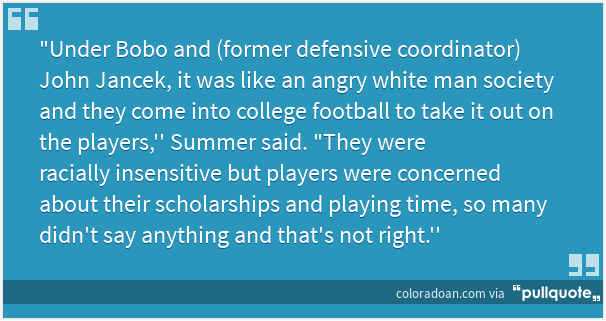
While Trevor Lawrence—probably the highest profile white Division I college football player in 2020—has become the face for the #WeWantToPlay campaign calling for a start to college football amidst a pandemic, the Colorado State University football program has been forced to reckon with a racially toxic culture, implicating their former coach and current assistant coach at the University of South Carolina (Mike Bobo).
The #WeWantToPlay campaign appears to be garnering greater media and public coverage, but the CSU controversy should not be ignored, and should not be examined as a culture problem somehow centered only at CSU or in the individual coaches named in that coverage.
Charges by Black players at CSU are powerful and damning:
Image
However, again, this is not about CSU solely or a few high-profile coaches; this is about “closed systems” and a normalized culture of abuse “hidden in plain sight”: CONTINUE READING: Big Time Football: “angry white man society” – radical eyes for equity

Saturday, July 11, 2020

My thoughts on the Kentucky Commissioner of Education Decision | Cloaking Inequity

My thoughts on the Kentucky Commissioner of Education Decision | Cloaking Inequity

MY THOUGHTS ON THE KENTUCKY COMMISSIONER OF EDUCATION DECISION


For many reasons I am very relieved that the Kentucky commissioner search has completed. Working with the Bluegrass community as Dean of @UKCollegeofEd, the @USNews top ranked College of Education in Kentucky (top 30 among publics in nation), is an incredible honor. I was glad for the opportunity to discuss with the entire Board a vision for a community-based, community-engaged vision for education in Kentucky— i.e. Community-Based AccountabilityCommunity Schools, locally-based assessment etc. I hope the Board and the new Commissioner seriously considers the empirically-based input focused on democratically-controlled choices that would chart a new direction for education in the Commonwealth.
It’s been 30 years since KERA, and looking at the data, our Commonwealth is near the bottom of national rankings in far too many areas. For example, during the last two years, Kentucky has experienced a precipitous drop in @NAEP_NCES scores. Also, there are districts in the state that are 2000% more likely to suspend African American children. We also lack teacher diversity in our state even though nearly a quarter of our students are of color. We must do better.
I hope that the state continues to treasure our educators as first responders to the Kentucky’s social challenges. A decade of political attacks on educators have impacted our ability to recruit teachers, thus a new course that values and engages their input at the state level is paramount.
I hope that the new Commissioner will make an immediate impact so that communities don’t have to wait. We look forward to working in collaboration with KDE in every way possible and expect to deliver results immediately. Communities, especially those of color, can’t wait for educational opportunity that may come tomorrow— it must be today— as public education is the compass our democracy.
Please Facebook Like, Tweet, etc below and/or reblog to share this discussion with others.
Check out and follow my YouTube channel here.
Twitter: @ProfessorJVH
Click here for Vitae.
My thoughts on the Kentucky Commissioner of Education Decision | Cloaking Inequity

Wednesday, July 1, 2020

BREAKING NEWS - Julian Vasquez Heilig is one of the Three candidates named in Kentucky’s education commissioner search | Kentucky Teacher

Three candidates named in Kentucky’s education commissioner search | Kentucky Teacher

Three candidates named in Kentucky’s education commissioner search


The Kentucky Board of Education on July 1 released the names of three candidates vying to become Kentucky’s next commissioner of education.
The board will meet July 6-7 to conduct second-round interviews with the three candidates in Louisville.
The candidates include:
Jason GlassJason Glass
Jason Glass, Ed.D. – Glass has been serving as superintendent and chief learner for Jeffco Public Schools in the metro Denver area since 2017. Prior to that, he served as the superintendent of Eagle County Schools in Colorado and as Iowa’s Director of Education, serving as the chief state school officer from 2010-2013. Glass also was previously the senior director of human capital strategy with Battelle for Kids and has held district leadership posts in human resources and research and assessment, worked as vice president of Quality Ratings with Qualistar Early Learning, held several posts with the Colorado Department of Education; and worked as a university instructor while a graduate student at the University of Kentucky, teaching at UK and Georgetown College. He began his teaching career as a high school social studies teacher for Hazard Independent Schools. A native of Brandenburg, KY, he earned his doctorate in education leadership from Seton Hall University, a master’s in political science, a master’s in education and a bachelor’s in political science and history, all from the University of Kentucky.
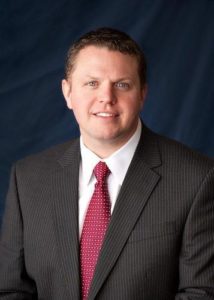
Julian Vasquez HeiligJulian Vasquez Heilig
Julian Vasquez Heilig, Ph.D. – Vasquez Heilig currently serves as the dean of the College of Education and professor of educational policy studies and evaluation at the University of Kentucky. He has served as professor of educational leadership and policy studies and director of the Doctorate in Educational Leadership at California State University. He has held numerous positions at the University of Texas, including associate professor of educational policy and planning, coordinator of the master’s program in educational policy and planning, vice-chair of the Department of Educational Administration’s Graduate Studies Committee, assistant professor of educational policy and planning, associate and assistant professor of African and African diaspora studies, faculty associate for the Center for Mexican American Studies, and faculty affiliate of the Center for African and African American Studies. Vasquez Heilig also served as associate director of research centers for the University Council for Educational Administration and was co-director of the Texas Center for Collaborative Educational Research and Policy. A native of Michigan, he earned his doctorate of educational administration and policy analysis and a master’s of sociology from Stanford University, as well as a master’s in higher education and a bachelor’s in history and psychology from the University of Michigan.
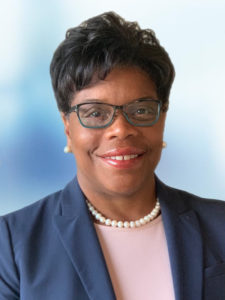
Felicia Cumings SmithFelicia Cumings Smith
Felicia Cumings Smith, Ed.D. – Smith currently serves as the assistant superintendent of teaching and learning in Jefferson County Public Schools (JCPS). She also served as senior program officer for the Bill and Melinda Gates Foundation, director of the National Center on Education and the Economy, executive director of the Collaborative Center for Literacy Development and lecturer at the University of Kentucky, was an associate commissioner and K-12 education program consultant at the Kentucky Department of Education, and began her career as an elementary and reading resource teacher in JCPS. A Kentucky native, Smith earned her Rank I in instructional leadership and school superintendent certification, as well as her doctorate in instruction and administration from the University of Kentucky. She earned her master’s and bachelor’s in elementary education from the University of Louisville.
The KBE retained Florida-based Greenwood/Asher in March to lead the search for the next CONTINUE READING: Three candidates named in Kentucky’s education commissioner search | Kentucky Teacher


Thursday, June 25, 2020

David Berliner: The Value of a College Education in the Humanities | Diane Ravitch's blog

David Berliner: The Value of a College Education in the Humanities | Diane Ravitch's blog

David Berliner: The Value of a College Education in the Humanities


David Berliner is one of the nation’s most eminent researchers of education. I am delighted that he sends original posts to me. I have informed him that “mi casa es su casa,” and he is always welcome here.
Why Universities Need Support, Need to Stay Open, and
Need to Have Their Students on Campus
David C. Berliner
Regents Professor Emeritus, Mary Lou Fulton College of Education, Arizona State University, Tempe, AZ
Over the last few years higher education enrollment in the USA has declined. The cost of colleges and universities has certainly been one factor in that small but steady drop in enrollment, particularly when return on investment is added to concerns about costs. The steep rise in tuition in recent years has an explanation: It is largely due to states’ disinvestment in their universities and colleges. From 2008, before the start of our last recession, to 2019, before the pandemic, my state of Arizona cut its contributions to higher education 54.9% (Mitchell, Leachman, & Saenz, 2019). When I first came to my wonderful university, I was impressed that tuition was relatively low, and it still is, but it is also 92.4% higher than it was in 2008! (Mitchell, Leachman, & Saenz, 2019)
So, for many, in the midst of this pandemic, the sacrifices that students and their families once made to obtain college degrees now appear to be less reasonable, perhaps even less possible. And families rightly worry that the rewards of a university degree are less tangible, compared to what they were in my generation. Incurring a CONTINUE READING: David Berliner: The Value of a College Education in the Humanities | Diane Ravitch's blog