Latest News and Comment from Education

Showing posts with label PASI SAHLBERG. Show all posts

Monday, March 22, 2021

Pasi Sahlberg and William Doyle: In Finland, Education is a Basic Civil Right | Diane Ravitch's blog

Pasi Sahlberg and William Doyle: In Finland, Education is a Basic Civil Right | Diane Ravitch's blog
Pasi Sahlberg and William Doyle: In Finland, Education is a Basic Civil Right


In this post, Pasi Sahlberg and William Doyle respond to a recent article that pitted civil rights groups against advocates for the Finnish model of education. They found the dichotomy puzzling. They wrote this article for this blog.

They write:

Two decades ago, Finland made big news in international education circles. Against all odds it became a top-performer in OECD’s first PISA (Programme for International Student Assessment) study that compared 15-year-olds’ knowledge and skills in reading, mathematical and scientific literacies. Since about 2010 education experts and pundits in the United States have debated whether there is anything at all that American school systems could learn from that small Nordic nation’s school system. Ten years on and these debates still go on.


In their March 15, 2021 essay “Finland Meets Civil Rights”, Professor Jal Mehta and co-author Krista Galleberg make good points, including “we can draw on CONTINUE READING: 
Pasi Sahlberg and William Doyle: In Finland, Education is a Basic Civil Right | Diane Ravitch's blog

Thursday, January 7, 2021

Pasi Sahlberg: Australian Education Is Declining Because It Followed the U.S. Model | Diane Ravitch's blog

Pasi Sahlberg: Australian Education Is Declining Because It Followed the U.S. Model | Diane Ravitch's blog
Pasi Sahlberg: Australian Education Is Declining Because It Followed the U.S. Model


In the early 2000s, media mogul Rupert Murdoch brought New York City Chancellor Joel Klein to Australia to spread the word about the “New York City Miracle.” This alleged miracle was as phony as George W. Bush’s “Texas Miracle,” all hat and no cattle. Unfortunately, the Education Minister (who subsequently became Australia’s Prime Minister) bought the tale and imposed national standards and testing on the entire country.

Pasi Sahlberg, teacher, researcher, scholar, is currently based in Australia. As a chronicler of Finnish education (see his book Finnish Lessons), Sahlberg has achieved international renown. In Australia, he heads the Gorski Institute and is trying to change the course of Australian education.

Pasi Sahlberg writes here about Australia’s refusal to own up to the dire consequences of the wrong path that it has taken. It is not too late to change course.

He writes that Australia has done a great job in controlling CONTINUE READING: Pasi Sahlberg: Australian Education Is Declining Because It Followed the U.S. Model | Diane Ravitch's blog

Wednesday, December 23, 2020

Doyle and Sahlberg: After the Pandemic, Children Need to Play | Diane Ravitch's blog

Doyle and Sahlberg: After the Pandemic, Children Need to Play | Diane Ravitch's blog
Doyle and Sahlberg: After the Pandemic, Children Need to Play


William Doyle and Pasi Sahlberg have a proposal for what children should do after the pandemic: Play.

They write at CNN.com:

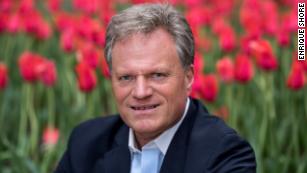
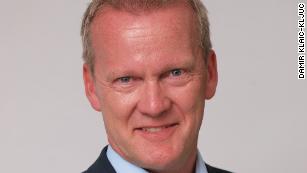
When the novel coronavirus is no longer as great a threat and schools finally reopen, we should give children the one thing they will need most after enduring months of isolation, stress, physical restraint and woefully inadequate, screen-based remote learning. We should give them playtime — and lots of it.William Doyle William Doyle Pasi SahlbergPasi Sahlberg As in-person classes begin, education administrators will presumably follow the safety guidelines of health authorities for smaller classes, staggered schedules, closing or regularly cleaning communal spaces with shared equipment, regular health checks and other precautions. But despite the limitations this may place on the students’ physical environment, schools should look for safe ways to supercharge children’s learning and well-being.We propose that schools adopt a 90-day “golden age of play,” our term for a transitional period when traditional academic education.

Play gives children a wide range of critical cognitive, physical, emotional and social benefits. The American Academy of Pediatrics, representing the nation’s 67,000 children’s doctors, stated in a 2012 clinical report that “play, in all its forms, needs to be considered as the ideal educational and developmental milieu for children,” including for children in poverty, and noted that “the lifelong success of children is based on their ability to be creative and to apply the lessons learned from playing.

“The Centers for Disease Control and Prevention (CDC) has also reported “substantial evidence that physical CONTINUE READING: Doyle and Sahlberg: After the Pandemic, Children Need to Play | Diane Ravitch's blog 


Thursday, December 10, 2020

Does the Pandemic Help Us Make Education More Equitable? (Pasi Sahlberg) | Larry Cuban on School Reform and Classroom Practice

Does the Pandemic Help Us Make Education More Equitable? (Pasi Sahlberg) | Larry Cuban on School Reform and Classroom Practice
Does the Pandemic Help Us Make Education More Equitable? (Pasi Sahlberg)


“Pasi Sahlberg is a Finnish educator who has worked as a schoolteacher, teacher-educator, researcher, and policy advisor in Finland and has studied education systems and advised education leaders around the world..”

I have excerpted Sahlberg’s description of how Finland’s and Australia’s schools responded to the Covid-19 pandemic. For readers who wish to see the entire article, it appeared in Educational Research for Policy and Practice online October 31, 2020.

Australia and Finland, the two homes of mine at the moment, are not just geographically as

distant from each other than possible, but they are also very different societies with distinct

histories, traditions, values and cultures. Australia is sunny and hot. Finland is,many believe,

snowy and cool. The Australians prefer things big and fast. The Finns think small is beautiful.

In other words, Australia is fire, Finland is ice. These cultural distinctions make CONTINUE READING: Does the Pandemic Help Us Make Education More Equitable? (Pasi Sahlberg) | Larry Cuban on School Reform and Classroom Practice