Latest News and Comment from Education

Thursday, January 14, 2021

David Labaree on Schooling, History, and Writing: Do No Harm: Reflections on the Impact of Educational Research | National Education Policy Center

David Labaree on Schooling, History, and Writing: Do No Harm: Reflections on the Impact of Educational Research | National Education Policy Center
David Labaree on Schooling, History, and Writing: Do No Harm: Reflections on the Impact of Educational Research


This post is a short piece I wrote in 2011 for a special issue of the journal Teacher Education and Practice on “Enhancing Teaching and Learning Through Scholarship.” My one take is that research in education is not necessarily well positioned to enhance education; on the contrary, it often does more harm than good.  See what you think.  Here’s a link to the original.

Do No Harm

Education is a field of dreams and so is educational research.  As educators, we dream of schools that can improve the lives of students, solve social problems, and enrich the quality of life; and as educational researchers, we dream that our studies will enhance the effectiveness of schools in achieving these worthy goals.  Both fields draw recruits who see the possibilities of education as a force for doing good, and that turns out to be a problem, because the history of both fields shows that the chances for doing real harm are substantial.  Over the years, research on teaching and teacher education – the topic of the discussion in this special issue – has caused a lot of damage to teaching and learning and learning-to-teach in schools.  So I suggest a good principle to adopt when considering the role of research in teacher education is a version of the Hippocratic Oath:  First do no harm. 

The history of educational research in the United States in the twentieth century supports a pessimistic assessment of the field’s impact on American school and society.  There was Edward L. Thorndike, whose work emphasized the importance of differentiating the curriculum in order to provide the skills and knowledge that students would later need in playing sharply different roles in a stratified workforce.  There was David Snedden, who labored tirelessly to promote CONTINUE READING: David Labaree on Schooling, History, and Writing: Do No Harm: Reflections on the Impact of Educational Research | National Education Policy Center
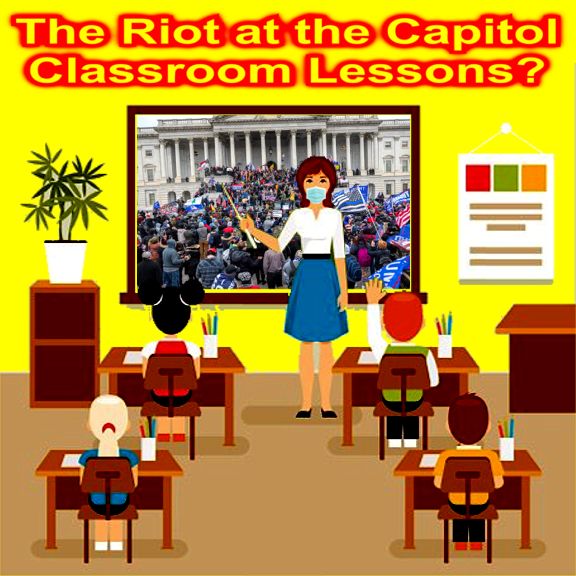
The Riot at the Capitol: Classroom Lessons?* | Larry Cuban on School Reform and Classroom Practice

The Riot at the Capitol: Classroom Lessons?* | Larry Cuban on School Reform and Classroom Practice
The Riot at the Capitol: Classroom Lessons?*


In an earlier post, I pointed out the obvious fact that tax-supported public schools were political institutions. Not in the partisan sense of Republican and Democrat but in serving the community in socializing community values in the next generation including respect for and pride in the nation. When taxpayers want their schools to instill core values in students (e.g., respect for individual, being part of a community, equal treatment) those are political decisions.

In light of January 6, 2020 attack on the Capitol instigated by President Donald Trump and the subsequent riot and destruction that occurred including the loss of five lives, the issue of teaching about this signal event in U.S. history in elementary and secondary classrooms again comes to the attention of teachers and non-teachers.

So should teachers and students deal with the attack upon the Capitol in classroom lessons? Yes, it is controversial and yes, it is highly political in that a Republican President egged on a rally of supporters to march down Pennsylvania Ave. to the Capitol where Democrats CONTINUE READING: The Riot at the Capitol: Classroom Lessons?* | Larry Cuban on School Reform and Classroom Practice

Republicans Usher in the Land Free from the Truth: Free Speech v. Free Markets – radical eyes for equity

Republicans Usher in the Land Free from the Truth: Free Speech v. Free Markets – radical eyes for equity
Republicans Usher in the Land Free from the Truth: Free Speech v. Free Markets


We know of course there’s really no such thing as the “voiceless.” There are only the deliberately silenced, or the preferably unheard.

ARUNDHATI ROY: THE 2004 SYDNEY PEACE PRIZE LECTURE

Labeled as “surreal” by Emilia Petrarca, Marjorie Taylor Greene (R – Georgia) wore as “censored” face mask while speaking from the floor on Congress.

First, we must recognize that statistically no one in the U.S. has the sort of access to a bully pulpit that a member of Congress has (535 out of 330 million people), and then, we must consider whether Greene is incredibly dishonest, spectacularly ignorant, or both.

After the insurrection at the Capitol by rightwing domestic terrorists supporting Trump—and emboldened by Trump and many Republicans in office—conservatives and Republicans across the U.S. has evoked “censorship,” “First Amendment,” and “freedom of speech” tirades in response to Trump being banned from several social media platforms as well as many Republicans losing followers on those platforms.

Here is the disturbing thing that Greene represents among conservatives and Republicans: There appears to be the same sort of dishonesty/ignorance running rampant because there is essentially no relationship between private businesses and free speech guaranteed in the Constitution since the First Amendment is about the role of government in protected speech.

Let’s not forget very recent history when Republicans and conservatives CONTINUE READING: Republicans Usher in the Land Free from the Truth: Free Speech v. Free Markets – radical eyes for equity

Schott Foundation's 2020 Grantmaking Impact + Eight #EdJustice Policy Wins that Give us Hope for 2021 | Schott Foundation for Public Education

Schott Foundation's 2020 Grantmaking Impact | Schott Foundation for Public Education
Schott Foundation's 2020 Grantmaking Impact


Fueling the frontlines of social progress with philanthropic support is central to Schott’s strategy to advance racial justice in public education. In a year like no other, Schott’s 2020 grantmaking was more nimble, diverse, and participatory than ever before. $1.64 million in philanthropic support went to the education justice movement: to continue our work with longstanding partners, to supply quickly-needed resources to mutual aid groups in the wake of COVID-19, and to seize the movement moment to help advocates win police-free schools.  In addition to our direct grantmaking support, Schott staff supported our community partners in obtaining an additional $380,000 in support from other foundations.

Schott Foundation makes grants across the United States, including Puerto Rico. The geographic impact of our grants reflect our ongoing commitment to the US South and to movement building efforts in the Northeast and in California.

Grantmaking by Region


LCRFFormed early last spring, our Loving Communities Response Fund for Racial Justice (LCRF) was the first COVID-specific response fund formed in the philanthropic sector that, in responding to the movement’s needs, soon expanded its work from supporting mutual aid into organizing in response to demands for police-free schools.

In 2020, LCRF made 55 grants to local, community-based organizations, most at the $5,000-$10,000 level, determined by an advisory board of grassroots education justice organizations.

LCRF Grants by Region


In addition to giving grants, Schott also contributed nearly 900 hours of technical assistance and support to the education justice movement: our staff worked with our grantees on communications, fundraising, and strategy helping to elevate their important work and increase their capacity. Learn more about our 2020 work here, including our sponsored webinars and top blog posts >

Amid the lockdowns from COVID-19 and the racial justice uprisings against police brutality, our partners and allies achieved significant wins in 2020, from police-free schools to protecting DACA to restoring school district voting rights. See the eight key policy wins from 2020 that inspire us for the year ahead >

Your support of the Schott Foundation is critical to helping us nurture and grow the education justice movement. 2021 must be a transformative year: please join and support us in order to ensure all children have the opportunity to learn.


Eight #EdJustice Policy Wins that Give us Hope for 2021 | Schott Foundation for Public Education - http://schottfoundation.org/node/4300


NANCY BAILEY: 6 Ways High-Stakes Standardized Testing Destroys Student Voice

6 Ways High-Stakes Standardized Testing Destroys Student Voice


The National Council of the Teachers of English is Helping Students Find Their Voices in Challenging Times. This title stood out as well worth exploring, but it’s also a reminder that since public education became focused on high-stakes standardized testing, public schools’ emphasis has been on scores, not students’ voices.

Student’s thoughts and ideas should be valued and also challenged in school but heard. Public schooling has not been about that for years, if ever. When the focus is on testing, it’s about results, not students.

The focus has been on how students perform, what they prove on a test with narrow questions that have driven what teachers teach, and how they teach it.

Students rotate through grades in packed classes. If they’re lucky, they connect with a teacher who is permitted to add personalized (not online) instruction by finding a way to care how a student thinks or behaves. Journal writing comes to mind.

Public schools were depersonalized by testing, and now computers are doing it more. There’s nothing personal about sitting in front of a screen unless there’s a teacher on the other end that a student knows in person and who will be around for face-to-face CONTINUE READING: 6 Ways High-Stakes Standardized Testing Destroys Student Voice

Stop the Spring Tests! Support the Children! | Diane Ravitch's blog

Stop the Spring Tests! Support the Children! | Diane Ravitch's blog
Stop the Spring Tests! Support the Children!


Ann Cook, executive director and co-founder of the New York State Performance Standards Consortium, and Phyllis Tashlik, director of the Consortium’s Center for Inquiry in Teaching and Learning, argue in this article in the New York Daily News that the spring testing should be canceled. The Consortium, a group of a few dozen high schools in New York, has an exemption from most state testing and has produced better academic outcomes (graduation rates, college entry, college retention) than the other public schools in the city with similar students. My guess is that they could make a powerful argument that standardized testing is unnecessary and wasteful.

Across the country, national and local groups — including the majority of parents — are calling on the federal government to waive standardized testing requirements for states in the spring. New York should be one of the leaders of that effort. Instead, it remains one of only 10 states to link standardized exams, in this case Regents exams, to high school graduation.

We’re in the throes of a pandemic with no consistency to school attendance, WiFi reception, or access to CONTINUE READING: Stop the Spring Tests! Support the Children! | Diane Ravitch's blog

Teacher Tom: Getting Straight A's

Teacher Tom: Getting Straight A's
Getting Straight A's


Over the New Year's break, I spent a few days reorganizing our laundry room/storage closet. Among the items in there were boxes of keepsakes, which is why it was a multiple-day project: I found myself considering each item, remembering, and telling myself and my family the stories they evoked. Among the memorabilia I found my very first report card from Meadowfield Elementary School. It was a document that Miss McCutcheon had filled in by hand. I'd received straight A's. 

I'd been proud of that accomplishment, although considering it from the vantage point of some four decades later, the feeling is much more complicated. For instance, as an eight-year-old I'd capably done the calculation, figuring that what Miss McCutcheon was telling me with these high marks was that I was the smartest kid in the class. I knew enough to not voice this aloud, but I thought it. Also, in looking back, I know that those grades also indicate that I must have been a "teacher's pet," which is to say an obedient goody-two-shoes.

I don't recall comparing report cards with any of my classmates. For all I know, Miss McCutcheon gave everyone CONTINUE READING: Teacher Tom: Getting Straight A's

Understanding and Countering Islamophobia - Year 2021 (CA Dept of Education)

Understanding and Countering Islamophobia - Year 2021 (CA Dept of Education)
State Superintendent Tony Thurmond and Experts Discuss Approaches to Understanding and Countering Islamophobia


SACRAMENTO—State Superintendent of Public Instruction Tony Thurmond today joined leaders from the Islamic Networks Group (ING) in a virtual classroom session on understanding and countering Islamophobia. The event was the third in a series of ongoing virtual classroom and professional development sessions that are part of the Education to End Hate Initiative, a multifaceted effort to use the power of public education to drive change and confront racism and bigotry.

“After seeing so many symbols of hate paraded through our nation’s capital last week, it’s clear that we must recommit ourselves to addressing and understanding all manifestations of hate such as Islamophobia,” said Thurmond. “And we must also commit to working together and discussing ways to create a future that’s inclusive and safe for all students. I launched the Education to End Hate Initiative in September to confront incidents of hate, bigotry, and racism rising across the state and nation—and it’s abundantly clear that it’s important now more than ever.”

Over the past few months, State Superintendent Thurmond and the California Department of Education (CDE) have hosted a series of virtual classroom and educator professional development sessions designed to engage students, educators, and families in a wide-ranging dialogue about the many forms of bias young people face across California and ways schools can lead efforts to end discrimination.

This virtual classroom session, “Understanding and Countering Islamophobia,” featured Maha Elgenaidi, the founder and Chief Innovation Officer of ING, and Ishaq Pathan, ING’s Bay Area Director. The presentations focused on showing how Islamophobia is enabled and disseminated, the impact of Islamophobia, and how it can be countered. They also drew the connection between Islamophobia, anti-blackness, and the “othering” of minoritized populations by showing how Muslims are racialized. The presenters also connected these concepts to the experiences of students and provided strategies for teachers to avoid harmful racist stereotypes. More information on Islamophobia, including an educator toolkit, is on the ING websiteExternal link opens in new window or tab..

The Education to End Hate initiative has three components: Educator training grants, which have been awarded to schools and districts across the state and will be used to support the improvement and development of curriculum as well as address systemic problems in policies and procedures; this virtual classroom series; and the upcoming creation of a roundtable with leaders, social justice organizations, educators and lawmakers to brainstorm additional ideas for ways schools can influence the change necessary to ensure a physically and emotionally safe learning environment that is inclusive for all students.

This was the third event in the virtual classroom series. Previous sessions included “Understanding Contemporary Anti-Semitism: An Introduction for California Educators” in December and “Pedagogical Approaches to Teaching about Native Americans” in November. Future offerings will be announced on the CDE’s social media pages.

An archived broadcast of this virtual classroom session can be found on the CDE Facebook pageExternal link opens in new window or tab.. Members of the public with questions and feedback on the initiative are encouraged to reach out at edtoendhate@cde.ca.gov.

# # # #

Tony Thurmond — State Superintendent of Public Instruction
Communications Division, Room 5602, 916-319-0818, Fax 916-319-0100


NYC Educator: UFT Delegate Assembly January 13, 2021--Waiting for Vaccines

NYC Educator: UFT Delegate Assembly January 13, 2021--Waiting for Vaccines
UFT Delegate Assembly January 13, 2021--Waiting for Vaccines


 4:19 UFT President Michael Mulgrew welcomes us. 

National--Has been difficult week. Tough for teachers to explain. We've never had students seeing everything happening in real time all the time. This is on top of all the other issues. We have to guide students through this craziness. We get no support at all from DOE. Hopefully things will turn around. From feds we need vaccine and funding. DeVos quit, tried to remove equity, to privatize, to help vulture lenders, to help all we're against. Probably worst Ed. Sec. of all time. We should see a strong contrast with a lifelong educator in this position.

Stimulus--Last one passed. NY State should get 4.5 billion, Much should go to NYC. First was one billion, but was completely supplanted by governor, as he took another billion out. We know students will be hurt by this situation. People will look to us to deal with various crises. Social and emotional stress, isolation--this is deeper than just learning loss. If state continues to supplant federal money will be huge problem. State is taking away money to help children in crisis. 2.4 billion coming our way, and children need to be prioritized. Will also effect CONTINUE READING: NYC Educator: UFT Delegate Assembly January 13, 2021--Waiting for Vaccines

Washington Privacy Act, SB5062, does not go far enough to protect consumers or students | Parent Coalition for Student Privacy

Washington Privacy Act, SB5062, does not go far enough to protect consumers or students | Parent Coalition for Student Privacy
WASHINGTON PRIVACY ACT, SB5062, DOES NOT GO FAR ENOUGH TO PROTECT CONSUMERS OR STUDENTS


On January 14, 2021, the Washington state legislature will hold a hearing on a privacy bill, The Washington Privacy Act, SB 5062 which is weak and does not fully protect consumers’ right to privacy: 

  • SB5062 does nothing to better protect educational, teacher, or student data. 
  • SB5062 does not apply to state or local government agencies.
  • SB5062 has many limitations and exemptions that allow the selling of user data or its use for marketing purposes: 
    • SB5062  allows corporations and other third parties to sell your data or use it for marketing purposes UNLESS you  expressly opt out.
    • If you do opt out, companies can charge you a higher price for their services.
  • Even then, consumers  can only “opt out” of the collection and use of personal data for certain purposes.” 
    • Instead, companies should be required to get prior consent or “opt in” for any disclosure of your personal data, including its use for marketing or sale. 
  • Finally, SB5062 does not allow people to hold companies accountable for violating their privacy rights by suing, if they’ve violated the law or your decision to opt out.

 We agree with this Seattle Times op-ed: Washington needs a privacy law that protects people, not corporations. Oppose CONTINUE READING: Washington Privacy Act, SB5062, does not go far enough to protect consumers or students | Parent Coalition for Student Privacy

CURMUDGUCATION: AZ: Teachers Slapped Yet Again

CURMUDGUCATION: AZ: Teachers Slapped Yet Again
AZ: Teachers Slapped Yet Again


Arizona is one of a handful of states that owe a debt to Florida; were it not for the Sunshine State, Arizona would be a strong contender for State Most Hostile To Public Education. And now their governor is sticking it to teachers yet again.


Arizona has a long-standing problem with convincing teachers to work there; they are one of the states that was recruiting folks from the Philipines to fill teacher positions. Their teacher pay stinks, and their actual money spent on students stinks as well (in 2015, per pupil spending was at $3400). Governor Ducey turned to public education demolition experts like Paul Pastorek (obliterator in chief of New Orleans schools) and Joel Klein. 

Arizona is a great playground for charter profiteers (just gut public schools to make privatized options more attractive). They have long hemorrhaged teachers from their workforce, even as they keep electing lawmakers like the GOP House Leader who claimed that teachers were only working second jobs so they could buy boats and bigger houses. They tried and failed at merit pay for CONTINUE READING: CURMUDGUCATION: AZ: Teachers Slapped Yet Again

A VERY BUSY DAY Larry Ferlazzo's Websites of the Day... The latest news and resources in education since 2007

 Larry Ferlazzo's Websites of the Day... | The latest news and resources in education since 2007


Around The Web In ESL/EFL/ELL
BiljaST / Pixabay Six years ago I began this regular feature where I share a few posts and resources from around the Web related to ESL/EFL or to language in general that have caught my attention. You might also be interested in THE BEST RESOURCES, ARTICLES & BLOG POSTS FOR TEACHERS OF ELLS IN 2020. Also, check out A Collection Of My Best Resources On Teaching English Language Learners. In additi
Ed Tech Digest
Nine years ago, in another somewhat futile attempt to reduce the backlog of resources I want to share, I began this occasional “” post where I share three or four links I think are particularly useful and related to…ed tech, including some Web 2.0 apps. You might also be interested in THE BEST ED TECH RESOURCES OF 2020 – PART TWO , as well as checking out all my edtech resources . Here are this w
“Tackling the ‘Taboo’ of Talking About Race & Privilege”
Tackling the “Taboo” of Talking About Race & Privilege is the headline of my latest Education Week column. Four educators share suggestions for books and articles white educators can read to learn more about race and racism. Here are some excerpts:
Thursday’s Must-Read Articles On School Reopenings
stux / Pixabay Here are new additions to THE BEST POSTS PREDICTING WHAT SCHOOLS WILL LOOK LIKE IN THE FALL : Amid Surges, Teachers Line Up For Their Vaccines is from NPR. Photos: Las Virgenes kids are among first in L.A. to return to school during pandemic is from The LA Times. Chicago school system locks out some teachers, withholds pay for not returning to in-person instruction is from The Wash
President-Elect Biden Urged To Stop In-Person ELL Testing During Pandemic
Latino groups ask Biden team to push back English-language testing amid Covid concerns is an NBC News article highlighting demands that the Biden Administration delay in-person English testing. It goes on to say: The concern comes after over 30 states have set windows to test such students’ English proficiency, starting as early as Jan. 4. With over 3.8 Latino ELLS in public schools, it’s a worry
It Appears That Biden May Now Be Realistically Looking At A Fall Timeline To Reopen Schools
Early last month, President-Elect Biden announced a goal of reopening schools one-hundred days from his inauguration – roughly in May (see Biden Wants Most Schools To Reopen By May 1st – Here’s Why I Think That Would Be Great Timing IF It Can Be Done Safely ). Then, two weeks ago, he modified that to a goal of reopening just K-8 by that time (see This Was Interesting – Biden Says He Wants K-8 Sch
“Improving Instruction With Student Data”
Improving Instruction With Student Data is the headline of my latest Education Week column. Three educators offer ideas on how they use student data to improve their instruction. Here are some excerpts:
Depressing Statistic Of The Day: Teachers At Reopened Schools Are Getting COVID At Higher Rates Than Surrounding Community
Well, this is depressing and unsurprising – who would have guessed that teachers would have higher rates of COIVD infection that others in their cities ( COVID cases among teachers appear to be rising. What does that mean? ) ? Just because they are surrounded each day by many young people who might not be diligent at respecting social distancing and safety precautions? Just because they are worki
Wednesday’s Must-Read Articles On School Reopenings
Here are new additions to THE BEST POSTS PREDICTING WHAT SCHOOLS WILL LOOK LIKE IN THE FALL : The quote above is from The New Yorker article, Black America Has Reason to Question Authorities , and you definitely will want to read it. Big district superintendents, Newsom advisers remain at odds on back to school plan is from EdSource.
New Resources On Race & Racism
I’m adding these new resources to various “Best” lists. You can find links to all of those many lists that relate to race and racism at “Best” Lists Of The Week: Resources For Teaching & Learning About Race & Racism: “ Mapping Marronage is an interactive visualization of the trans-Atlantic networks of 

 Larry Ferlazzo's Websites of the Day... | The latest news and resources in education since 2007