Latest News and Comment from Education

Thursday, June 4, 2020

Most California districts would get more in federal aid than they’d lose in budget cuts | EdSource

Most California districts would get more in federal aid than they’d lose in budget cuts | EdSource

Most California districts would get more in federal aid than they’d lose in budget cuts
Districts argue they still need more money — distributed differently.


State Superintendent of Public Instruction Tony Thurmond and coalitions of labor and school district groups are asserting that California schools won’t be able to open safely if Congress doesn’t provide more aid to cope with the coronavirus pandemic.

Yet by one measure, school districts collectively would get nearly as much in already promised federal aid as their proposed state funding would be cut in 2020-21. And many districts may get more than they’ll lose in state aid.
Through the federal Coronavirus Aid, Relief and Economic Security (CARES) Act that Congress passed in March, California’s K-12 schools would receive enough to cover more than 90% of the $6.4 billion that Newsom is proposing to cut from school districts’ and charter schools’ funding in the next state budget to make up for a massive projected decline in tax revenue.
Newsom is proposing a cut of approximately 8% of districts’ general fund, known as the Local Control Funding Formula. It provides a base amount and additional funding for “high-needs” students: English learners, and low-income, homeless and foster students in every district.
An EdSource analysis projects that of the 897 districts that receive their funding through the funding formula, 546 school districts and county offices of education — 60.4% of the total — would get more CARES Act funding than they’d lose in cuts to the funding formula. These numbers don’t include the 100-plus mostly wealthy “basic aid” districts excluded from the Local Control Funding Formula because their property tax revenues exceed what they would get through the formula.
The main factor for the wide differences in districts’ CARES Act funding is the allocation formula that Newsom has chosen to address students’ loss of learning as a result of pandemic-related school closures. He would direct $2.9 billion — about half of the CARES Act money going to K-12 — only to districts categorized as “concentration” districts under the funding formula. These are districts where at least 55% of students enrolled are high-needs.
All districts, however, would still be entitled to the rest of the CARES Act money: an CONTINUE READING: Most California districts would get more in federal aid than they’d lose in budget cuts | EdSource

Katy Grimes: Sacramento City School District Email Claims 'Racism is Prevalent Throughout This Country, Including in Sacramento' - California Globe

Sacramento City School District Email Claims 'Racism is Prevalent Throughout This Country, Including in Sacramento' - California Globe

Sacramento City School District Email Claims ‘Racism is Prevalent Throughout This Country, Including in Sacramento’
This is exactly what they think of you


In an email sent out June 1st by officials in the Sacramento City Unified School District, the subject – “Advisory of Citywide Curfew” – deviated from the purpose of the message about the curfew straight into offensive shaming and pandering.
Dear Sac City Unified Community:
We acknowledge the pain associated with the death of George Floyd and the racism that is prevalent throughout this country, including in Sacramento. We value protest. However, we learned that due to instances of violence and looting, the City of Sacramento is imposing a curfew beginning tonight at 7:00 pm with an increased police presence.
We are asking parents/guardians to partner with our district, the City of Sacramento and the Black Child Legacy Campaign to account for your student in compliance with the curfew mandate.
Thank you for your contribution to the safety of our youth and community.
Copyright © 2020 Sacramento City Unified School District, All rights reserved.
The email message went to all SCUSD employees, parents of SCUSD students, and community members.
A teacher friend was livid, and responded saying the statement about this city, its residents, and the country, is vile.
This is the same school district which killed a wildly successful Competitive Academic Program because Sacramento school district officials deemed it “too white.” Parents reported white and Asian kids were purposely removed from program lottery.
California Globe reported recently when Sacramento City School District Superintendent Jorge Aguilar took a significant pay increase, while schools are closed, and after stating last year that he would not accept a salary increase while the CONTINUE READING: Sacramento City School District Email Claims 'Racism is Prevalent Throughout This Country, Including in Sacramento' - California Globe


Hundreds of Sacramento Kids Stopped Schooling Due To COVID-19 - capradio.org

Hundreds of Sacramento Kids Stopped Schooling Due To COVID-19 - capradio.org

Hundreds of Sacramento Kids Stopped Schooling Due To COVID-19


More than 500 Sacramento kids have lost touch with the Sacramento City Unified School District since schools closed their doors in mid-March to prevent the spread of COVID-19.
The number of kids who hadn’t started the distance-learning process was initially higher — 1,636 students — but school district employees have whittled the number of kids down by calling, texting and emailing families over the past few weeks. 
Now, school officials are trying to reconnect with the kids who are hardest to reach, by visiting children’s homes one-by-one. 
"We’re getting down to our truly, truly, unreachable, no-contact students," said Jennifer Kretschman with the Sacramento City Unified School District, who is heading up efforts to find the kids and help them log into their online classrooms. 
Kretschman says initially, the district may have lost touch with students because they had outdated contact information for families. Some kids didn’t start distance-learning right away because they didn’t have a laptop, or had trouble logging into classes. But other families are lost in the shuffle because of tough life changes.
"A lot of families were displaced and had to move or go stay with relatives just because of job loss and all the other things that were happening," Kretschman said. 
Last Wednesday, Kretschman and Ethel Baker elementary school Principal Nate McGill CONTINUE READING: Hundreds of Sacramento Kids Stopped Schooling Due To COVID-19 - capradio.org

A Significant Error in Policy Thinking | Larry Cuban on School Reform and Classroom Practice

A Significant Error in Policy Thinking | Larry Cuban on School Reform and Classroom Practice

A Significant Error in Policy Thinking


In light of the Covid-19 pandemic and the imminent re-opening of schools in the next few months, I re-visit a post I published nearly a decade ago about a significant error that policymakers have committed repeatedly in actions taken about teachers, teaching, students, and learning. The current crisis offers officials and practitioners an opportunity to reconsider past thinking about schooling. 
As a result of inhabiting a different world than teachers, policymakers make a consequential error. They and a cadre of influentials confuse teacher quality with teaching quality, that is, the personal traits of teachers—dedicated, caring, gregarious, intellectually curious—produce student learning rather than the classroom and school settings.
Both are important, of course, but policymakers and their influential camp followers have accentuated personal traits far more than the organizational and social context in which teachers teach daily. So if students score low on tests, then who the teachers are, their personal traits, credentials, and attitudes come under close scrutiny, rather than the age-graded school, the regularities in daily practices that accompany this organization, neighborhood demography, workplace conditions, and resources that support teaching. The person overshadows the place.[i]
In attributing far more weight to individual teacher traits rather than seriously considering the situation in which teachers teach, policymakers (I include civic and business leaders) end up having a cramped view of teaching quality. Quality teaching is complex because an essential distinction is masked: the difference between “good” teaching and “successful” teaching. Both “good” and ” CONTINUE READING: A Significant Error in Policy Thinking | Larry Cuban on School Reform and Classroom Practice

Russ on Reading: Instruction for the Vulnerable Reader: Spelling

Russ on Reading: Instruction for the Vulnerable Reader: Spelling

Instruction for the Vulnerable Reader: Spelling


Today I continue with my series on the vulnerable reader gathering posts from the past to look at instruction for our neediest readers. My previous post looked at one aspect of word work: decoding. In this post, I look at most frustrating of topics: spelling.

Many vulnerable readers have difficulty with accurate spelling. For some children the difficulty is inability to hear sounds in words in the order they occur. For other children, it may be a lack of visual memory for words. After all, 50% of words are not regularly spelled, so we need to develop visual images of words such as "know" to know how to spell them. Still other children may not develop good spelling because they do not read or write enough or because they have not developed a "spelling conscience", a desire to spell correctly.

Most poor readers are also poor spellers, but not all good readers are good spellers. Many factors go into the equation. The good news is that spelling is not connected to intelligence, and with tools like spell check available, there is no reason for poor spelling to be debilitating to young learners, unless outside forces make it that way.

Invented spelling is a tool for young learners to learn how words work. For CONTINUE READING: 
Russ on Reading: Instruction for the Vulnerable Reader: Spelling

Mail Order Schools: the Past and Present of Distance Learning – Have You Heard

Mail Order Schools: the Past and Present of Distance Learning – Have You Heard

Mail Order Schools: the Past and Present of Distance Learning


Students flailing without real teachers. Sky-high dropout rates. Aggressive sales pitches. Sound familiar? Have You Heard revisits America’s first great love affair with distance learning, the learn-by-mail craze that swept the nation 100+ years ago. The case for distance learning made by the original (for profit) edu-preneurs was virtually identical to what we’re hearing today. But while they sold the promise of “personalized learning” free from the distraction of classmates, distance learning 1.0 suffered from the same problem that plagues its 21st century counterpart: learning alone has never worked for the vast majority of students. Special guests: education historian Bob Hampel and “Young Jack,” a student at an early 20th century correspondence school. Complete transcript available here.
The financial support of listeners like you keeps this podcast going. Subscribe on Patreon or donate on PayPal.


Mail Order Schools: the Past and Present of Distance Learning – Have You Heard

Louisiana Superintendent Cade Brumley Confirmed; Jessica Baghian Submits Resignation | deutsch29

Louisiana Superintendent Cade Brumley Confirmed; Jessica Baghian Submits Resignation | deutsch29

Louisiana Superintendent Cade Brumley Confirmed; Jessica Baghian Submits Resignation


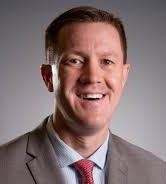
On June 01, 2020, the Louisiana Senate confirmed Louisiana’s new state superintendent, Cade Brumley:
Brumley’s first day as state superintendent is June 08, 2020.
Many individuals congratulated Brumley in the comments section of his Twitter announcement.
I noticed assistant superintendent, Jessica Baghian, did not.
IMG_1768
Jessica Baghian
On June 03, 2020, Advocate journalist Will Sentell tweeted that Baghian has submitted her resignation effective June 12, 2020:
Baghian’s exit represents an end to the narrative-muddying, John White era in Louisiana education.
I expect that other John White hires will be leaving , as well.
We have turned a corner in Louisiana education.
Goodbye, Jessica Baghian.
Welcome, Cade Brumley.
CadeBrumley
Cade Brumley
___________________________________________________________________

My latest book, A Practical Guide to Digital Research: Getting the Facts and Rejecting the Lies, is now available for purchase on Amazon and via Garn Press!

IMG_1764

Follow me on Twitter @deutsch29blog


Louisiana Superintendent Cade Brumley Confirmed; Jessica Baghian Submits Resignation | deutsch29


Private School P-EBT Data Collection Application - Nutrition (CA Dept of Education)

Private School P-EBT Data Collection Application - Nutrition (CA Dept of Education)

Private School P-EBT Data Collection Application


The California Department of Social Services (CDSS) and the California Department of Education (CDE), in a joint effort, are administering the federal Pandemic Electronic Benefit Transfer (P-EBT) program. Under this program, students eligible for Free or Reduced-Priced Meals (FRPM) under the National School Lunch Program (NSLP) or School Breakfast Program (SBP) are eligible to receive funds to support food and grocery purchases during the last three months of the school year. Eligible students attending public schools are identified for participation in the program through data that local educational agencies (LEAs) submit to the California Longitudinal Pupil Achievement Data System (CALPADS) administered by the CDE. The CDSS then administers the distribution of the benefit.
In order to enable eligible students attending private schools to receive P-EBT benefits, the CDE has implemented the Private School P-EBT data collection application(XLSX). In order to enable students attending your schools to receive benefits under the P-EBT program, the CDE is requesting that your agency provide a list of FRPM eligible children at your school sites. In an effort to expedite the issuance of P-EBT benefits for these children, the CDE will share the lists of eligible children with the CDSS and P-EBT cards will be issued directly to these families. These families will not need to submit an online application for P-EBT.
Data Collection
In about a week, the CDE will send a link to the Private School P-EBT Data Collection application. The application will be open for data submission until approximately June 24, 2020. The exact deadline will be shared when the online application becomes available. A user name and password to access the application will follow in a separate email to the Food Service Director contact the CDE has on file in the Child Nutrition Information and Payment System.
During the completion of the online Private School P-EBT Data Collection application, Program Operators will be asked to submit a list of your FRPM eligible students using the attached Excel template. You must provide your school’s County-District-School (CDS) code, the student’s first and last name, the student’s date of birth, and a current mailing address.
A current mailing address is critical so that P-EBT cards reach eligible children effectively.
In addition, you must provide the student’s FRPM eligibility date. For students who are directly certified, the eligibility date is the date that they were first identified as directly certified for the 2019– 20 school year. For students who submitted a meal application, the date would be the day that your agency certified the student for FRPM benefits.
Schools are encouraged to process all newly received meal applications prior to submitting this list to the CDE. In order to provide ample time to process these P-EBT benefits, only one file submission will be allowed per agency. Once you have completed the application and have successfully submitted your eligibility file, you will be locked out of the application.
When uploading the FRPM eligible list, your agency will be required to attest to the accuracy of the data: “I certify that the data submitted is accurate and complete. All students on this list were eligible for participation in the National School Lunch Program (NSLP)/School Breakfast Program through direct certification, by an approved NSLP application, or other means provided by the program.”
Resources
The following links provide more information about P-EBT:
Contact Information
For more information about P-EBT, you may visit the CDSS P-EBT web pageExternal link opens in new window or tab..
Families that require assistance with their P-EBT card can call the P-EBT Customer Service Center at 877-328-9677.
For updated information about COVID-19 emergency feeding, please visit the CDE COVID-19 School and Child and Adult Day Care Meals web page. This page is updated each Friday with new information.
Questions:   Nutrition Services Division | 800-952-5609

NYC Public School Parents: "Talk out of School": Defunding the Police and Investing in our Schools instead

NYC Public School Parents: "Talk out of School": Defunding the Police and Investing in our Schools instead

"Talk out of School": Defunding the Police and Investing in our Schools instead


Please check out the latest "Talk out of School" podcast featuring Alex Vitale, professor at Brooklyn College and coordinator of the Policing and Social Justice Project, and Jasmine Gripper, Executive Director of Alliance for Quality Education

They discuss how over-policing in NYC and elsewhere has contributed to the unrest and violence that has erupted throughout the city and the nation in recent days, how the Mayor's proposed budget cuts the NYPD budget less than 1%, while cutting education by 3%, and why the city should instead be disinvesting in the police and School Safety Agents, and use the savings to hire more teachers, social workers, and counselors instead.

Alex Vitale also spoke about the secret gang database, created by the NYPD with  help from School Safety Agents, and Jasmine Gripper countered the false claims of Gov. Cuomo that he has worked for more equitable school funding while the opposite is true.

Thanks to AQE, you can send a message to the Mayor about de-funding the police here.  For more information on this issue, check out the budget demands of  Communities United for Police Reform (CPR)  and  The End of Policing by Alex Vitale , available for download as an e-book for free. 
NYC Public School Parents: "Talk out of School": Defunding the Police and Investing in our Schools instead


Teacher Tom: What If Everyone Understood Play?

Teacher Tom: What If Everyone Understood Play?

What If Everyone Understood Play?


We tend to ascribe wisdom to those who have lived longest. And that's valid: the longer someone has lived, the more mistakes they've made, and therefore, the more experience they have. But there is another type of wisdom -- if wisdom is the right word -- with which we are born, and that we proceed to "unlearn" as we get older.

Specifically, I'm thinking about play. We are born knowing not just how to play, but with the wisdom to know that play belongs at the center of our lives. We are born with all the wisdom we will ever need about eating, sleeping, and snuggling as well, but by the time we're all grown up, most of us have forgotten our store infantile wisdom.

We eat too much or not enough. Western society is plagued with poor dietary habits. Most of us don't get enough sleep either, and what we do get is so often interrupted and fitful due to stress and anxiety, not to mention the poor diets and lack of physical exercise. Snuggling might be a little easier for us, especially if we have young children in our lives, but I would assert that most of us don't get enough human touch as we go through our days.

And most adults have no idea what we're talking about when we talk about play. Of sure, they remember play, like a teddy CONTINUE READING: 
Teacher Tom: What If Everyone Understood Play?