Latest News and Comment from Education

Thursday, February 28, 2019

Sign a Petition to Change the Charter Law in California | Diane Ravitch's blog

Sign a Petition to Change the Charter Law in California | Diane Ravitch's blog

Sign a Petition to Change the Charter Law in California


Allies who met at the Oakland conference of the Network for Public Educare are petitioning to regulate charter schools so they don’t harm public schools.

Dear Friend of Public Education:
On behalf of Educators for Democratic Schools, and Wellstone Democratic Club Education Committee (both active in Oakland) we are writing again to those who participated in the California Caucus of the NPE conference and others interested in Charter School reform to enlist your support for reform of the Charter School Act. We are about to launch a statewide petition for the following specific changes to the Act:
  1. Add adverse fiscal impact as a basis on which districts may reject charter applications.
  1. Give locally elected school boards the sole authority to approve and renew charter school petitions.
  1. Require charter schools to enroll students with disabilities, including those with the most severe disabilities, English Language Learners, and newcomers, in equal proportion to the enrollment of these groups of students in the district in which the charter operates.
  1. Apply to charter school board members the same prohibition of conflicts of interest as apply to public school boards.
  1. Require charter schools to be more accountable and transparent and not force school districts to have to cede control of their facilities to charter schools.
You can sign the petition today by going to CharterLawReform.com.
We also created a suggested cover email for you here but if you want to create your own personal cover even better: Open in Docs
We are hoping that tomorrow each of you will join each of us and many other organizers throughout the state to send the petition out to all your friends, families, networks and organizations and ask them to sign as well.  Once someone signs and inserts their address it will automatically be directed to their state Senator and Assembly member as well as every member of the Education Committees of both bodies and the Governor.
Thank you in advance for your help and support!
David Weintraub, on behalf of Educators for Democratic Schools
Wellstone Democratic Club Education Committee
Sign a Petition to Change the Charter Law in California | Diane Ravitch's blog


Oakland parents lead ‘strike schools’ in homes as negotiations continue - SFGate #Unite4OaklandKids #WeAreOEA #WeAreCTA #strikeready #REDFORED

Oakland parents lead ‘strike schools’ in homes as negotiations continue - SFGate

Oakland parents lead ‘strike schools’ in homes as negotiations continue


Inside Alicia Johnson’s Berkeley home Wednesday, a handful of kindergartners finished their morning math activity at the dining table and dashed downstairs to a playroom filled with a meandering train track, a rubber T. rex, costumes and a toy kitchen.
A few older kids played on a Nintendo Wii upstairs after finishing their own morning lesson. There were 13 children in all.
It’s the new norm at Johnson’s “strike school,” a safe haven nestled in the Hiller Highlands neighborhood where parents drop their kids off before heading to work, unwilling to cross the picket line of educators that has all but shut down Oakland schools for one week.
Johnson, 38, is in a group of parents across the Oakland Unified School District who have stepped up as impromptu caretakers and teachers during the strike, opening up their homes to other school kids as a show of solidarity to teachers asking for better wages and more resources.
The district upped its offer Wednesday to an 8 percent raise plus a 2 percent bonus. Teachers are seeking a 12-percent raise, among other demands, and the Oakland Education Association did not comment immediately on the new proposal.
“It helps put parents’ mind at ease,” said Johnson, whose two kids attend Kaiser Elementary School. “They don’t have to stress, they don’t have to worry about missing work, not being paid. And I know they would do it for me if I had an emergency and needed help, too.”
Many of these at-home schools— dubbed “solidarity schools” by organizers and parents — have popped up across the district, though numbers weren’t available districtwide. Parents have established more than 40 solidarity schools at Melrose Leadership Academy alone, according to the organization Bay Rising, which has helped coordinate many of the schools.
Parents, high school students and young kids held a solidarity school protest in downtown Oakland Wednesday, calling on state representatives to support the teachers’ union.
Oakland schools have remained open during the labor action, with substitute teachers and administrators on duty. But school CONTINUE READING: Oakland parents lead ‘strike schools’ in homes as negotiations continue - SFGate


Highlights from Projections of Education Statistics to 2027

Highlights from Projections of Education Statistics to 2027

HIGHLIGHTS FROM PROJECTIONS OF EDUCATION STATISTICS TO 2027

Projections of Education Statistics to 2027 is the 46th in a series of publications initiated in 1964. This report provides national-level data on enrollment, teachers, high school graduates, and expenditures at the elementary and secondary level, and enrollment and degrees at the postsecondary level for the past 15 years and projections to the year 2027. For each of the 50 states and the District of Columbia, the tables, figures, and text contain data on projections of public elementary and secondary enrollment and public high school graduates to the year 2027. The methodology section describes models and assumptions used to develop the national- and state-level projections.


Figure 1. Actual and projected numbers for enrollment in elementary and secondary schools, by grade level: Fall 2002 through fall 2027
Click the figure to expandFigure 1. Actual and projected numbers for enrollment in elementary and secondary schools, by grade level: Fall 2002 through fall 2027
NOTE: PreK = prekindergarten. Enrollment numbers for prekindergarten through 12th grade and prekindergarten through 8th grade include private nursery and prekindergarten enrollment in schools that offer kindergarten or higher grades. Since the biennial Private School Universe Survey (PSS) is collected in the fall of odd-numbered years, private school numbers for alternate years are estimated based on data from the PSS. Some data have been revised from previously published figures. Mean absolute percentage errors of selected education statistics can be found in table A-2, appendix A.
SOURCE: U.S. Department of Education, National Center for Education Statistics, Common Core of Data (CCD), “State Nonfiscal Survey of Public Elementary/Secondary Education,” 2002–03 through 2015–16; Private School Universe Survey (PSS), selected years 2003–04 through 2015–16; and National Elementary and Secondary Enrollment Projection Model, 1972 through 2027. (This figure was prepared April 2018.)

Total elementary and secondary enrollment
  • increased 3 percent between 2002 and 2015 (54.4 million versus 56.2 million); and
  • is projected to increase 4 percent between 2015 and 2027 to 58.2 million.
Enrollment in prekindergarten through grade 8
  • was 2 percent higher in 2015 (39.7 million versus 39.0 million) than in 2002; and
  • is projected to increase 4 percent between 2015 and 2027 to 41.2 million.
Enrollment in grades 9–12
  • increased 7 percent between 2002 and 2015 (15.4 million versus 16.5 million); and
  • is projected to increase 3 percent between 2015 and 2027 to 17.0 million.


Figure 3. Projected percentage change in enrollment in public elementary and secondary schools, by state: Fall 2015 and fall 2027
Click the figure to expandFigure 3. Projected percentage change in enrollment in public elementary and secondary schools, by state: Fall 2015 and fall 2027
NOTE: Mean absolute percentage errors of enrollment in public elementary and secondary schools by state and region can be found in table A-7, appendix A. Although rounded numbers are displayed, the figures are based on unrounded numbers.
SOURCE: U.S. Department of Education, National Center for Education Statistics, Common Core of Data (CCD), “State Nonfiscal Survey of Public Elementary/Secondary Education,” 2015–16; and State Public Elementary and Secondary Enrollment Projection Model, 1980 through 2027. (This figure was prepared April 2018.)


The expected 3 percent national increase in public school enrollment between 2015 and 2027 plays out differently among the states.
  • Enrollments are projected to be higher in 2027 than in 2015 for 33 states and the District of Columbia, with projected enrollments
  • 5 percent or more higher in 24 states and the District of Columbia; and
  • less than 5 percent higher in 9 states.
  • Enrollments are projected to be lower in 2027 than in 2015 for 17 states, with projected enrollments
  • 5 percent or more lower in 10 states; and
  • less than 5 percent lower in 7 states.


Figure 9. Actual and projected numbers for high school graduates, by control of school: School years 2002–03 through 2027–28
Click the figure to expandFigure 9. Actual and projected numbers for high school graduates, by control of school: School years 2002–03 through 2027–28
NOTE: The private school data for 2014–15 is an actual number. Since the biennial Private School Universe Survey (PSS) is collected in the fall of odd-numbered years and the numbers collected for high school graduates are for the preceding year, private school numbers for odd years are estimated based on data from the PSS. Includes graduates of regular day school programs. Excludes graduates of other programs, when separately reported, and recipients of high school equivalency certificates. Some data have been revised from previously published figures. Mean absolute percentage errors of selected education statistics can be found in table A-2, appendix A.
SOURCE: U.S. Department of Education, National Center for Education Statistics, Common Core of Data (CCD), “State Nonfiscal Survey of Public Elementary/Secondary Education,” 2003–04 through 2009–10; “State Dropout and Completion Data File,” 2010–11 through 2012–13; Private School Universe Survey (PSS), selected years, 2003–04 through 2015–16; and National High School Graduates Projection Model, 1972–73 through 2027–28. (This figure was prepared April 2018.)

The total number of high school graduates
  • increased 15 percent between 2002–03 and 2012–13 (3.0 million versus 3.5 million), a period of 10 years; and
  • is projected to increase 5 percent between 2012–13 and 2027–28 to 3.7 million.
The number of public high school graduates
  • increased 17 percent between 2002–03 and 2012–13 (2.7 million versus 3.2 million); and
  • is projected to increase 5 percent between 2012–13 and 2027–28 to 3.3 million.
The number of private high school graduates
  • increased 4 percent between 2002–03 and 2012–13 (296,000 versus 309,000); and
  • is projected to be not measurably different in 2027–28 (314,000) than in 2012–13.


Figure 16. Actual and projected numbers for total enrollment in all degree-granting postsecondary institutions: Fall 2002 through fall 2027
Click the figure to expandFigure 16. Actual and projected numbers for total enrollment in all degree-granting postsecondary institutions: Fall 2002 through fall 2027
NOTE: Degree-granting institutions grant associate’s or higher degrees and participate in Title IV federal financial aid programs. Some data have been revised from previously published figures.
SOURCE: U.S. Department of Education, National Center for Education Statistics, Integrated Postsecondary Education Data System (IPEDS) Spring 2003 through Spring 2017, Fall Enrollment component; and Enrollment in Degree-Granting Institutions Projection Model, 2000 through 2027. (This figure was prepared April 2018.)


Total enrollment in degree-granting postsecondary institutions
  • increased 19 percent from 2002 to 2016 (16.6 million versus 19.8 million), a period of 14 years; and
  • is projected to increase 3 percent, to 20.5 million, from 2016 to 2027, a period of 11 years.

To view the full report, please visit https://nces.ed.gov/ pubsearch/pubsinfo.asp?pubid=2019001


AUTHORS

William J. Hussar
National Center for Education Statistics Tabitha M. Bailey
IHS Global Inc.

This report was prepared in part under Contract No. ED-IES-14-O-5005 with IHS Global Inc. Mention of trade names, commercial products, or organizations does not imply endorsement by the U.S. Government.


Highlights from Projections of Education Statistics to 2027

LA City Council Says California Needs to Increase Education Spending - NBC Southern California

LA City Council Says California Needs to Increase Education Spending - NBC Southern California

LA City Council Says California Needs to Increase Education Spending

A little over a month removed from a strike by the Los Angeles teachers union, the City Council Tuesday approved a resolution calling for California public schools to be funded at the national average or higher by the year 2020, and at a level that is equal to or above the average of the top 10 states nationally by 2025.
The resolution approved on a 12-0 vote puts the council on record as officially supporting any legislative or administrative action at the state level that would help achieve the goal.
According to the resolution, California ranks 45th nationally in the percentage of taxable income spent on education, 41st in per-pupil funding, 45th in pupil-teacher ratios and 48th in pupil-staff ratios.
California funds schools at roughly $1,961 per student less than the national average, which translates to $3,462 per student when adjusted for California being a high-cost state, and California trails the average of the top 10 states by almost $7,000 in per-pupil funding, the resolution says.
In January, members of United Teachers Los Angeles went on strike for six school days, calling for smaller class sizes and the hiring of more support staff, such as nurses, counselors and librarians, along with a pay raise. The strike ended after a marathon negotiating session led by Mayor Eric Garcetti that resulted in a labor agreement.


LA City Council Says California Needs to Increase Education Spending - NBC Southern California

The Rise of the *Portfolio* Model for Schools – Have You Heard

The Rise of the *Portfolio* Model for Schools – Have You Heard

The Rise of the *Portfolio* Model for Schools


The portfolio model of school district management—it sounds technocratic, even a little bit weedy and yet it’s arguably one of the hottest button topics in our great education debate today. You may have heard the ‘p’ word mentioned in the context of recent teachers strikes in LA and Denver, and if you haven’t, well, you’ll likely be hearing it soon. That’s because there’s big money lining up to bring the portfolio model to a school district near you. A new organization backed by two billionaires—that would be Reed Hastings of Netflix fame and hedge funder John Arnold—will be pushing aggressively and expensively to expand the portfolio model across the country. But what is it exactly? In the latest episode of Have You Heard, Jennifer and Jack are joined by Katrina Bulkley, author of Between Public and Private: Politics, Governance and the New Portfolio Models for Urban Education Reform. Bulkley walks us through the central tenets of portfolio-ism and also sheds some lights on why districts that have embraced the portfolio push seem to be, well, on fire.
You can read a full transcript of the episode here. And if you’re a fan of Have You Heard, please consider becoming a supporter on Patreon.

The Rise of the *Portfolio* Model for Schools – Have You Heard


Linda Darling-Hammond at AASA: Testing Is Not Reform | Diane Ravitch's blog

Linda Darling-Hammond at AASA: Testing Is Not Reform | Diane Ravitch's blog

Linda Darling-Hammond at AASA: Testing Is Not Reform


The newly appointed chair of the California State Board of Education Linda Darling-Hammond spoke to the national conference of the American Association of School Administrators (the School Superintendents Association) and denounced the American reliance on high-stakes testing as a reform strategy.
If America wants to be the world leader in education, then it should look to other countries as a model for success, says Linda Darling-Hammond, a leading educational researcher, in her Thought Leader session Thursday at the AASA national conference.
Countries such as Finland and Singapore have been among the highest-scoring countries in international comparisons. Unlike the United States, these countries provide broad support for children’s welfare, said Darling-Hammond, president and CEO of the Learning Policy Institute in Palo Alto, Calif.
“They take care of children. Health care is usually universal. There is income security and (state-paid) preschool,” she told a room full of superintendents, education advocates and business leaders at the AASA conference. In effect, those countries educate “the whole child,” she said.
Darling-Hammond was the keynote speaker for the AASA Sobol Lecture, named for the late New York education leader Thomas Sobol, a vehement supporter of equity in education and for involving parents and teachers in policymaking decisions affecting classrooms. Sobol passed away in 2015.
With more than 25 books and research articles on education, Darling-Hammond is influential in CONTINUE READING: Linda Darling-Hammond at AASA: Testing Is Not Reform | Diane Ravitch's blog

Wisconsin Governor Tony Evers Proposes State Budget that Would Slow School Privatization | janresseger

Wisconsin Governor Tony Evers Proposes State Budget that Would Slow School Privatization | janresseger

Wisconsin Governor Tony Evers Proposes State Budget that Would Slow School Privatization


Wisconsin’s new governor, Tony Evers released a budget plan on Tuesday that confronts the school privatization agenda of former Governor Scott Walker and what remains a Republican-dominated Wisconsin Legislature.  Wisconsin has been a leader among the states which have favored the expansion of private school tuition voucher programs and charter schools.
For the Associated PressScott Bauer quotes Republican Senate Majority Leader Scott Fitzgerald: “Republicans in the Legislature have spent years helping build the voucher program… We will not support a budget that includes this proposal.”
Wisconsin’s Milwaukee Voucher Program launched the nation’s experiment with school privatization nearly three decades ago.  Whether or not Evers succeeds in curbing what has been Wisconsin’s persistent expansion of vouchers and charters, his budget proposal names many of the ways Wisconsin’s expansion of school privatization has violated the public interest.
The Milwaukee Journal Sentinel‘s Molly Beck describes Evers’ plan: “About 28,000 students attend 129 private schools using a taxpayer-funded voucher in Milwaukee as of the 2018-19 school year. Evers’ proposal would freeze the number of seats available in the program beginning in the 2021-22 school year, allowing new students to enroll only when others graduate or leave the program… Enrollment also would be frozen in private voucher schools in other parts of the state based on the program’s headcount at the end of the current school year.  As of this school year, about 10,000 students attend private schools using a taxpayer-funded voucher outside of Milwaukee… Evers also proposes to cap enrollment in the state’s newest voucher program for students with disabilities… Under Evers’ proposal, voucher schools also would be banned from charging tuition for students living in poverty under the proposal and would be required to allow students to opt out of religious activities.”
Evers’ plan would also curb the growth of charter schools in Wisconsin: “Evers in his spending plan also would suspend programs created by Republicans in recent years to expand CONTINUE READING: Wisconsin Governor Tony Evers Proposes State Budget that Would Slow School Privatization | janresseger

Betsy DeVos and her allies are trying to redefine ‘public education.' Critics call it ‘absurd.' - The Washington Post

Betsy DeVos and her allies are trying to redefine ‘public education.' Critics call it ‘absurd.' - The Washington Post

Betsy DeVos and her allies are trying to redefine ‘public education.' Critics call it ‘absurd.'
Florida’s new governor is right on board


In September 1875, President Ulysses S. Grant traveled to Des Moines, where he gave a speech that said in part:
"Encourage free schools and resolve that not one dollar of money appropriated to their support no matter how raised, shall be appropriated to the support of any sectarian school. Resolve that either the state or Nation, or both combined shall support institutions of learning sufficient to afford every child growing up in the land the opportunity of a good common school education, unmixed with sectarian, pagan or atheistical tenets. Leave the matter of religion to the family circle, the church and the private school supported entirely by private contributions. Keep the church and state forever separate.”
That was long the consensus of what “public education" means in the United States: common schools open to all and funded, operated and governed by the public through local governments.
Now, Education Secretary Betsy DeVos and her allies are pushing their own definition of public education, as new Florida Gov. Ron DeSantis (R) did this month, to the secretary’s delight. On Feb. 15, DeSantis gave a news conference about his plan for a school voucher-like program that would use public money for private and religious school tuition, an expansion of the “school choice” options already available in the state. He said:
“An important point to make is, you know, we talk about, ‘This is public school, this is charters.' Look, if it’s public dollars, it’s public education. . . . In Florida, public education is going to have a meaning that is directed by the parents, where the parents are the drivers because they know what’s best for their kids."
There it was: “Look, if it’s public dollars, it’s public education.” And DeVos was quick to tweet her support, saying, "Completely agree, @GovRonDesantis.”


To DeVos and those who agree with her, it is wrong to say public education means only traditional public school districts.
Rather, under her definition, it also means charter schools, which are publicly funded but privately run, sometimes by for-profit companies, and which usually operate with far fewer rules of transparency than traditional school systems. And it includes students who attend private and religious schools with publicly CONTINUE READING: Betsy DeVos and her allies are trying to redefine ‘public education.' Critics call it ‘absurd.' - The Washington Post

Cartoons about School and District Leaders | Larry Cuban on School Reform and Classroom Practice

Cartoons about School and District Leaders | Larry Cuban on School Reform and Classroom Practice

Cartoons about School and District Leaders


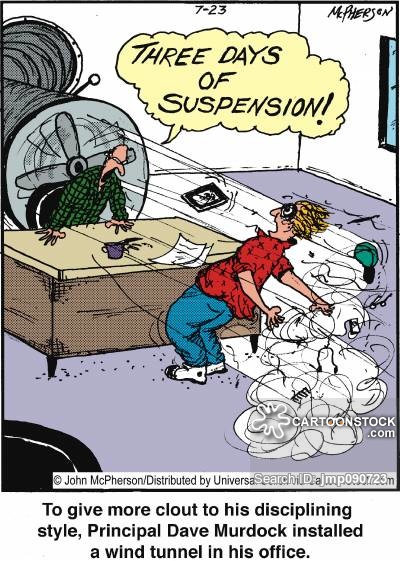
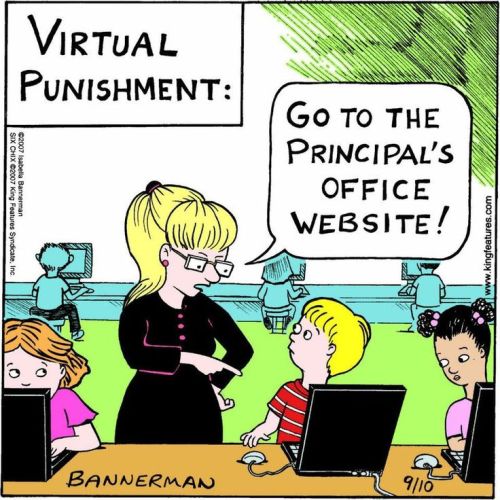
Here are some pokes at principals and superintendents that may get you to smile or grimace, chuckle or frown. Some may even get you to laugh. If so, I have accomplished what I set out to do with this collection. Enjoy!


class-wind_tunnel-principal-head_teacher-clout-authority-jmp090723_low.jpg

076ae3580f8012807f6025c6798532e5.jpeg

cfde66da482407f5fc5df0b2ae50ade9.jpg

cartoon186.jpg

Seattle Schools Community Forum: Cuts Happening Throughout Seattle Schools

Seattle Schools Community Forum: Cuts Happening Throughout Seattle Schools

Cuts Happening Throughout Seattle Schools


From Facebook:

I just learned that my school Franklin will be losing 6 full time teachers next year. Other South Seattle schools are also apparently losing teachers. For a district supposedly committed to equity this is shocking. We'll have to either cut out some of our electives ( we already are pretty limited - 1 ceramics teacher, 1 drawing/painting teacher, 1 music teacher, 1 drama teacher in the arts, for instance, so what do we lose?) Or cram more students into core classes if we lose non-elective teachers. I teach English. 65% of our kids speak a language other than English at home. Around 70% are free or reduced lunch eligible. Let's lose 6 people at the Central Office ( I'd like to see the Director level abolished) and keep teachers in the buildings.
There was some discussion about how Running Start students aren't count and therefore, the school's enrollment count drops.  Maybe Kellie LaRue could give us some insights on this issue.

More comments:


Our principal at Eckstein held back tears at this morning’s staff meeting as she shared next year’s cuts.
Dearborn Park will likely be forced to drop the entire language immersion program if we aren't given another teacher...
But also if they make schools less attractive with fewer electives and/or crowded classes, more people will leave SPS for Charters and Private schools. It's a vicious cycle.
And, I think perhaps it’s on us to pressure our elected school board CONTINUE READING: Seattle Schools Community Forum: Cuts Happening Throughout Seattle Schools

NYC Public School Parents: Requiem for the Renewal schools: What a sad waste of time, money and human lives.

NYC Public School Parents: Requiem for the Renewal schools: What a sad waste of time, money and human lives.

Requiem for the Renewal schools: What a sad waste of time, money and human lives.


Yesterday, the Mayor and the Chancellor Carranza announced an end to the Renewal program, which has cost the city $773 million since 2014. Since that time, of the 94 schools  put on the list by Carmen Farina, nine schools have been merged with other schools, 14 schools have been closed, and 21 schools have improved enough to be renamed “Rise” schools. Fifty schools remain in the program.

While Schools Chancellor Richard Carranza said that the Renewal plan an “absolutely appropriate” attempt to address problems “that no one has solved at 100 percent,” I was quoted in the NY Post this way:

Leonie Haimson, founder of the Class Size Matters advocacy group, said, “I feel like I’m watching the same movie for the 1,000th time,” and added that de Blasio’s “approach is just to continue with the same BS.”

“Unless you address these out-of-control class sizes, nothing is going to change,” she said.

The comments made by the Mayor de Blasio and the Chancellor yesterday, and the report released at the same time, provide contradictory and confusing information about whether the program has been successful or has failed, and what if anything will now be changed.

According to the document's properties, the report was written by Greg Anrig, who was formerly at the Century Foundation and is now a “ Content Strategy Manager” at the DOE, whatever that means, according to his twitter profile.

In a NY Times interview, de Blasio admitted the original Renewal plan had been flawed:

“I’m at peace that with the information we had and the structure we had at the time, it was a sensible approach,” he said. But he added, “I would not do it again that way.”

Yet the report itself claims that the Renewal schools have made significant gains in test scores, suspension, attendance and graduation rates than the average NYC public school.

The new DOE report also asserts that education officials have learned important lessons about the flaws of their previous strategy and now know far better how to address the CONTINUE READING: 
NYC Public School Parents: Requiem for the Renewal schools: What a sad waste of time, money and human lives.


How DeVos & Co. Use Special Ed. to Privatize Public Schools and End Student Services

How DeVos & Co. Use Special Ed. to Privatize Public Schools and End Student Services

How DeVos & Co. Use Special Ed. to Privatize Public Schools and End Student Services

Education Secretary Betsy DeVos and her corporate friends are about dumping civil rights protections regarding IDEA. Special education has become a means to transform public education into choice and charter schools while ending student services.
This is done by defunding special education and convincing parents that services don’t matter. Dismantling services in public schools shouldn’t be allowed. It destroys IDEA protections and drives parents to seek vouchers.
Below I list one of the corporations working to end special education.
It’s important to remember what life was like before IDEA and not go backwards in time to when children did not get the services they deserved due to learning difficulties.
If my son Jonah was ready for school before 1975 our district could have refused to educate him. But he is protected under IDEA and our district has to follow the rules. If at any time during his school years (he just aged out) our district refused to adhere to CONTINUE READING: How DeVos & Co. Use Special Ed. to Privatize Public Schools and End Student Services


Thurmond Statement on the Teachers' Strike in OUSD - Year 2019 (CA Dept of Education)

Thurmond Statement on the Teachers' Strike in OUSD - Year 2019 (CA Dept of Education

State Superintendent Tony Thurmond Statement on the Teachers' Strike in Oakland Unified School District

OAKLAND—State Superintendent of Public Instruction Tony Thurmond participated in two all-day negotiation meetings this week between the Oakland Unified School District and the Oakland Education Association.
Oakland Unified School District teachers went on strike Thursday, February 21, after earlier contract talks stalled. Mediating in a strike is not a typical role for a State Superintendent; however, Thurmond was compelled to take a seat at the bargaining table.
“I have worked with Oakland Unified School District students for close to a decade,” said Thurmond. “When I was asked to help, I did it for the sake of the students. If my assistance is needed to help get the strike resolved quickly and get students and teachers back in the classroom, then I am more than willing to provide that support.”
Discussions between the district and the union have included compensation, class sizes, and expanding support services to students. According to Thurmond, talks regarding the issues presented by the teachers have been constant.
“At this time, both sides are communicating and trying to reach an agreement that each feels is fair,” said Thurmond. “Talks have been moving in a productive direction, and I don’t expect that momentum to stop.”


Thurmond Statement on the Teachers' Strike in OUSD - Year 2019 (CA Dept of Education