Latest News and Comment from Education

Thursday, December 17, 2015

Getting from ESSA to Equity

Blog | Schott Foundation for Public Education:


The latest from the Schott Foundation and our allies.

DEC16
Last week President Obama signed the Every Student Succeeds Act (ESSA) into law, replacing No Child Left Behind as the latest version of the 1965 Elementary and Secondary Education Act. With any bill of this size and scope it defies easy description, and as one would expect given the political climate in Washington, DC, ESSA is a decidedly mixed law with the potential for both positive and negative effects.
DEC01
Today is #GivingTuesday, a global day dedicated to giving back. Grassroots organizations are working hard for — and winning — serious victories for public school children in communities across the country. But they can't continue without gifts from people like you.
NOV18
On November 3, 2015, a tight race to achieve full funding of public schools across Mississippi was lost. Initiative 42, the ballot initiative for “better schools,” was a citizen-led campaign with bipartisan, grassroots support for fully funded public schools.
NOV10
The school-to-prison pipeline has drawn increased attention recently, especially after Dignity in School’s successful National Week of Action. But while stories of middle and high schoolers pushed out of school through inequitable and disproportionately applied harsh discipline policies are tragic enough, there may be something even worse: the pre-school to prison pipeline. It can be hard to imagine scenarios in which suspending or expelling a preschooler would be appropriate, but a new report from the Center for American Progress shows that even our youngest students are disciplined and pushed out at disproportionate rates.
NOV05
Mississippi's public schools have been underfunded and under-performing for years. Their students, especially in the state's poorer districts, face inequitable learning environments and lack the real opportunity to learn that could help encourage their future successes. Despite these very real problems, however, Tuesday's election failed in passing Proposition 42, a proposed constitutional amendment that would have required adequate and efficient funding of the state's public schools. Yet while the parents, students, educators, and advocates who led the campaign for the amendment are disappointed, they aren't giving up on Mississippi and the educational future of its children.
NOV04
The Foundation Budget Review Commission, a bipartisan group of legislators and educators, released their findings on the state of education funding in Massachusetts and their recommendation for an ambitious new funding plan that would allow schools to more fully support programs to increase educational equity. While the plan would cost about half a billion dollars per year, it would also be the first step in addressing the substantial opportunity gap that exists in Massachusetts.
OCT26
The Obama administration has reversed course on the high-stakes, high-frequency federal testing policies of the last decade. Following the policies of the Bush administration's No Child Left Behind, programs like Race to the Top encouraged tests that were used for crucial decisions like school funding, teacher hiring, and school takeovers. They also increased the amount of time students spend testing, reducing their instructional time and contributing to curriculum that reduced breadth and depth of learning for more test preparation. Now, while not wholly abandoning standardized testing, the administration finally responded to mounting criticism against these tests and is calling for capping the amount of time students can spend on them.
OCT12
Last week was Dignity in School’s national week of action to end school pushout. All week parents, students, educators, and activists held events across the country to engage their communities and spread information about ways we can rethink discipline in public schools. The national week of action had four major demands: to shift funding to restorative discipline practices, to use positive behavioral interventions instead of suspensions and expulsions, to fully implement restorative justice practices, and to engage parents and students about discipline policies.
OCT06
Under a beautiful October sky on the edge of the French Quarter, 700 people from around the country converged on New Orleans. Students, parents, teachers, community activists, labor organizers, policy experts, and advocates of a multitude of issues came together for a weekend of education, collaboration, and engagement. Organized by the Schott Foundation and the American Federation of Teachers, with more than a dozen co-sponsoring local and national organizations, our key theme was community and labor organizing together for racial justice.
OCT02
A new report by a trio of racial justice and LGBTQ+ organizations highlights an important but overlooked facet of the school to prison pipeline: LGBTQ+ students are also at risk from harsh disciplinary policies. The Equality Federation, the Advancement Project, and the Gay Straight Alliance Network worked together to publish their report, called Power in Partnerships: Building Connections at the Intersections to End the School-to-Prison Pipeline. The report not only emphasizes how crucial this issue is, but also serves as a valuable resource for groups looking to form partnerships to fight against all of the many ways the school to prison pipeline hurts students.


 Schott Foundation for Public Education http://bit.ly/1P9jdbm


Schools Matter: From ESEA to ESSA: The Hole Gets Deeper

Schools Matter: From ESEA to ESSA: The Hole Gets Deeper:

From ESEA to ESSA: The Hole Gets Deeper

Modern education reform started in 1965, when the passage of the first Elementary and Secondary Education Act signaled that policy elites had chosen the politically expedient over the morally responsible.  In doing so, the root causes of poverty and racism were buried beneath a mountain of misplaced blame labeled school accountability.  The segment below this post from The Mismeasure of Education explains what I mean.
 

Beginning with ESEA, unequal student achievement became the proxy for deep inequalities that go all the way back to slavery, but instead of addressing the resulting poverty that is always mirrored in test scores, Lyndon Johnson and the Congress chose to travel the low and easy political road of pretending to fix schools, which quickly turned into a blame game that got everyone outside of schools off the hook for a deep and unacknowledged societal shame that was unequaled in the Western world.

Now fifty years later nothing has changed except that American businessmen have turned five decades of inept schooling interventions into an education industry that generates major revenue streams worth billions of dollars, which effectively cut channels that direct the flow of our society's children based on the whims of capitalists without conscience.

The recent passage of the reauthorization of ESEA shows that education reform has become much like the permanent "war on terror:" never-ending, misdirected, and arrogantly uninterested in the long term outcomes.  The shame of the nation, as Kozol called our great moral failing, just got more shameful.

Background reading below from The Mismeasure of Education, which offers an explication of the educational events of the 1960s.


The Modern Testing Era Begins
         As noted earlier, education has not always been the chosen road to opportunity and upward mobility. The case had to be made, and the solution had to be sold, and James Conant was instrumental toward establishing education as the means to that end.  Between the New Deal and the early 1960s, policy makers at the national level consciously chose to focus efforts to establish social and economic equity through increasing access to education (Kantor & Lowe, 1994), rather than the more expensive and politically unpopular route of wealth redistribution, job creation, guaranteed minimum income levels, and programs to disrupt segregated Schools Matter: From ESEA to ESSA: The Hole Gets Deeper:


Horn & Wilburn (2013)

Students Still Not Feeling the Economic Recovery - NEA Today

Students Still Not Feeling the Economic Recovery - NEA Today:

Students Still Not Feeling the Economic Recovery

school budget cuts
The fiscal outlook in most states has improved since the Great Recession, but the recovery – much like the U.S. economy as a whole – is far from complete. Nowhere is this more evident than in the nation’s public schools.  Education was one of the first areas that incurred massive budget cuts when the economy tanked in late 2008. Now almost eight years later, we still have a long way to go before education funding returns to pre-recession levels,  A new analysis by the Center on Budget and Policy Priorities (CBPP) lays out a distressing picture of how slow and painful the recovery has been for the nation’s students. Not only have funding levels not recovered, but some states are still cutting.
Education funding is split almost evenly between state and local funding sources with the federal government chipping in the rest (roughly nine percent). It’s an inherently inequitable formula due to the reliance on local property taxes. Lower-income districts can’t begin to provide adequate support for their schools when state lawmakers slash education spending, as they did across the country when the recession hit in 2008 and 2009. As the fiscal outlook darkened, lawmakers relied disproportionately on severe spending cuts – a shortsighted policy that remains largely entrenched. As the CBPP report points out, these austerity measures have only undermined growth and investment:
State K-12 cuts have slowed the economic recovery by reducing overall economic activity since the recession officially ended in mid-2009.  They forced school districts to lay off teachers and other employees, reduce pay for the remaining workers, and cancel contracts with suppliers and other businesses.  These steps remove consumer demand from the economy, which in turn discourages businesses from making new investments and hiring.
CBPP reports that at least 31 states provided less state funding per student in the 2014 school year than in the 2008 school year.  And in at least 15 states, those cuts exceeded 10 percent. (Note: a few states, including California, were not included in this analysis due to unavailability of the necessary data).
Local education funding per student hasn’t fared much better, falling in 18 states over the same period. Local funding has ticked up in 27 states but not enough to recover the losses from the deep spending cuts at the state level.
One of the most critical education investments state and local governments make is new school construction, renovation and modernization. These expenditures – known as “capital spending” – have been severely cut since the recession. According to CBPP, elementary and high schools across the nation had to slash capital spending $28 billion (37%) between 2008 and 2013. Some of the cuts have been extreme, as much as 50% in five states. In addition, student enrollment has increased by more than 800,000 since 2008, while education jobs have decreased by almost 300,000. 
Most state coffers may not currently be flush with cash, but blaming a less-than-Students Still Not Feeling the Economic Recovery - NEA Today:

Yes, I support teachers and their unions–and I oppose charters. And I don’t get paid to do it. | Bob Braun's Ledger

Yes, I support teachers and their unions–and I oppose charters. And I don’t get paid to do it. | Bob Braun's Ledger:

Yes, I support teachers and their unions–and I oppose charters. And I don’t get paid to do it.


This site recently posted an article critical of The Star-Ledger for failing to identify fully the author of an op-ed piece praising North Star, a charter school in Newark. The newspaper’s guest writer, who was identified only as a parent, had posted on her Linked-In page that she was employed by the charter school with significant responsibilities. She denied that she was paid by the school and deleted the Linked-In entry. It’s important to note I did not criticize the woman; I called out the newspaper (the same newspaper that, today, thinks it is front page news for a charter school to try to enroll poor students).
My article drew puerile, cowardly (anonymous or pseudonymous) and defamatory responses that I will not post. This isn’t The Star-Ledger and I won’t provide a platform for the deranged in my comments section. Some were just lies that I won’t help spread. I do, however, believe I owe readers an explanation of my irrevocable opposition to public funding for privately-operated charter schools.
But first–to one of those lies: That I work for teacher unions and, therefore, am a paid advocate. I do support unionism. I grew up in a family–two families, really, but that’s a long story not appropriate here–that owed their middle-class status to unions. My father was a railroad engineer and a union member. My step-father was a teamster and a shop steward. They made good salaries that allowed them to buy decent homes and afford vacations–only on their salaries. I believe the inexcusable income inequality from which many suffer today is a direct result of the collapse of the union movement.
So, yes, I support unionism–for private and public employees, including teachers. Teacher unions have helped many urban residents achieve middle-class economic status and that translates into better lives for their children. I do not believe it is a coincidence that corporate reforms that have led to school closures, Teach for America, charter expansion, and other changes have come just at a time when many persons of color finally got good, secure jobs as teachers and other public employees. Yes, I do believe many so-called “reforms” are aimed at African-American school employees.
One deranged blogger–a suburban school board member from Lawrenceville–has called me a “loyal union lackey.” Recently, she quoted none other than a paid Yes, I support teachers and their unions–and I oppose charters. And I don’t get paid to do it. | Bob Braun's Ledger:


CURMUDGUCATION: Gulen Charters In Trouble Again

CURMUDGUCATION: Gulen Charters In Trouble Again:

Gulen Charters In Trouble Again

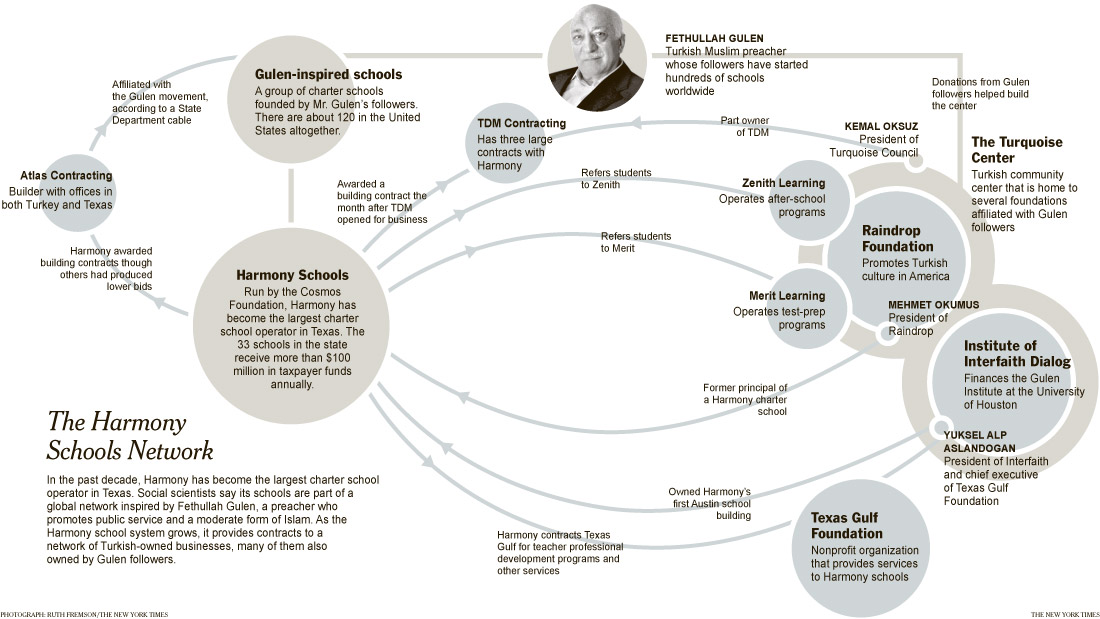
The Gulen network of charters is perhaps the most transparent abuse of the charter school system in the US, and their troubled nature is on display again in the midwest.

A clout-heavy charter-school firm that operates four taxpayer-funded schools in Chicago is suspected of defrauding the government by funneling more than $5 million in federal grants to insiders and “away from the charter schools,” according to court records obtained by the Chicago Sun-Times.

The Sun-Times reports that the FBI is investigating "a scheme to defraud federal programs" running back to "at least 2007." The probe is being run out of the FBI's Cleveland office, which would not comment because the investigation is ongoing.

This particular scheme involved the Concept Charter School chain, and involved bringing in E-Rate funds and funneling them to private companies "affiliated with" Concept's chief information officer, including funneling that money through the Bank of Asya in Turkey, a bank alleged founded and operated by Gulen followers. 

That information officer has since sort of, well, vanished from the US. But a computer consultant named Stephen Draviam, who worked for Concept until they cur him off and replaced him with other vendors who have "extensive ties" to the charter operators (read any story about Gulen schools and you'll run into the phrase "extensive ties" many times) has apparently talked to them. He may want to be careful about that. Another former Concept official named Mustafa Emanet broke ties with Concept and suddenly found himself arrested in Turkey for heroin possession. He lives in Ohio now.

The story that emerges here is the same one that emerged in the work of reporter James Pilcher of the Cincinatti Enquirer in October of 2014. Folks with Gulen ties open a charter school, staff it with foreign teachers on H-1B visas, and then begin strip-mining US taxpayers. Grant money, state 
CURMUDGUCATION: Gulen Charters In Trouble Again:

Big Education Ape: Ohio charter schools among network accused of ‘human trafficking’ and teaching Islam - Break New... http://bit.ly/1NXCX4w

Big Education Ape: Gulen charter school network: Overseas Junkets And Charter Schools – Part Two http://bit.ly/1GJLBAU

Big Education Ape: In Blow to Erdogan, Turkish Court Halts Closing of Schools Tied to His Rival - The New York Times http://bit.ly/1QPvu6J

Big Education Ape: Turkish religious movement influence alleged at Ohio school - Yahoo Finance http://bit.ly/1JUvkr4

Glendale Unified board denies charter school plans; petitioners say they will appeal to county - Glendale News-Press

Glendale Unified board denies charter school plans; petitioners say they will appeal to county - Glendale News-Press:

Glendale Unified board denies charter school plans; petitioners say they will appeal to county


The Charter School Approval Flea Flicker 


The Glendale Unified School Board on Tuesday voted unanimously to deny a petition submitted by parents who sought to establish a charter school in Glendale.
District officials concluded the plan for the school would fail in its execution to “present a sound educational program,” primarily because of financial issues.
The lead petitioners, however, plan to appeal the board’s decision, said Hilary Stern, a co-lead petitioner who spent two years creating a 250-page plan for the school, named the International Studies Language Academy.
The charter school, which Glendale Unified officials began to formally consider in October, was expected to offer dual-language immersion programs in Spanish, German, Italian and French for students in kindergarten through eighth grade.
“We had hoped to work with GUSD as our authorizer, but now have no choice but to appeal to the county” Stern said in an email.
If granted approval through the Los Angeles County Office of Education, Stern added, she is still hopeful to establish the school in Glendale.
The school’s supporters favored the charter’s potential to meet the demand for dual-language programs, which are popular in Glendale Unified because there are seven different foreign language classes, and students spend the majority of the school day learning in their chosen foreign language.
However, Glendale school officials found fault with the charter’s proposed staffing, educational and financial plans.
“While the petitioners’ efforts [are] admirable, and we believe that their intentions are to serve students, we found a number of significant weaknesses and deficiencies in the proposed plan,” said Glendale Unified co-interim Supt. Joel Shawn.
In their 18-page staff report recommending denial of the charter school, a team of 10 Glendale Unified administrators concluded that the charter school would not likely fulfill Glendale Unified board denies charter school plans; petitioners say they will appeal to county - Glendale News-Press:
Big Education Ape: Flea Flicker: Should state be able to approve charter schools in Virginia? - Daily Press http://bit.ly/1QPtgEg
Big Education Ape: Washington Charter Schools Find Another Source Of Public Money | KUOW News and Information http://bit.ly/1QPtknC

Chicago schools settle federal lawsuit by pregnant teachers - Yahoo News

Chicago schools settle federal lawsuit by pregnant teachers - Yahoo News:

Chicago schools settle federal lawsuit by pregnant teachers


CHICAGO (Reuters) - Eight Chicago public school teachers who said they were fired or forced to leave because of pregnancies will receive a combined $280,000 in back pay and damages, under a settlement announced by the U.S. Justice Department on Wednesday.
The DOJ lawsuit, filed against the Chicago Board of Education last December, alleged that starting in 2009, Scammon Elementary School Principal Mary Weaver subjected female teachers to lower performance evaluations and discipline because of their pregnancies.
The suit alleged that Weaver gave negative reviews to teachers after learning they were pregnant, when she had given them positive reviews in the past. It said Weaver targeted for firing eight teachers who either became pregnant or returned to work at Scammon after their pregnancies.
The district, which serves about 400,000 students at more than 600 schools in the third-largest U.S. city, faces a $1.1 billion structural deficit. Its teachers voted last week to authorize a strike next year if union officials in contract negotiations deem it necessary.
"That a public school engaged in a pattern of firing teachers because of their pregnancies is dismaying to say the least," said Julianne Bowman, director of the Chicago District of the Equal Employment Opportunity Commission, which investigated the charges of discrimination.
The settlement, which must be approved by the Northern Illinois U.S. District Court, requires the board to change personnel policies to guard employees against discrimination on the basis of sex and pregnancy and establish training requirements for supervisors and staff.
The board did not admit any wrongdoing in the settlement agreement.
"Chicago Public Schools is fully committed to promoting inclusive work environments free of discrimination or mistreatment," said Emily Bittner, a CPS spokeswoman. "We are taking steps to bolster training and policy awareness to ensure every school and office in CPS is a welcoming environment."
Weaver, who won a Chicago Public Schools principal achievement award in 2013, made negative comments to and about pregnant Scammon teachers and to a teacher who had given birth and was expressing breast milk, the lawsuit said.
She responded to one teacher's pregnancy announcement with "I can't believe you are doing this to me. You are going to be out right before (mandatory) testing," according to documents.
The complaint said Weaver asked a teacher who was expressing breast milk questions like "That isn't over yet?" and "When will you be done with that?"

Investors Rebel Against Controversial Online School Operator K12 - BuzzFeed News

Investors Rebel Against Controversial Online School Operator K12 - BuzzFeed News:

Investors Rebel Against Controversial Online School Operator K12

Teachers unions protested outside the virtual charter school operator’s shareholder meeting, while inside, investors voted down its proposal for executive pay.

Investors delivered a strong censure to the country’s largest online charter school operator at its annual meeting Wednesday, voting down its plan for executive pay.
The vote was another sign of discontent among shareholders of the controversial company K12 Inc., with governance advisory firm Glass Lewis & Co. citing a “substantial disconnect between compensation and performance results” in its recommendation that shareholders vote against the pay proposal.
K12, which has made a business for itself out of operating publicly funded online charter schools across the country, is at its lowest stock price in five years, down 75% from a high in September of 2013. In the past few months, it has faced aninvestigation by California’s attorney general and an onslaught of criticism from the rest of the education world, which has largely turned against online schools and their operators because of their students’ poor performance.
Glass Lewis gave the company an “F” rating for how it paid its executives compared to peers: K12’s CEO, Nathaniel Davis, was paid $5.33 million in 2015; its chief financial officer was paid $3.6 million.
K12 confirmed its pay proposal had been voted down, but declined to comment further.
Investors weren’t the only ones voicing discontent Wednesday: outside the shareholder meeting in Washington D.C. a throng of protestors from national teachers’ unions, along with representatives from a school operated by K12, marched and chanted. Protestors accused one of the company’s largest school networks, the California Virtual Academies, of failing its 15,000 students.
In the wake of a report earlier this year which found students at online schools lost out on a full year’s worth of learning, both sides of the education debate openly criticized the schools. Groups that typically stand behind charter schools and their expansion said they were disconcerted and unhappy with how online schools had served their students.Investors Rebel Against Controversial Online School Operator K12 - BuzzFeed News:
Molly Hensley-Clancy is a business reporter for BuzzFeed News and is based in New York. She covers the intersection of business and education.
Contact Molly Hensley-Clancy at molly.hensley-clancy@buzzfeed.com.


The cost of closed charter schools | Gainesvillecom

Editorial: The cost of closed charter schools | Gainesville.com:

Editorial: The cost of closed charter schools


When Gainesville parents and teachers must buy their own paint to spruce up public school classrooms, it makes it even more galling that the state wastes millions on the facilities of failing charter schools.
Such is the situation facing Alachua County and other communities throughout Florida. Charter schools in 30 school districts in the state have closed after receiving as much as $70 million in state capital funding, according to an Associated Press report published Sunday in The Sun.
Charter schools, which are public schools run by private groups, used the money for construction costs, rent payments and even property insurance. Taxpayers recovered just $133,000 in the last three years because most of the money was already spent on those costs, the AP reported.
The Sun reported a similar situation is happening in Alachua County. One third of the 21 charter schools operating in the county since 2009 have closed, taking $1.2 million in state funding for facilities with them.
For three of those years, local public schools didn’t get a dime of facility funding from the state. That has led to heating and cooling systems breaking down and aging public school facilities otherwise falling into disrepair.
It has gotten so bad that parents and other volunteers have taken matters into their own hands. Last summer, Howard Bishop Middle School parents and teachers paid for their own paint to fix up classrooms there.
Part of the problem is the state’s antiquated way for funding school facility improvements. The Public Education Capital Outlay trust fund is generated by a tax on utilities and communication services, but has shrunk due to energy conservation and disappearing landline phones.Editorial: The cost of closed charter schools | Gainesville.com:

Koch brothers supersize higher-ed spending | Center for Public Integrity

Koch brothers supersize higher-ed spending | Center for Public Integrity:
Koch brothers supersize higher-ed spending
In 2014, billionaire industrialists' foundations donated to more colleges than ever


The Koch brothers are supersizing their already hefty investments into college students’ hearts and minds.
A pair of private foundations led by the billionaire industrialists poured more than $23.4 million into U.S. colleges and universities during 2014, according to a Center for Public Integrity analysis of tax documentsrecently filed with the Internal Revenue Service.
That’s several million dollars more than the $19.3 million the Charles Koch Foundation and Fred C. and Mary R. Koch Foundation together spread among schools during 2013 — and nearly double the $12.7 million they spent in 2012.
This increased funding in 2014 follows a recent Center for Public Integrity investigation that revealed the Koch brothers, Charles and David, consider the higher educational programs they fund a “fully integrated” part of a massive organizational network fighting to enact deregulatory government policies and elect conservative political candidates.
Meanwhile, private foundations led by liberal political bankroller George Soros — the Kochs’ de facto Democratic foil who also heavily funds higher education — spent slightly more money on a smaller number colleges and universities than the Koch foundations did during 2014.
The most notable difference: While some of Soros’ higher education grants go to programs aligning with his domestic policy priorities, the majority are focused overseas, tax records show.
Almost all of the higher education programs the Koch foundations fund cleave to the brothers’ philosophy of promoting free markets and laissez-faire capitalism in the United States.
In some cases, the Koch foundations have attempted, or succeeded, in attaching certain strings to their contributions, such as control over curriculum, and more recently, obtaining personal information about students. Dozens of college officials interviewed this year by the Center for Public Integrity assert that their professors retain full academic freedom and may teach as they see fit, regardless of who is funding their programs.
The vast number of agreements between wealthy donors and the college and universities they fund are never made public, so it’s impossible to comprehensively assess the conditions attached by such benefactors.
George Mason University, a public school in Northern Virginia about 15 miles from Washington, D.C., received almost $16.8 million — the majority of the money Koch foundations last year directed at higher education in 2014, and by far the most of any recipient.
Charles Koch has long maintained close personal and financial ties to the university, which hosts a pair of research centers specializing in free market economics and individual liberty: the Mercatus Center and Institute for Humane Studies.
Thirteen schools received six-figure amounts last year, led by Florida State University; The Catholic University of America in Washington, D.C.; Creighton University in Nebraska; Troy University in Alabama and Indiana University.

Top 2014 recipients of Koch foundation cash

California and Virginia, with 15 schools each, account for the greatest number of schools receiving Koch foundation contributions, federal tax documents for 2014 show.
They’re followed by Georgia and North Carolina (14 schools each); Pennsylvania and Texas (12 each); Illinois (10); Florida, Kansas and New York (nine each); and Ohio and South Carolina (eight each).
Below are those schools that received at least $25,000 in Koch foundation funding last year:Koch brothers supersize higher-ed spending | Center for Public Integrity:

Parenting in America: Outlook, worries, aspirations are strongly linked to financial situation | Pew Research Center

Parenting in America: | Pew Research Center:

Parenting in America

Outlook, worries, aspirations are strongly linked to financial situation

Parents’ view of their neighborhood differs sharply by income
Contemporary debates about parenthood often focus on parenting philosophies: Are kids better off with helicopter parents or a free-range approach? What’s more beneficial in the long run, the high expectations of a tiger mom or the nurturing environment where every child is a winner? Is overscheduling going to damage a child or help the child get into a good college? While these debates may resonate with some parents, they often overlook the more basic, fundamental challenges many parents face – particularly those with lower incomes. A broad, demographically based look at the landscape of American families reveals stark parenting divides linked less to philosophies or values and more to economic circumstances and changing family structure.
A new Pew Research Center survey conducted Sept. 15-Oct. 13, 2015, among 1,807 U.S. parents with children younger than 18 finds that for lower-income parents, financial instability can limit their children’s access to a safe environment and to the kinds of enrichment activities that affluent parents may take for granted. For example, higher-income parents are nearly twice as likely as lower-income parents to rate their neighborhood as an “excellent” or “very good” place to raise kids (78% vs. 42%). On the flip side, a third of parents with annual family incomes less than $30,000 say that their neighborhood is only a “fair” or “poor” place to raise kids; just 7% of parents with incomes in excess of $75,000 give their neighborhood similarly low ratings.
More concern about violence, teenage pregnancy among lower-income parentsAlong with more negative ratings of their neighborhoods, lower-income parents are more likely than those with higher incomes to express concerns about their children being victims of violence. At least half of parents with family incomes less than $30,000 say they worry that their child or children might be kidnapped (59%) or get beat up or attacked (55%), shares that are at least 15 percentage points higher than among parents with incomes above $75,000. And about half (47%) of these lower-income parents worry that their children might be shot at some point, more than double the share among higher-income parents.
Concerns about teenage pregnancy and legal trouble are also more prevalent among lower-income parents. Half of lower-income parents worry that their child or one of their children will get pregnant or get a girl pregnant as a teenager, compared with 43% of higher-income parents. And, by a margin of 2-to-1, more lower-income than higher-income parents (40% vs. 21%) say they worry that their children will get in trouble with the law at some point.
There are some worries, though, that are shared across income groups. At least half of all parents, regardless of income, worry that their children might be bullied or struggle with anxiety or depression at some point. For parents with annual family incomes of $75,000 or higher, these concerns trump all others tested in the survey.
The survey also finds that lower-income parents with school-age children face more challenges than those with higher incomes when it comes to finding affordable, high-quality after-school activities and programs. About half (52%) of those with annual family incomes less than $30,000 say these programs are hard to find in their community, compared with 29% of those with incomes of $75,000 or higher. And when it comes to the extracurricular activities in which their children participate after school or on weekends, far more higher-income parents than lower-income parents say their children are engaged in sports or organizations such as the scouts or take lessons in music, dance or art. For example, among high-income parents, 84% say their children have participated in sports in the 12 months prior to the survey; this compares with 59% among lower-income parents.

The link between family structure and financial circumstances

For U.S. kids, strong link between parents’ marital status and likelihood of living in povertyThe dramatic changes that have taken place in family living arrangements have no doubt contributed to the growing share of children living at the economic margins. In 2014, 62% of children younger than 18 lived in a household with two married parents – a historic low, according to a new Pew Research Center analysis of data from the U.S. Census Bureau. The share of U.S. kids living with only one parent stood at 26% in 2014. And the share in households with two parents who are living together but not married (7%) has risen steadily in recent years.1
These patterns differ sharply across racial and ethnic groups. Large majorities of white (72%) and Asian-American (82%) children are living with two married parents, as are 55% of Hispanic children. By contrast only 31% of black children are living with two married parents, while more than half (54%) are living in a single-parent household.
The economic outcomes for these different types of families vary dramatically. In 2014, 31% of children living in single-parent households were living below the poverty line, as were 21% of children living with two cohabiting parents.2 By contrast, only one-in-ten children living with two married parents were in this circumstance. In fact, more than half (57%) of those living with married parents were in households with incomes at least 200% above the poverty line, compared with just 21% of those living in single-parent households.

Most parents say they’re doing a good job raising their kids

Millennial moms give themselves high marksAcross income groups, however, parents agree on one thing: They’re doing a fine job raising their children. Nearly identical shares of parents with incomes of $75,000 or higher (46%), $30,000 to $74,999 (44%) and less than $30,000 (46%) say they are doing a very good job as parents, and similar shares say they are doing a good job.
Though parental scorecards don’t differ by income, they do vary across other demographic divides, such as gender and generation. Among all parents, more mothers than fathers say they are doing a very good job raising their children (51% vs. 39%), and Millennial mothers are particularly inclined to rate themselves positively. Nearly six-in-ten (57%) moms ages 18 to 34 say they are doing a very good job as a parent, a higher share than Millennial dads (43%) or any other generational group.
Regardless of how they see themselves, parents care a lot about how others perceive their parenting skills. For married or cohabiting parents, the opinion of their spouse or partner matters the most: 93% of these parents say it matters a lot to them that their spouse or partner sees them as a good parent. But most single parents (56%) also say they care a lot that their child’s other parent sees them as a good parent.
Most parents want others to see them as good parentsAbout seven-in-ten (72%) parents want their own parents to think they are doing a good job raising their children, and smaller but substantive shares care a lot that their friends (52%) and people in their community (45%) see them as good parents.
Parents are nearly evenly divided about whether their children’s successes and failures are more a reflection of how they are doing as parents (46%) or of their children’s own strengths and weaknesses (42%). Parents of younger children feel more personally responsible for their children’s achievements or lack thereof, while parents of teenagers are much more likely to say that it’s their children who are mainly responsible for their own successes and failures.
There are significant differences along racial lines as well, with black and Hispanic parents much more likely than whites to say their children’s successes and failures are mainly a reflection of the job they are doing as parents.

Mothers are more overprotective than fathers


About six-in-ten parents (62%) say they can sometimes be overprotective, while just a Parenting in America: | Pew Research Center:

Don’t blame George W. Bush for what President Obama did to public schools - The Washington Post

Don’t blame George W. Bush for what President Obama did to public schools - The Washington Post:

Don’t blame George W. Bush for what President Obama did to public schools

President Obama applauds as former president George W. Bush arrives on stage at the dedication ceremony for the George W. Bush Presidential Center in Dallas, April 25, 2013. (REUTERS/Jason Reed)
There are few people today who would argue that the now-defunct 2002 No Child Left Behind law, however well-intentioned, was not severely flawed — at best. The chief education initiative of president George W. Bush ushered in an era of high-stakes standardized testing by mandating assessments and intervention at schools with low test scores, an agenda that led to a severe narrowing of curriculum and the labeling of schools that were doing just fine as failing. When President Obama signed No Child Left Behind out of existence last week, putting his signature on the new K-12 law of the land, called the Every Student Succeeds Act, there wasn’t a great deal of lamenting over its demise.
To mark the day, Obama gave a speech in which he said:
 “The measure replaces No Child Left Behind, the 2002 law that amplified Washington’s role in U.S. classrooms and launched a national system that judged schools based on math and reading test scores and required them to raise scores every year or face escalating penalties. No Child Left Behind was also created with strong bipartisan support, but over time its test-based accountability became widely seen as overly punitive and unrealistic.
“The goals of No Child Left Behind were the right ones — high standards, accountability, closing the achievement gap, making sure every child was learning. But in practice, it often fell short. . . . It led to too much testing during classroom time, forced schools and school districts into cookie cutter reforms that didn’t produce the kind of results that we wanted to see.
“The new law erases that system and instead lets each state develop its own methods for judging school quality.”
Obama was letting his administration off the hook. While NCLB did lead to too much testing and cookie-cutter reforms,  it was his own education secretary, Arne Duncan, who took NCLB’s inherent problems and amplified them. While the new law does eliminate some of the worst provisions of NCLB, it also goes a long way to rebuking the U.S. Education Department’s micromanagement of education policies in a way that even No Child never attempted to do.
It was the Bush administration that expanded federal involvement in Don’t blame George W. Bush for what President Obama did to public schools - The Washington Post:

Wednesday, December 16, 2015

John White’s final days or rabbit trick waiting to happen? | Crazy Crawfish

John White’s final days or rabbit trick waiting to happen? | Crazy Crawfish:

John White’s final days or rabbit trick waiting to happen?


Those who follow k-12 education in Louisiana closely know about state supt. John White and his illusionist tricks.  There have been several times over the last few years I expected John to hightail it out of here, only to see him double down on his egregious and dishonest behavior and come out stronger than before each crisis.  Amazing and mystifying, but he is a true magician.
In the last BESE (BESE is the State School Board responsible for hiring and firing the state superintendent) election John White’s out-of-state billionaire supporters (led by education crime syndicate boss and chairman of LABI, Lane Grigsby) poured millions into the race to save his lying ass from getting canned for all the atrocious, dishonest, and antagonistic behavior he’s exhibited over his entire tenure as State Sup and local Sup of the New Orleans Recovery School District.
White even received some national notoriety (and praise) for “standing up” to Governor Bobby Jindal over the issue of Common Core State Standards. While this dispute may have been staged for the benefit of Jindal’s National presidential ambitions from the outside it looked like Jindal was really giving White a hard time.
(Fighting something controversial is a good way to stay in the media – see Donald Trump’s entire campaign – but actually resolving issues has a way of removing that spotlight so I don’t believe Jindal actually wanted to resolve the Common Core issue.)
Jindal is now leaving office in disgrace, unable to become more than a sad footnote in this presidential race, unable to extricate the state from Common Core, leaving a mortgaged state in shambles with a budget held together by rusty screws and tattered, generic Scotch tape, and a gaping multi-billion dollar deficit for years to come for governor elect John Bel Edwards.
Whatever the truth, Jindal looks like Tweedle-dum, and White looks like the John White’s final days or rabbit trick waiting to happen? | Crazy Crawfish:

Hope and the Teacher | The Jose Vilson

Hope and the Teacher | The Jose Vilson:

Hope and the Teacher

tanehisicoates
My colleague asked me point-blank: “You’re saying you don’t think you’re having an effect on kids?”
I guess I should have been more poignant. I’m also not one for small talk, an affliction I acquired from years of nervous ticks when I spoke in normal situations. I also suffered from an extreme case of “I respect this person’s current work on these issues to not be honest.”
The thing about teaching, writing, and advocating at the same time is that I’m simultaneously aware of the energy it takes to teach my 150 students at 45 minutes a class for an entire day and the legions of self-interested actors who, at any given moment, would turn these very children against me. That’s our current educational discourse, an overlay of the socioeconomic and political realities of a nation at risk of every and anything at all times. Everything is right or wrong and the only way to fix it is to double down or completely change course. Every person is either good or evil. We must choose a side, one for each eye, if we’re granted that at all.
In my positionality, I am hopeful things will change. I am doubtful anything will.
In Ta-Nehisi Coates’ blog, he says that writers, specifically those who write with history in mind, who only work with a hopeful lens haven’t done much homework, or are willfully ignorant of Hope and the Teacher | The Jose Vilson: