Latest News and Comment from Education

Saturday, April 25, 2015

Big Education Ape: Special Nite Cap: Catch Up on Today's Post 4/25/15 #‎NPEChicago‬

Special Nite Cap - Catch Up on Today's Post 4/25/15


Special Nite Cap 

CORPORATE ED REFORM
Not everyone made it to Chicago this weekend -- but you can still be part of the action via the Livestream that will broadcast on as many as three channels. All the keynotes and many of the workshops will be available live, starting Sunday at 9:00 am central time at   www.schoolhouselive.org

 Please tweet with the hashtag ‪#‎NPEChicago‬ and help us trend #1 again like we did twice last year.

LIVE FROM CHICAGO, APRIL 25-26


Dylan Sepulveda presents his original piece, “Academia” #NPECHICAGO
Patriot Press : See the Spit Fire 2015 Performances Here!: Dylan Sepulveda presents his original piece, “Academia”See the Spit Fire 2015 Performances Here!
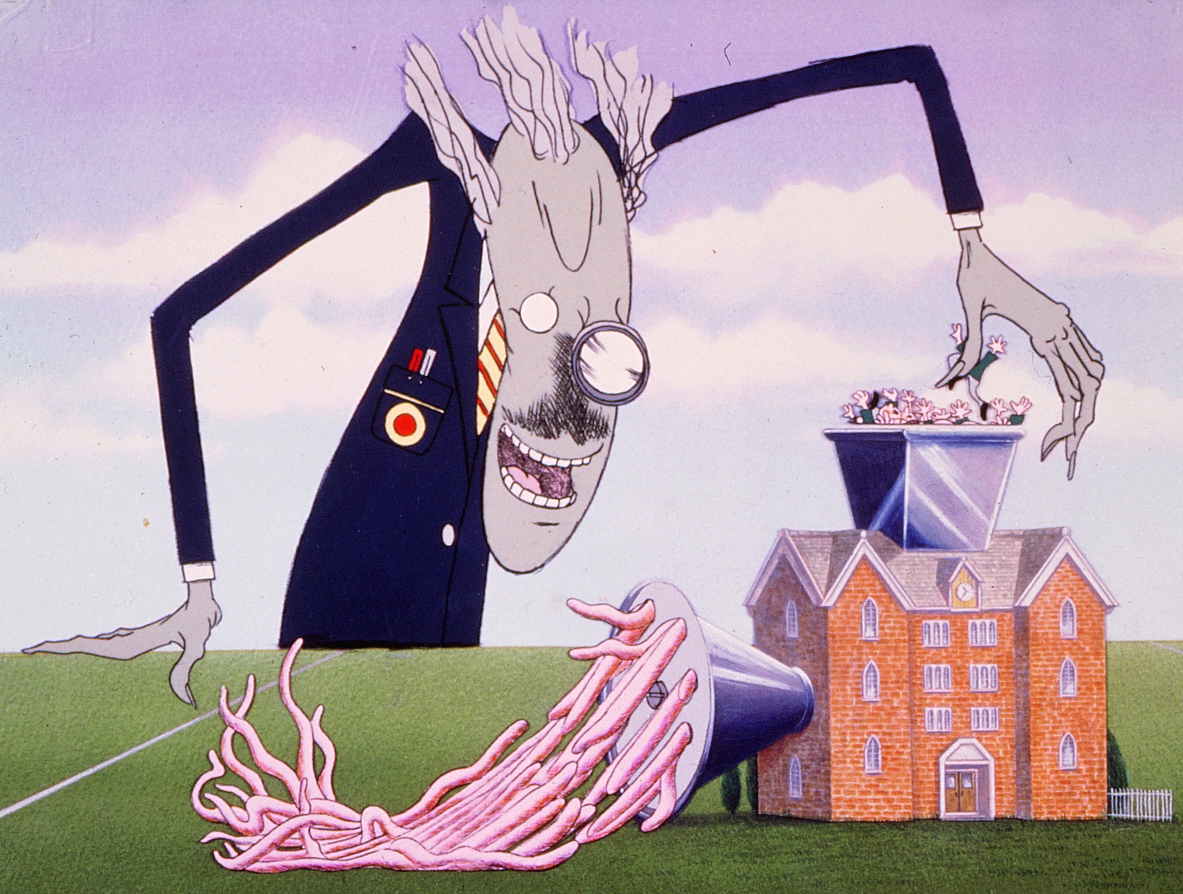
The Invented History of 'The Factory Model of Education'
The Invented History of 'The Factory Model of Education': The Invented History of 'The Factory Model of Education'And so too we’ve invented a history of “the factory model of education” in order to justify an “upgrade” – to new software and hardware that will do much of the same thing schools have done for generations now, just (supposedly) more efficiently, with control moved out of the hands of
Recess and Behavior Problems Part I: Attitude Adjustment
Recess and Behavior Problems Part I: Attitude Adjustment: Recess and Behavior Problems Part I: Attitude AdjustmentAPRIL 25, 2015 BY NANCY BAILEY LEAVE A COMMENTMy recent post “If You’re a Teacher Who Denies Recess…” raised some questions about what a teacher could do if they couldn’t use recess as a bargaining chip to get students to complete their work and/or behave. I thought it was important fo
SUNDAY, APRIL 26 NPE 2015 Annual Conference Schedule, Panels & Keynotes #‎NPEChicago
SUNDAY, APRIL 26THMorning KeynoteDiane Ravitch in Conversation with AFT’s Randi Weingarten and NEA’s Lily Eskelsen GarcíaClosing Keynote and Call to ActionChicago’s Very Own, Karen LewisSunday, April 26th Schedule7:00 – 9:00                        BreakfastPaid as part of the meal plan (purchase through our website)9:00am-10:15                   Sunday Session 5Schools of Opportunity: Carol Burris
NPE Lessons LIVE and the Raw Truth: What do we need to do? | Reclaim Reform
NPE Lessons LIVE and the Raw Truth: What do we need to do? | Reclaim Reform: NPE Lessons LIVE and the Raw Truth: What do we need to do?Posted on April 25, 2015by Ken PrevitiViewing the LIVE coverage of the Network for Public Education Conference is an enlightening experience to say the least. The vast differences of experiences from teacher to teacher, age category to age category and location to
Public boarding school _ the way to solve educational ills? - Yahoo News
Public boarding school _ the way to solve educational ills? - Yahoo News: Public boarding school _ the way to solve educational ills? BUFFALO, N.Y. (AP) — Buffalo's chronically struggling school system is considering an idea gaining momentum in other cities: public boarding schools that put round-the-clock attention on students and away from such daunting problems as poverty, troubled homes and tr
Officials to review state exams after errors found: Fariña - NY Daily News
Officials to review state exams after errors found: Fariña - NY Daily News: Education officials to review state exams after error discovery: FariñaCity Schools Chancellor Carmen Fariña (seen with Deputy Mayor Richard Buery at a Pre-K enrollment center on Thursday) has promised that officials will review state math and reading exams after the discovery of two major errors. City schools boss Carmen
Teacher: What I wish everyone knew about working in a high-needs school - The Washington Post
Teacher: What I wish everyone knew about working in a high-needs school - The Washington Post: Teacher: What I wish everyone knew about working in a high-needs school The following post was written by a fifth-year English teacher in a Title 1 middle school who blogs anonymously at the loveteachblog. It captures both the joys and overwhelming burdens of working in an under-resourced school with a l
Troy LaRaviere: Corrupt public servants. SUPES and Barbara Byrd-Bennett. | Fred Klonsky
Troy LaRaviere: Corrupt public servants. SUPES and Barbara Byrd-Bennett. | Fred Klonsky: Troy LaRaviere: Corrupt public servants. SUPES and Barbara Byrd-Bennett.– From Troy LaRaviere’s blog. Troy is a principal at Blaine elementary school in Chicago.An InvitationIn July of 2013–along with hundreds of principals across Chicago–I received an email with the subject, “Leadership Launch with Dr. Barbar
Louisiana Educator: The War Against Public Schools and Teachers Resumes Next Week!
Louisiana Educator: The War Against Public Schools and Teachers Resumes Next Week!: The War Against Public Schools and Teachers Resumes Next Week!Two Committees of the Louisiana House of Representatives next week will go back to work attempting to further dismantle public education and do more damage to the teaching profession.House Education Committee: 9:00 AM, Wednesday, April 29So after all the
Peg with Pen: Jody Dosher for CEA President and Social Movement Unionism
Peg with Pen: Jody Dosher for CEA President and Social Movement Unionism:Jody Dosher for CEA President and Social Movement UnionismThe CEA delegate assembly is in Denver this weekend. It’s no secret that I’m supporting Jody Dosher for CEA President. Jody was one of the founders of the R.A.V.E. caucus (Re-igniting Association Values for Educators). In the R.A.V.E. caucus we strive to bring social m
Direct instruction vs inquiry learning - Business Insider
Direct instruction vs inquiry learning - Business Insider: A group of teachers went to China and realized that the West is instructing students wrongReuters / StringerWhat can the west learn from the success of Chinese schools?Seventy teachers from the UK were sent to Shanghai to study classroom methods to investigate why Chinese students perform so well. Upon their return, the teachers reported t
Feds Play the Race Card to Crush Parents’ Revolt Against Common Core | National Review Online
Feds Play the Race Card to Crush Parents’ Revolt Against Common Core | National Review Online: Feds Play the Race Card to Crush Parents’ Revolt Against Common CoreThere was a time when Common Core supporters loudly insisted the program — adopted by no fewer than 46 states — was most assuredly not federal, that any allegation that this astounding national uniformity was the result of federal pressu
Schoolhouse Live NPE 3 THE NETWORK FOR PUBLIC EDUCATION NATIONAL CONFERENCE #‎NPEChicago
THE NETWORK FOR PUBLIC EDUCATION NATIONAL CONFERENCENPE 3SCHEDULE: SATURDAY, APRIL 25 (Central Time) For more information visit The Network for Public Education8:30-NPE 1: Opening Keynote9:10-NPE 1: Defending the Early Years                NPE 2: Student Panel        NPE 3: Resisting the Juggernaut10:35-NPE 1: How to Effectively Debunk Myths in an Era of Education Misinformation          NPE 2: Pe
Schoolhouse Live NPE 2 THE NETWORK FOR PUBLIC EDUCATION NATIONAL CONFERENCE #‎NPEChicago
THE NETWORK FOR PUBLIC EDUCATION NATIONAL CONFERENCENPE 2SCHEDULE: SATURDAY, APRIL 25 (Central Time) For more information visit The Network for Public Education8:30-NPE 1: Opening Keynote9:10-NPE 1: Defending the Early Years                NPE 2: Student Panel        NPE 3: Resisting the Juggernaut10:35-NPE 1: How to Effectively Debunk Myths in an Era of Education Misinformation          NPE 2: Pe
Schoolhouse Live NPE 1 THE NETWORK FOR PUBLIC EDUCATION NATIONAL CONFERENCE #‎NPEChicago
Schoolhouse Live: THE NETWORK FOR PUBLIC EDUCATION NATIONAL CONFERENCENPE 1SCHEDULE: SATURDAY, APRIL 25 (Central Time) For more information visit The Network for Public Education8:30-NPE 1: Opening Keynote9:10-NPE 1: Defending the Early Years                NPE 2: Student Panel        NPE 3: Resisting the Juggernaut10:35-NPE 1: How to Effectively Debunk Myths in an Era of Education Misinformation 

YESTERDAY

#‎NPEChicago‬ The Resistance is Real – They’re All Here at the Network for Public Education Conference! | gadflyonthewallblog
The Resistance is Real – They’re All Here at the Network for Public Education Conference! | gadflyonthewallblog: The Resistance is Real – They’re All Here at the Network for Public Education Conference!An old adage says, “The most radical thing we can do is introduce people to one another.”If that’s true, then the Network for Public Education conference in Chicago may be the most radical gathering
New York City Parents Grade Mayor on Campaign Promises - K-12 Parents and the Public - Education Week
New York City Parents Grade Mayor on Campaign Promises - K-12 Parents and the Public - Education Week: New York City Parents Grade Mayor on Campaign PromisesNew York City parents gave Mayor Bill de Blasio some pretty low grades when it came to fulfilling campaign promises about the city's schools.A New York City political action committee, NYC Kids PAC, released a report April 19 tracking the comm

Special Nite Cap  - Catch Up on Today's Post 4/24/15


SUNDAY, APRIL 26TH

Morning Keynote
Diane Ravitch in Conversation with AFT’s Randi Weingarten and NEA’s Lily Eskelsen García
image (1)


Closing Keynote and Call to Action
Chicago’s Very Own, Karen Lewis

image (3)


Sunday, April 26th Schedule


7:00 – 9:00                        Breakfast
Paid as part of the meal plan (purchase through our website)

9:00am-10:15                   Sunday Session 5

Schools of Opportunity: Carol Burris and Dr. Kevin Welner
A Trip To The Jersey C.O.A.S.T; Community Organizing Around Standardized Test: Michael Kaminski, Jim Boice, Alex DeVicaris, Patrick Manahan, and Susan Cauldwell
The Impact of Race and Poverty on Education; What Parents Need To Know: Nathan Harris, Dora Taylor, and Julie Woestehoff
Social Justice Unionism; The What, Who and Why: Michelle Gunderson, Xian Franzinger Barrett, and UCORE activists
More Than a Score; Black Student Lives Matter: Jesse Hagopian
Knocking Down Barriers Together; College Access for All: Nicole Hurd moderating, Veniese Bradley-Mitchell, Claire Dennison, and Julie Pagliuco
How to Have Conversations with Teach for America Supporters: Dr. Julian Vasquez Heilig, Katie Osgood, Jameson Brewer, Annie Tan, Chad Sommer, and Dr. Terica Butler

10:25 – 11:30                    Morning Keynote
Diane Ravitch in Conversation with AFT’s Randi Weingarten and NEA’s Lily Eskelsen García

11:40 – 12:55                    Sunday Session 6

Designing and Delivering Persuasive Assessment Reform Messages: Bob Schaeffer, Bianca Tanis, and Steve Baker
Imagineering Our Edu-Nation: Katie Lapham
BATS Pushing Back Against the Dismantling Of Special Education: Marla Kilfoyle, Terry Kalb, Melissa Tomlinson, and Lorri Gumanow
Teacher Education; Doing What Is Right When Everything Is Wrong: Tim Slekar, Jed Hopkins, Sheila Hopkins, Donna Vukelich-Selva, and Alexandra Miletta
Teach Writing Like A Writer: Peter Greene
Getting Your Book Published: Anthony Cody, John Kuhn, Jose Vilson, and Denny Taylor 
The Battle for Adult Education in California; “Workforce Preparation” vs. Community is Immunity: Kristen Pursley, Cynthia Eagleton, and Bruce Neuberger

1:05 – 1:45                    Sunday Closing Keynote and Call to Action
Chicago’s Very Own, Karen Lewis


 Please tweet with the hashtag ‪#‎NPEChicago‬ and help us trend #1 again like we did twice last year.

LIVE FROM CHICAGO, APRIL 25-26
CHECK OUT ALL THREE CHANNELS!

Dylan Sepulveda presents his original piece, “Academia” #NPECHICAGO

Patriot Press : See the Spit Fire 2015 Performances Here!:


The student news site of Freehold Township High School


Dylan Sepulveda presents his original piece, “Academia”


The Invented History of 'The Factory Model of Education'

The Invented History of 'The Factory Model of Education':

The Invented History of 'The Factory Model of Education'


And so too we’ve invented a history of “the factory model of education” in order to justify an “upgrade” – to new software and hardware that will do much of the same thing schools have done for generations now, just (supposedly) more efficiently, with control moved out of the hands of labor (teachers) and into the hands of a new class of engineers, out of the realm of the government and into the realm of the market.  Audrey Watters


“What do I mean when I talk about transformational productivity reforms that can also boost student outcomes? Our K–12 system largely still adheres to the century-old, industrial-age factory model of education. A century ago, maybe it made sense to adopt seat-time requirements for graduation and pay teachers based on their educational credentials and seniority. Educators were right to fear the large class sizes that prevailed in many schools. But the factory model of education is the wrong model for the 21st century.” – US Secretary of Education Arne Duncan (2010)
One of the most common ways to criticize our current system of education is to suggest that it’s based on a “factory model.” An alternative condemnation: “industrial era.” The implication is the same: schools are woefully outmoded.
As edX CEO Anant Agarwal puts it, “It is pathetic that the education system has not changed in hundreds of years.” The Clayton Christensen Institute’s Michael Horn and Meg Evan argue something similar: “a factory model for schools no longer works.” “How to Break Free of Our 19th-Century Factory-Model Education System,” advises Joel Rose, the co-founder of the New Classrooms Innovation Partners. Education Next’s Joanne Jacobs points us “Beyond the Factory Model.” “The single best idea for reforming K–12 education,” writes Forbescontributor Steve Denning, ending the “factory model of management.” “There’s Nothing Especially Educational About Factory-Style Management,” according to the American Enterprise Institute’s Rick Hess.
I’d like to add: there’s nothing especially historical about these diagnoses either.

Blame the Prussians


The “factory model of education” is invoked as shorthand for the flaws in today’s schools – flaws that can be addressed by new technologies or by new policies, depending on who’s telling the story. The “factory model” is also shorthand for the history of public education itself – the development of and change in the school system (or – purportedly – the lack thereof).
Here’s one version of events offered by Khan Academy’s Sal Khan along with Forbes’ writer Michael Noer – “the history of education”:


Khan’s story bears many of the markers of the invented history of the “factory model of education” – buckets, assembly lines, age-based cohorts, whole class instruction, standardization, Prussia, Horace Mann, and a system that has not changed in 120 years.
There are several errors and omissions in Khan’s history. (In his defense, it’s only eleven and a half minutes long.) There were laws on the books in Colonial America, for example, demanding children be educated (although not that schools be established). There was free public education in the US too prior to Horace Mann’s introduction of the “Prussian model” – the so-called “charity schools.” There were other, competing models for arranging classrooms and instruction as well, notably the “monitorial system” (more on that below). Textbook companies were already thriving before Horace Mann or the Committee of Ten came along to decide what should be part of the curriculum. One of the side-effects of the efforts of Mann and others to create a public education system, unmentioned by Khan, was the establishment of “normal schools” where teachers were trained. Another was the requirement that, in order to demonstrate accountability, schools maintain records on attendance, salaries, and other expenditures. Despite Khan’s assertions about the triumph of standardization, control of public schools in the US have, unlike in Prussia, remained largely decentralized – in the hands of states and local districts rather than the federal government.
The standardization of public education into a “factory model” – hell, the whole history of education itself – was nowhere as smooth or coherent as Khan’s simple timeline would suggest. There were vast differences between public education in Mann’s home state of Massachusetts and in the rest of the country – in the South before and after the Civil War no doubt, as in the expanding West. And there have always been objections from multiple quarters, particularly from religious groups, to the shape that schooling has taken.
Arguments over what public education should look like and what purpose public education should serve – God, country, community, the economy, the self – are not new. These battles have persisted – frequently with handwringing about education’s ongoing failures – and as such, they have shaped and yes changed, what happens in schools.

The Industrial Era School


Sal Khan is hardly the only one who tells a story of “the factory of model of education” that posits the United States adopted Prussia’s school system in order to create a compliant populace. It’s a story cited by homeschoolers and by libertarians. It’s a story told by John Taylor Gatto in his 2009 book Weapons of Mass Instruction. It’s a story echoed by The New York Times’ David Brooks. Here he is in 2012: “The American education model…was actually copied from the 18th-century Prussian model designed to create docile subjects and factory workers.”
For what it’s worth, Prussia was not highly industrialized when Frederick the Great formalized its education system in the late 1700s. (Very few places in the world were back then.) Training future factory workers, docile or not, was not really the point.
Nevertheless industrialization is often touted as both the model and the rationale for the public education system past and present. And by extension, it’s part of a narrative that now contends that schools are no longer equipped to address the needs of a post-industrial world.
Perhaps the best known and most influential example of this argument comes from Alvin Toffler who decried the “Industrial Era School” in his 1970 book Future Shock:
Mass education was the ingenious machine constructed by industrialism to produce the kind of adults it needed. The problem was inordinately complex. How to pre-adapt children for a new world – a world of repetitive indoor toil, smoke, noise, machines, crowded living conditions, collective discipline, a world in which time was to be regulated not by the cycle of sun and moon, but by the factory whistle and the clock.

The solution was an educational system that, in its very structure, simulated this new world. This system did not emerge instantly. Even today it retains throw-back elements from pre-industrial society. Yet the whole idea of assembling masses of students (raw material) to be processed by teachers (workers) in a centrally located school (factory) was a stroke of industrial genius. The whole administrative hierarchy of education, as it grew up, followed the model of industrial bureaucracy. The very organization of knowledge into permanent disciplines was grounded on industrial assumptions. Children marched from place to place and sat in assigned stations. Bells rang to announce changes of time.

The inner life of the school thus became an anticipatory mirror, a perfect introduction to industrial society. The most criticized features of education today – the regimentation, lack of individualization, the rigid systems of seating, grouping, grading and marking, the authoritarian role of the teacher – are precisely those that made mass public education so effective an instrument of adaptation for its place and time.
Despite these accounts offered by Toffler, Brooks, Khan, Gatto, and others, the history of schools doesn’t map so neatly onto the history of factories (and visa versa). As education historian Sherman Dorn has argued, “it makes no sense to talk about either ‘the industrial era’ or the development of public school systems as a single, coherent phase of national history.”
If you think industrialization is the shift of large portions of working people to wage-labor, or the division of labor (away from master-craft production), then the early nineteenth century is your era of early industrialization, associated closely with extensive urbanization (in both towns and large cities) and such high-expectations transportation projects as the Erie Canal or the Cumberland Road project (as well as other more mundane and local transportation improvements). That is the era of tremendous experimentation in the forms of schools, from legacy one-room village schools in the hinterlands to giant monitorial schools in cities to academies and normal schools and colleges and the earliest high schools in various places. It is the era of charity schools in cities and the earliest (and incomplete) state subsidies to education, a period when many states had subsidies to what we would call private or parochial schools. It is also the start of the common-school reform era, the era when both workers and common-school reformers began to talk about schooling as a right attached to citizenship, and the era when primary schooling in the North became coeducational almost everywhere. It was an era of mass-produced textbooks. It was an era when rote learning was highly valued in school, despite arguments against the same. And, yes, the first compulsory-school law was passed before the Civil War… but it was not enforced.

Maybe you think industrialization is the development of railroads, monopolies, national general strikes, metastasizing metropolises, and mechanized production. Then you mean the second half of the nineteenth century, and that is the era where the structural dreams of common-school reformers largely came to pass with tuition-free 
The Invented History of 'The Factory Model of Education':

Recess and Behavior Problems Part I: Attitude Adjustment

Recess and Behavior Problems Part I: Attitude Adjustment:


Toys

Recess and Behavior Problems Part I: Attitude Adjustment

My recent post “If You’re a Teacher Who Denies Recess…” raised some questions about what a teacher could do if they couldn’t use recess as a bargaining chip to get students to complete their work and/or behave. I thought it was important for me to address these problems.
My attempt here is to show that all children deserve recess, and to look for other ways to deal with troublesome behavior so teachers don’t punish children by withholding recess.
I will provide suggestions for teachers (and parents), but please know that I am no know-it-all. Behavioral difficulties with students in ever increasing class sizes can be most challenging. But I will give some suggestions in three short posts. And if any teacher wants to join in and give their own solutions, please feel welcome.
First, I would never keep a student from recess for not completing work at school or homework.
The testing craze has made teachers push students to work faster. But faster doesn’t always mean better. Some students just work slowly. Students who try but don’t finish their assignments might also have a learning problem. Some parents and teachers might say, they know their kids and they are just lazy, but I would argue it is difficult to know that for sure.
I have never met a child, and I have known a lot of students with behavioral and learning disabilities, who didn’t want to do a good job in school. If they bubble Christmas trees in on test forms, or procrastinate doing their work, or even act out, it isn’t because they are saying, “I love to get into trouble.” It is because they have a Recess and Behavior Problems Part I: Attitude Adjustment: