Today's Big Education Ape - PostRank Top Mid Day Posts #ows
Sunday links. « Fred Klonsky's blog
Big Education Ape - PostRank (PostRank: All) - 3 minutes ago
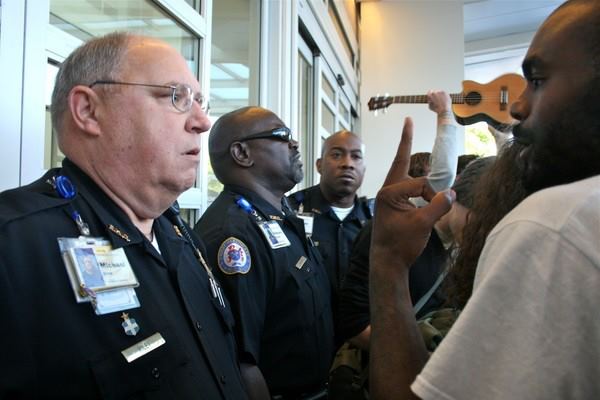
Sunday links. « Fred Klonsky's blog:Sunday links.by Fred KlonskyPhoto: H/T Jed Brandt. Occupy Atlanta.I woke up to this news from Glen Brown: The proposed overhaul of Illinois’ pension system could cost the state $62 billion more than the current system over the next three decades, according to a report prepared for the Teacher Retirement System.Bank Transfer Day was yesterday. You can still transfer your money out of a big bank to a credit union on Monday. Or Tuesday.The Tea Party ... more »
Erik Fresen’s False Prophecy | Scathing Purple Musings
Big Education Ape - PostRank (PostRank: All) - 3 minutes ago
Erik Fresen’s False Prophecy | Scathing Purple Musings:Erik Fresen’s False Prophecyby Bob SikesThe Miami Heraldhas published a comprehensive look at Florida’s new teacher evaluation system the state will have under SB736. Reporters Laura Insensee and Sarah Butrymowicz interviewed several people for their article, including Rep. Erik Fresen of Miami.The Herald reporters demonstrated considerable professionalism in not pointing out that Fresens’ family owns several Academica charter schools in Miami. Perhaps they should have. Fresen let loose with a real whopper. After ... more »
Dr. Cornell West and Chris Hedges at Goldman Sachs Mock Trial Occupy Wall Street on Nov 3, 2011 People’s Hearing | Seattle Education #ows
Big Education Ape - PostRank (PostRank: All) - 3 minutes ago

Dr. Cornell West and Chris Hedges at Goldman Sachs Mock Trial Occupy Wall Street on Nov 3, 2011 People’s Hearing | Seattle Education:Dr. Cornell West and Chris Hedges at Goldman Sachs Mock Trial Occupy Wall Street on Nov 3, 2011 People’s Hearingby seattleducation2011
With A Brooklyn Accent: Why Teachers Must Become Community Organizers and Justice Fighters #ows
Big Education Ape - PostRank (PostRank: All) - 3 minutes ago
With A Brooklyn Accent: Why Teachers Must Become Community Organizers and Justice Fighters:Why Teachers Must Become Community Organizers and Justice FightersWhy Teachers Must Become Community Organizers and Justice FightersMark NaisonThere is a long history of Teacher Activism in the United States. In New York City, the tradition goes back to the late 1930s when teachers associated with the Communist Party and the New York City Teachers Union fought to have Negro History Month honored in the NYC Public schools, to ... more »
Thinking differently about time on task
Big Education Ape - PostRank (PostRank: All) - 3 minutes ago
Thinking differently about time on task:Thinking differently about time on taskby Susan HeaddenMore time on task — growing evidence, along with simple common sense, shows that the more hours students engage in learning, the more they can boost their academic achievement. That, along with increasing concerns about the learning reversals students suffer over the summer, is why more and more school districts are starting to think beyond the confines of the six-hour-a-day, 180-day-a-year box.An analysis by Education Sector, which has ... more »
Onward & Upward - Arlington, VA, United States, ASCD EDge Blog post
Big Education Ape - PostRank (PostRank: All) - 3 minutes ago

Onward Upward - Arlington, VA, United States, ASCD EDge Blog post:Onward Upward Colleagues who have known me over the yeas ask, “Walter, what’s up? Why is ASCD supporting the Common Core State Standards?” as if we have gone over to the dark side. My initial answer is, “Standards are not evil!” followed by, “Besides, ASCD very thoughtfully and deliberately made the decision to get involved in this work. Common Core and Whole Childgo hand in hand!” The 5 strands of ...more »
Ozomatli to Occupy LA: Can’t Let the Bullshit Split Us Up! | California Father #OWS
Big Education Ape - PostRank (PostRank: All) - 3 minutes ago
Ozomatli to Occupy LA: Can’t Let the Bullshit Split Us Up! | California Father:Ozomatli to Occupy LA: Can’t Let the Bullshit Split Us Up!by California Father
Education Report: Readers respond to role of teachers in Occupy Oakland movement - San Jose Mercury News #ows
Big Education Ape - PostRank (PostRank: All) - 3 minutes ago
Education Report: Readers respond to role of teachers in Occupy Oakland movement - San Jose Mercury News:Education Report: Readers respond to role of teachers in Occupy Oakland movementBy Katy MurphyOakland TribunePosted: 11/06/2011 01:00:00 AM PDTThis is a sampling of The Education Report, Katy Murphy's Oakland schools blog. Read more atwww.IBAbuzz.com/education. Follow her at Twitter.com/KatyMurphy.Nov. 4: On the day of Occupy Oakland's general strike, 294 Oakland public school teachers, almost 15 percent of the teaching force, stayed out of school. In ... more »
NJEA: Meaningful reform is more than evaluation, tenure | NJ.com
Big Education Ape - PostRank (PostRank: All) - 3 minutes ago

NJEA: Meaningful reform is more than evaluation, tenure | NJ.com:NJEA: Meaningful reform is more than evaluation, tenurePublished: Sunday, November 06, 2011, 7:23 AM By Star-Ledger Guest Columnist By Barbara KeshishianIf the New Jersey Education Association’s position on education reform was as obstinate as The Star-Ledger believes, our union would deserve the criticism it has received.But the truth is, NJEA supports real education reform, including changes to tenure and evaluation that will help districts identify which teachers are performing at a ... more »
School Tech Connect: A Day In The Life
Big Education Ape - PostRank (PostRank: All) - 11 hours ago

School Tech Connect: A Day In The Life:A Day In The Lifeby noreply@blogger.com (Tim) Here are the titles I picked off the shelf of my branch library today. On my Kindle, this collection would have cost $50. At the library? Free. I feel compelled to mention this because one of the themes downplayed in the ed tech world is that none of these gadgets are making us any wiser.Naturally, the mayor has proposed cutting back on library services because library ... more »
Digital Parents and Low-Tech Schools | Larry Cuban on School Reform and Classroom Practice
Big Education Ape - PostRank (PostRank: All) - 11 hours ago
Digital Parents and Low-Tech Schools | Larry Cuban on School Reform and Classroom Practice:Digital Parents and Low-Tech Schoolsby larrycuban“Should I feel bad that I let my son watch age-appropriate education programs on TV and learn things like a second language?… Shame on me for letting my child play chess and math games on my iPad?…Is it really outrageous that I let my son sit on my lap in front of my computer so I could help him type his first ... more »
The Problem Is Older Than the Factory « Cooperative Catalyst
Big Education Ape - PostRank (PostRank: All) - 11 hours ago
The Problem Is Older Than the Factory « Cooperative Catalyst:The Problem Is Older Than the Factoryby John T. Spencer“Dad, if ants are so strong why can’t we just make really big machines that are built like ants and can carry heavy stuff for us?” Joel asks me.Being a first-grader, I struggle with how to teach the difficulty of scalability.“Sometimes things that work in small spaces don’t work when they get too big,” I tell him.“Show me,” he dares.So we build ... more »
Save Seattle Schools Community Blog: Seattle Schools' Future Enrollment Trends
Big Education Ape - PostRank (PostRank: All) - 11 hours ago
Save Seattle Schools Community Blog: Seattle Schools' Future Enrollment Trends:Seattle Schools' Future Enrollment Trendsby Melissa WestbrookFirst off - paying for consultant W. Les Kendrick - is the best money this district has spent on a consultant in a long, long time.Mr. Kendrick was the featured speaker at the Wednesday Work Session on Capacity Management and, despite a long PowerPoint (that he powered thru - staff take note), he was clear and concise. And, boy is he a guy who likes ... more »
Today's Big Education Ape - PostRank Top Early Evening Posts #ows
Big Education Ape - PostRank (PostRank: All) - 11 hours ago

Today's Big Education Ape - PostRank Top Early Evening Posts #owsStatement by the President on Hajj and Eid al-Adha | The White HouseBig Education Ape - PostRank (PostRank: All)-21 minutes agoStatement by the President on Hajj and Eid al-Adha | The White House:Statement by the President on Hajj and Eid al-Adhaby The White HouseRelease Time: For Immediate ReleaseMichelle and I extend our greetings for a happy Eid al-Adha to Muslims worldwide and congratulate those performing Hajj. Thousands of Muslim Americans ... more »
KOCH OUT NEWS www.kochwatch.org
Big Education Ape - PostRank (PostRank: All) - 11 hours ago
www.kochwatch.org:Crooks Liars: Exclusive Video: #OccupyDC Protesters Hit by Driver...Who Police Let GoCD at www.kochwatch.org - 1 hour ago* -By Tina Dupuy * *November 5, 2011-* On Friday night I was covering the protest of the Americans for Prosperity conference at the Washington DC Convention Center. It started off with a march from McPherson Square, the location of the Occupation, down K Street to the convention center. The crowd of around 500 people chanted and marched around the perimeter of the ... more »
NY Times: “All Americans Should Feel Ashamed” Of Alabama Immigration Law | Larry Ferlazzo’s Websites of the Day…
Big Education Ape - PostRank (PostRank: All) - 11 hours ago
NY Times: “All Americans Should Feel Ashamed” Of Alabama Immigration Law | Larry Ferlazzo’s Websites of the Day…:NY Times: “All Americans Should Feel Ashamed” Of Alabama Immigration Lawby Larry FerlazzoThe New York Times has published an editorial about Alabama’s attack on immigrants. Here are its last two paragraphs:Alabama has seized from the federal government the job of controlling immigration within its borders. The law’s architects and supporters proclaim that their goal is to catastrophically disrupt the lives of illegal immigrants ... more »
Election memories. « Fred Klonsky's blog
Big Education Ape - PostRank (PostRank: All) - 11 hours ago
Election memories. « Fred Klonsky's blog:Election memories.by Fred KlonskyAs a general rule I am a guy who likes taking his politics to the street. It’s why I like the Occupation movement.I was talking to someone, an old political activist like me, who muttered about how our generation needs to give the Occupation movement a more solid program. He called the Occupation spontaneous with a frown as if spontaneity was sticky and couldn’t be easily washed off.We’ve had a few years ... more »
Schools Matter: Invest in protecting children from poverty, not in national standards
Big Education Ape - PostRank (PostRank: All) - 11 hours ago
Schools Matter: Invest in protecting children from poverty, not in national standards:Invest in protecting children from poverty, not in national standardsby skrashenSent to the Los Angeles Times, November 5, 2011Re: (“Backsliding on school reform, “ November 5).The Times faults the Harkens-Enzi proposal for a new education law because it lacks national standards. Without national standards, the Times insists, schools will have “no incentive to improve.”In reality, American teachers have been successful without national standards: Middle-class American students attending well-funded... more »