Latest News and Comment from Education

Monday, May 22, 2017

CURMUDGUCATION: Education's Existential Crisis

CURMUDGUCATION: Education's Existential Crisis:

Education's Existential Crisis

Image result for Existential Crisis

No, it's not the possibility that Betsy DeVos's DeVoucher program may gut public education with the goal of replacing it with privatized school by and for the People Who Matter. Nor is it the policy goal held by some that the whole concept of "school" can be replaced with an array of modules geared to different competencies that can be accessed and completed on line at the time and place of the student's choosing. It's not even the steady clamping shut of the pipeline that provides actual trained professional teachers, without whom a school is difficult to put together.


No, the biggest existential threat strikes at the very foundation of education, the foundation of knowledge itself.

Plenty of bytes have been burned discussing a post-fact society, a culture where truth no longer matters. And that nibbles at the edges of what we're talking about.

This Vox piece by David Roberts (Vox's climate and science reporter) is long and thorough, but here's the key idea. He sets it up by recapping a classic Rush Limbaugh rant from 2009, in which Limbaugh claims that we live in two universe, and one is a universe of lies (he was talking about climate science, but at this point, it 
CURMUDGUCATION: Education's Existential Crisis:


At West Virginia Public School, AFT President Rips Trump Budget Cuts | MilTech

At West Virginia Public School, AFT President Rips Trump Budget Cuts | MilTech:

At West Virginia Public School, AFT President Rips Trump Budget Cuts

Image result for American Federation of Teachers President Randi Weingarten

WAR, W.Va.—Following a tour of a McDowell County, W.Va., community school that provides essential services to help lift its disadvantaged students, American Federation of Teachers President Randi Weingarten blasted President Trump’s proposed budget cuts, which would directly impede the ability of the school to provide many of its programs.
One of the most recent accomplishments of Reconnecting McDowell—a 125-member public-private partnership created by the AFT and Gayle Manchin, now secretary of the West Virginia Education and the Arts Department—is the conversion of Southside K-8 School into a community school with wraparound health and social services and academic support.
Southside K-8 is a public school in rural, poor McDowell County, whose students depend on federal funding for the additional resources and supports they need to thrive. Today we saw programs that would be axed under the cruel, catastrophic budget cuts the Trump administration wants,” Weingarten said.
Trump and Education Secretary Betsy DeVos have proposed a $10.6 billion cut in federal education funding and a more than $1 billion increase for vouchers and other school choice options.
“If Trump and DeVos bothered to venture out to rural McDowell, they would see that public schools are the only choice and that slashing vital investments that directly help students like those at Southside K-8 is like a dagger to the heart,” Weingarten said.
Weingarten noted that McDowell County went for Trump in the November election because voters believed his promises to help the struggling residents economically.
“If education is the economic development engine, which I believe, then cutting public education to smithereens puts the brakes on any possible progress,” she said.

Are Tech & Learning Compatible? | My Island View

Are Tech & Learning Compatible? | My Island View:

Are Tech & Learning Compatible?

Image result for wired teachers
I recently read yet another article that questioned the effect of using technology in education. I believe it stated that there are 3.6 million educators using edtech as the basis for the post. The post itself was well done, but throughout my reading I was troubled by what defined an edtech-using educator. How is it determined that an educator is truly an edtech user?
I have been in meetings where educators had to fill out questionnaires asking about their technology experience. They claimed to be technology-using educators based solely on their use of Power Point for lectures. Technically using Power Point for a lecture does require technology, but that is like claiming to be a social media guru after using Facebook to only follow some family members who post their family vacation pictures at every opportunity.
If we were to do a survey of ten educators who claim to be edtech-users and six of them base their claim on power point lectures alone, and two use tech to send digital worksheets to their students, and the final two educators have students using tech apps for collaboration, curation, communication and creation of content, we could confidently claim that Edtech is not having a great effect on learning. It would be effective for probably less than 20% of the students. The next obvious Are Tech & Learning Compatible? | My Island View:

Episode 34: Speaking "Freely" about Social Justice and Faster Pussycat! | BustED Pencils

Episode 34: Speaking "Freely" about Social Justice and Faster Pussycat! | BustED Pencils:

Speaking "Freely" about Social Justice and Faster Pussycat! 


Feature Interview: Dr. Kevin Kumashiro joins Tim to talk about his new adventure as a social justice warrior “consultant.”
Trending News with Attitude: Free Speech on College Campuses: “That’s Not Right!”
What Would Matt Damon’s Mom Say about politicians meddling with college courses?
Activist of the Week: Justin Oakley talks Education Talk and Faster Pussycat?Alison McDowell.
And of course a Moment of Zinn…
Let’s Bust Some Pencils!


 Episode 34: Speaking "Freely" about Social Justice and Faster Pussycat! | BustED Pencils:

Mitchell Robinson: The “Brave New World” of Teacher Evaluation | Eclectablog

The “Brave New World” of Teacher Evaluation | Eclectablog:

The “Brave New World” of Teacher Evaluation

from: https://today.ucf.edu/deal-moves-teaching-simulator-developed-at-ucf-into-private-sector/

Just when you think the masters of the universe who run the corporate reform movement can’t be even more clueless, you catch wind of the newest effort to turn education into a profit-generating endeavor–this time, a hare-brained scheme to evaluate student teachers, by…and I swear I’m not making this up…observing them as they pretend to teach…wait for it…a fake “classroom” of avatars, in a virtual reality environment.
Avatars.

Avatars!

AVATARS!!!!!

Don’t believe it? Neither did I until I took a look at the new “National Observational Teaching Exam,” or NOTE, brought to you by the Educational Testing Service (ETS)–the same company that brings us the Graduate Record Exam (GRE), the SAT, the PRAXIS tests, the AP Exams, and the National Assessment of Educational Progress (NAEP).
NOTE works like this: a teacher candidate (student teacher) “teaches” a sample lesson for 6-7 minutes using a “virtual class” populated by 5-6 “avatar students,” and receives feedback from an artificial intelligence program. The NOTE system is a combination of video production and “advanced technology” developed by the US Military, according to Mark Atkinson, the CEO of the tech firm Mursion, Inc., which is responsible for the creation of the avatars and virtual reality environment used in NOTE.
ETS describes NOTE as a program that promises to “measure a teaching candidate’s readiness to teach in ways that are representative of real-life teaching experiences.” The operative word here is “representative,” as the teacher candidates are not assessed by observing their work in an actual The “Brave New World” of Teacher Evaluation | Eclectablog:


Teachable Moment – Have You Heard

Teachable Moment – Have You Heard:

Teachable Moment

Related image

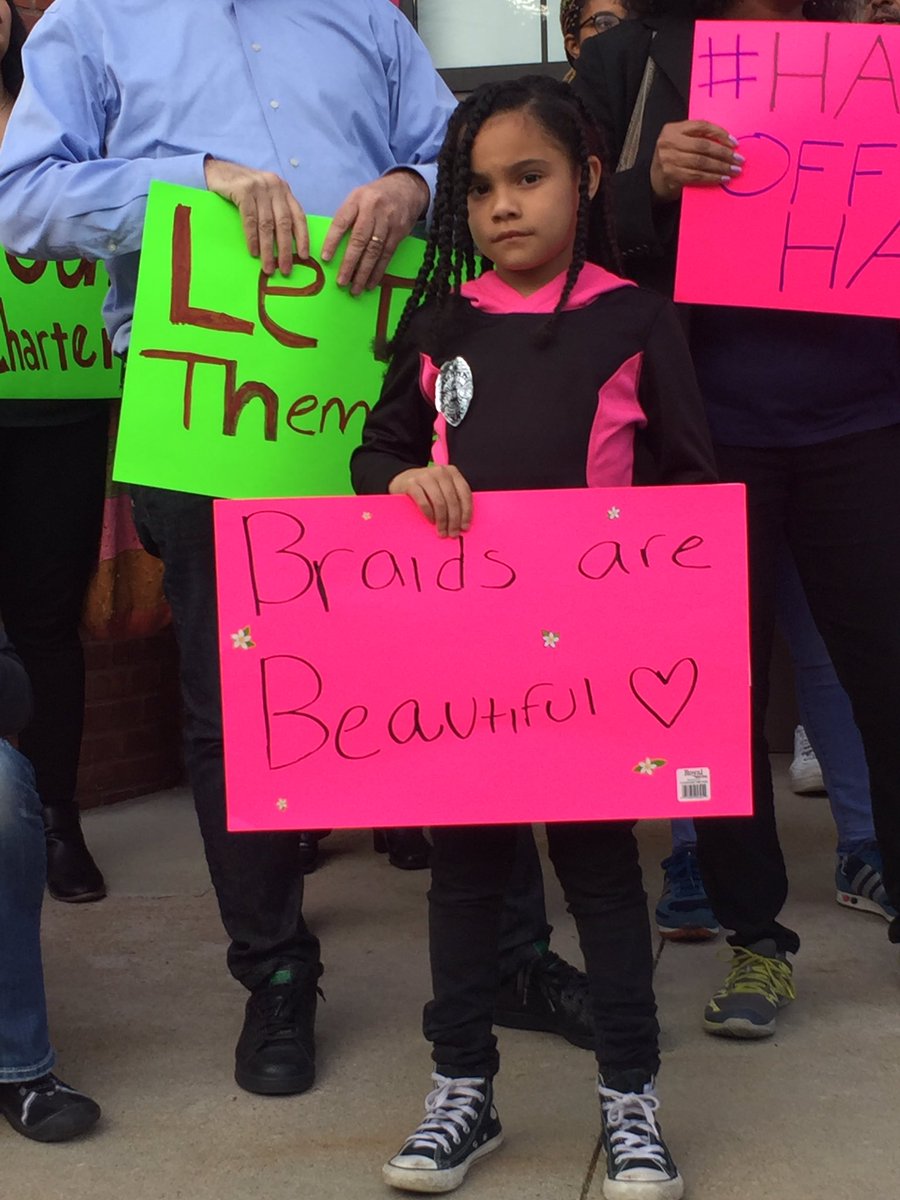
A Massachusetts charter school suspends its controversial discipline policy. But parent complaints about the state’s largest charter are nothing new and are usually ignored…


BREAKING: that Massachusetts charter school that was disciplining Black students for the way they braid their hair, and using equity-ish ling as justification has officially backed down. Trustees voted last night to suspend the controversial and nonsensical policy. Their decision wasn’t exactly a surprise; seemingly every single legal advocate, including Attorney General Maura Healey, had weighed in. But Mystic Valley’s change of heart also raises a question, or make that hundreds of questions. Over the years, the state has amassed hundreds of complaints from parents about the way that the trustees run this school, and those complaints seem to have gone exactly nowhere. To your personalized learning device, reader. It’s teachable moment time.


When news broke about Mystic Valley’s harsh punishment of students over hairstyles, including certifiably adorbs twins Mya and Deanna Cook, there was a quick and perfectly justifiable media pile-on. But missing from most of these stories was any context about this school. Mystic Valley Charter School isn’t some run-amok fluke. It’s the largest charter school in Massachusetts, with the longest waiting list. And this is far Teachable Moment – Have You Heard:

California Turnip the Beet Award Recipients - Summer Meal Programs (CA Dept of Education)

California Turnip the Beet Award Recipients - Summer Meal Programs (CA Dept of Education):

California Turnip the Beet Award Recipients
An annual listing of the California Turnip the Beet Award winners.


Program Details

The U.S. Department of Agriculture (USDA) Food and Nutrition Service (FNS) recently awarded the first-ever Turnip the Beet awards to Summer Meal Program sponsors across the nation who participate in the National School Lunch Program Seamless Summer Option (SSO) or the Summer Food Service Program (SFSP).
The awards recognize outstanding Summer Meal Program sponsors who work hard to offer high-quality meals that are appetizing, appealing, and nutritious.
The California Department of Education Nutrition Services Division congratulates all the 2016 California Turnip the Beet award recipients for their efforts to provide high-quality meals during the summer months.

Gold Turnip the Beet Awardee

Lakeside Union School District Seamless Summer Option
The Lakeside Union School District Summerside Café serves high-quality, kid-friendly menu items and involves parents to help increase participation in summer meals. The school district collaborates with local partners to offer family barbecues, salad bars, and kid-friendly breakfast offerings. Summertime meal services include nutrition education components delivered to children and their families, along with a daily healthy cooking lesson.

Silver Turnip the Beet Awardees

Manteca Unified Nutrition Education Seamless Summer Option
Manteca Unified Nutrition Education uses community partners, grant resources and existing staff to provide enrichment, health and physical activities at the summer meal locations. Due to the success and increase in meal participation of the daily barbecues, the district will offer additional barbecue sites and enrichment activities for the 2017 SSO.
West Contra Costa Unified School District Seamless Summer Option
West Contra Costa Unified School District partners with the Contra Costa Food Bank to distribute fresh produce to needy families at more than 10 summer meal sites. They serve 323,577 nutritious summer meals and snacks at 71 sites in low-income neighborhoods. Meal services at their park locations are supported by a mobile kitchen, and children are able to receive hot menu entrees such as green chili tamales, teriyaki chicken and brown rice, chicken and bean sopas, and whole grain rotini bolognese. Meals also include the choice of fresh sides and salads. Quality oriented menus include a greater variety of fresh fruits and vegetables, prepared and offered in numerous ways,and make up over 75 percent of the offerings.
Natomas Unified School District Nutrition Services Seamless Summer Option
As the second most diverse school district in the nation, Natomas Unified School District Nutrition Services offers nutritious choices that appeal to the community. Throughout the summer they host kick-off events to introduce students to their neighborhood farmers. The farmers hand out produce to families alongside the barbeques and festivities. Partnering with the USDA, the California Department of Food and Agriculture, the Dairy Council of California, the Center for Ecoliteracy, and local farmers the district is able to provide the community with an opportunity to celebrate summer meals and all that Sacramento’s food growers have to offer.
Questions:   Nutrition Services Division | sfsp@cde.ca.gov | 916-322-8323
Last Reviewed: Monday, May 22, 2017


 California Turnip the Beet Award Recipients - Summer Meal Programs (CA Dept of Education):

The New York Times on “The Little Known Statistician” Who Passed | VAMboozled!

The New York Times on “The Little Known Statistician” Who Passed | VAMboozled!:

The New York Times on “The Little Known Statistician” Who Passed

William-L.-Sanders

As many of you may recall, I wrote a post last March about the passing of William L. Sanders at age 74. Sanders developed the Education Value-Added Assessment System (EVAAS) — the value-added model (VAM) on which I have conducted most of my research (see, for example, here and here) and the VAM at the core of most of the teacher evaluation lawsuits in which I have been (or still am) engaged (see herehere, and here).
Over the weekend, though, The New York Times released a similar piece about Sanders’s passing, titled “The Little-Known Statistician Who Taught Us to Measure Teachers.” Because I had multiple colleagues and blog followers email me (or email me about) this article, I thought I would share it out with all of you, with some additional comments, of course, but also given the comments I already made in my prior post here.
First, I will start by saying that the title of this article is misleading in that what this “little-known” statistician contributed to the field of education was hardly “little” in terms of its size and impact. Rather, Sanders and his associates at SAS Institute Inc. greatly influenced our nation in terms of the last decade of our nation’s educational policies, as largely bent on high-stakes teacher accountability for educational reform. This occurred in large part due to Sanders’s (and others’) lobbying efforts when the federal government ultimately choose to incentivize and de facto require that all states hold their teachers accountable for their value-added, or lack thereof, while attaching high-stakes consequences (e.g., teacher termination) to teachers’ value-added estimates. This, of course, was to ensure educational reform. This occurred at the federal level, as we all likely know, primarily via Race to the Top and the No Child Left Behind Waivers essentially forced upon states when states had to adopt VAMs (or growth models) to The New York Times on “The Little Known Statistician” Who Passed | VAMboozled!:
 

Joint Meeting of the California Practitioners Advisory Group and the State Board of Education Notice and Agenda, June 2017 - California Practitioners Advisory Group (CA Dept of Education)

CPAG Meeting Notice and Agenda, June 2017 - California Practitioners Advisory Group (CA Dept of Education):

Joint Meeting of the California Practitioners Advisory Group 
and the State Board of Education

Image result for Joint Meeting of the California Practitioners Advisory Group and the State Board of Education

AGENDA

June 1, 2017

California Practitioners Advisory Group Members

  • Jo Ann Isken, Chair
  • Ed Manansala, Vice Chair
  • Melissa Agudelo
  • Jorge Aguilar
  • Mariana Astorga-Almanza
  • Ulises Garcia
  • Carolina Hernandez-Malone
  • John-Damien Huntley
  • Linda Kaminski
  • Kimberly Kenne
  • Tara Kini
  • Nancy Lara
  • L. Karen Monroe
  • Marco Petruzzi
  • Neva Rowden
  • Susan Salcido
  • Araceli Simeon

Liaisons to the State Board of Education

  • Sue Burr
  • Ilene Straus
Note: The State Board of Education (SBE) meeting is a study session and the SBE members in attendance will take no action on any items.

State Board Members

  • Michael W. Kirst, President
  • Ilene W. Straus, Vice President
  • Sue Burr
  • Bruce Holaday
  • Feliza I. Ortiz-Licon
  • Patricia A. Rucker
  • Niki Sandoval
  • Ting L. Sun
  • Karen Valdes
  • Trish Williams
  • Olivia Sison, Student Member

Secretary & Executive Officer

  • Hon. Tom Torlakson

Executive Director

  • Karen Stapf Walters
Schedule of MeetingLocation
Thursday, June 1, 2017
9:00 a.m. Pacific Time ±
California Department of Education
1430 N Street, Room 1101
Sacramento, California 95814 
916-319-0843

Please see the detailed agenda for more information about the items to be considered and acted upon. The public is welcome.
ALL TIMES ARE APPROXIMATE AND ARE PROVIDED FOR CONVENIENCE ONLY.
ALL ITEMS MAY BE RE-ORDERED TO BE HEARD AT ANY TIME OF THE NOTICED MEETING. A LIVE STREAM OF THE MEETING WILL BE PROVIDED; HOWEVER, THE VIDEO FEED AND PUBLIC VIEWING OF THE MEETING WILL BE PAUSED IF THE CPAG PARTICIPATES IN SMALL GROUP DISCUSSION/ACTIVITY.
The California Practitioners Advisory Group (CPAG) and the State Board of Education will hold a one-day meeting on Thursday, June 1, 2017, at the location indicated above. The meeting may include some activities involving the group as a whole and small group discussion involving one or more of the members. The following outline of activities is provided for convenience only. The actual order of business may be changed without notice to accommodate the needs of members, invited presenters, and key staff. Anyone interested in a particular matter should plan on being in attendance for the whole meeting on June 1, 2017. The timing and order of activities may change. The full CPAG will commence, recess, and reconvene as necessary throughout the one-day meeting.
GUIDELINES FOR PUBLIC INPUT SESSIONS
Time is set aside for individuals desiring to speak on any topic not otherwise on the agenda. Please see the detailed public agenda for the Public Session. In all cases, the presiding officer reserves the right to impose time limits on presentations as may be necessary to ensure that the agenda is completed.
REASONABLE ACCOMMODATION FOR ANY INDIVIDUAL WITH A DISABILITY
Pursuant to the Rehabilitation Act of 1973 and the Americans with Disabilities Act of 1990, any individual with a disability or any other individual who requires reasonable accommodation to attend or participate in a meeting or function of the California Practitioners Advisory Group may request assistance by contacting the California Department of Education, Improvement and Accountability Division at 1430 N Street, Room 6208, Sacramento, CA, 95814, by telephone at 916-319-0843 or by email at cpag@cde.ca.gov.
Thursday, June 1, 20179:00 a.m. Pacific Time ±
  • Call to Order
  • Salute to the Flag
  • Overview of Agenda
  • Announcements
  • Roll Call and Introductions
  • Special Presentations
    Public notice is hereby given that special presentations for informational purposes may take place during this session.
  • Agenda Items
  • Adjournment

AGENDA ITEMS

Item 01
Subject: Feedback Regarding the State System of Support.
Type of Action: Action, Information

Item 02
Subject: Feedback Regarding the Draft California State Plan for the Every Student Succeeds Act.
Type of Action: Action, Information

Item 03
Subject: Discussion Regarding the Every Student Succeeds Act Statute Concerning the Definition of “Ineffective” Teacher.
Type of Action: Action, Information

Item 04
Subject: Update on the School Conditions and Climate Work Group and the Ad Hoc Family Engagement Work Group.
Type of Action: Action, Information

Item 05
Subject: California Practitioners Advisory Group Priorities, Including, but Not Limited to, Agenda Items; Approval of Minutes; General Comments and Questions from CPAG Members; and Other Matters of Interest.
Type of Action: Action, Information

Item 06
Subject: General Public Comment Public. Comment is invited on any matter not included on the printed agenda. Depending on the number of individuals wishing to address the California Practitioners Advisory Group, the presiding officer may establish specific time limits on presentations.
Type of Action: Information
***ADJOURNMENT OF THE MEETING***

This agenda is posted on the California Practitioners Advisory Group’s Web site. For more information concerning this agenda, please contact the California Department of Education at 1430 N Street, Room 5111, Sacramento, CA, 95814; telephone 916-319-0787; facsimile 916-319-0972. Individuals desiring to speak on the items presented will be limited to two minutes each. A group of five speakers may sign up together and designate one speaker who will be allocated a total of three minutes for the group. Members of the public wishing to send written comments about an agenda item to the CPAG members are encouraged to send an electronic copy to cpag@cde.ca.gov, with the item number clearly marked in the subject line. In order to ensure that comments are received by CPAG members in advance of the meeting, please submit these and any related materials to our office by noon on May 26, 2017, the Friday prior to the meeting. For the June 2017 meeting, the agenda will also be posted on the State Board of Education’s Web site and all letters submitted to the CPAG members will also be distributed to the SBE members.
Last Reviewed: Monday, May 22, 2017


 CPAG Meeting Notice and Agenda, June 2017 - California Practitioners Advisory Group (CA Dept of Education):

What ‘school choice’ means in the era of Trump and DeVos - The Washington Post

What ‘school choice’ means in the era of Trump and DeVos - The Washington Post:

What ‘school choice’ means in the era of Trump and DeVos

Image result for big education ape Trump DeVos
If President Trump and Education Secretary Betsy DeVos have made one thing clear when it comes to education policy, it is this: Their priority is expanding “school choice.” What is that, exactly?
This is a primer about the school choice movement, which supporters say seeks to expand alternatives to traditional public schools for children who have poor educational options in their neighborhoods and to give parents a choice in their children’s education.
Critics argue that using public funds to support choice schools is undermining the traditional public system, which educates the majority of America’s school-age children, and that it is ultimately aimed at privatizing the most important civic institution in the country.
Whatever the intent, the Trump administration is taking the movement into a new era, elevating it to the center of the national education policy debate after years, under presidents Barack Obama and George W. Bush, of school “accountability” taking center stage.
DeVos’s Education Department is planning to spend an unprecedented amount of public money — well over $1 billion — to expand school choice in the 2018 proposed budget, and it is said to be considering other ways to promote choice. The secretary has not been shy about expressing disdain for the traditional public school system by calling it a “dead end” and a “monopoly.”
Trump, too, has disparaged traditional public schools, calling them, in his inaugural speech, part of the “American carnage.” His pro-school-choice bent was clear when he welcomed a group of 10 teachers and parents to the White House in February: two invitees were from traditional public schools, one was from a public school that specializes in special What ‘school choice’ means in the era of Trump and DeVos - The Washington Post:
Image result for big education ape Trump DeVos
 Image result for big education ape Trump DeVos

Mandatory Retention Laws Are Failing Students

Mandatory Retention Laws Are Failing Students:

Mandatory Retention Laws Are Failing Students

Image result for Mandatory Retention Laws 3rd graders

Any teacher could tell you that a good education inspires students’ natural curiosity, imagination, and desire to learn, and no bubble test can truly capture any one of these traits. Yet—and despite what many educators already know—more and more states are adopting laws that require students to repeat the third grade if they don’t score at or above the proficient level.
According to the Education Commission of the States, 16 states plus Washington, D.C. have laws that require retention for students not reading at a certain level by the end of third grade. Unless exceptions are made, students most likely to suffer from these laws are students of color, students living in poverty, English language learners, and students with special needs.
Eight other states (Alaska, Colorado, Maine, Maryland, New Jersey, New Mexico, Oklahoma and West Virginia) allow for retention, but does not mandate it.
Proponents of the law say students who don’t pass a reading proficiency test are more likely to struggle through school. Mississippi’s governor, Phil Bryant, for example, championed a third grade literacy retention law in 2013. The law was modeled after a similar law from Florida. Both laws have been promoted as a way to help students overcome literacy challenges early.
In a 2014 report, called Opportunity Mississippi,” the governor wrote, “My ‘Third Grade Gate’ literacy measure … will improve literacy achievement by ending social promotion of third grade students who are not reading on grade level … As this policy is fully implemented, we will gain a better understanding of how many children are struggling with literacy, and we will in turn be able to prove the need for additional resources.”
Retaining a student should always be the last resort and should not be determined by a single test score. Other factors such as a students’ progress made during the school year, input from teachers and parents and the availability of student supports must be taken into account” – Shyrelle Eubanks, National Education Association
The retention law hits close to home for Bryant, who, according to news reports, was held back in the third grade. “Repeating the third grade was the best thing that could have happened to me,” he told The Clarion-Ledger, Jackson’s daily newspaper, in 2015.
But many parents and educators are frustrated with the law.
In 2015, Ztearreyo Amos’s nine-year-old daughter couldn’t make sense of the literacy test. “She told me, if she was studying and doing good work during the school year, then she shouldn’t have to pass a test to go the next grade level,” Amos told the Hechinger Report, an organization that covers U.S. education.
Other parents think better ways exist to give students the support they need. Brandie Correro, a parent from Mississippi’s Desoto County Public Schools, told WREG in 2015, “I just don’t think that Mandatory Retention Laws Are Failing Students:
Image result for Mandatory Retention Laws 3rd graders

Gov. Brown’s proposal delays $1 billion for schools until 2019 | EdSource

Gov. Brown’s proposal delays $1 billion for schools until 2019 | EdSource:

Gov. Brown's proposal delays $1 billion for schools until 2019

Regarding the $1 billion in one-time funding for K-12 schools that Gov. Jerry Brown proposed last week in his 2017-18 budget: The word is don’t count on it – at least not next year.
In what a school consultant is calling a “bait and switch,” the Department of Finance is saying that the money won’t be available until May 2019 at the earliest – and possibly only partially then. The department will release the funding after it’s sure that the revenue projections on which the budget is based came true.
“While we recognize that there may be some who would prefer that these one-time funds be released sooner, given the recent and demonstrated volatility of revenues, we believe that postponing the release of these funds in the manner we have proposed is a prudent policy in light of this uncertainty,” department spokesman H.D. Palmer wrote in an email.
Brown didn’t mention the delay in his May 11 press conference in which he released his revised state budget plan. He said that K-12 schools would get $2.8 billion more, a 5.4 percent increase to the current budget. But within hours, Department of Finance officials began telling district officials in meetings that more than a third of the new money – the one-time funding that districts could use however they want – would be withheld for nearly two years. The $1 billion would equal about $166 per student statewide.
The $1.4 billion increase to the Local Control Funding Formula – the primary source of districts’ general spending – that Brown also has proposed would not be delayed, Palmer said.
Brown’s budgeters predict that an economic recession, with a loss of state revenue, is right around the bend, and so are being extra cautious. They also want to avoid repeating what has occurred the past three years, in which actual revenues came in below the forecasts on which the budgets were based. Rather than lower next year’s Gov. Brown’s proposal delays $1 billion for schools until 2019 | EdSource:

U.S. Education Secretary to Roll Out Plan to Destroy Public Schools to Her Cult | Fox 59

U.S. Education Secretary to roll out school choice plan in Indy | Fox 59:

U.S. Education Secretary to Roll Out Plan to Destroy Public Schools to Her Cult In Indy

Image result for big education ape devos


INDIANAPOLIS, Ind. – Before she was picked by President Trump to head up the U.S. Department of Education, Betsy DeVos was the chairwoman of the American Federal for Children, a pro-school choice lobbying group.
When she visits Indianapolis Monday night, Secretary DeVos will address a sea of friendly and familiar faces at the AFC’s National Policy Summit at the Weston Hotel.
It’s expected DeVos will roll out a Trump administration plan to provide tax credits to corporations and individuals who donate money to groups and schools that provide school choice scholarships to students and parents.
“We see that this is a really significant opportunity for her to lay out a vision for what she sees as educational choice going into the future for all fifty states,” said AFC Spokesman Tommy Schultz. “I think Indianapolis and Indiana are great places to do it where Indiana has one of the fastest growing choice programs in the entire country.”
More than 33,000 Hoosier students attend classes in a private or charter school under Indiana’s expanded choice program.
“So a federal tax credit scholarship program would be a really great way to facilitate getting more families educational options for their child. We expect something like that to be potentially rolled out later this year,” said Schultz. “It’s purely folks giving charitable contributions to education scholarship organizations and then therefore they’ll get a credit for that.”
Indiana’s public school teachers fear the DeVos speech will be one more attack on the system that educates a majority of America’s children, many of them in struggling urban school districts.
“We are concerned that her speech is going to be about changes to the proposed federal budget and how that’s going to impact our students,” said Theresa Merideth, president of the Indiana State Teachers Association. “What we have is a voucher system now that funds kids who are already going, by and large, to private schools anyway, and there is no data that is showing they are doing any better that public school counterparts.”
Meredith said before- and after-school programs, and services aimed at special education youngsters, will be at risk from proposed Trump administration cuts to the federal education budget.
Schultz said any federal tax credits for donations to choice scholarships will not impact the proposed budget of the U.S. Department of Education.U.S. Education Secretary to roll out school choice plan in Indy | Fox 59:
 Image result for big education ape devos destroy
Image result for big education ape devos destroy