Latest News and Comment from Education

Wednesday, January 25, 2017

Is the Digital Conversion of Baltimore’s Schools a Worry for All Schools?

Is the Digital Conversion of Baltimore’s Schools a Worry for All Schools?:

Is the Digital Conversion of Baltimore’s Schools a Worry for All Schools?


What’s the Status of STAT Costs? In a Dozen Years, that Could Be a Billion Dollar Question
A year ago, the public first glimpsed the costs of BCPS’ digital initiative when the “STAT budget” was released. A revised tally is back, but it doesn’t tell the whole story.
By Joanne C. Simpson
A blur of money is spinning around the virtual vortex where our Students and Teachers are supposedly Accessing Tomorrow via STAT. The question: Is this a space-time passage to the future or a budgetary black hole?
The $1.6 billion Baltimore County Public School’s proposed operating budget for next school year was just released—and the cost of the laptop-per-student initiative still remains nearly as opaque as wormholes and astrophysics.
Overall, STAT’s evolving scenario seems a mash-up of multimillion-dollar “techbooks,” controversial Spanish-language software, unclear rising expenses, possibly stealth purchasing policies, and interactive classroom projectors that could tap a school’s Is the Digital Conversion of Baltimore’s Schools a Worry for All Schools?:


MSNBC: We are alarmed, we are appalled, we are taking action! - Lily's Blackboard

MSNBC: We are alarmed, we are appalled, we are taking action! - Lily's Blackboard:

MSNBC: We are alarmed, we are appalled, we are taking action! 

When I’m asked about education Secretary nominee Betsy DeVos, this is how I respond:
And this is how you can respond!


 MSNBC: We are alarmed, we are appalled, we are taking action! - Lily's Blackboard:

As Victories Mount, Ethnic Studies Advocates Flex Their Muscles

As Victories Mount, Ethnic Studies Advocates Flex Their Muscles:

As Victories Mount, Ethnic Studies Advocates Flex Their Muscles

ethnic studies

A bill that would have extended Arizona’s ban on ethnic studies and social justice to its community colleges and universities has failed, ending an attack on ethnic studies and academic freedom that faculty, students, and other advocates called “completely and utterly disgusting,” and runs counter to prevailing trends around ethnic studies.
The bill would have cut state funding for community colleges and public universities that teach courses, or host events and activities, that “promote division, resentment or social justice” toward another race, gender, religion, political affiliation or social class.
Writer Shaun King called it an effort to protect “white supremacy and cultural hegemony.” Meanwhile, in other states, ethnic studies is expanding, buoyed by research showing its positive effects on student attendance, grades, and other indicators of learning.
This, of course, isn’t Arizona’s first foray into ethnic studies. In 2010, the state banned ethnic studies in K12 public schools, taking aim at a popular, decade-old Mexican American studies program in Tucson. The then-state superintendent said it encouraged resentment of White people, while educators said it helped close achievement gaps and encouraged Latino students to pursue higher education.
While that law still faces a court challenge in federal appeals court, ethnic and social-justice activists were galvanized by the attack. Tucson students chained themselves to chairs during a school board meeting. Some were arrested. Their resistance spread. “The ban in Arizona lit a fire for everyone here to think, ‘Hey, we should be doing something about this,’” said Jose Lara, a Los Angeles social-studies teacher and 2015 winner of the NEA Human and Civil Rights Social Justice Award, to The Atlantic.
“Keeping students from learning about their own history is institutional racism, and as educators we have a responsibility to do something about it. Ethnic studies is what anti-racism education looks like in the classroom,” Lara told an NEA audience in 2015.
In the wake of the Arizona ban, ethnic studies spread to Texas and California. In Texas, in 2015, the State Board of Education voted to include Mexican American studies as an elective in the state curriculum. By 2015, at least five California As Victories Mount, Ethnic Studies Advocates Flex Their Muscles:


Parent: Why school ‘choice’ doesn’t mean the same thing to me as to Betsy DeVos - The Washington Post

Parent: Why school ‘choice’ doesn’t mean the same thing to me as to Betsy DeVos - The Washington Post:

Parent: Why school ‘choice’ doesn’t mean the same thing to me as to Betsy DeVos

Image result for community schools
It’s National School Choice Week 2017, a celebration being promoted on its website as “the largest series of education-related events in U.S. history,” featuring 21,392 total events in all 50 states and  16,777 schools of all types holding events. There are  2,159 home-school groups holding events as well as 1,258 chambers of commerce. More than 600 governors, mayors and county leaders are issuing School Choice Week proclamations. Rallies and special events are being held at 25 state capitol buildings.
It’s quite something.
Why are these exercises held annually? According to the website (boldfaced type from the original):
The goal of National School Choice Week (NSCW) is to raise public awareness of all types of education options for children. These options include traditional public schools, public charter schools, magnet schools, online learning, private schools, and home schooling.
Though traditional public schools — which educate the vast majority of U.S. schoolchildren — are mentioned first, the emphasis of these events wasn’t about fixing the traditional neighborhood public school. That was evident at a rally Tuesday in Washington, D.C.,  where House Speaker Paul D. Ryan (R-Wis.) used the occasion to praise Betsy DeVos, the Michigan billionaire nominated by President Trump to be education secretary. DeVos is a longtime advocate for vouchers and charter schools who once called the public education system “a dead end.”
There was talk by other legislators at the rally of “failing” public schools and how to help kids get out of them. How to systemically improve traditional public school districts and institute fair funding systems wasn’t a popular speech topic.
School choice has become increasingly controversial across the country amid the proliferation of charter schools — many of them run by for-profit companies — and voucher/voucher-like programs that use public money to pay for private and religious school tuition.
Choice supporters say that parents — especially but not exclusively those with children in troubled traditional public schools — have a right to send their children to any school they want and the public should pay for it.
Supporters of the traditional system say that while there are some excellent charter schools — which are funded by the public but operated privately — charter and voucher schools don’t generally perform any better than public schools, are not held to the same standards, and are not accountable to the public.
Here’s a post, written by Bertis Downs,  a parent and a public education activist in Athens, Ga., who asks policymakers so intent on expanding charters and vouchers: “Much of this makes me wonder why our leaders don’t embrace the ‘first ​choice’ so many parents and teachers advocate: the improvement of all public schools so that there are excellent​ schools in every neighborhood in America?”
Downs was legal counselor and manager of the band R.E.M., and he spends a great deal of time advocating for public education in Clarke County, where he lives, as well as around the country.  He was an adjunct professor teaching entertainment law and music law at the University of Georgia Law School. And he is a board member of the nonprofit education advocacy group Network for Public Education.

By Bertis Downs
​T​his is School Choice Week, the annual exercise when well-funded, corporate school reform outfits pour money into advertising and marketing ​to promote charter schools as well as vouchers and other programs in which the public pays for private and religious school tuition.
School Choice Week coincides with the confirmation drama of President Trump’s nomination of Michigan billionaire Betsy DeVos as education secretary, who has said the public education system in the United States is a “dead end,” and who is seen by critics as a supporter of privatizing public education. DeVos stumbled at her Senate confirmation hearing last week, displaying a lack of understanding of key education issues, and Democrats have sought — unsuccessfully — a second hearing before the Senate education committee votes on whether to Parent: Why school ‘choice’ doesn’t mean the same thing to me as to Betsy DeVos - The Washington Post:

Seattle Schools Community Forum: Let's Talk about Philanthropy

Seattle Schools Community Forum: Let's Talk about Philanthropy:

Let's Talk about Philanthropy


Several articles on this topic have crossed my computer screen so let's dive in.

One of my favorite public education bloggers, Mercedes Schneider, had this fascinating thread at her blog, Deutsch29, "Media Matters: Reporting on Corporate Reform and Omitting Walton, Gates, and Broad."


Media Matters is a non-profit "progressive research and information center research and information center dedicated to comprehensively monitoring, analyzing and correcting conservative misinformation in the US media…" whose chair just happened to be Hillary Clinton's campaign manager, David Brock.  

Media Matters published this piece, “Here Are The Corporations And Right-Wing Funders Backing The Education Reform Movement: A Guide To The Funders Behind A Tangled Network Of Advocacy, Research, Media, And Profiteering That’s Taking Over Public Education.”


Now, from the title, it sounds like Vogel’s piece is exhaustive– “a guide to the funders.” However, as one continues reading, one finds this summation:
Media Matters outlines the many overlapping connections in an echo chamber of education privatization advocacy groups, think tanks, and media outlets that are increasingly funded by a handful of conservative billionaires and for-profit education companies — often without proper disclosure.
Interestingly enough, Vogel’s “many overlapping connections” fails to include the Big Three corporate-reform-purchasing 
Seattle Schools Community Forum: Let's Talk about Philanthropy:


Phi Delta Kappan: Do Charter schools serve black children well? – Cloaking Inequity

Phi Delta Kappan: Do Charter schools serve black children well? – Cloaking Inequity:

Phi Delta Kappan: Do Charter schools serve black children well?


The nation’s largest civil rights organization steps up its opposition to charter schools just as a president and new education secretary appear ready to kick the sector into high gear.
This article appeared here at Phi Delta Kappan.
by Joan Richardson
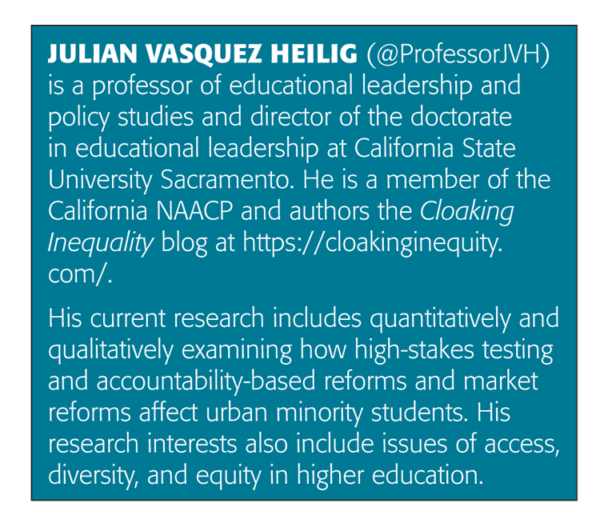
AN INTERVIEW WITH JULIAN VASQUEZ HEILIG
KAPPAN: What’s your perspective on what led the NAACP to conclude that a moratorium on the expansion of charter schools would be in the best interest of students of color?
HEILIG: If you examine their resolutions over the years, the membership of the NAACP has taken several critical stands on charters. I believe that’s been a response to the fact that there’s been an enormous growth in charters over the past two decades. The federal government alone has spent $3.3 billion on charter schools over the past 10 years. We’ve also seen a doubling of charters over the past few years. There are 6,800 charters across the United States that enroll nearly 3 million children. Charters aren’t really a boutique thing anymore.
heilig_sb2
So the 2010 resolution by the NAACP first said that we needed to take a really hard look at charters, even saying that they are separate and unequal. In 2014, they passed another resolution equating charters with the privatization movement. So this is really a critique that the NAACP has made over the years.
The NAACP is not alone in taking this stand. Other civil rights organizations have also asked for a moratorium and discussed the role of charter schools in the education privatization movement — the Journey for Justice Alliance, an alliance of charter parents and noncharter parents in cities across the United States, and the Black Lives Matter Movement, which is the nation’s youngest civil rights organization. So you have the nation’s oldest and largest civil rights organization and the nation’s youngest civil rights organization coming together and another grassroots organization that includes charter school parents all speaking in unison.
I also think it’s important to remember that school choice came to prominence when white academics sought to influence the national conversation about desegregation and public education after Brown v. Board of Education. The initial push for school choice was not to improve the success of minority students in the United States. In fact, the academics who recommended school choice envisioned a public education system built around parent-student choice, school competition, and school autonomy as a solution to what they saw as the problem of direct democratic control and governmental intervention in public schools. In the South, school choice was used for “all deliberate slowness” after Brown to ensure that black children would not go to school with white children. So abuse of school choice has long been a civil rights issue.
KAPPAN: What’s striking about the 2016 resolution is its emphasis on the moratorium and the language about the expansion of charter schools. What’s not as clear is whether this means that the NAACP supports or opposes the concept of charter schools or whether the opposition to charter schools is just to create more of them too quickly. Can you clarify that?
heilig_sb3-600x523
HEILIG: I don’t think any of the civil rights organizations have said that we need to close all 7,000 charter schools by tomorrow. The critique has been that there are issues in charter schools and that charter schools haven’t acted substantively to address the critiques. For example, they are paying lobbyists millions of dollars to ensure that in California we don’t have access to discipline data or to teacher attrition data. They appear to be tone deaf to concerns raised by parents and by the African-American community. That’s really disconcerting. It’s been a good outcome that the calls for a moratorium have finally gotten their attention.
The charter movement really hasn’t engaged in these conversations in ways that have been productive in terms of more transparency and accountability for students of color who attend charter schools. Thus, you see this response because charter and noncharter parents are Phi Delta Kappan: Do Charter schools serve black children well? – Cloaking Inequity:

LA Times: News Or Content Marketing (aka Alternative Facts) You Decide

Parents need more help choosing schools in Los Angeles, report says - LA Times:

LA Times: News Or Content Marketing (aka Alternative Facts) You Decide


How Does the LA TIMES Piece Differ from the Charter School Advocacy Blog LA School Report/The 74

Report: Half of LA families are using school choice programs, but many struggle to find quality options | LA School Report - http://wp.me/p2fzpD-baI on @LASchoolReport

Parents need more help choosing schools in Los Angeles, report says

Despite the school district’s promises and efforts to simplify its systems, choosing a public school for your child in Los Angeles is not for the faint of heart. Various campuses and programs have different deadlines, forms and application rules.
new report from the local group Parent Revolution asserts that parents are dissatisfied and poorly served by a system that makes access to high-quality programs complicated and especially challenging for unsophisticated or low-income families.
The group behind the report is best known for using the state’s “parent trigger” law to organize parents to force change at schools with low test scores — either through restaffing or turning them into charter schools. Its critics accuse the group of a pro-charter bias, which it denies. The group’s new report is based on results from the first year of its privately funded effort to assist parents in choosing schools.
The report is based on surveys and interviews with the families of 515 South Los Angeles students who submitted applications with the group’s help, as well as other families that did not complete the entire process. 
“Public school choice in Los Angeles is complex and it takes some degree of savvy to navigate on the district side and on the charter school side,” said Seth Litt, Parent Revolution’s executive director.Parents need more help choosing schools in Los Angeles, report says - LA Times:

Seattle Schools Community Forum: Seattle Schools and Money

Seattle Schools Community Forum: Seattle Schools and Money:

Seattle Schools and Money

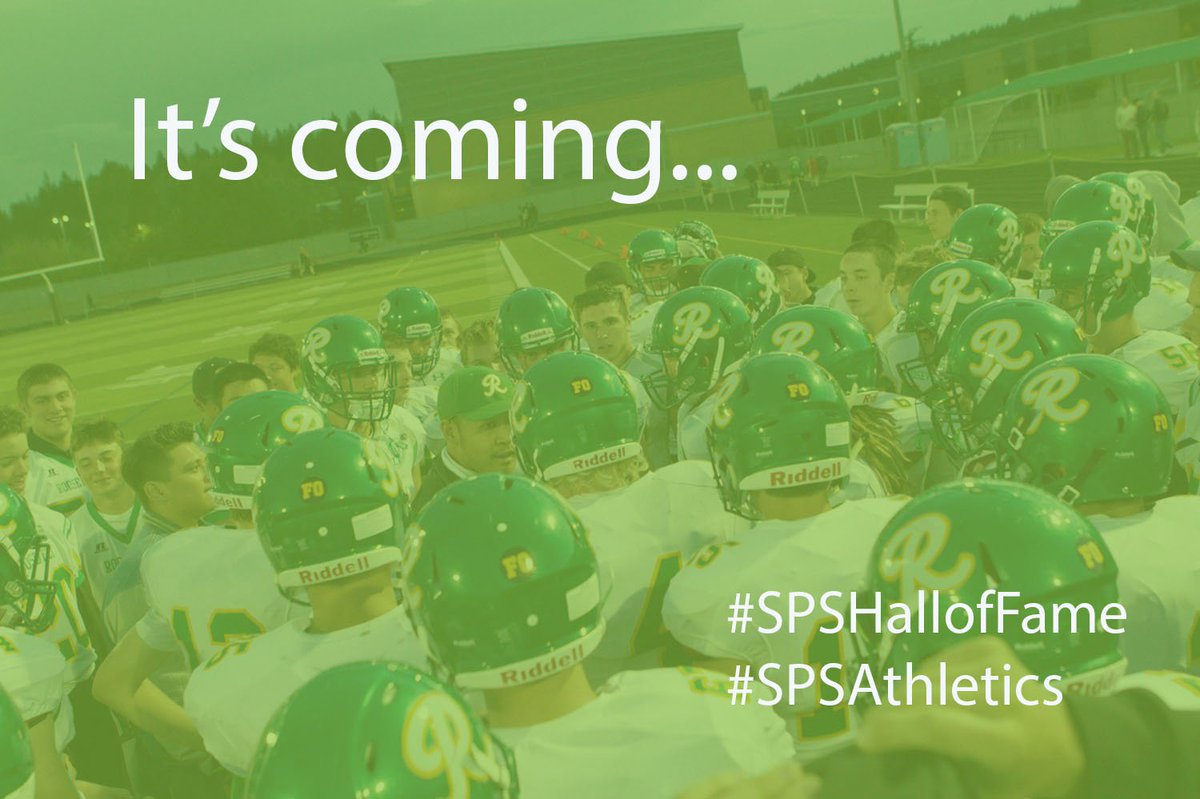
So why do I have this tweet graphic that SPS sent out this morning?  Read on. 

The Superintendent has a budget update page at the district's webpage.   

In it, he thanks supporters of Seattle Public Schools and notes the efforts being made to avoid the levy cliff and fully fund McCleary.

The Board is having a Work Session today from 4:30-8:30 pm to cover a variety of topics;
- Seattle Pre-K programs,
- the 2017-2018 budget, and -Enrollment/Assignment (this is an oversight work session, not one to address a specific issue.)

There is also an Executive Session at the end of the meeting for "evaluate the performance of a public employee."

Pre-K 
Page 13 of the preschool presentation is amazing - It has survey results from parents in the City's program in SPS buildings that show 100% of parents are 
Seattle Schools Community Forum: Seattle Schools and Money:


Gulen Charter Scandal: Lawyers for Turkey call for probe of Chicago charter school | Chicago Sun-Times

Lawyers for Turkey call for probe of Chicago charter school | Chicago Sun-Times:

Lawyers for Turkey call for probe of Chicago charter school

Lawyers for the government of Turkey filed a complaint Tuesday with the Chicago Public Schools’ inspector general against a local charter group and its taxpayer-funded school in Rogers Park. | Sun-Times file photo

Lawyers for the government of Turkey filed a complaint Tuesday with the Chicago Public Schools’ inspector general against a local charter group and its taxpayer-funded school in Rogers Park.
The complaint alleges Des Plaines-based Concept Schools and its Chicago Math and Science Academy engage in “sweetheart deals” that hurt local taxpayers — but benefit the global movement led by Turkish-born cleric Fethullah Gulen.
Turkish President Recep Tayyip Erdogan is in a bitter struggle with the 75-year-old Gulen, who lives in Pennsylvania and has ties to charter-management firms that run about 150 schools across the country, including CMSA and three other publicly funded Concept campuses in Chicago.
Islamic cleric Fethullah Gulen (pictured in July 2016) | AP file photo
The attorneys for Erdogan’s government, led by Washington, D.C.-based lawyer Robert Amsterdam, have filed similar complaints with education officials in three other states in recent months.
In a statement, Concept Schools said the Turkish government’s complaints are “politically motivated stunts” and that officials in other states have “found no merit to their claims.”
“Concept has followed all guidelines set forth by Chicago Public Schools and the Illinois State Board of Education,” according to the statement.
CPS Inspector General Nicholas Schuler declined to comment.
In their complaint here, lawyers for Turkey accused CMSA’s board of working with Concept and its real-estate arm “to commit ongoing fraud, waste and financial mismanagement of Lawyers for Turkey call for probe of Chicago charter school | Chicago Sun-Times:

JONATHAN PELTO: DeVos doesn’t know the ABCs of public education | TheHill

DeVos doesn’t know the ABCs of public education | TheHill:

DeVos doesn’t know the ABCs of public education


Betsy DeVos leaves education advocates even more worried about the future of public education policy under Trump Like much in Washington these days, there were two completely different and contrary narratives following Education Secretary nominee Betsy DeVos’ confirmation hearing last week.
Trump loyalists celebrated what appeared to be DeVos successful effort to keep from derailing her own confirmation, while public education advocates strengthen their belief that DeVos’ performance reiterated their worst fears about the pro-charter school champion.
But for her reference that guns might be needed in schools to fight off grizzly bears, the Republican Senate majority must be breathing a sigh of relief as they as prepare to confirm DeVos as the nation’s next election chief.
On the other hand, educators and education advocates are reeling from a combination of frustration, incredulousness and downright anger having watched a hearing that revealed that DeVos lacks the fundamental experience and basic understanding of the issues one would want and expect in the person chosen to serve as the Secretary of the United States Department of Education.
On a wide variety of issues of concern to educators, parents and those who support public education, DeVos appeared ignorant of the law, unwilling to commit to implementing federal law or simply unwilling to answer questions about her agenda should she be confirmed.
In one of the most illuminating moments of the evening, HELP Committee ranking Democrat, Sen. Patty Murray (D-WA) asked DeVos, “Can you commit to us that you will not work to privatize public schools…?”
Although DeVos fundamentally ducked the retorting that she would strive to find “common ground” that would give parents “options,” she made it extremely clear that she would remain loyal to the charter school industry DeVos doesn’t know the ABCs of public education | TheHill:

New Reports Question Education Strategy Pushed by Trump Administration | janresseger

New Reports Question Education Strategy Pushed by Trump Administration | janresseger:

New Reports Question Education Strategy Pushed by Trump Administration


Donald Trump pushes expanding parental choice among schools as the way to help children learn.  Parental choice defined as tuition vouchers for children to carry to private schools, more charter schools which are publicly funded but privately operated, and tuition tax credits of various sorts by which parents can apply the money they would have paid in taxes to pay for privatized education.
The thing is that private schools, on the whole, don’t do a better job than public schools.  Chris and Sarah Lubienski, professors of education at the University of Illinois discovered evidence of this when they were studying mathematics achievement as measured by test scores: “We were both skeptical when we first saw the initial results: public schools appeared to be attaining higher levels of mathematics performance than demographically comparable private and charter schools—and math is thought to be a better indicator of what is taught by schools than, say, reading, which is often more influenced directly and indirectly by experiences in the home… But after further investigation and more targeted analyses, the results held up.  And they held up… even when we used different models and variables in the analyses…  (T)he data show that the more regulated public school sector embraces more innovative and effective professional practices, while independent schools often use their greater autonomy to avoid such reforms, leading to curricular stagnation. (The Public School Advantage: Why Public Schools Outperform Private Schools, pp. xvii-xviii)
In a November policy brief for the Stanford Center for Opportunity Policy in Education, Frank Adamson compares international test results from nations with strong public school systems like Finland, Cuba and Canada with school systems that have experimented significantly with New Reports Question Education Strategy Pushed by Trump Administration | janresseger:

Tech giant alleged to have shared private student data :: SI&A Cabinet Report

Tech giant alleged to have shared private student data :: SI&A Cabinet Report :: The Essential Resource for Superintendents and the Cabinet:

Tech giant alleged to have shared private student data


(Miss.) Google Inc. allegedly collected students’ personal information and search history to help advertisers target children, according to a lawsuit filed by the state of Mississippi.
The suit claims Google used its apps marketed as being safe for teacher and student use–including Gmail, Google Calendar and Google Docs–for third party use, and then falsely assured families that student data was being kept private.
“It is disturbing to think that one of the world’s most profitable corporations would try to make even more money by deceiving parents and taking advantage of Mississippi school children,” Attorney General Jim Hood said in a statement. “Through this lawsuit, we want to know the extent of Google’s data mining and marketing of student information to third parties.”
Nearly every state has made some effort in recent years to bolster student data privacy protections by adopting comprehensive and thorough approaches toward handling security breaches, collection and handling of data, and limiting who is able to access data.
According to the nonprofit Data Quality Campaign, at least 386 bills were introduced throughout the country targeting issues of transparency, security and privacy between 2014 and 2016. Many sought to protect state and federal assessment of data, as well as third-party service providers’ information security and data sharing activities.
In 2015, scores of companies that collect student information or provide technology used for educational purposes signed the K-12 School Service Provider Pledge to Safeguard Student Privacy–including Google–in which they promised not to collect, maintain, use or share student personal information beyond what is needed for educational purposes. Additionally, companies agreed to disclose what information is collected and for what purposes to parents in an easy-to-understand manner.
The lawsuit filed by Hood this month claims that Google has failed to live up to its pledge. The suit alleges that the company builds profiles from student information which are used to target advertising, without properly disclosing the types of information it collects. The attorney general’s Tech giant alleged to have shared private student data :: SI&A Cabinet Report :: The Essential Resource for Superintendents and the Cabinet:


Trump Pauses ESSA Accountability Regulations | Truth in American Education

Trump Pauses ESSA Accountability Regulations | Truth in American Education:

Trump Pauses ESSA Accountability Regulations

President Donald Trump’s first action after being sworn in as our 45th President of the United States was to order a freeze of all Obama Administration regulations that had not yet taken effect pending review.
Trump’s chief of staff, Reince Priebus, sent a memo to all department and agency heads that read:
The President has asked me to communicate to each of you his plan for managing the Federal regulatory process at the outset of his Administration.  In order to ensure that the President’s appointees or designees have the opportunity to review any new or pending regulations, I ask on behalf of the President that you immediately take the following steps:
  1. Subject to any exceptions the Director or Acting Director of the Office of Management and Budget (the “OMB Director”) allows for emergency situations or other urgent circumstances relating to health, safety, financial, or national security matters, or otherwise, send no regulation to the Office of the Federal Register (the “OFR”) until a department or agency head appointed or designated by the President after noon on January 20, 2017, reviews and approves the regulation.  The department or agency head may delegate this power of review and approval to any other person so appointed or designated by the President, consistent with applicable law.
  2. With respect to regulations that have been sent to the OFR but not published in the Federal Register, immediately withdraw them from the OFR for review and approval as described in paragraph 1, subject to the exceptions described in paragraph 1.  This withdrawal must be conducted consistent with OFR procedures.
  3. With respect to regulations that have been published in the OFR but have not taken effect, as permitted by applicable law, temporarily postpone their effective date for 60 days from the date of this memorandum, subject to the exceptions described in paragraph 1, for the purpose of reviewing questions of fact, law, and policy they raise.  Where appropriate and as permitted by applicable law, you should consider proposing for notice and comment a rule to delay the effective date for regulations beyond that 60-day period.  In cases where the effective date has been delayed in order to review questions of fact, law, or policy, you should consider potentially proposing further notice-and-comment rulemaking.  Following the delay in effective date
    a. for those regulations that raise no substantial questions of law or policy, no further action needs to be taken; and
    b. for those regulations that raise substantial questions of law or policy, agencies should notify the OMB Director and take further appropriate action in consultation with the OMB Director.
  4. Exclude from the actions requested in paragraphs 1 through 3 any regulations Trump Pauses ESSA Accountability Regulations | Truth in American Education:


Almost everyone in Trump’s cabinet has experience with public education—except the education secretary Betsy DeVos — Quartz

Almost everyone in Trump’s cabinet has experience with public education—except the education secretary Betsy DeVos — Quartz:

Almost everyone in Trump’s cabinet has experience with public education—except the education secretary


Among the myriad of objections leveled at Betsy DeVos, US president Donald Trump’s pick to lead American public education, the most stark is the fact that she’s never actually attended a public high school or university. Nor have her four children.
The criticism becomes all the sharper when looking at Trump’s overall cabinet, which at this point is almost completely assembled.
PositionIndividualPublic high school and/or university attended
PresidentDonald Trump
Vice presidentMike PenceColumbus North High School
Chief of staffReince PriebusTrempler High School, University of Wisconsin
Homeland securityJohn KellyUniversity of Massachusetts
DefenseJames MattisRichland High School; Central Washington University
CIAMike PompeoUS Military Academy
StateRex TillersonUniversity of Texas at Austin
Housing and urban developmentBen CarsonDetroit Public Schools
TransportationElaine ChaoSyosset High School
UN ambassadorNikki HaleyClemson University
EnergyRick PerryPaint Creek Independent School District; Texas A&M University
CommerceWilbur Ross
InteriorRyan ZinkeWhitefish High School; University of Oregon
EducationBetsy DeVos
Attorney generalJeff SessionsWilcox Central High School
TreasurySteve Mnuchin
Environmental protection agencyScott PruittUniversity of Kentucky
Small business administrationLinda McMahonNew Bern High School; East Carolina University
Budget directorMick Mulvaney
Health and human servicesTom PriceDearborn High School; University of Michigan
LaborAndy PuzderKent State University
Director of national intelligenceDan CoatsJackson High School
US trade representativeRobert Lighthizer
AgricultureSonny PerdueWarner Robins High School; University of Georgia
Veterans affairsDavid Shulkin*
*Shulkin attended a private university. The details of his high school are not available.
With the exception of DeVos, Trump himself, and just a handful of others, most of Trump’s administration have had some form of experience with American public education, whether that’s graduating from public high schools or attending public universities. And that’s even given their absurd wealth (Trump’s cabinet picks have more money than a third of American households combined), and the fact that affluent people usually gravitate toward private schooling.
DeVos, a Michigan billionaire who favors the idea that federal money should go to independent schools as well as public ones, was called out as an ill-fitting choice to lead the US Education Department from the start—and now the awkwardness is all the more apparent. She attended a private Christian high school in Michigan, then a private liberal arts college.
She also failed at her own confirmation hearing to understand basic education terms or take a stance on issues such as student-performance accountability and campus sexual assault. If her appointment is Almost everyone in Trump’s cabinet has experience with public education—except the education secretary Betsy DeVos — Quartz: